Quick Navigation:
| | | | |
Quick Navigation:
| | | | |
The American Civil War
Summary of Chapter 4, "The American Civil War,":
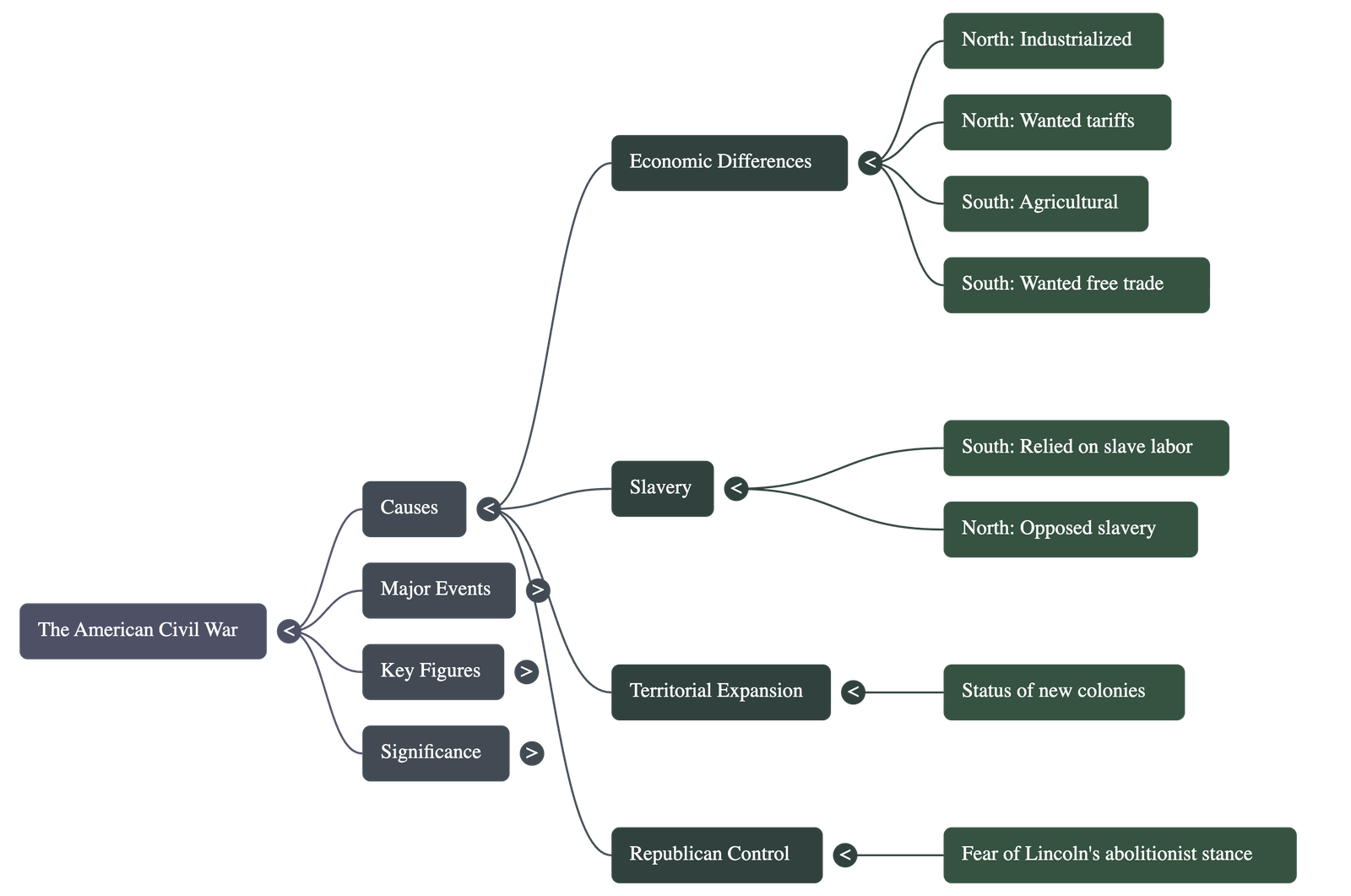
Economic and Social Causes
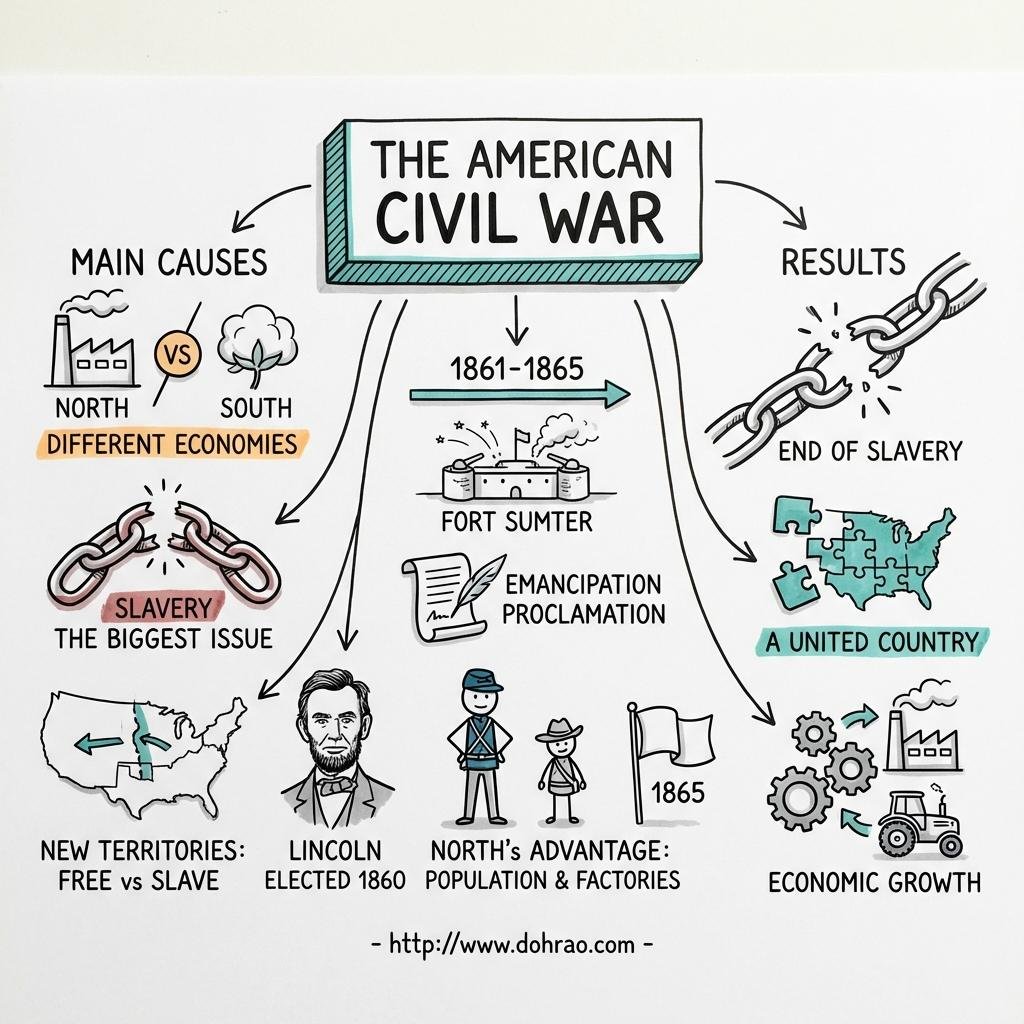
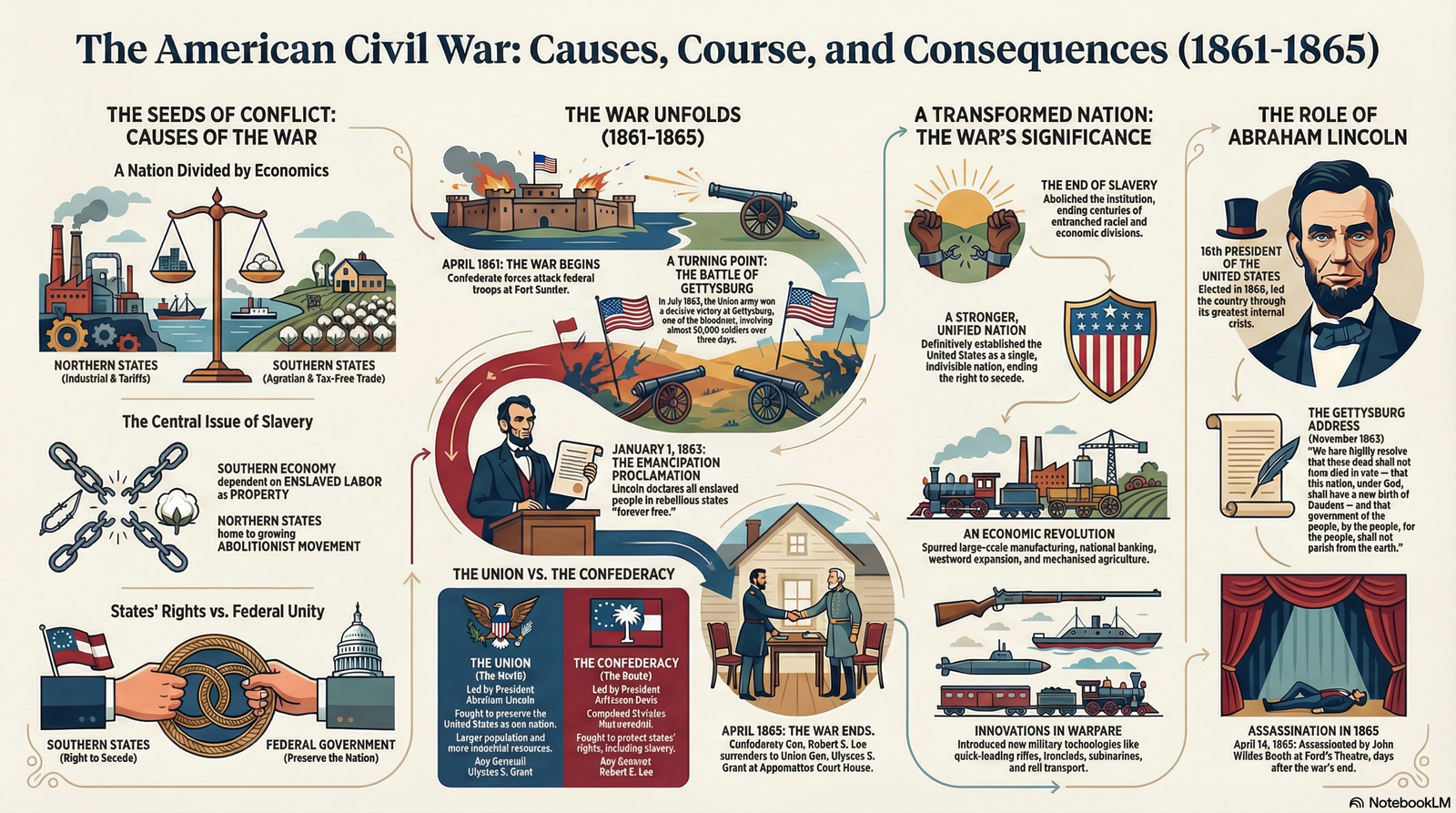
- Economic Disparity: The Northern states were highly industrialized with textile factories, while the Southern states were primarily agricultural, relying on large plantations for cotton and tobacco.
- Trade Conflicts: The North wanted tariffs to protect their industries from foreign competition, whereas the South desired tax-free trade with Britain to export raw cotton and import cheap manufactured goods.
- The Institution of Slavery: Slavery was a major point of friction; slaves were treated as commodities with no rights, forced to work on Southern plantations in miserable conditions. The North did not require slave labor as most people worked in factories.
- Political Tension: The South feared that the election of Republican candidate Abraham Lincoln would lead to the total abolition of slavery, causing Southern states to consider secession.
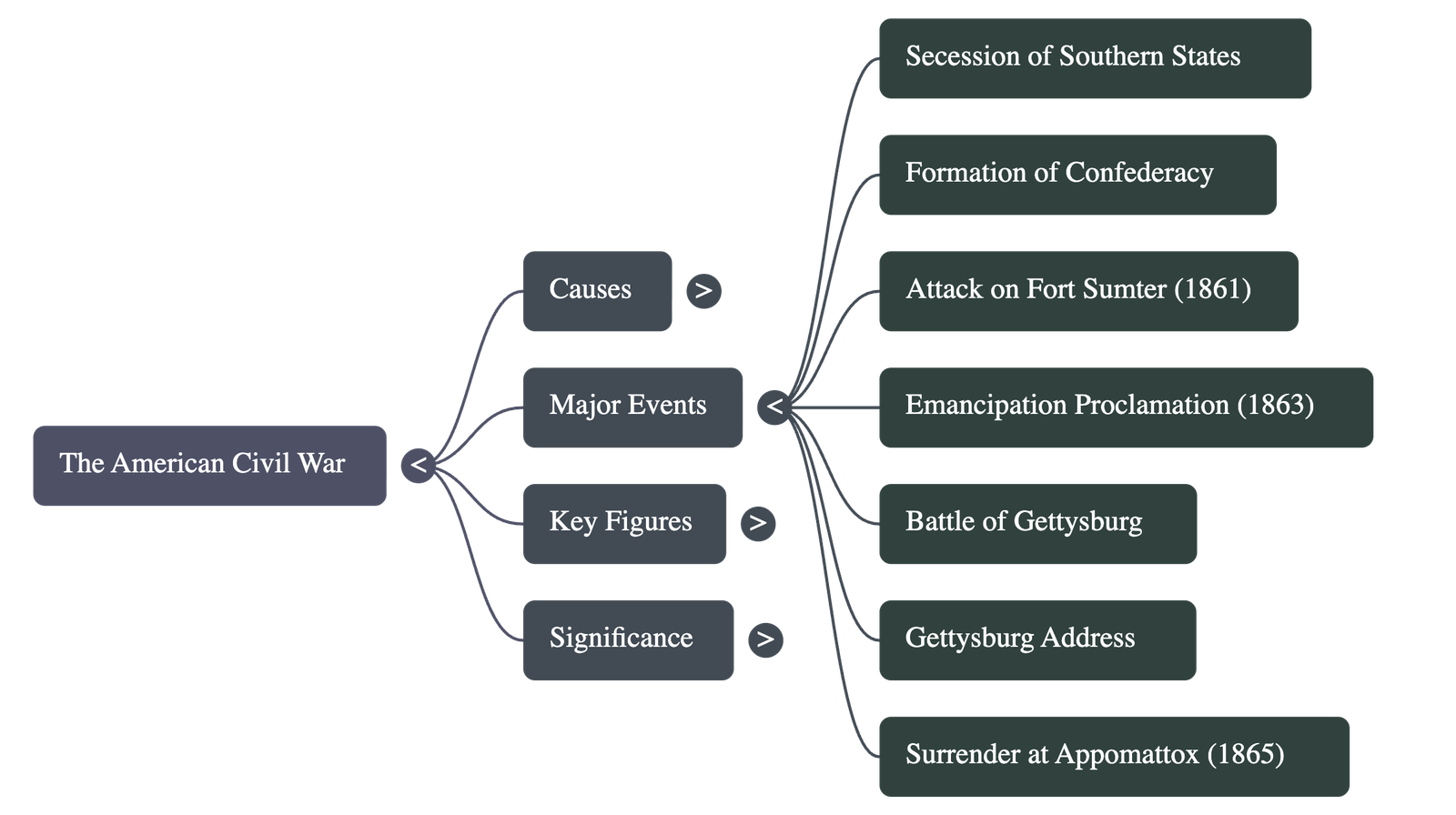
Outbreak and Course of the War (1861–1865)
- Secession: Following Lincoln's election, several Southern states seceded from the Union to form the Confederate States of America.
- The Conflict Begins: The war officially started in April 1861 when the Confederates attacked federal troops at Fort Sumter in South Carolina.
- The Proclamation of Emancipation: In 1862, Lincoln issued this proclamation, declaring that all slaves in rebelling states would be free as of January 1, 1863. This effectively abolished slavery in those areas.
- Key Battles and Turning Points: One of the bloodiest encounters was the Battle of Gettysburg in July 1863, where the Federal (Union) Army won a significant victory.
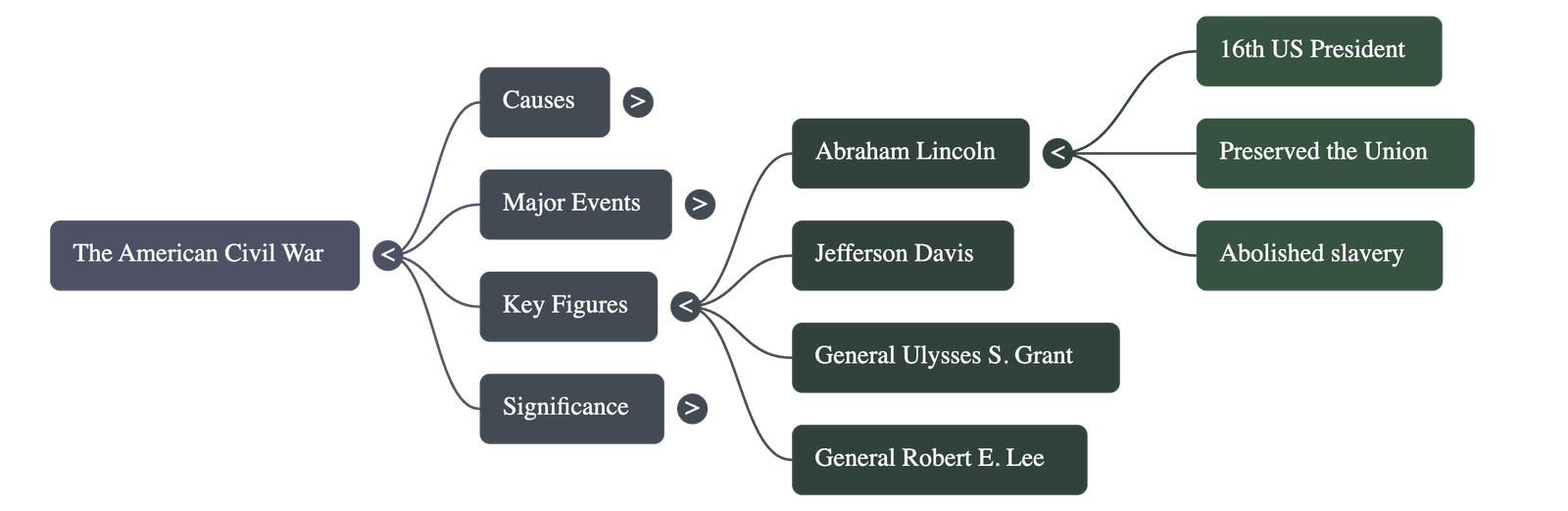
- End of the War: The war concluded in 1865 when Confederate General Lee surrendered to General Ulysses S. Grant at Appomattox Court House in Virginia.
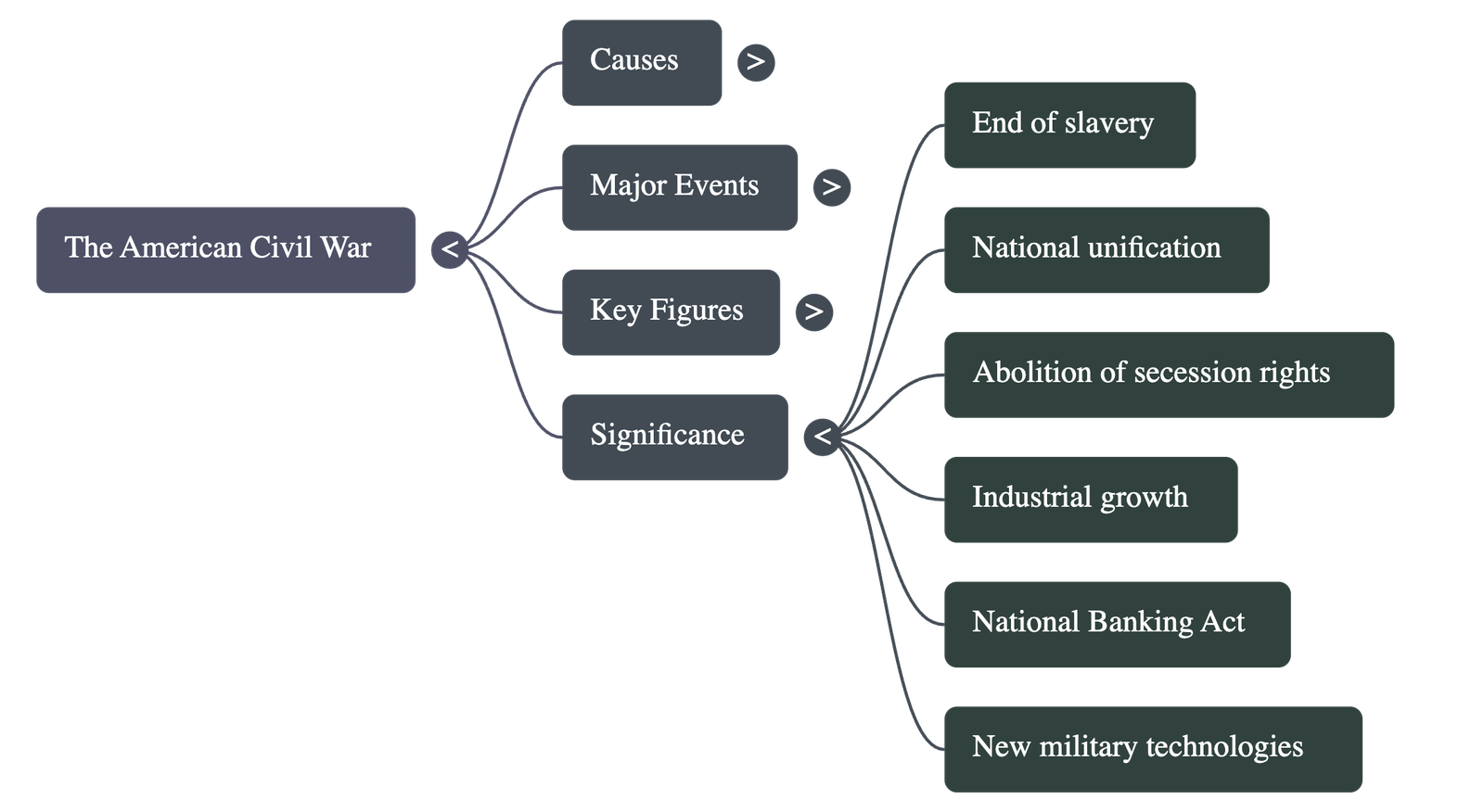
Significance and Results of the War
- Abolition of Slavery: The war permanently ended the institution of slavery, which had long estranged the North and South.
- National Unity: It established that no state had the right to secede, welding the USA into a single, strong nation.
- Industrial and Economic Growth: The war stimulated large-scale manufacturing and led to the National Banking Act of 1863, which regulated the banking system and promoted nationwide business.
- Modern Warfare: The conflict saw the first use of new technology in war, including armored ships, submarines, quick-loading rifles, and the telegraph.
Role and Legacy of Abraham Lincoln
- Preserving the Union: As the 16th President, Lincoln was dedicated to keeping the nation unified and refused to grant the South the right to secede.
- Gettysburg Address: In his famous speech, Lincoln defined democracy as the "government of the people, by the people and for the people".
- Assassination: Just days after the war ended, on April 14, 1865, Lincoln was assassinated by John Wilkes Booth while attending a play at Ford’s Theatre.
Analogy for Understanding: To understand the American Civil War, imagine a large family estate where the siblings in the North wing want to run a modern tech business, while the siblings in the South wing want to keep an old-fashioned farm using forced help. When the siblings cannot agree on the rules for the house, the South tries to break away and build their own wall, leading to a massive fight. The war was the painful process of tearing down that wall to ensure the family remained under one roof with one set of fair rules for everyone.
Do checkout all questions & answers of this chapter.
Quick Navigation:
| | | | |
1 / 1
Quick Navigation:
| | | | |