Origins and Need for the United Nations
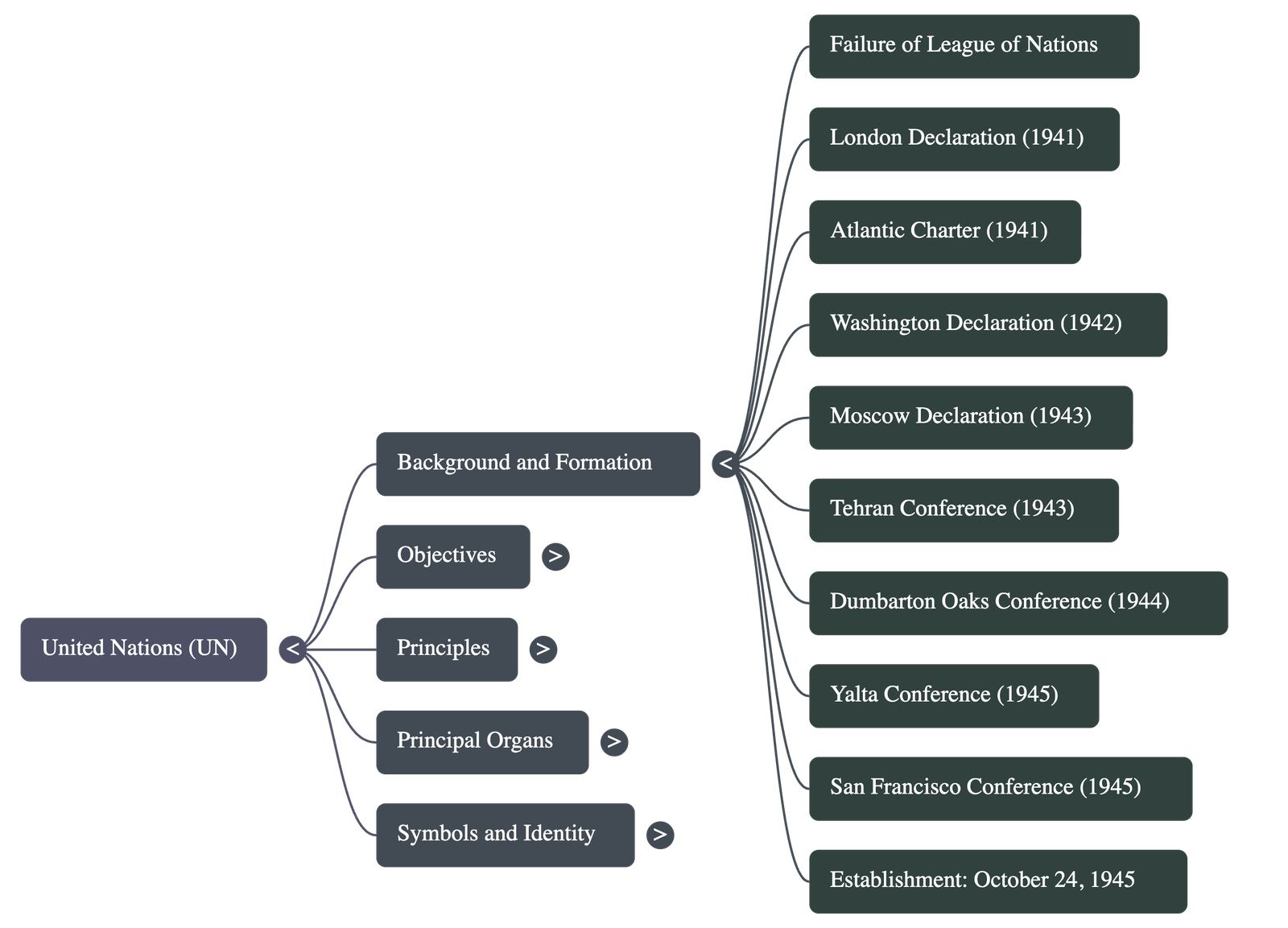
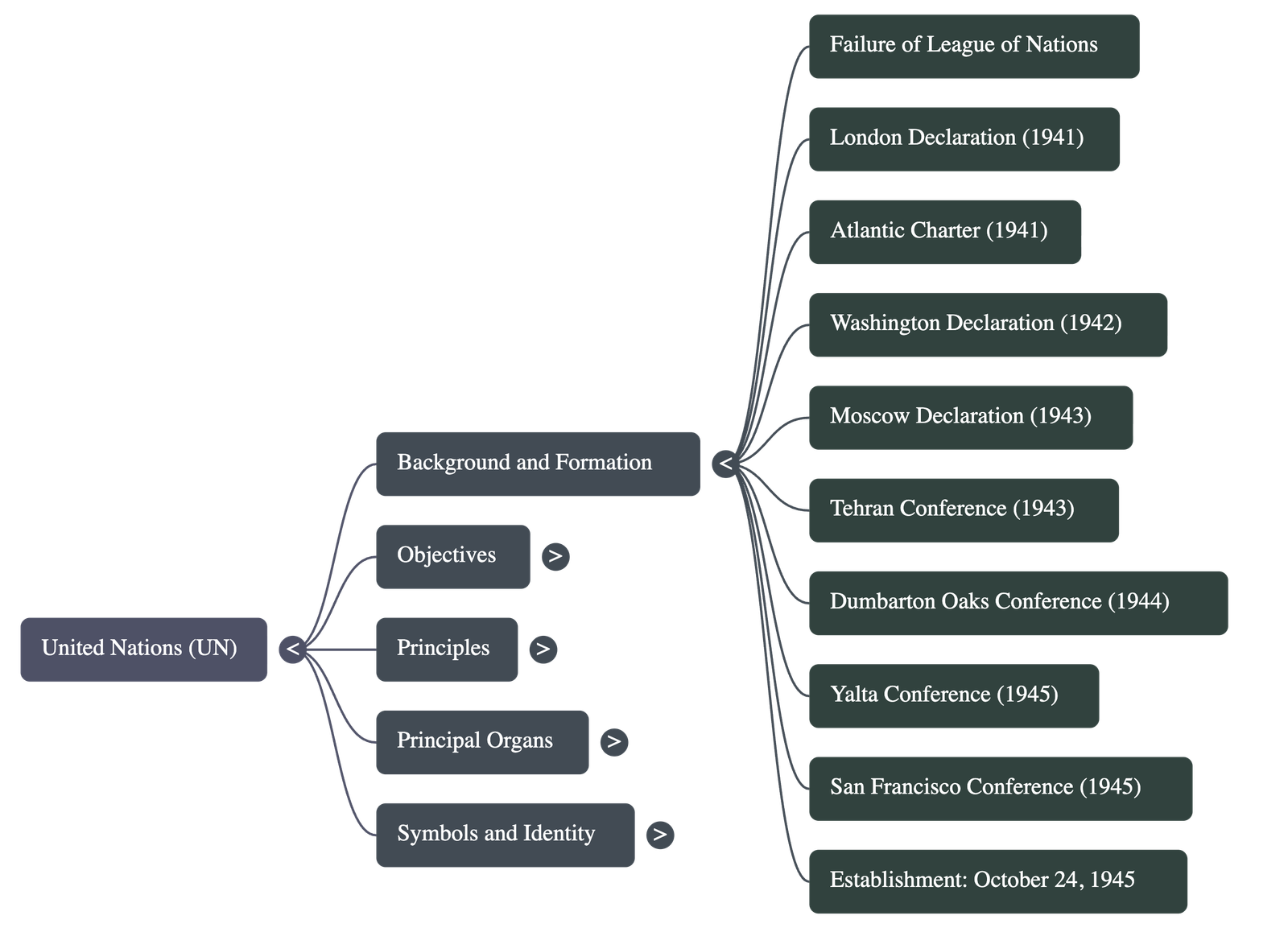
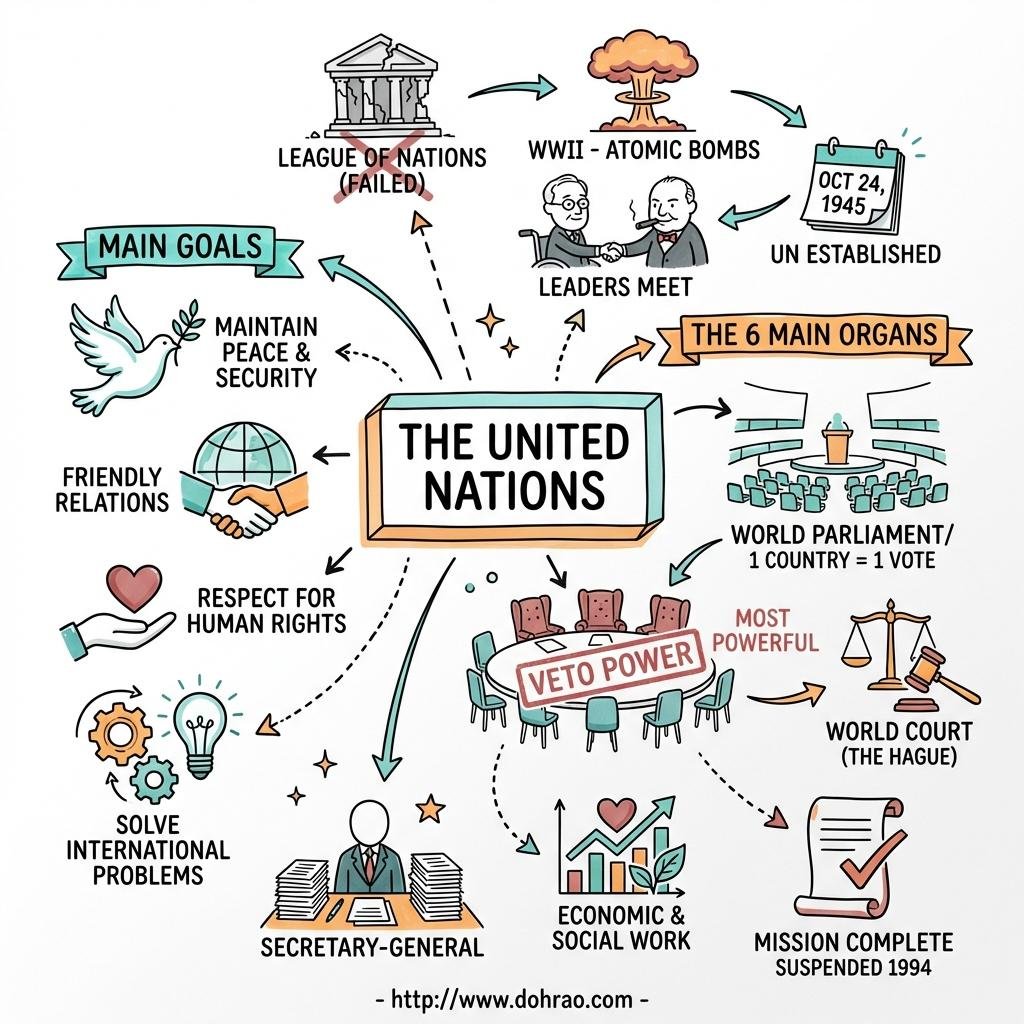
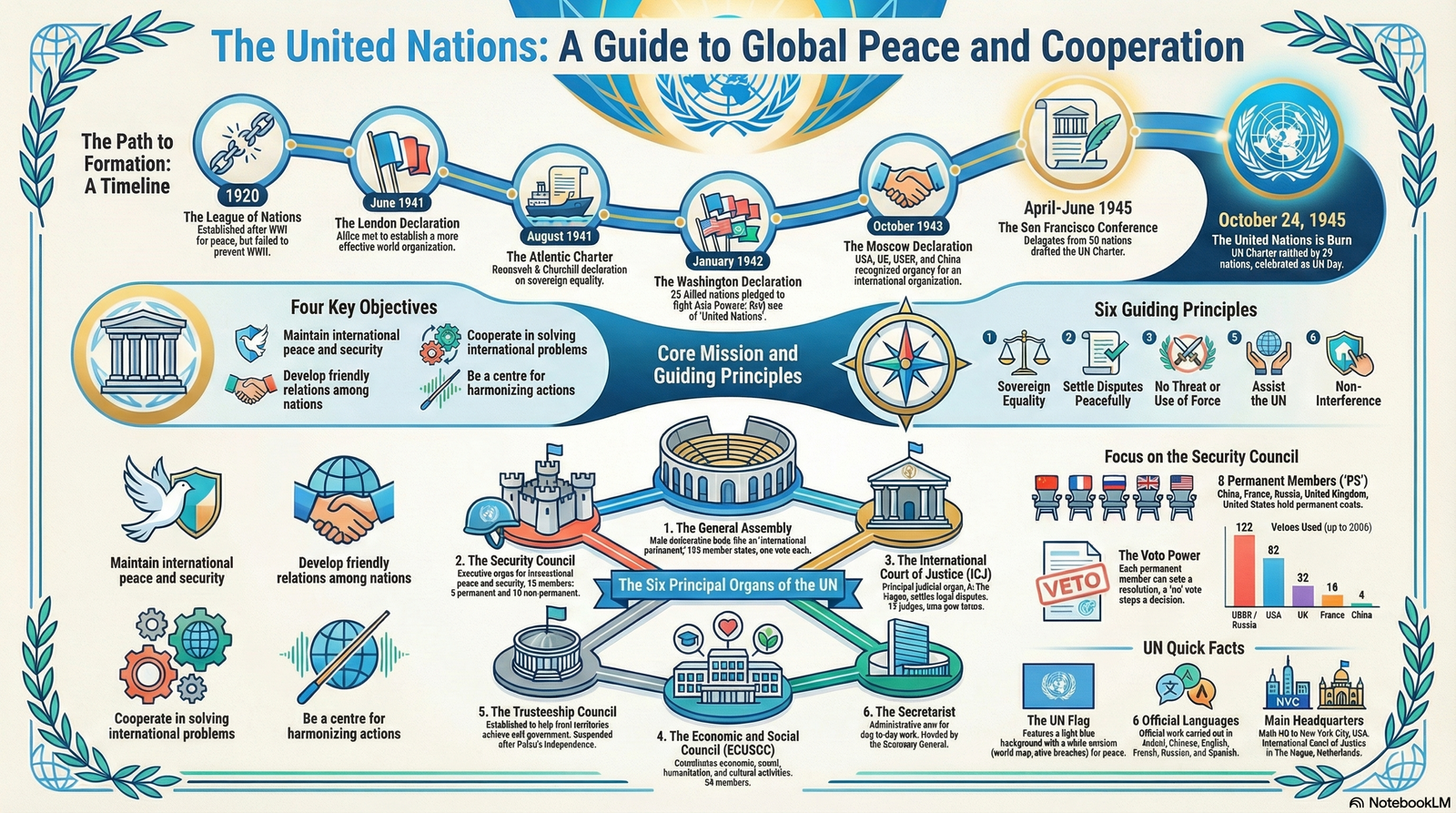
- Failure of the League of Nations: Established in 1920, the League of Nations failed to prevent the occurrence of the Second World War, leading to the realization that a more powerful organization was required to protect mankind.
- Impact of World War II: The Second World War was significantly more destructive than the First, notably due to the first use of atomic bombs by the United States on Hiroshima and Nagasaki in August 1945.
- Leadership and Vision: Allied leaders, specifically US President Franklin D. Roosevelt and British Prime Minister Winston Churchill, were instrumental in initiating discussions to establish an organization that could maintain international peace.
The Path to Formation (1941–1945)
The UN was formed through a series of declarations and conferences:
- Early Declarations: The process began with the London Declaration (June 1941) and the Atlantic Charter (August 1941), which recognized the principle of sovereign equality for all states.
- First Use of the Name: The term "United Nations" was first used during the Washington Declaration on January 1, 1942, signed by 26 nations.
- Planning Conferences: Key meetings included the Moscow Declaration (1943), the Tehran Conference (1943), and the Dumbarton Oaks Conference (1944), where the structure of the organization was discussed.
- Finalization: The Yalta Conference (1945) led to the San Francisco Conference, where the UN Charter was signed by 50 participating nations on June 26, 1945.
- Official Establishment: The United Nations formally came into existence on October 24, 1945, which is now celebrated annually as United Nations Day.
Core Objectives and Principles
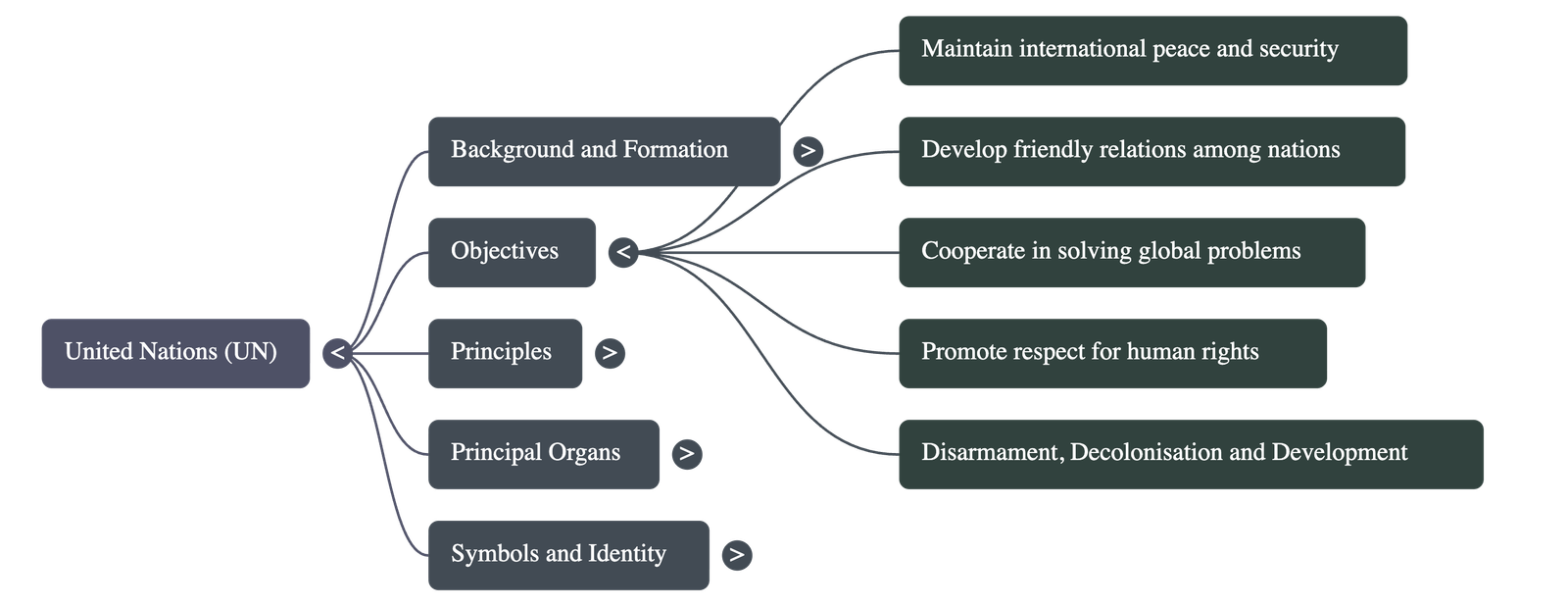
- Primary Goals: The main objectives are to maintain international peace and security, develop friendly relations among nations, and cooperate in solving international economic, social, cultural, and humanitarian problems.
- Modern Focus: The UN has added three new objectives: Disarmament, Decolonisation, and Development.
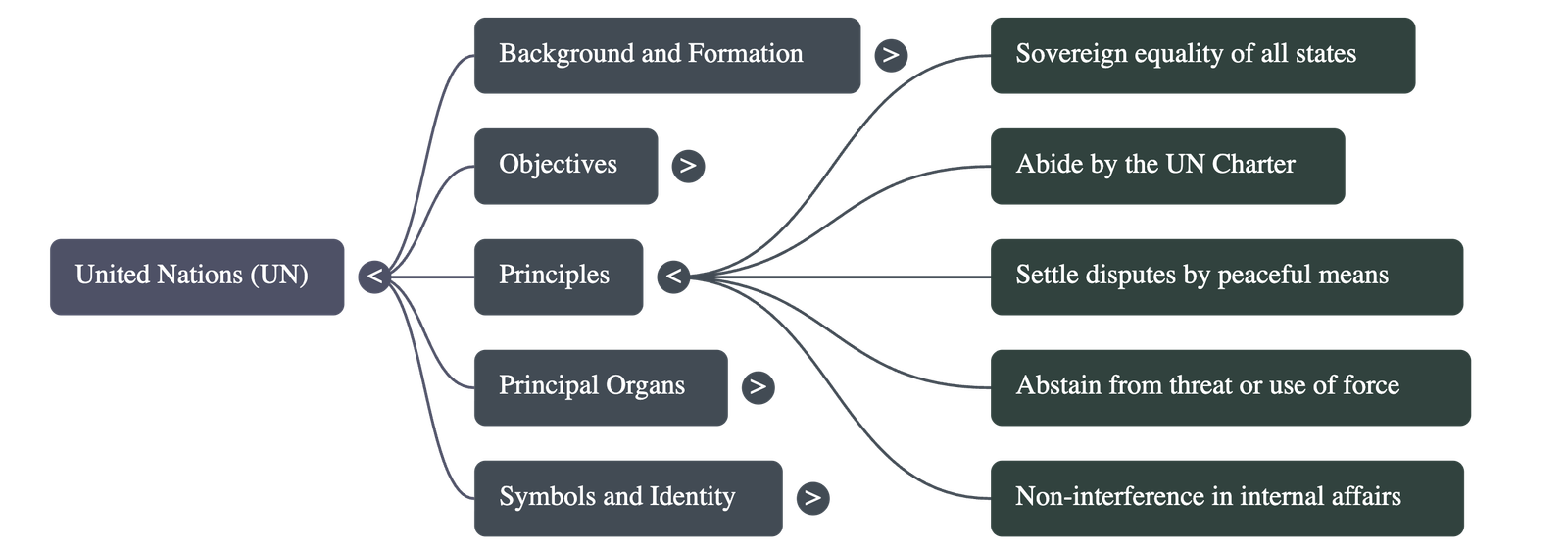
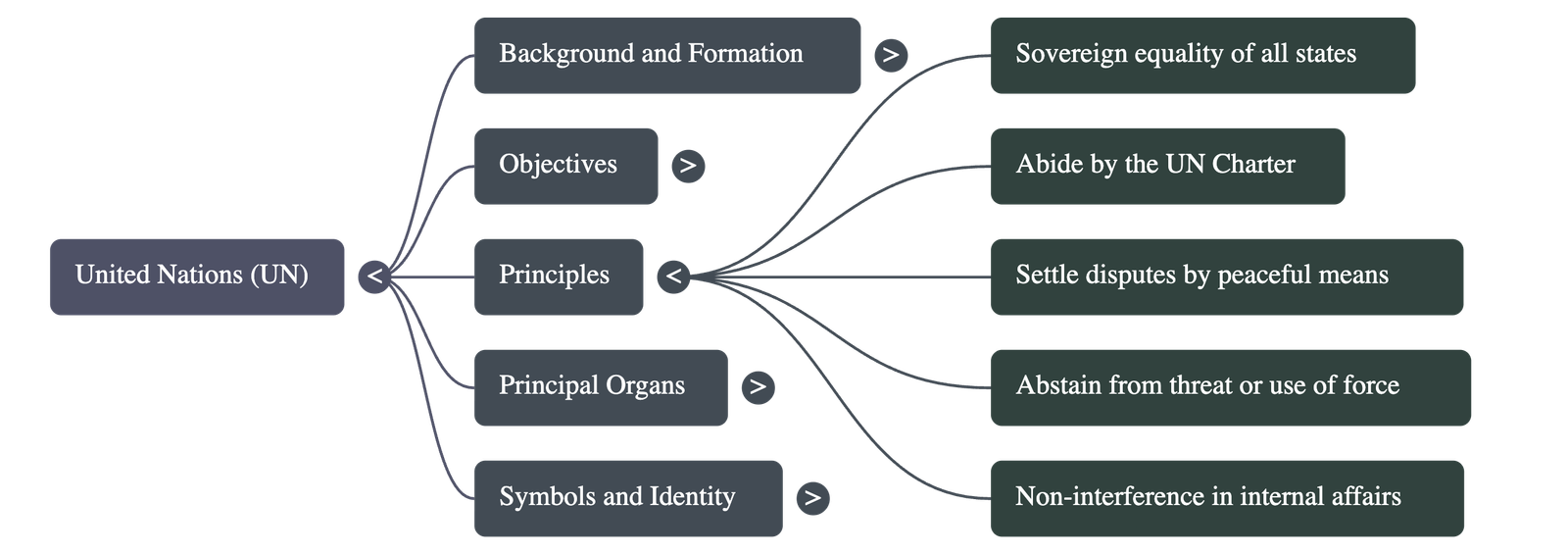
- Founding Principles: Members must abide by the Charter, settle disputes through peaceful means, refrain from the threat or use of force, and recognize the sovereign equality of all members.
- Membership: Membership is open to all peace-loving nations that accept the obligations of the UN Charter.
Structure and Principal Organs
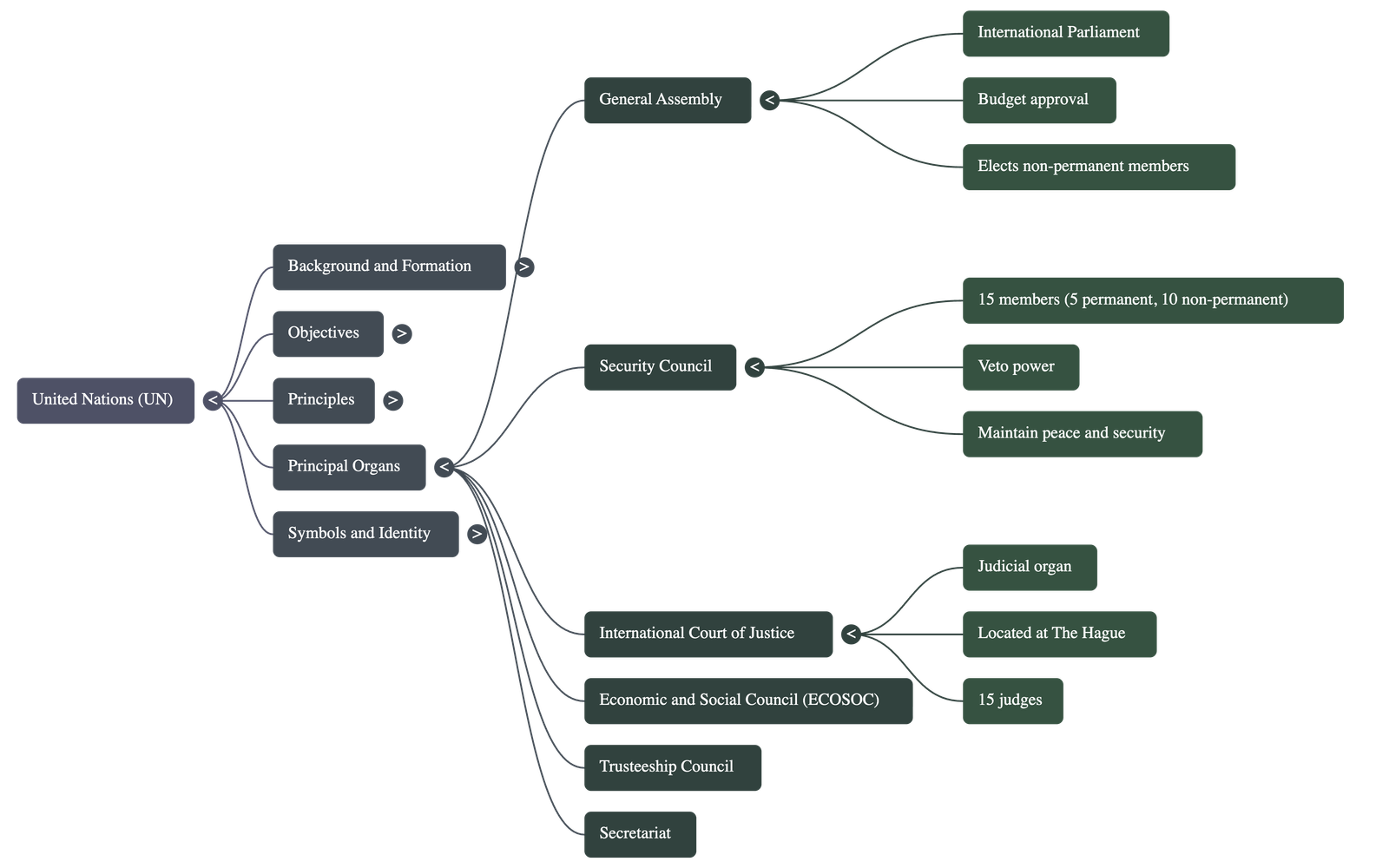
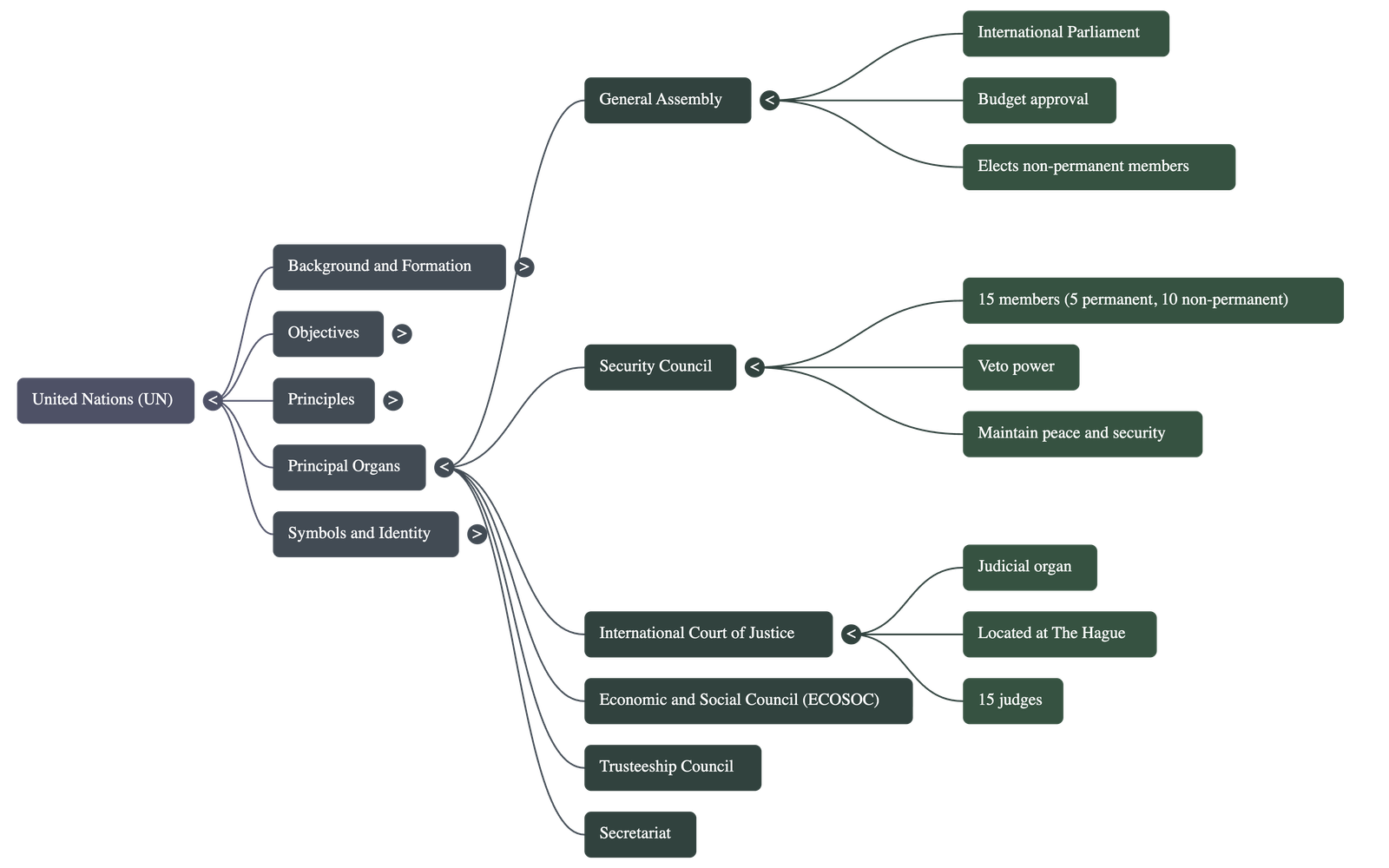
The UN operates through six principal organs, all based in New York except for the judicial branch:
- The General Assembly (GA): Often described as an International Parliament, it includes all member states (each having one vote). It discusses matters of peace, elects members to other organs, and approves the UN budget.
- The Security Council (SC): The executive organ responsible for maintaining peace. It consists of 15 members: 5 permanent (China, France, Russia, UK, and USA) and 10 non-permanent members elected for two-year terms.
- Veto Power: Permanent members have a negative vote called a veto; if any permanent member uses this power, a resolution cannot be adopted.
- International Court of Justice (ICJ): Based in The Hague (Netherlands), it is the judicial organ. It consists of 15 judges who resolve legal disputes between nations and provide legal opinions.
- Economic and Social Council (ECOSOC): Consists of 54 members and coordinates the economic and social work of the UN.
- Trusteeship Council: Originally formed to manage "trust territories," it suspended operations after the independence of Palau, the last trust territory.
- The Secretariat: The administrative arm of the UN, headed by the Secretary-General, who is the chief administrative officer.
General Symbols and Languages
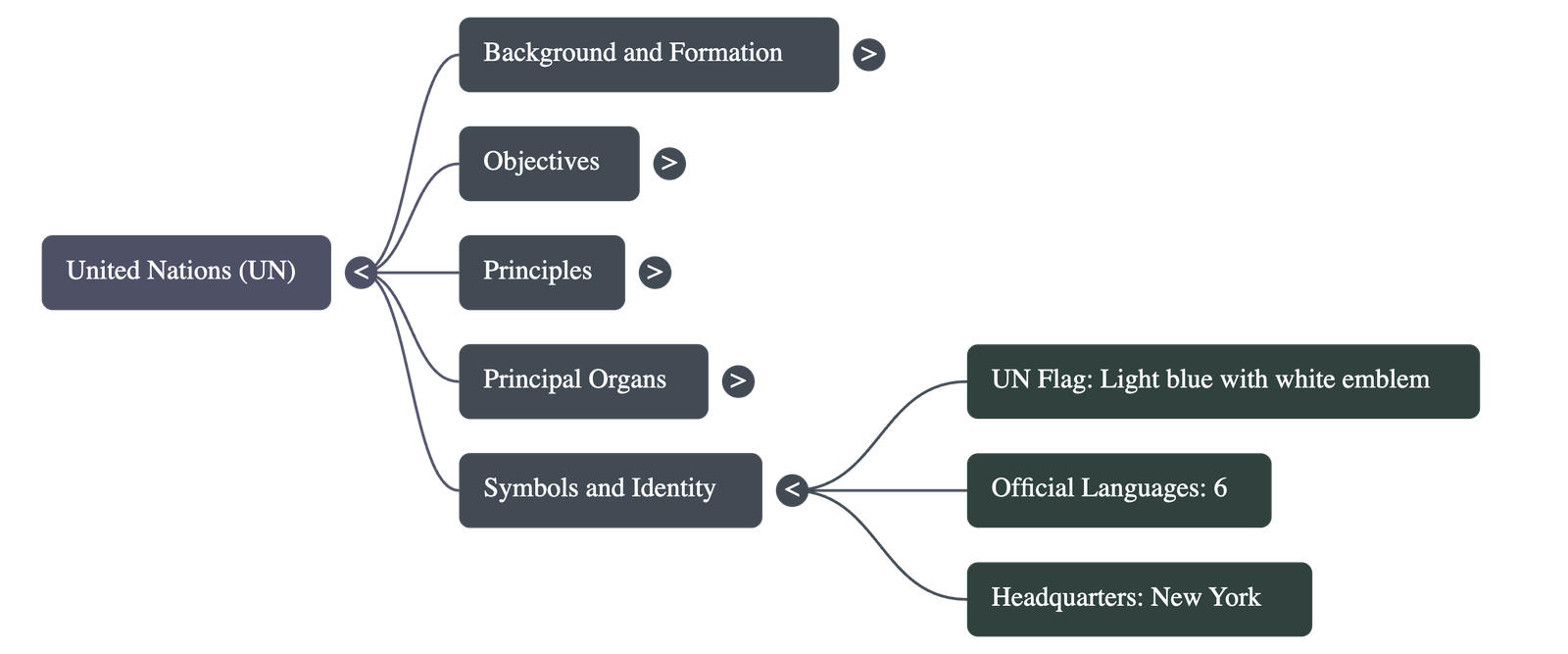
- The UN Flag: Features a light blue background with a white emblem of a world map surrounded by olive branches, symbolizing peace.
- Official Languages: The UN conducts its work in six languages: Arabic, Chinese, English, French, Russian, and Spanish.
Analogy for Understanding: Think of the United Nations as a global neighborhood association. The General Assembly is like a town hall meeting where every neighbor gets a voice. The Security Council acts as a small emergency response committee with special "veto" locks held by the oldest residents to ensure no major changes are made without their agreement. The International Court of Justice is the mediator that settles property line disputes, and the Secretariat is the administrative office that keeps the neighborhood's records and daily operations running smoothly.
Do checkout all questions & answers of this chapter.