India's Struggle for Freedom - Phase 1
Following is a pointwise summary of Chapter 10, "India’s Struggle for Freedom — Phase 1":
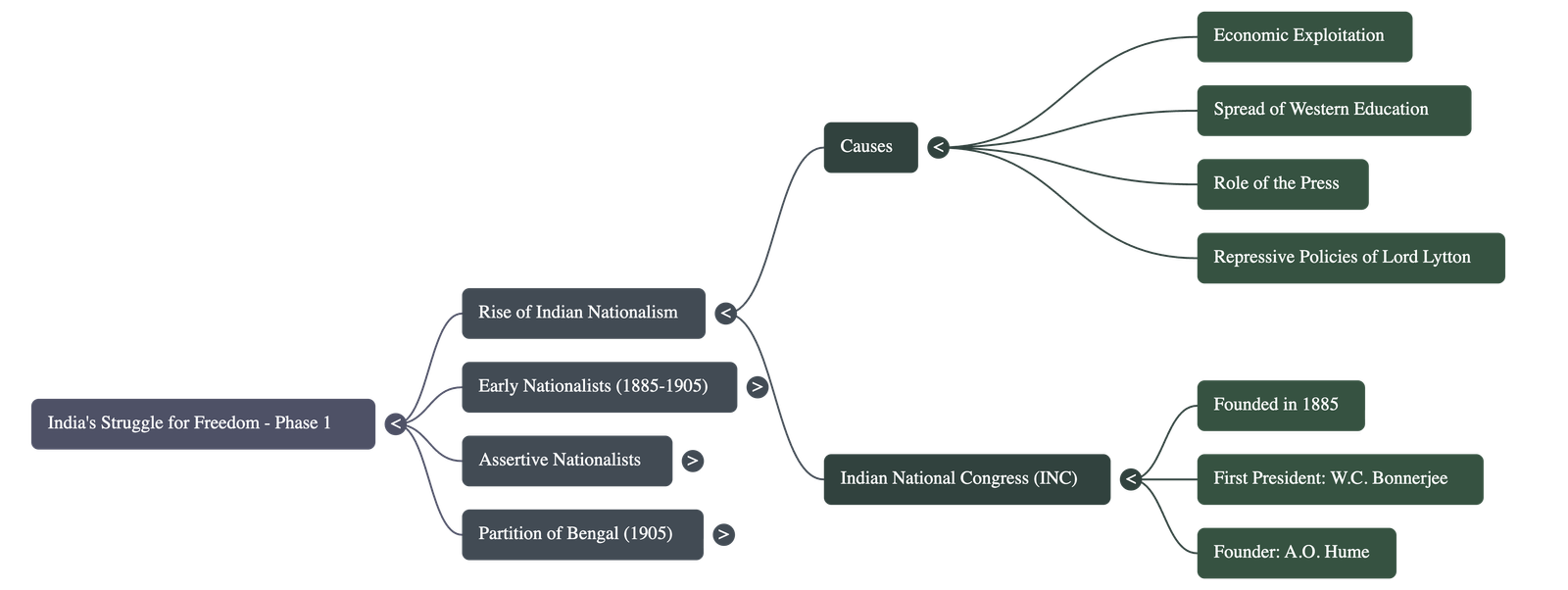
1. Rise of Indian Nationalism
- Definition: Nationalism is defined as a feeling of oneness and common consciousness among people living in a shared territory with a common historical and cultural background.
- Causes for Rise:
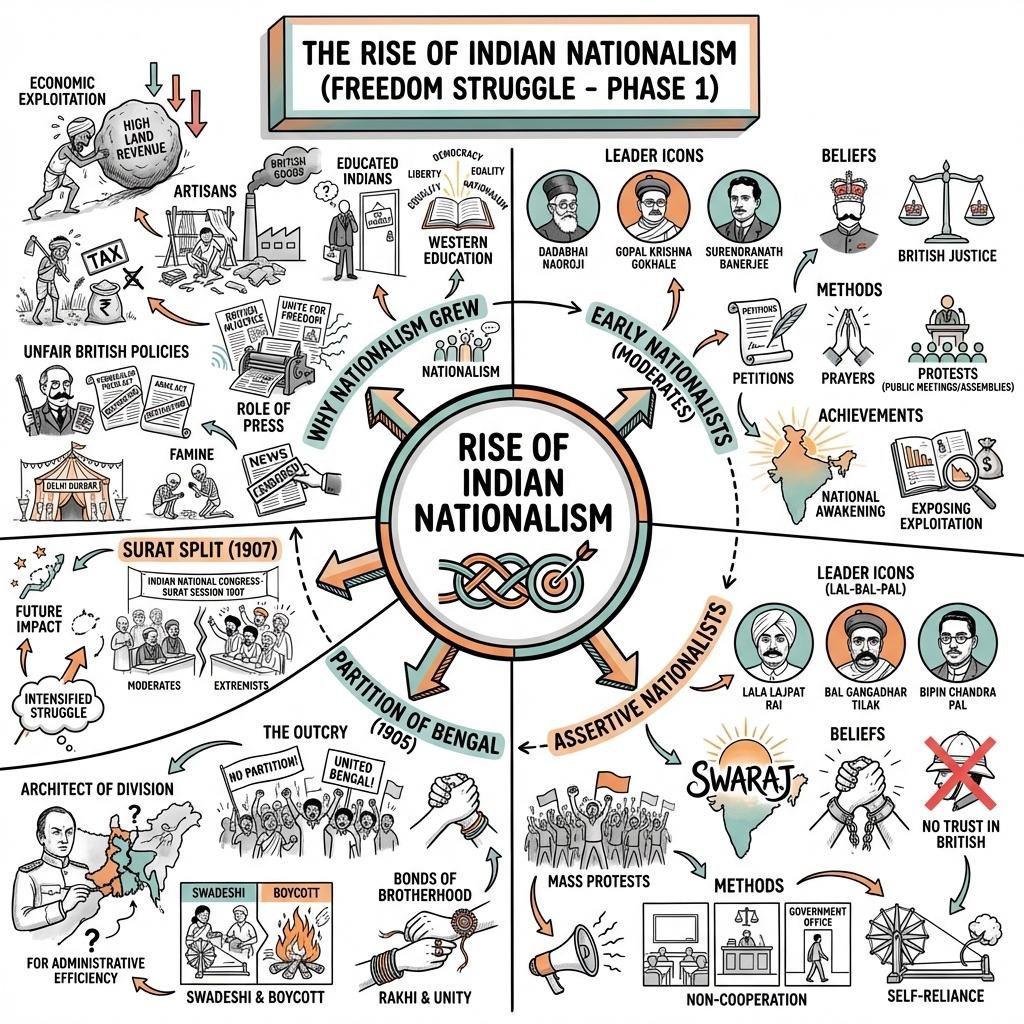
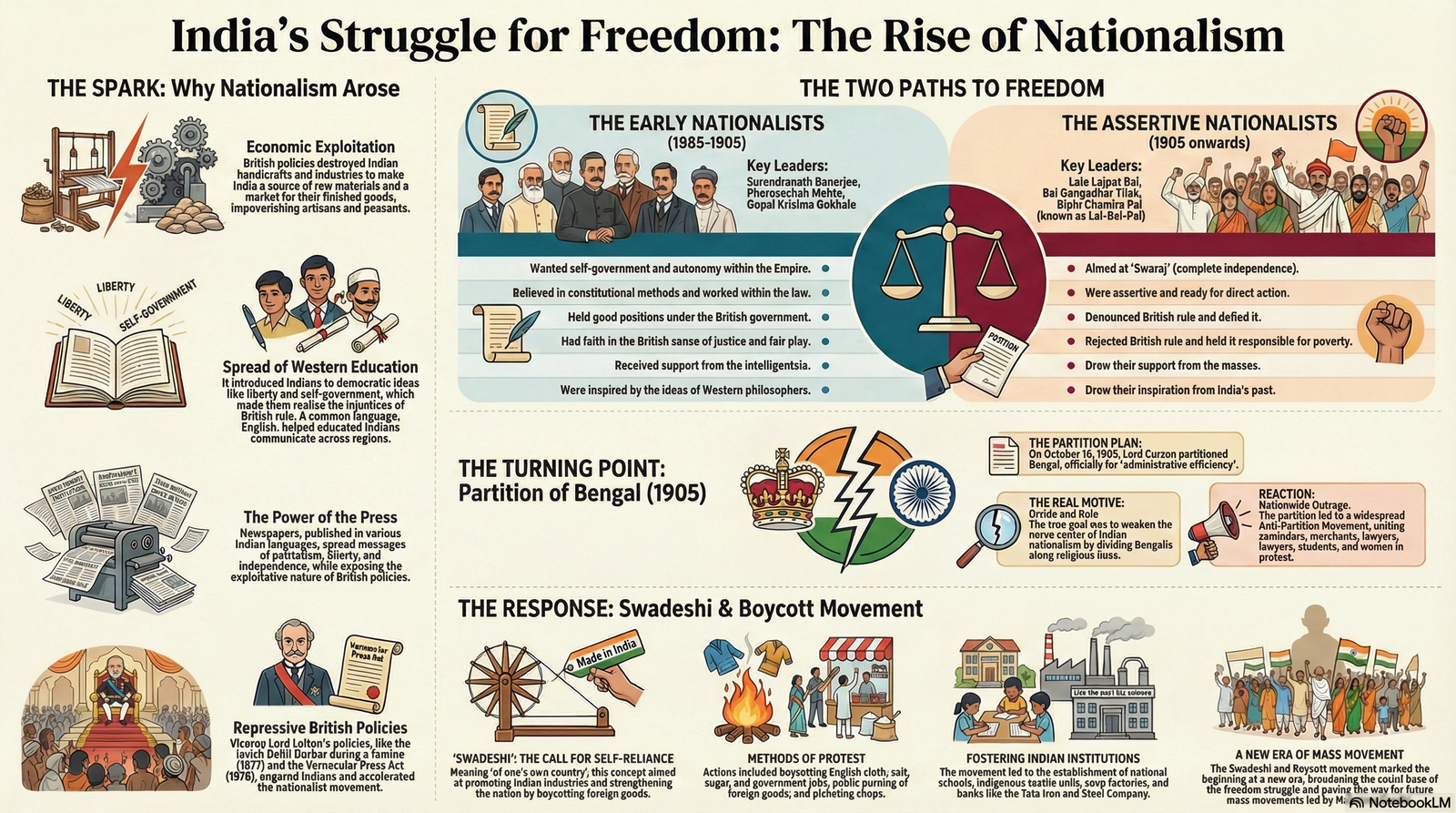
- Economic Exploitation: British policies exploited all sections of society, including peasants (high land revenue), the landed aristocracy (loss of estates), and artisans (destruction of Indian handicrafts).
- Spread of Western Education: It provided a common language (English) for communication among educated Indians and introduced them to modern liberal ideas like democracy, liberty, and equality.
- Role of the Press: Newspapers in English and vernacular languages spread patriotism, criticized unjust British policies, and enabled different regions to exchange views.
- Repressive Policies of Lord Lytton: Actions such as the Vernacular Press Act (1878), the Indian Army Act (1879), and reducing the age for Civil Service exams quickened the pace of the nationalist movement.
2. The Indian National Congress (INC)
- Foundation: The INC was founded in 1885 by A.O. Hume, marking the formal beginning of the organized national movement.
- First Session: Held in Mumbai under the presidency of W.C. Bonnerjee.
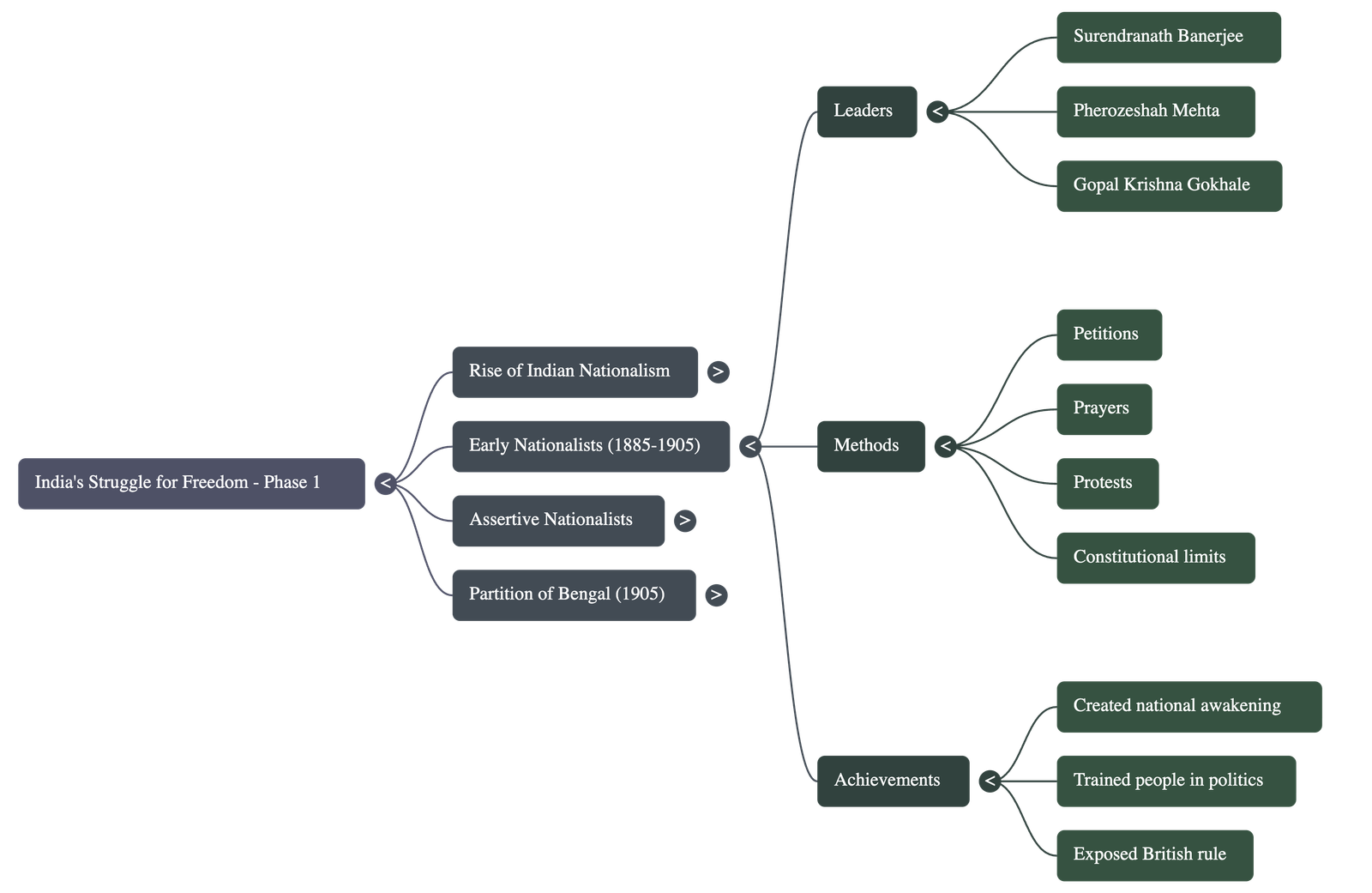
3. The Early Nationalist Phase (1885–1905)
- Leadership: Led by educated middle-class leaders like Surendranath Banerjee, Sir Pherozeshah Mehta, and Gopal Krishna Gokhale.
- Methods: They used constitutional and peaceful methods, famously known as the "three P’s": Petitions, Prayers, and Protests.
- Achievements: They created a national awakening, trained people in political thought, and exposed the true exploitative nature of British rule.
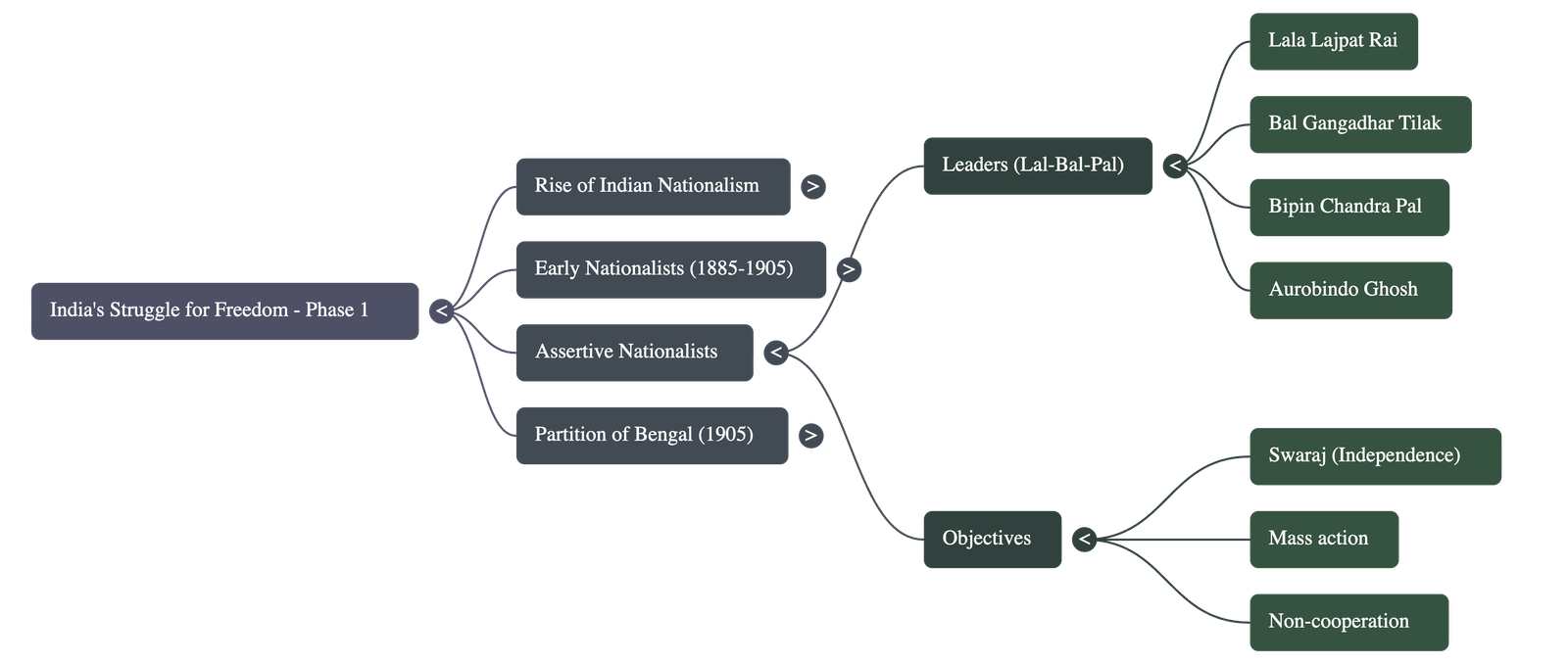
4. The Assertive Nationalist Phase (1905–1918)
- Leadership: Led by Lala Lajpat Rai, Bal Gangadhar Tilak, and Bipin Chandra Pal (the Lal-Bal-Pal trio) along with Aurobindo Ghosh.
- Objectives: Their main goal was the immediate attainment of 'Swaraj' (complete independence).
- Methods: They advocated for mass action, non-cooperation, and passive resistance rather than constitutional petitions.
- Achievements: They expanded the movement's social base to include students, women, and the middle class, and instilled national pride by extolling India's past.
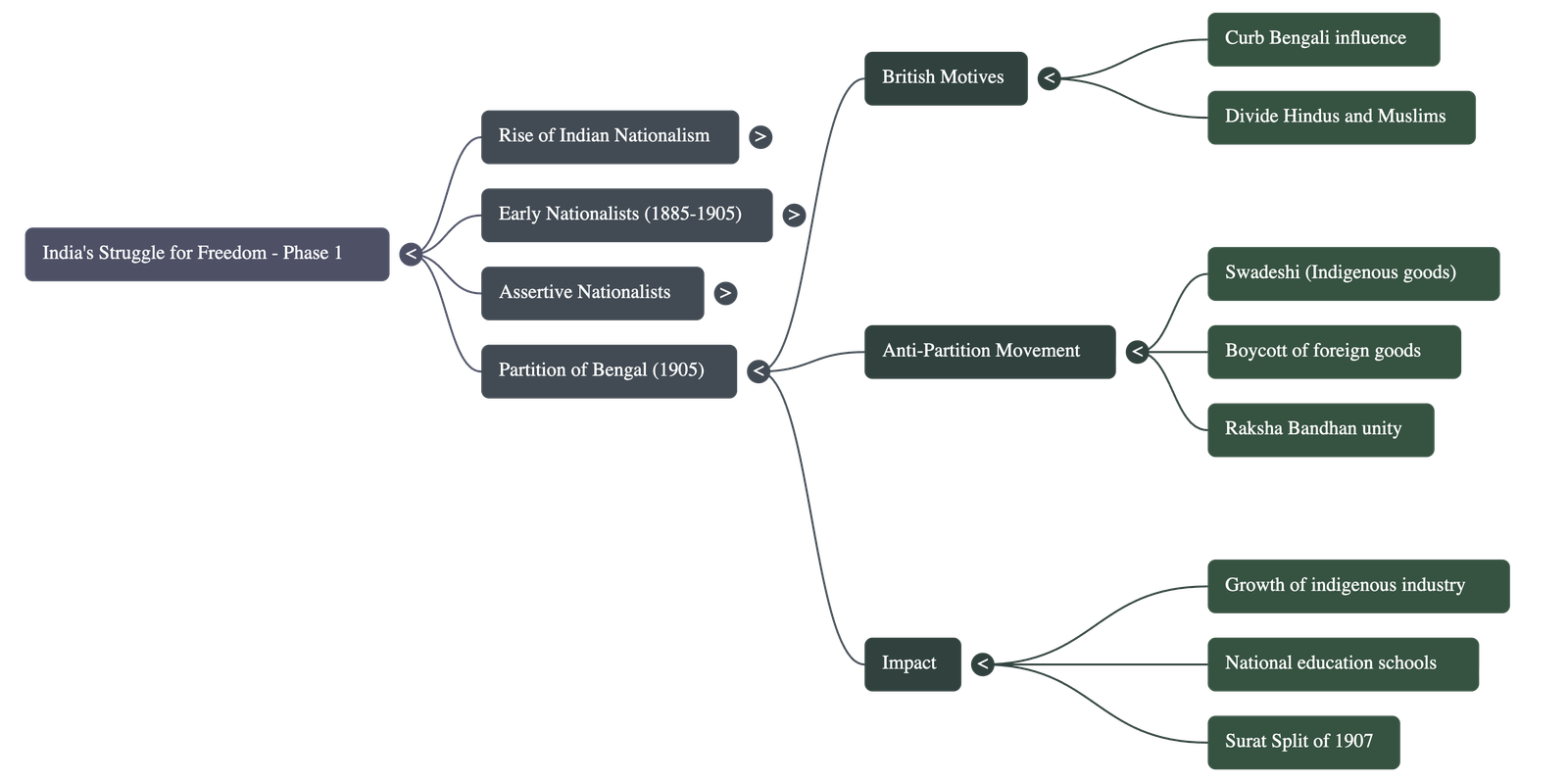
5. Partition of Bengal (1905)
- The Act: Lord Curzon divided Bengal into two provinces: 'Bengal' and 'Eastern Bengal and Assam'.
- Motive: While the British claimed it was for administrative necessity, the real motive was to curb the rising tide of nationalism and divide the population on religious grounds (Hindus and Muslims).
6. Anti-Partition and Swadeshi Movement
- Anti-Partition Protests: Observed as a day of national mourning with fasting, hartals, and the singing of 'Bande Mataram' and 'Amar Sonar Bangla'.
- Swadeshi and Boycott: 'Swadeshi' meant using indigenous goods to strengthen the nation, while 'Boycott' involved abstaining from British goods, rejecting government posts, and burning foreign cloth.
- Impact:
- Encouraged the establishment of indigenous industries (e.g., Tata Iron and Steel Company).
- Promoted national education through the setup of many secondary and primary national schools.
- Brought new classes, including women and students, into the political struggle.
7. The Surat Split (1907)
- The Conflict: Disagreements over the methods of agitation led to a clash at the Surat session of the Congress.
- Outcome: The Assertive Nationalists were expelled from the Congress, and the two groups did not reunite for nearly a decade (until 1916).
Analogy to Solidify Understanding: Think of the Indian National Movement in this phase as a growing business. The Early Nationalists were like the founding partners who tried to negotiate politely with a difficult landlord using formal letters (Petitions and Prayers). When those negotiations failed to yield results, the Assertive Nationalists emerged like a new management team that decided to stop paying rent and started a competing business (Swadeshi) to force the landlord to listen. The Surat Split was the moment these two teams had a falling out over which strategy was better, temporarily dividing the "company" until they realized they were stronger together.
Do checkout all questions & answers of this chapter.