Quick Navigation:
| | | | |
Quick Navigation:
| | | | |
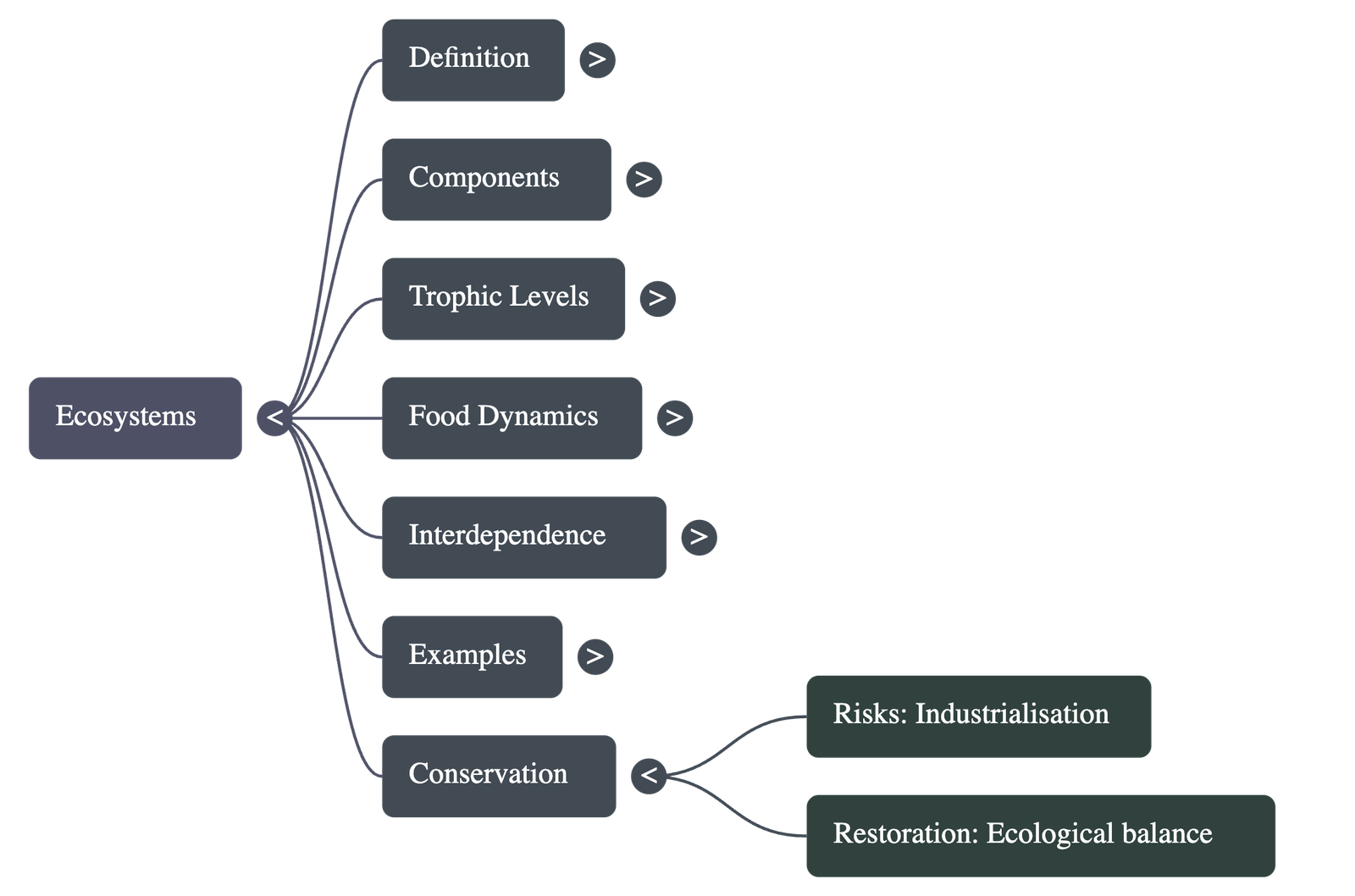
This is a point-wise summary of Chapter 4, "Ecosystems":
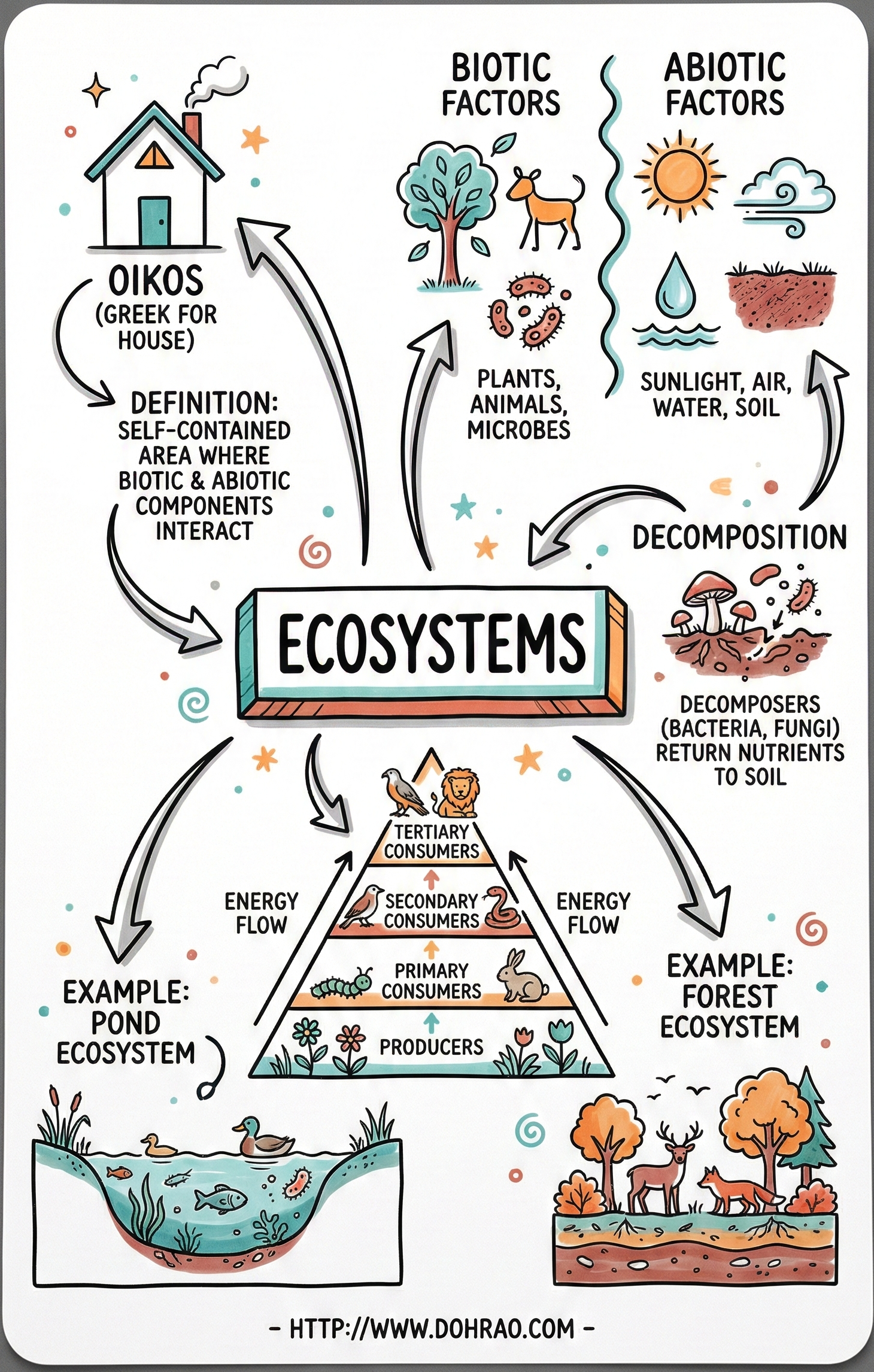
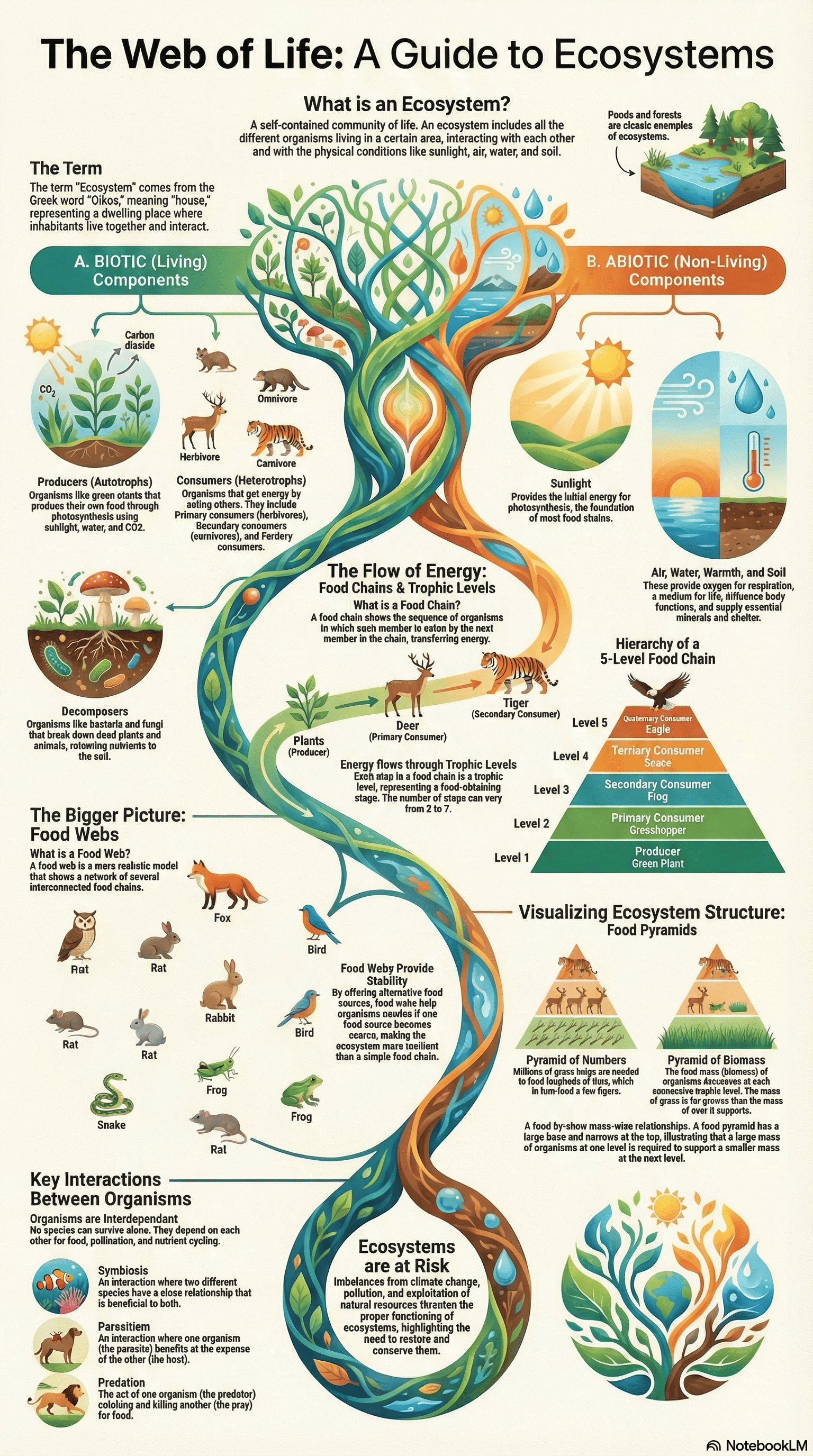
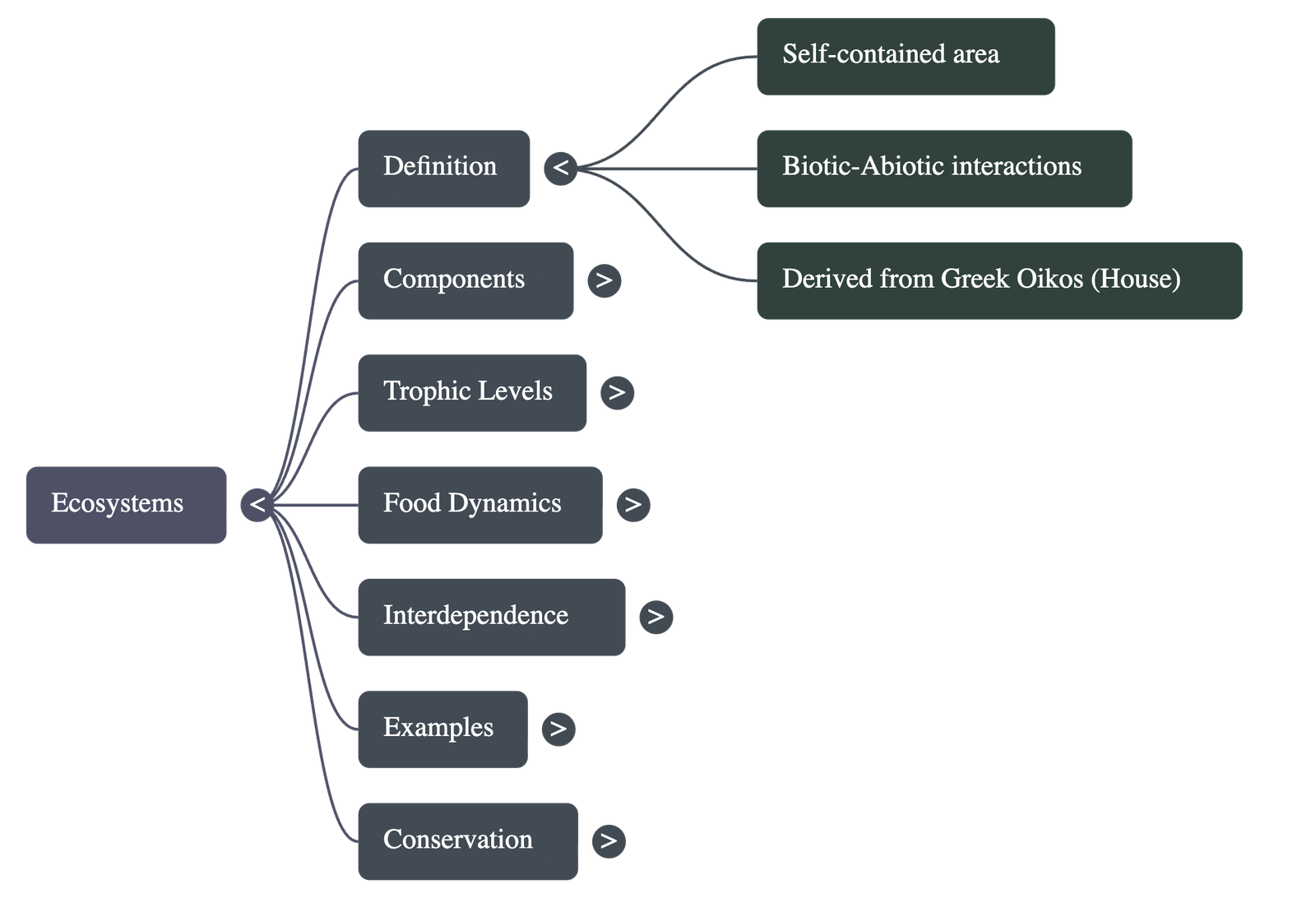
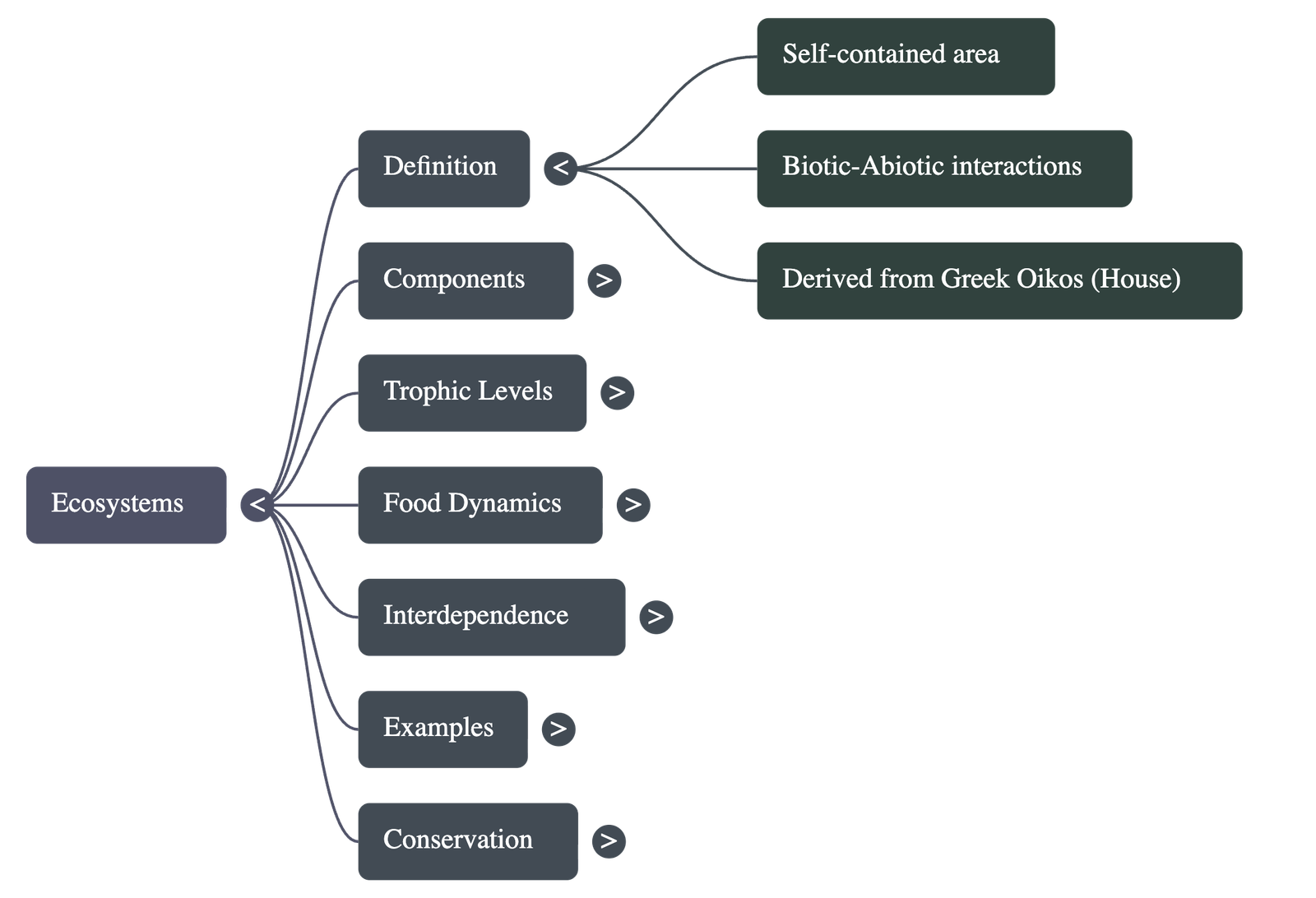
- Definition and Origin: An ecosystem is a self-contained area where living organisms interact with each other and their physical environment, such as sunlight, air, water, and soil. The term is derived from the Greek word Oikos, meaning "house" or dwelling place.
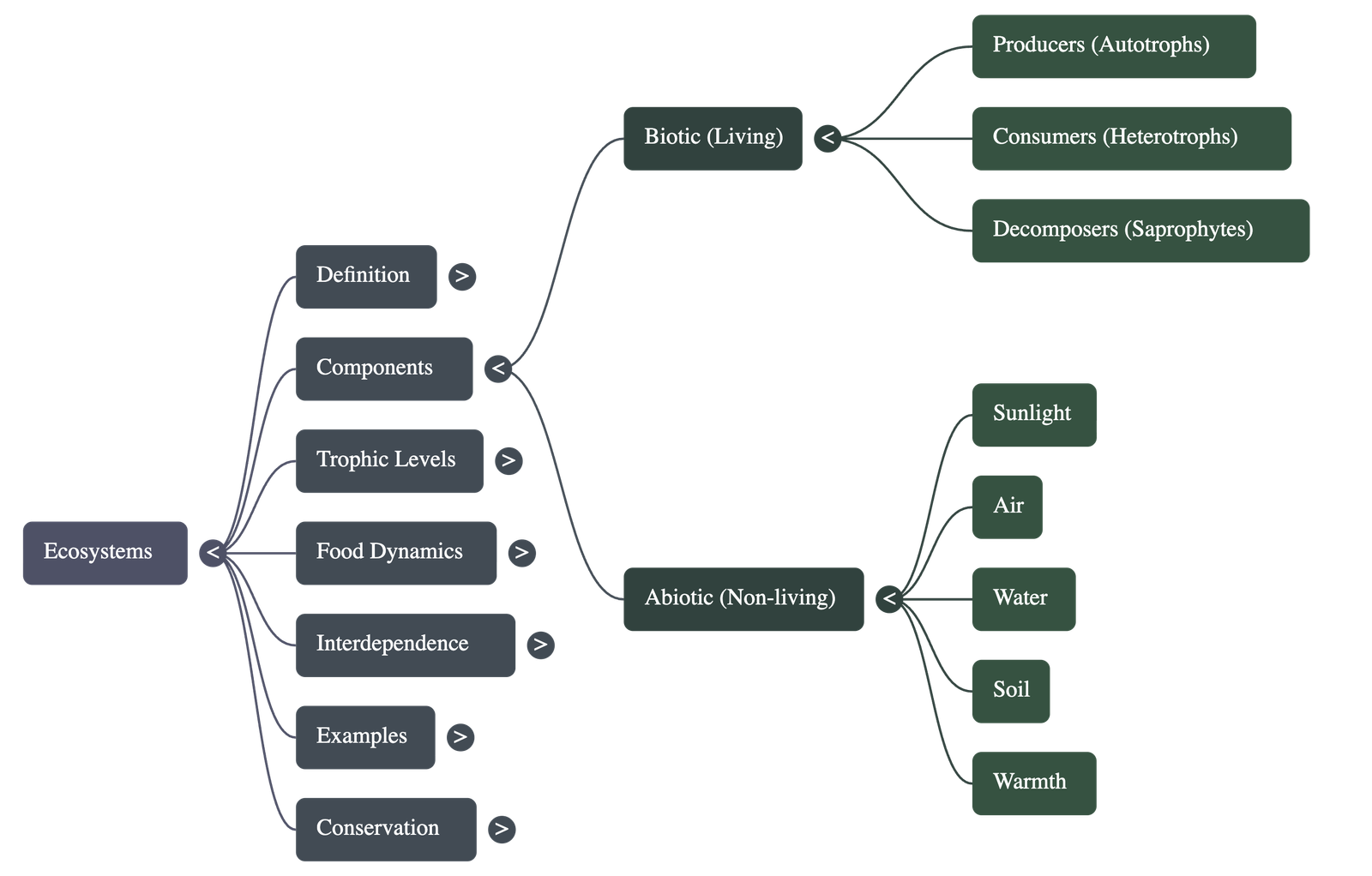
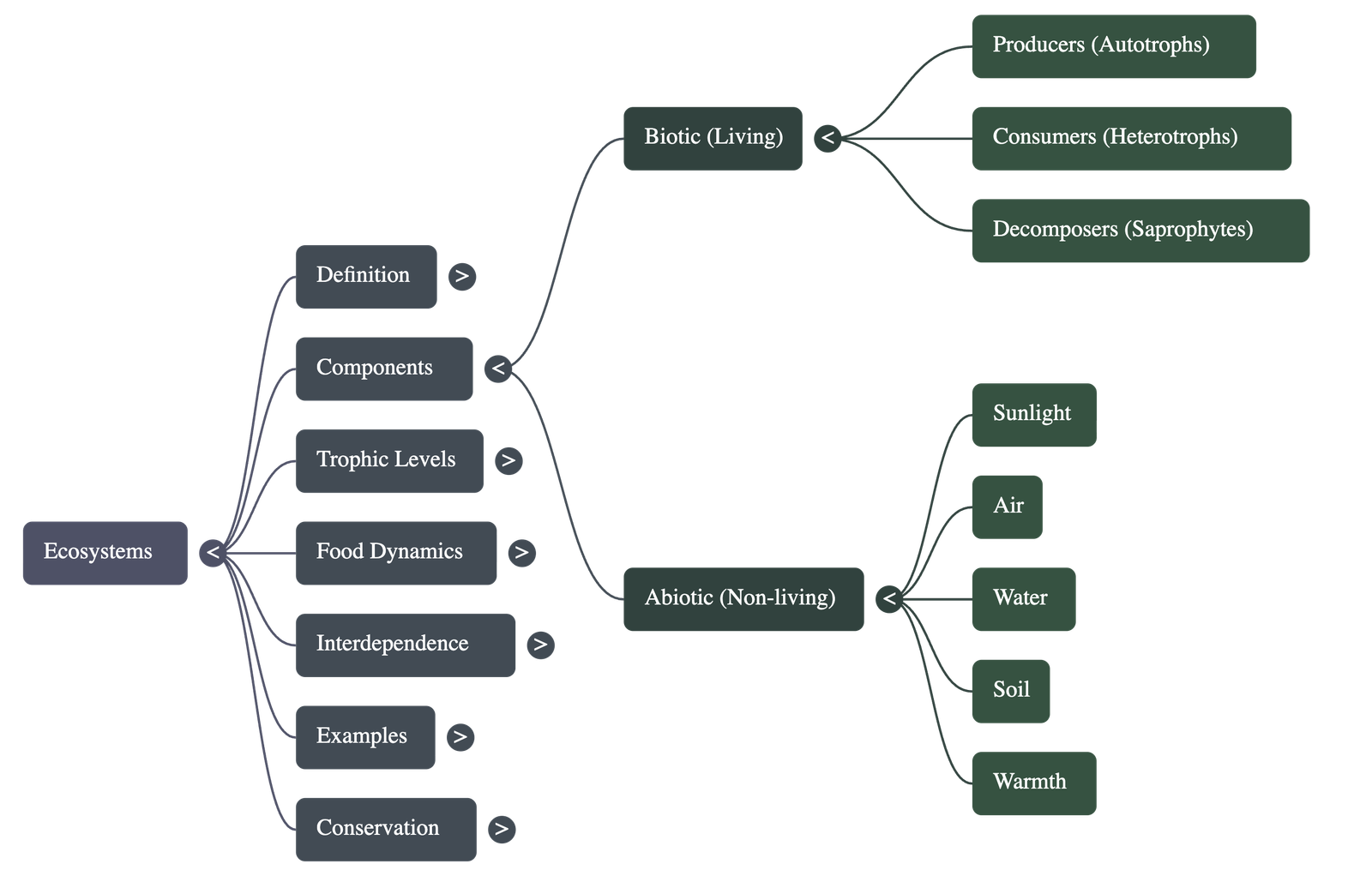
- Biotic and Abiotic Components: Ecosystems consist of two main categories: Biotic components (living things like plants, animals, and microbes) and Abiotic components (non-living factors like sunlight, air, water, warmth, and soil).
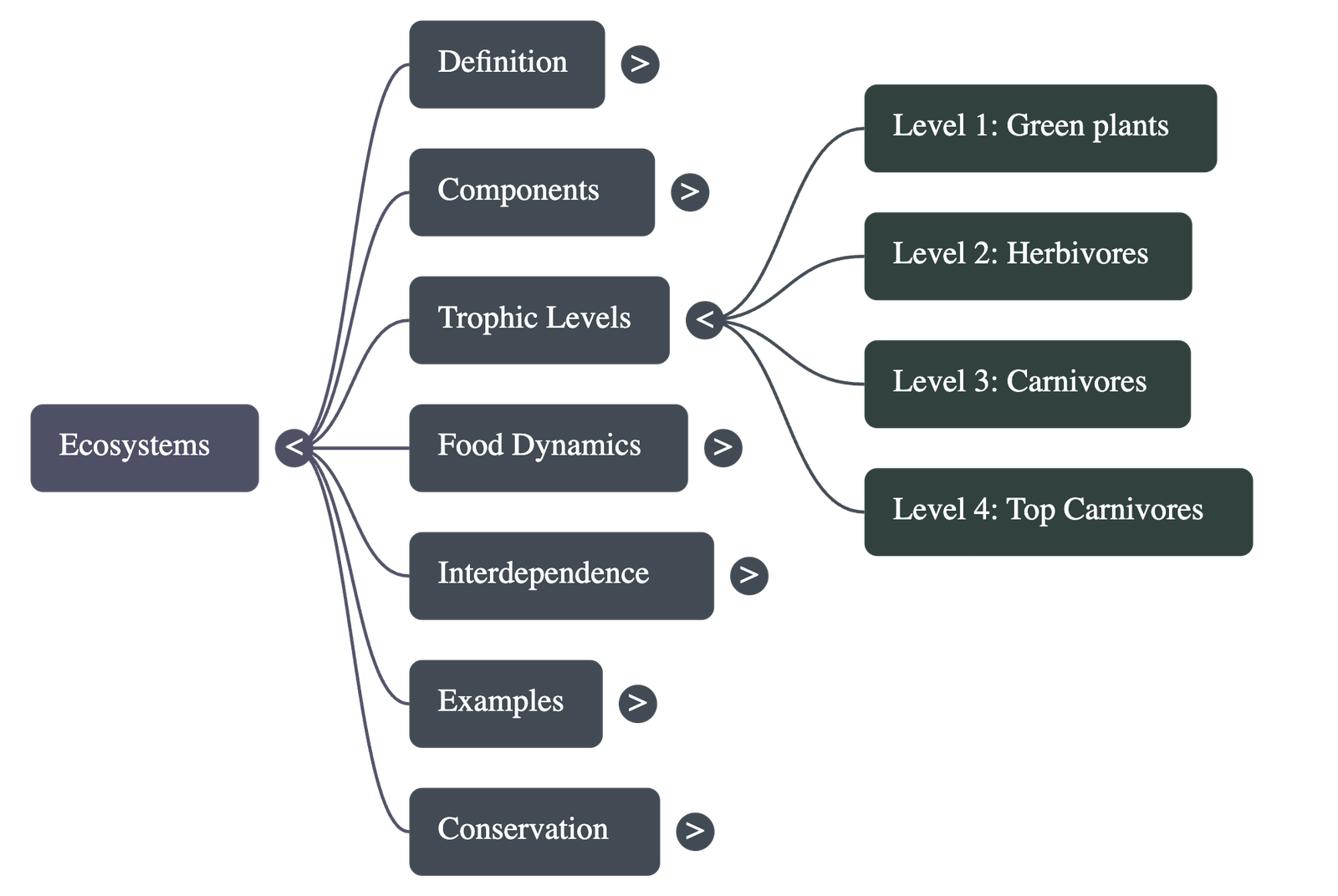
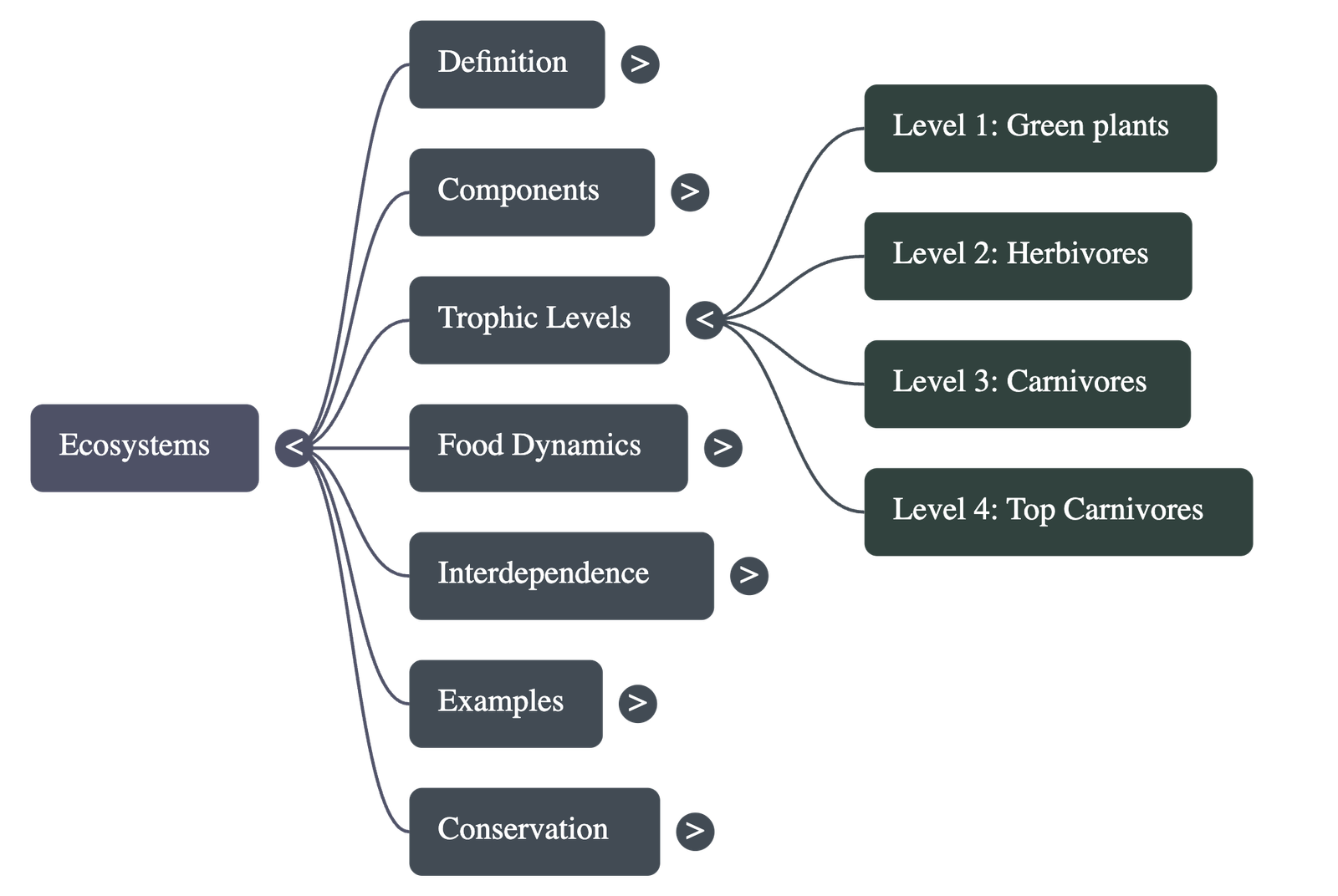
- Trophic Levels: Organisms are organized into levels based on how they obtain food:
- Trophic Level 1 (Producers/Autotrophs): Green plants that produce their own food through photosynthesis.
- Trophic Level 2 (Primary Consumers): Herbivores that eat plants directly, such as rabbits, grasshoppers, and deers.
- Trophic Level 3 & 4 (Secondary/Tertiary Consumers): Carnivores that eat other animals, such as frogs, snakes, and tigers.
- Decomposers and Detritivores: Organisms like bacteria, fungi, and vultures that break down dead organic matter, returning nutrients to the soil.
- Flora and Fauna: Flora refers to the naturally occurring plants in an area, while fauna refers to the animals. These vary significantly by region; for example, the Gir Forests are known for the Lion, while Jaladpara Sanctuary is known for the Rhinoceros.
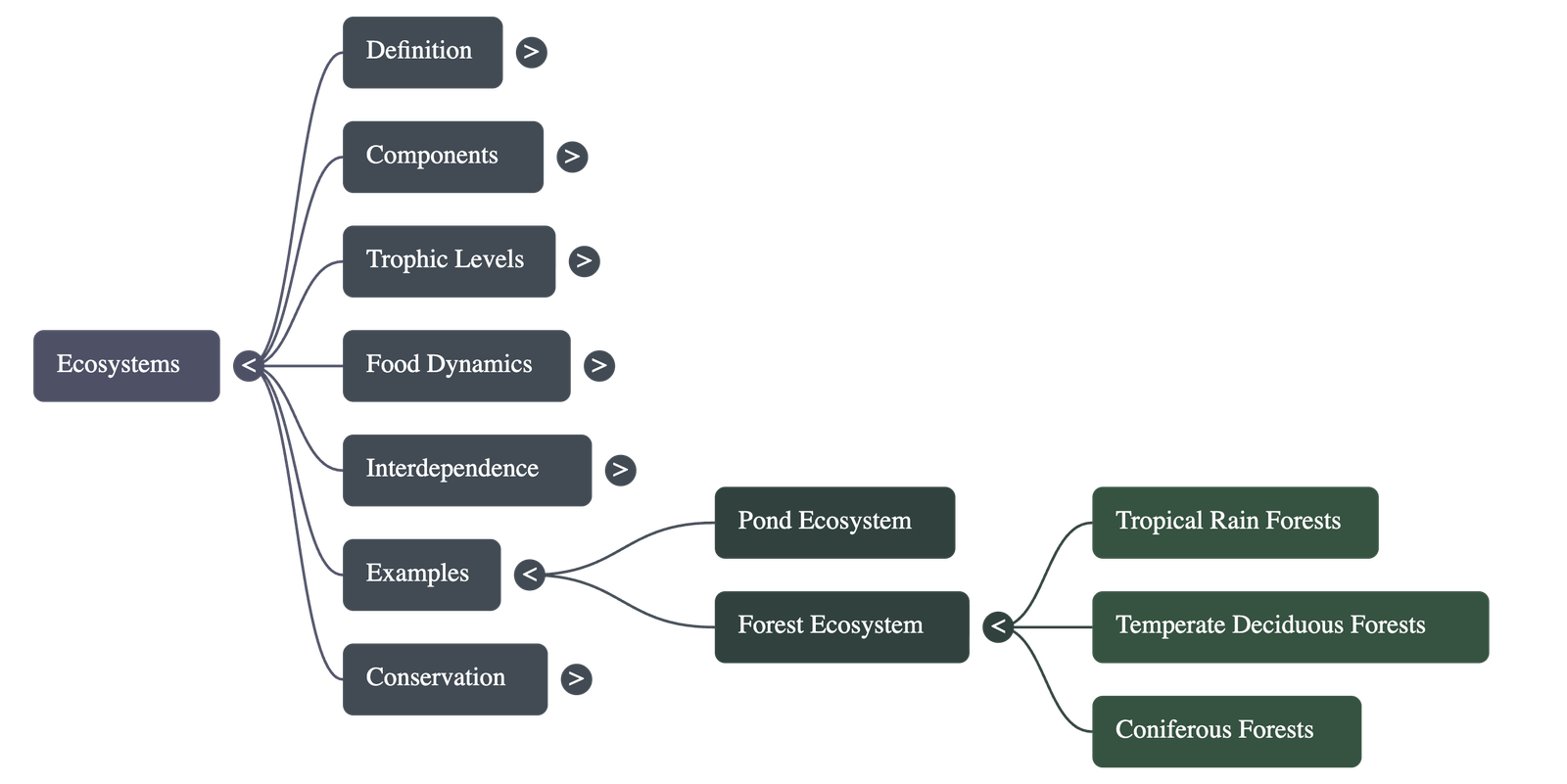
- Forest Ecosystem Types: The sources identify three specific forest types:
- Tropical rain forests: Characterized by evergreen trees and high biodiversity.
- Temperate Deciduous forests: Found in regions like North China and Japan, featuring trees like pine and oak.
- Coniferous forests: Found at high altitudes, featuring fir and pine trees.
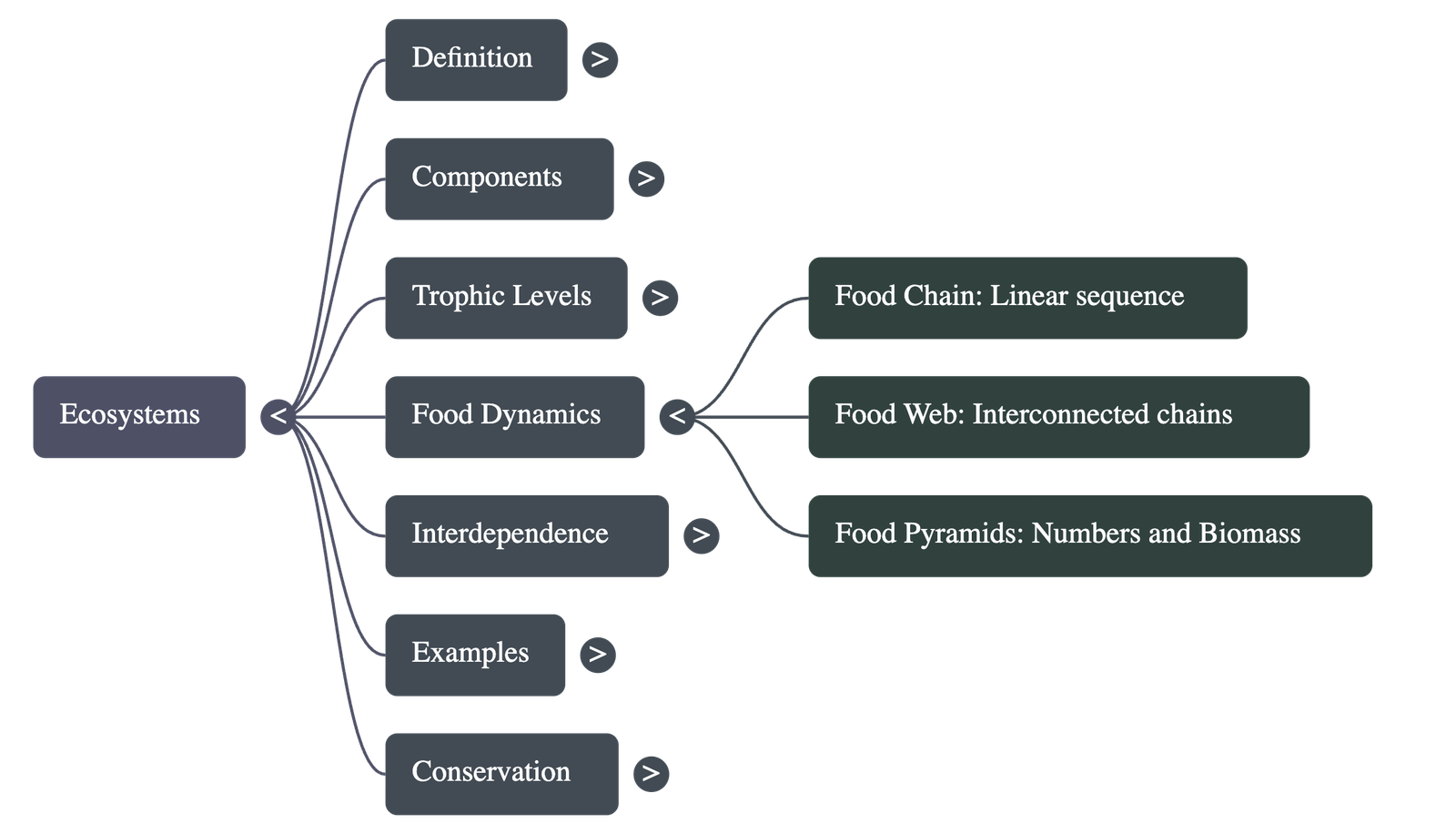
- Food Chains and Food Webs: A food chain is a linear sequence of organisms where each eats the lower member and is eaten by the higher member. A food web is a complex network of interconnected food chains that provides stability to an ecosystem by offering alternative food sources.
- Food Pyramids: These represent the relationship between different trophic levels in terms of the number of individuals (Pyramid of Numbers) or the total mass (Pyramid of Biomass), with the largest base always being the producers.
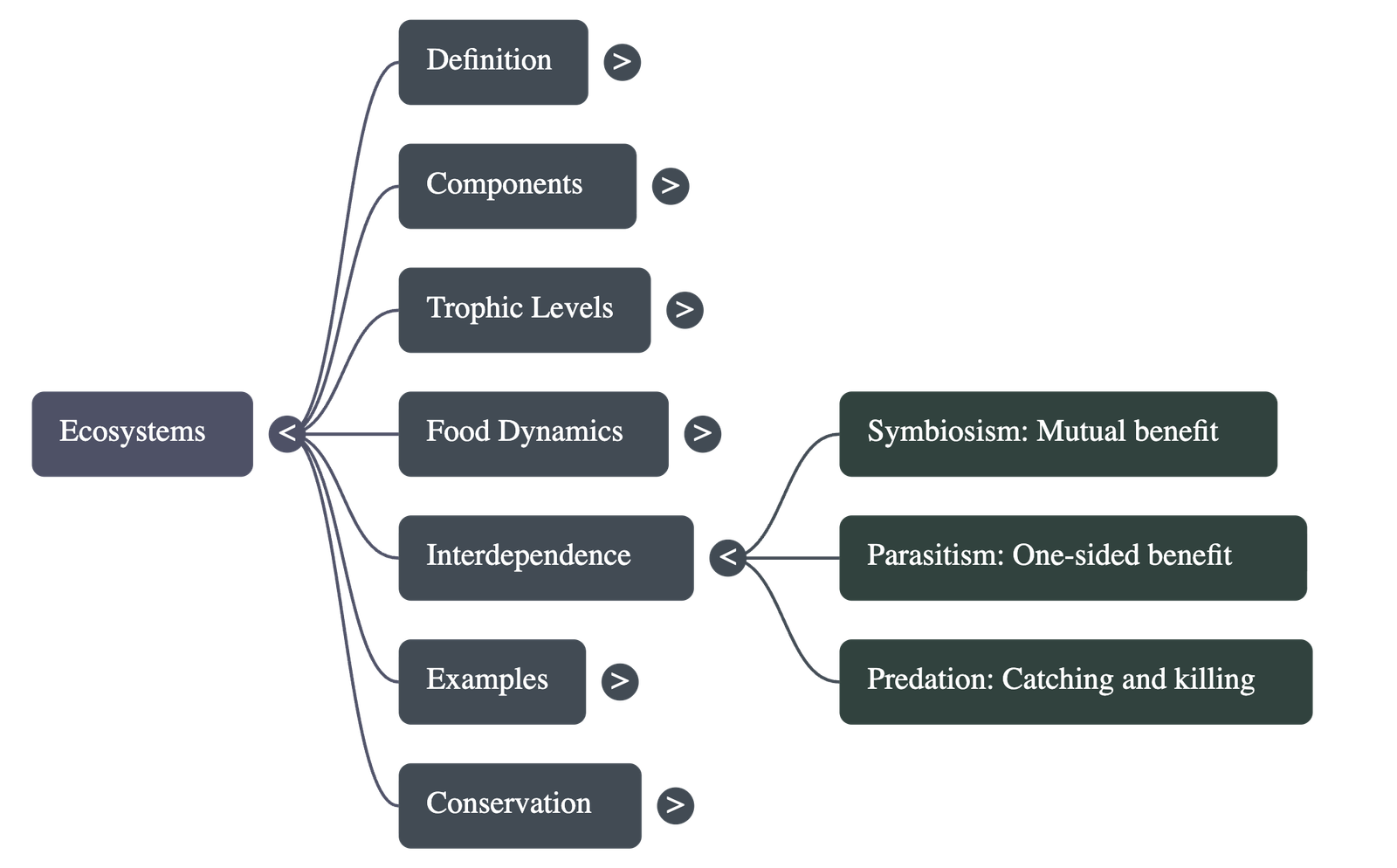
- Interdependence between Organisms: No species can survive alone; they interact through:
- Symbiosis: A relationship where both species benefit (e.g., lichens).
- Parasitism: One species benefits (parasite) while the other is harmed (host).
- Predation: A predator catches and kills another organism (prey) for food.
- Ecosystem Risks and Conservation: Human activities like industrialization and exploitation of natural resources have led to ecological degradation, climate change, and food shortages. Restoring the finer balance between organisms and their environment is essential for a healthy future.
Analogy for Understanding: Think of an ecosystem like a busy neighborhood. The "house" (Abiotic factors) provides the structure, the "grocery stores" (Producers) supply the food, and the "residents" (Consumers) interact in various ways to keep the community running. If the grocery stores close or the utilities fail, the entire neighborhood struggles to survive.
Do checkout all questions & answers of this chapter.
Quick Navigation:
| | | | |
1 / 1
Quick Navigation:
| | | | |
Quick Navigation:
| | | | |