Quick Navigation:
| | | | |
Quick Navigation:
| | | | |
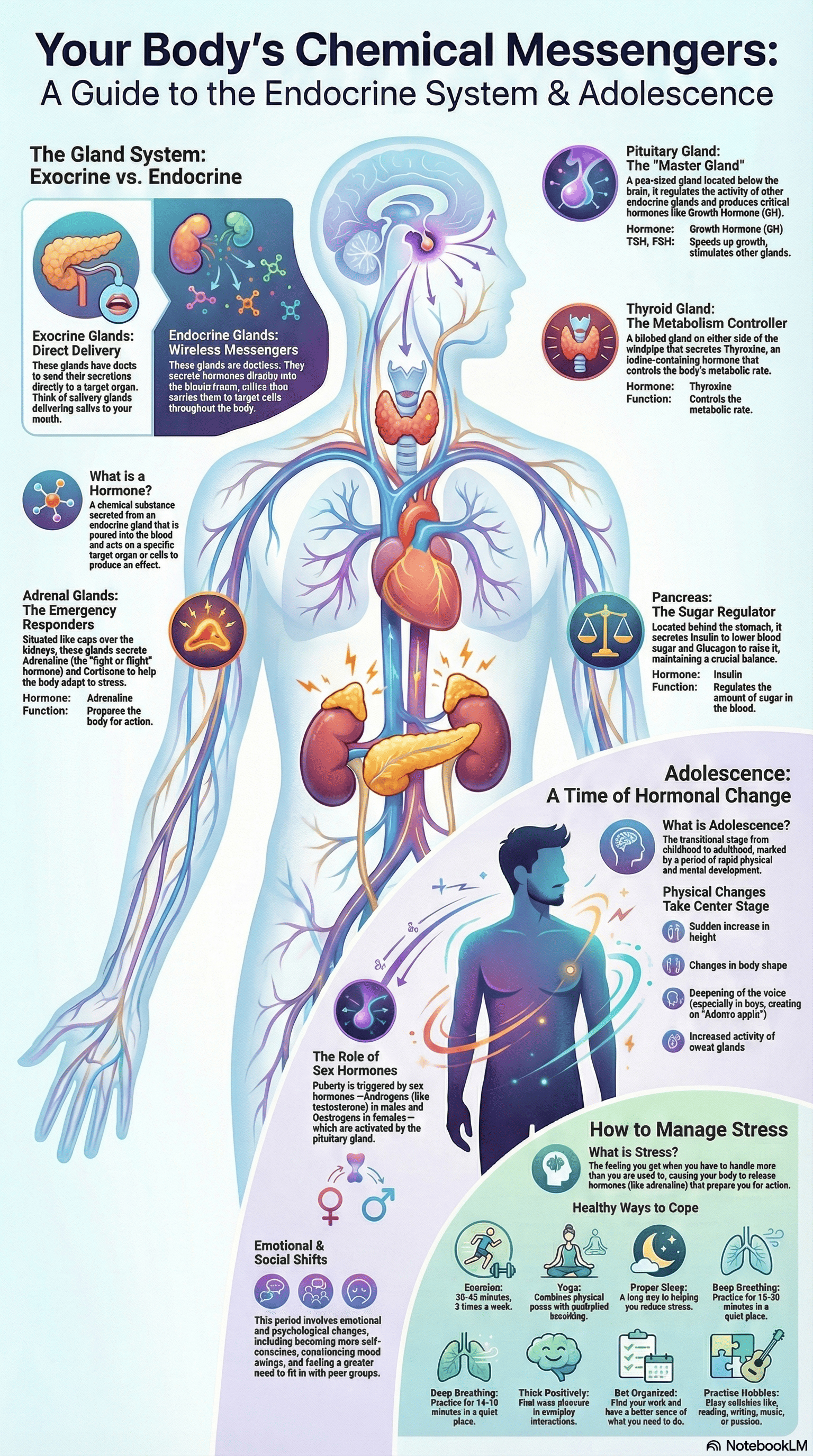
This is a point-wise summary of "Endocrine System and Adolescence":
Types of Glands and Hormones
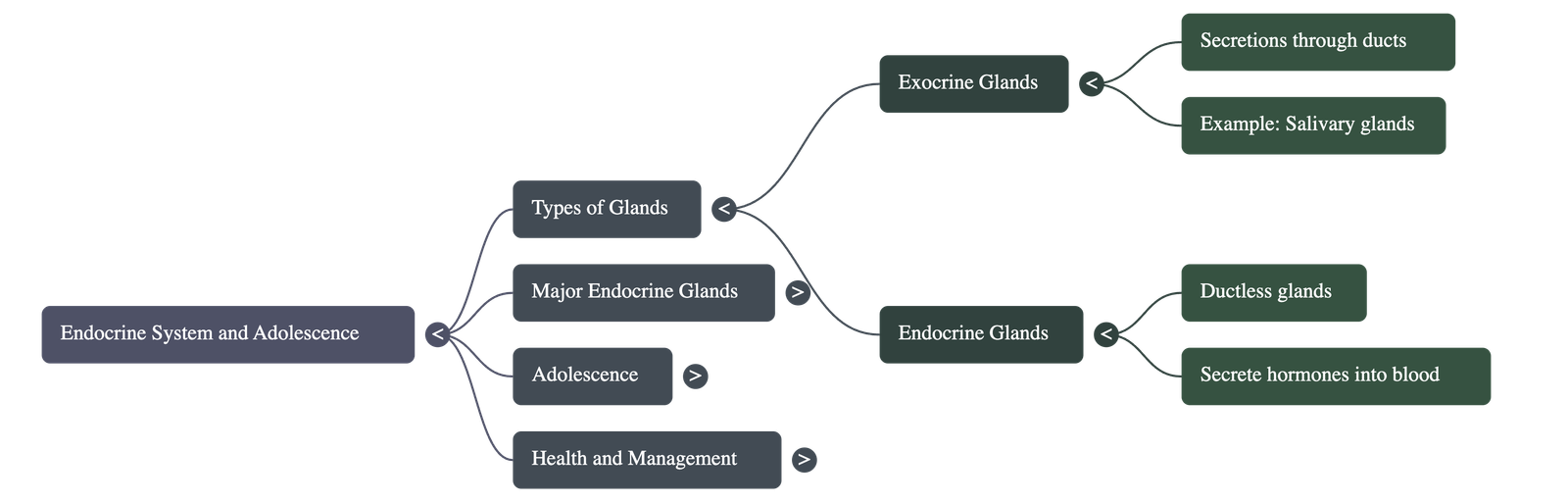
- Two types of glands: The body contains exocrine glands, which send secretions through ducts (like salivary glands), and endocrine glands, which are ductless and pour secretions directly into the bloodstream.
- Hormones: These are chemical substances secreted in small quantities by endocrine glands that act on specific target organs or cells.
Major Endocrine Glands and Functions
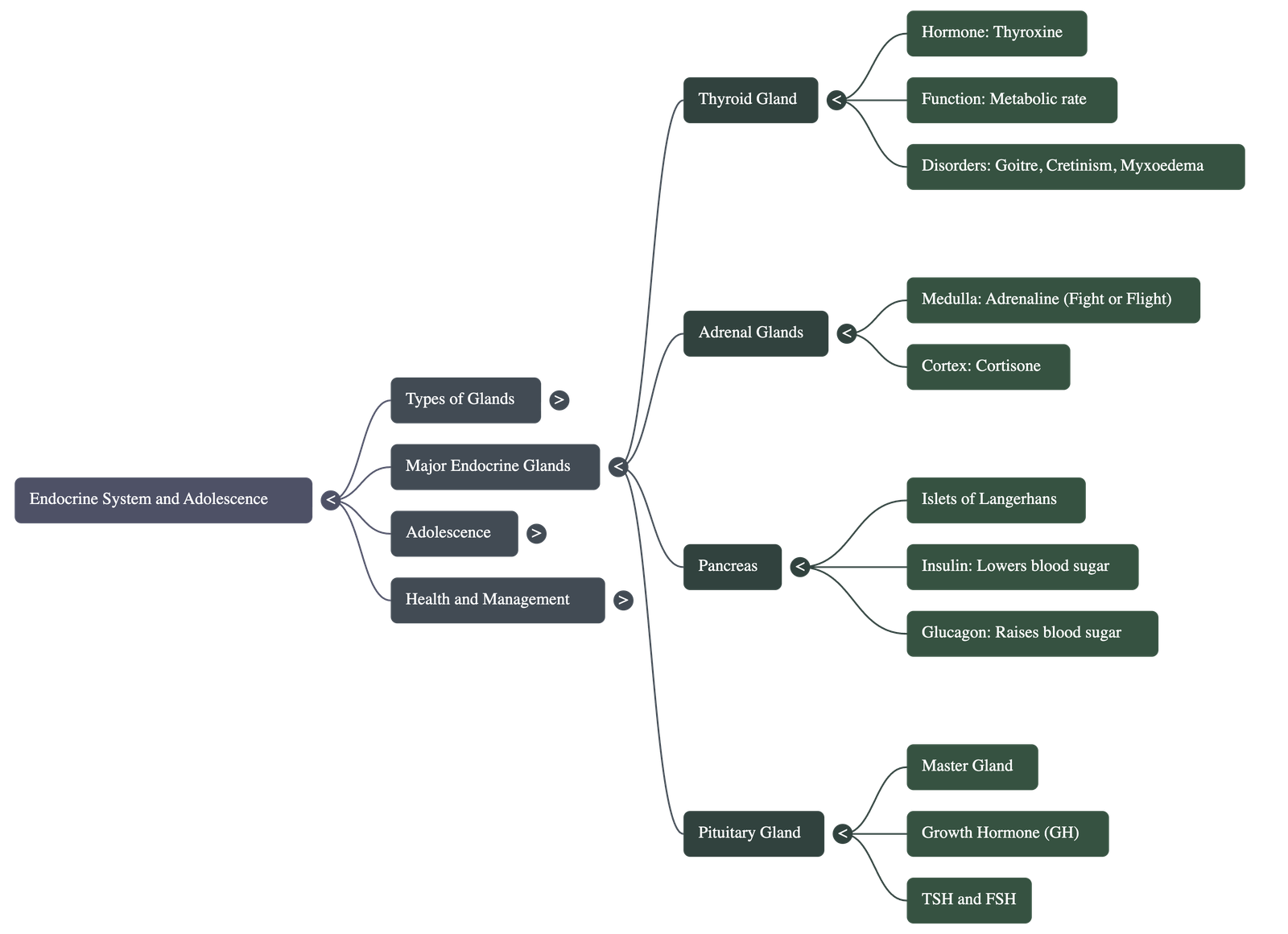
- Thyroid Gland: Located near the windpipe, it secretes thyroxine, which regulates the body's metabolic rate.
- Deficiencies: Can lead to Simple goitre (neck swelling due to lack of iodine), Cretinism (mental/physical retardation in children), or Myxoedema (sluggishness in adults).
- Adrenal Glands: Located atop the kidneys, consisting of a medulla and a cortex.
- The medulla secretes adrenaline, the "fight or flight" hormone, which prepares the body for emergencies by increasing heartbeat and blood pressure.
- The cortex secretes cortisone, which influences the metabolism of carbohydrates, fats, and proteins.
- Pancreas: Contains "Islets of Langerhans" that secrete insulin and glucagon.
- Insulin lowers blood glucose levels; a deficiency causes diabetes mellitus.
- Glucagon raises blood sugar by breaking down glycogen in the liver.
- Pituitary Gland: Known as the "master gland," it is located below the brain and regulates other endocrine glands. It secretes Growth Hormone (GH), which controls growth, and others like TSH (thyroid-stimulating) and FSH (gonad-stimulating).
Adolescence and Physical Changes
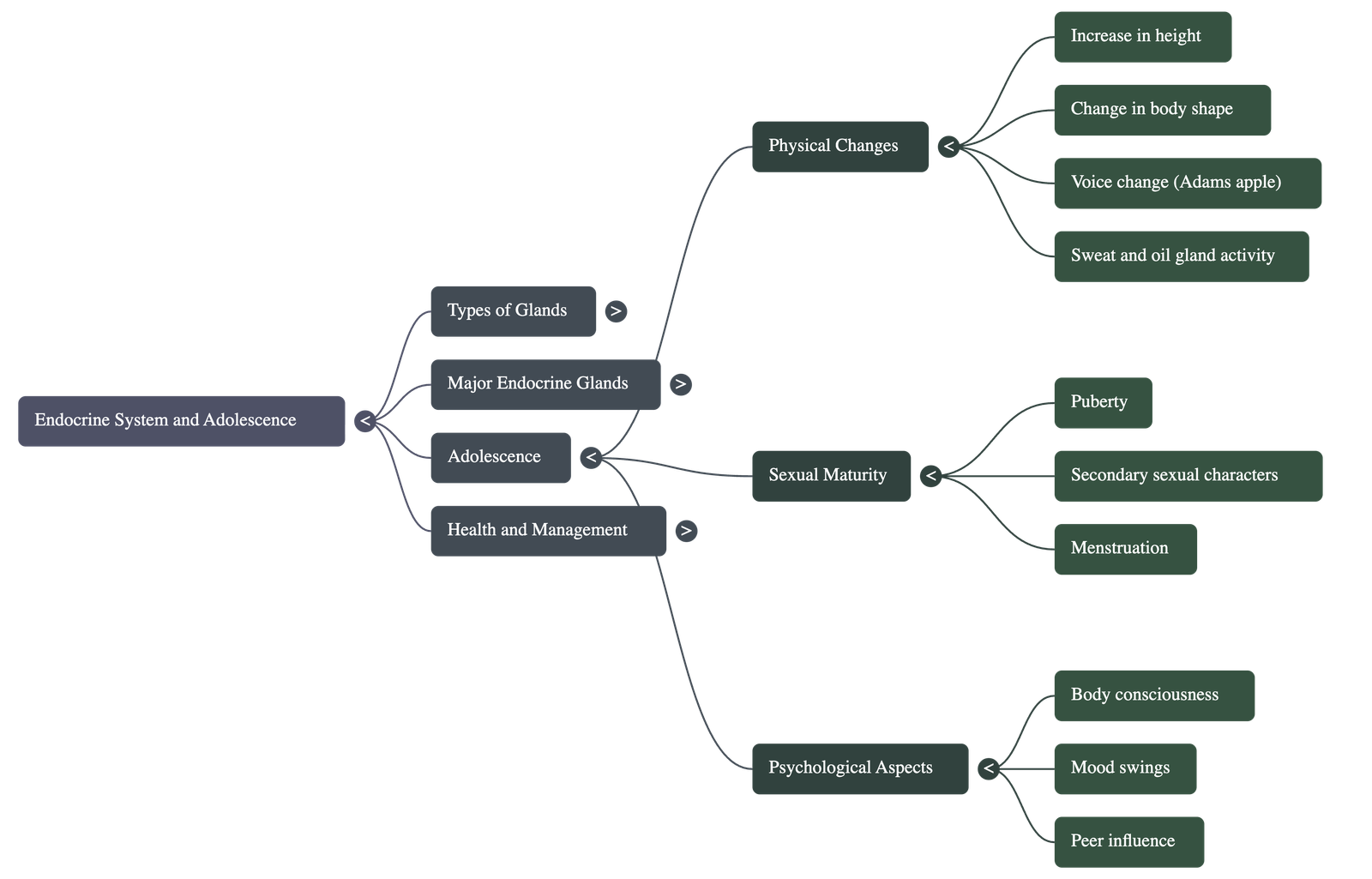
- Adolescence: A transitional stage of physical and mental development between childhood and adulthood.
- Physical Changes: These include a sudden increase in height, changes in body shape (broader shoulders in boys, wider hips in girls), and voice changes (development of the Adam's apple in boys).
- Increased Activity: Sweat and sebaceous (oil) glands become more active, often leading to acne and pimples.
Sexual Development and Puberty
- Puberty: The stage where a person becomes capable of reproduction.
- Sex Hormones: Triggered by the pituitary gland, the testes produce testosterone (androgens) and the ovaries produce oestrogens.
- Secondary Sexual Characteristics: These include hair growth on the face and body for boys and breast development in girls.
- Reproductive Processes: Females begin menstruation (periods), and males begin producing sperm.
Emotional Changes and Stress Management
- Emotional Spurt: Adolescents may experience mood swings, self-consciousness regarding their bodies, and increased reliance on peer groups.
- Stress: Defined as the body's response to handling more pressure than one is used to, resulting in physical and psychological symptoms.
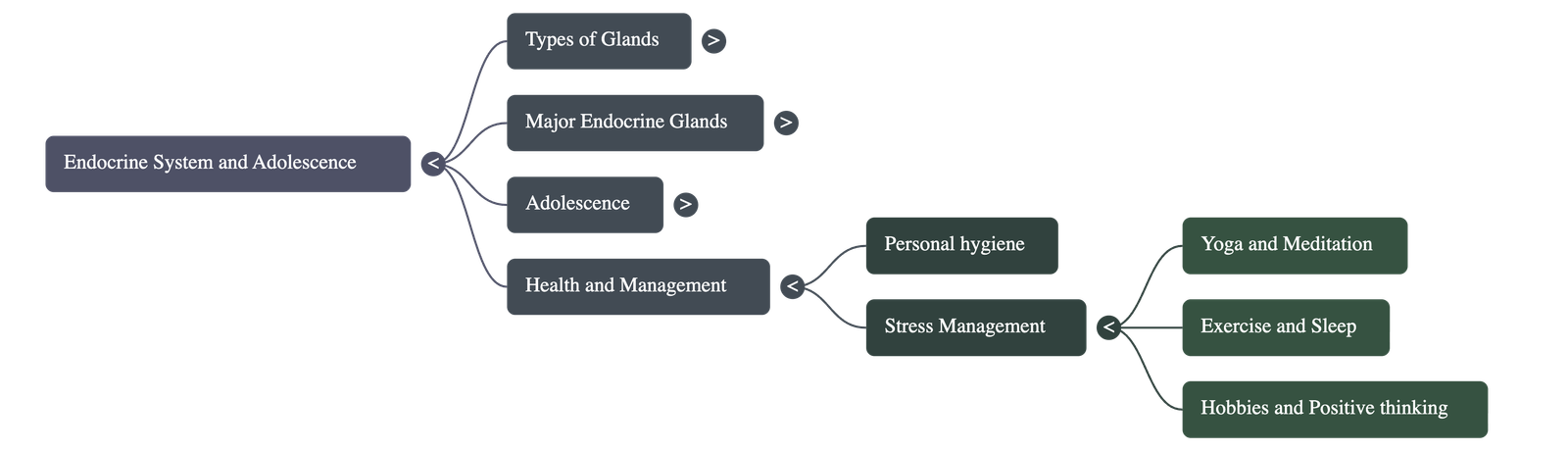
- Stress Management: Techniques to tackle stress include yoga, regular exercise, maintaining a proper sleep schedule, meditation, and practicing hobbies.
Analogy for Understanding: Think of the endocrine system as a highly coordinated postal service. The endocrine glands are the post offices that create "mail" (hormones). Instead of using trucks (ducts), they drop this mail directly into a river (the bloodstream) that flows throughout the entire city (the body). Each letter is addressed to a specific house (target organ), telling that house exactly how to behave—whether to speed up its work or change its structure.
Do checkout all questions & answers of this chapter.
Quick Navigation:
| | | | |
1 / 1
Quick Navigation:
| | | | |