Quick Navigation:
| | | | |
Quick Navigation:
| | | | |
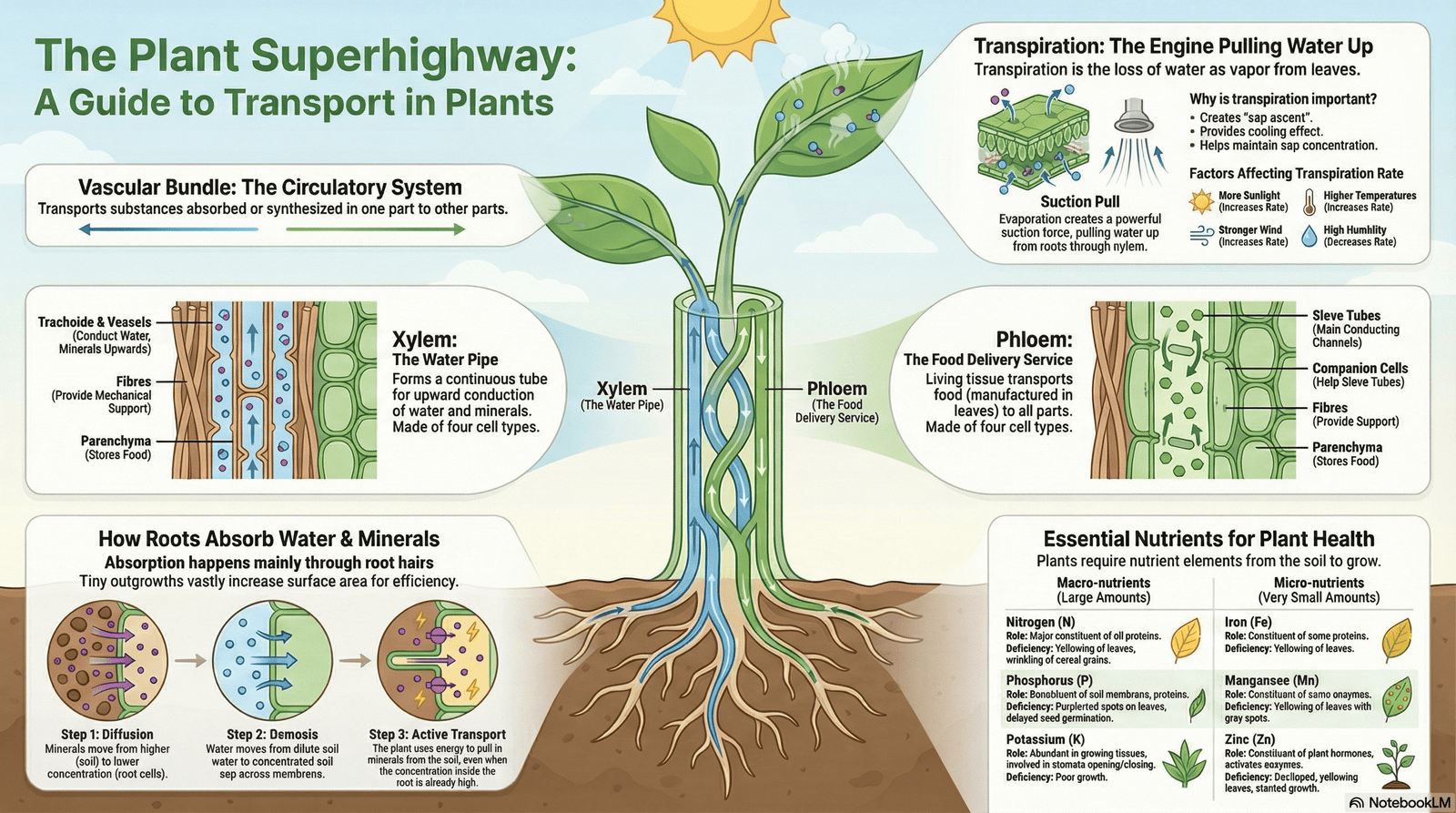
"Transport in Plants," provides a comprehensive look at how water, minerals, and food are moved through a plant's system. Below is a point-wise summary of the key concepts.
The Conducting System
- Transportation Definition: It is the process where substances absorbed or synthesized in one part of a plant are moved to other parts.
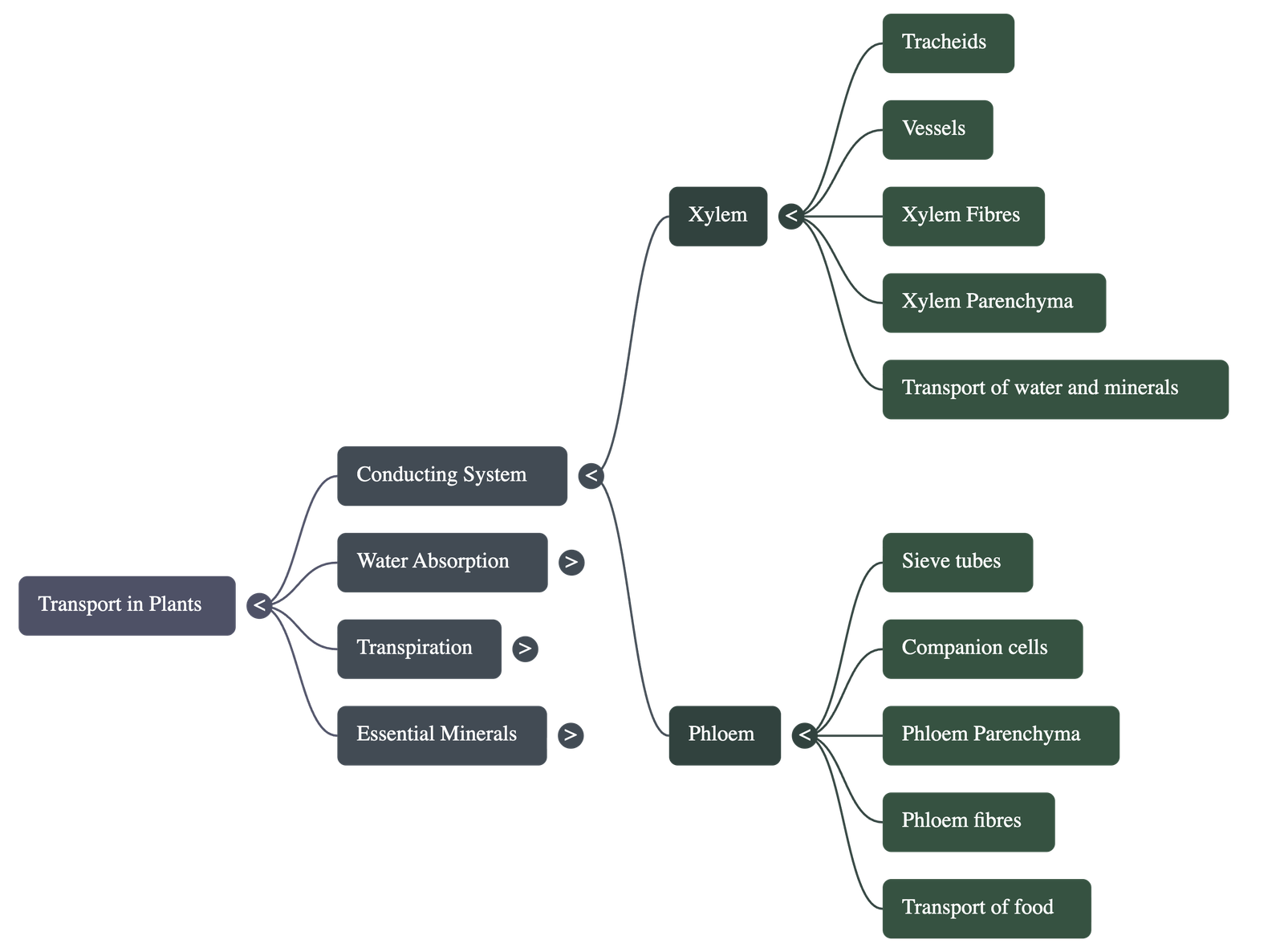
- Vascular Bundles: The conducting system consists of two main tissues: xylem and phloem.
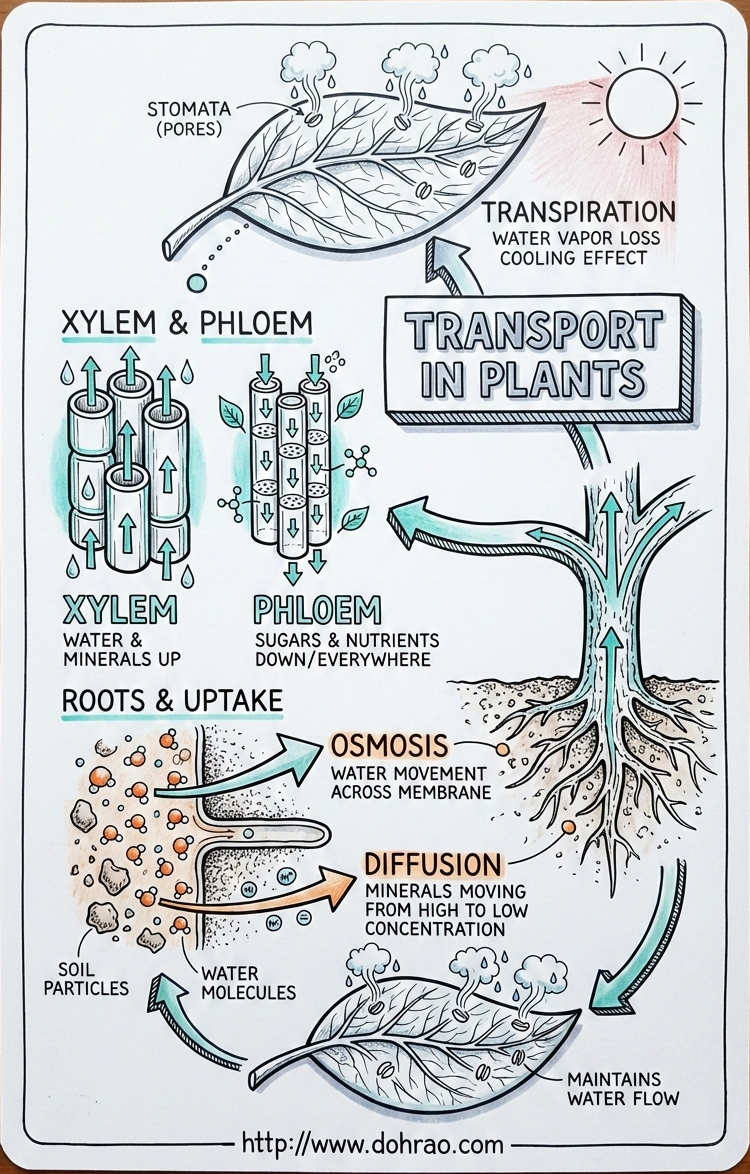
- Xylem: This tissue is responsible for the upward conduction of water and dissolved minerals from the roots to the rest of the plant. It consists of four cell types: tracheids (dead cells for conduction and support), vessels (long tube-like channels), fibres (mechanical support), and parenchyma (living cells that store food).
- Phloem: This tissue specializes in transporting organic food (sucrose solution) manufactured in the leaves to all parts of the plant, including the roots. This process is known as translocation. Phloem consists of sieve tubes, companion cells, parenchyma, and fibres.
Mechanisms of Absorption and Movement
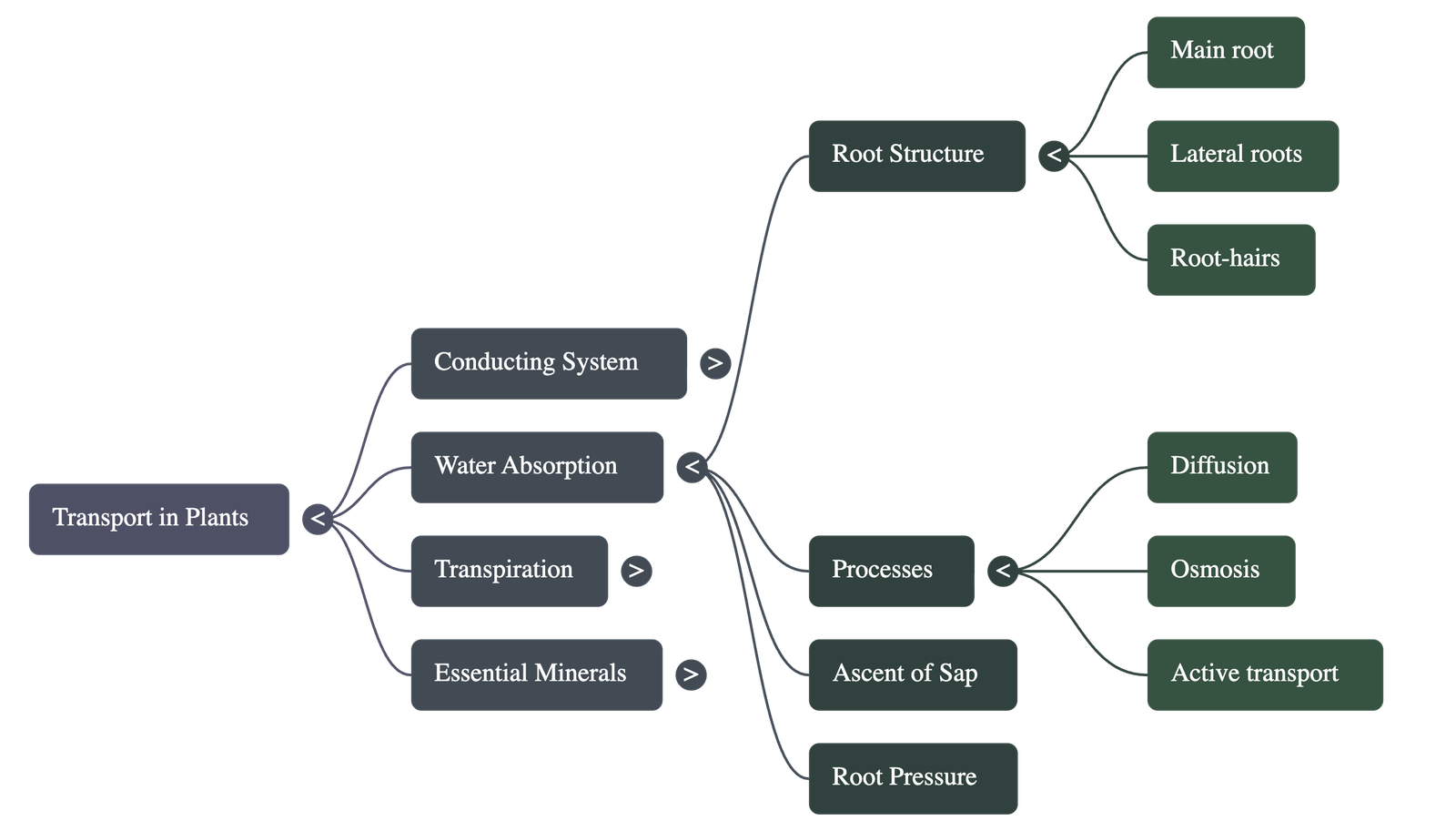
- Root-hairs: These are fine outgrowths of the root's epidermal cells that provide a large surface area for absorption. They contain cell sap with a higher concentration of solutes than the surrounding soil water.
- Diffusion: The movement of molecules (gas, liquid, or solid) from a higher concentration to a lower concentration. Soil water and minerals move into the root cell wall via this process.
- Osmosis: The movement of water molecules from a region of higher concentration to lower concentration across a semi-permeable membrane. Water enters root-hair cells through osmosis.
- Active Transport: This is the movement of molecules (specifically minerals) from a lower concentration to a higher concentration using energy.
- Ascent of Sap: The upward movement of water and minerals (sap) is facilitated by root pressure (created by the continuous inflow of water) and transpiration pull.
Transpiration
- Definition: Transpiration is the loss of water in the form of water vapour from the aerial parts (mostly leaves) of a plant.
- Factors Affecting Rate:
- Sunlight: Increases the rate as stomata open during the day.
- Temperature: Faster on hot days compared to cold ones.
- Wind: Increases evaporation as air moves faster.
- Humidity: Reduces the rate because moist air cannot hold more water vapour.
- Importance: It provides a cooling effect for the plant and creates a suction force (transpiration pull) that helps water reach the top of tall trees.
Importance of Minerals
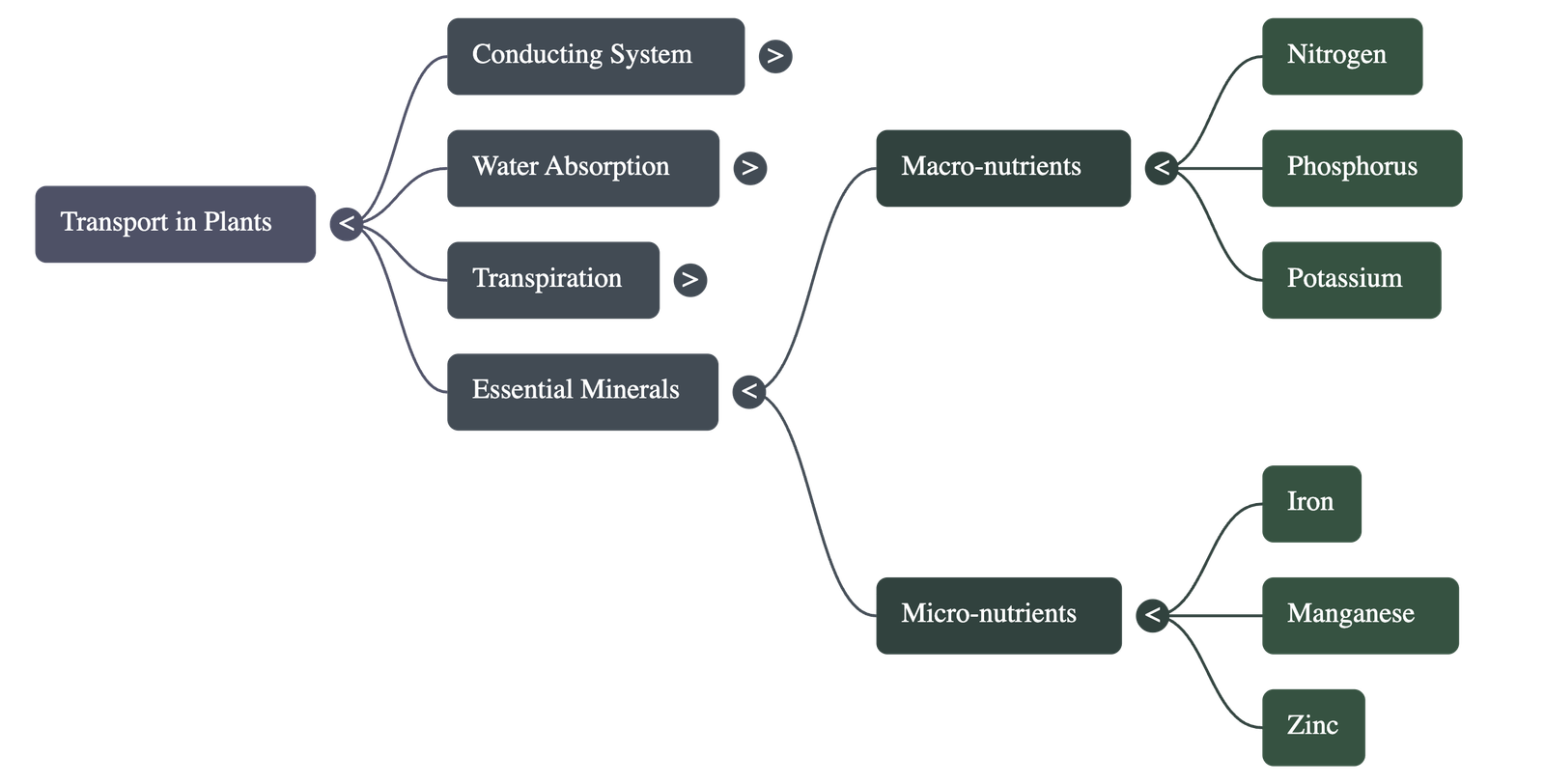
- Nutrient Categories: Minerals are divided into macro-nutrients (needed in large amounts like Nitrogen, Phosphorus, and Potassium) and micro-nutrients (needed in small amounts like Iron, Manganese, and Zinc).
- Deficiency Symptoms: Lack of essential minerals leads to diseases such as the yellowing of leaves (due to nitrogen or iron deficiency), purple spots (phosphorus deficiency), or stunted growth (zinc deficiency).
Analogy to Solidify Understanding To understand the plant's transport system, think of a skyscraper's plumbing and delivery system: The xylem is like the main water pipes pumping water from the basement (roots) to the top floors, while the phloem is like the service elevator carrying food from the cafeteria (leaves) to workers on every floor. Transpiration acts like a powerful vacuum at the very top of the building, pulling the water up through the pipes to ensure it reaches even the highest offices.
Do checkout all questions & answers of this chapter.
Quick Navigation:
| | | | |
1 / 1
Quick Navigation:
| | | | |