Quick Navigation:
| | | | |
Quick Navigation:
| | | | |
This is a point-wise summary of the chapter on human reproduction:
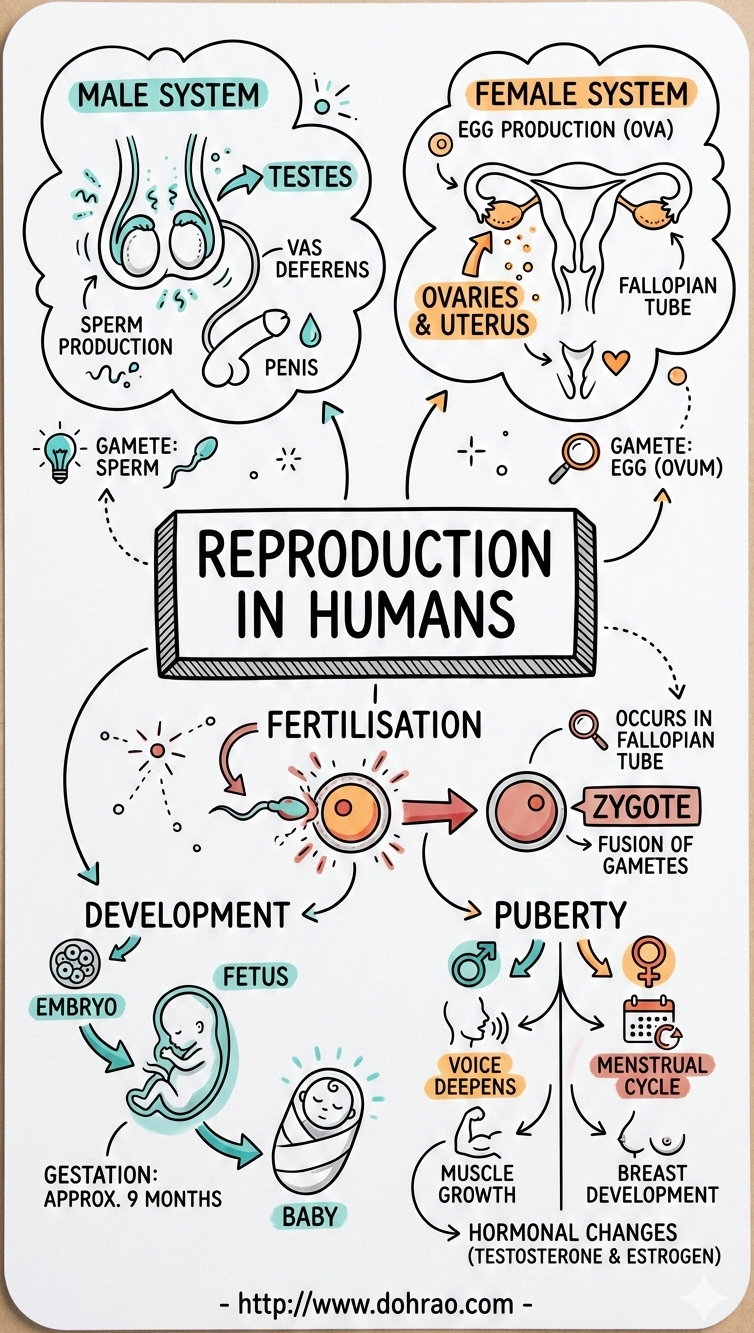
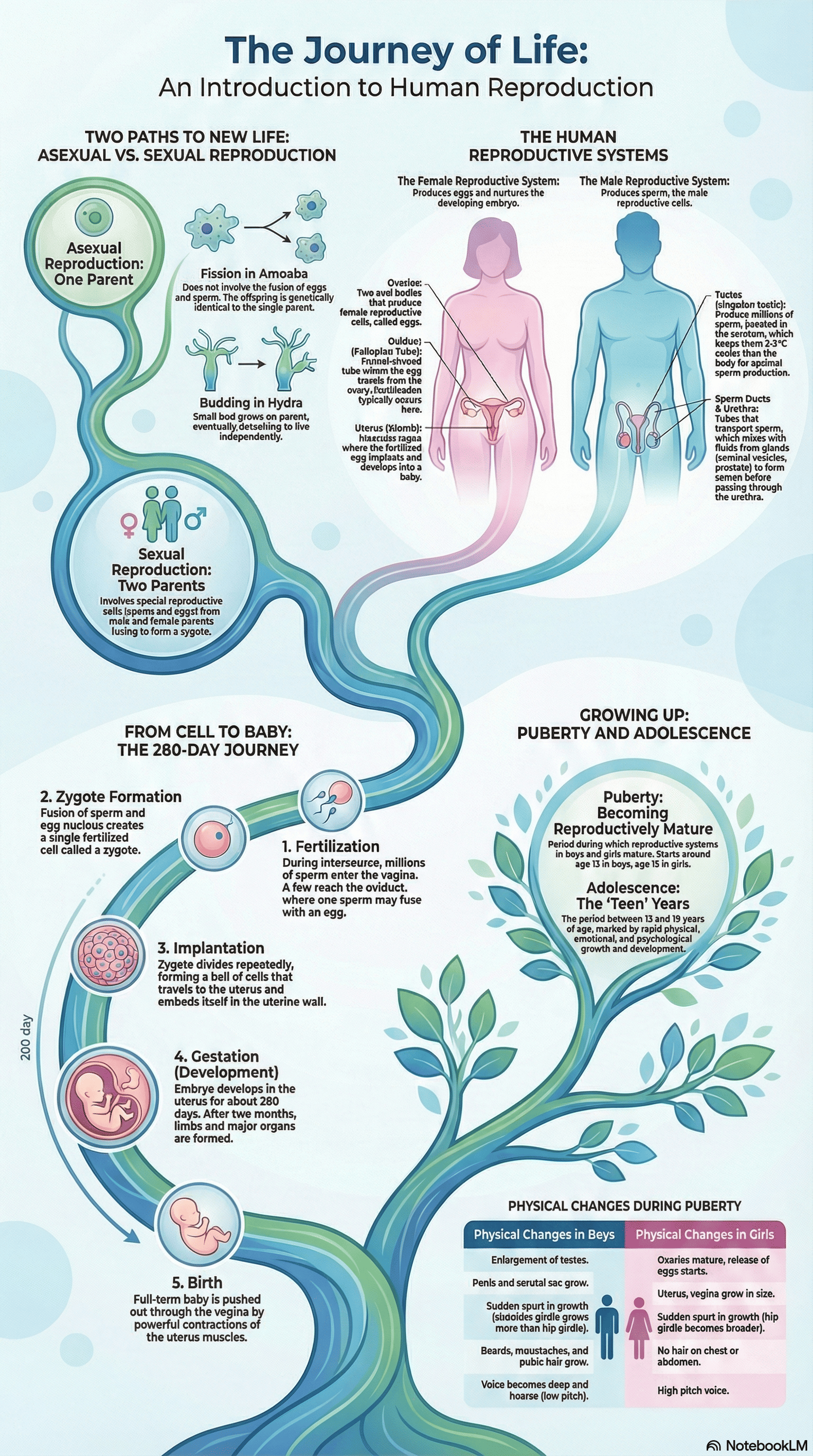
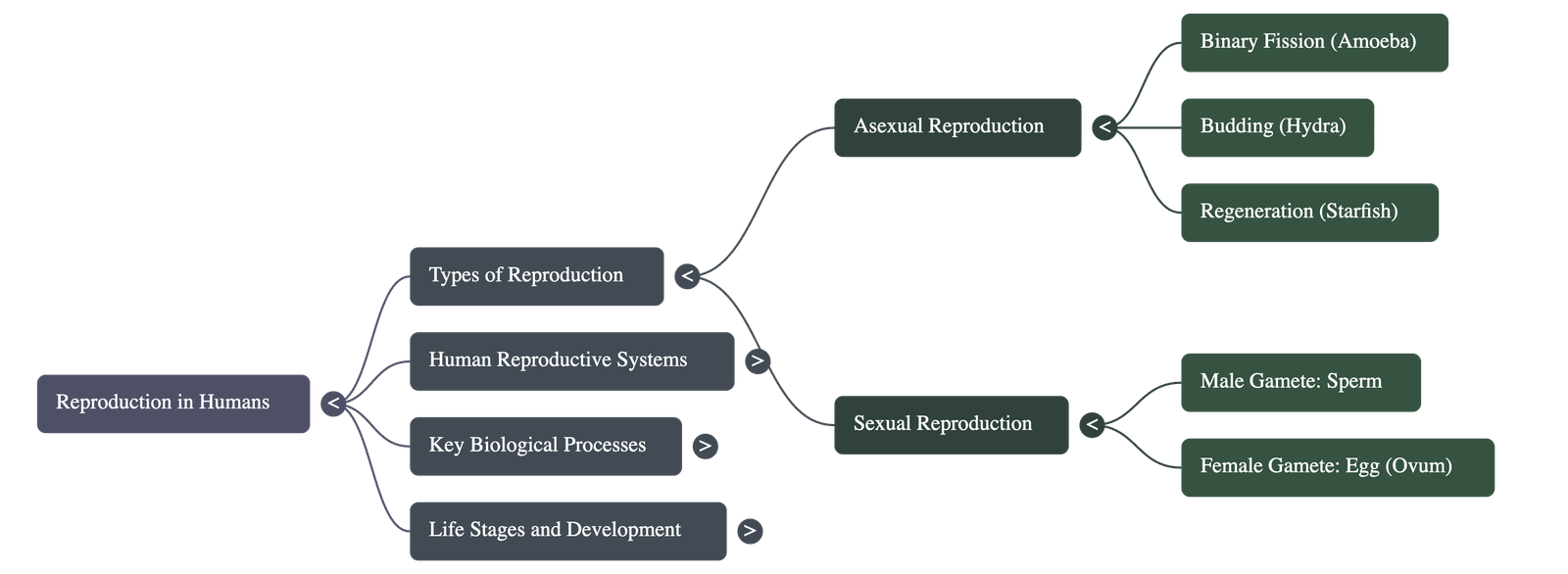
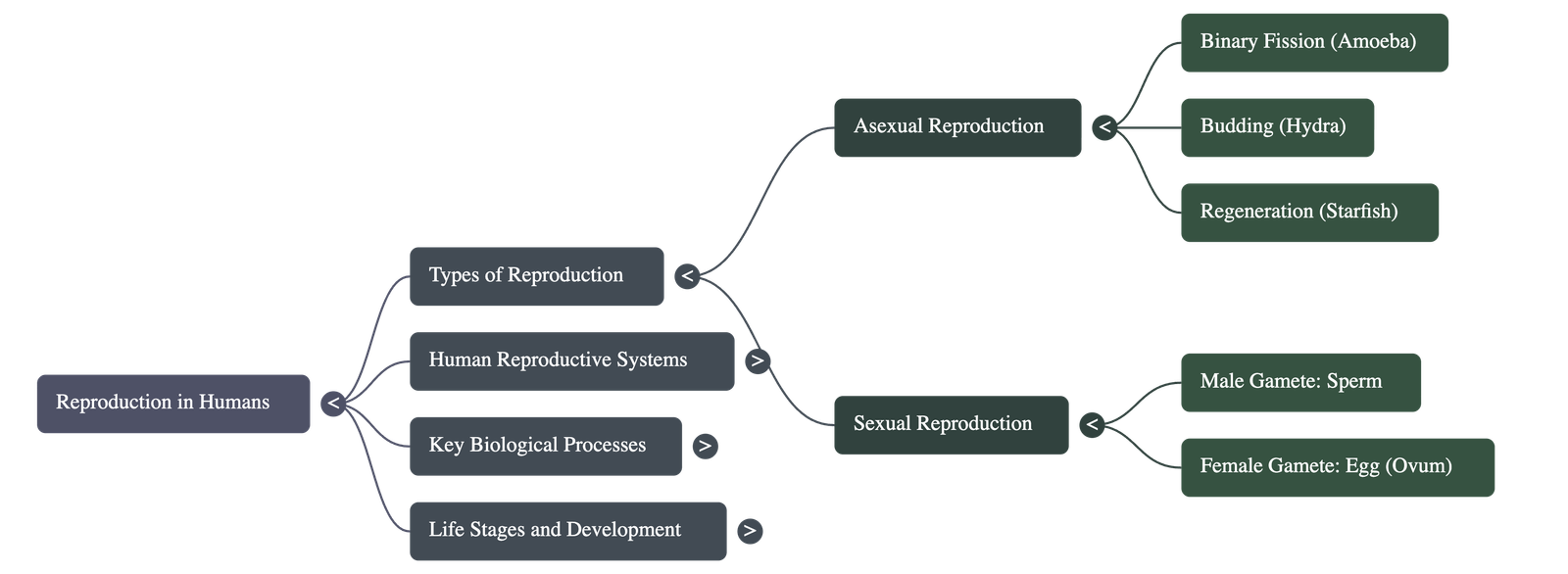
- Reproduction Overview: Reproduction is the process of creating new individuals of the same kind, ensuring the continuance of a species. It can occur through asexual or sexual methods.
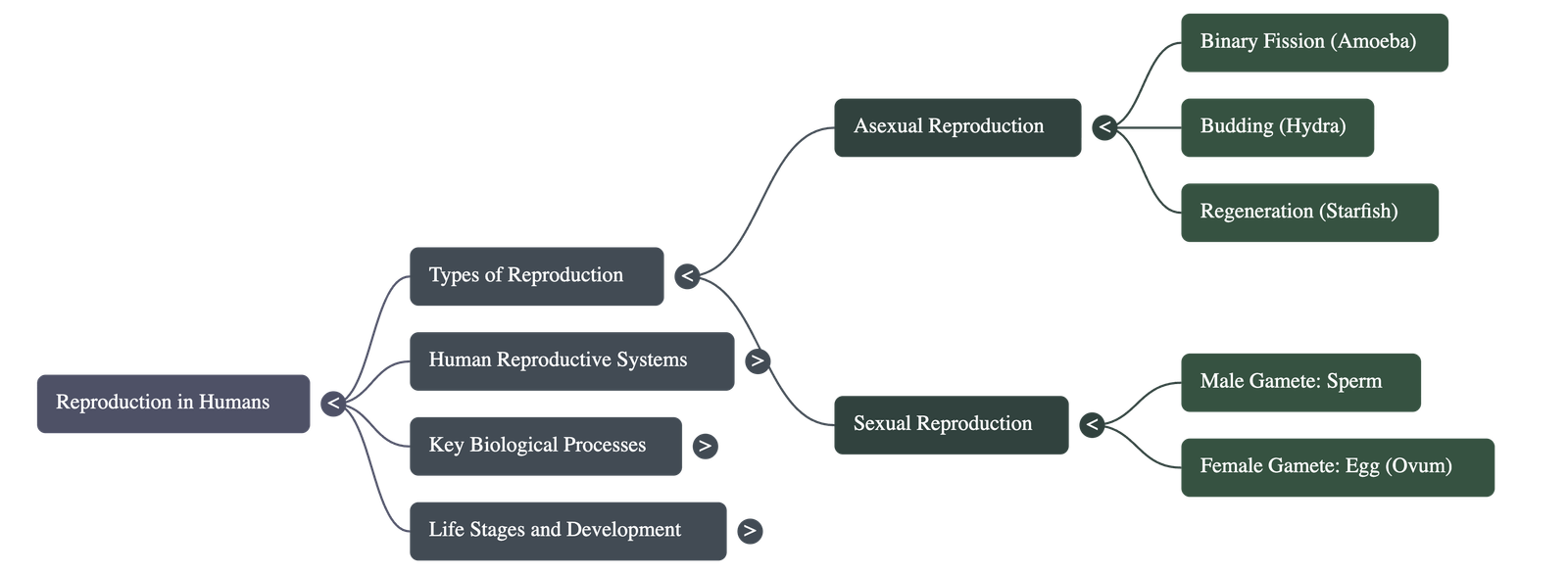
- Asexual Reproduction in Animals: This method does not involve eggs or sperms. Key types include:
- Binary Fission: A single-celled organism like an amoeba divides its nucleus and cytoplasm to form two daughter cells.
- Budding: New individuals grow as buds on the outside of the parent body before detaching, commonly seen in Hydra.
- Regeneration: The ability to regrow lost body parts or produce new individuals from body pieces, seen in Hydra and starfish.
- Sexual Reproduction Basics: Most animals reproduce sexually, involving the fusion of male reproductive cells (sperms) and female reproductive cells (eggs). The fusion of these cells is called fertilisation, which produces a zygote that eventually grows into an embryo and then a new individual.
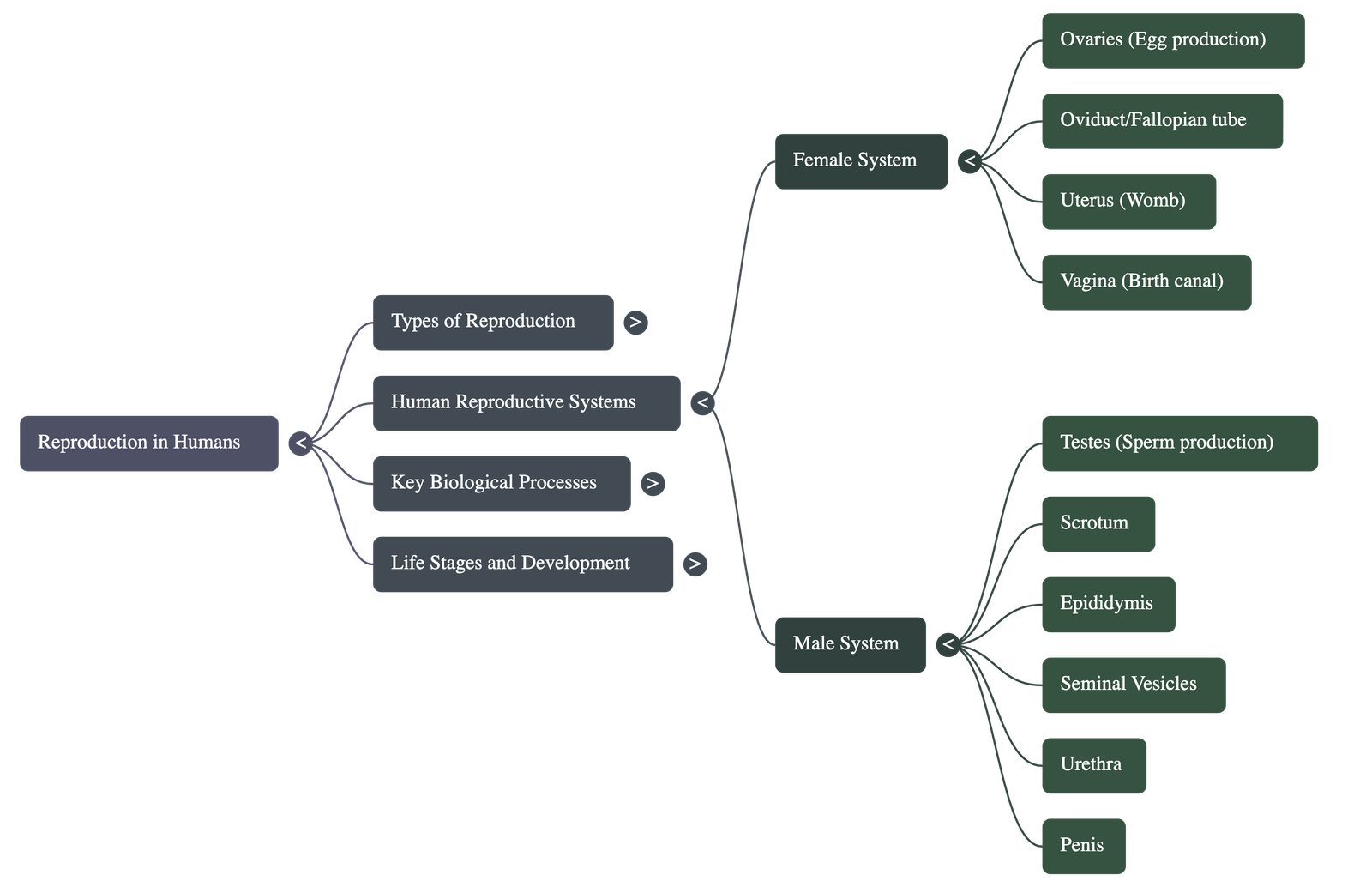
- Human Female Reproductive System:
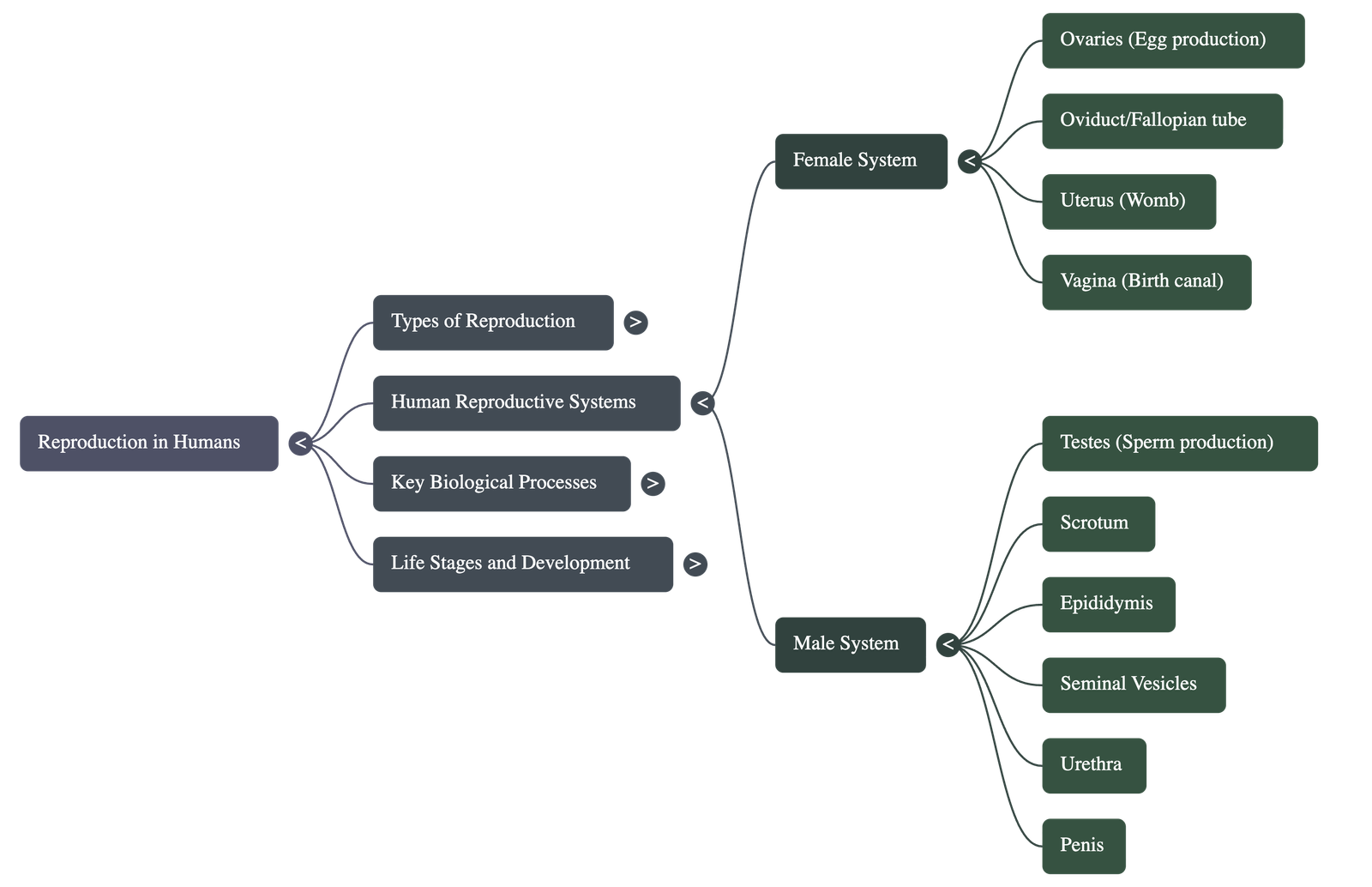
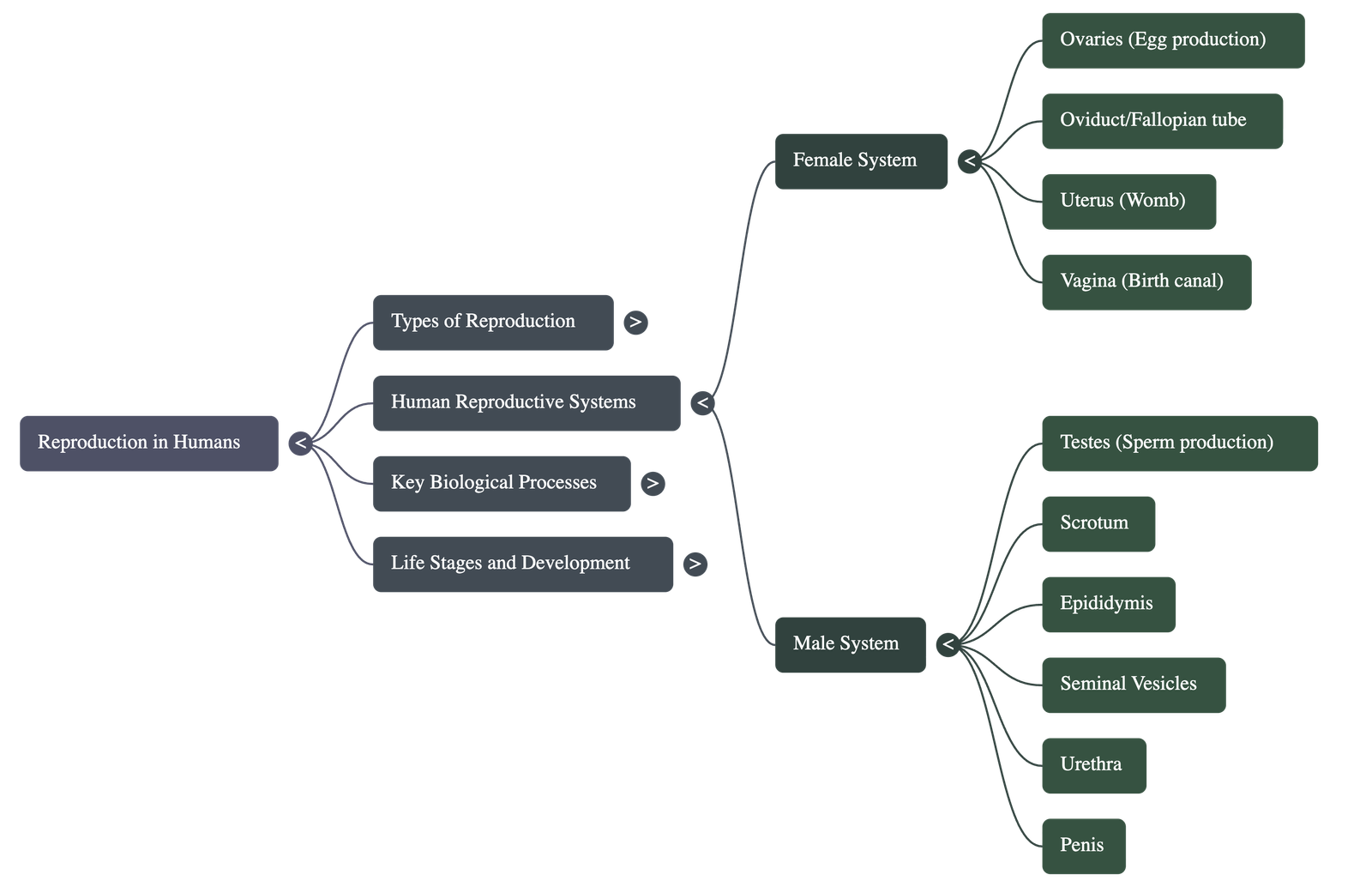
- Ovaries: Produce eggs.
- Oviducts (Fallopian Tubes): Funnel-shaped tubes where the egg passes after being released and where fertilisation typically occurs.
- Uterus (Womb): The site where the embryo fixes itself and grows.
- Vagina: Also known as the birth canal, it leads from the uterus to the outside of the body.
- Human Male Reproductive System:
- Testes: Located in the scrotum outside the body cavity to maintain a temperature $2-3^\circ\text{C}$ lower than body temperature, which is necessary for sperm production.
- Ducts and Glands: Sperms travel through the epididymis and sperm ducts. They mix with fluids from the seminal vesicles, prostate gland, and Cowper’s glands to form semen.
- Urethra and Penis: The urethra carries both urine and semen through the penis to the outside.
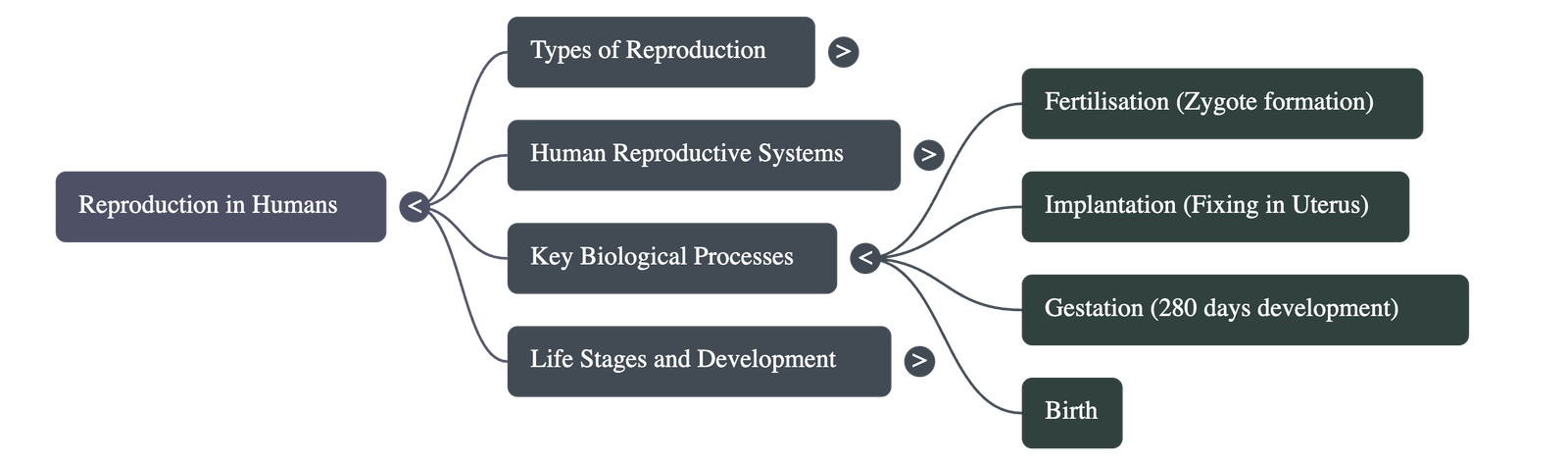
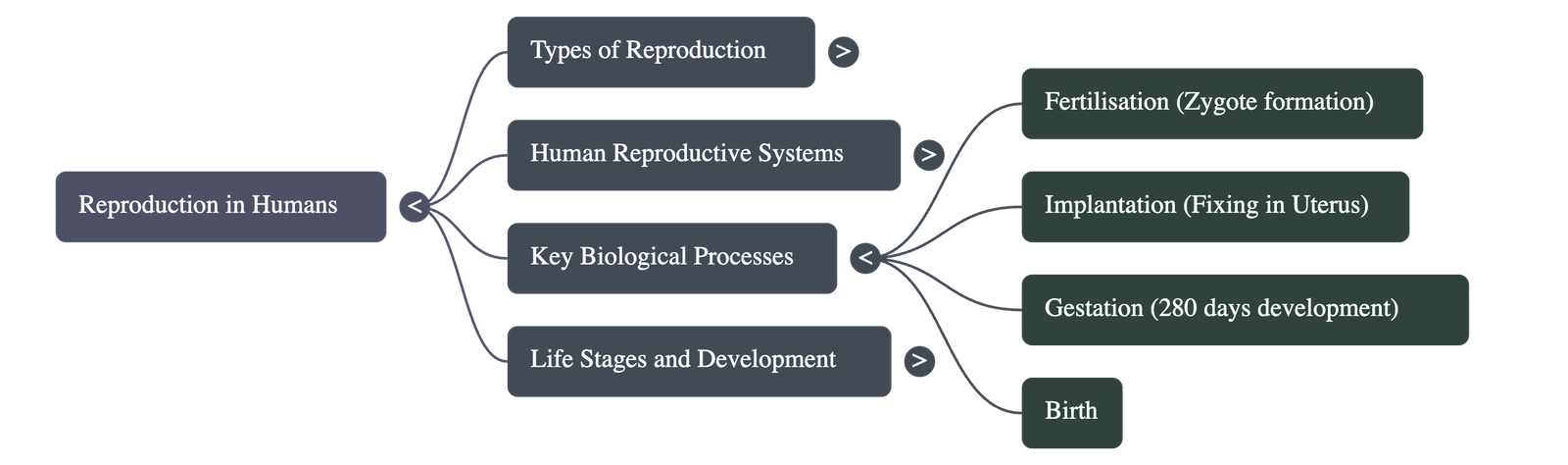
- Fertilisation and Implantation: During intercourse, sperms swim through the vagina to the oviducts. If a sperm fuses with an egg, fertilisation occurs. The resulting zygote moves to the uterus and fixes itself into the uterine wall, a process called implantation, which marks the state of pregnancy.
- Development and Birth:
- Gestation: The full term of embryo development in the uterus, which lasts about 280 days in humans.
- Growth and Differentiation: A single-celled zygote divides and cells specialise (differentiation) to form various tissues, organs, and organ systems.
- Birth: The baby is pushed out of the uterus through the vagina by powerful muscle contractions.
- Puberty and Adolescence:
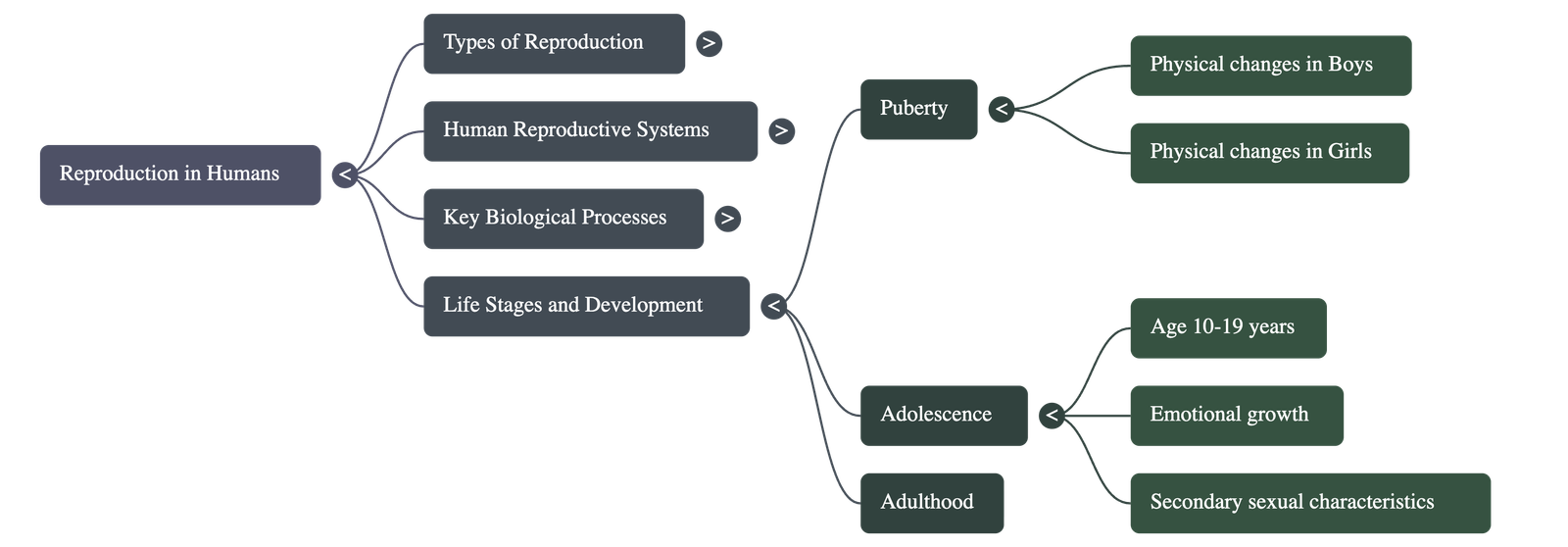
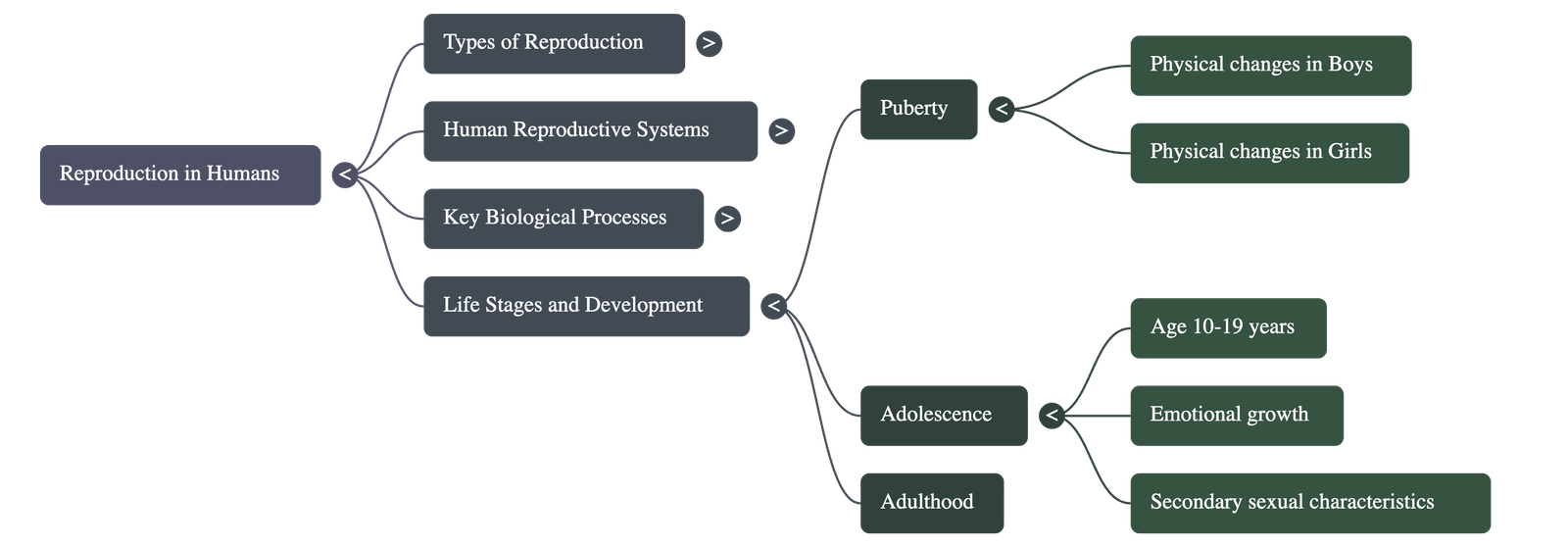
- Puberty: The period when reproductive systems mature. Boys experience enlargement of testes and voice deepening, while girls experience ovary maturation and the start of the menstruation cycle.
- Adolescence: The period between 10–19 years of age characterized by rapid physical, emotional, and psychological growth.
- Adulthood: Following adolescence, an individual reaches full physical growth and emotional stability, focusing on stable relationships and career pursuits.
Analogy for Understanding: To understand the process of human development, think of it like building and operating a complex machine. Fertilisation is the moment the blueprint is finalized and the power is turned on. Gestation is the construction phase inside the factory (the uterus). Puberty and Adolescence are like the "fine-tuning" and "software update" period where the machine's primary systems (reproductive and physical) are brought to full capacity before it reaches the steady state of Adulthood.
Do checkout all questions & answers of this chapter.
Quick Navigation:
| | | | |
1 / 1
Quick Navigation:
| | | | |
Quick Navigation:
| | | | |