Quick Navigation:
| | | | |
Quick Navigation:
| | | | |
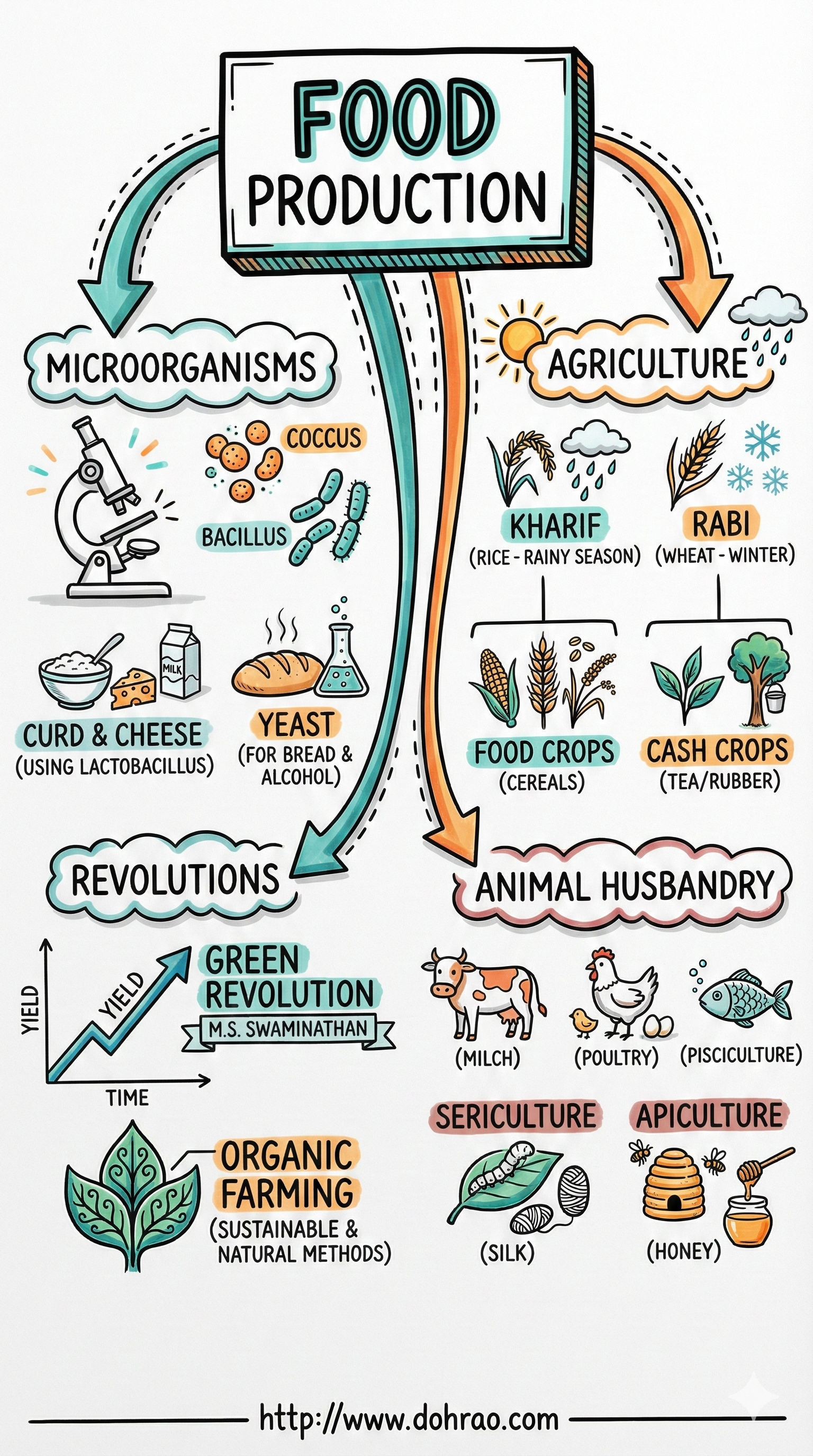
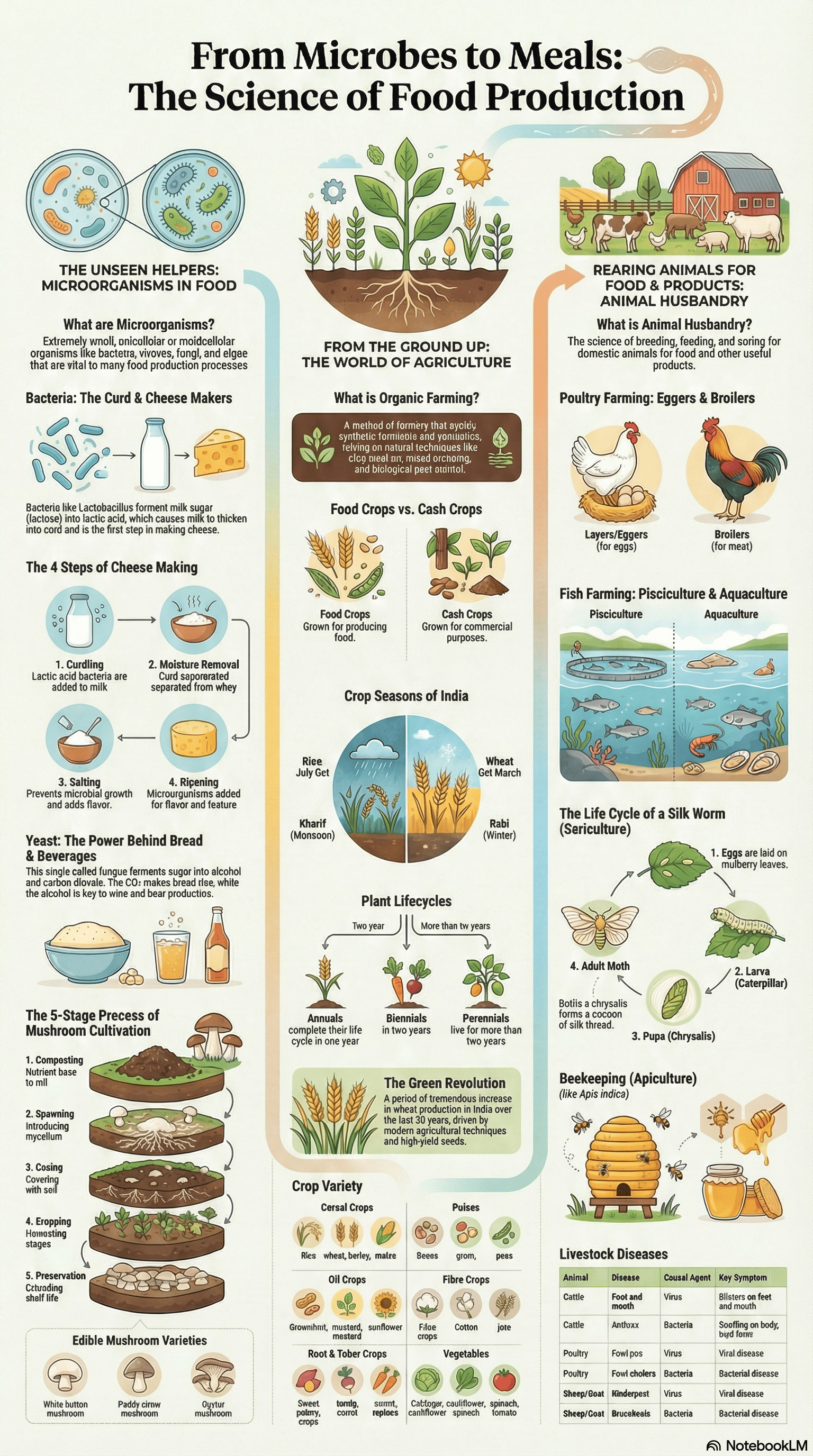
Overview of Chapter 9, "Food Production," which details how microorganisms, plants, and animals are utilized for food and other essential resources.
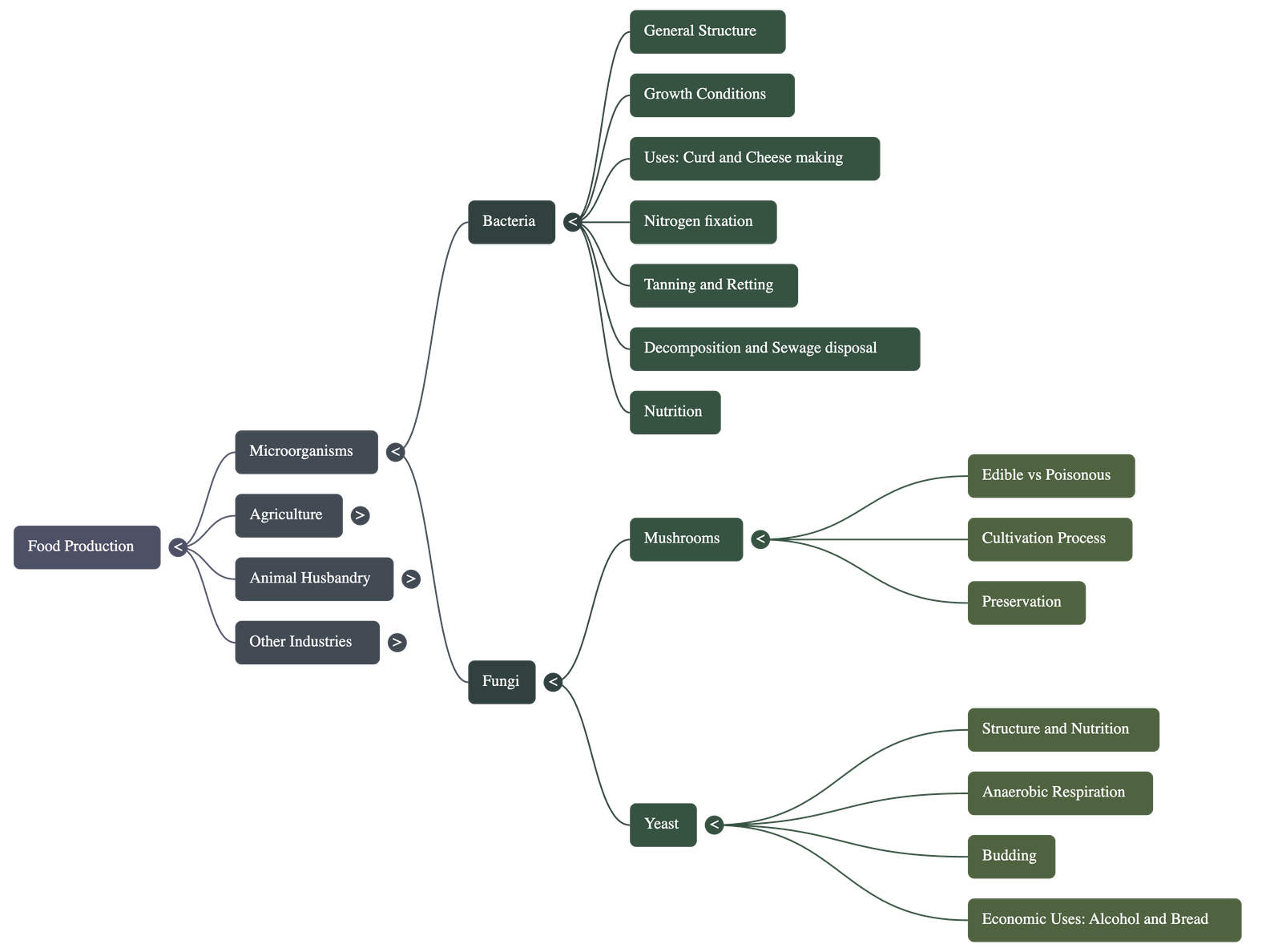
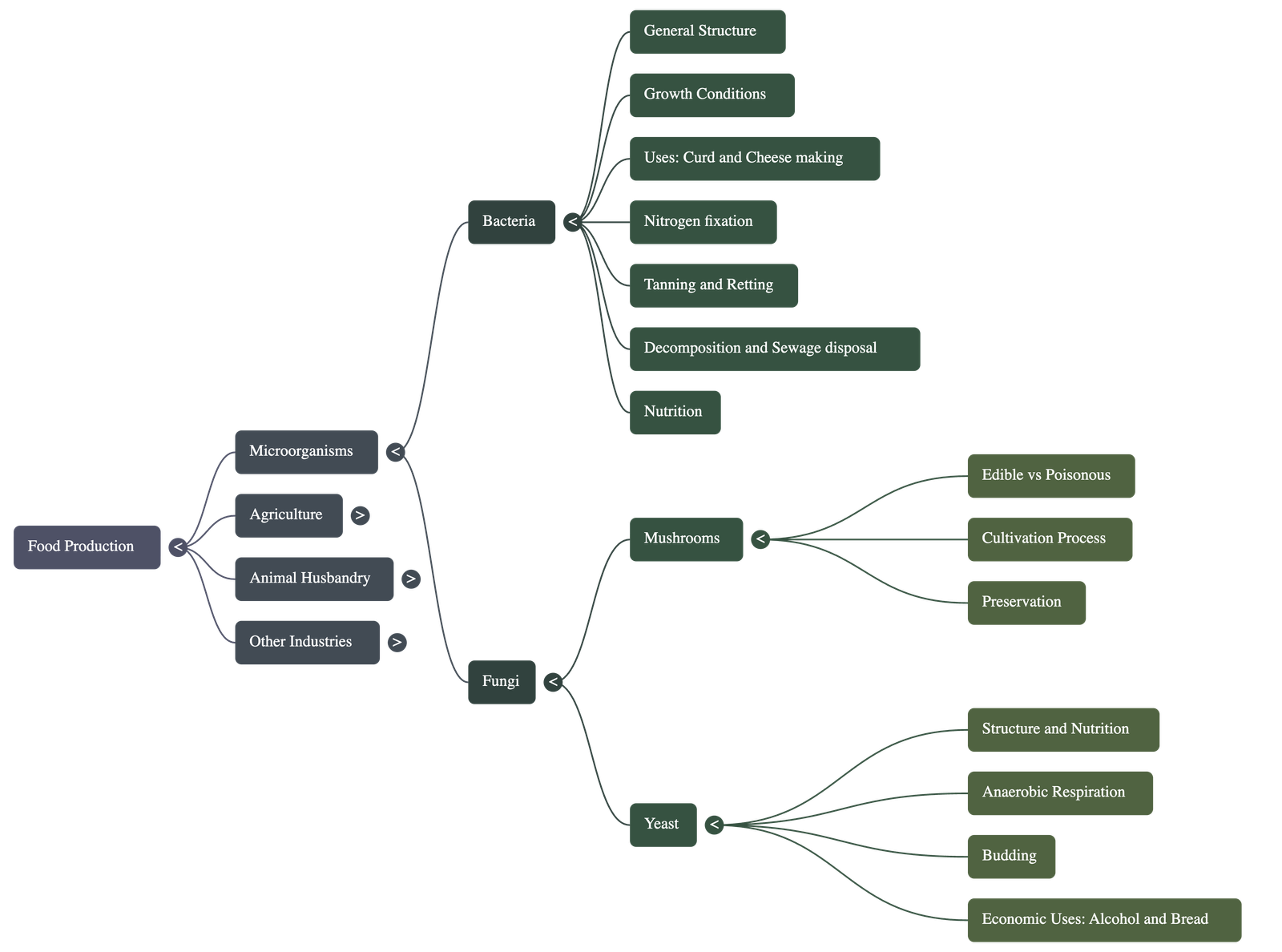
1. Microorganisms in Food Production
- Bacteria: These are microscopic organisms of various shapes (round, rod, spring, or comma) that require specific pH, temperature, and oxygen levels to flourish.
- Industrial Uses: Bacteria are essential for making curd (Lactobacillus) and cheese, fixing nitrogen in soil, tanning leather, and decomposing sewage,.
- Fungi (Mushrooms): Certain varieties like the white button mushroom are highly nutritious sources of proteins and minerals,.
- Cultivation: Growing mushrooms involves five major steps: composting (preparing substrate), spawning (planting "seeds"), casing (adding soil), cropping/harvesting, and preservation,.
- Yeast: A single-celled fungus that reproduces asexually by budding.
- Economic Importance: Yeast is vital for alcoholic fermentation used in brewing beer and wine-making. In bread making, yeast ferments sugar to produce carbon dioxide, which makes the dough rise.
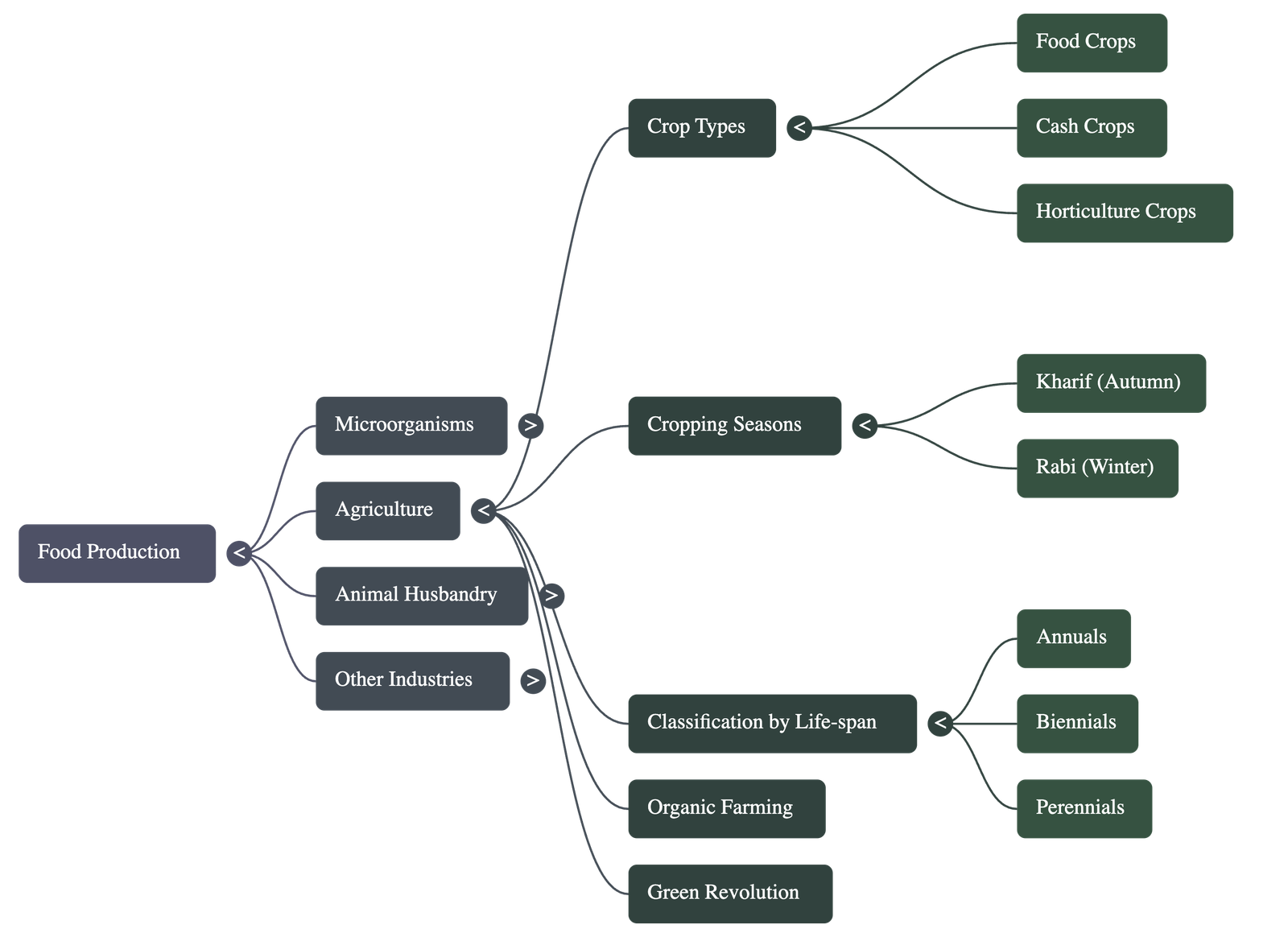
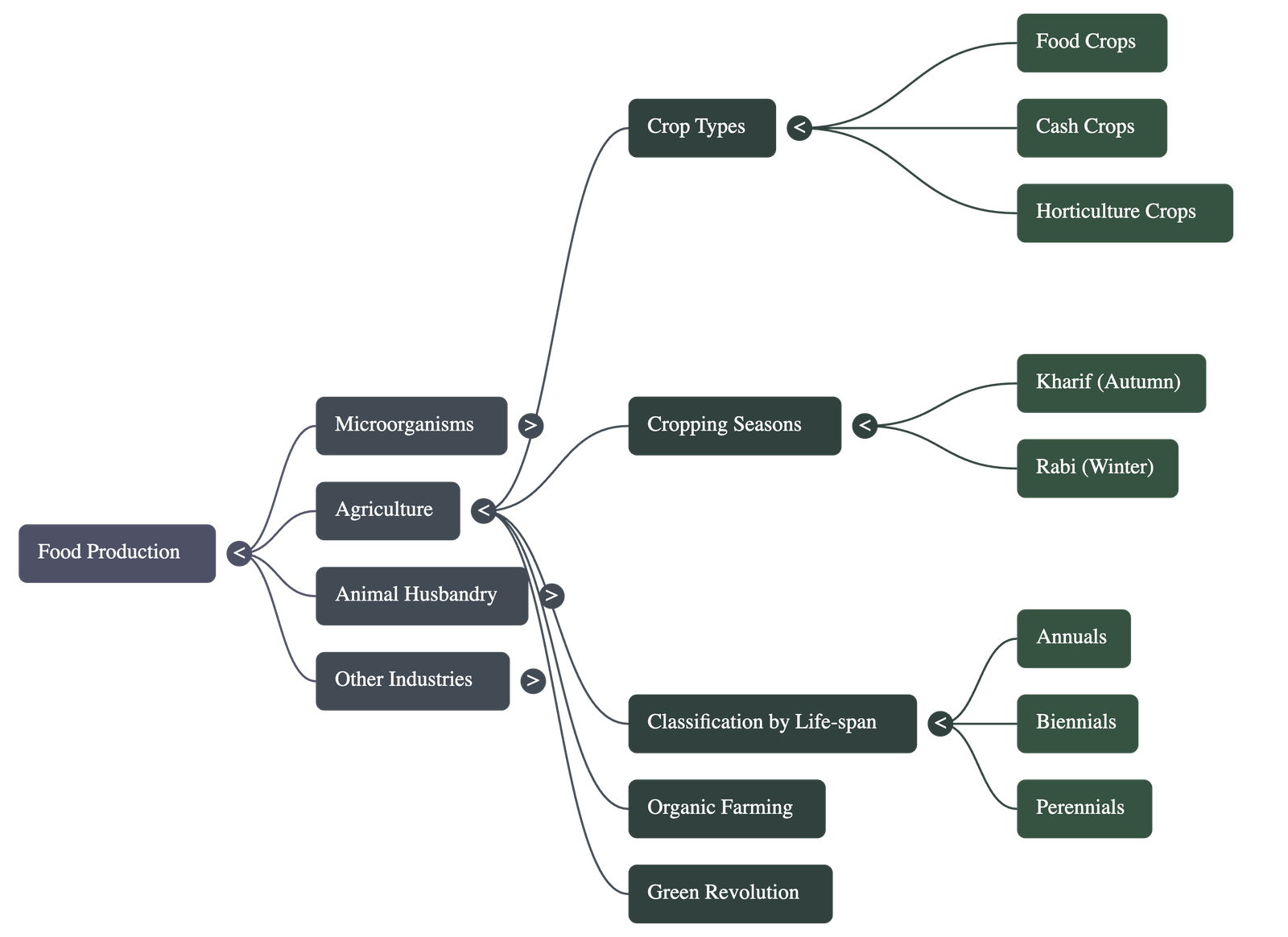
2. Agriculture and Crop Production
- Classification of Crops: Agriculture is divided into food crops (cereals, pulses) for consumption and cash crops (rubber, tea, coffee) for commercial purposes.
- Crop Seasons in India:
- Kharif Crops: Grown in the rainy season (June–October), such as rice.
- Rabi Crops: Grown in the winter season (October/November onwards), such as wheat.
- Cultivation Methods: Seeds are sown through methods like broadcasting (throwing), dibbling, drilling, or transplantation (moving seedlings from nurseries to fields).
- Modern Agricultural Trends:
- Organic Farming: Focusing on raising crops without inorganic fertilizers or pesticides to maintain soil fertility.
- Green Revolution: A period of tremendous increase in wheat production in India, spearheaded by scientist M.S. Swaminathan.
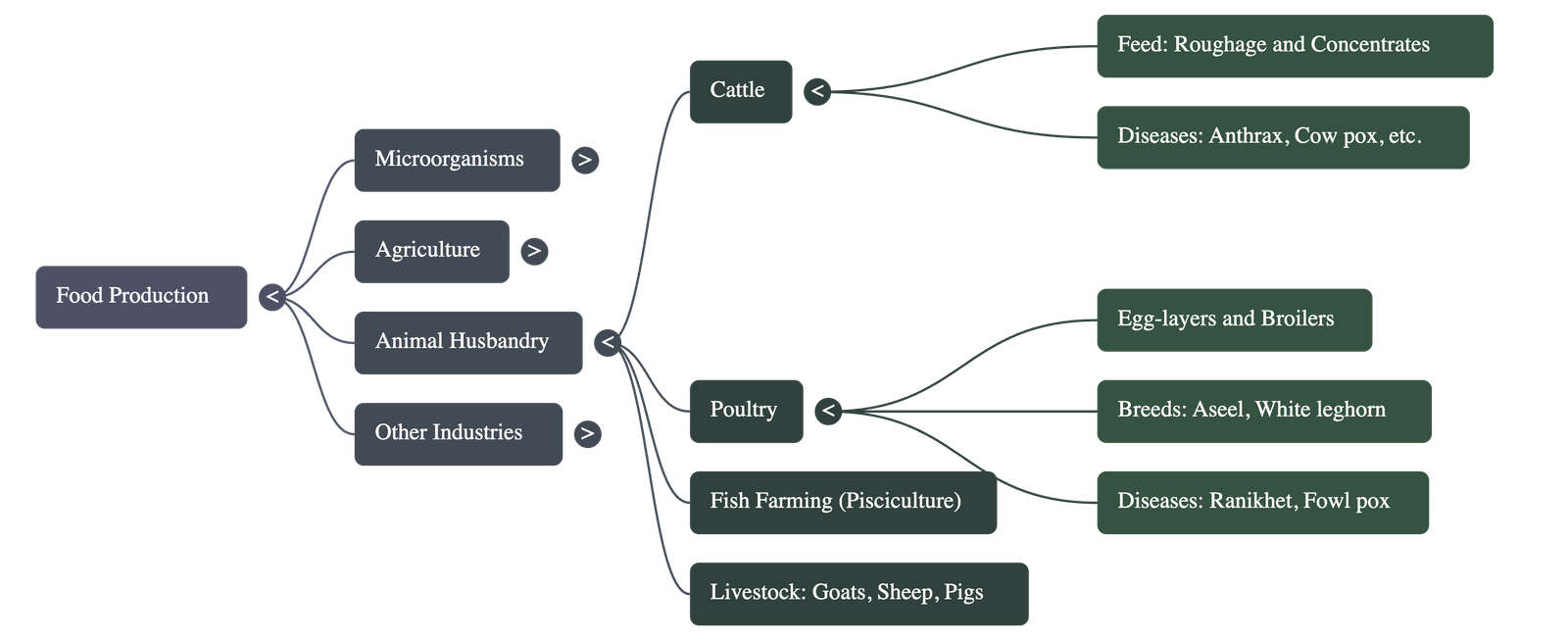
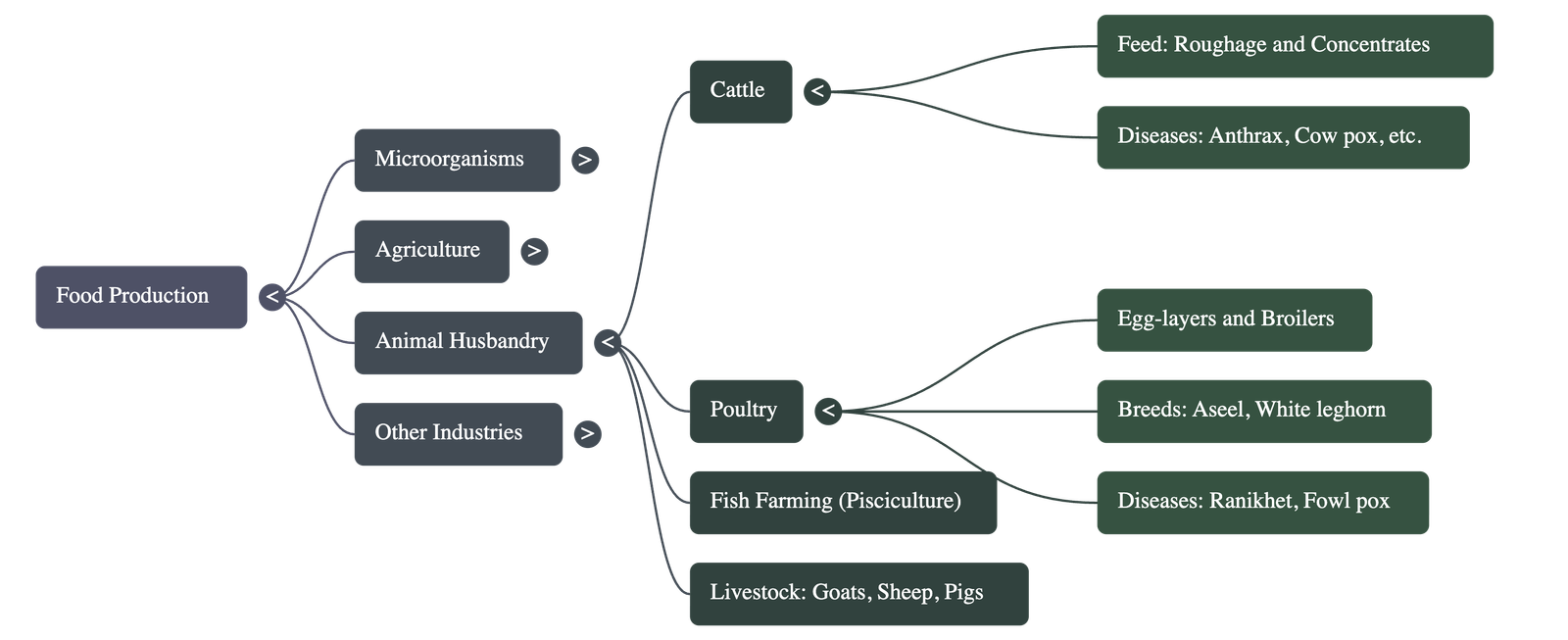
3. Animal Husbandry and Other Industries
- Cattle Farming: Cattle are raised for milk (milch animals) and work. They require a diet of roughage (fibrous fodder) and concentrates (nutrient-rich grains).
- Poultry: Focused on producing eggs (eggers/layers) and meat (broilers). Common breeds include the indigenous Aseel and the exotic White Leghorn.
- Fish Farming (Pisciculture): The production and management of fish in water bodies. It is a vital source of protein and vitamins A and D,.
- Livestock (Goats, Sheep, Pigs): These animals provide meat (mutton, pork), wool, and skins. Important goat breeds include Gaddi and Kashmiri Pashmina.
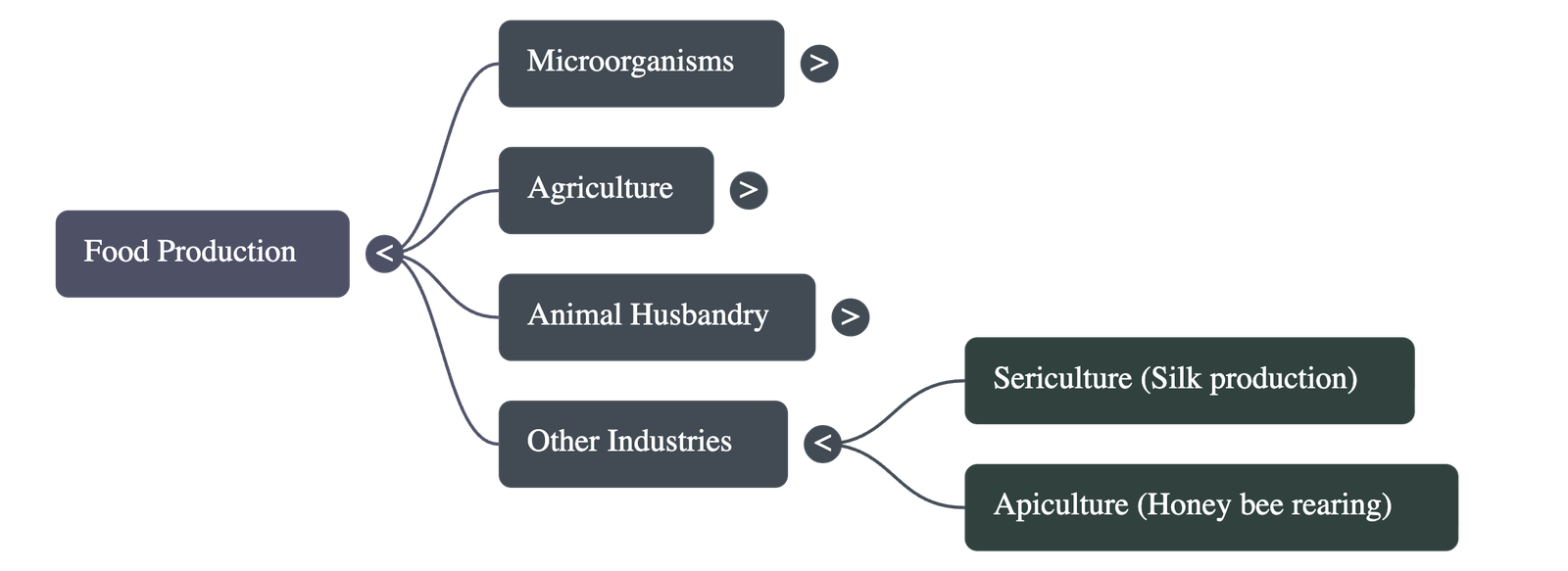
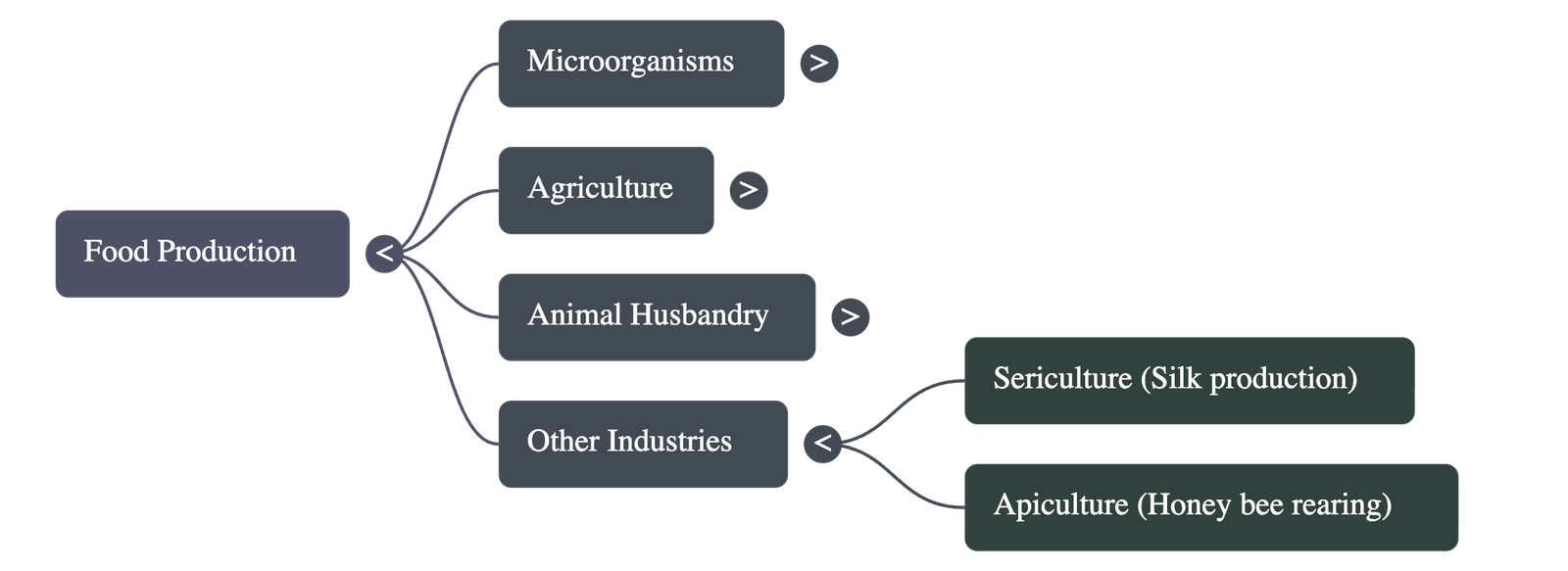
- Sericulture: The artificial rearing of silkworms to produce silk from their cocoons.
- Apiculture: The rearing of honey bees (such as Apis indica) to obtain honey and beeswax.
Analogy for Understanding: Think of Food Production as a vast industrial kitchen. The microbes (bacteria and yeast) are the specialized "mini-chefs" that handle fermentation and chemical changes; Agriculture is the "pantry" providing raw ingredients like grains and vegetables; and Animal Husbandry is the "dairy and meat station" that manages livestock to ensure a steady supply of protein and milk.
Do checkout all questions & answers of this chapter.
Quick Navigation:
| | | | |
1 / 1
Quick Navigation:
| | | | |