Quick Navigation:
| | | | |
Quick Navigation:
| | | | |
Based on the sources provided, here is a pointwise summary of Chapter 3, "The Judiciary":
Role and Structure of the Judiciary
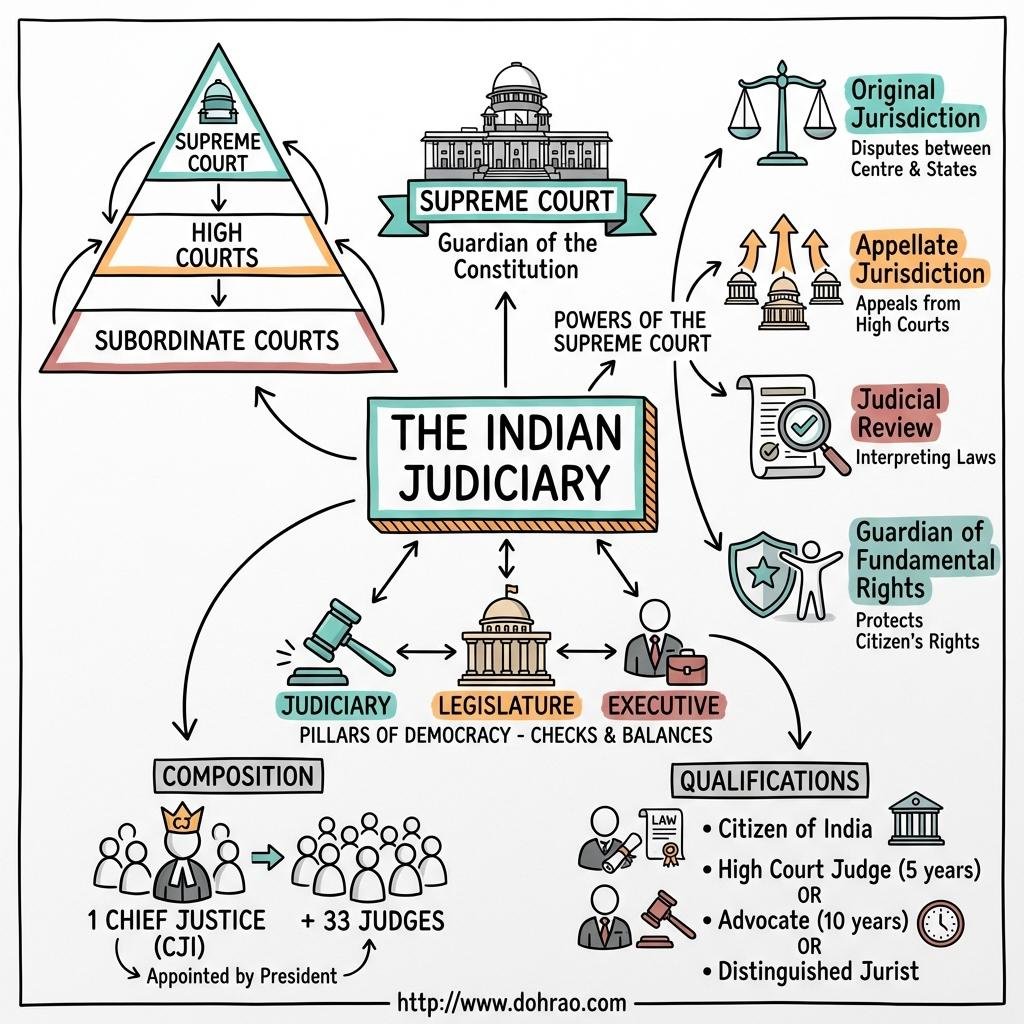
- The Third Pillar: The Judiciary is the third pillar of democracy, responsible for interpreting laws, ensuring their proper implementation, protecting citizen rights, and resolving disputes between individuals or government bodies.
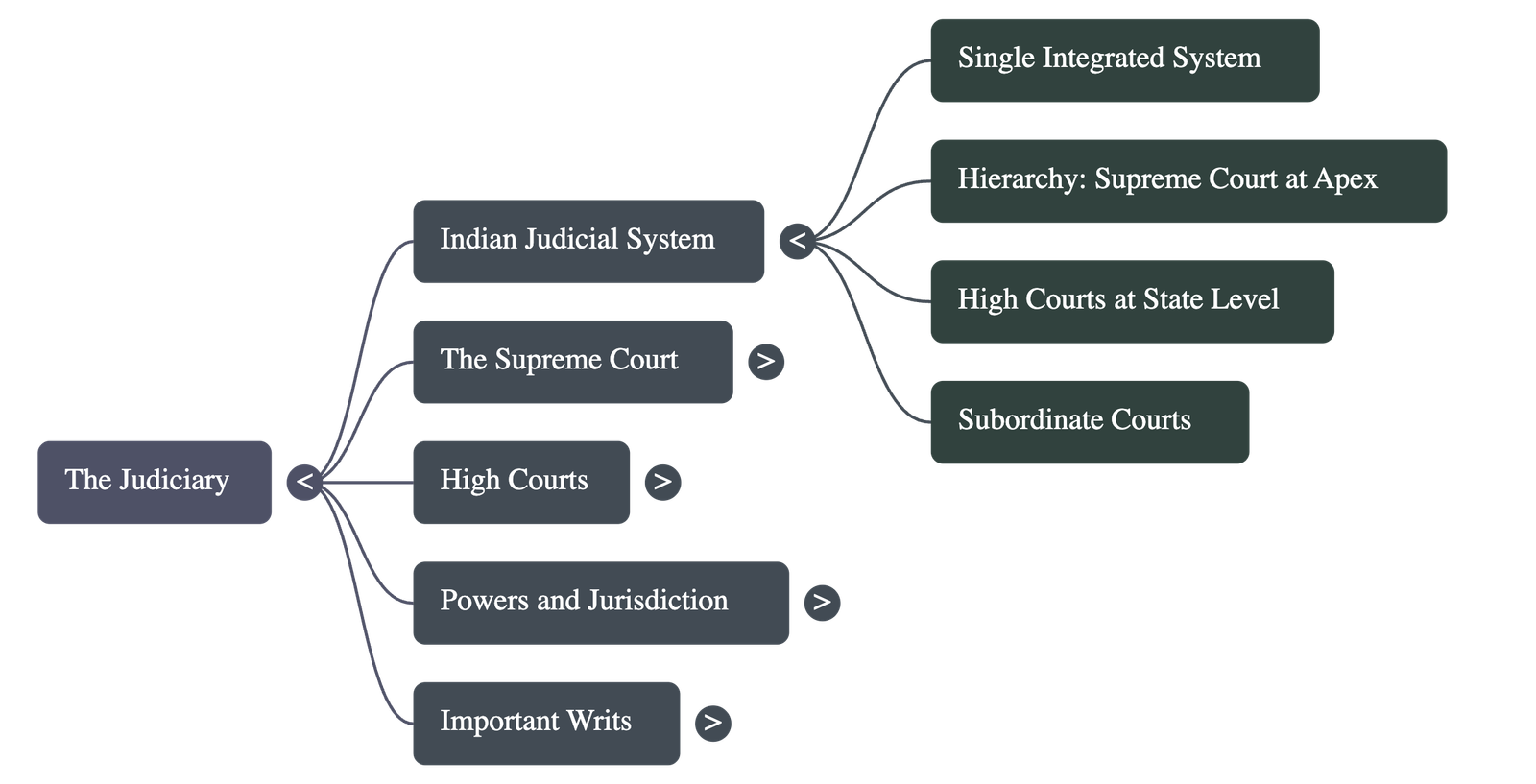
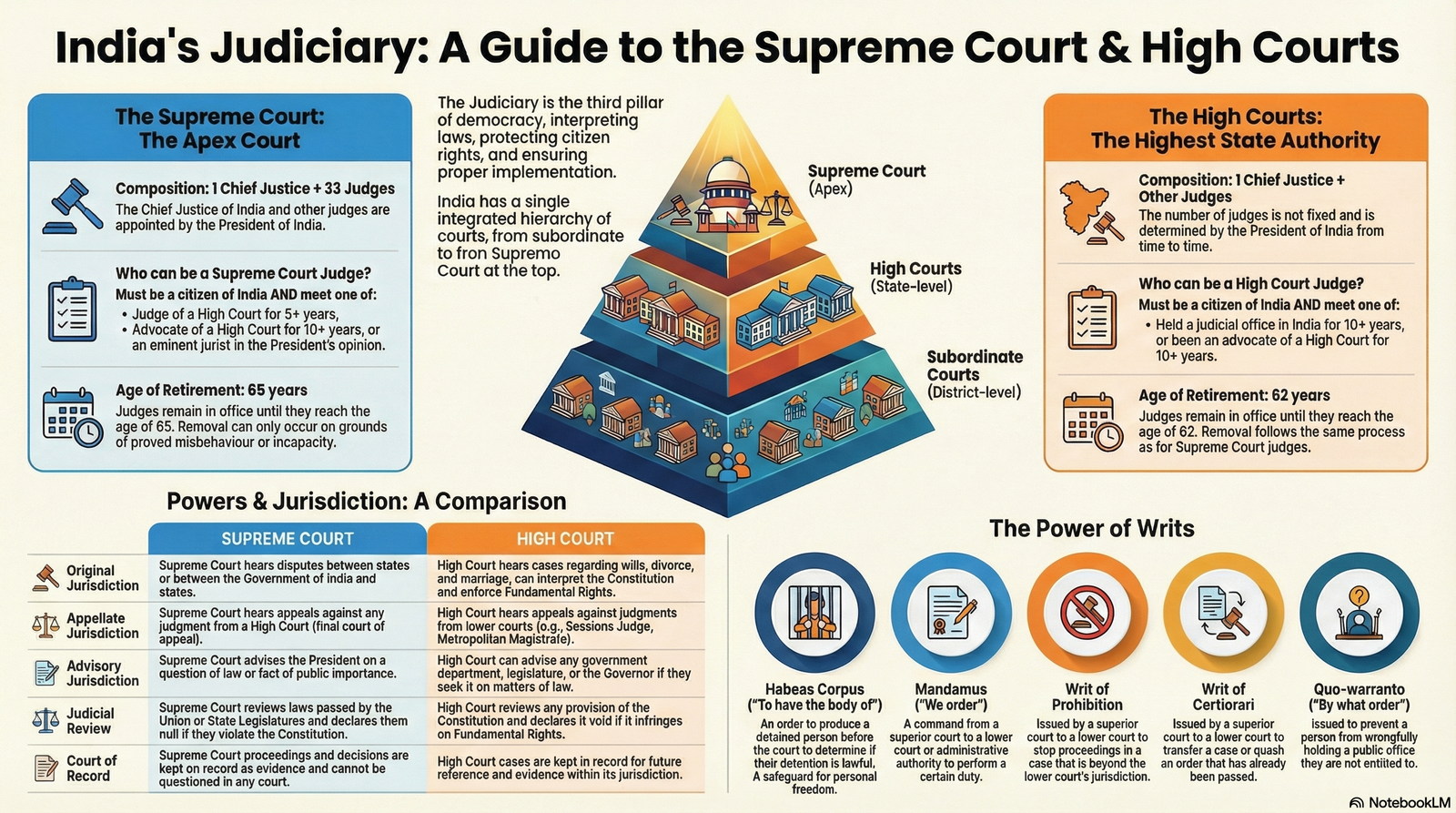
- Single Integrated System: India maintains a unified judicial hierarchy. The Supreme Court sits at the apex, followed by High Courts at the state level, and Subordinate Courts at the district level.
- Guardian of the Constitution: The Judiciary acts as the final interpreter and guardian of the Constitution.
The Supreme Court of India
- Composition: It consists of the Chief Justice of India and 33 other judges, all appointed by the President.
- Qualifications: To be a judge, one must be a citizen of India and have either been a High Court judge for 5 years, an advocate for 10 years, or be an eminent jurist.
- Term and Removal: Judges serve until the age of 65. They can only be removed by the President on grounds of proved misbehaviour or incapacity.
- Jurisdiction:
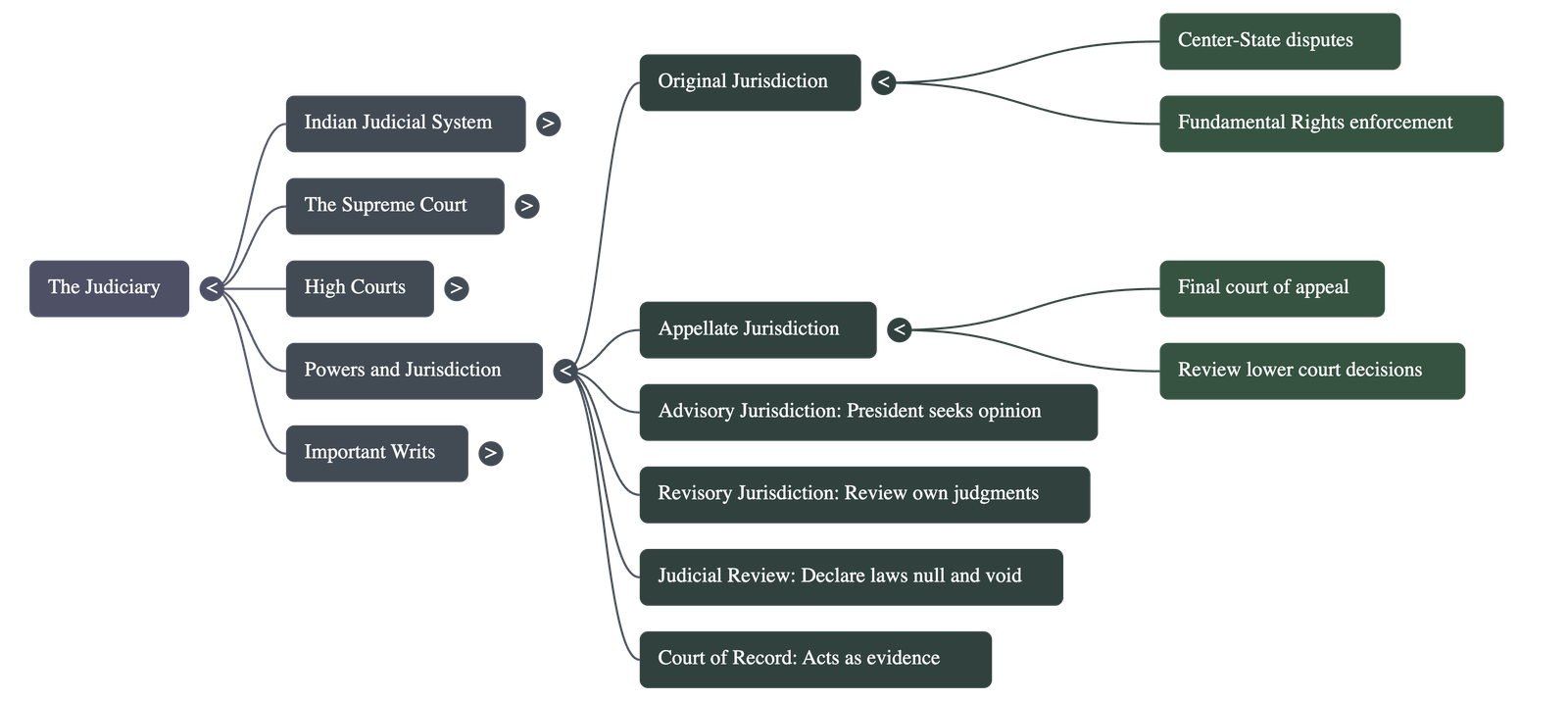
- Original: Handles disputes between the Centre and States or between States, and enforces Fundamental Rights.
- Appellate: Acts as the final court of appeal for civil and criminal cases from lower courts.
- Advisory: Provides opinions to the President on legal matters of public importance.
- Revisory: Can review its own previous judgments to correct errors.
- Judicial Review: Has the power to declare laws null and void if they contravene the Constitution.
The High Courts
- State Authority: The High Court is the highest judicial authority in a State. While most states have their own, Parliament can establish a common High Court for multiple states (e.g., Punjab and Haryana).
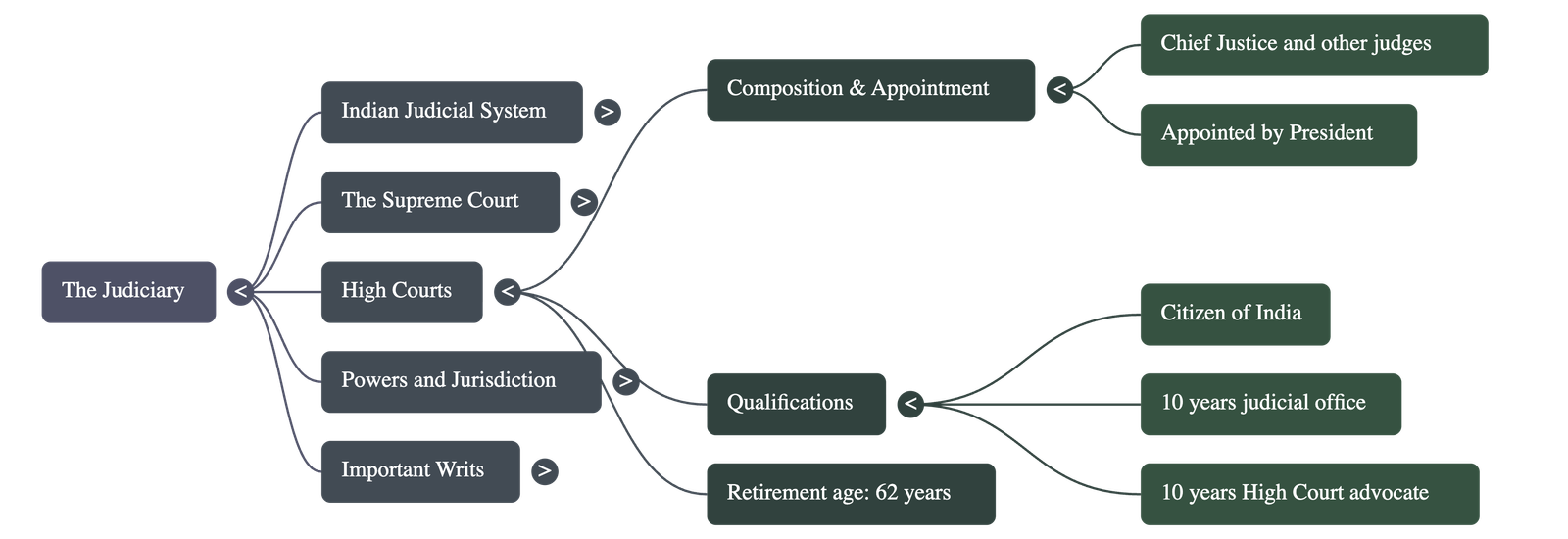
- Composition and Term: Judges are appointed by the President and serve until the age of 62.
- Qualifications: Requires 10 years of holding a judicial office in India or 10 years as a High Court advocate.
- Jurisdiction: Includes original jurisdiction over cases like marriage and divorce, appellate jurisdiction over subordinate courts, and the power of Judicial Review.
Key Judicial Concepts
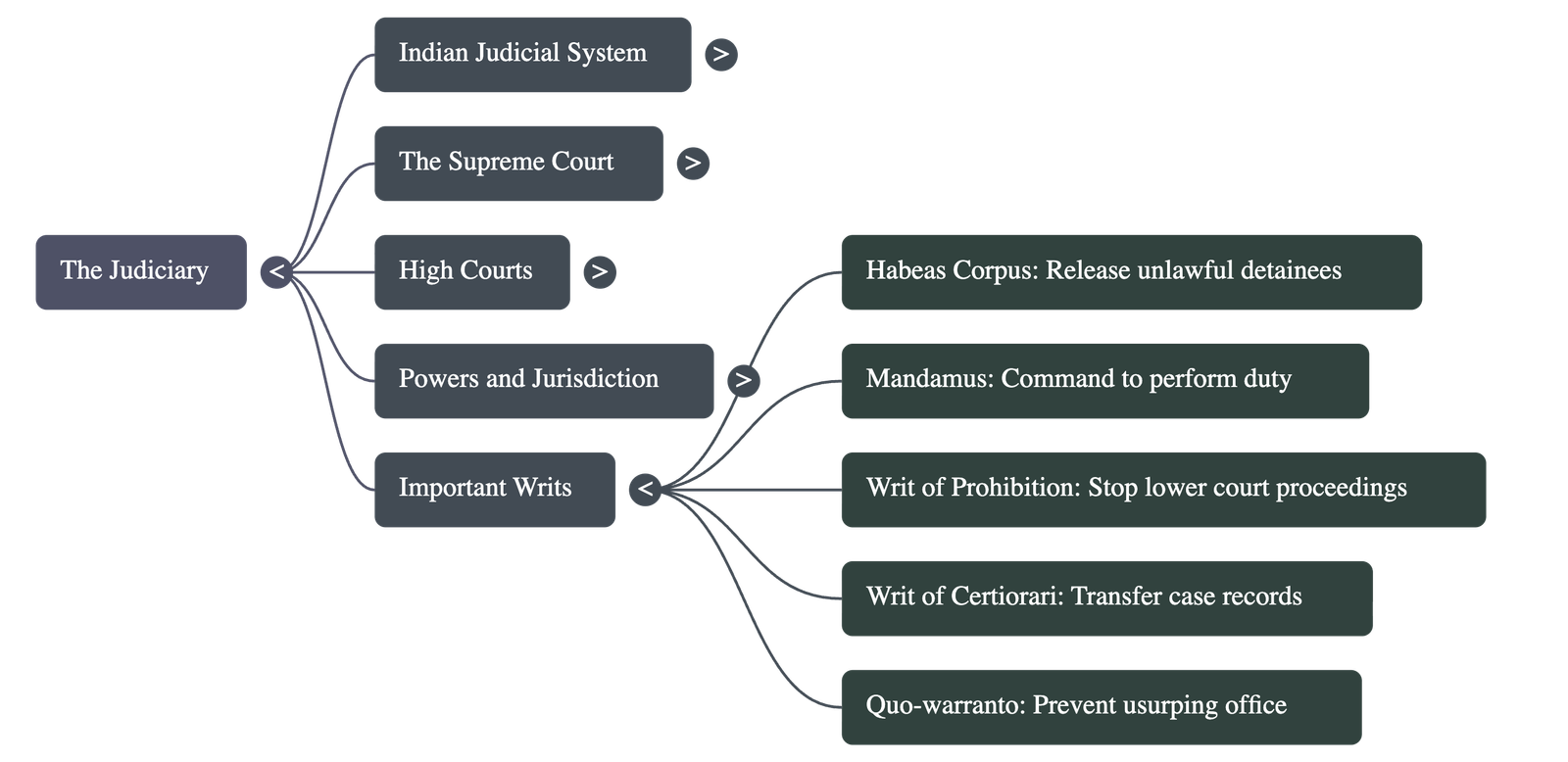
- Important Writs: Courts protect fundamental freedoms through writs such as Habeas Corpus (release from unlawful detention), Mandamus (ordering an official to perform a duty), and others like Prohibition, Certiorari, and Quo-warranto.
- Court of Record: Both the Supreme Court and High Courts function as Courts of Record, meaning their proceedings and decisions are preserved as evidence and legal precedents that cannot be questioned in any court.
Analogy to Solidify Understanding: Think of the Indian Judiciary as a multi-story security system for a building. The Subordinate Courts are like the ground-floor security guards handling daily entries. The High Courts are the floor managers who oversee specific sections (States). The Supreme Court is the head of security in the penthouse; they have the final say on all rules, can override any floor manager’s decision, and hold the "master key" (the Constitution) to ensure the entire building operates legally.
Do checkout all questions & answers of this chapter.
Quick Navigation:
| | | | |
1 / 1
Quick Navigation:
| | | | |