Quick Navigation:
| | | | |
Quick Navigation:
| | | | |
Elements, Compounds & Mixtures
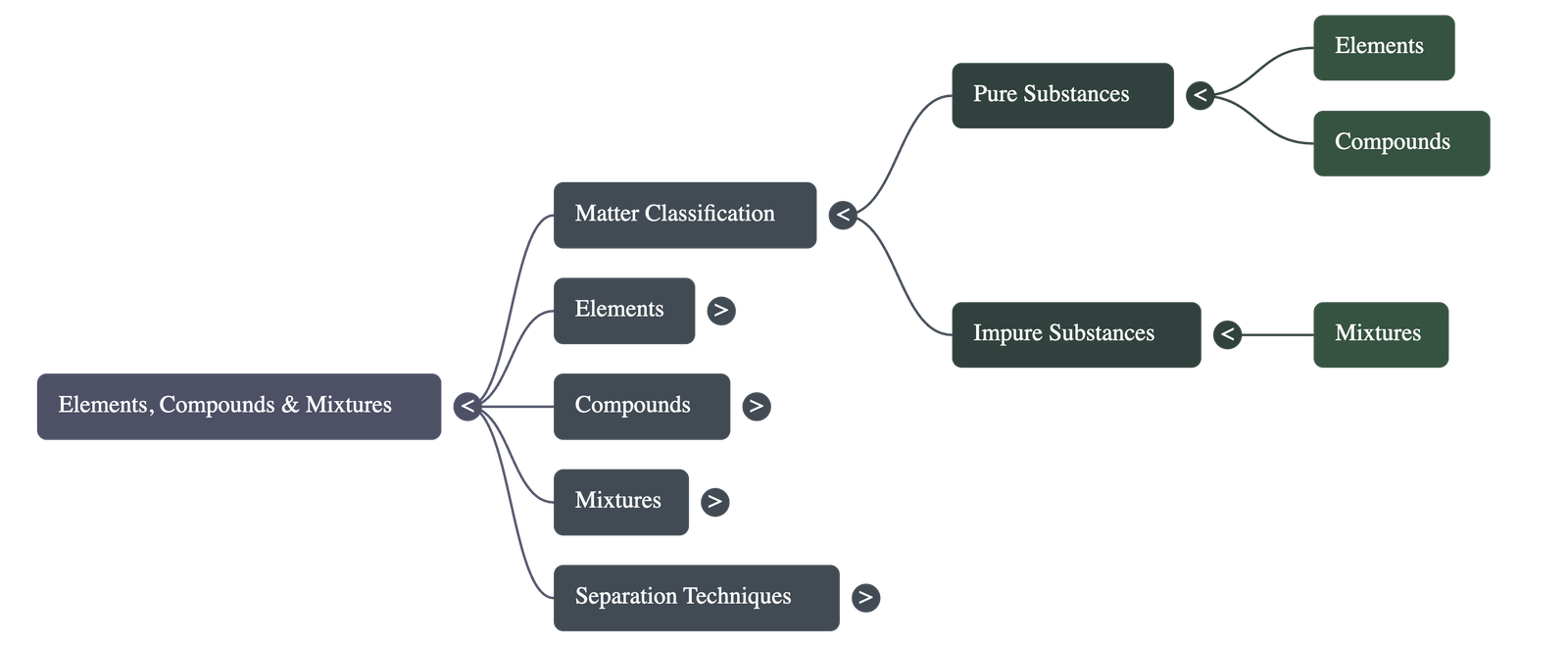
1. Classification of Matter
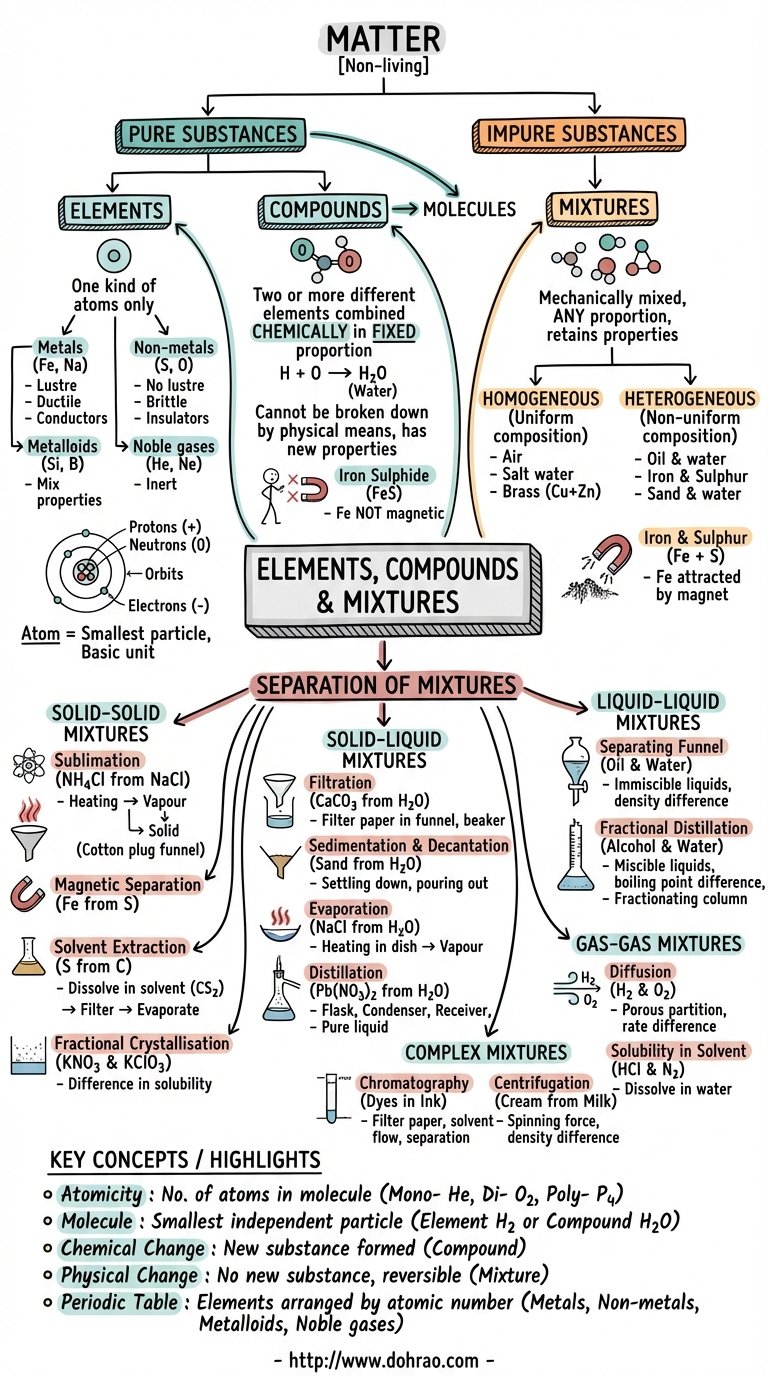
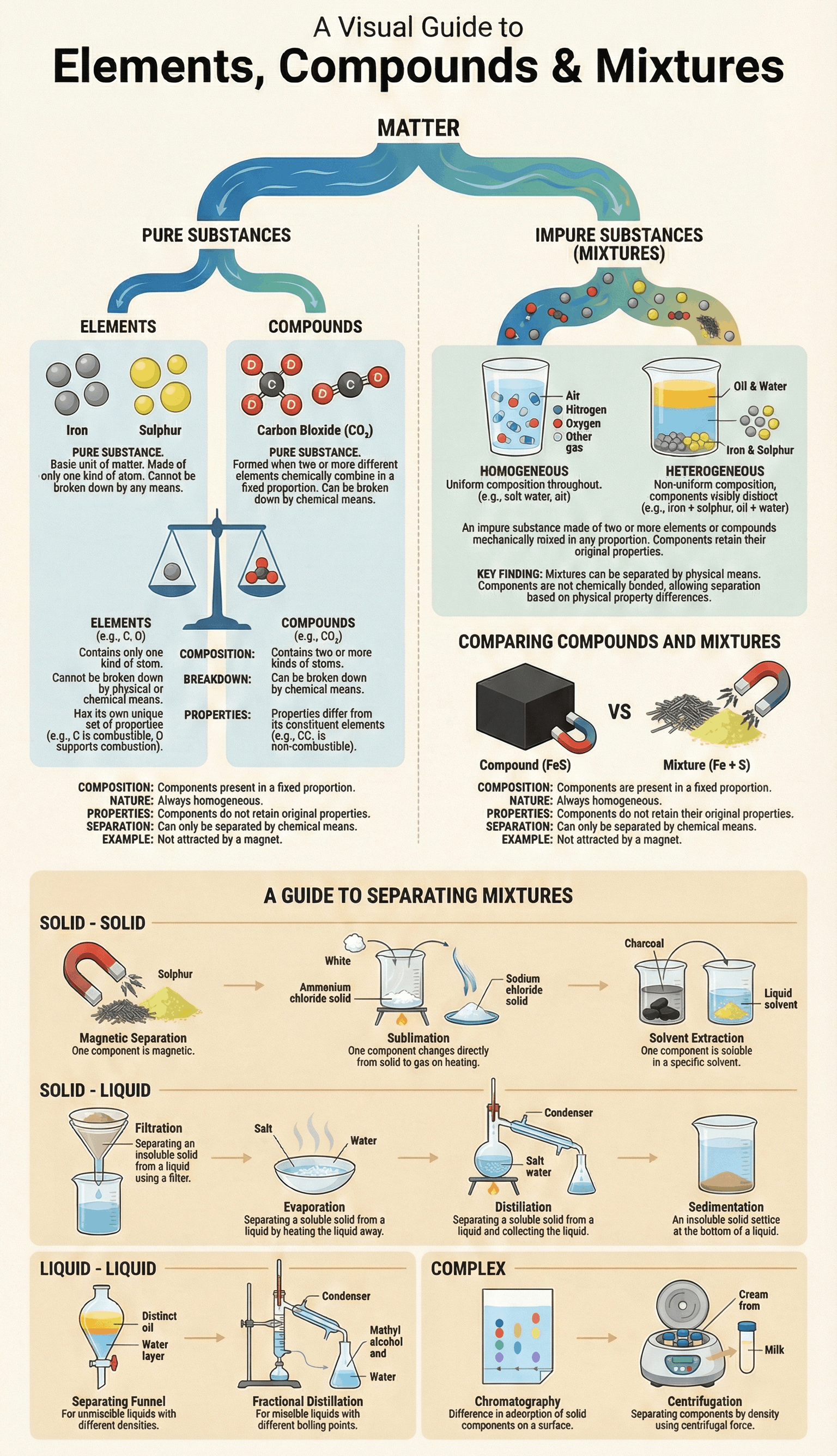
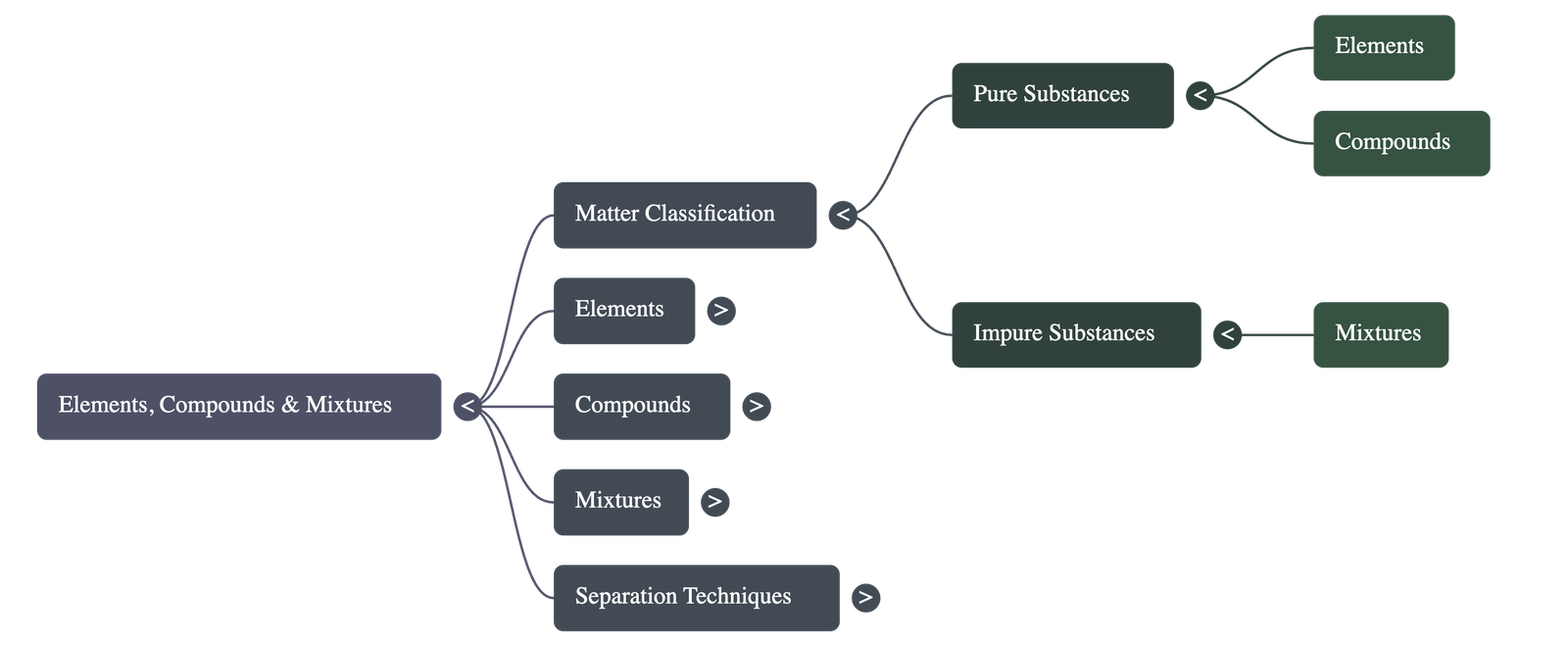
- Matter is broadly classified into two categories: Pure Substances and Impure Substances.
- Pure Substances include Elements (like Iron and Sulphur) and Compounds (like Iron Sulphide).
- Impure Substances are known as Mixtures, which can be homogeneous (like Air) or heterogeneous (like Oil and Water).
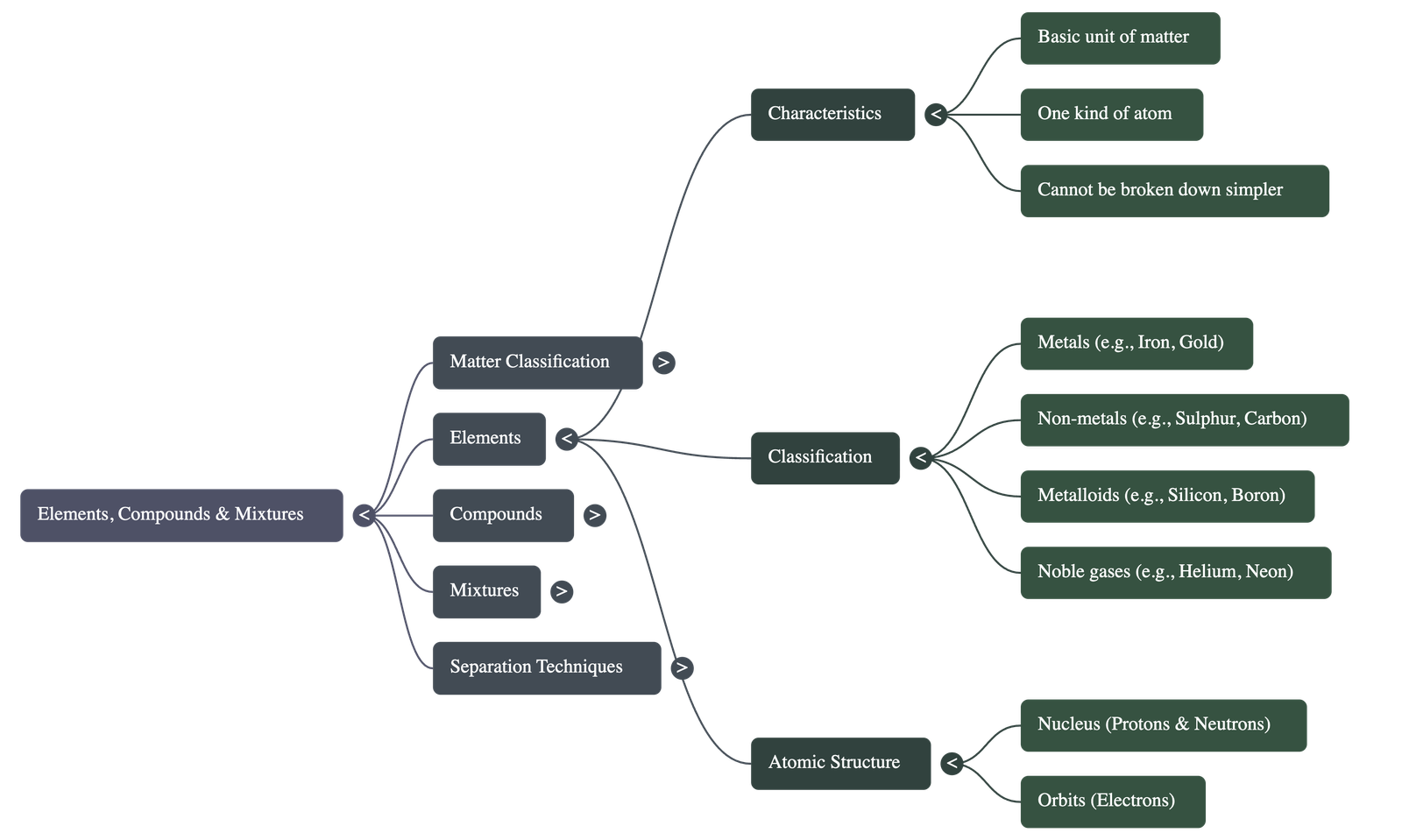
2. Elements and Atoms
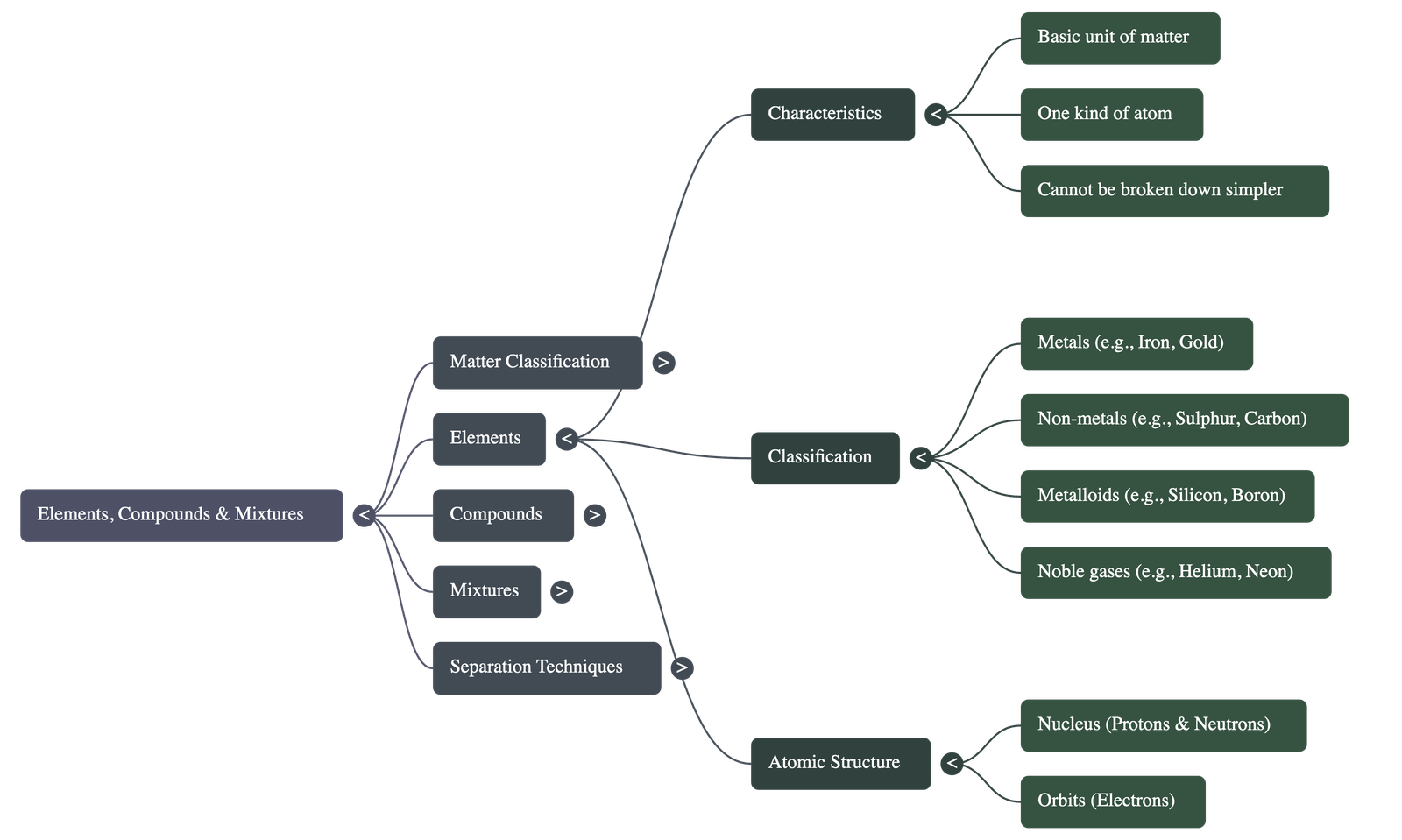
- An Element is the basic unit of matter, made up of only one kind of atom, and cannot be broken down into simpler substances.
- Atoms are the smallest particles of an element. They consist of a Nucleus (containing positive protons and neutral neutrons) surrounded by Orbits where negative electrons revolve.
- Elements are classified into Metals (lustrous, malleable, ductile, good conductors), Non-metals (non-lustrous, poor conductors), Metalloids (showing properties of both), and Noble Gases (chemically inactive).
3. Molecules and Atomicity
- A Molecule is the smallest particle of a substance that can normally exist independently while retaining its physical and chemical properties.
- Atomicity refers to the number of atoms in a molecule: Monoatomic (1 atom, e.g., Helium), Diatomic (2 atoms, e.g., Oxygen), or Polyatomic (more than 2 atoms, e.g., Ozone).
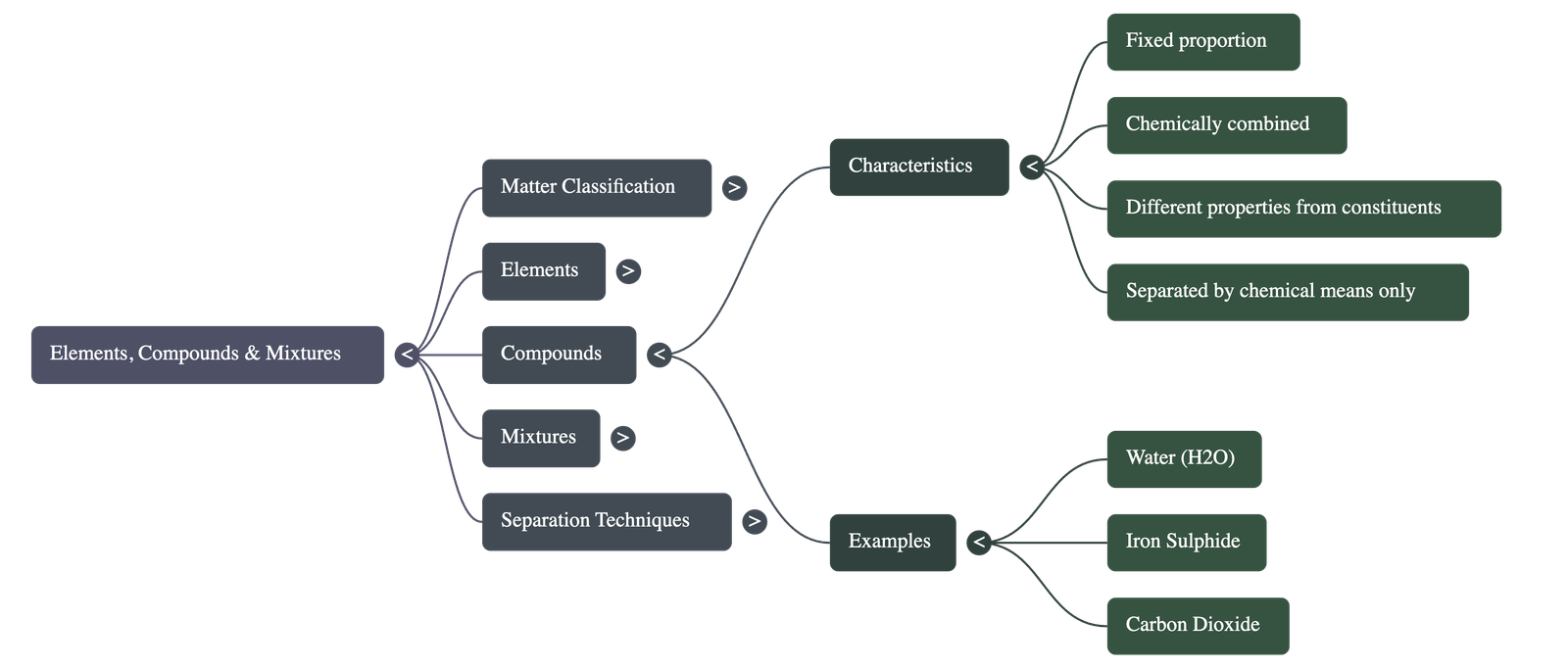
4. Compounds
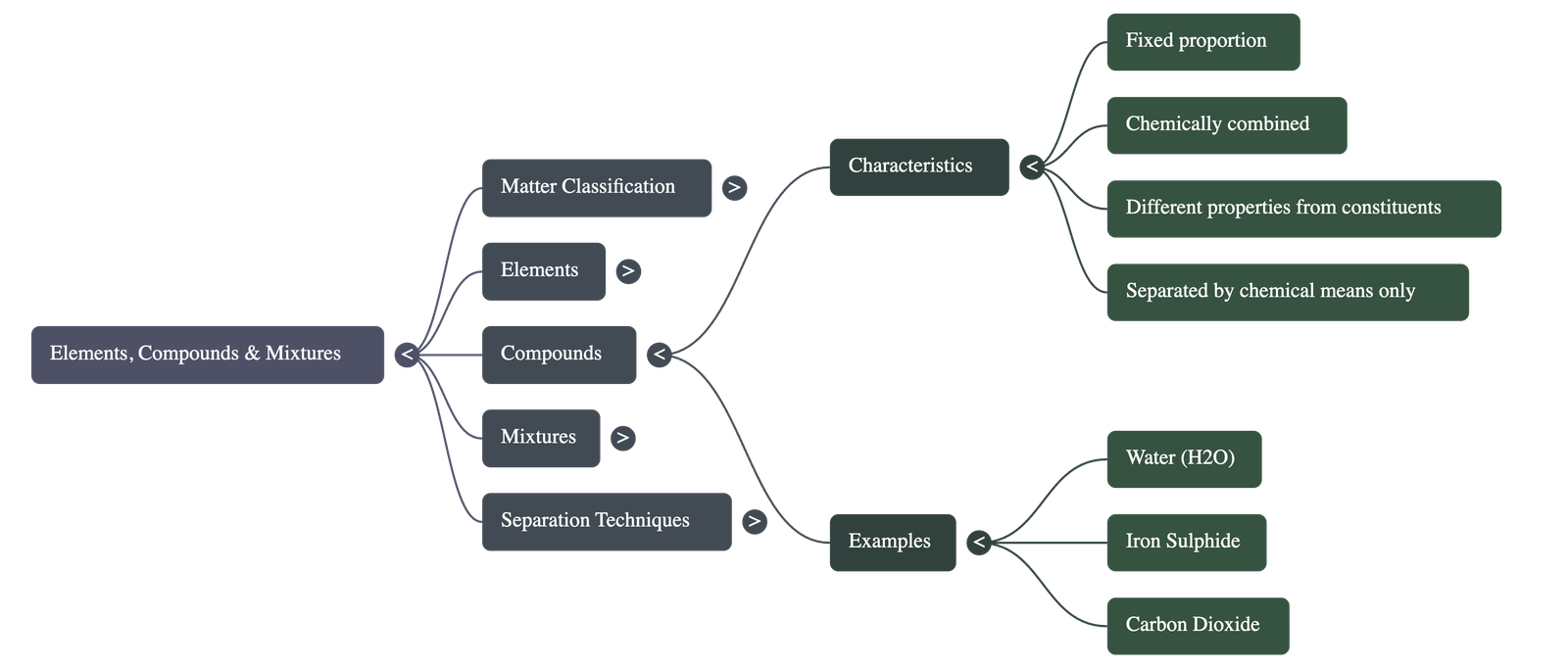
- A Compound is a pure substance formed by the chemical combination of two or more different elements in a fixed proportion.
- Components of a compound lose their original properties; for example, combustible Carbon and life-supporting Oxygen combine to form Carbon Dioxide, which is a non-supporter of combustion.
- The constituents of a compound can only be separated by chemical means.
5. Mixtures
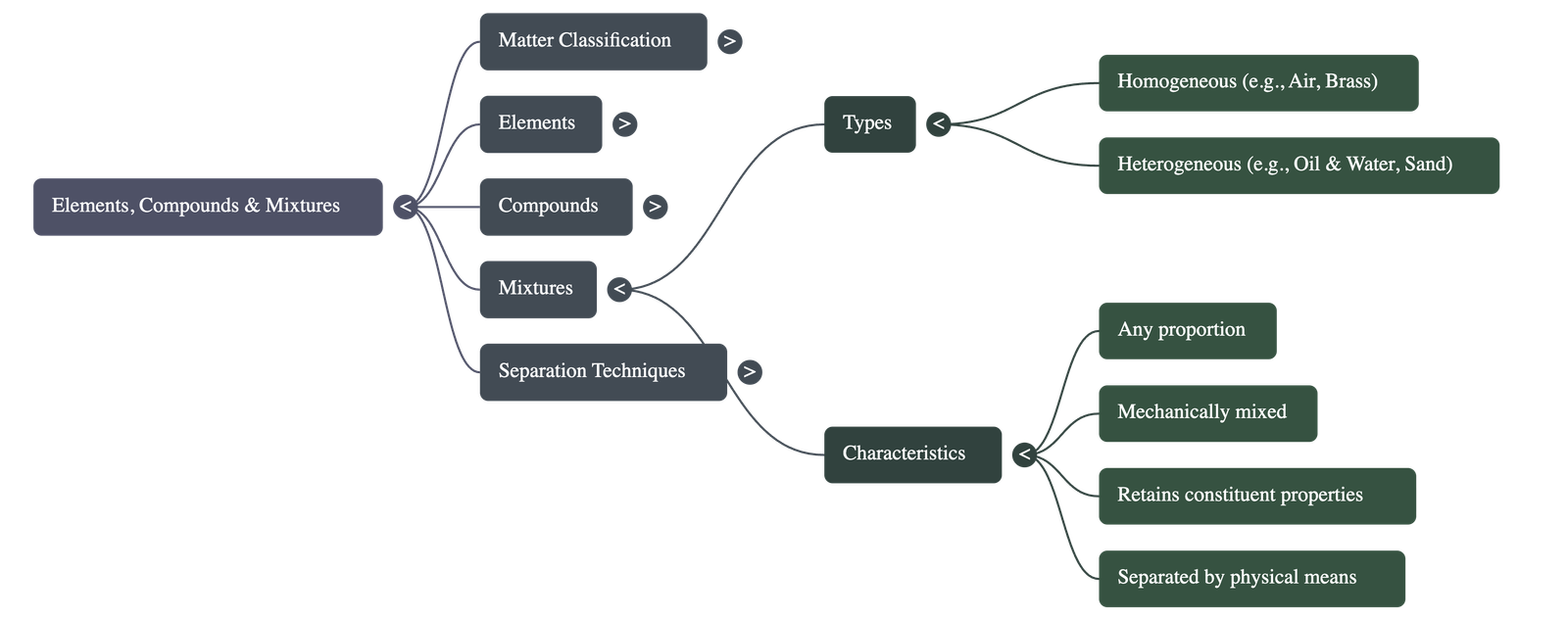
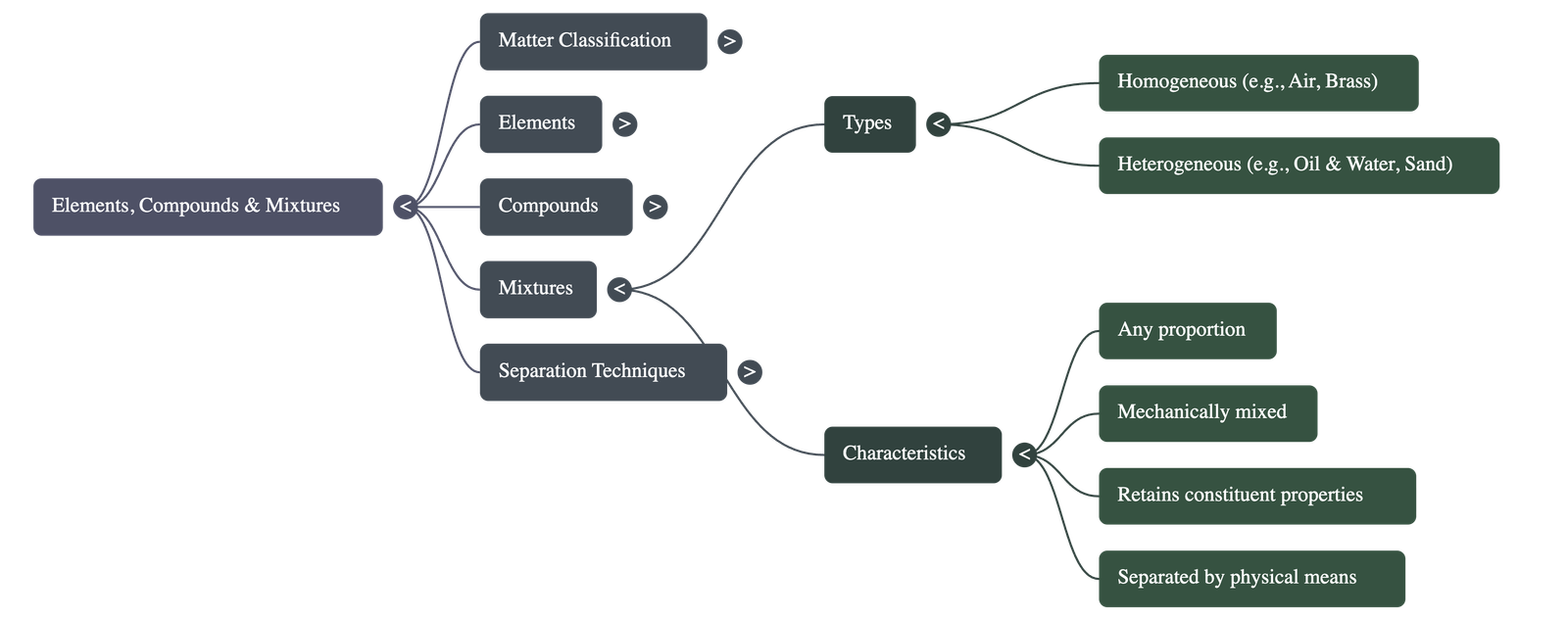
- A Mixture is formed when two or more substances are mechanically mixed in any proportion without a chemical reaction.
- Constituents of a mixture retain their original properties (e.g., in an iron and sulphur mixture, iron is still attracted by a magnet).
- Homogeneous mixtures have a uniform composition throughout (e.g., Salt solution), while Heterogeneous mixtures do not (e.g., Sand and water).
6. Separation Techniques
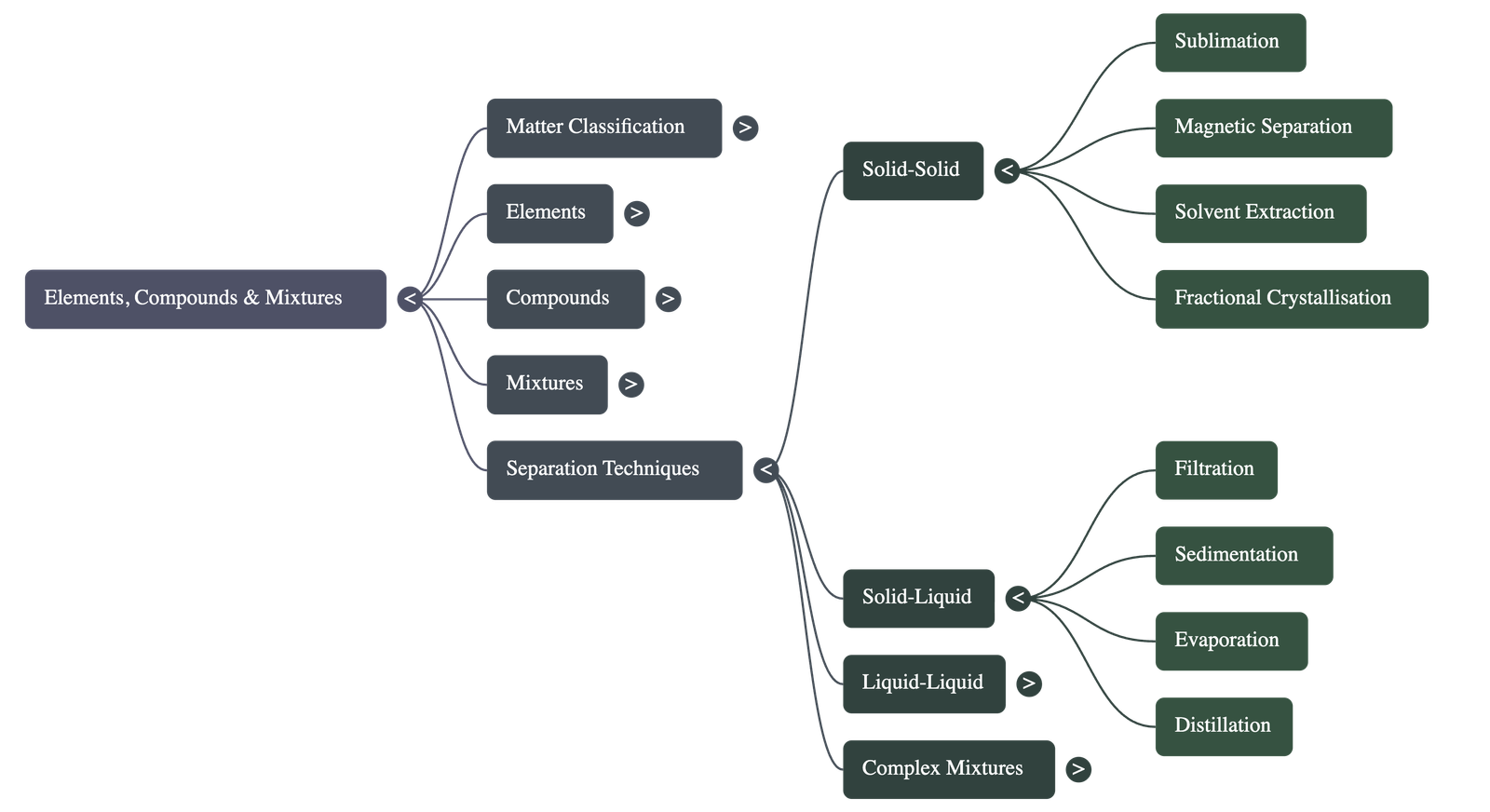
- Solid-Solid Separation: Includes Sublimation (for substances like Ammonium Chloride), Magnetic Separation (using magnets for iron), Solvent Extraction (based on solubility), and Fractional Crystallisation.
- Solid-Liquid Separation: Includes Filtration (using filter paper), Sedimentation/Decantation (settling of solids), Evaporation (recovering soluble solids), and Distillation (recovering both solid and liquid).
- Liquid-Liquid Separation: Separating Funnels are used for immiscible liquids (like Oil and Water), while Fractional Distillation is used for miscible liquids with different boiling points.
- Complex Mixtures: Chromatography is used to separate different dyes in ink based on adsorption, and Centrifugation uses centrifugal force to separate components based on density (e.g., cream from milk).
Do checkout all questions & answers of this chapter.
Quick Navigation:
| | | | |
1 / 1
Quick Navigation:
| | | | |

Quick Navigation:
| | | | |