Quick Navigation:
| | |
Water Resources
1. Introduction to Water Availability
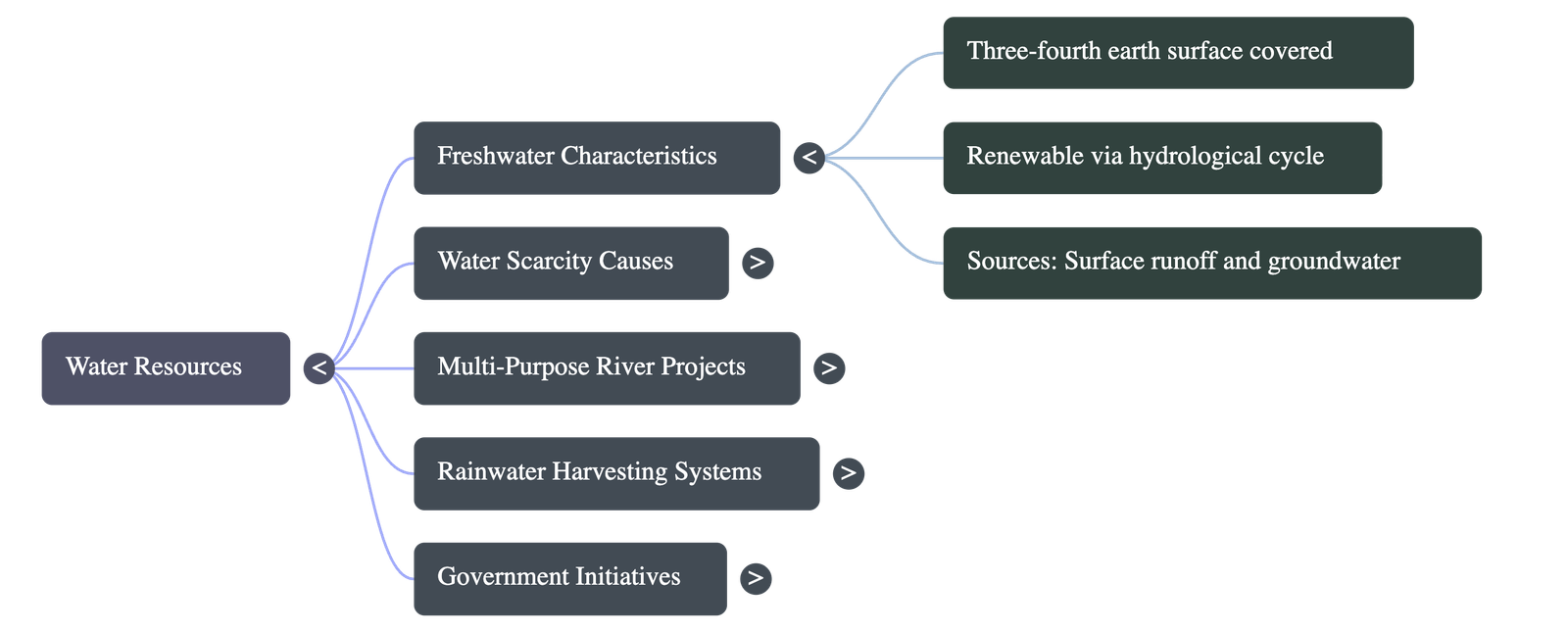
- Three-fourths of the earth's surface is covered with water, but only a small proportion is freshwater available for use.
- Freshwater is primarily obtained from surface run-off and groundwater.
- Water is a renewable resource, continually renewed and recharged through the hydrological cycle.
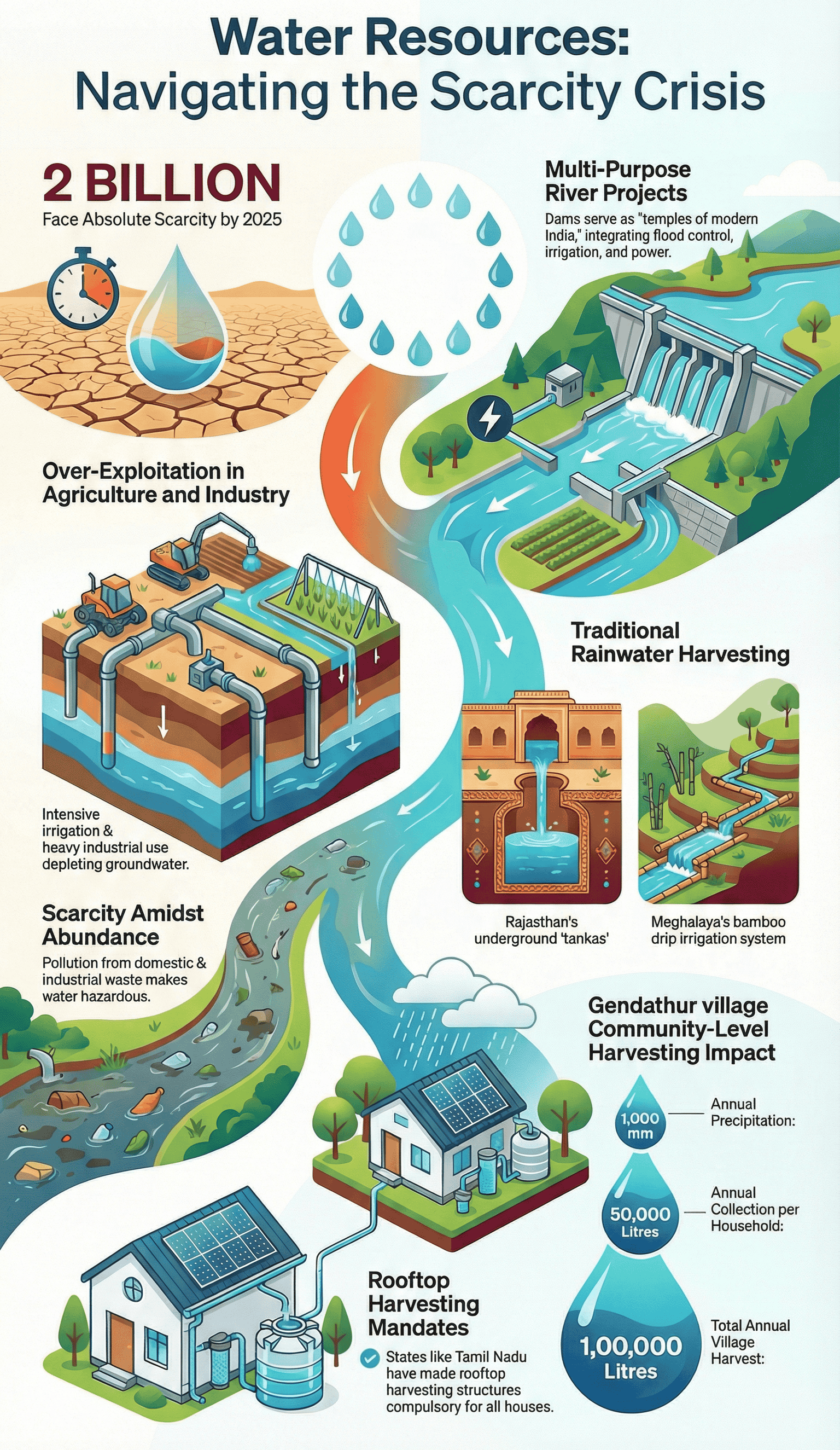
- Despite this abundance, it is predicted that by 2025, nearly two billion people will live in absolute water scarcity.
2. Water Scarcity and Its Causes
Water scarcity is not limited to arid regions like Rajasthan; it also affects areas with ample rainfall due to mismanagement.
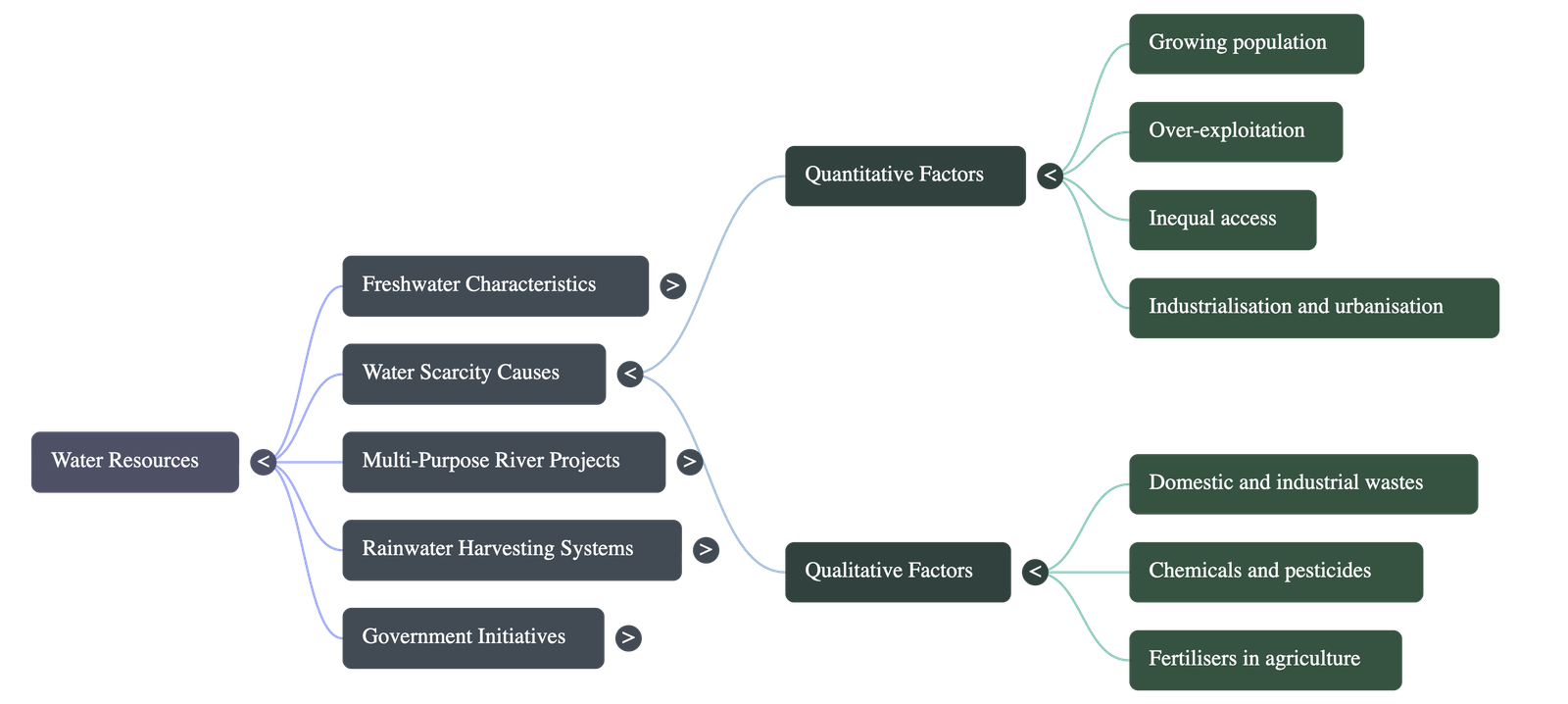
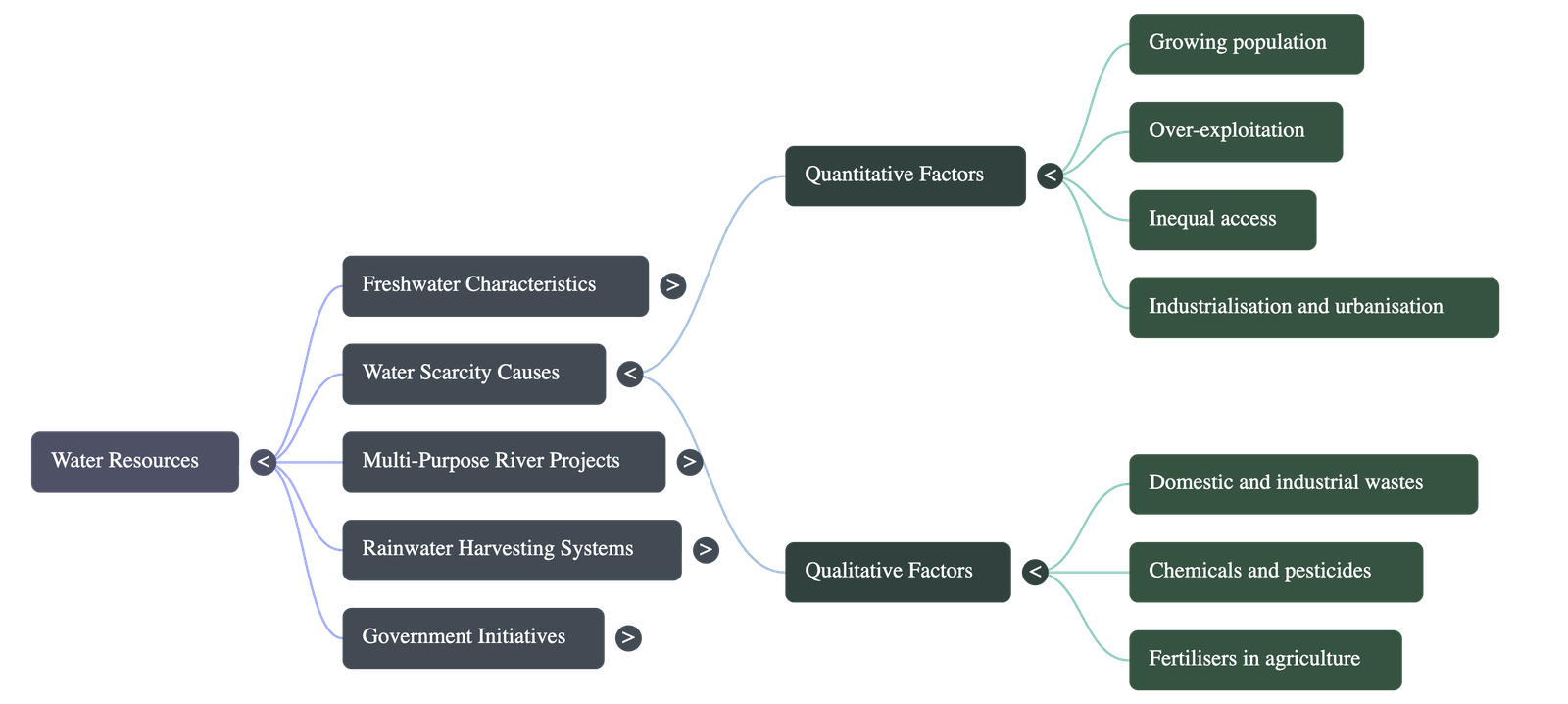
- Over-exploitation and Unequal Access: Scarcity often results from excessive use and unequal distribution among different social groups.
- Population Growth: A large population requires more water for domestic use and food production. To increase food supplies, water resources are over-exploited for irrigated agriculture (the largest consumer of water).
- Industrialisation: Post-independence industrialisation has exerted pressure on freshwater resources. Industries are heavy users of water and rely on hydroelectric power.
- Urbanisation: Rapid urban growth and modern lifestyles have increased water and energy consumption. Many housing societies have their own groundwater pumping devices, leading to depleted water tables.
- Pollution: Even where water is available, quality may be poor due to domestic and industrial waste, chemicals, pesticides, and fertilisers, making it hazardous for human use.
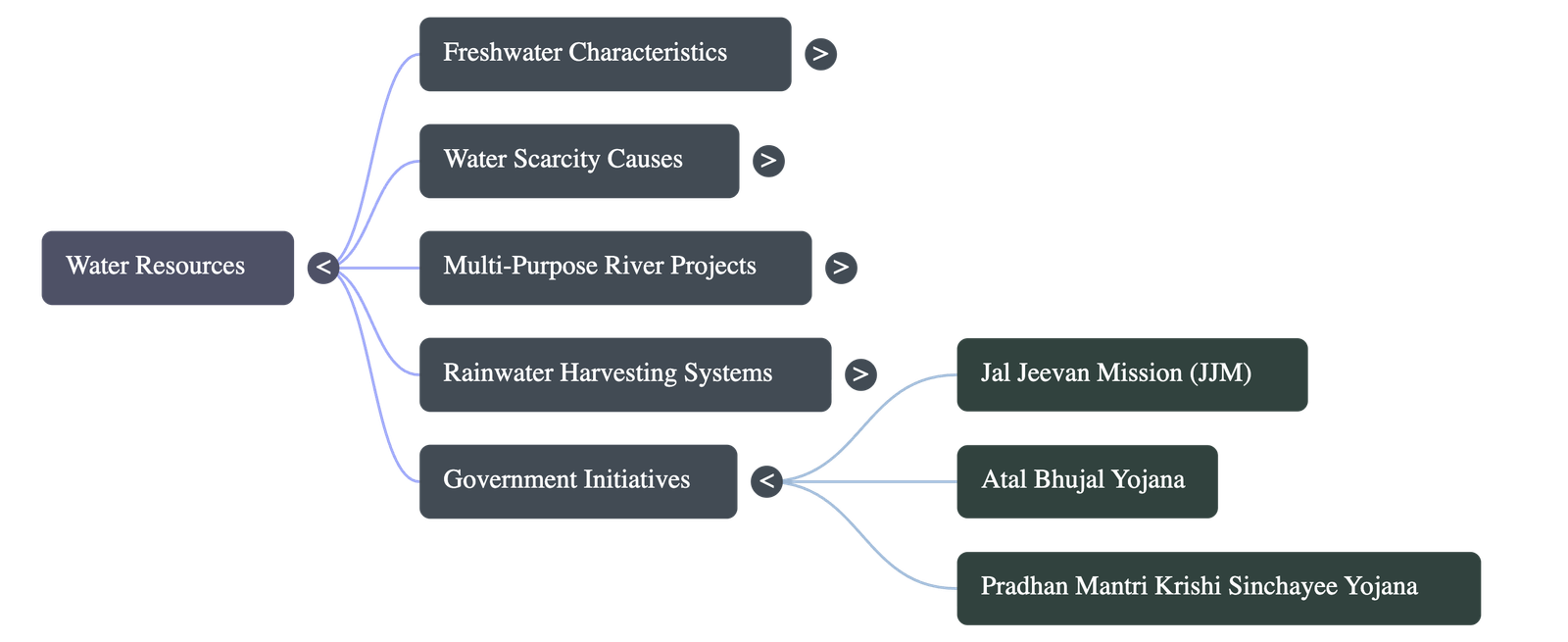
Jal Jeevan Mission (JJM): A government initiative aimed at providing assured potable piped water (55 litres per capita per day) to every rural household.
3. Multi-Purpose River Projects and Integrated Management
- Historical Context: Since ancient times (e.g., Chandragupta Maurya’s reign), India has built sophisticated hydraulic structures like dams, reservoirs, embankments, and canals.
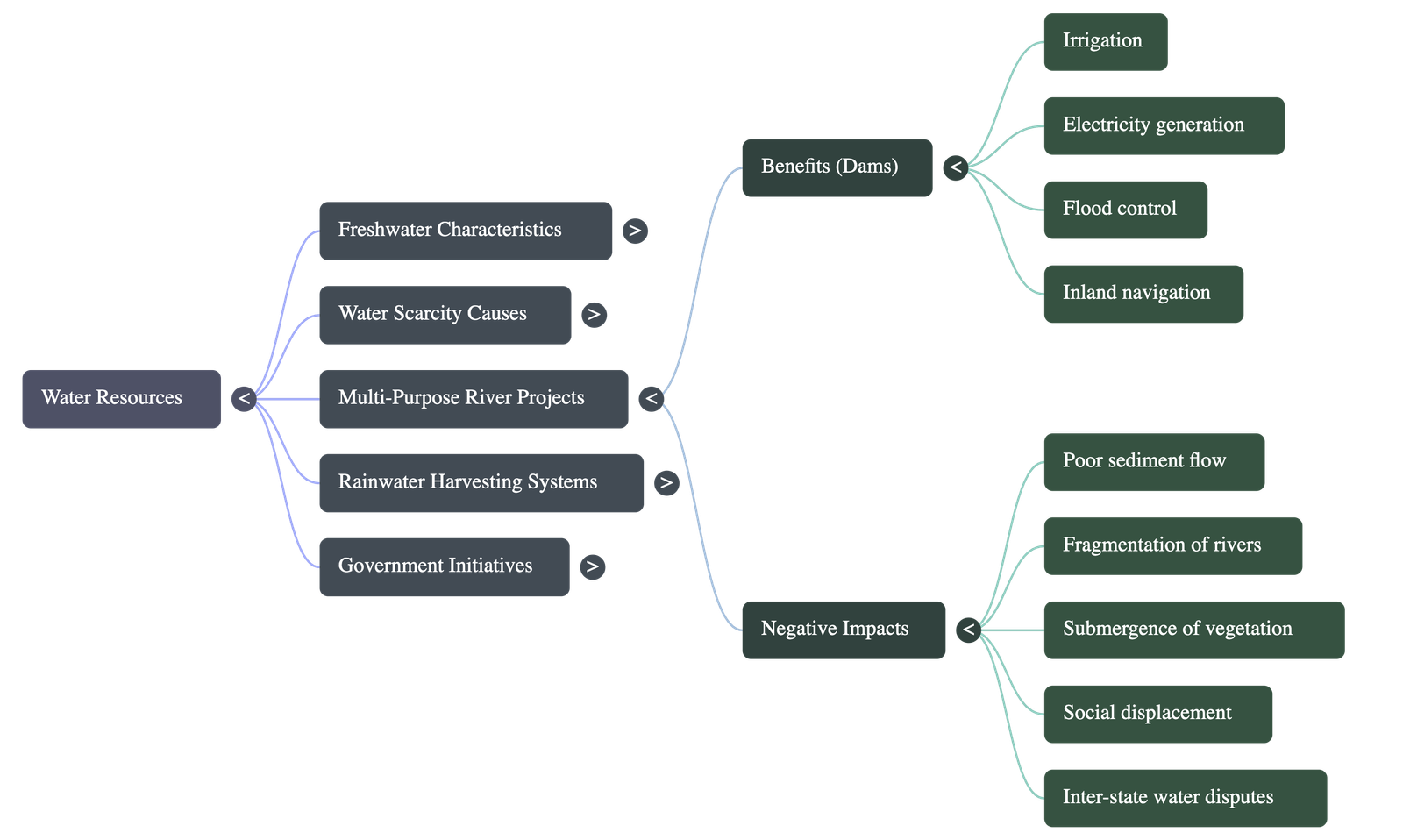
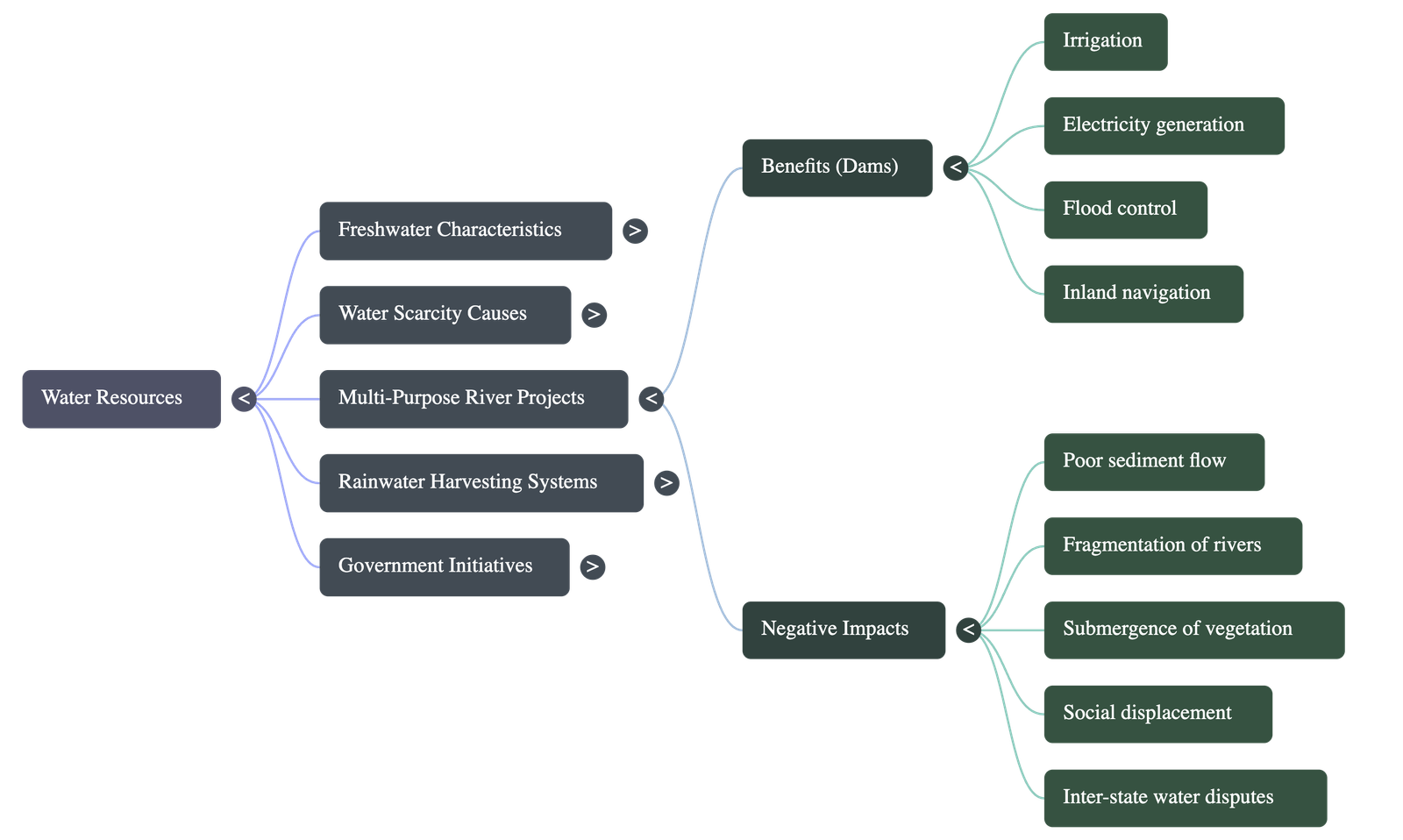
- Modern Dams: Termed "Multi-purpose Projects" because they serve many integrated uses:
- Irrigation
- Electricity generation (Hydel power)
- Water supply for domestic and industrial use
- Flood control
- Recreation, inland navigation, and fish breeding
- Examples: Bhakra-Nangal Project (Sutlej-Beas basin), Hirakud Project (Mahanadi basin), Sardar Sarovar Dam (Narmada river).
- "Temples of Modern India": Jawaharlal Nehru believed dams would integrate agricultural development with rapid industrialisation.
4. Criticism of Large Dams
- Ecological Impact: Damming rivers affects their natural flow, causing poor sediment flow and excessive sedimentation at the reservoir bottom. This leads to rockier stream beds and destroys aquatic habitats.
- Fragmenting Rivers: Dams make it difficult for aquatic fauna to migrate, especially for spawning.
- Submergence: Reservoirs submerge existing vegetation and soil, leading to decomposition over time.
- Social Movements: Projects like the Narmada Bachao Andolan arose due to the large-scale displacement of local communities who often do not benefit from the projects.
- Irony of Flood Control: Dams constructed to control floods have occasionally triggered floods due to sediment buildup. They have also failed to control floods during excessive rainfall.
- Other Issues: Induced earthquakes, water-borne diseases, pollution, and soil salinisation due to intensive irrigation.
5. Rainwater Harvesting
Considered a socio-economically and environmentally viable alternative to large dams.
Traditional Methods:
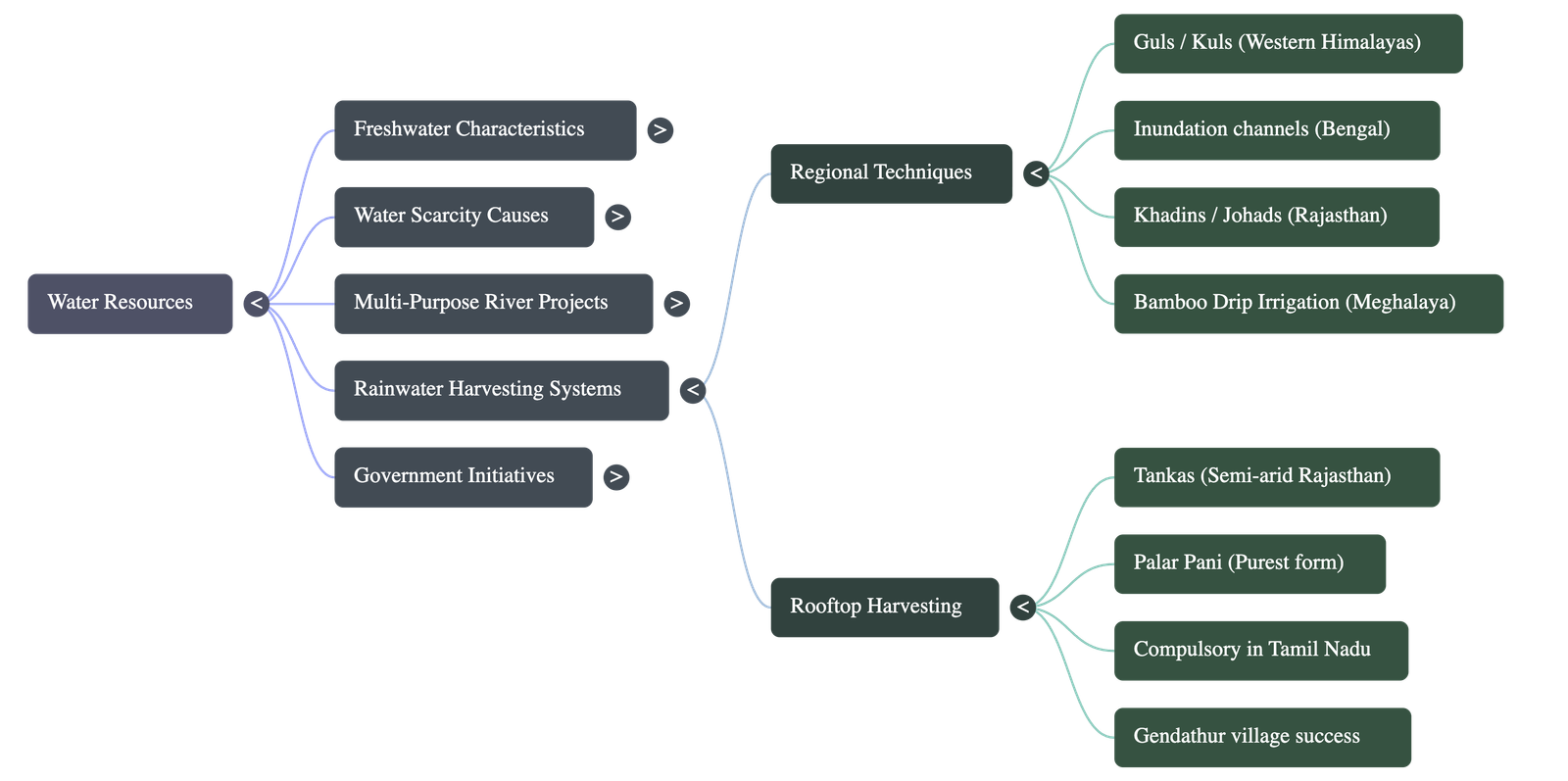
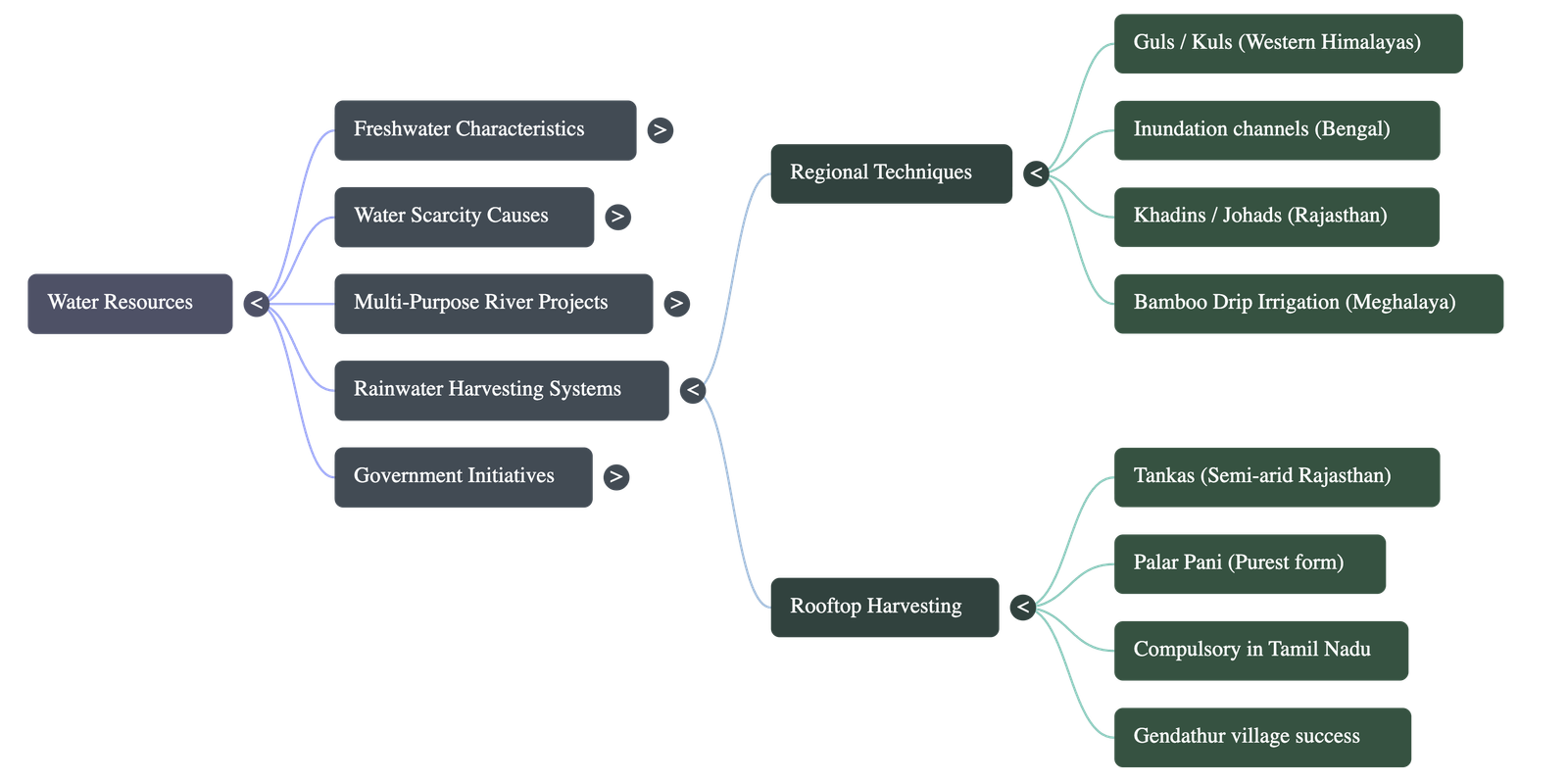
- Guls or Kuls: Diversion channels built in the hill and mountainous regions (Western Himalayas) for agriculture.
- Rooftop Rainwater Harvesting: Commonly practiced in Rajasthan to store drinking water.
- Inundation Channels: Developed in the floodplains of Bengal to irrigate fields.
- Khadins and Johads: In arid regions (e.g., Jaisalmer), agricultural fields were converted into rain-fed storage structures that allowed water to stand and moisten the soil.
The 'Tankas' of Rajasthan:
- Underground tanks built inside houses or courtyards in semi-arid regions (Bikaner, Phalodi, Barmer).
- Connected to sloping roofs via pipes to collect rainwater.
- Stored water is called Palar Pani, considered the purest form of natural water.
- Used during summer when other sources dry up; adjoining rooms are built to stay cool.
Modern Adaptations and Success Stories:
- Gendathur (Karnataka): A remote village where nearly 200 households installed rooftop harvesting systems, making the village rich in rainwater.
- Bamboo Drip Irrigation (Meghalaya): A 200-year-old system using bamboo pipes to transport stream water over long distances to water plants with high efficiency.
- Tamil Nadu: The first state in India to make rooftop rainwater harvesting compulsory for all houses, with legal provisions for defaulters.
- Shillong: Despite being near Cherapunjee (highest rainfall), the city faces water shortages. Rooftop harvesting meets 15-25% of household water requirements.
Do checkout all questions & answers of this chapter.
Quick Navigation:
| | |
1 / 1
Quick Navigation:
| | |