Quick Navigation:
| | |
Climate
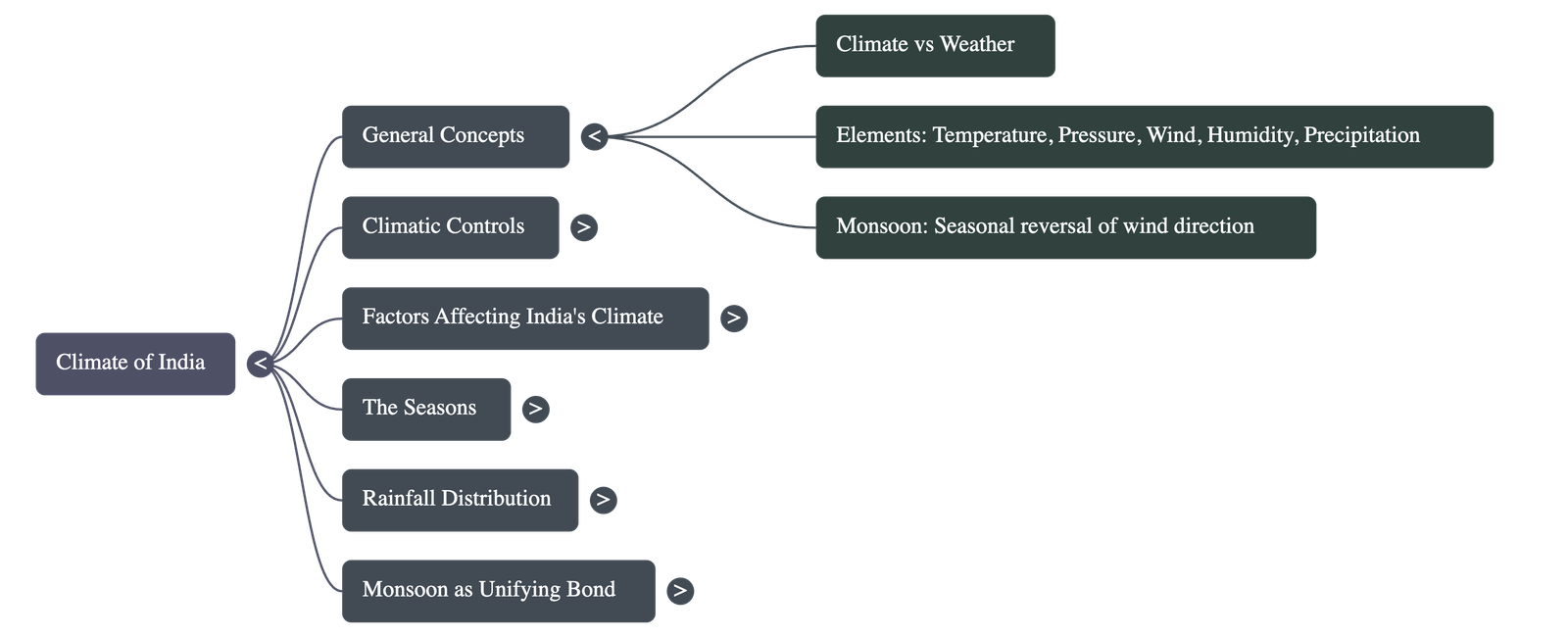
Introduction to Weather and Climate
- Climate refers to the sum total of weather conditions and variations over a large area for a long period of time (more than thirty years).
- Weather describes the state of the atmosphere over an area at any specific point in time.
- The elements of both weather and climate include temperature, atmospheric pressure, wind, humidity, and precipitation.
- India’s climate is described as the ‘monsoon’ type, a pattern primarily found in South and Southeast Asia.
- The word ‘monsoon’ is derived from the Arabic word ‘mausim’ (season) and refers to the seasonal reversal in wind direction.
Regional Variations in India
- Temperature: In summer, temperatures can hit 50°C in the Rajasthan desert while staying at 20°C in Pahalgam. In winter, Drass can drop to -45°C while Thiruvananthapuram remains at 22°C.
- Diurnal Range: The Thar Desert sees huge day-night variations (50°C to 15°C), whereas Andaman and Nicobar islands have almost no difference.
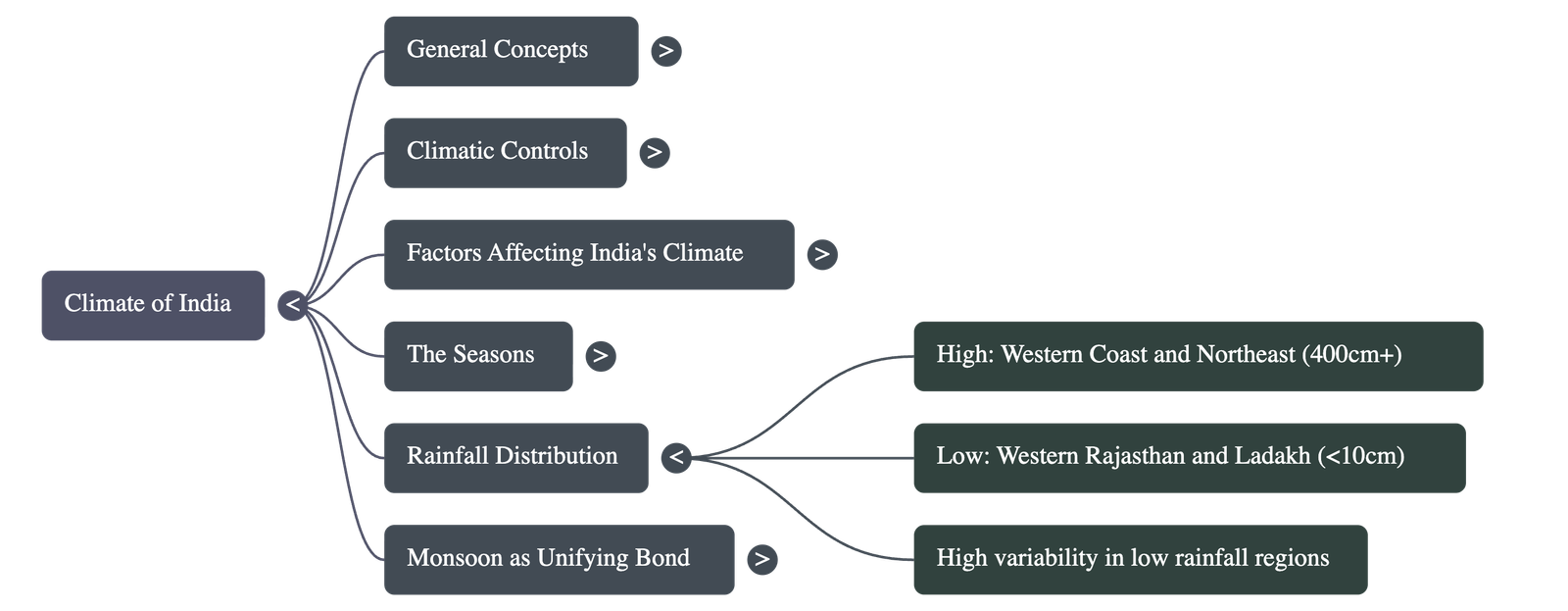
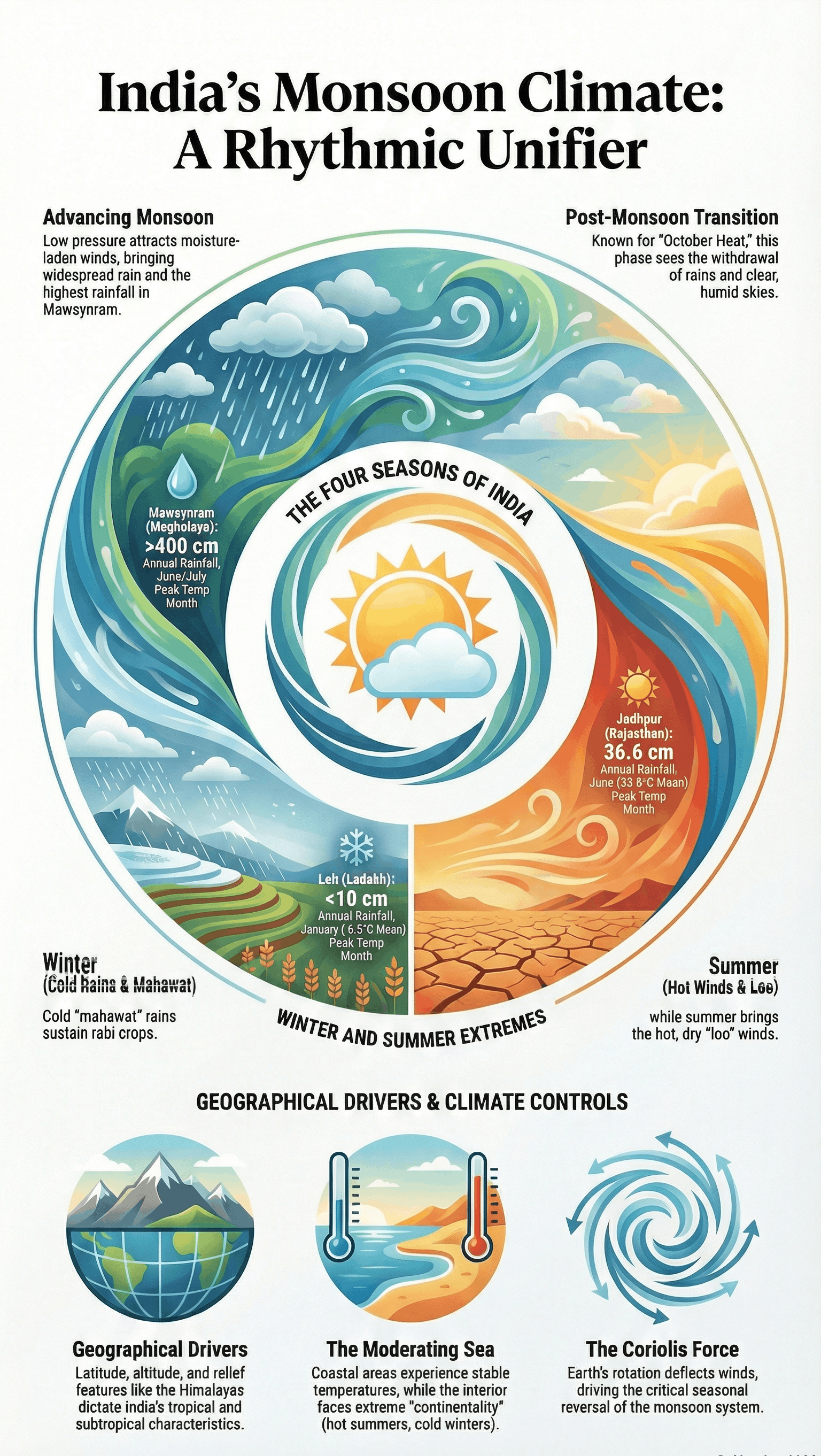
- Precipitation: While the Himalayas experience snowfall, the rest of the country receives rain. Annual rainfall varies from over 400 cm in Meghalaya to less than 10 cm in Ladakh and western Rajasthan.
- Seasonal Distribution: Most of India receives rain from June to September, but the Tamil Nadu coast gets a large portion of its rain during October and November.
Climatic Controls and Factors
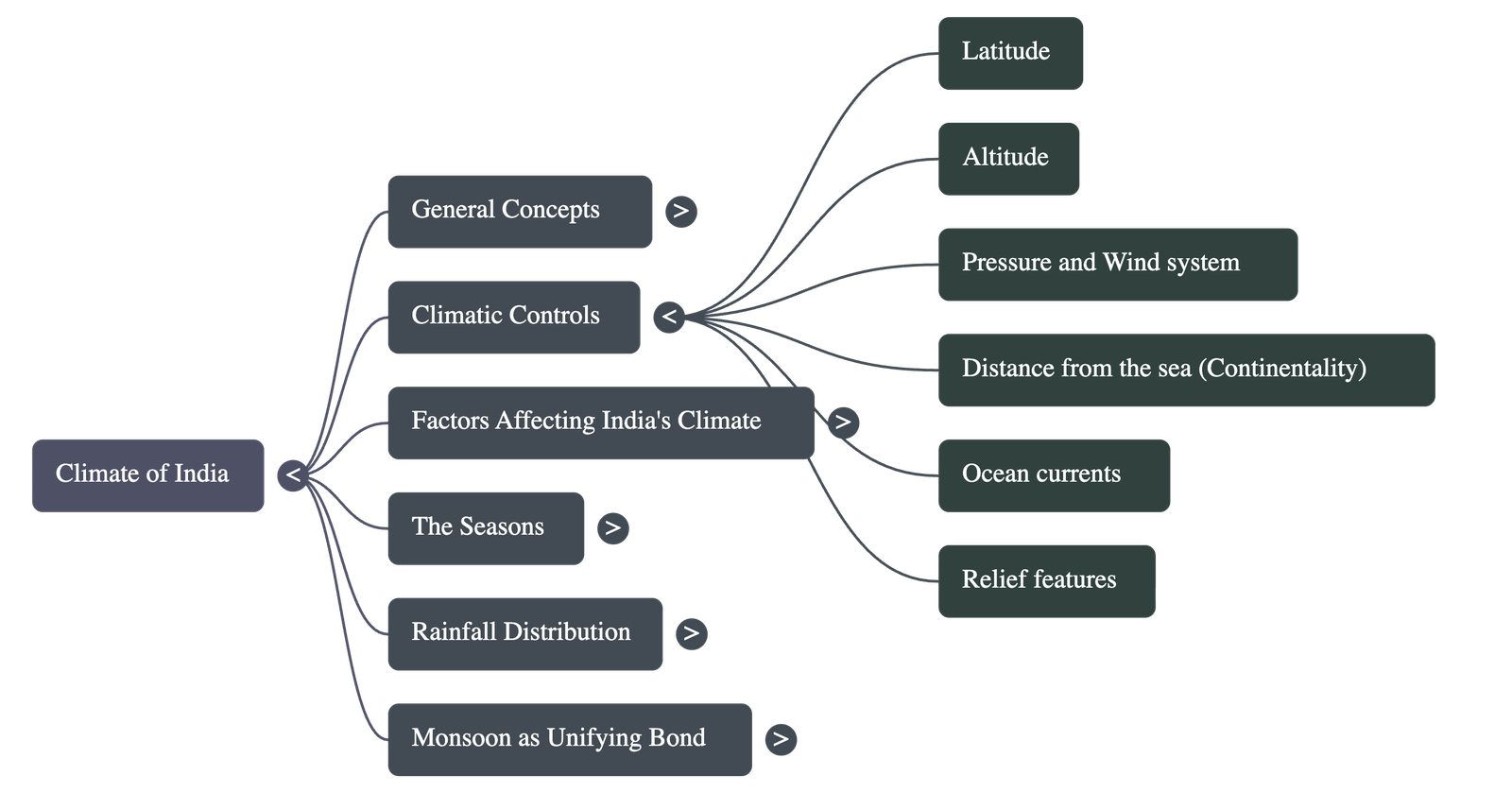
- Six Major Controls: Latitude, altitude, pressure and wind system, distance from the sea (continentality), ocean currents, and relief features.
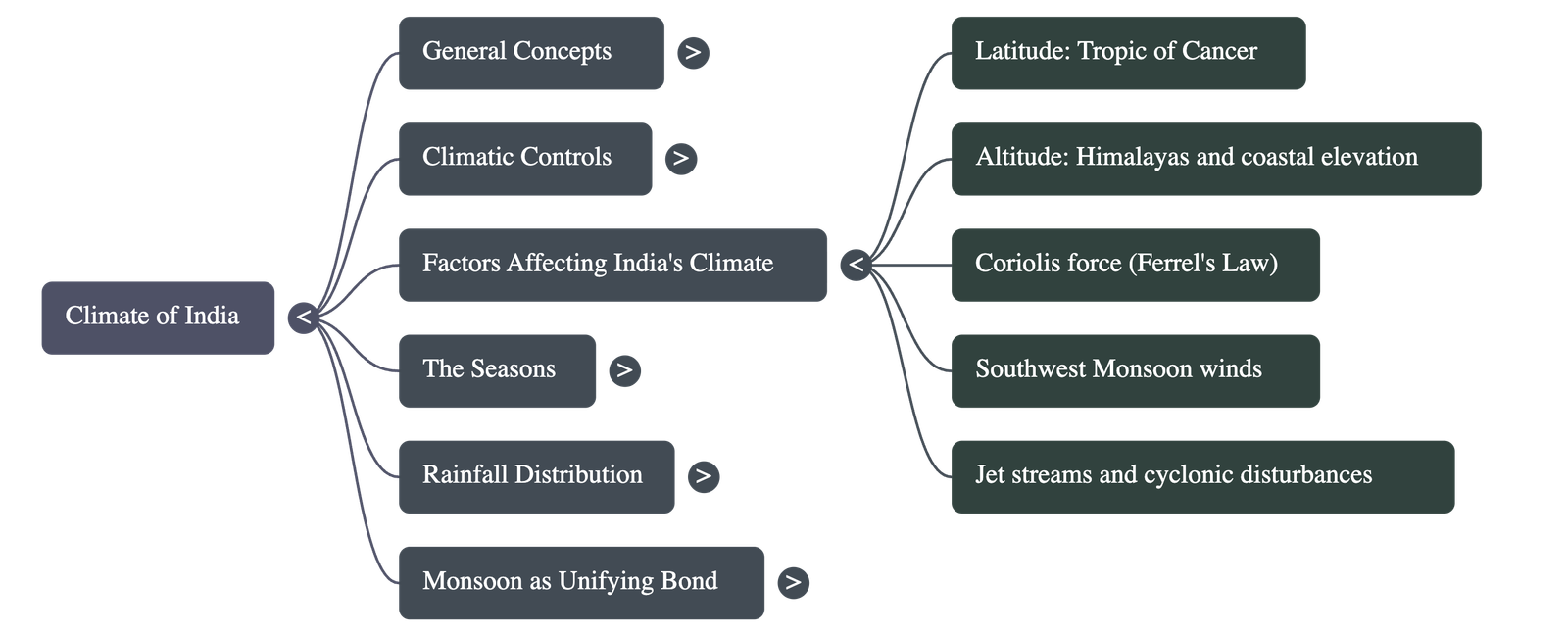
- Latitude: The Tropic of Cancer passes through the middle of India, giving the country both tropical and subtropical climatic characteristics.
- Altitude: The Himalayas (average height 6,000m) block cold Central Asian winds, ensuring milder winters for the subcontinent.
- Pressure and Winds: India is influenced by North Easterly winds, jet streams, and the Coriolis force (which deflects winds to the right in the northern hemisphere).
- Southwest Monsoon: In summer, low pressure over the interior landmass draws moisture-laden air from the high-pressure area over the southern Indian Ocean.
The Four Main Seasons
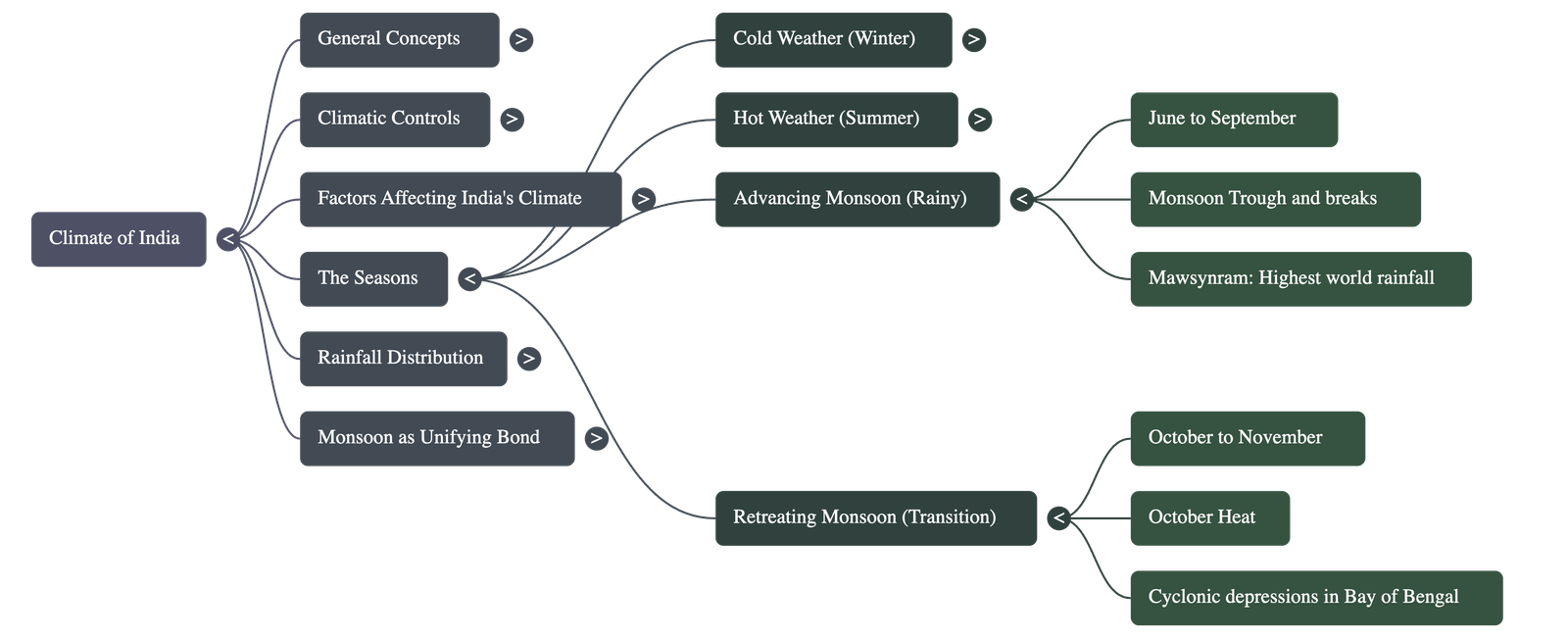
- The Cold Weather Season (Winter): From mid-November to February. Characterized by clear skies, low temperatures, and "Mahawat" (small amounts of winter rain vital for rabi crops).
- The Hot Weather Season (Summer): From March to May. Features rising temperatures and falling air pressure. Notable for the ‘Loo’ (hot, dry winds) and ‘Kaal Baisakhi’ thunderstorms in West Bengal.
- Advancing Monsoon (Rainy Season): From June to September. The Southwest Monsoon covers the country. Mawsynram receives the world’s highest rainfall. This season is known for "breaks" (wet and dry spells).
- Retreating/Post Monsoon (Transition): During October and November. Marked by the withdrawal of the monsoon, clear skies, and "October heat" (high temperature and humidity). This period often sees destructive cyclones on the eastern coast.
Distribution and Variability
- Highest rainfall occurs in the Western Ghats and Northeastern India.
- Low rainfall areas include western Rajasthan, Gujarat, Haryana, Punjab, and the interior Deccan plateau.
- Monsoon rain is highly variable; areas of high rainfall are prone to floods, while low rainfall areas are drought-prone.
The Monsoon as a Unifying Bond
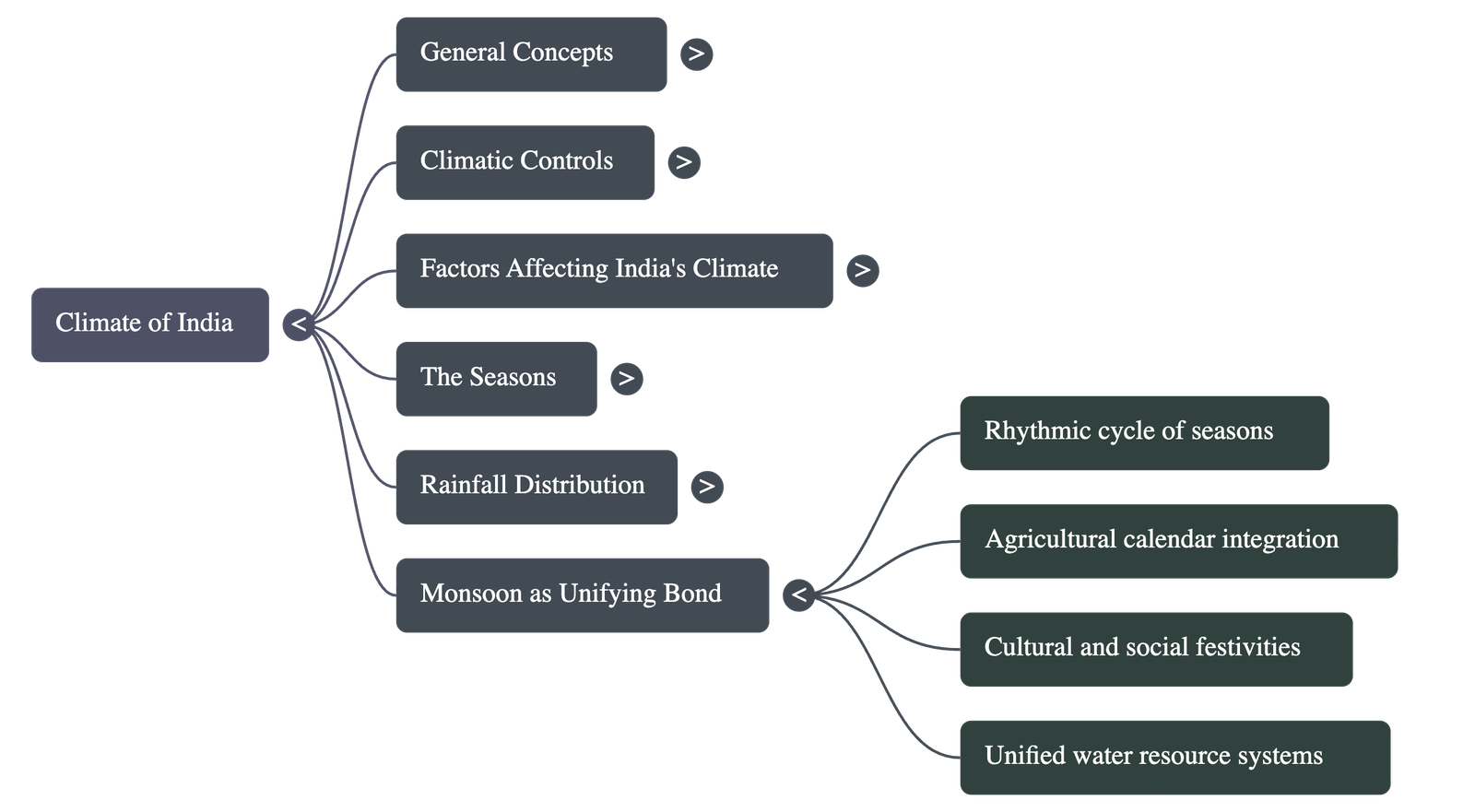
The monsoon acts as a primary unifying force for the Indian subcontinent. The rhythmic cycle of seasons, the agricultural calendar, the flora and fauna, and the life of the people (including festivals) all revolve around the monsoon. It provides the water necessary to set agricultural activities in motion, binding the entire country from North to South and East to West.
Do checkout all questions & answers of this chapter.
Quick Navigation:
| | |
1 / 1
Quick Navigation:
| | |