Quick Navigation:
| | | |
Factors of Production
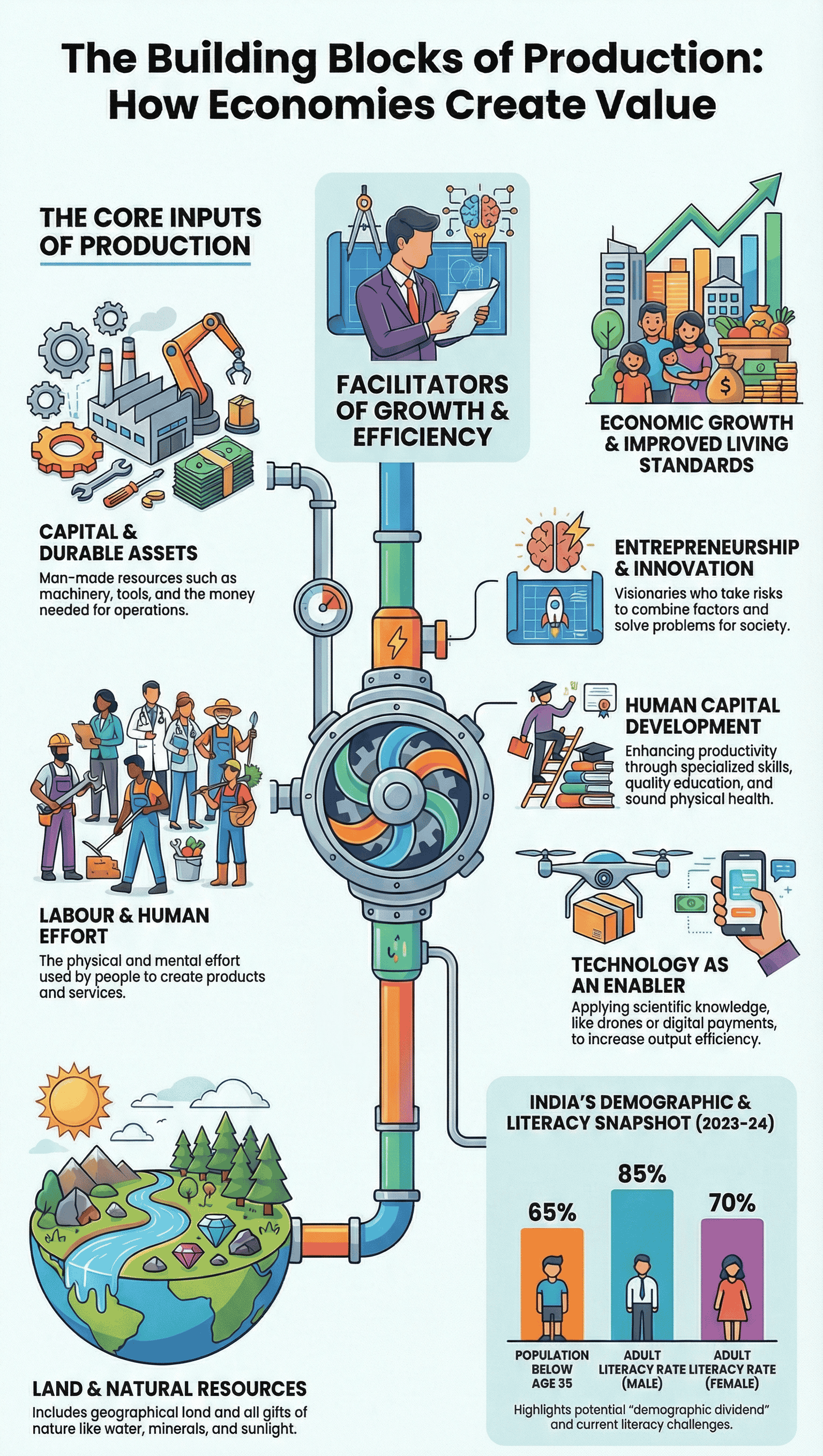
Introduction: Every product goes through a production process before reaching the consumer. The resources or inputs required to produce these goods and services are known as the factors of production. Businesses combine these factors to create opportunities and drive economic activities.
1. The Four Factors of Production
In economics, the inputs used in a production process are classified into four primary categories, with technology acting as a crucial facilitator:
A. Land (Natural Resources)
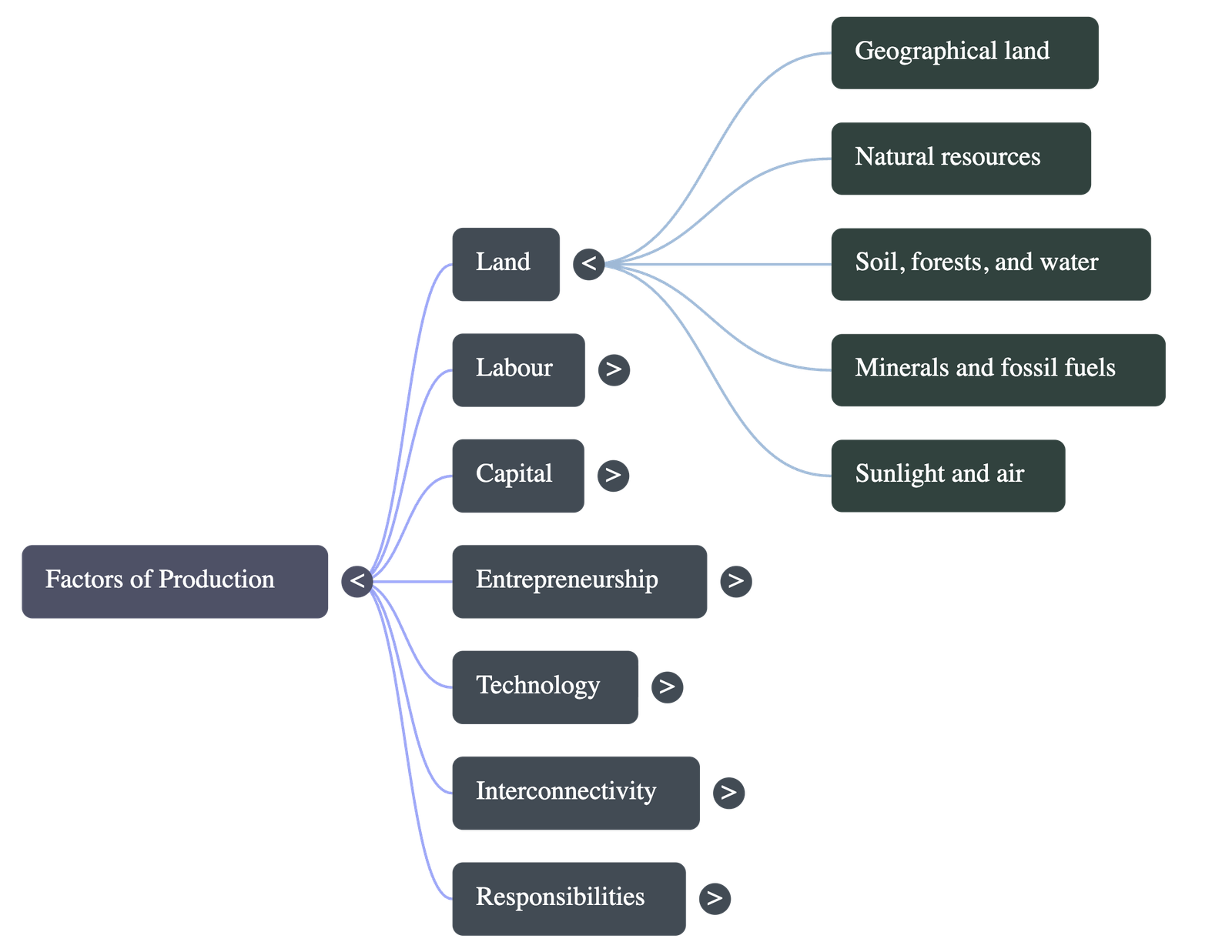
- Encompasses not just geographical land, but all natural resources.
- Includes soil, forests, water, air, sunlight, minerals, oil, and natural gas.
- Businesses either purchase the land or pay rent to use it.
B. Labour and Human Capital (Human Resources)
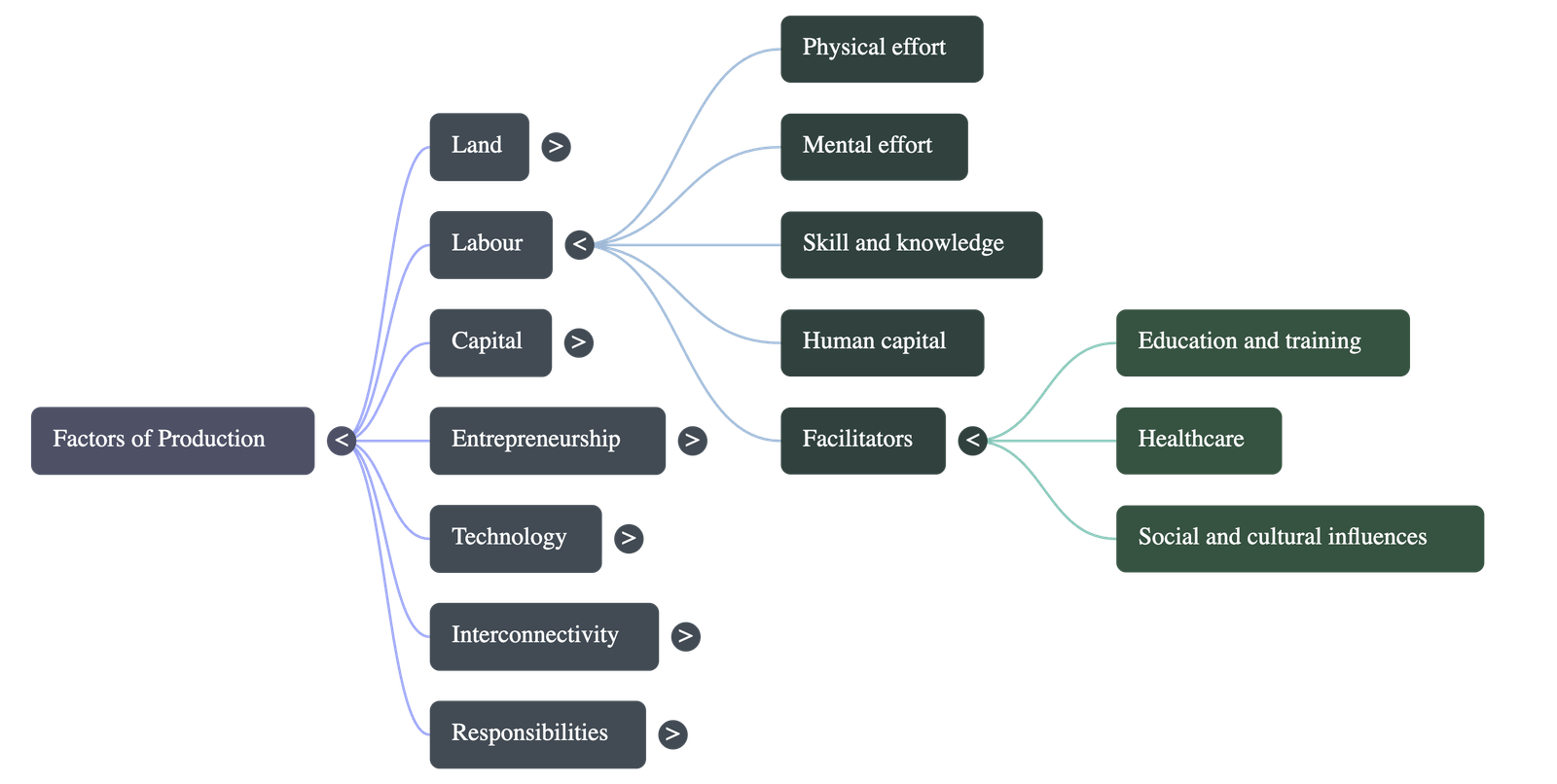
- Labour refers to the physical and mental effort used in the production process (e.g., farmers, teachers, doctors).
- Human Capital is the specialised skills, knowledge, abilities, and expertise required to perform that labour effectively.
- Facilitators of Human Capital:
- Education and Training: Prepares individuals to solve real-world problems and excel in their careers.
- Healthcare: Good health supports cognitive development, consistency, and higher workplace productivity.
- Social and Cultural Influences: Work ethics significantly impact growth. Examples include the Japanese concept of kaizen (continuous improvement) and the German emphasis on punctuality and quality.
- India's Context & Challenges: With 65% of the population below 35 years of age, India has a massive demographic dividend. However, challenges remain, such as improving the adult literacy rate (currently 85% for males and 70% for females as of 2023).
- Ancient Skill Heritage: India has a rich history of skill-based work, where work was viewed as an offering or devotion. Ancient texts like the Shilpashastras provided detailed design guidelines. A historical example includes the 2000-year-old technique of stitching wooden ships for maritime trade.
C. Capital
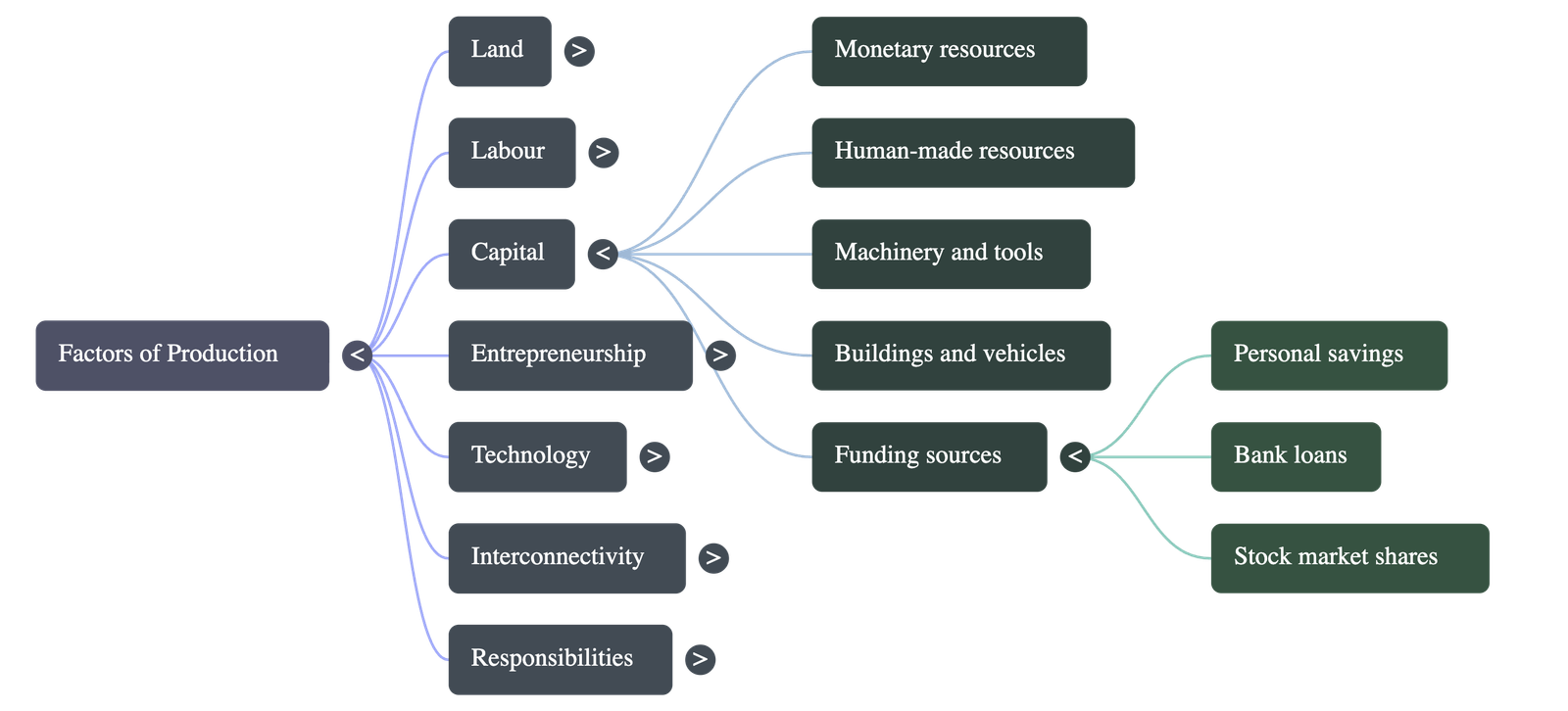
- Comprises monetary resources and durable human-made assets.
- Includes machinery, tools, equipment, vehicles, computers, and factory buildings.
- Sources of Capital: Entrepreneurs often start with personal savings, family, or friends. They can also take bank loans (paying interest) or, for larger expansions, raise money from the public through the stock market (paying dividends to shareholders).
D. Entrepreneurship
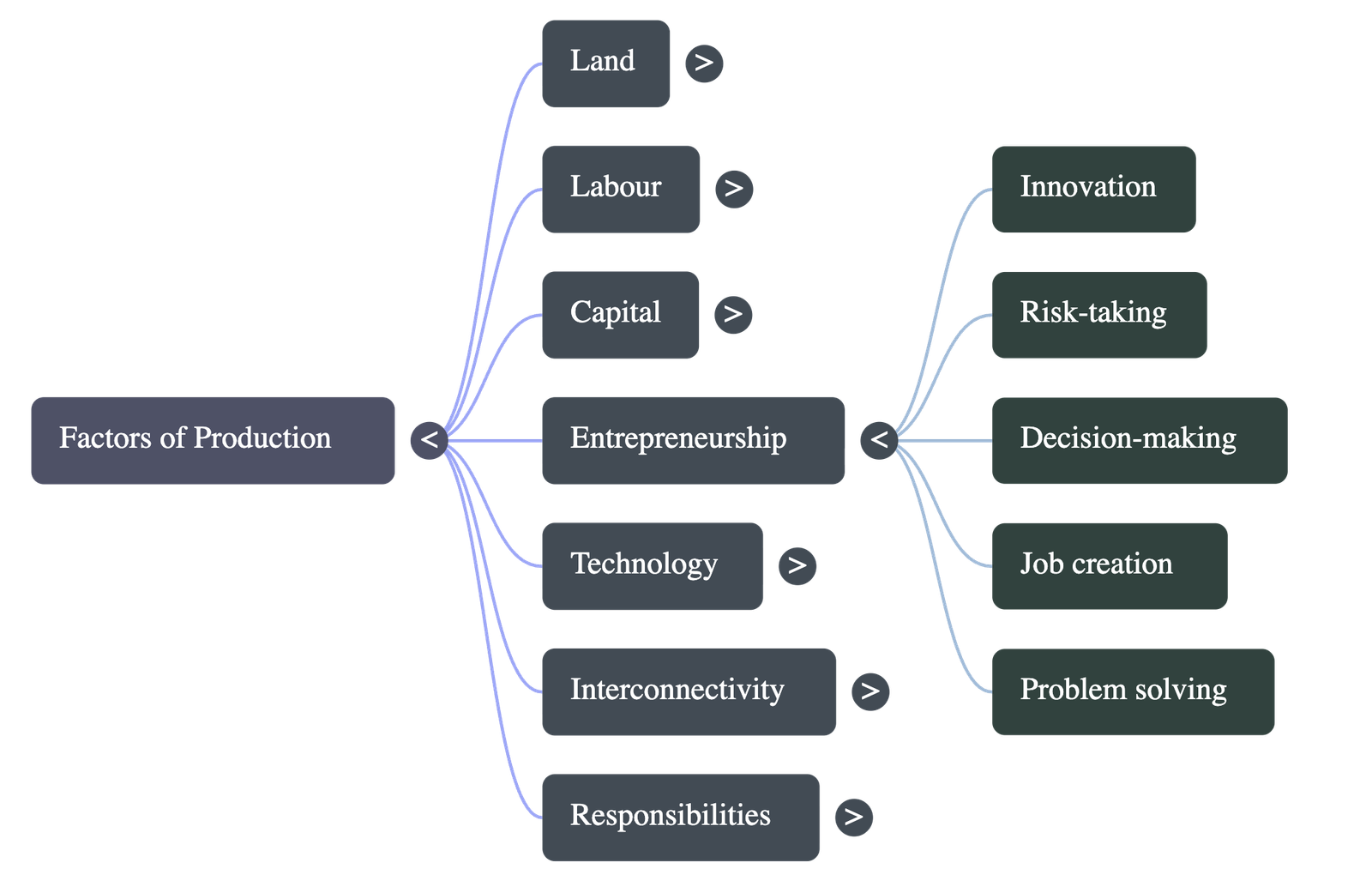
- The act of starting a business or creating something new to solve a problem.
- An entrepreneur identifies problems, takes financial risks, combines the other factors of production, and makes key operational decisions.
- They create job opportunities, support livelihoods, and contribute to societal welfare.
- Startups are specific entrepreneurial ventures with limited resources that aim for rapid growth by leveraging technology.
- Example: J.R.D. Tata, a visionary industrialist and philanthropist who started India's first airline and expanded the Tata Group while focusing on worker welfare.
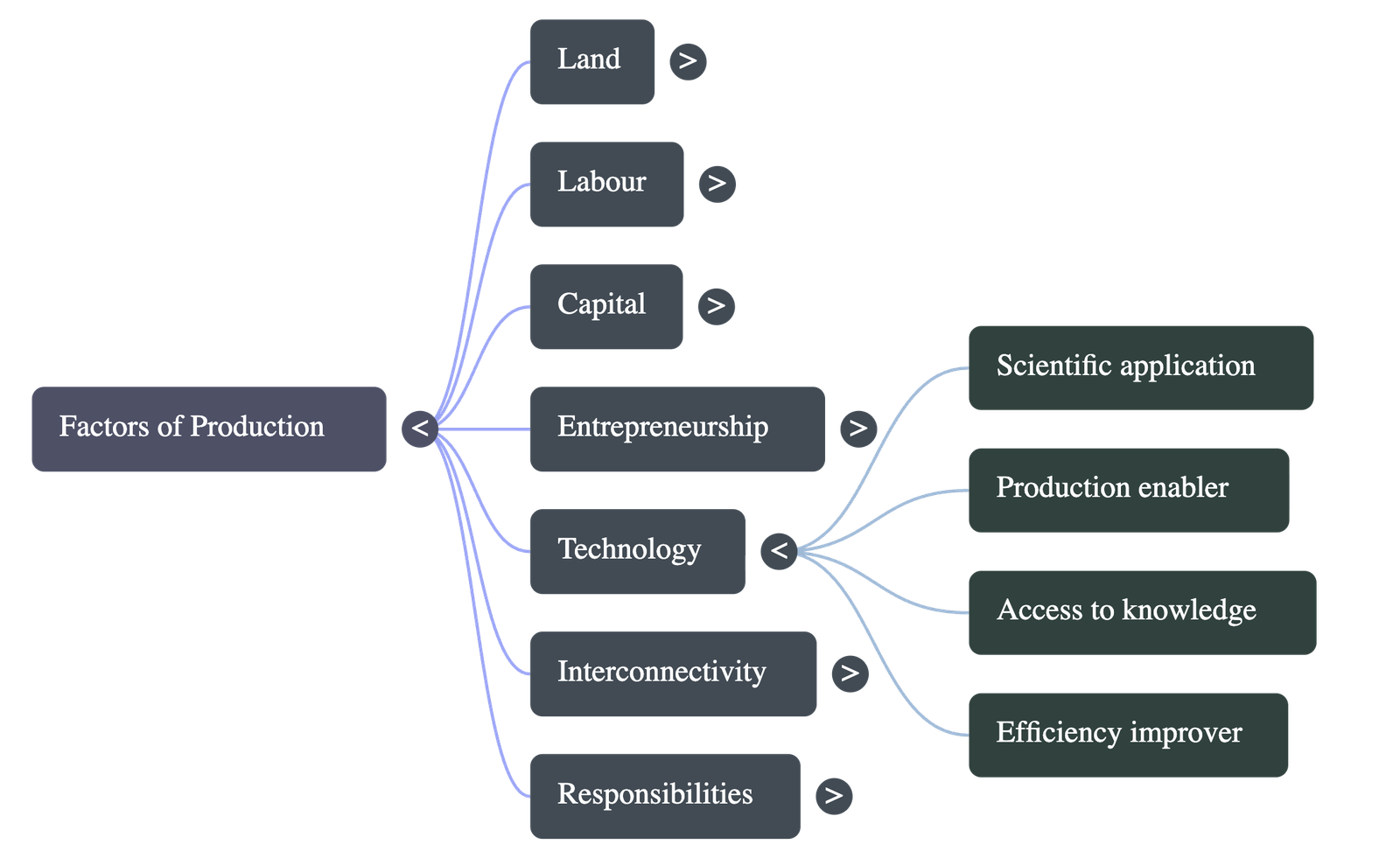
2. Technology: An Enabler of Production
- Technology is the application of scientific knowledge to make production more efficient.
- Modern examples include digital payments (UPI), GPS routing, and drones for agriculture.
- It helps replace outdated methods (e.g., email replacing postal letters) though some older tech like pulleys remain useful.
- Access to Knowledge & Jobs: Government platforms like SWAYAM offer free online courses, and the National Career Service portal connects individuals to global and domestic job opportunities, eliminating geographical barriers.
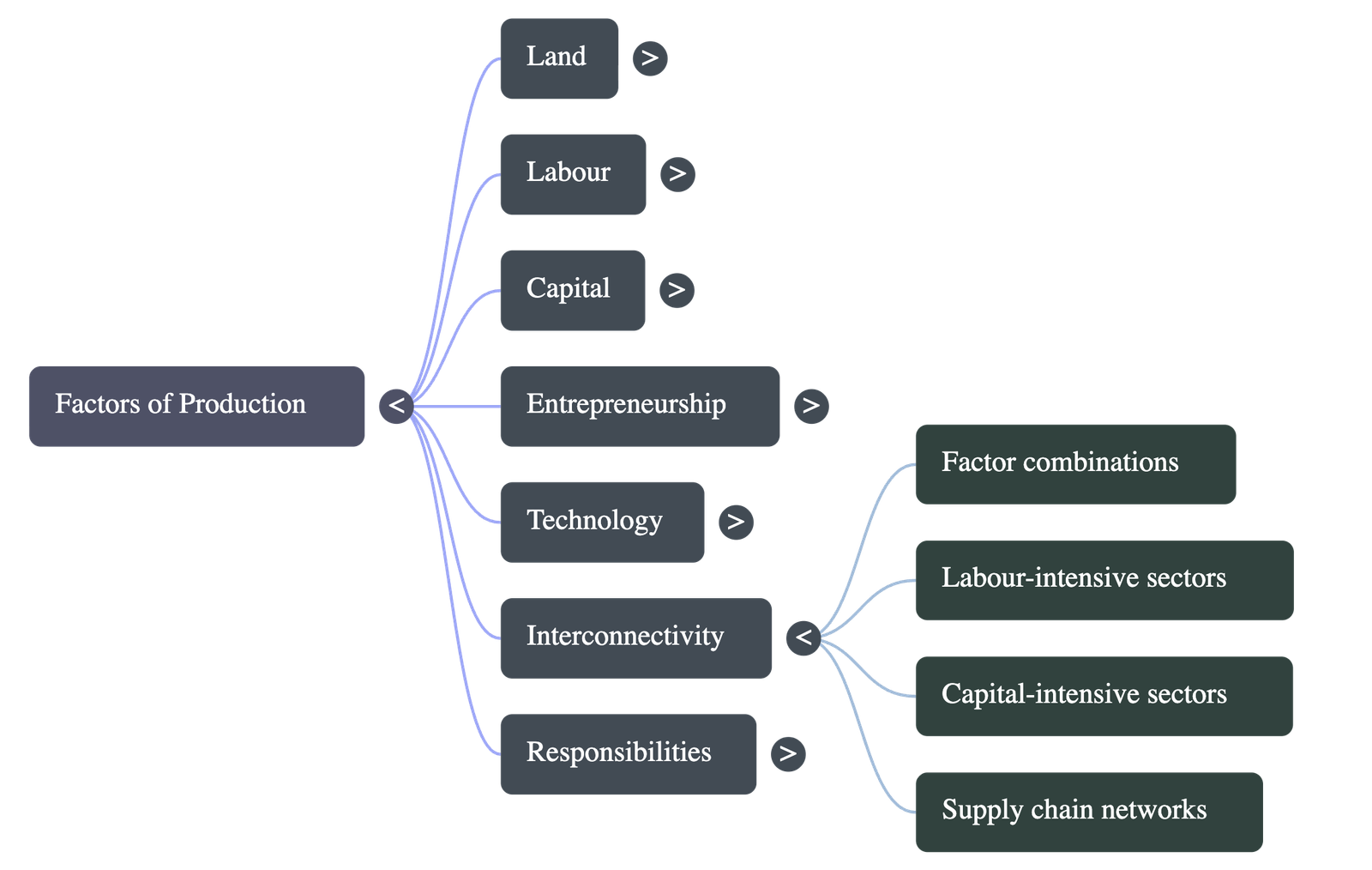
3. Interconnectedness of the Factors
- All factors (land, labour, capital, entrepreneurship, and technology) must be combined. The proportion depends on the industry.
- Labour-intensive sectors include agriculture and handicrafts. Capital-intensive sectors include semiconductor and satellite manufacturing.
- Factors complement each other; missing one can halt the entire production process.
- Supply Chains: The network of resources and activities required to produce goods. Disruptions here (e.g., during the COVID-19 pandemic) show the vulnerability of relying on distant inputs.
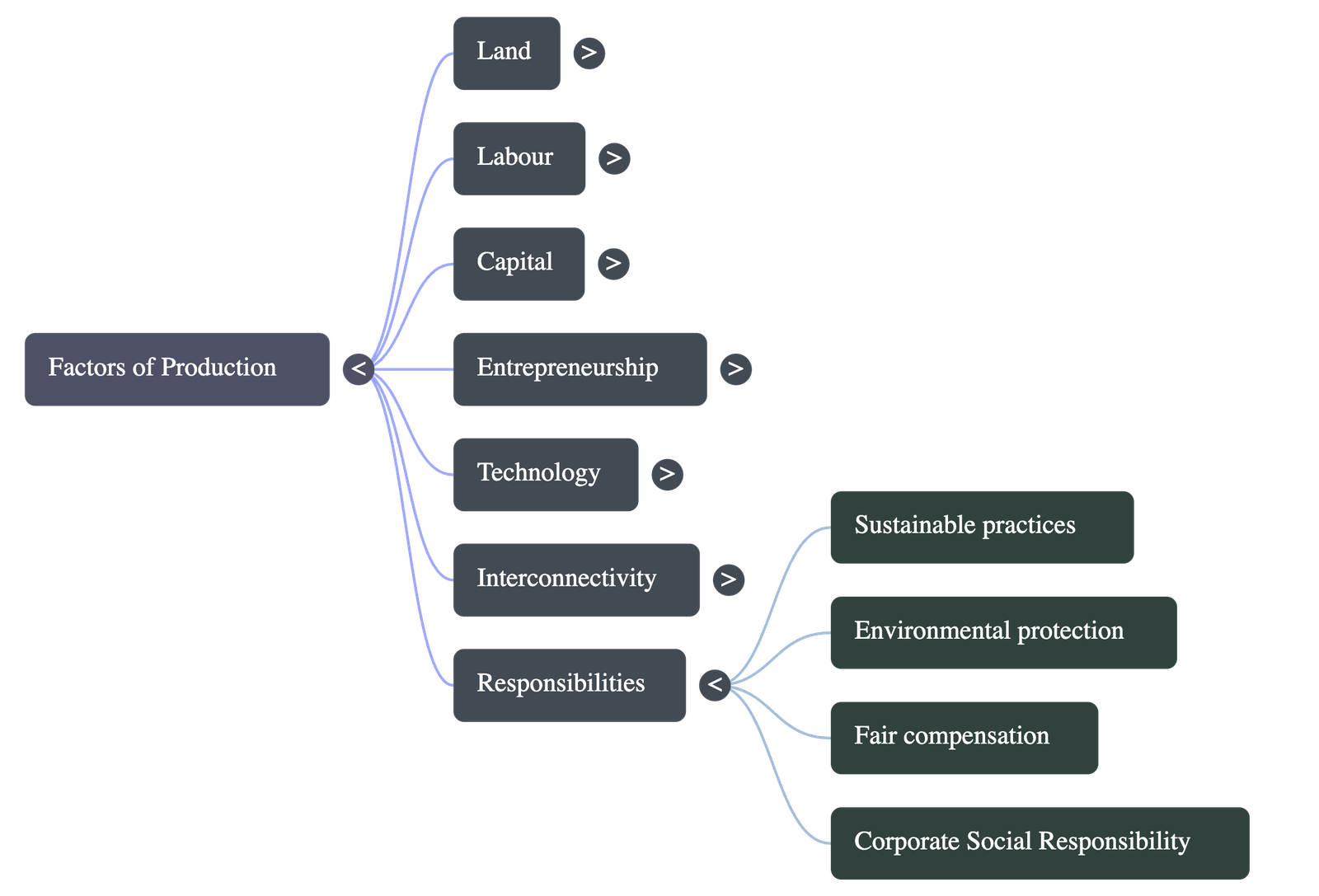
4. Responsibilities Towards Factors of Production
- Environmental Responsibility: Producers must use natural resources sustainably to avoid pollution (e.g., proper disposal of leather factory waste and e-waste) and ensure resources remain available for future generations.
- Responsibility Towards Workers:
- Providing fair compensation and safe working conditions.
- Investing in ongoing skill development and training.
- Ensuring workplace rights, preventing discrimination, and offering benefits like healthcare and paid leave.
- Corporate Social Responsibility (CSR): Businesses are motivated to address social and environmental concerns. India was the first nation globally to mandate CSR by law in 2014, requiring companies to spend 2% of their average profits on societal welfare activities.
Do checkout all questions & answers of this chapter.
Quick Navigation:
| | | |
1 / 1
Quick Navigation:
| | | |