Quick Navigation:
| | | |
The Rise of the Marathas
Who Were the Marathas?
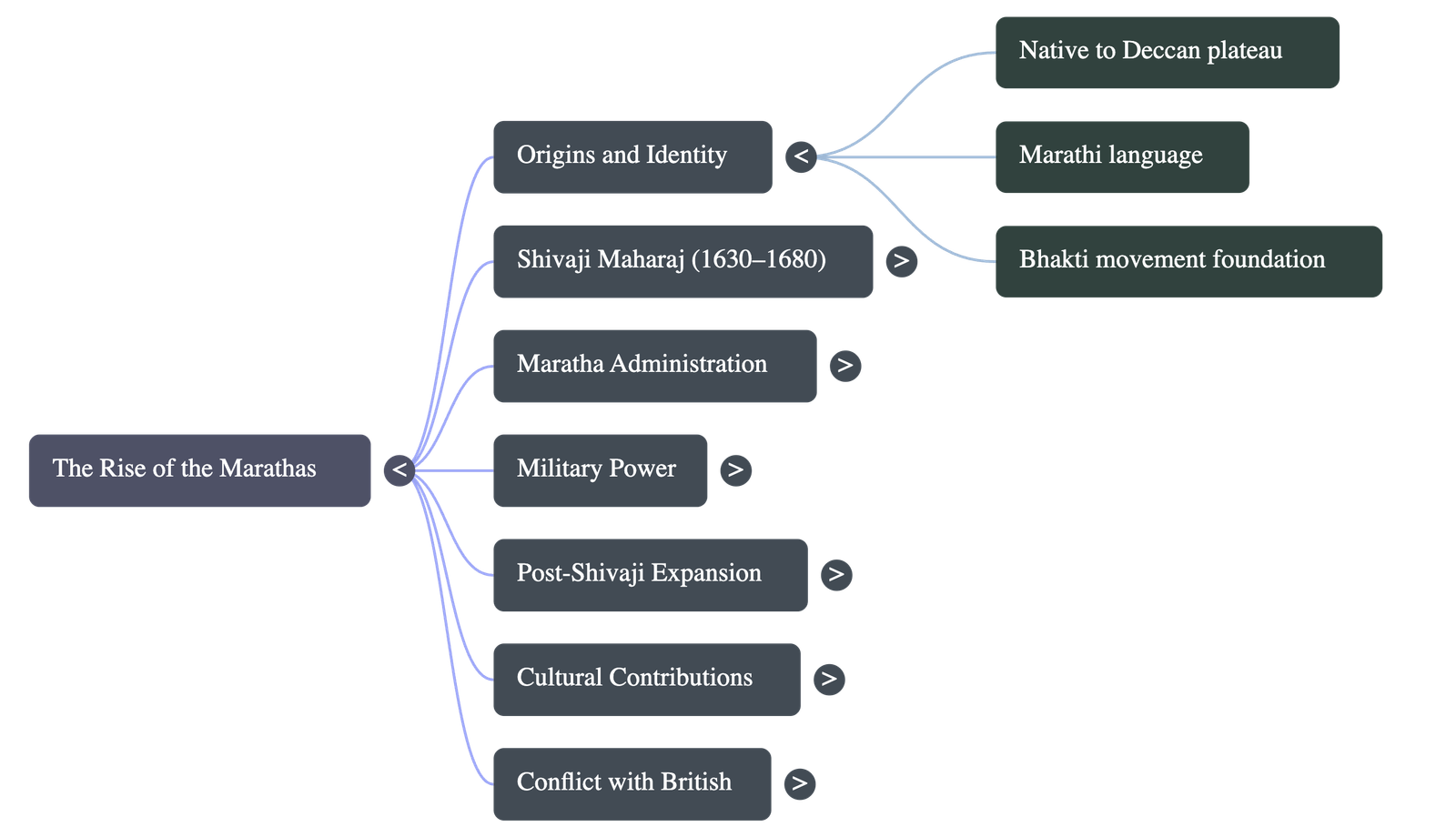
- ■ Native to the Deccan plateau (present-day Maharashtra), the Marathas were identified by their continuous literary language, Marathi.
- ■ A strong cultural foundation was laid between the 7th and 17th centuries by the Bhakti movement. Saints like Dnyaneshwar, Namdev, Tukaram, and Ramdas promoted devotion and social organization, creating political awareness among the masses.
Foundation of Maratha Power & The Rise of Shivaji
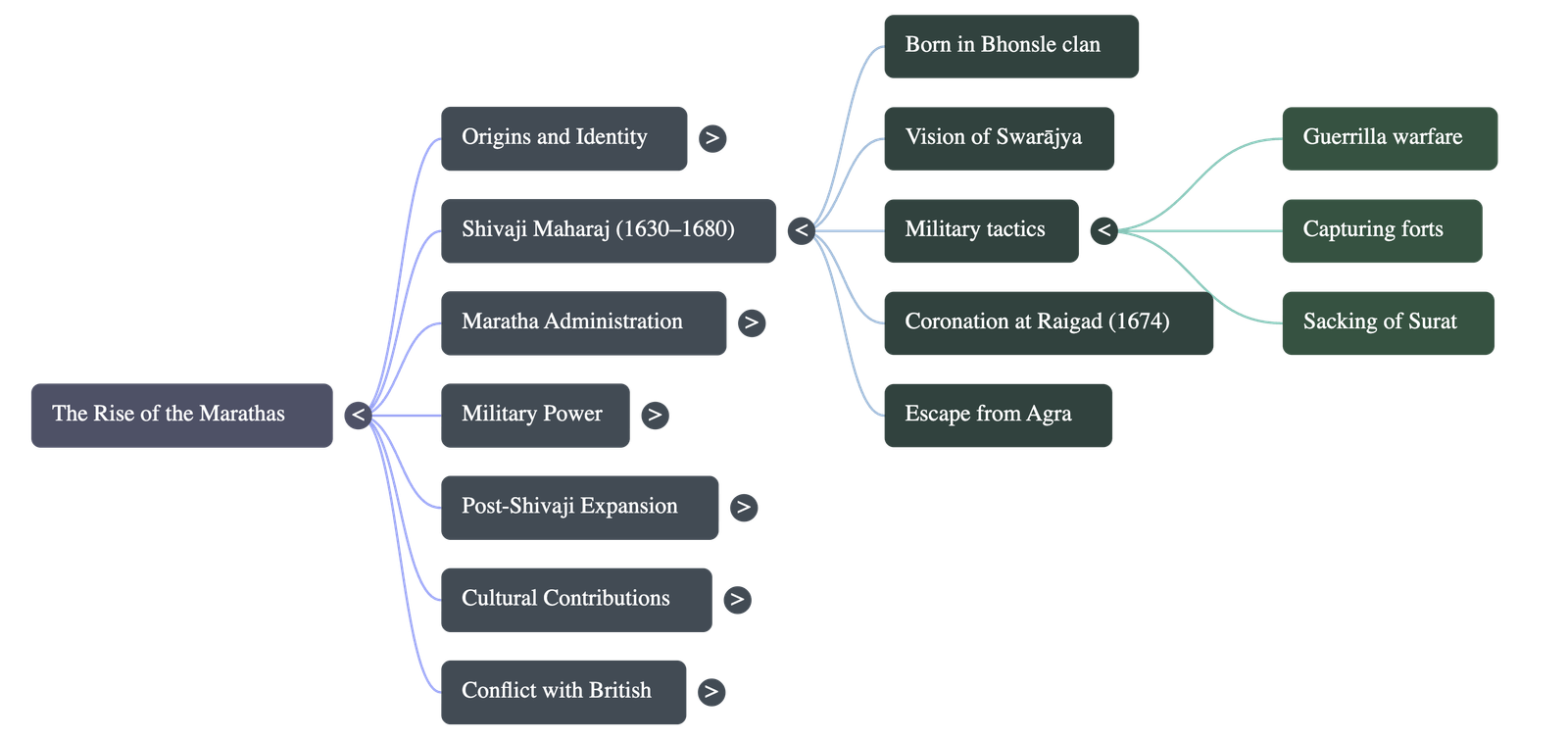
- ■ Born in 1630 in the Bhonsle clan, Shivaji began his military campaigns at the age of 16 to consolidate the Pune region and build a sovereign kingdom known as Swarajya.
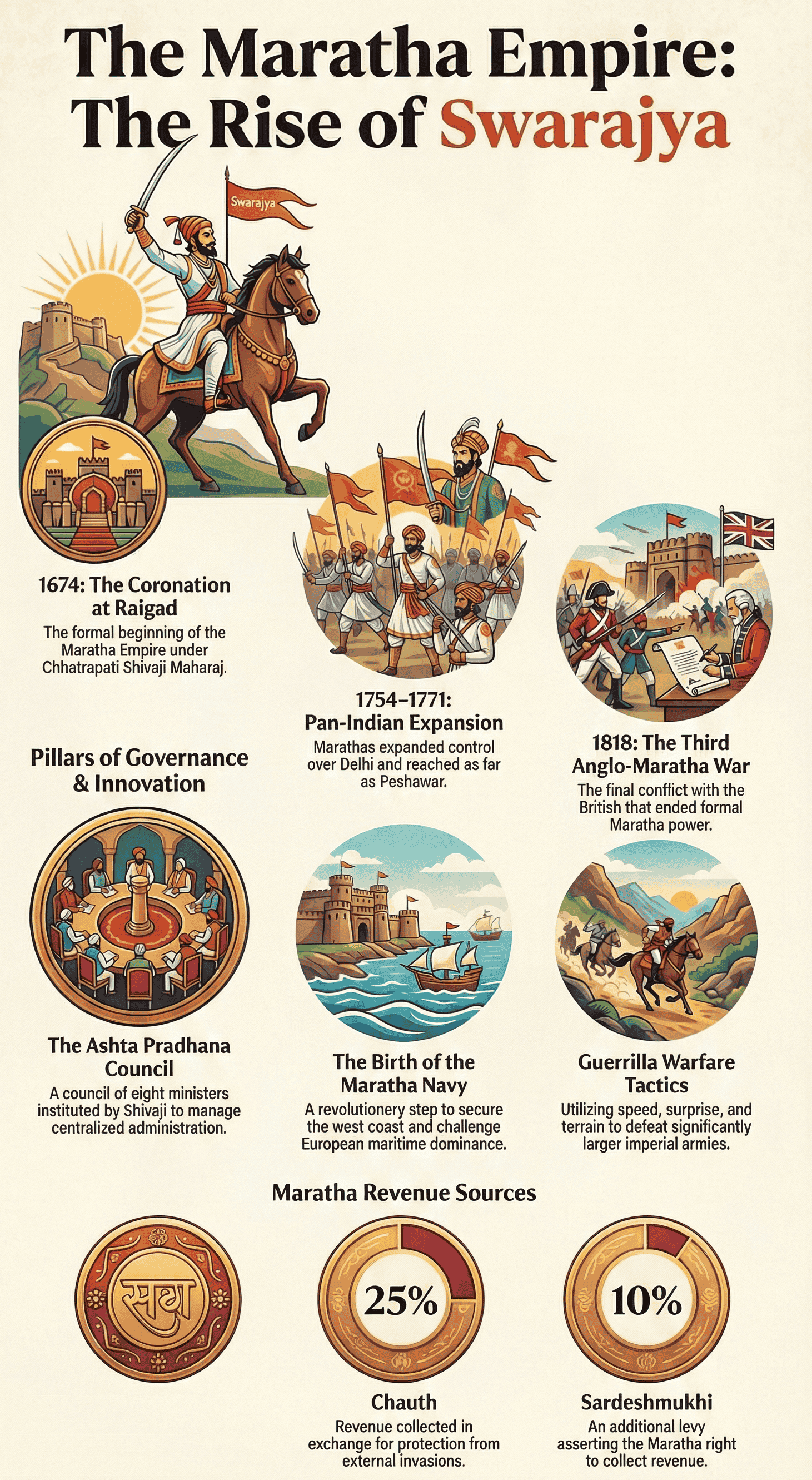
- ■ Military Tactics: He utilized guerrilla warfare—relying on speed, surprise, and terrain knowledge—to defeat much larger armies. He famously defeated the Bijapur general Afzal Khan using a wagh nakh (tiger's claw weapon).
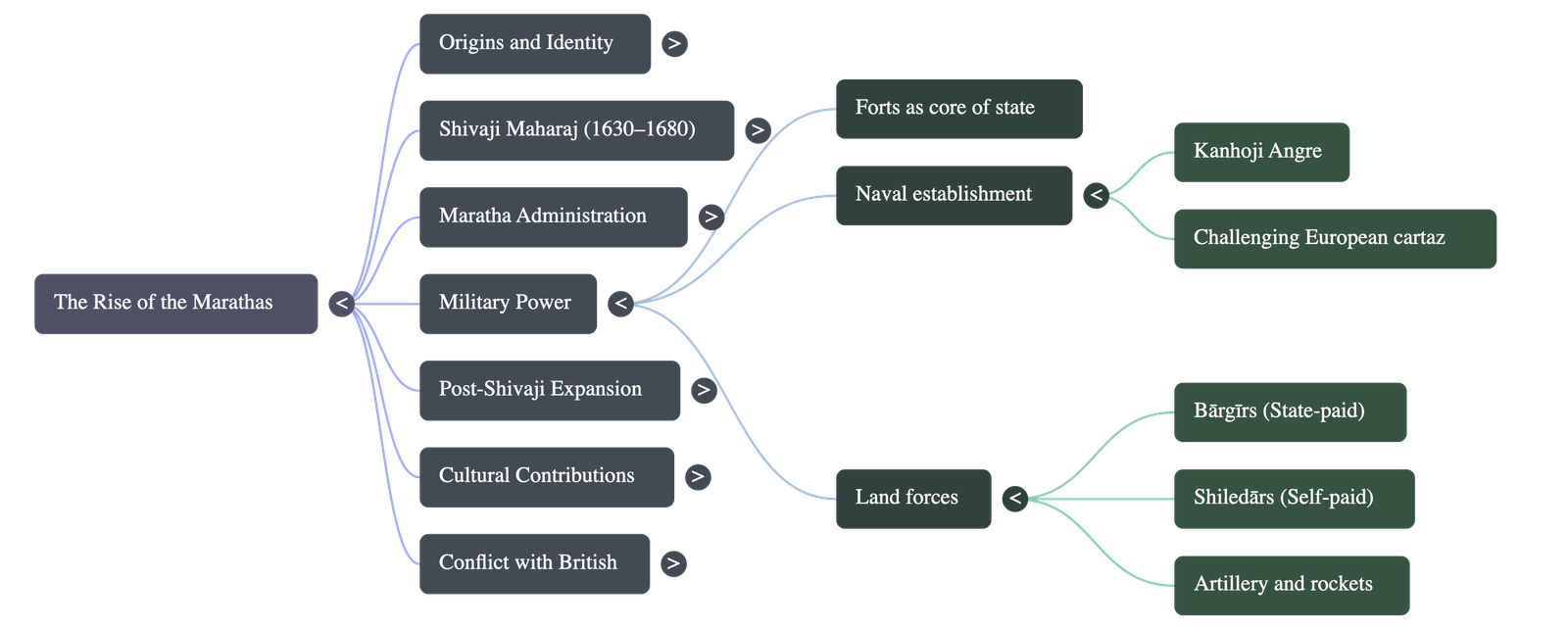
- ■ Naval Power: Recognizing the importance of the coast, Shivaji established a dedicated Maratha Navy, a revolutionary step to counter European and regional threats.
- ■ Mughal Encounters: He successfully executed a surgical night raid on Mughal general Shaista Khan and heavily looted the wealthy Mughal port city of Surat to fund his empire, while strictly sparing religious and charitable places.
- ■ Coronation & Southern Conquest: Coronated with Vedic rites in 1674 at Raigad fort, adopting the title Chhatrapati. He subsequently conquered southern territories, providing the Marathas with immense strategic depth.
The Marathas After Shivaji
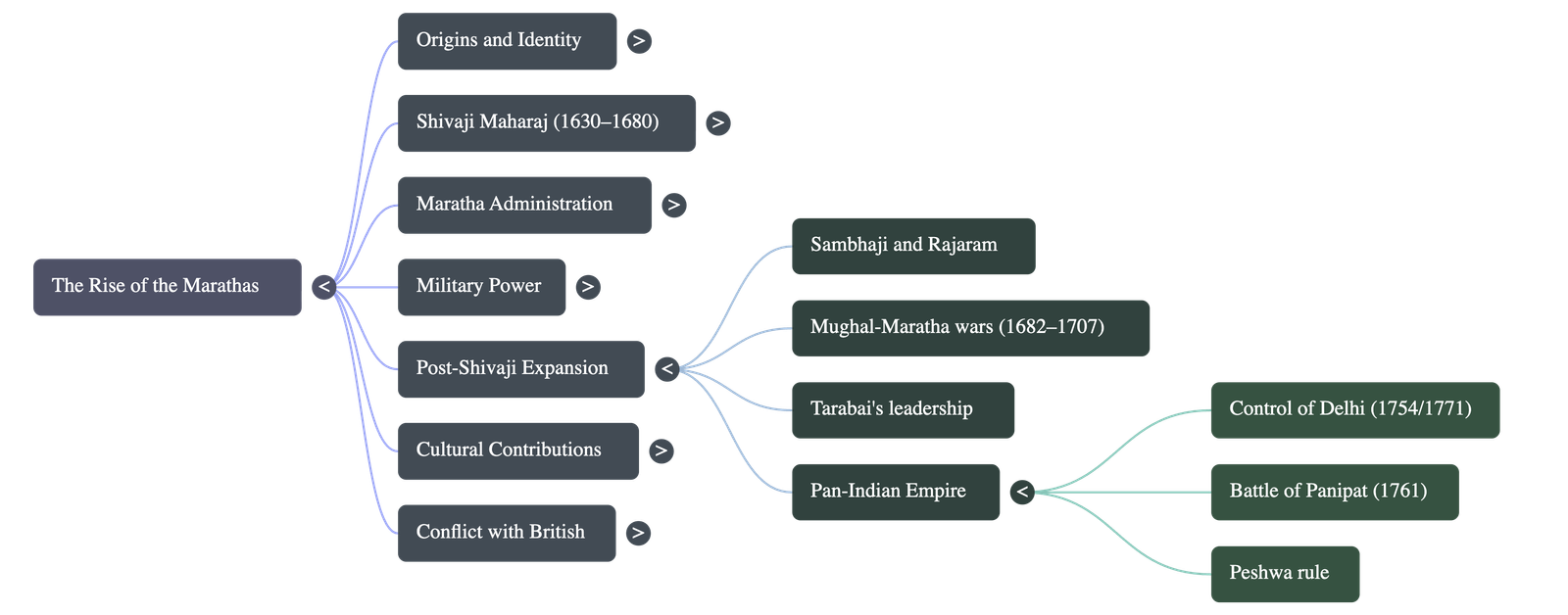
- ■ Following Shivaji's death, his son Sambhaji was captured and brutally executed by Mughal Emperor Aurangzeb.
- ■ The leadership shifted to Rajaram and later to his queen, Tarabai, who fiercely defended Maratha fortresses and launched offensive invasions into Mughal territories in northern India.
- ■ The Peshwa Era: The empire evolved into a decentralized structure where the Peshwa (Prime Minister) wielded major power. Peshwas like Bajirao I and Nanasaheb led a massive pan-Indian expansion.
- ■ Despite a disastrous defeat at the Battle of Panipat (1761), they quickly recovered under Madhavrao I and Mahadji Shinde, going on to recapture Delhi in 1771.
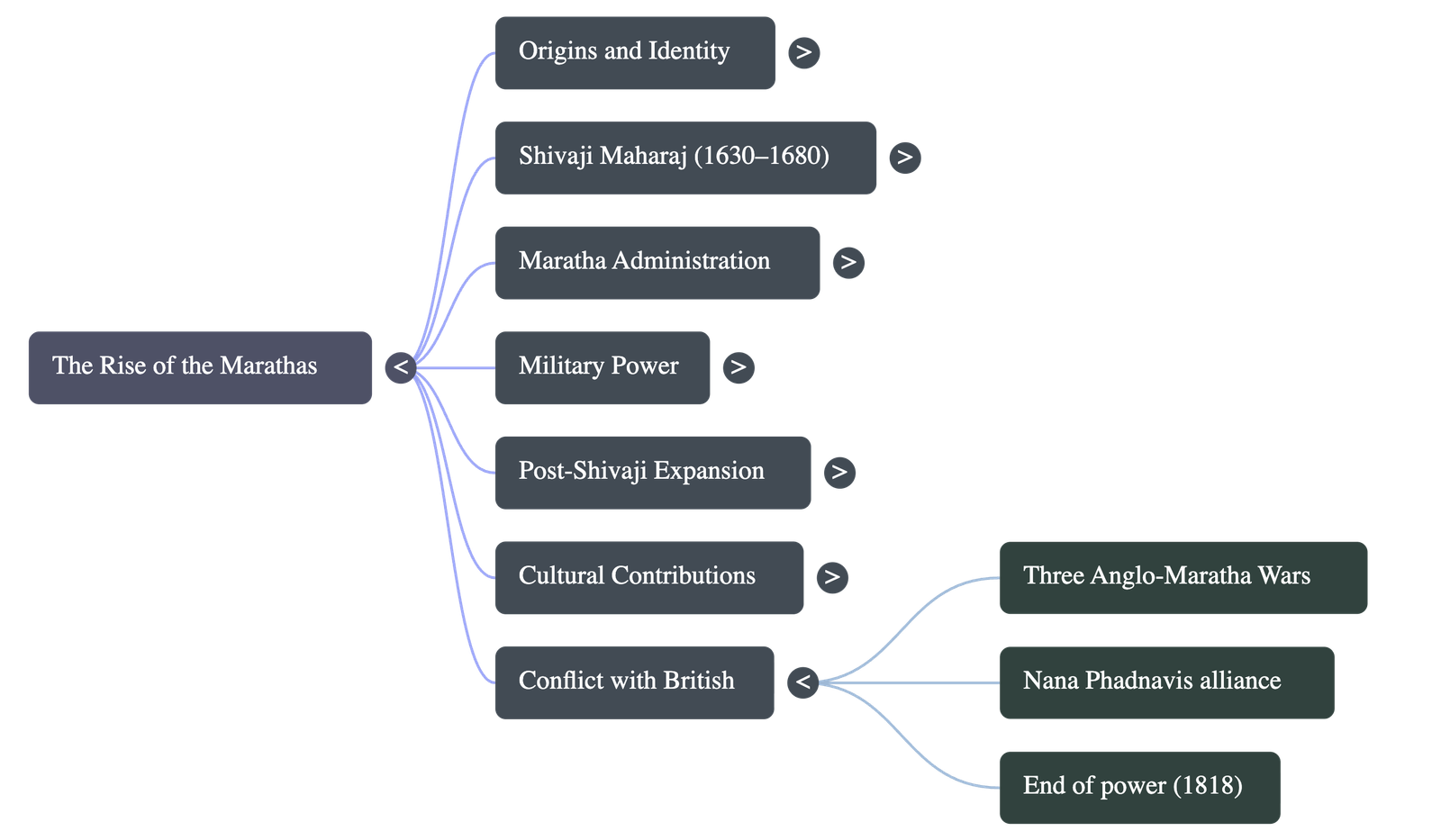
- ■ The Marathas became the dominant power in India until internal disunity and British technological superiority led to their downfall after three Anglo-Maratha Wars (1775–1818).
Maratha Administration & Governance
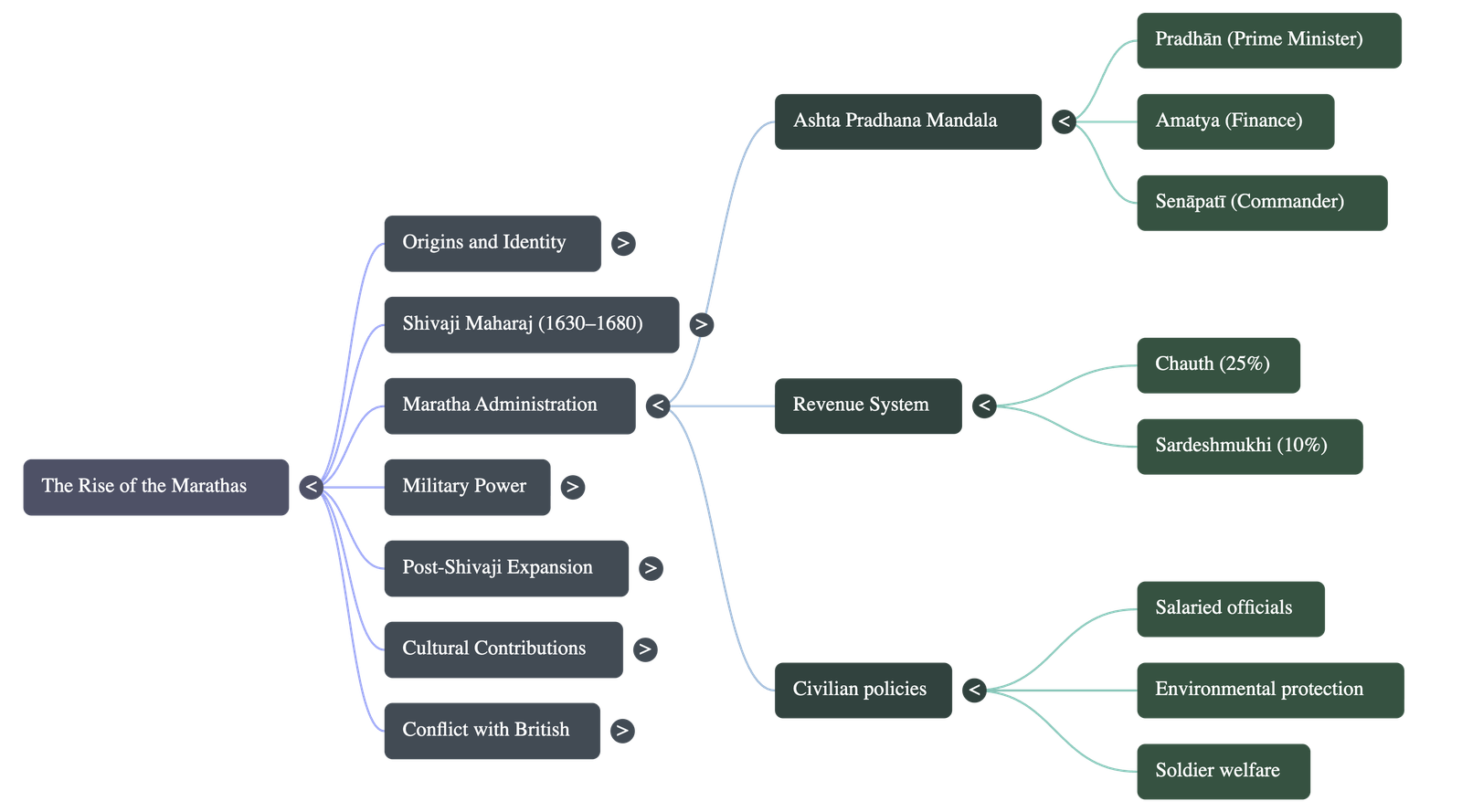
- ■ Civilian Rule: Shivaji abolished hereditary posts, paying officials directly from the treasury. He established the Ashta Pradhana Mandala (Council of Eight Ministers).
- ■ Taxation: Introduced taxes like chauth (25%) and sardeshmukhi (10%) levied on external provinces in exchange for military protection without administrative interference.
- ■ Military & Navy: Forces included cavalry (state-funded bargirs and self-funded shiledars), infantry, and navy. Forts were critical to the state's survival. Later leaders modernized the army with European-style troops and artillery.
- ■ Justice & Welfare: The judicial system used village panchayats and rarely employed capital punishment. Shivaji ensured strict orders against oppressing subjects and offered state pensions to widows of fallen soldiers.
- ■ Trade: Actively pursued international maritime trade reaching places like Yemen and Malaysia. Maintained robust domestic infrastructure including roads, bridges, and river ferries.
Cultural Revival & Legacy
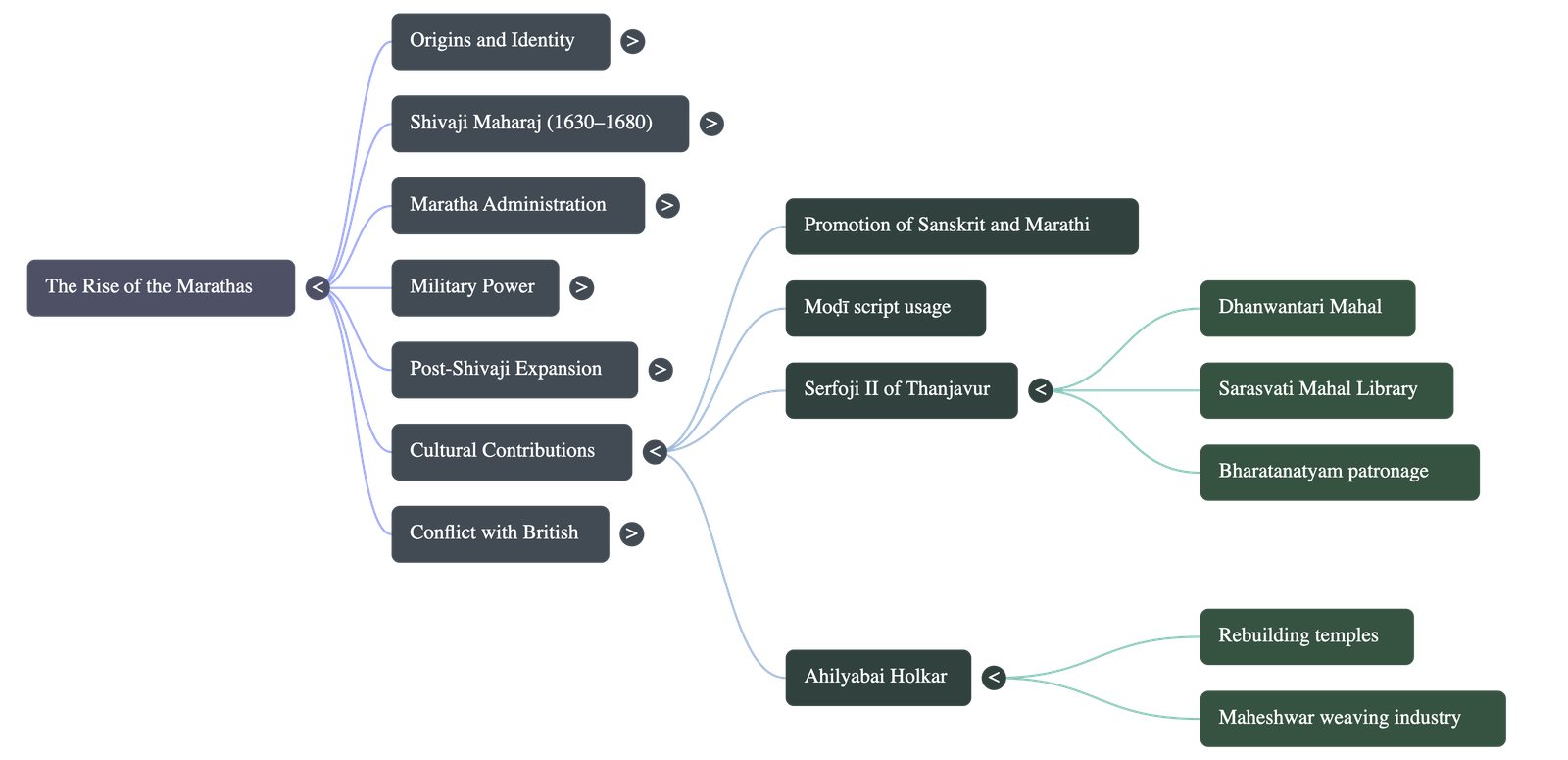
- ■ Promoted traditional arts, religious institutions, and literature. Shivaji commissioned a treatise to replace Persian diplomatic vocabulary with Sanskrit terms.
- ■ Rebuilt numerous desecrated temples and restored ancient Hindu traditions while showing deep respect for religious diversity.
- ■ Proved to the masses that a mighty foreign empire could be defeated and successfully administered locally, deeply inspiring the later Indian independence movement.
Mighty Maratha Women
- ■ Ahilyabai Holkar: Ruled the Indore region wisely for thirty years. She rebuilt major Indian cultural landmarks, including the Kashi Vishwanath and Somnath temples, and championed the local handloom industry.
- ■ Tarabai: A tactical and fearless warrior queen who preserved Maratha independence during the critical Mughal onslaught and initiated Maratha expansion into the north.
The Thanjavur Marathas
- ■ Shivaji's half-brother Ekoji conquered Thanjavur (Tamil Nadu), leading to a deeply syncretic multilingual culture (Tamil, Telugu, and Marathi).
- ■ Serfoji II: A brilliant scholar-king who wrote a global geography play, patronized early Bharatanatyam and Carnatic music, established a modern medical center, founded the first native-run printing press, and inscribed his family's history on the Brihadishwara temple.
Do checkout all questions & answers of this chapter.
Quick Navigation:
| | | |
1 / 1
Quick Navigation:
| | | |