Quick Navigation:
| | | |
Natural Resources and Their Use
1. The Concept of Natural Resources
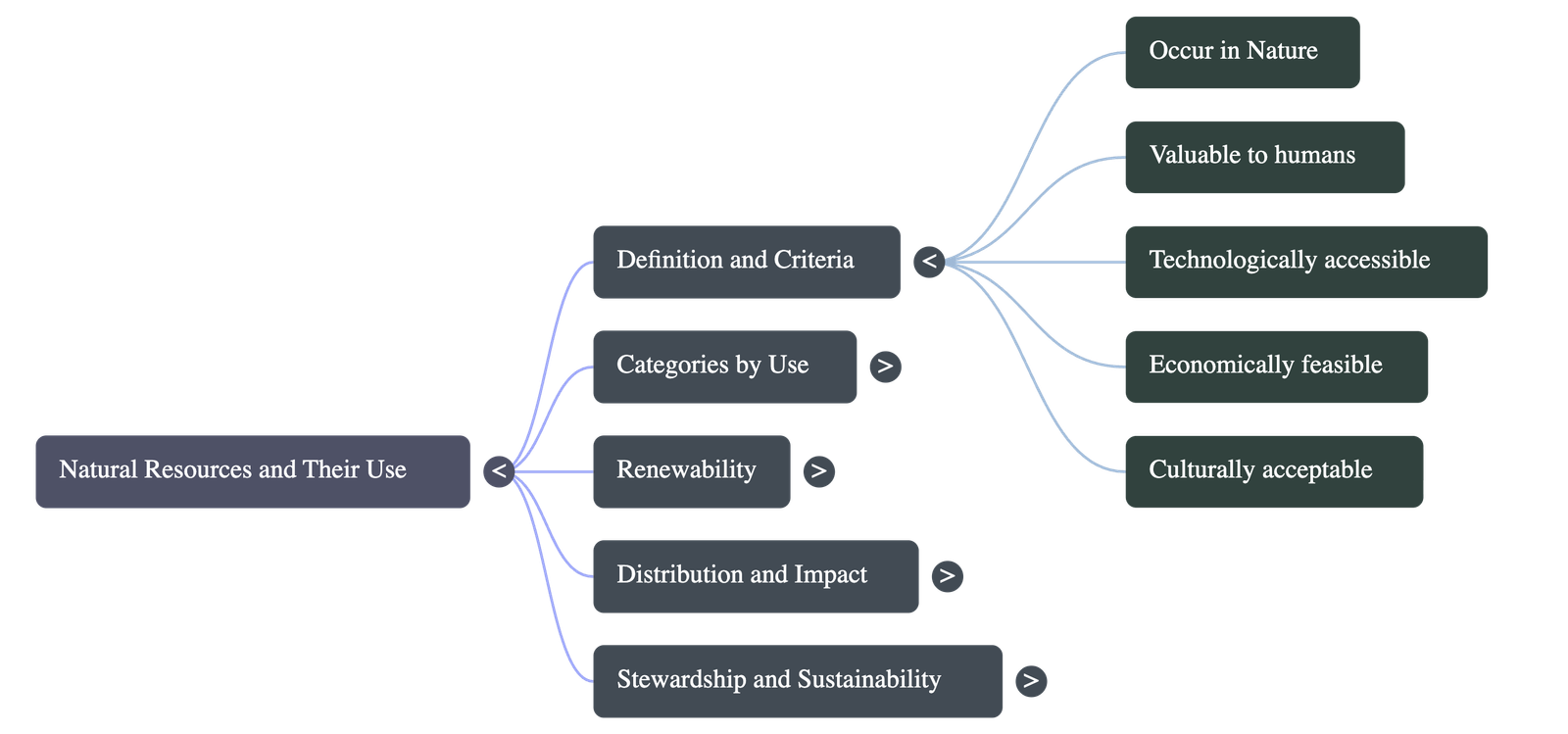
- • Defining Nature: Nature includes all life and non-life forms that exist independently of human creation within our environment.
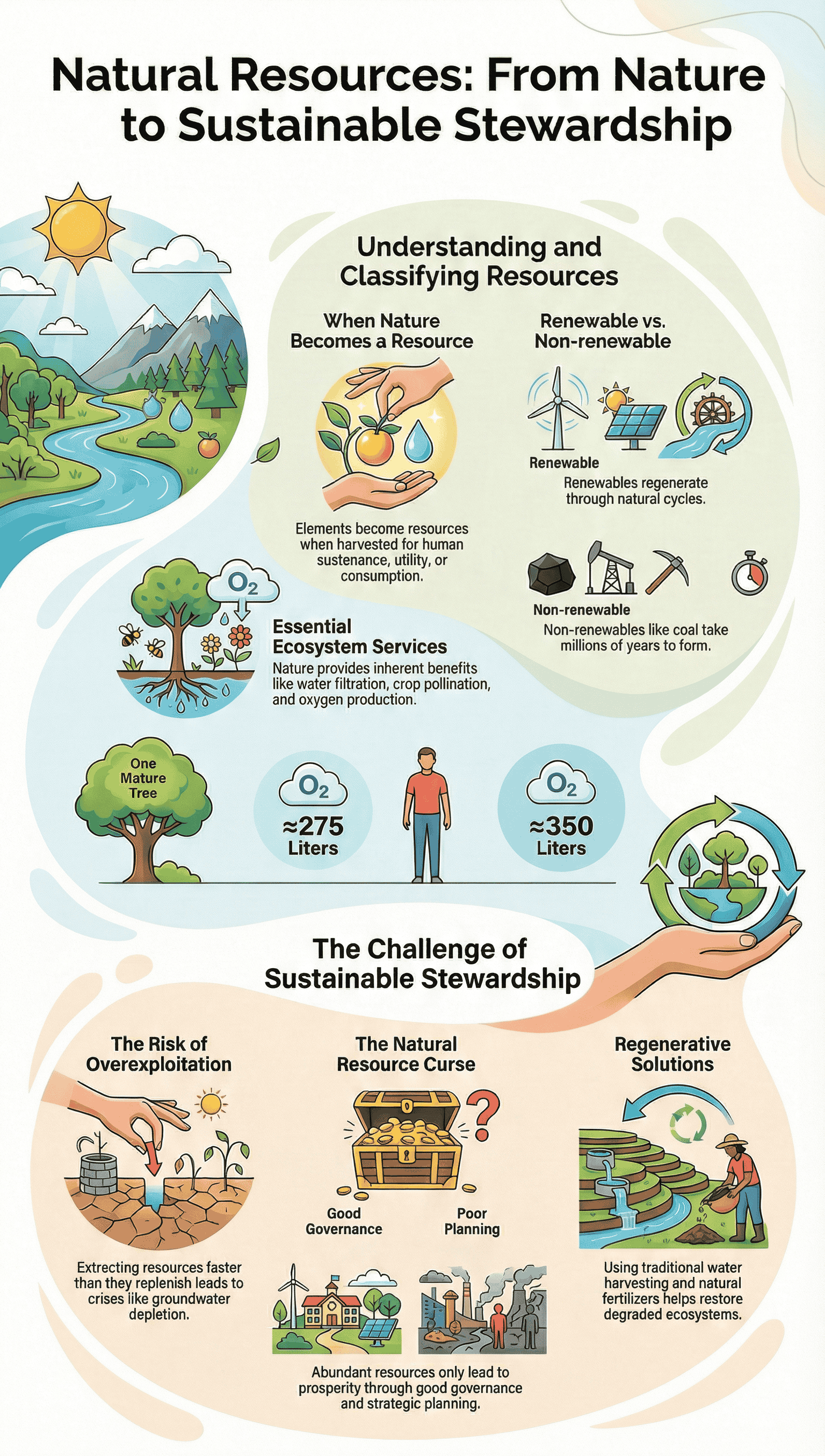
- • Transition to Resources: Elements of nature are transformed into "resources" when humans utilize them for sustenance or process them into new goods for consumption.
- • Conditions for Resource Viability: To be classified as a usable resource, an entity must be technologically accessible, economically feasible to extract, and culturally acceptable to use.
2. Categorisation of Natural Resources
-
•
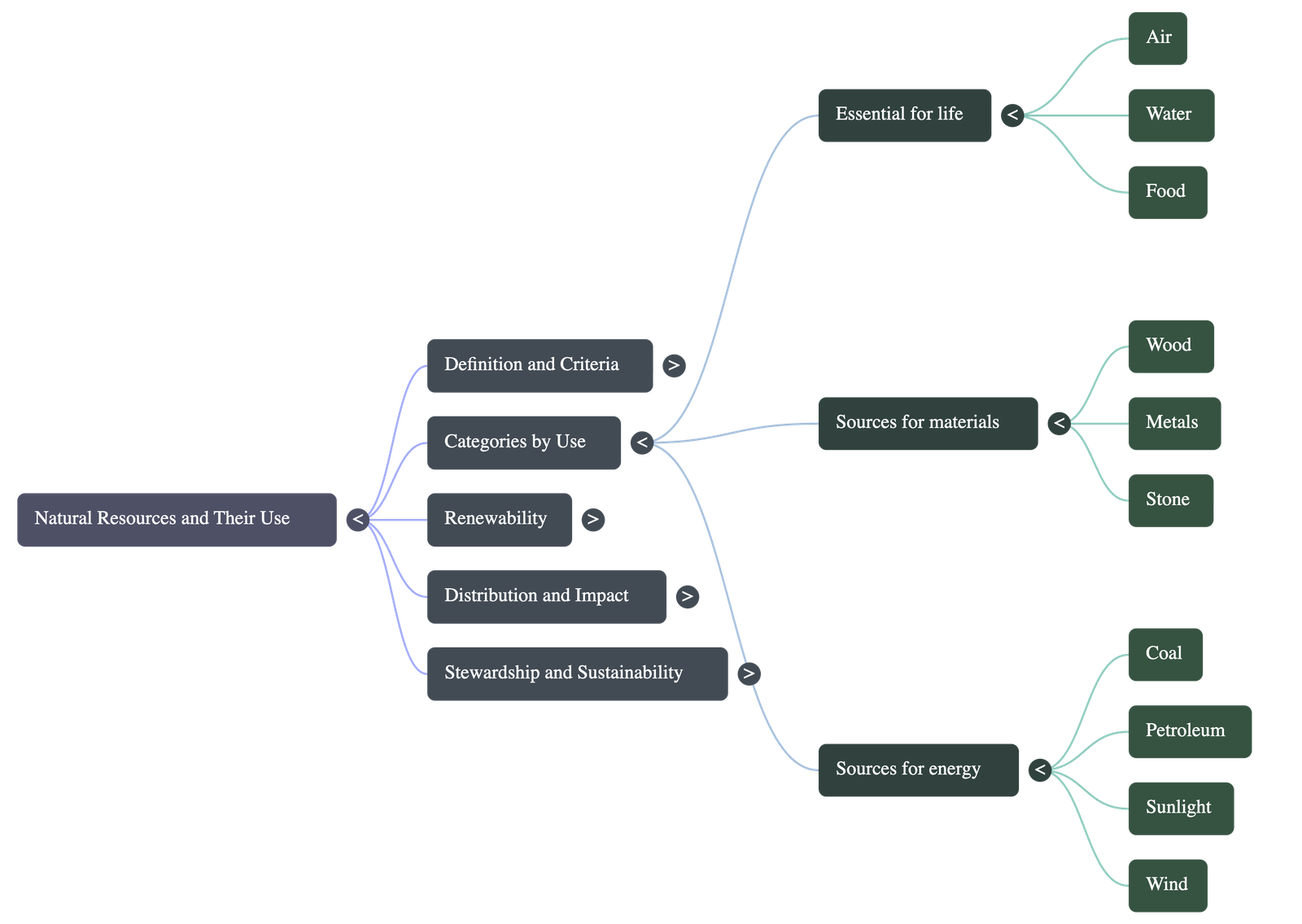
Based on Utility:
- Essential for Life: Fundamental necessities like air, water, and food derived directly from the atmosphere, rivers, and soil.
- Source for Materials: Natural gifts shaped into physical objects for utility or art (e.g., timber for furniture, marble, metals).
- Sources for Energy: The backbone of modern living, transportation, and industry (e.g., coal, petroleum, natural gas, sunlight, wind).
-
•
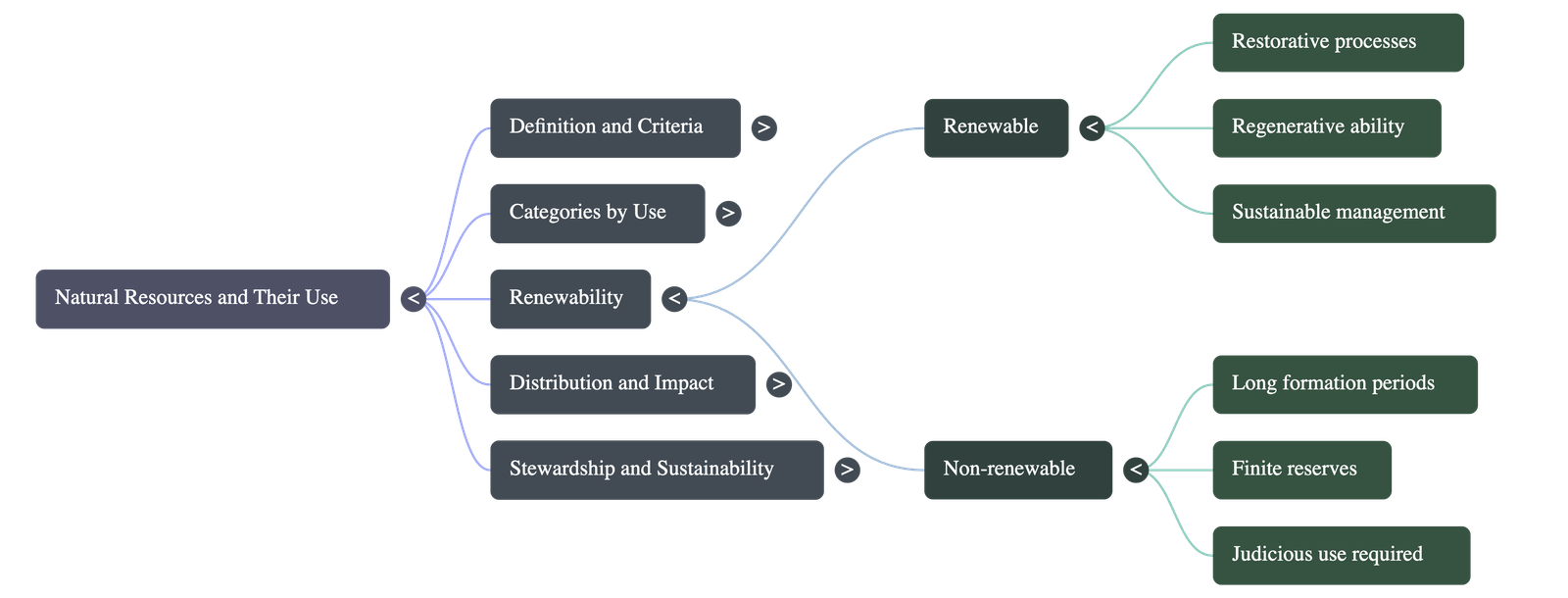
Based on Renewability:
- Renewable Resources: Resources capable of natural restoration and regeneration (e.g., solar energy, wind, flowing water, forests). They only remain renewable if extraction does not exceed their natural regeneration rate.
- Non-Renewable Resources: Resources formed over millions of years that cannot replenish quickly enough to match human consumption (e.g., fossil fuels, metal ores). These require judicious use.
3. Distribution and the "Resource Curse"
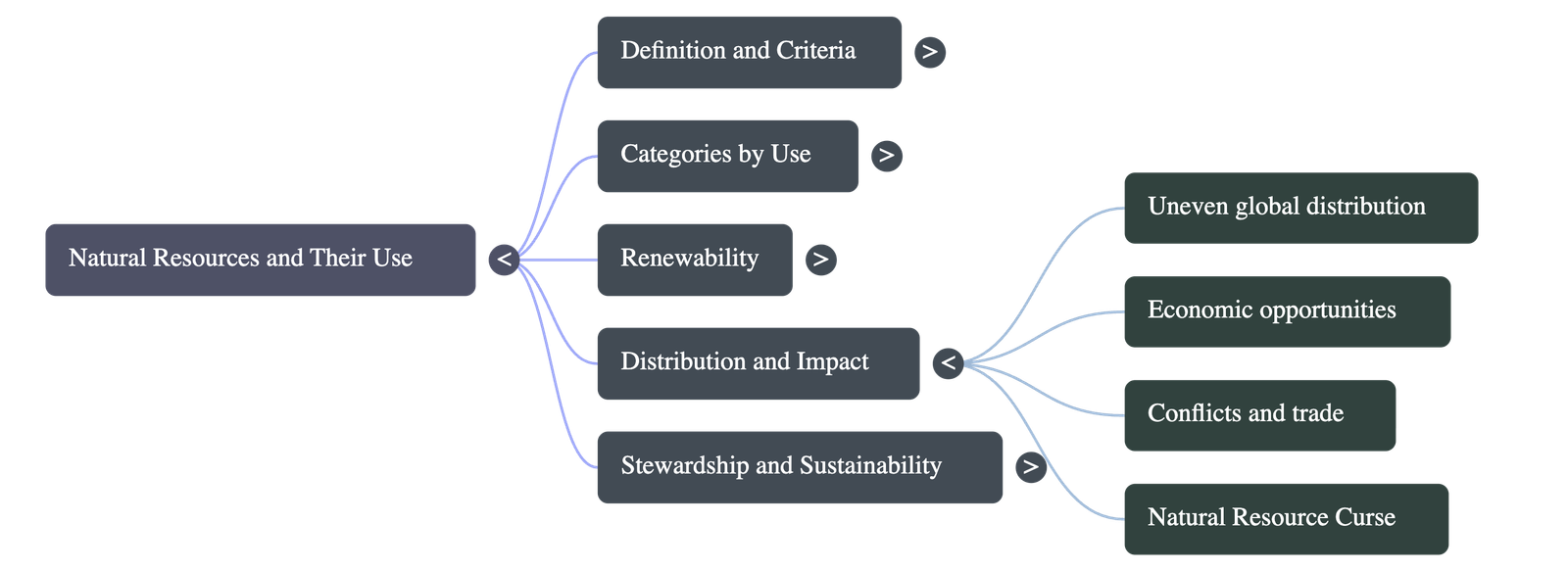
- • Geographical Inequality: Natural resources are distributed unevenly globally and locally. This impacts human settlement patterns, trade, and can trigger political and regional conflicts (e.g., interstate water-sharing disputes like the Kaveri River).
- • The Paradox of Plenty: Also known as the "natural resource curse," this phenomenon occurs when resource-rich areas suffer from slow economic growth due to an inability to develop industries that add value to raw materials.
- • Path to Prosperity: Avoiding this curse requires investment in human knowledge, technological skills, strategic planning, and good governance to turn short-term extraction into sustainable, long-term economic development.
4. Environmental Degradation and Challenges
- • Disruption of Nature's Cycles: Irresponsible human activity, such as fossil-fuel-driven industrialization and deforestation, has broken nature's healing cycles, causing climate change and rapid glacier melting.
- • Biodiversity Loss: Unregulated commercialization (like overfishing of tuna) disrupts complex food webs and natural ecosystem balance.
- • Overexploitation Case Study (Punjab): The shift to high-yielding, water-thirsty crops during the Green Revolution, enabled by free power, led to massive groundwater depletion (making water inaccessible up to 30 meters deep). Heavy reliance on chemical fertilizers and pesticides severely degraded and poisoned the soil.
- • Industrial Pollution: Essential industries like cement production release fine dust and toxic waste, polluting the air, water, and soil, emphasizing the need for stricter guidelines and alternative materials.
5. Stewardship and Sustainable Solutions
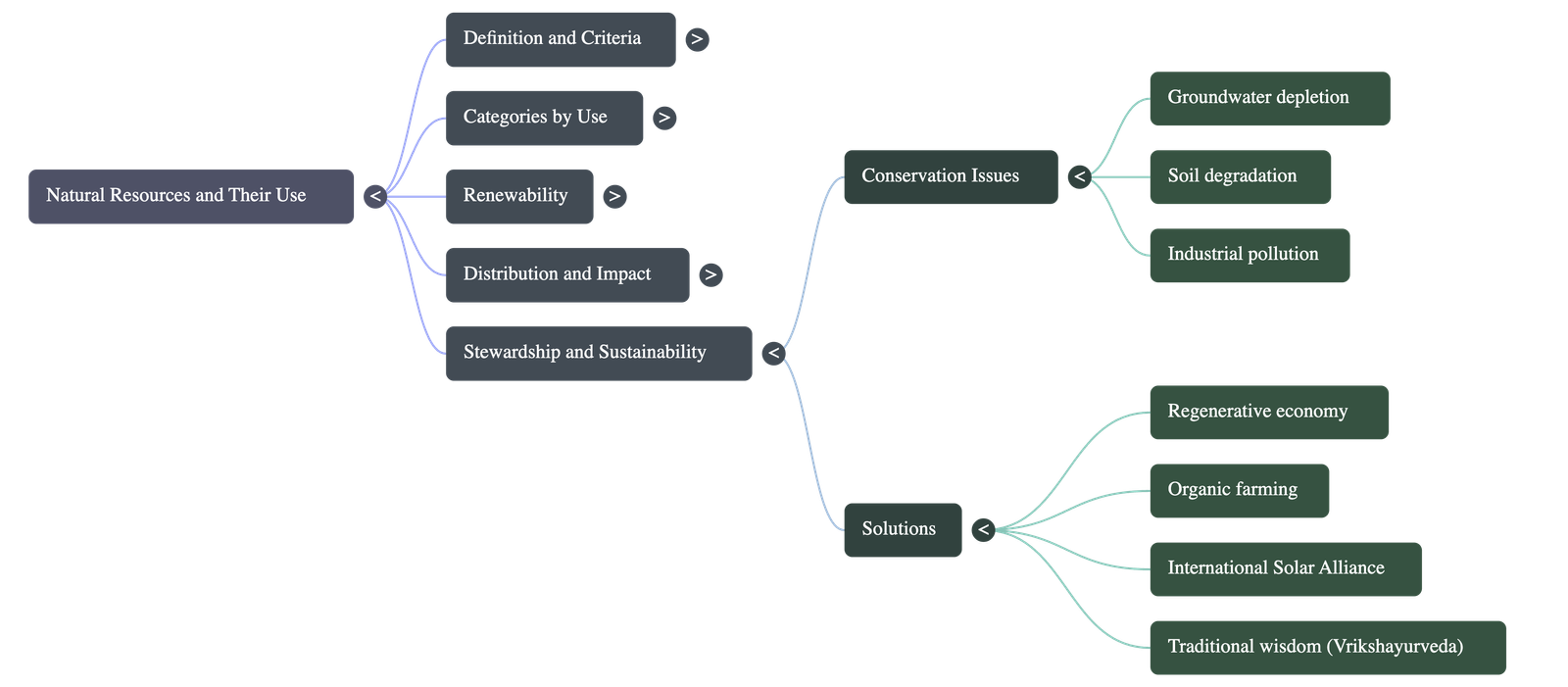
- • Regenerative Economy: A critical shift is required toward an economic model that harmonizes with nature, repurposes resources, minimizes waste, and replenishes what has been taken.
- • Reviving Traditional Knowledge: Ancient Indian sciences like Vṛikṣhāyurveda offer frameworks for sustainable agriculture, detailing crop rotation, natural pest management, and methods to retain soil health and moisture.
- • Sustainable Success Case Study (Sikkim): By transitioning to 100% organic farming, Sikkim successfully restored local biodiversity, boosted eco-tourism, and increased average farmer incomes by 20%, proving sustainability is economically viable.
- • Renewable Energy Initiatives: The International Solar Alliance (spearheaded by India and France) highlights the global transition to sustainable energy, leveraging technical expertise to fund massive solar projects (e.g., Bhadla Solar Park).
- • Ethical Resource Management (Lokasangraha): Emphasizing the wellbeing of all, we must act as responsible stewards of the Earth, ensuring equitable access to vital resources like clean water and air for all sections of society.
Do checkout all questions & answers of this chapter.
Quick Navigation:
| | | |
1 / 1
Quick Navigation:
| | | |