Quick Navigation:
| | | |
Universal Franchise and India’s Electoral System
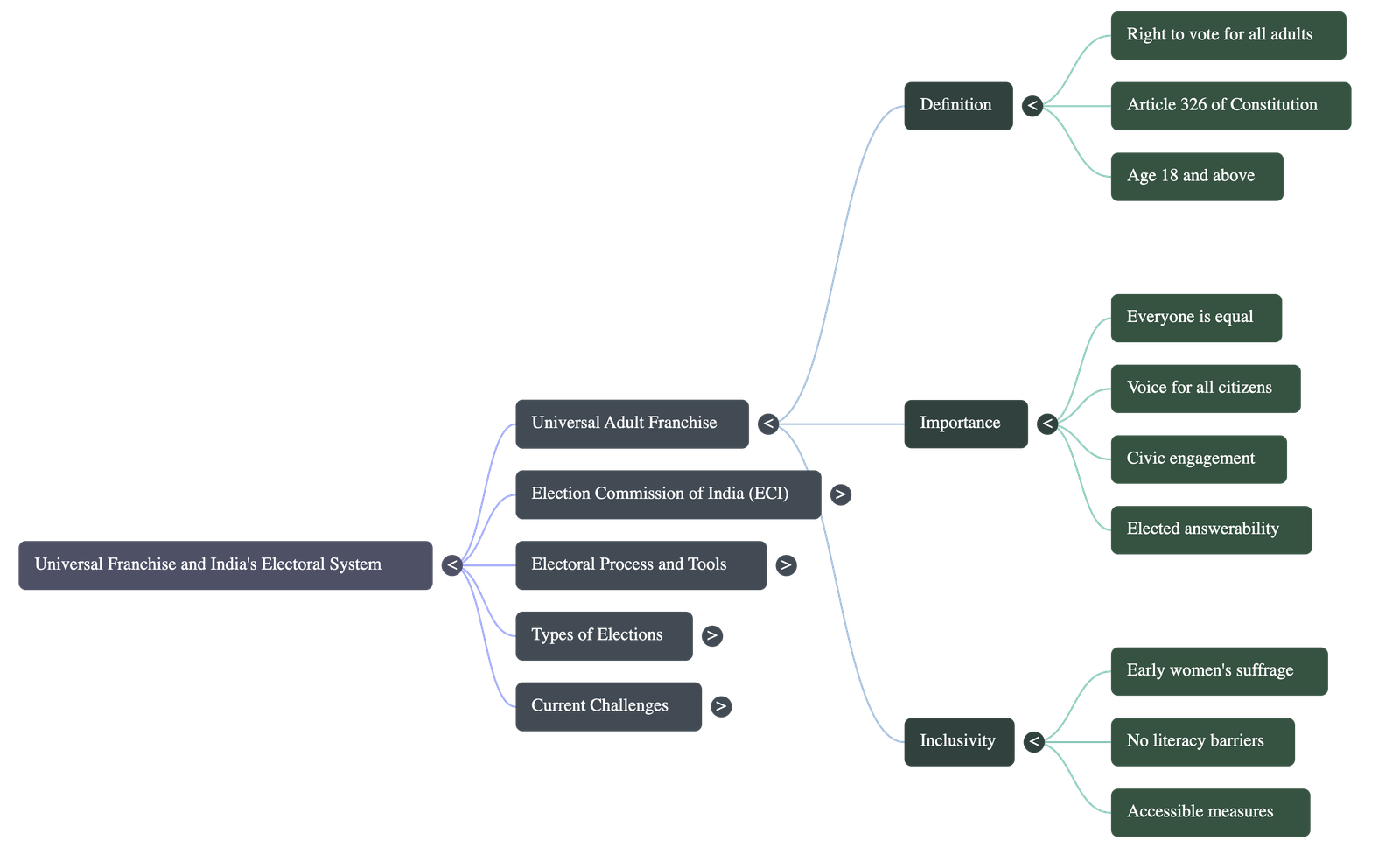
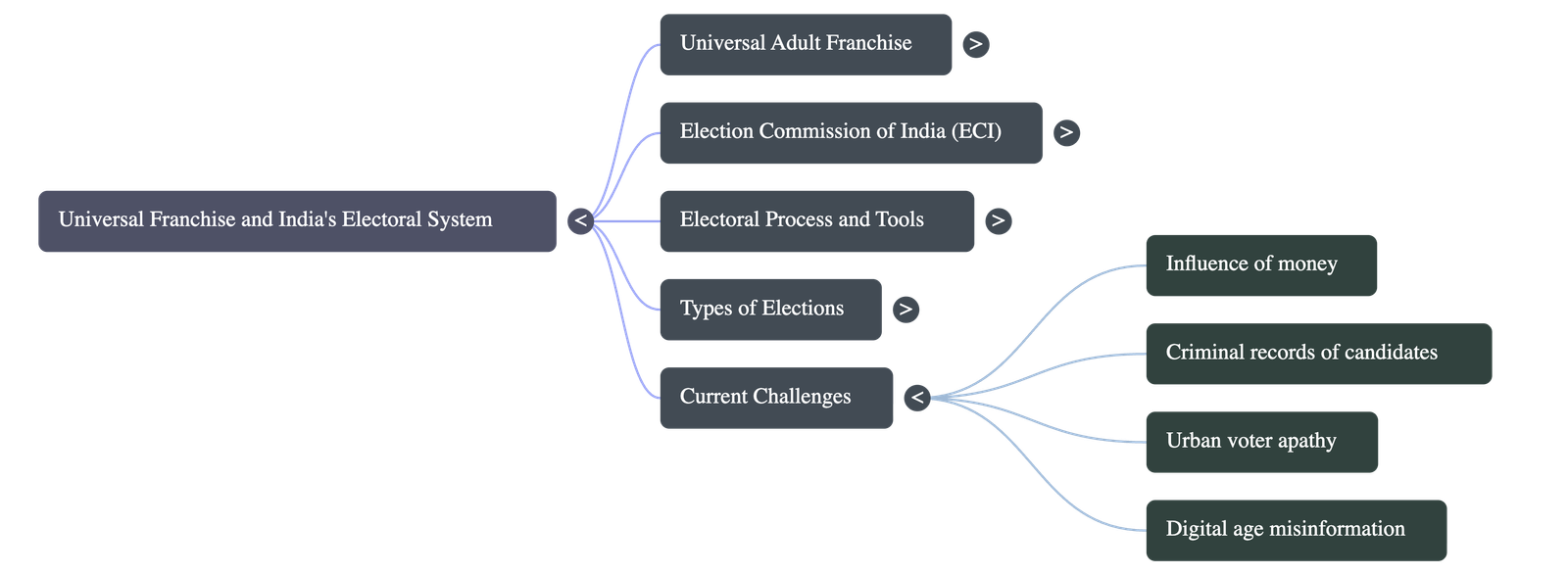
Universal Adult Franchise
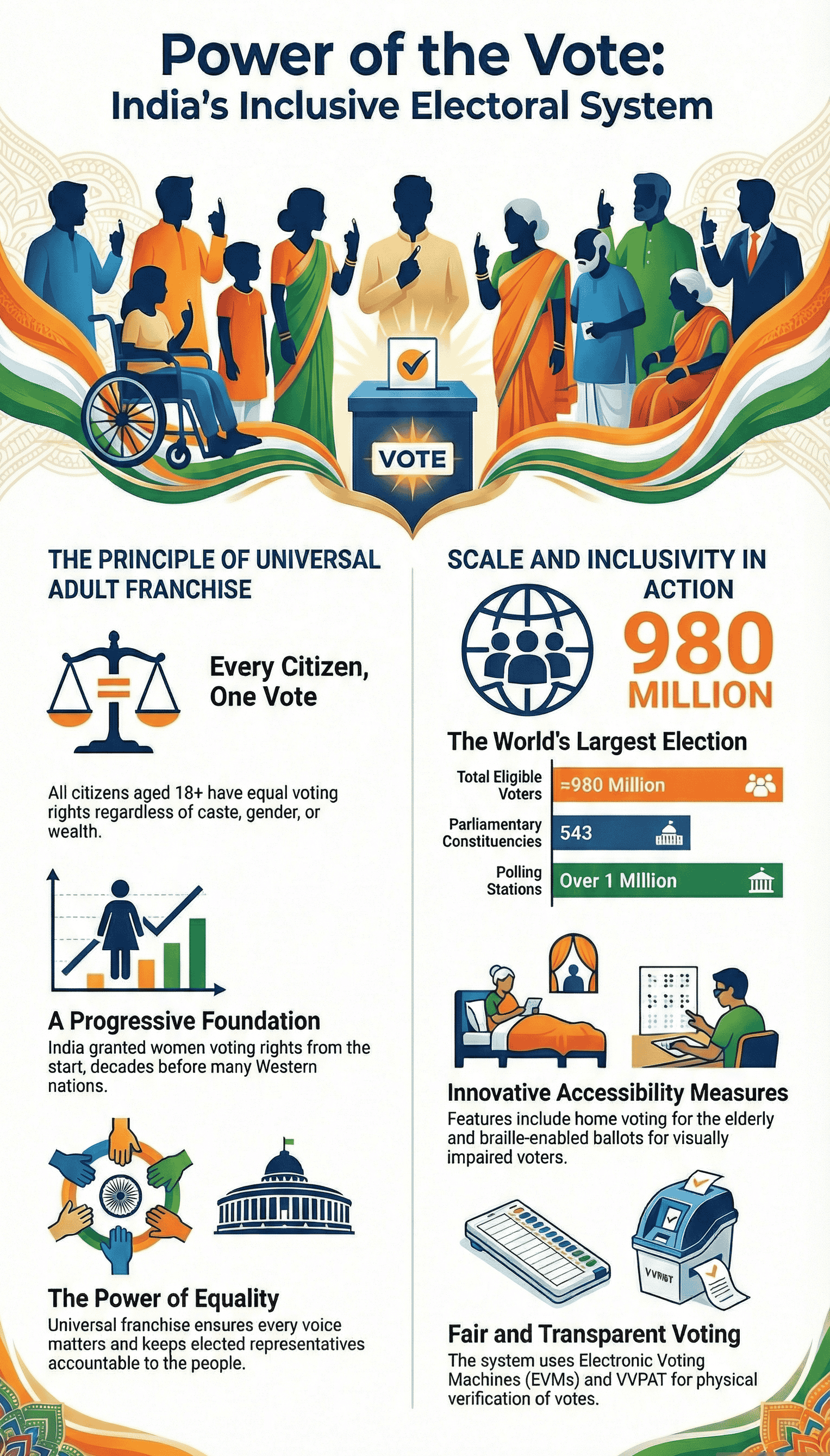
- ■ Definition and Scope: Indian democracy guarantees universal adult franchise, meaning every citizen aged 18 and above has the right to vote, irrespective of caste, creed, race, religion, gender, education, or wealth.
- ■ Historical Context: India was among the early nations to grant women voting rights right from Independence, guided by a progressive constitutional vision.
- ■ Voting Age Amendment: The minimum voting age in India was reduced from 21 to 18 in the year 1988.
- ■ Significance: It ensures political equality, makes elected representatives answerable to the public, empowers citizens to decide their future, and fosters active civic engagement.
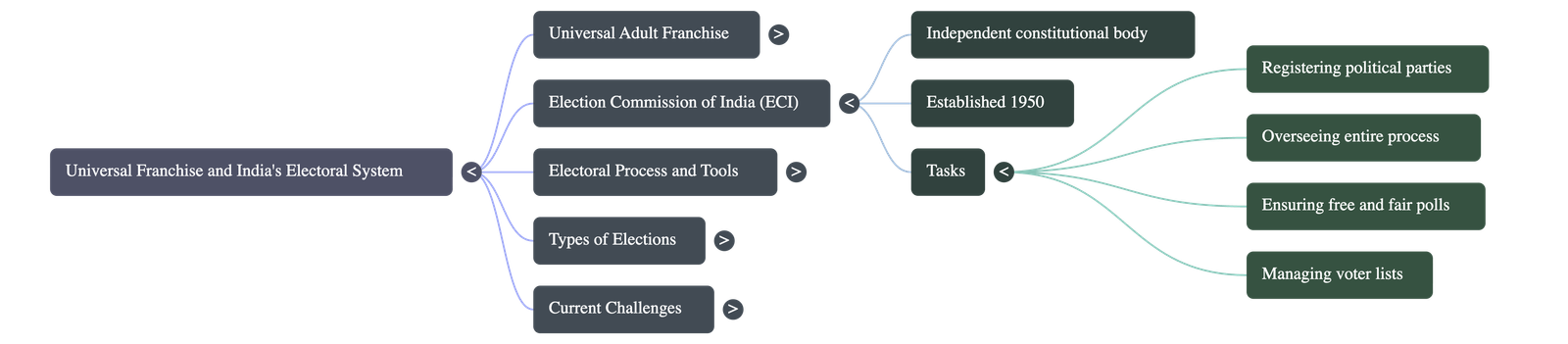
The Election Commission of India (ECI)
- ■ Role and Inception: Established in 1950, the ECI is an independent constitutional body responsible for conducting free and fair elections in India.
- ■ Jurisdiction: It manages elections for the Lok Sabha, Rajya Sabha, State Legislative Assemblies, the President, and the Vice President.
- ■ Organizational Structure: At the national level, it is headed by the Chief Election Commissioner and two Election Commissioners. At the state/UT level, it is managed by the Chief Electoral Officer, and at the district level by the District Election Officer.
- ■ Key Functions: The ECI registers political parties, sets election dates, enforces campaign rules, and oversees the entire electoral machinery.
Scale, Inclusivity, and Technology
- ■ Massive Scale: The 2024 Lok Sabha elections involved around 980 million voters across 543 constituencies and utilized over 1 million polling stations.
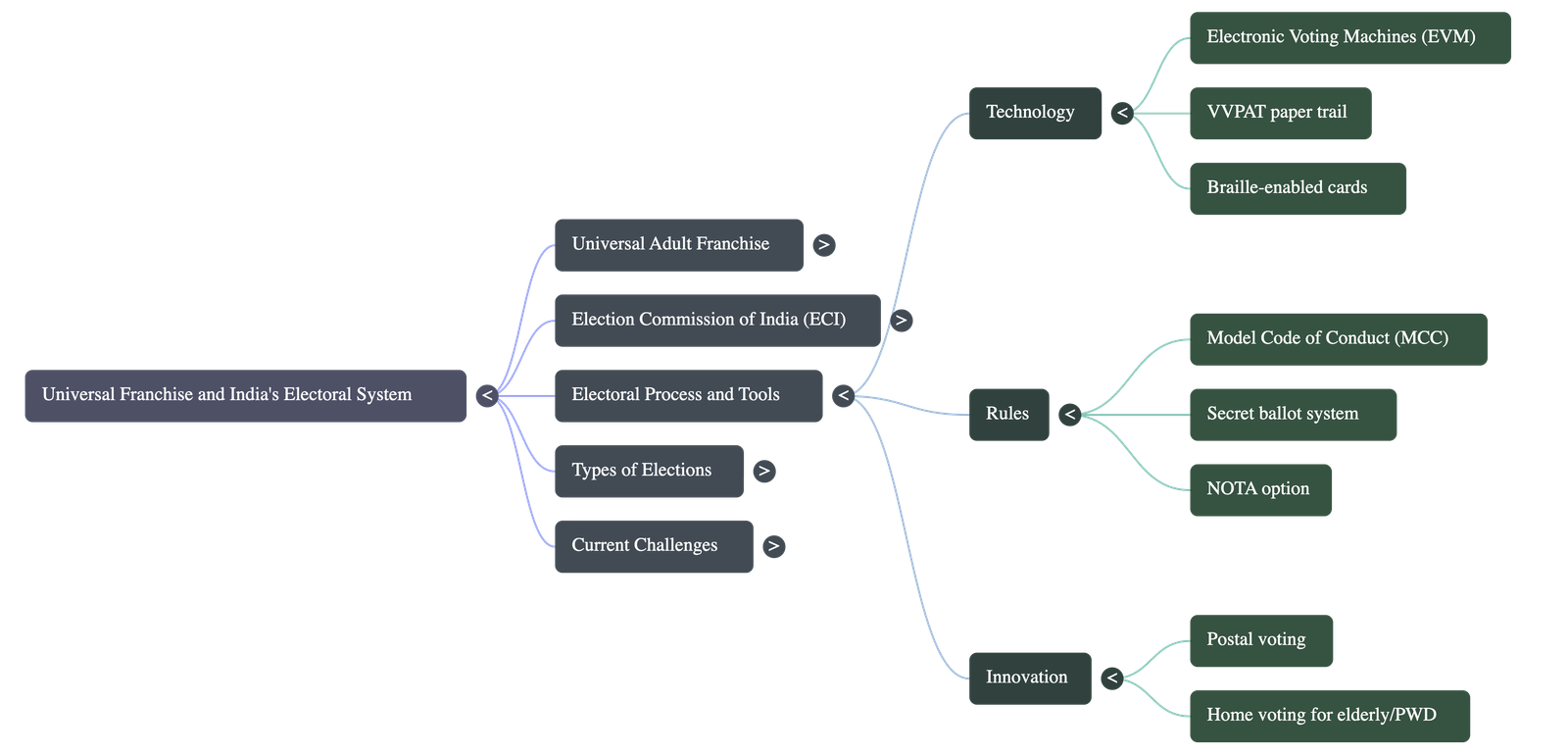
- ■ Accessibility Measures: The ECI ensures no voter is left behind by providing home voting options for the elderly and disabled, postal voting, wheelchair access, and braille-enabled voter cards.
- ■ EVMs and VVPAT: India heavily utilizes Electronic Voting Machines (EVMs) paired with the Voter Verifiable Paper Audit Trail (VVPAT) system, which provides a physical paper backup to verify electronic votes.
- ■ NOTA Option: The 'None Of The Above' option empowers voters to officially reject all candidates on the ballot, sending a powerful message for better political choices.
- ■ Reserved Constituencies: In the Lok Sabha, 84 constituencies are reserved for Scheduled Castes (SC) and 47 for Scheduled Tribes (ST).
Model Code of Conduct (MCC)
- ■ Purpose: A set of dos and don’ts to ensure free, fair, and peaceful elections.
- ■ Government Restrictions: The ruling party is prohibited from misusing government resources or announcing new schemes that could unduly influence voters.
- ■ Strict Prohibitions: The ECI strictly monitors and penalizes candidates for influencing voters with cash or gifts, or using abusive and inflammatory language.
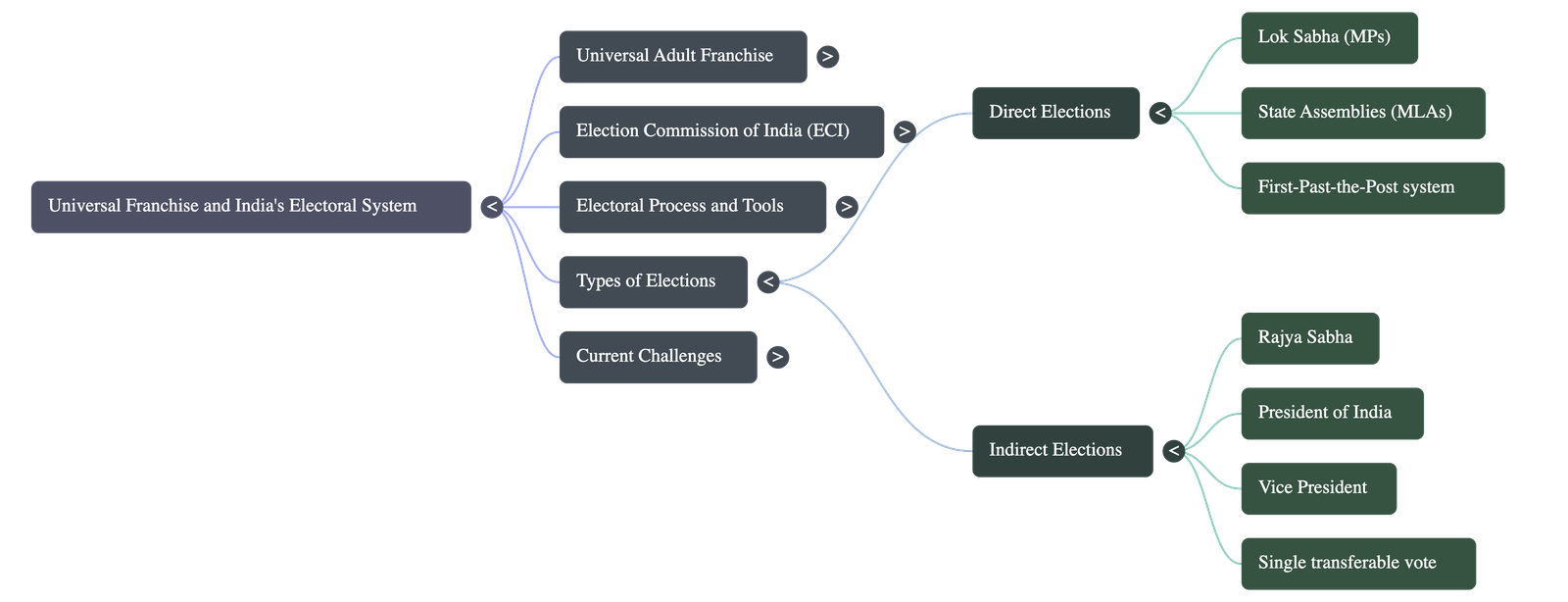
Types of Elections in India
- ■ Direct Elections (Lok Sabha & State Assemblies): Citizens directly elect Members of Parliament (MPs) and Members of Legislative Assembly (MLAs). India uses the 'First-Past-the-Post' system, meaning the candidate with the highest number of votes wins the constituency, even without an absolute majority.
- ■ Indirect Elections (Rajya Sabha): The Rajya Sabha (Council of States) is a permanent house that is never dissolved. It has 245 members: 233 are elected indirectly by state MLAs using a single transferable vote system, and 12 are nominated by the President.
- ■ Election of the President: The President is elected indirectly by an Electoral College consisting of elected MPs from both houses and elected MLAs from states and specific UTs. This ensures the President legitimately represents both the central and state governments.
- ■ Election of the Vice President: Elected via a single transferable vote by an electoral college made up of both elected and nominated members of the Parliament.
Challenges and the Road Ahead
- ■ Current Issues: Despite its success, the electoral system faces hurdles such as the growing influence of money power, candidates with criminal backgrounds, and declining voter turnout (apathy), particularly in urban sectors.
- ■ The Solution: The future of democracy relies heavily on voter awareness. Media and educational campaigns are essential to empower citizens—especially the youth—to make thoughtful, responsible choices and act as vigilant safeguards of the democratic system.
Do checkout all questions & answers of this chapter.
Quick Navigation:
| | | |
1 / 1
Quick Navigation:
| | | |