Quick Navigation:
| | | |
The Parliamentary System: Legislature and Executive
Introduction & Foundation
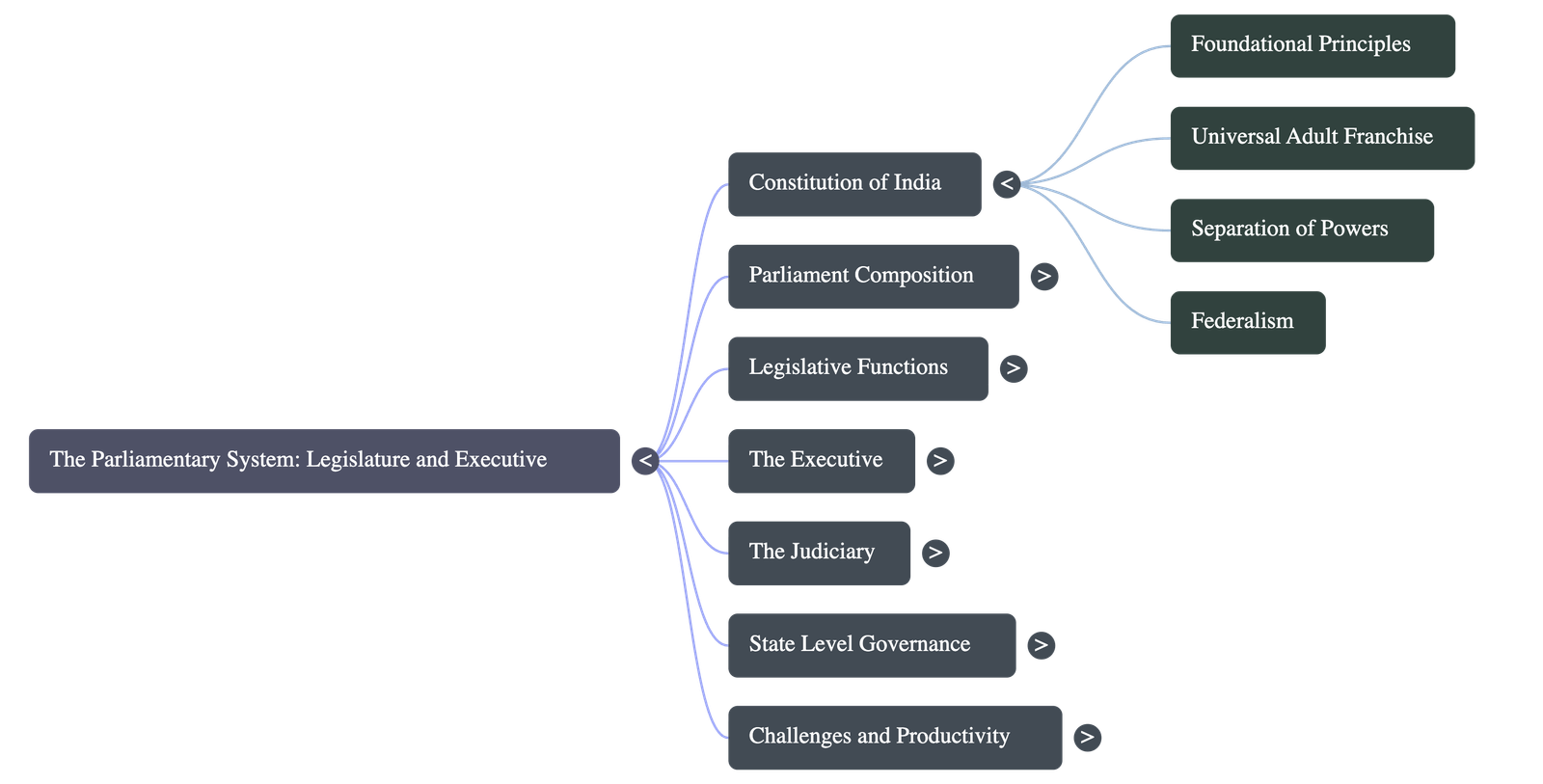
- The Constitution of independent India laid foundational principles for governance, notably Universal Adult Franchise, which grants all adult citizens the right to vote regardless of background, gender, or religion.
- Citizens directly elect representatives to the Lok Sabha, and the majority group forms the government.
- The Parliament serves as the supreme legislative body, making laws and guiding the government based on the consent of the people.
Composition & Structure of the Parliament
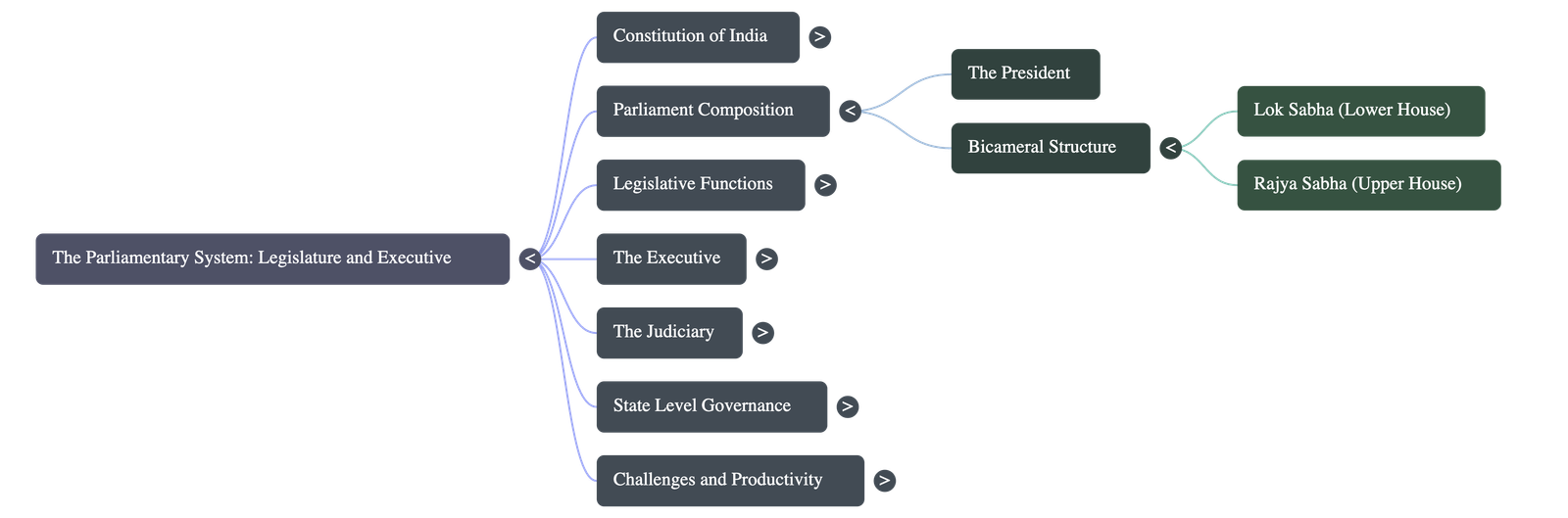
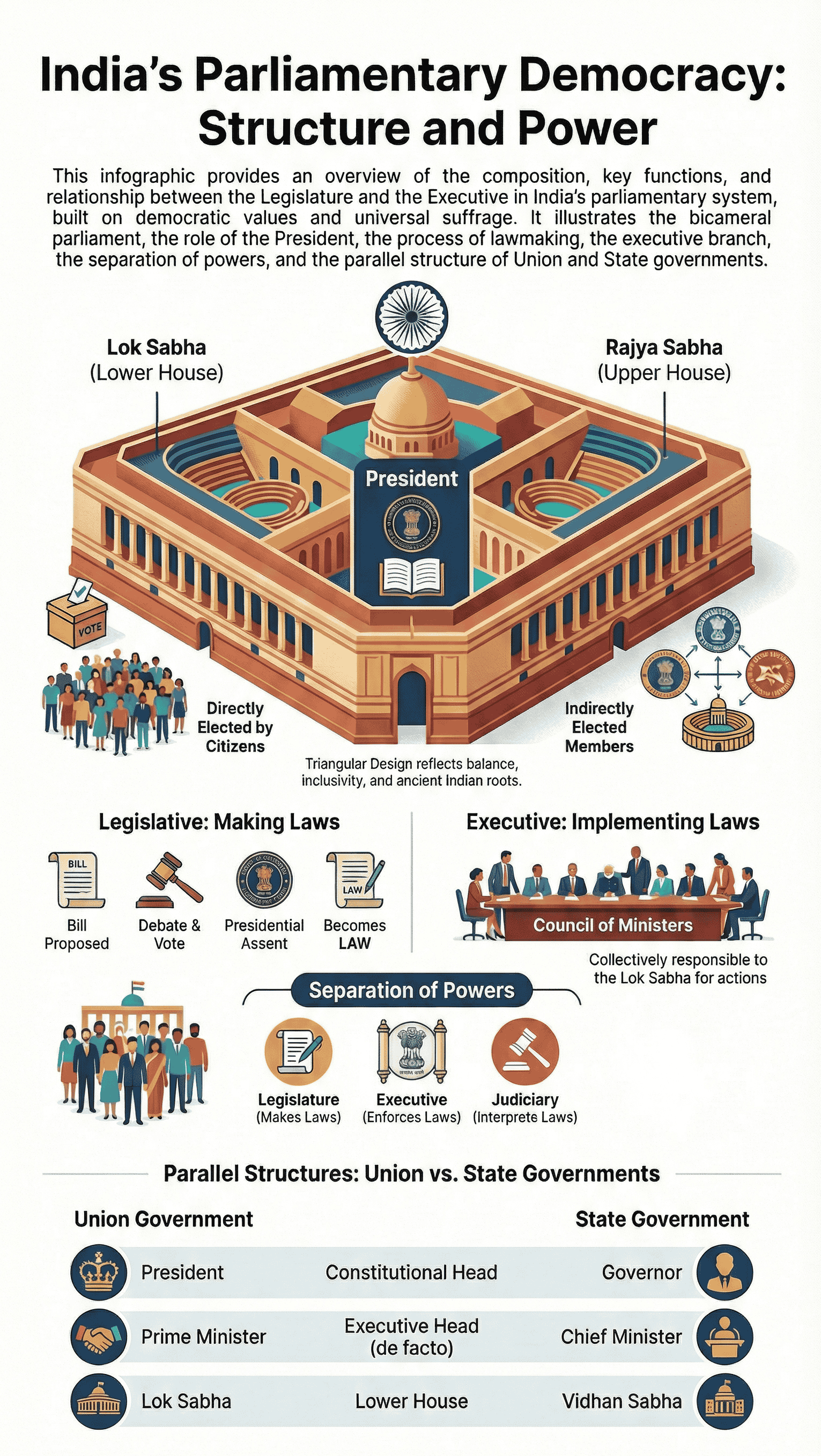
- Bicameral System: The Indian Parliament consists of the President and two houses—the Lok Sabha (Lower House / House of the People) and the Rajya Sabha (Upper House / Council of States).
- Lok Sabha: Representatives are directly elected by the people. The maximum constitutionally envisaged capacity is 550 members. It is presided over by the Speaker.
- Rajya Sabha: Members are indirectly elected by an electoral college to represent the states, reflecting the spirit of federalism. It is presided over by the Vice President of India.
- The Sengol: A historic gold-plated sceptre symbolising righteous and just rule, placed near the Speaker’s chair in the Lok Sabha.
Legislative Functions of the Parliament
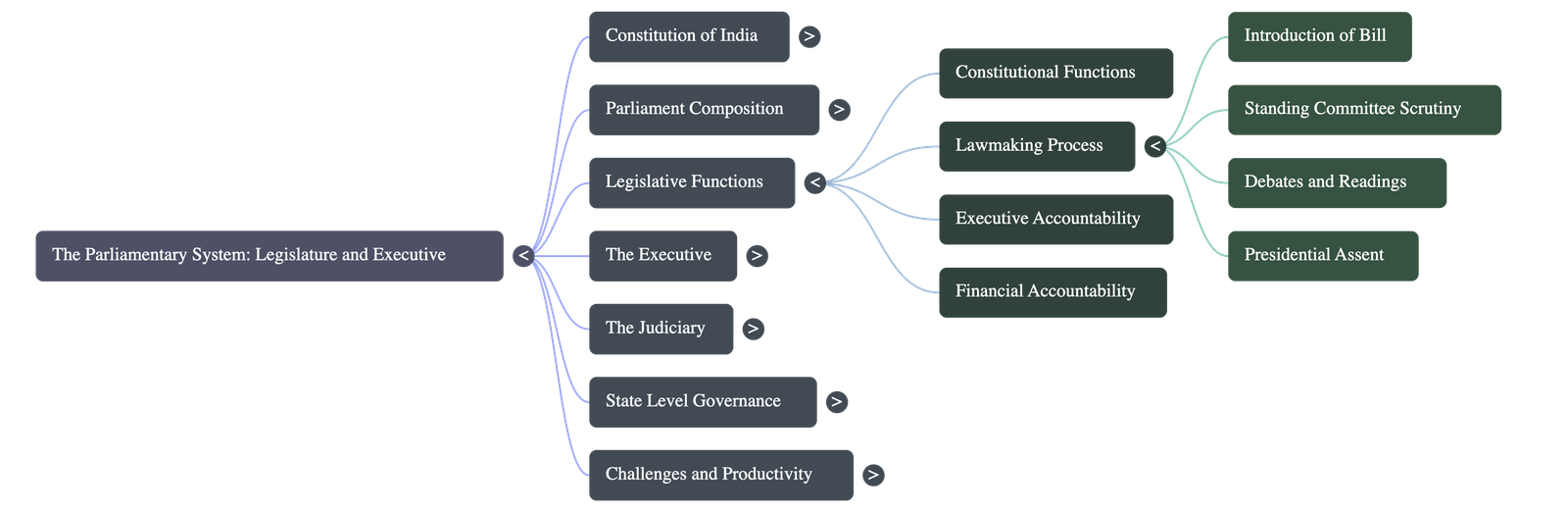
- Constitutional Functions: Upholding the Constitution, enabling parliamentary democracy, ensuring federalism, separating powers, electing the President/Vice President, and framing laws to uphold Fundamental Rights.
- Lawmaking: The primary role of drafting, debating, and passing laws. A proposed law (bill) undergoes multiple readings, committee scrutiny, clause-by-clause discussions, and voting in both houses before receiving Presidential assent and becoming an act (e.g., the Right to Education Act).
- Executive Accountability: Holding the government answerable through mechanisms like the "Question Hour," where ministers must justify policies and decisions, and through Parliamentary Standing Committees.
- Financial Accountability: Approving and monitoring government spending via the annual budget. Notably, "Money Bills" concerning financial matters can only be introduced in the Lok Sabha.
Executive Functions
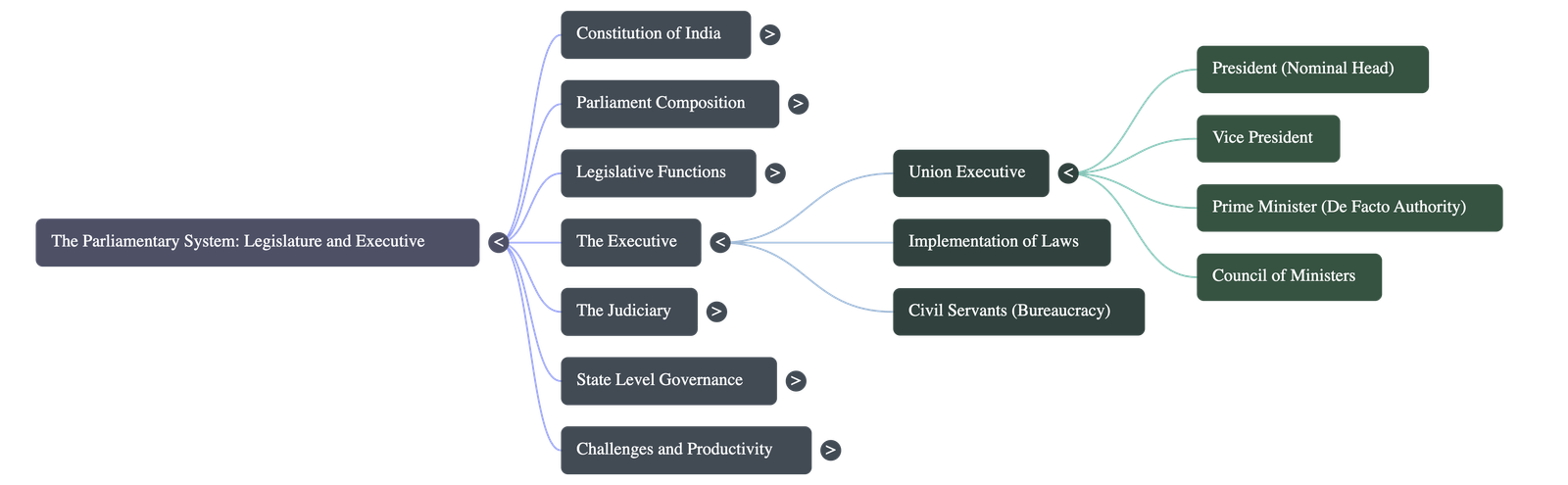
- The President: The nominal head of state who appoints the Prime Minister, summons Parliament, gives assent to bills, and can exercise discretionary powers during political crises.
- Prime Minister & Council of Ministers: The de facto executive authority. They implement laws, shape national policies, and run the daily government operations. They are collectively accountable to the Lok Sabha.
- Civil Servants: A permanent group of administrators and bureaucrats who assist ministers in smoothly enforcing laws and executing policies.
The Judiciary & Checks and Balances
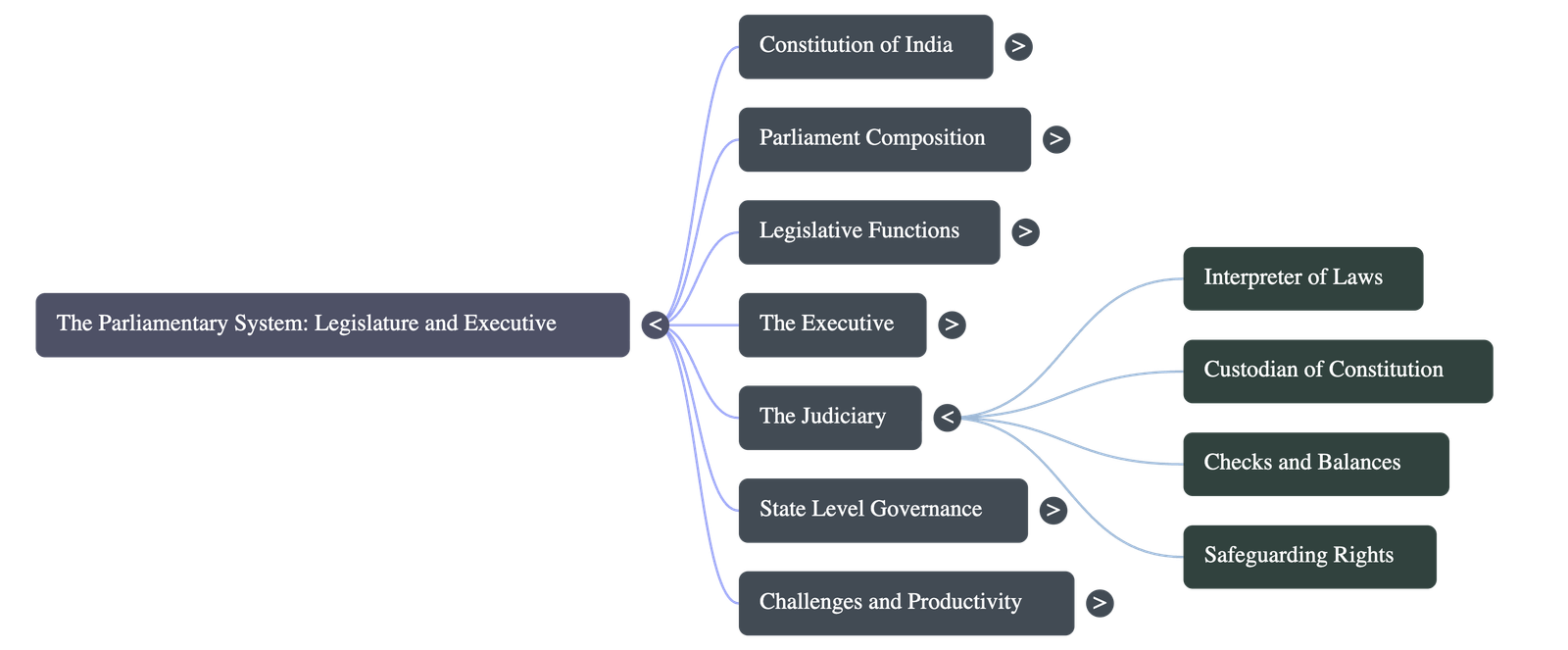
- The Judiciary acts as the custodian of the Constitution, interpreting laws and resolving disputes through a system of courts.
- It maintains a system of checks and balances by ensuring that neither the Legislature (when making laws) nor the Executive (when implementing them) violates the constitutional framework.
Governance at the State Level
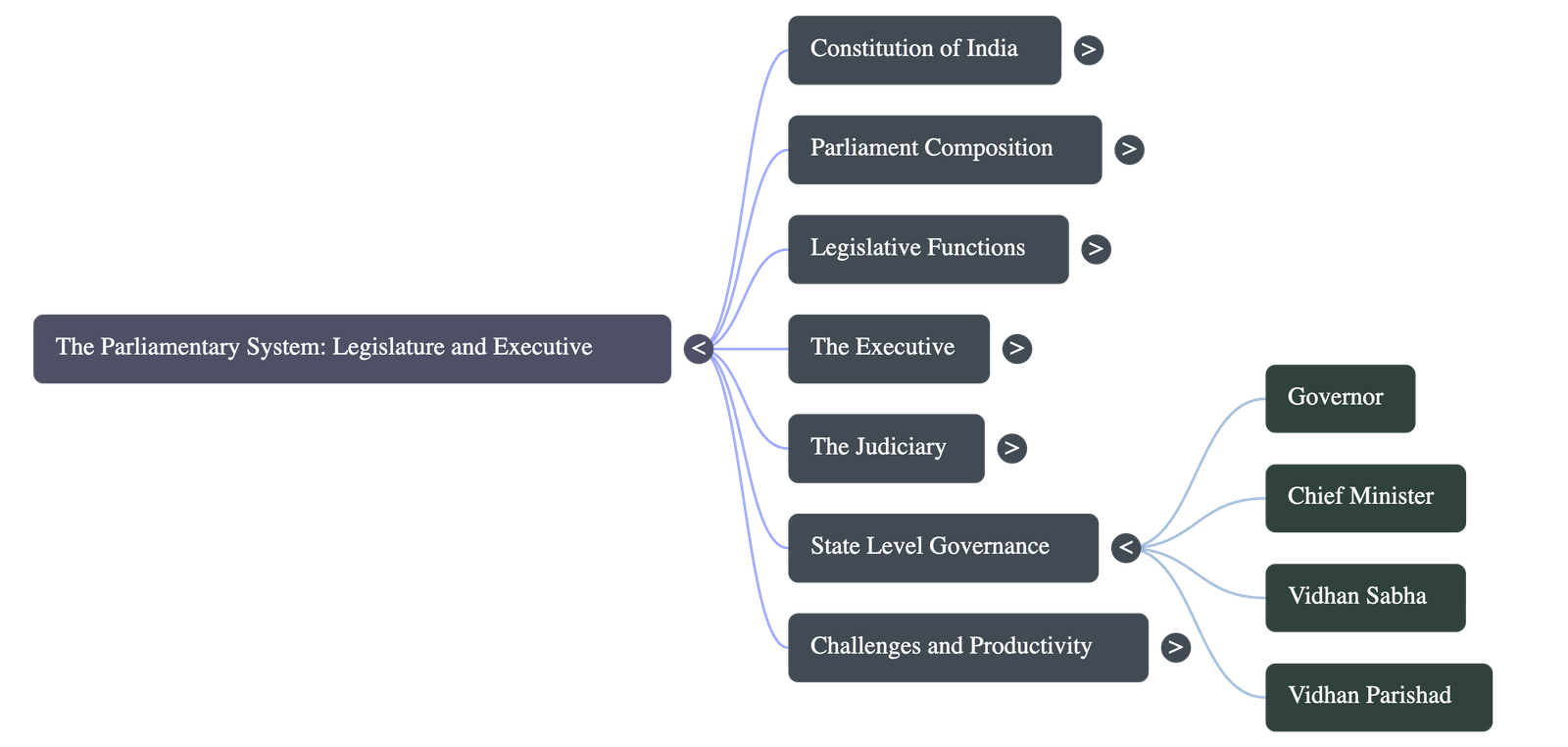
- State governments mirror the Union structure. The Governor serves as the nominal head, while the Chief Minister is the de facto executive leader.
- State Legislatures: Can be Unicameral (having only a Vidhan Sabha/Legislative Assembly) or Bicameral (having both a Vidhan Sabha and a Vidhan Parishad/Legislative Council).
- Lawmaking Jurisdiction: Powers are divided into the Union List (central matters), State List (regional matters), and Concurrent List (shared matters, where central law overrides state law in case of conflict).
Challenges to Effective Functioning
- Parliament meets in three main sessions: Budget, Monsoon, and Winter.
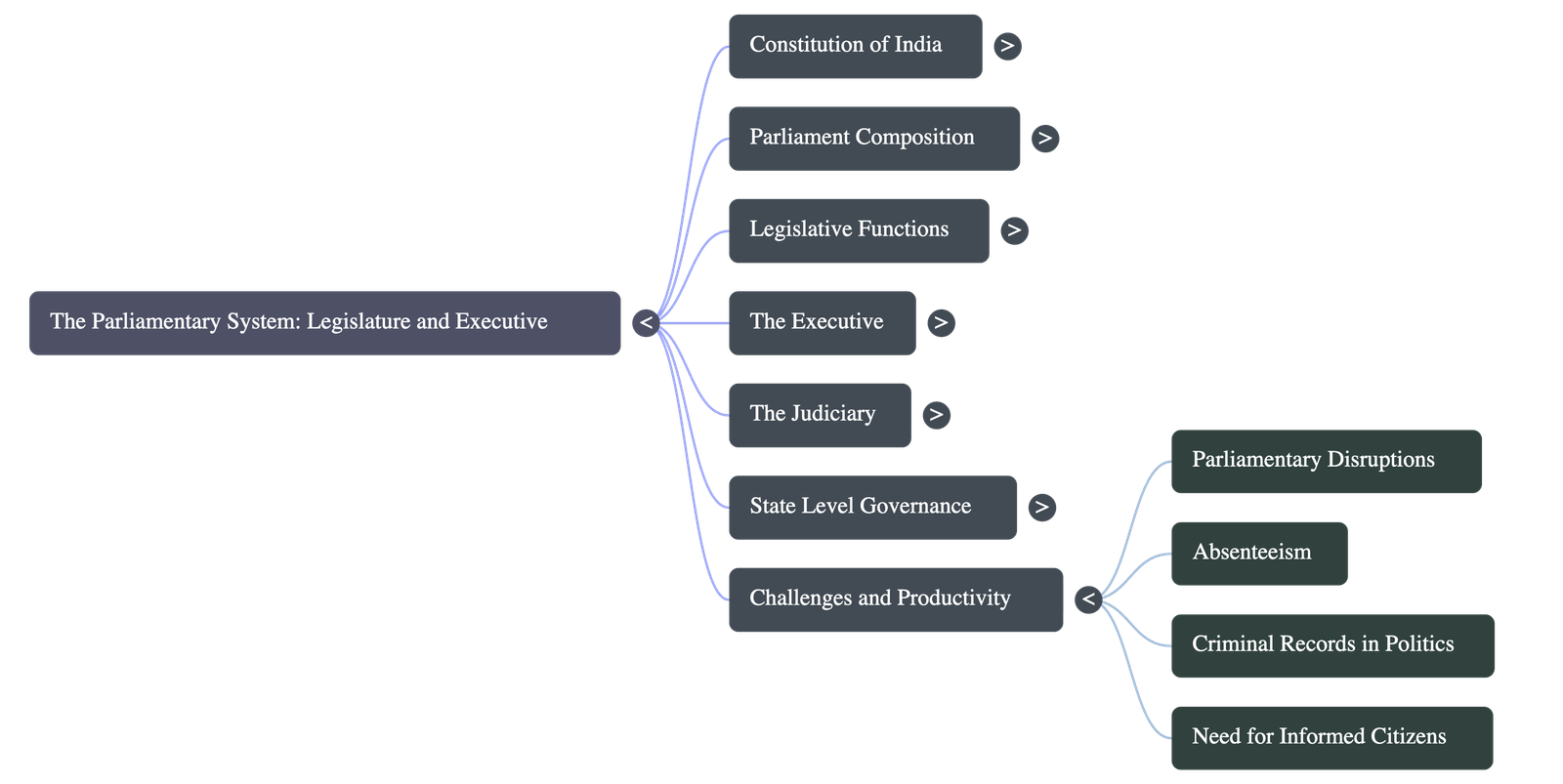
- Effectiveness is often hampered by absenteeism, non-cooperative conduct, disruptions during Question Hour, and declining productivity (e.g., sessions clocking very low functional percentages).
- Concerns exist over delayed bills and the election of representatives with criminal records.
- Citizen Role: These challenges can be mitigated by an informed and engaged electorate. Citizens are encouraged to ask questions, participate in public discussions, and hold their representatives accountable.
Do checkout all questions & answers of this chapter.
Quick Navigation:
| | | |
1 / 1
Quick Navigation:
| | | |