Quick Navigation:
| | |
The Lost Child
Overview: This chapter by Mulk Raj Anand describes a child's visit to a spring fair with his parents. It poignantly illustrates how a child's intense desire for material things vanishes instantly when he loses the safety and security of his parents.
-
The Festive Atmosphere
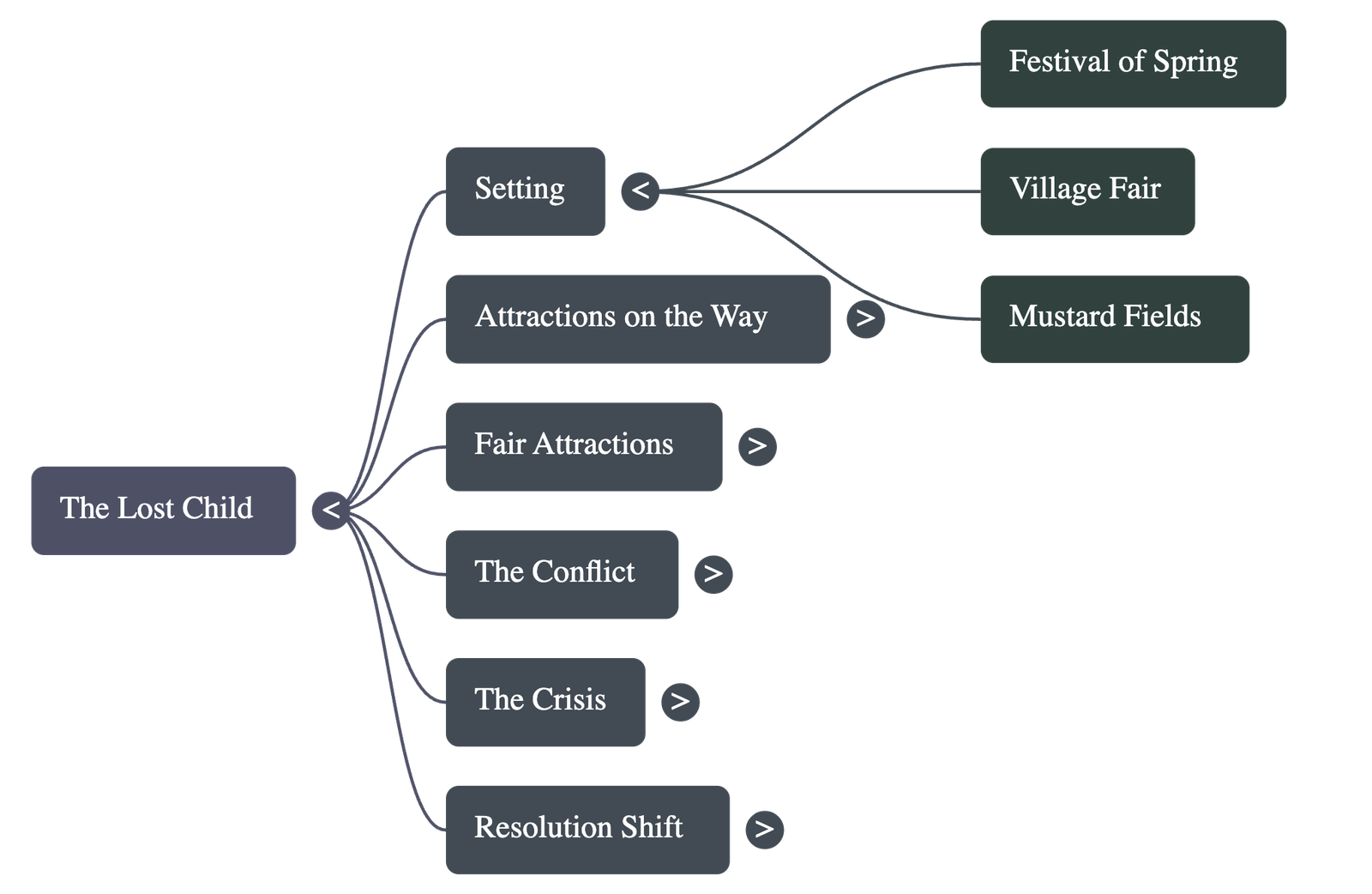
It was the festival of spring. A joyous crowd clad in bright colors emerged from the lanes and alleys. Some walked, some rode horses, and others were carried in bamboo and bullock carts. A little boy ran excitedly between his father’s legs, brimming with life and laughter. -
Attractions on the Way
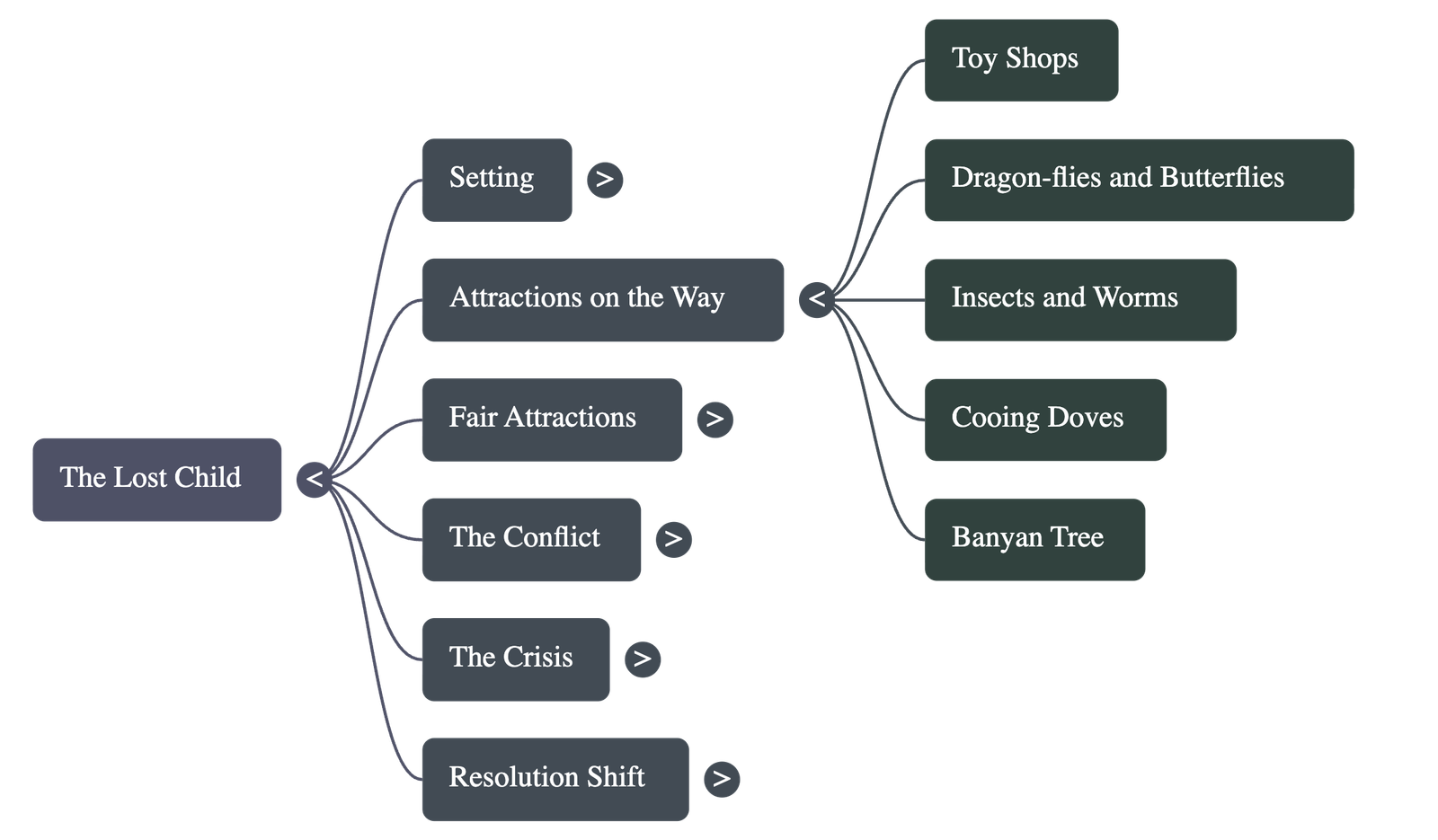
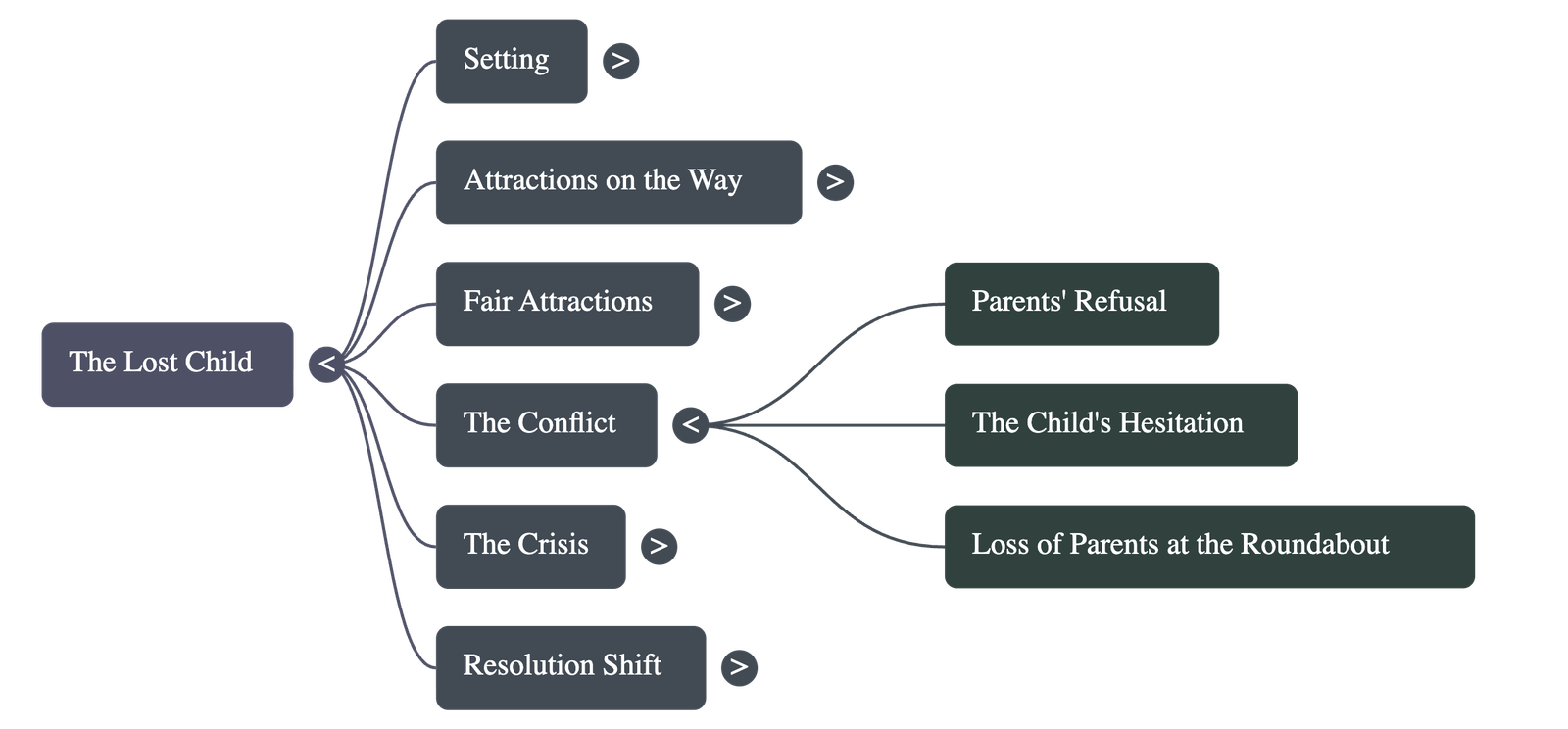
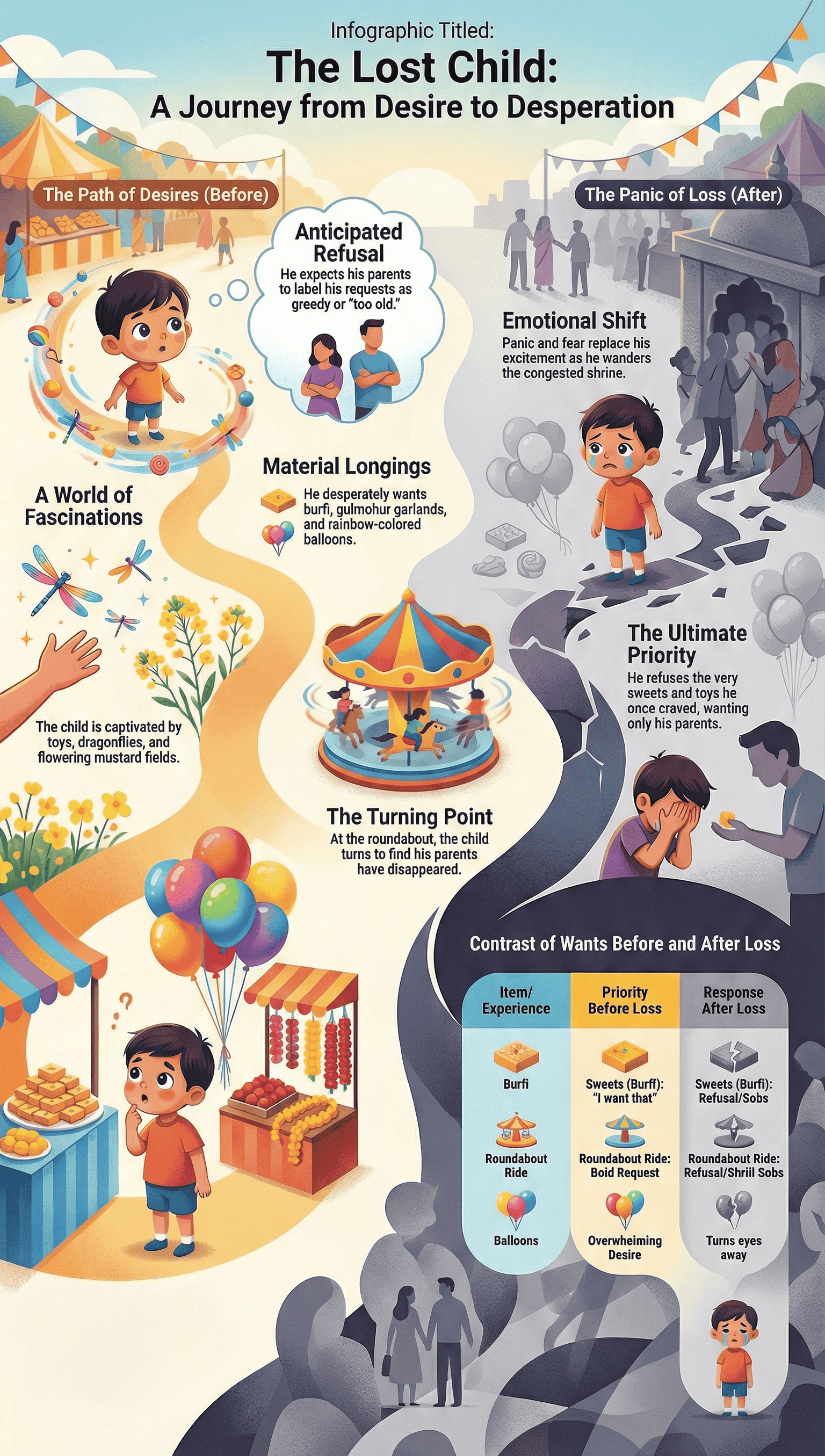
The child lagged behind, fascinated by the toys in the shops lining the way. His parents constantly called him to "Come, child, come." When he asked for a toy, his father looked at him with a tyrant's cold stare of refusal. His mother, more tender, distracted him by showing him the flowering mustard field, which looked like melting gold. -
Nature's Distractions
The child was captivated by nature. He chased dragonflies and butterflies, trying to catch them. He was attracted to insects and worms along the footpath. Upon entering a grove, a shower of young flowers fell on him, and he began gathering petals, only to drop them when he heard the cooing of doves. -
Reaching the Fair and Unfulfilled Desires
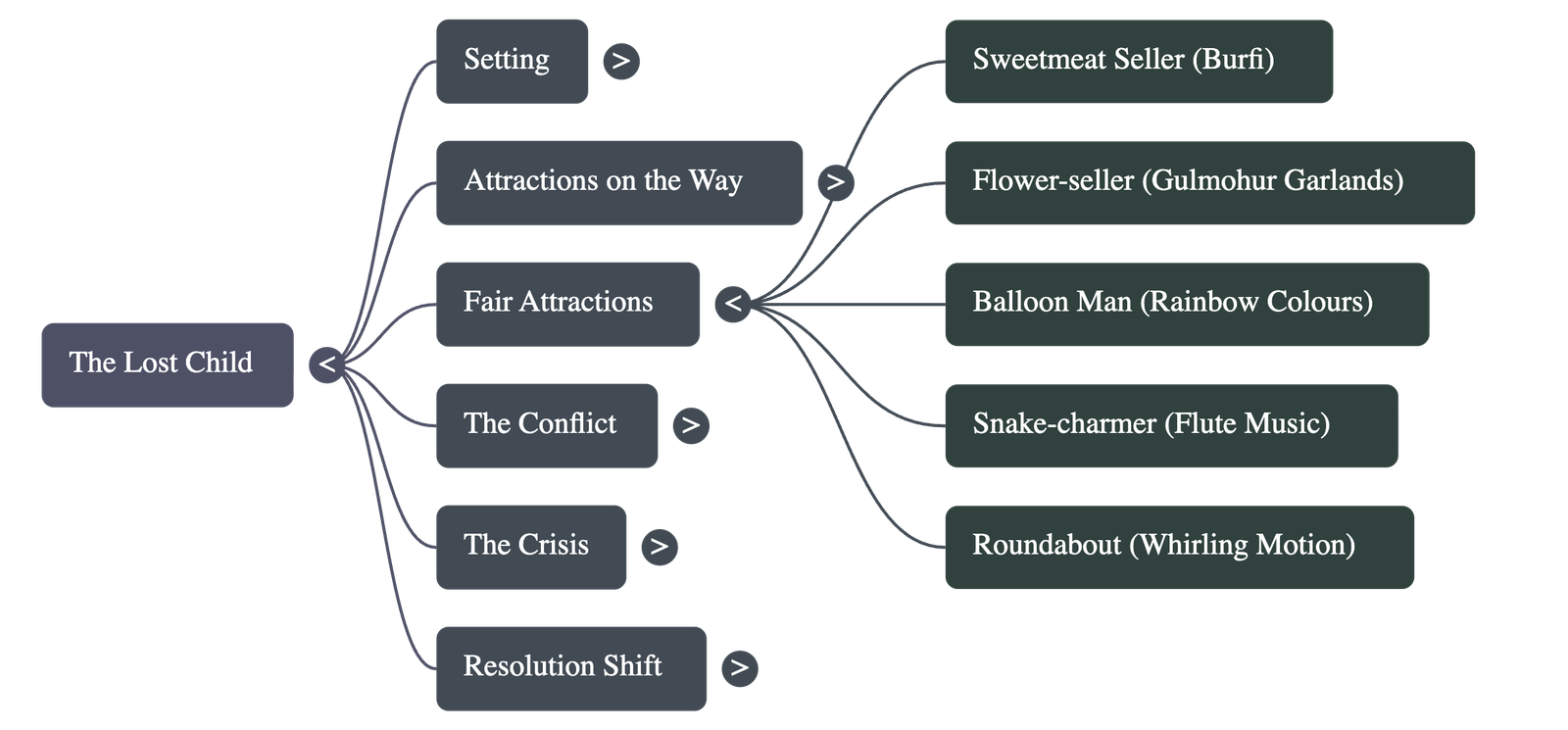
As they entered the fair, the child was repelled and fascinated by the confusion. He saw many things he desperately wanted but did not fully ask for, knowing his parents' likely excuses:- Sweets: He wanted burfi from the sweetmeat seller but knew his parents would call him greedy.
- Flowers: He wanted a garland of gulmohur but knew they would say the flowers were cheap.
- Balloons: He desired the rainbow-colored balloons but knew they would say he was too old to play with them.
- Music: He wanted to listen to the snake charmer but knew his parents had forbidden such coarse music.
-
The Realization of Loss
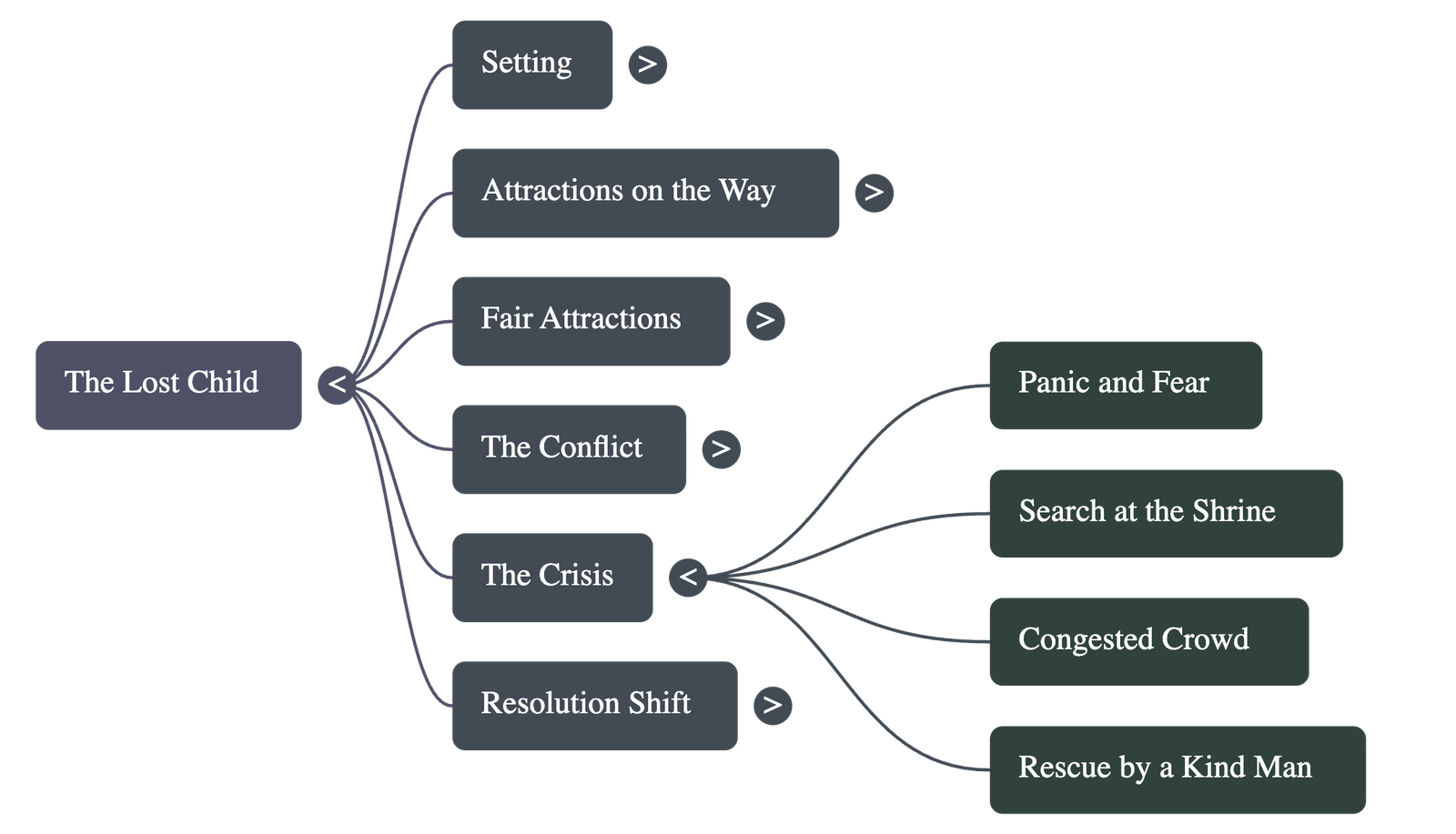
The child watched a roundabout in full swing. Unable to resist, he made a bold request: "I want to go on the roundabout, please, Father, Mother." When there was no reply, he turned around to find his parents were nowhere to be seen. He looked everywhere, but they were gone. -
Panic and Despair
A full, deep cry rose from his throat. Panic-stricken, he ran hither and thither, shouting "Mother, Father!" His yellow turban came untied, and his clothes became muddy. He ran toward a crowded shrine, struggling to get through the throngs of people, and shrieked at the highest pitch of his voice to avoid being trampled. -
The Rescue
A man in the surging crowd heard the child's cry and lifted him up in his arms. He asked the child how he got there and whose baby he was, but the child only wept more bitterly, crying, "I want my mother, I want my father!" -
Rejection of All Luxuries
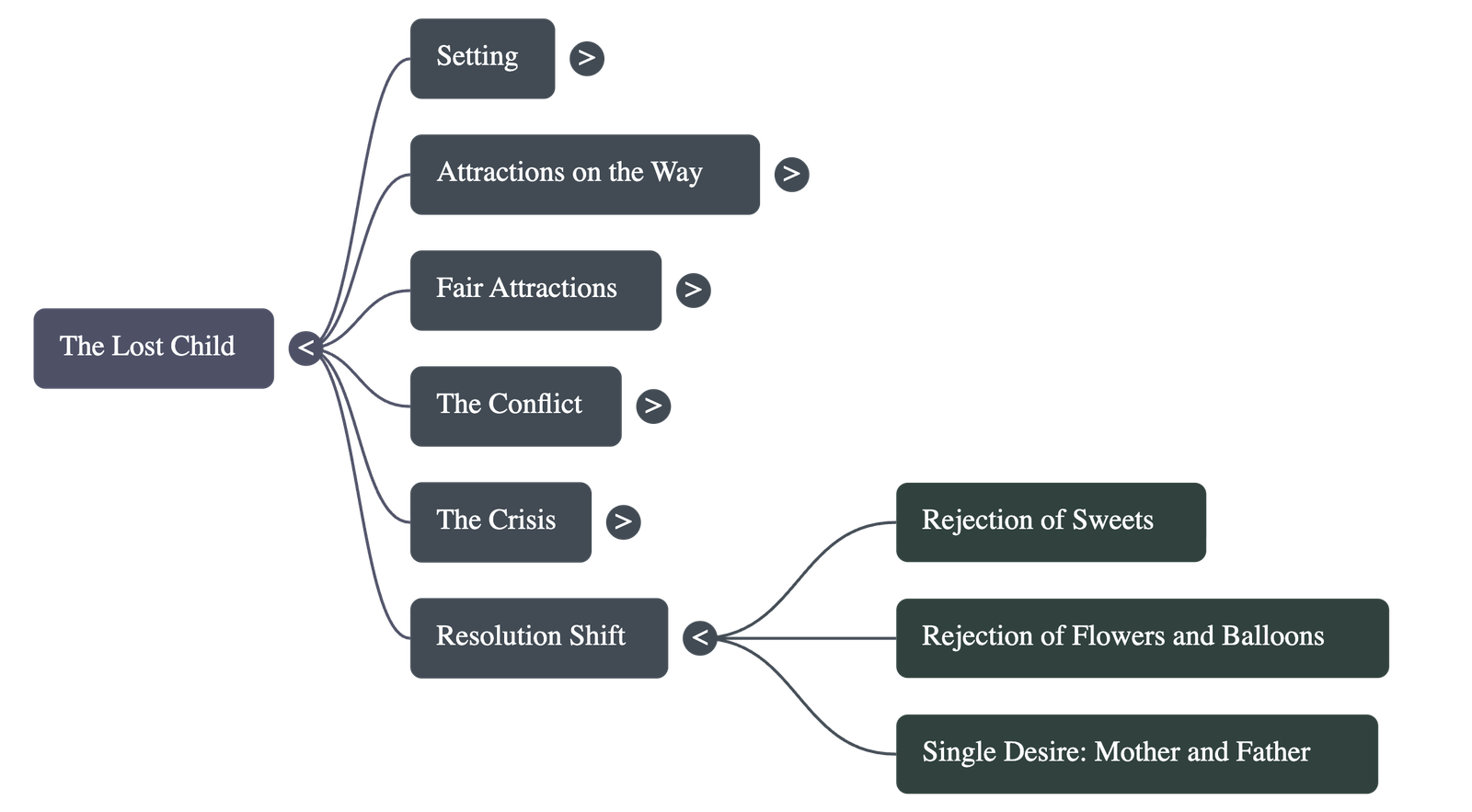
The kind man tried to soothe the child by offering him all the things he had previously desired. The man took him to the roundabout, the snake charmer, the balloon seller, the flower seller, and finally the sweet shop. -
Conclusion
At every offer—whether it was a ride on the horse, the nice music, the rainbow balloons, the smelling flowers, or the sweets—the child turned away. He shut his ears, turned his nose, and turned his face, reiterating only one sob: "I want my mother, I want my father!" The story highlights that without his parents, the things the child earlier craved held no value for him.
Do checkout all questions & answers of this chapter.
Quick Navigation:
| | |
1 / 1
Quick Navigation:
| | |