Quick Navigation:
| | |
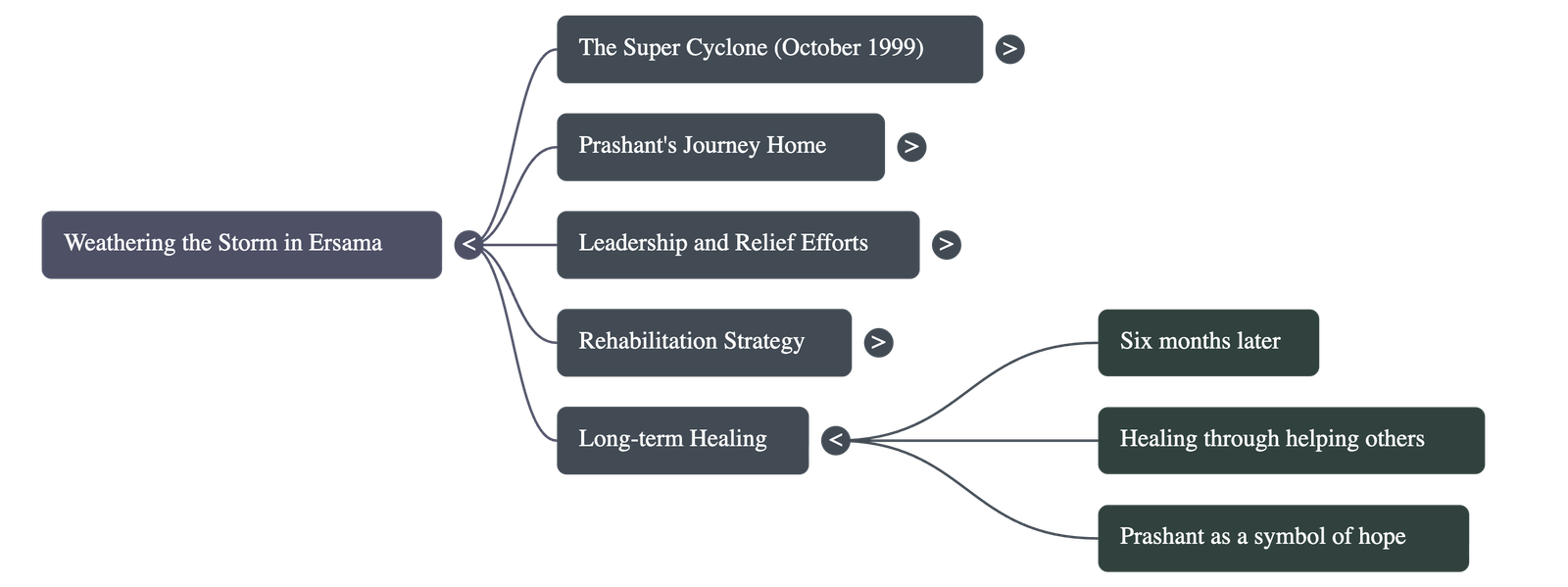
Weathering the Storm in Ersama
1. The Onset of the Super Cyclone
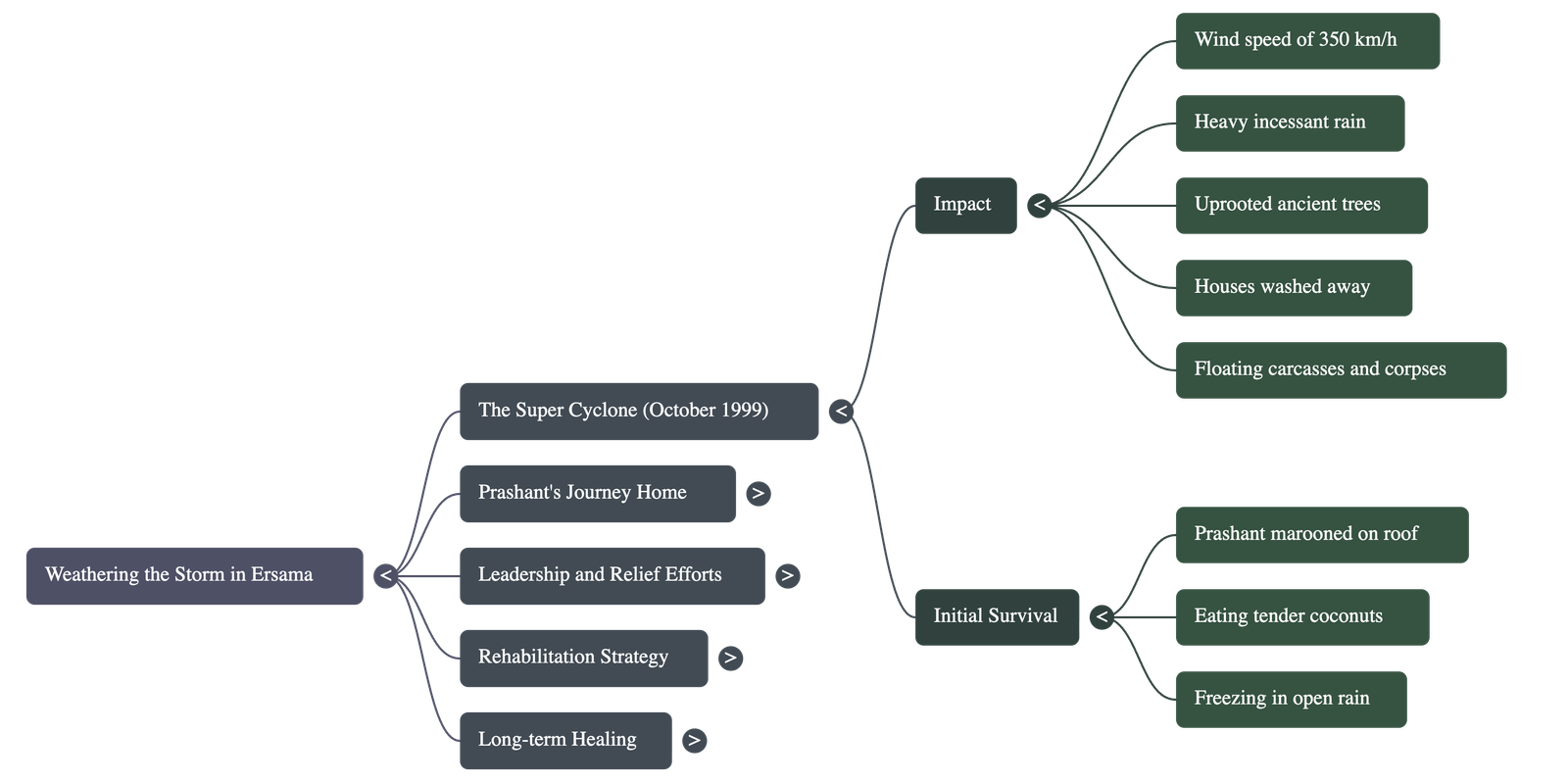
- Prashant's Visit: On October 27, 1999, Prashant (a young man of 19) went to the block headquarters of Ersama, 18 kilometers from his village, to visit a friend.
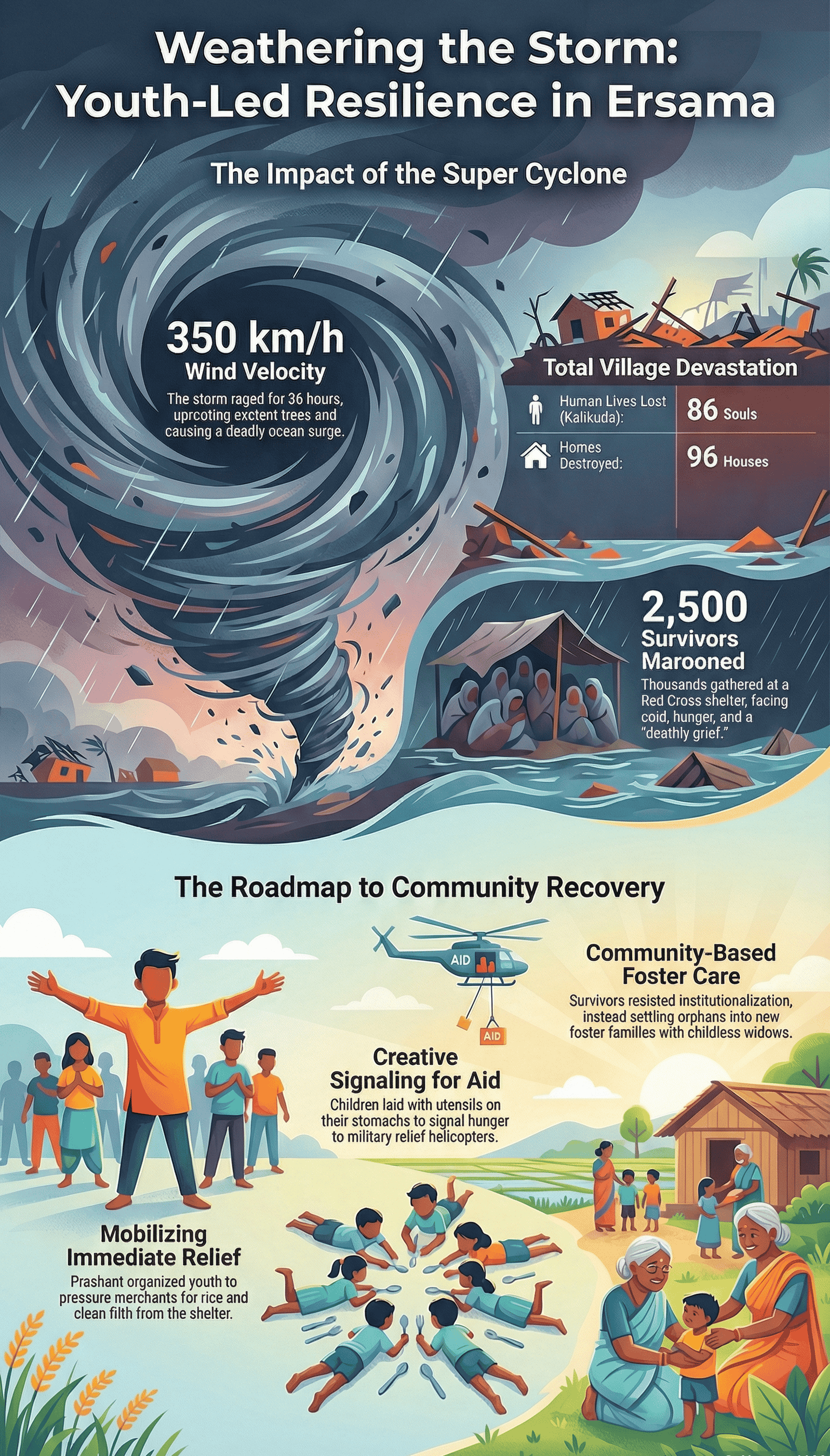
- The Storm Strikes: In the evening, a devastating storm hit. Winds beat against houses at a velocity of 350 km per hour. Ancient trees were uprooted and crashed to the earth.
- Destruction Begins: Heavy, incessant rain filled the darkness. Houses and people were washed away. In his friend's house, the angry water swirled and rose to neck-deep levels.
- The Night of Terror: Though the house was made of brick and mortar, the family was terrified as uprooted trees fell on the house, damaging the roof and walls.
2. Survival on the Roof
- Seeking Refuge: To escape the rising water, Prashant and his friend's family took shelter on the roof, where they remained for the next two days.
- A Scene of Devastation: By morning, a brown sheet of water covered everything. Only fractured cement houses stood. Animal carcasses and human corpses floated everywhere.
- A Blessing in Disguise: Two coconut trees had fallen onto the roof of the house. These tender coconuts kept the trapped family from starving during the 36-hour ordeal.
- Prashant's Fear: Freezing in the rain, Prashant wept, constantly worrying if his own family had survived the catastrophe.
3. The Journey Back to Kalikuda
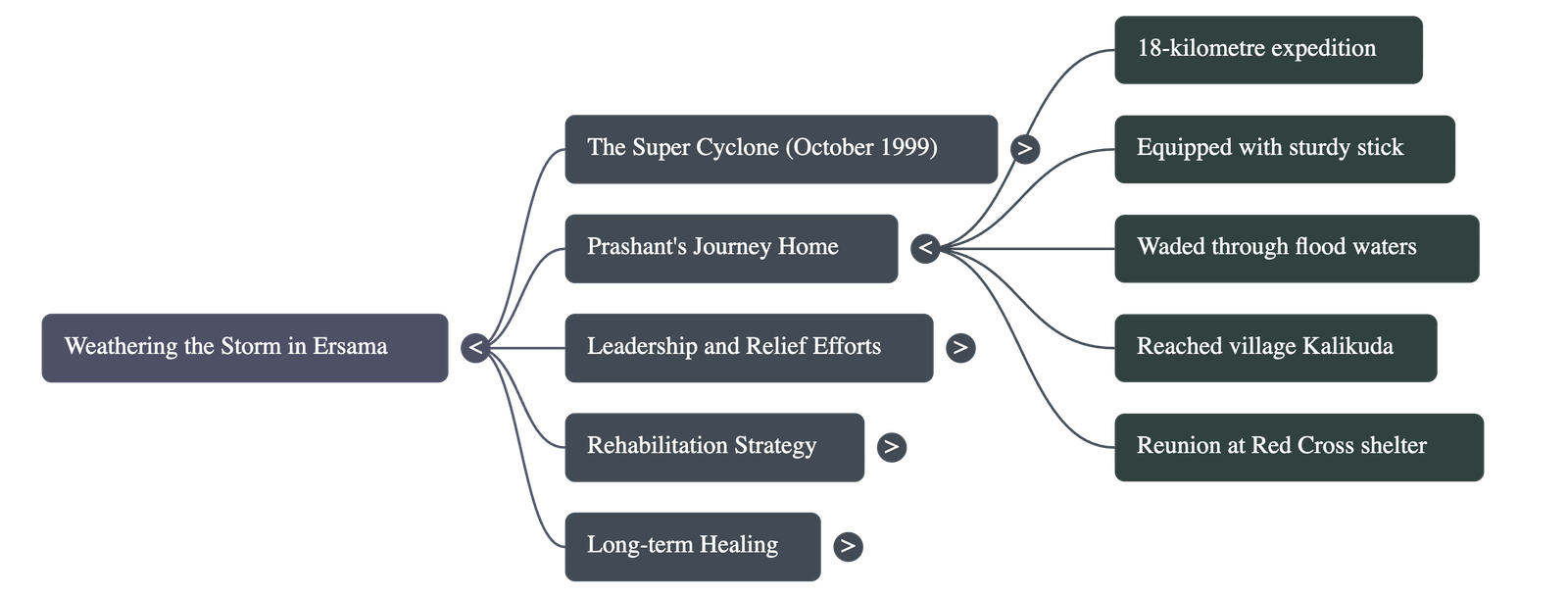
- The Decision to Leave: Once the rain ceased after two days, Prashant determined to return to his village to find his family, despite the danger and his friend's pleas to stay.
- The Difficult Trek: Equipped with a long, sturdy stick, he waded through the swollen floodwaters on the 18-kilometer journey. He used the stick to locate the road and find shallow spots.
- Horrific Scenes: He witnessed macabre scenes, having to push away floating bodies of men, women, children, and animals to move forward.
- Companions: Partway through, he found two friends of his uncle returning to the village and joined them.
- Arrival: Upon reaching his village, Kalikuda, his heart went cold. Where his home stood, there were only remnants of the roof. Belongings were mangled in tree branches.
4. Reunion and Assessment
- The Red Cross Shelter: Prashant went to the shelter to look for his family. He first spotted his maternal grandmother, who rushed to him in tears.
- Miraculous Survival: His extended family gathered around him. His brother, sister, uncles, and aunts had all survived.
- Grim Situation: The shelter was crowded with 2,500 people. 86 lives were lost in the village, and all 96 houses were washed away. The survivors were desperate, with only a few green coconuts to eat.
5. Leadership and Organization
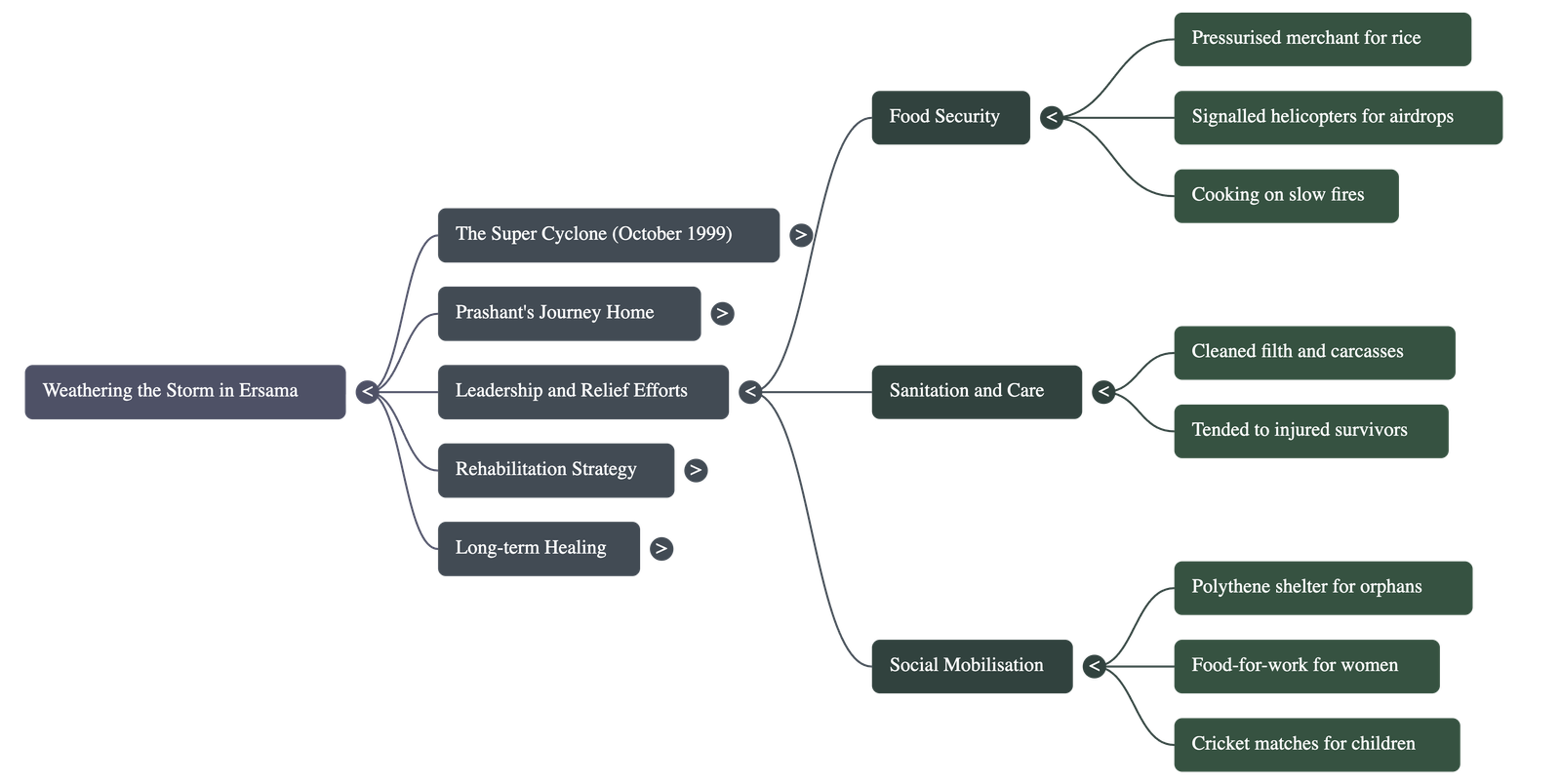
- Taking Charge: Prashant decided to step up as a leader. He organized a group of youths and elders to pressure the local merchant to give them rice.
- Securing Food: The delegation succeeded. They cooked the rice over a fire made from fallen branches. Though the rice was rotting, it allowed the survivors to eat for the first time in four days.
- Hygiene and Health: Prashant organized a team of youth volunteers to clean the shelter of filth, urine, vomit, and carcasses, and to tend to the wounds of the injured.
6. Innovative Relief Measures
- Signaling Helicopters: When a military helicopter dropped food once and didn't return, the youth task force came up with a plan. They deputed children to lie on the sand with empty utensils on their stomachs.
- Success: The message that they were hungry got through. The helicopters began making regular rounds, airdropping food and basic needs.
7. Rehabilitation and Social Healing
- Supporting Orphans: Prashant brought orphaned children together and built a polythene shelter for them. Women were mobilized to look after them while men secured resources.
- Combating Grief: Noticing the women and children sinking into grief, he persuaded women to join a "food-for-work" NGO program.
- Engaging Children: Since he loved cricket, he organized cricket matches and other sports events to keep the children engaged and active.
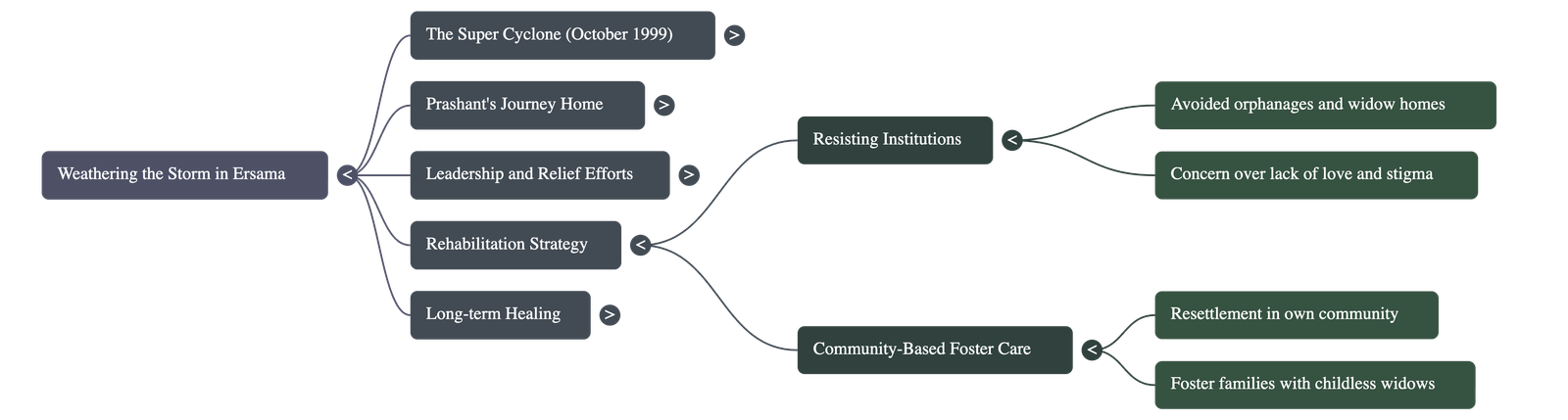
- Resisting Institutions: The volunteers resisted the government plan to place orphans and widows in separate institutions, fearing stigma and loneliness.
- Community Foster Care: They advocated for resettlement within the community, creating new foster families where childless widows cared for orphans.
8. Conclusion
- Healing Through Service: Six months after the cyclone, Prashant's own wounded spirit had healed because he had no time to worry about his own pain.
- A Beacon of Hope: His handsome, youthful face became what the widows and orphaned children of his village sought out most in their darkest hours.
Do checkout all questions & answers of this chapter.
Quick Navigation:
| | |
1 / 1
Quick Navigation:
| | |