Quick Navigation:
| | |
A House Is Not a Home
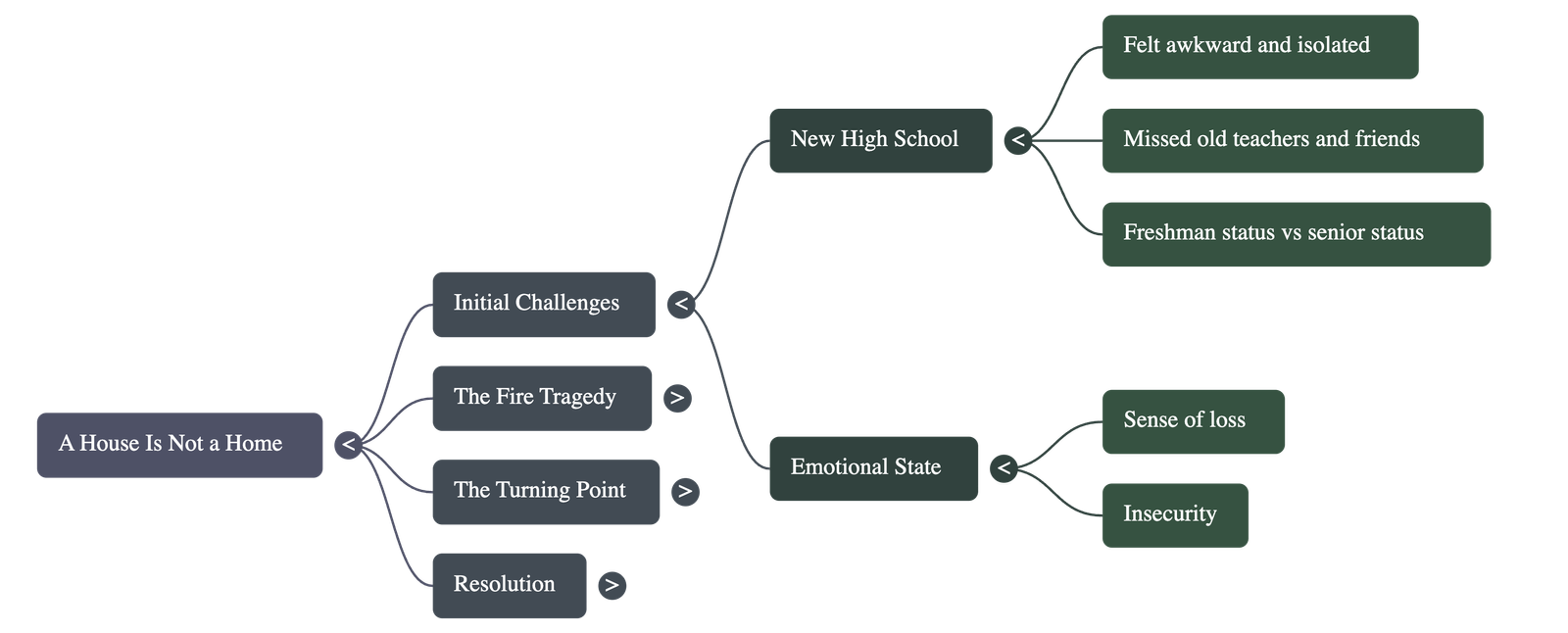
Adjusting to a New High School
- The narrator finds the first year of high school awkward and isolating after leaving junior high at the head of the class.
- The new school is significantly larger, and the narrator's closest friends have been sent to a different high school.
- Feeling lonely, the narrator frequently visits old teachers, who encourage getting involved in activities to meet new people.
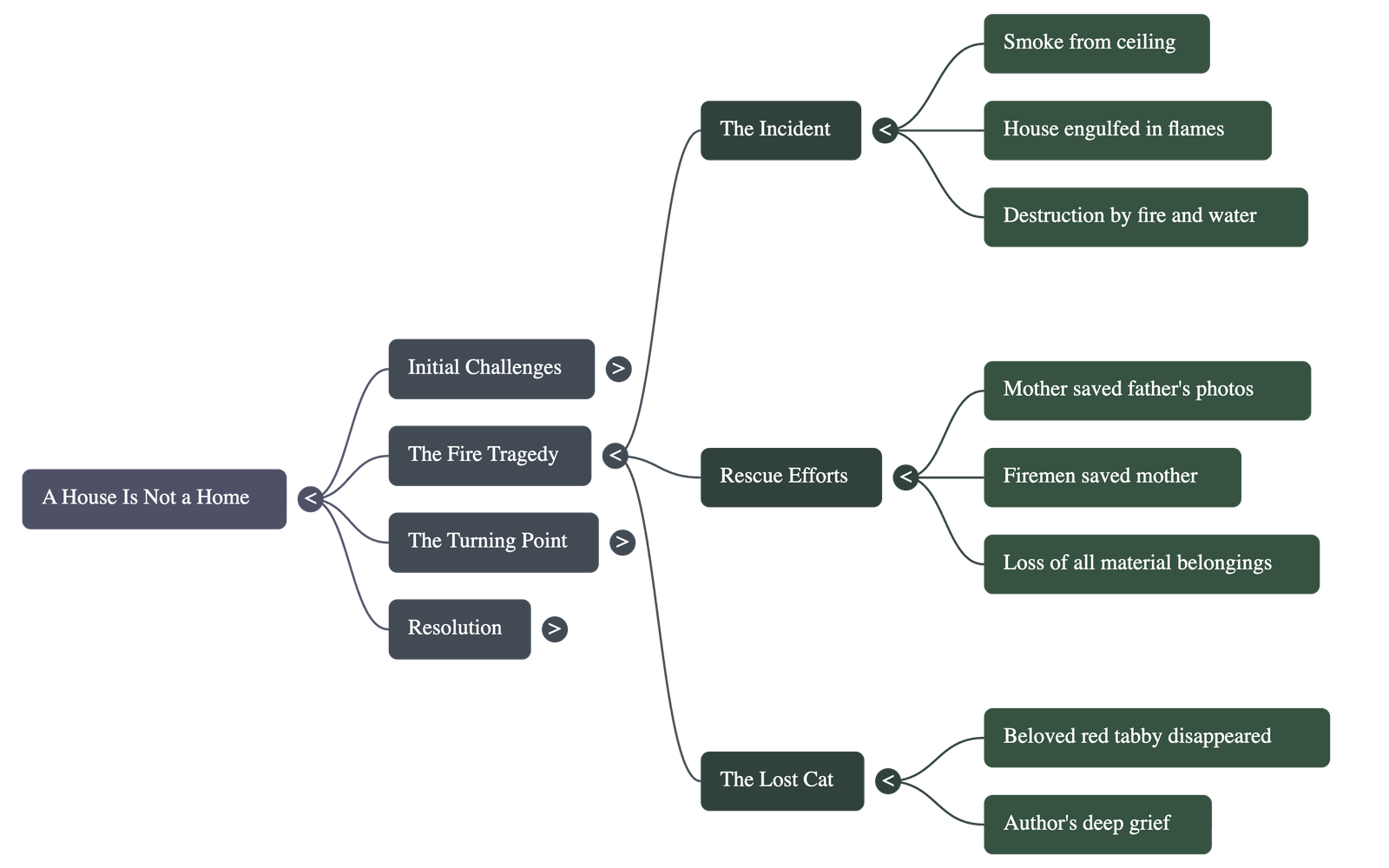
The Fire Incident
- On a cold Sunday afternoon, while the narrator is doing homework by the fireplace with their red tabby cat nearby, smoke begins pouring through the ceiling seams.
- The narrator and mother escape into the front yard as the roof becomes engulfed in flames.
- The mother runs back into the burning house to save a metal box of important documents and, in a second attempt, tries to retrieve pictures and letters belonging to the narrator’s late father.
- A fireman restrains the narrator from running after the mother. Other firefighters successfully rescue the mother, who had inhaled smoke, and administer oxygen.
- Five hours later, the fire is out, and the house is almost completely destroyed.
Loss and Despair
- After the fire, the narrator realizes the cat is missing and breaks down in tears, overwhelmed by the loss of the new school, the house, and the pet.
- Unable to stay in the burnt house, the family goes to the grandparents' house for the night with only the clothes on their backs.
- The next day, the narrator attends school in an embarrassed state—wearing a dress with borrowed tennis shoes, with no books or backpack.
- The narrator feels like a zombie and an outcast, wanting to die rather than face the humiliation and insecurity of having everything ripped away.
- Upon visiting the ruins of the house, the narrator sees that almost everything is destroyed by fire, water, or chemicals, except for the photo albums and documents the mother saved.
- The family rents a nearby apartment, and the narrator frequently watches the debris clearing, hoping to find the missing cat.
A Turn of Events
- News of the fire spreads quickly at school. The narrator initially feels embarrassed by the attention.
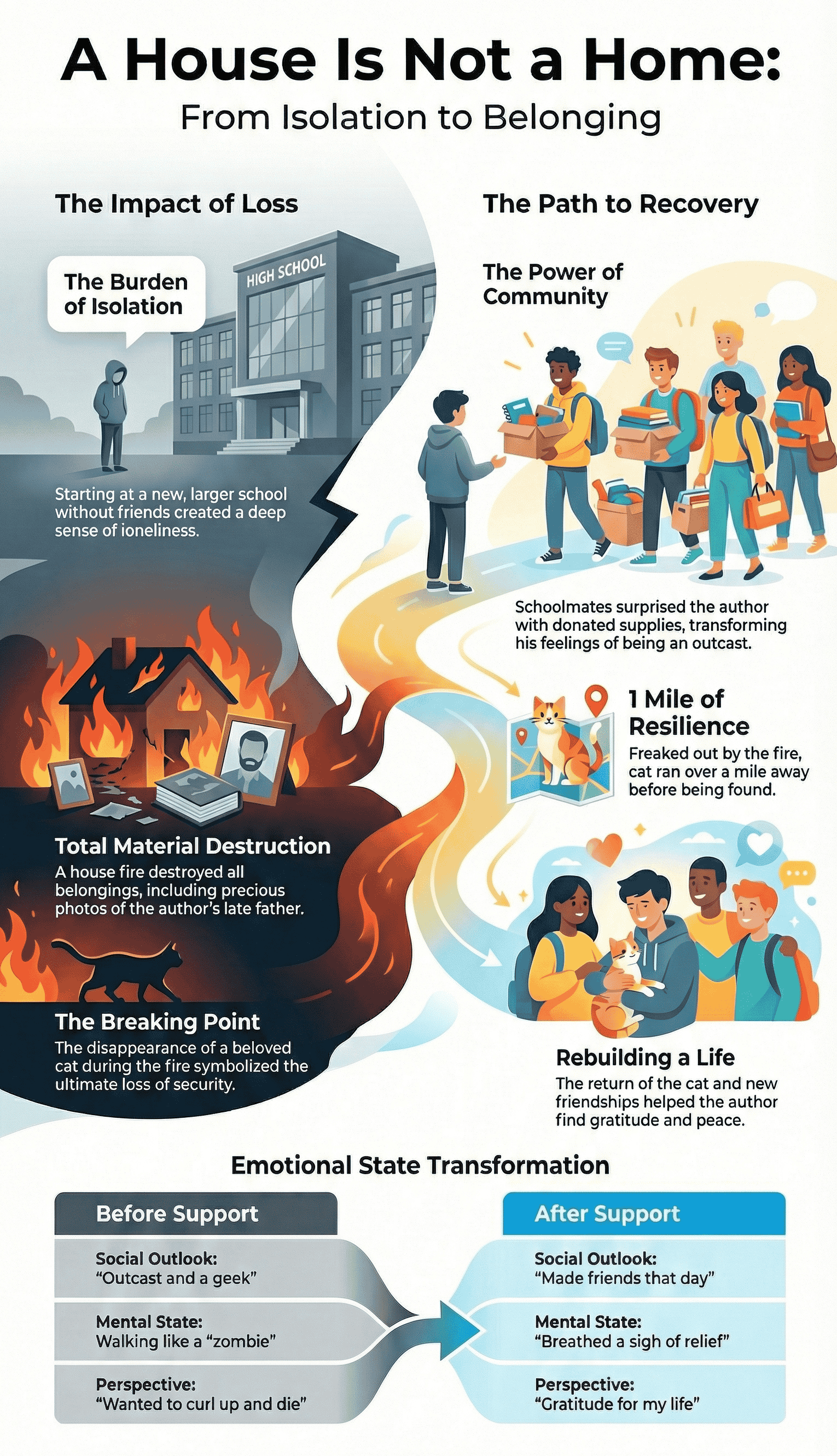
- However, the schoolmates surprise the narrator by collecting money and setting up a table filled with school supplies, notebooks, and new clothes (jeans, tops, sweatsuits).
- Overcome by emotion, the narrator experiences a genuine outpouring of concern from peers, leading to new friendships and invitations to visit others' homes.
- This act of kindness allows the narrator to breathe a sigh of relief and begin to feel that things will be okay.
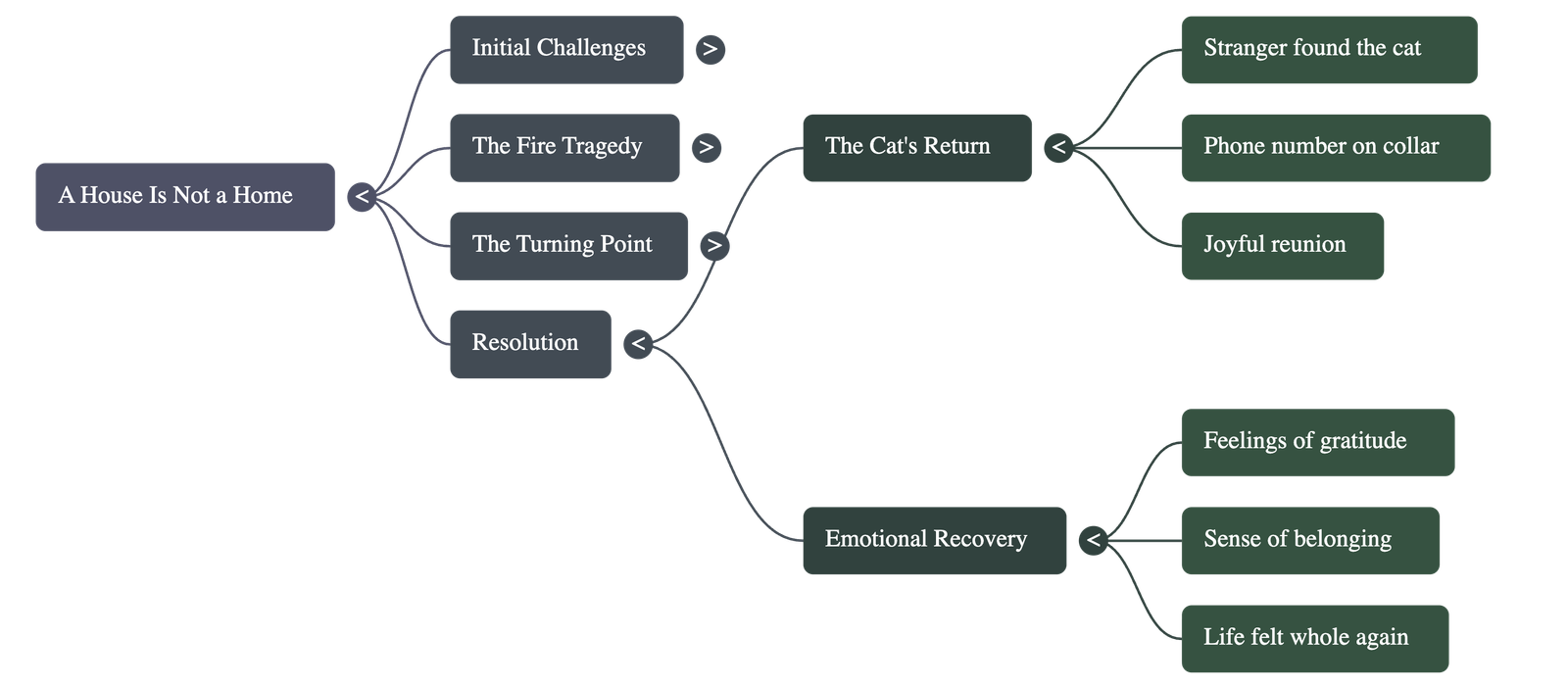
Reunion and Renewal
- A month later, while watching the house being rebuilt with two new friends, a woman approaches the narrator holding the missing cat.
- The cat had been frightened by the fire and ran over a mile away. Although the collar had a phone number, the family’s phones had been destroyed.
- The kind stranger had taken the cat in and worked hard to locate the owners, knowing the pet was loved.
- Reunited with the cat and surrounded by friends, the narrator's feelings of loss and tragedy diminish.
- The story concludes with the narrator feeling gratitude for life, new friends, the stranger's kindness, and the return of the beloved cat. The narrator states, "My cat was back and so was I," signifying a return to a sense of wholeness and belonging.
Do checkout all questions & answers of this chapter.
Quick Navigation:
| | |
1 / 1
Quick Navigation:
| | |