Quick Navigation:
| | |
In the Kingdom of Fools
The Strange Laws of the Kingdom
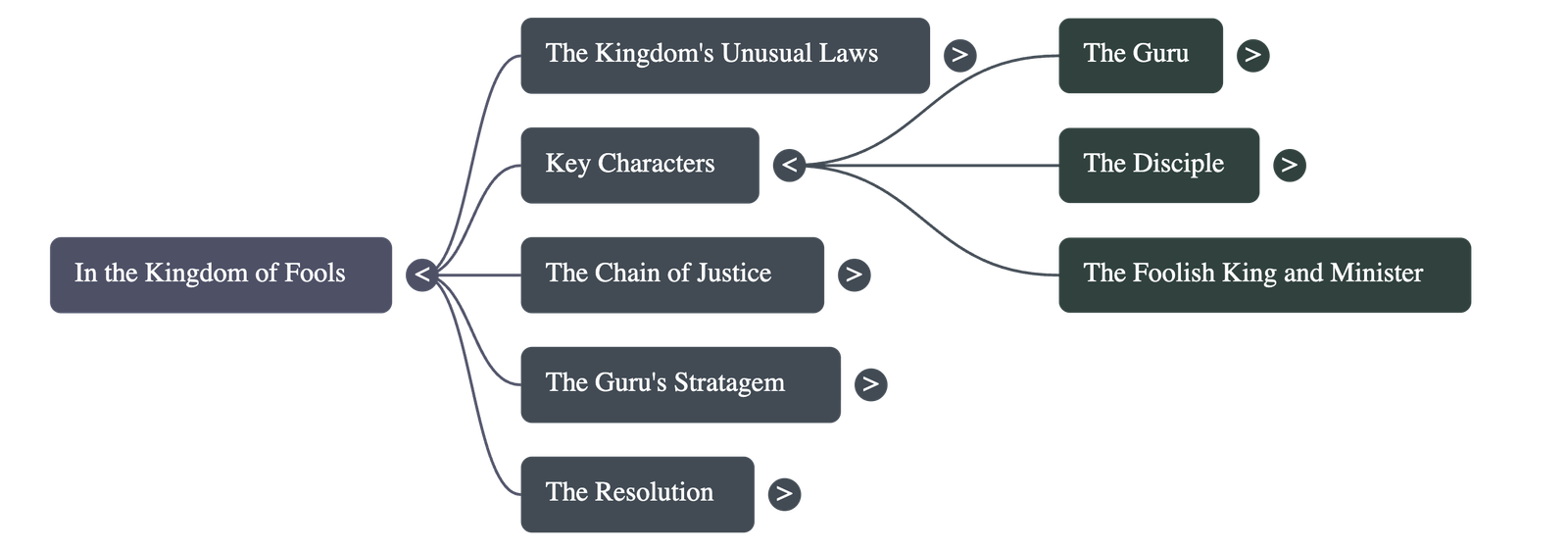
- ➤ The story is set in a kingdom ruled by a foolish king and his equally foolish minister.
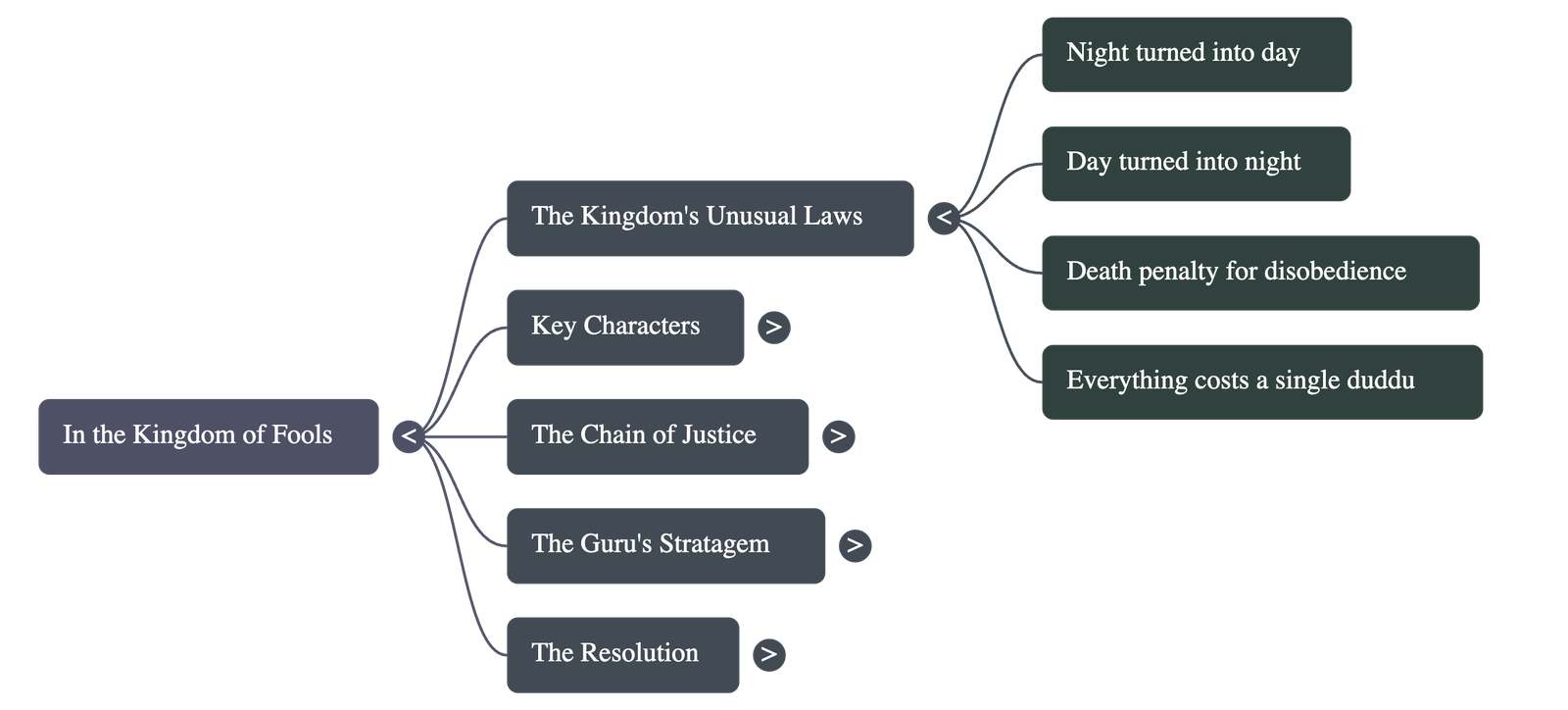
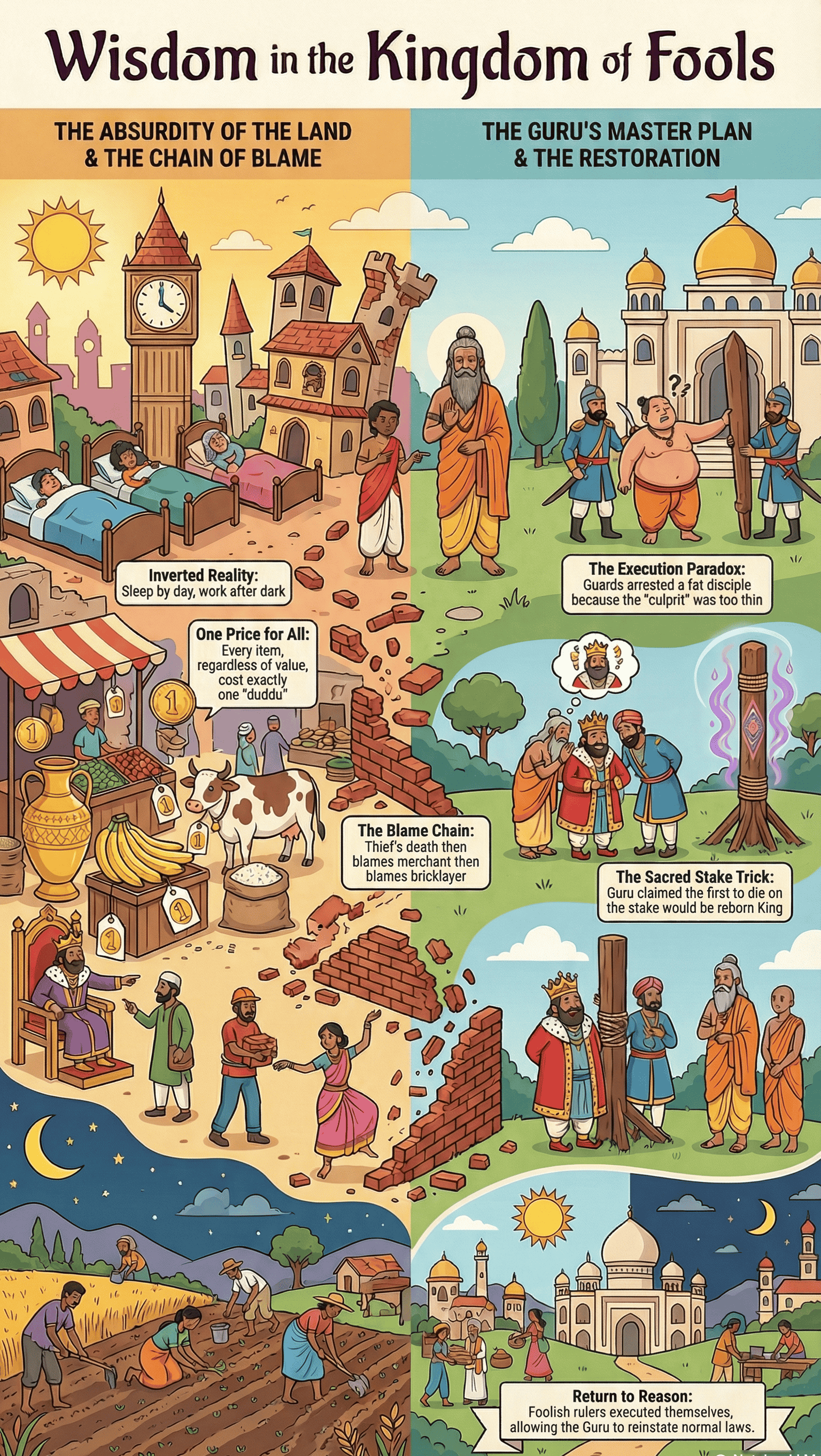
- ➤ They decided to reverse the order of nature: day was treated as night, and night as day.
- ➤ People were ordered to work, till fields, and run businesses only after dark and go to sleep as soon as the sun rose. Disobedience was punishable by death.
Arrival of the Guru and Disciple
- ➤ A wise guru and his disciple arrived in the city during broad daylight but found it deserted because everyone was asleep, even the animals.
- ➤ When evening came, the city woke up. The two travelers were hungry and went to buy groceries.
- ➤ They were astonished to find that everything in the market cost the same amount—a single duddu (a local coin)—whether it was a measure of rice or a bunch of bananas.
- ➤ The guru realized this was a dangerous place governed by fools and decided to leave immediately. However, the disciple, tempted by the cheap and abundant food, refused to leave and stayed behind.
The Crime and the Blame Game
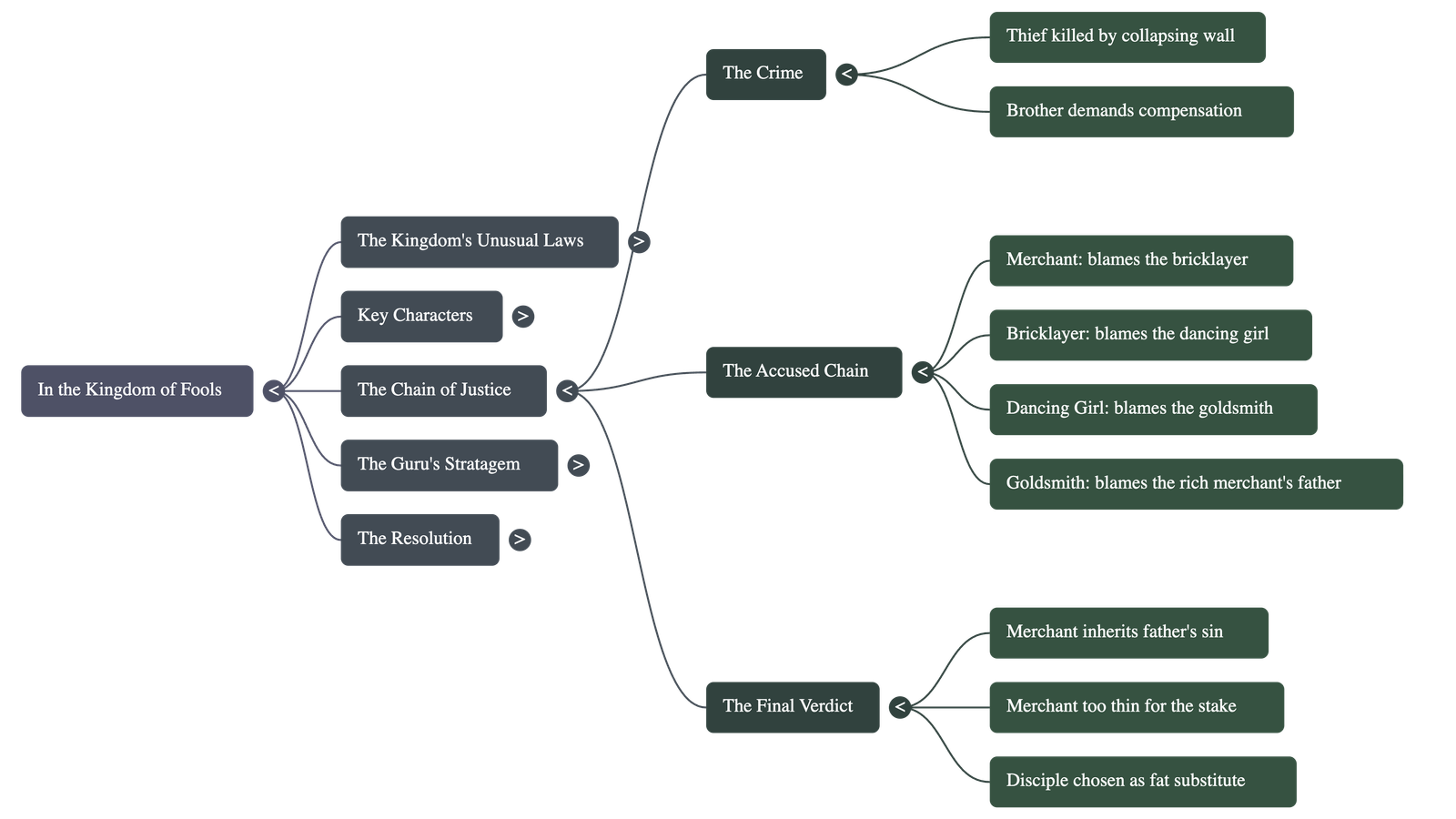
- ➤ A thief broke into a rich merchant's house by making a hole in the wall. As he was leaving with the loot, the old wall collapsed on him, killing him instantly.
- ➤ The thief’s brother complained to the king, blaming the merchant for having a weak wall and demanding justice.
- ➤ The Merchant's Defense: He claimed he didn't build the wall; it was the bricklayer's fault for building it badly.
- ➤ The Bricklayer's Defense: He admitted to building a bad wall but blamed a dancing girl who distracted him by walking up and down the street with jingling anklets while he was working.
- ➤ The Dancing Girl's Defense: Now an old woman, she blamed the goldsmith. She explained she had to walk up and down because the goldsmith was lazy and kept delaying her order for jewelry.
- ➤ The Goldsmith's Defense: He claimed he couldn't finish her jewelry because he was busy with a rich merchant’s order for a wedding, and rich men are impatient.
- ➤ The rich merchant turned out to be the father of the original accused merchant. Since the father was dead, the king ruled that the son must inherit his father’s punishment just as he inherited his wealth.
The Crisis and the Guru's Intervention
- ➤ A new stake was prepared for execution, but the rich merchant was too thin to fit it properly. The king, worried that justice could not be done, ordered his servants to find a man fat enough to fit the stake.
- ➤ The disciple, who had grown very fat from eating bananas, rice, and ghee, was caught and brought to the place of execution despite being innocent.
- ➤ Terrified, the disciple prayed to his guru. The guru, possessing magical vision, saw everything and arrived to save him.
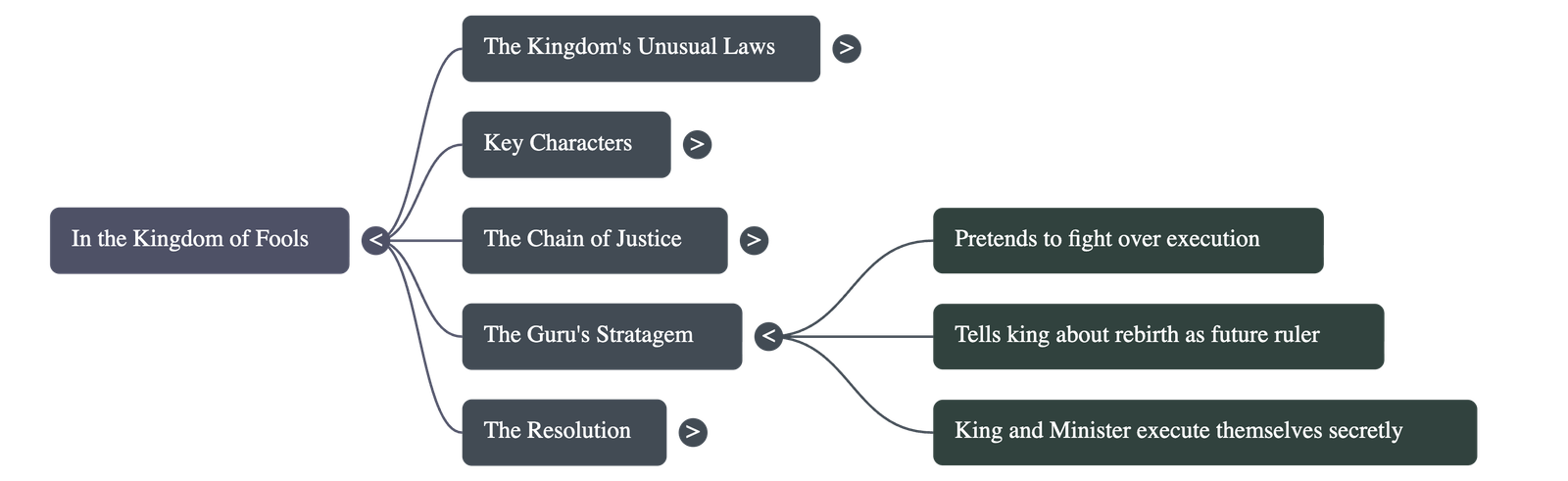
- ➤ The guru whispered a plan to the disciple and then demanded the king execute him (the guru) first. The disciple, playing along, insisted that he should be executed first.
The Trick and the Resolution
- ➤ Confused by their eagerness to die, the king asked for an explanation. The guru took the king aside and lied, telling him that the stake was the "stake of the god of justice."
- ➤ He claimed that whoever died on it first would be reborn as the king of the country, and the second person would be reborn as the minister.
- ➤ The foolish king did not want to lose his kingdom in the next life. He discussed this with his minister, and they decided to die on the stake themselves to return as rulers in their next lives.
- ➤ The king and minister secretly released the guru and disciple, disguised themselves as the prisoners, and were executed.
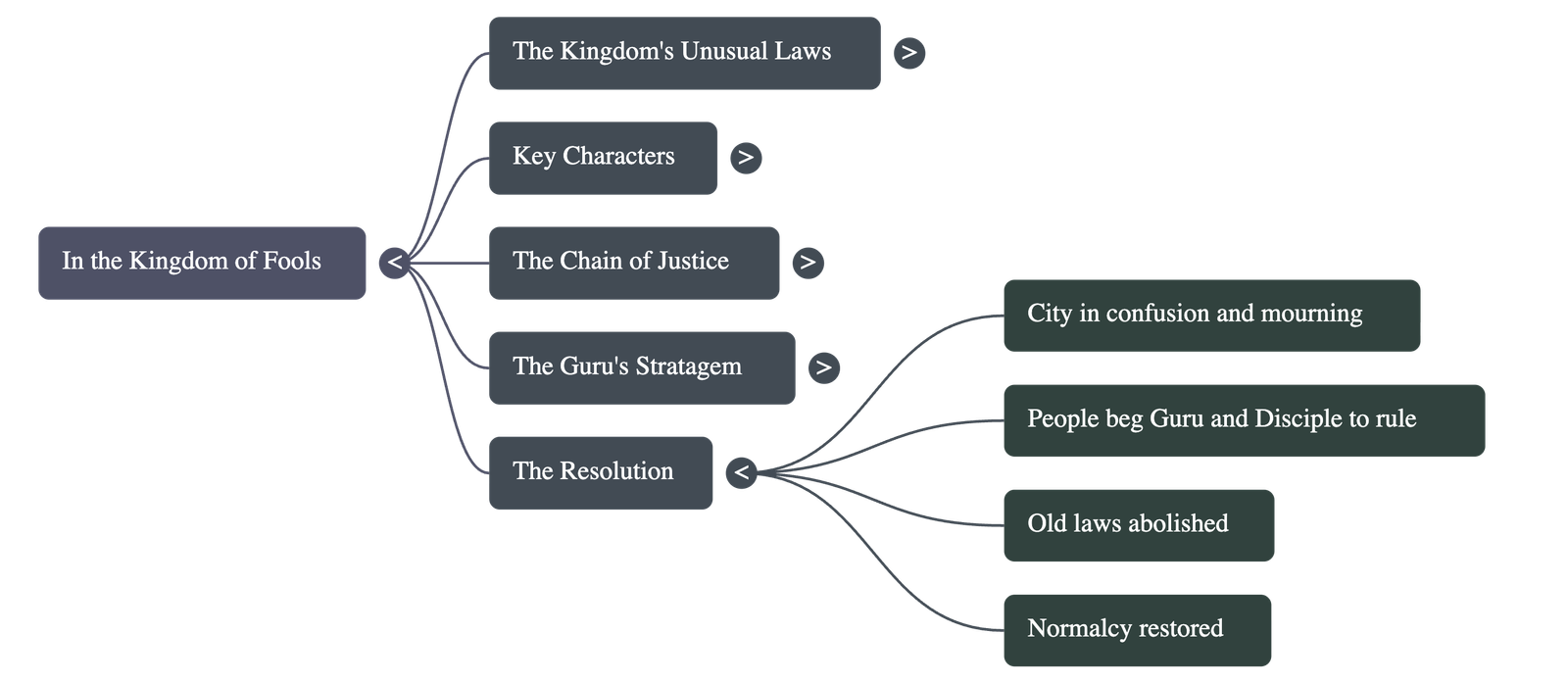
- ➤ The next morning, the people panicked upon seeing the dead bodies of their king and minister. They begged the guru and disciple to take over the kingdom.
- ➤ The guru agreed on the condition that the old laws be changed. Night became night again, day became day, and prices were normalized, restoring the kingdom to sanity.
Do checkout all questions & answers of this chapter.
Quick Navigation:
| | |
1 / 1
Quick Navigation:
| | |