Quick Navigation:
| | |
Iswaran the Storyteller
Introduction: Mahendra and Iswaran
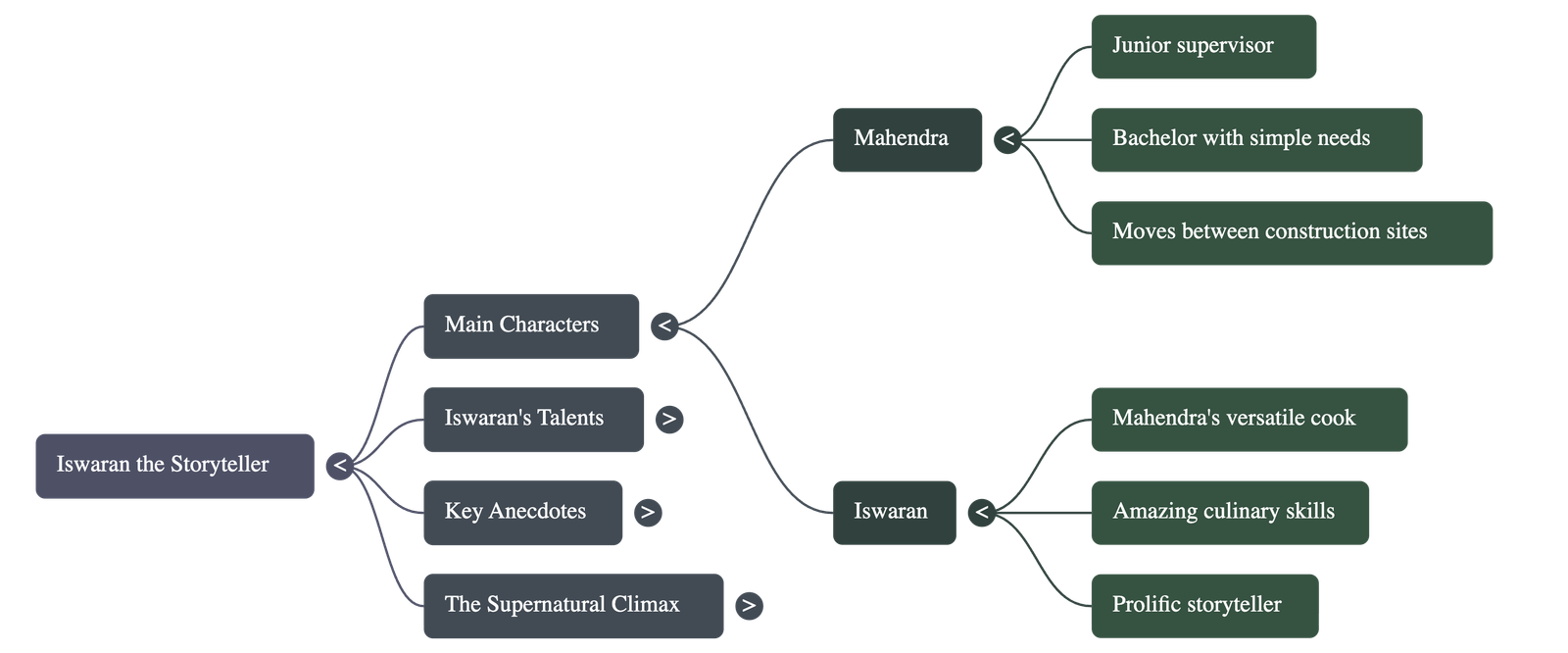
- ➤ Mahendra's Profession: The story is narrated to Ganesh by Mahendra, a junior supervisor whose job involves moving from one construction site to another (coal mines, railway bridges, chemical plants, etc.).
- ➤ Simple Living: Being a bachelor, Mahendra has simple needs and can adjust to various difficult living conditions, such as makeshift canvas tents.
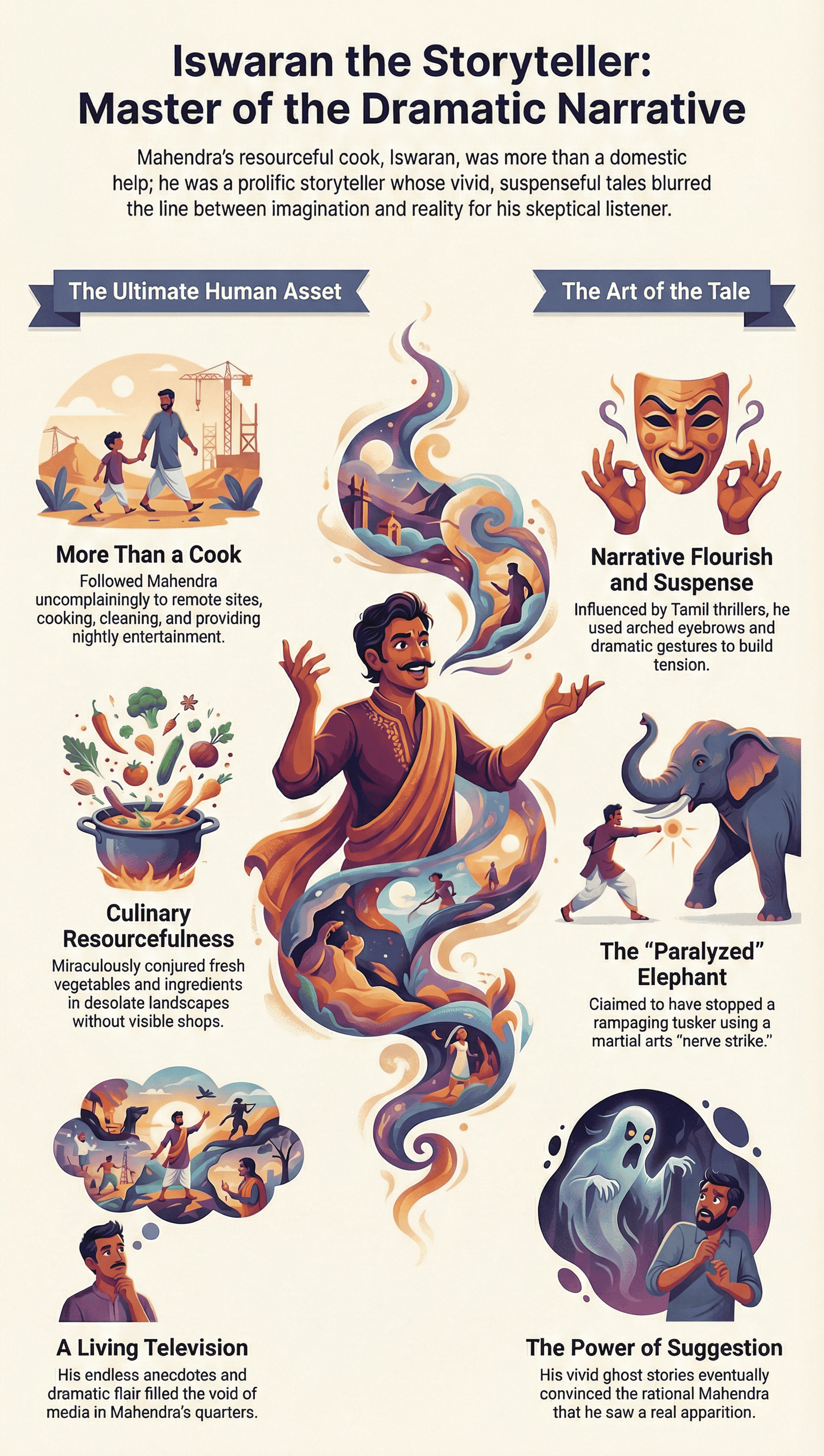
- ➤ Iswaran the Asset: Mahendra’s domestic help, Iswaran, is his greatest asset. Iswaran is very attached to Mahendra and follows him uncomplainingly to every new posting.
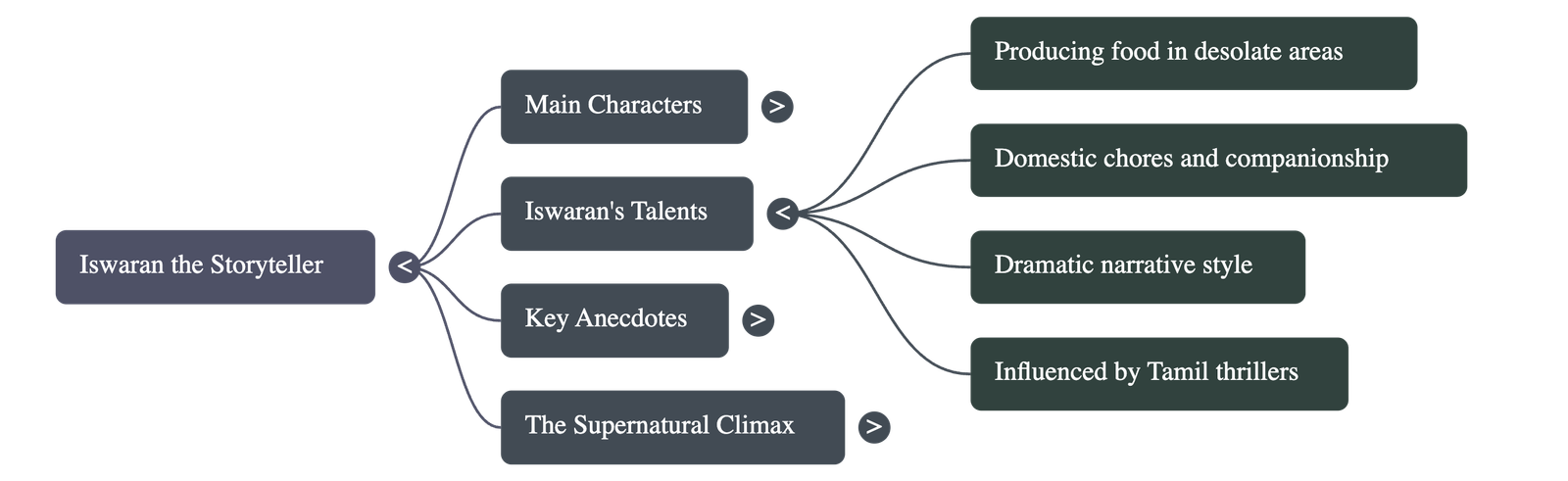
- ➤ Domestic Duties: Iswaran cooks delicious meals, washes clothes, and acts as a companion by chatting with Mahendra at night.
The Art of Storytelling
- ➤ Resourcefulness: Iswaran has an amazing ability to find fresh vegetables and ingredients even in desolate landscapes to cook varied dishes.
- ➤ Literary Influence: He reads popular Tamil thrillers, which influence his own storytelling style. He is fascinated by imaginative descriptions and narrative flourishes.
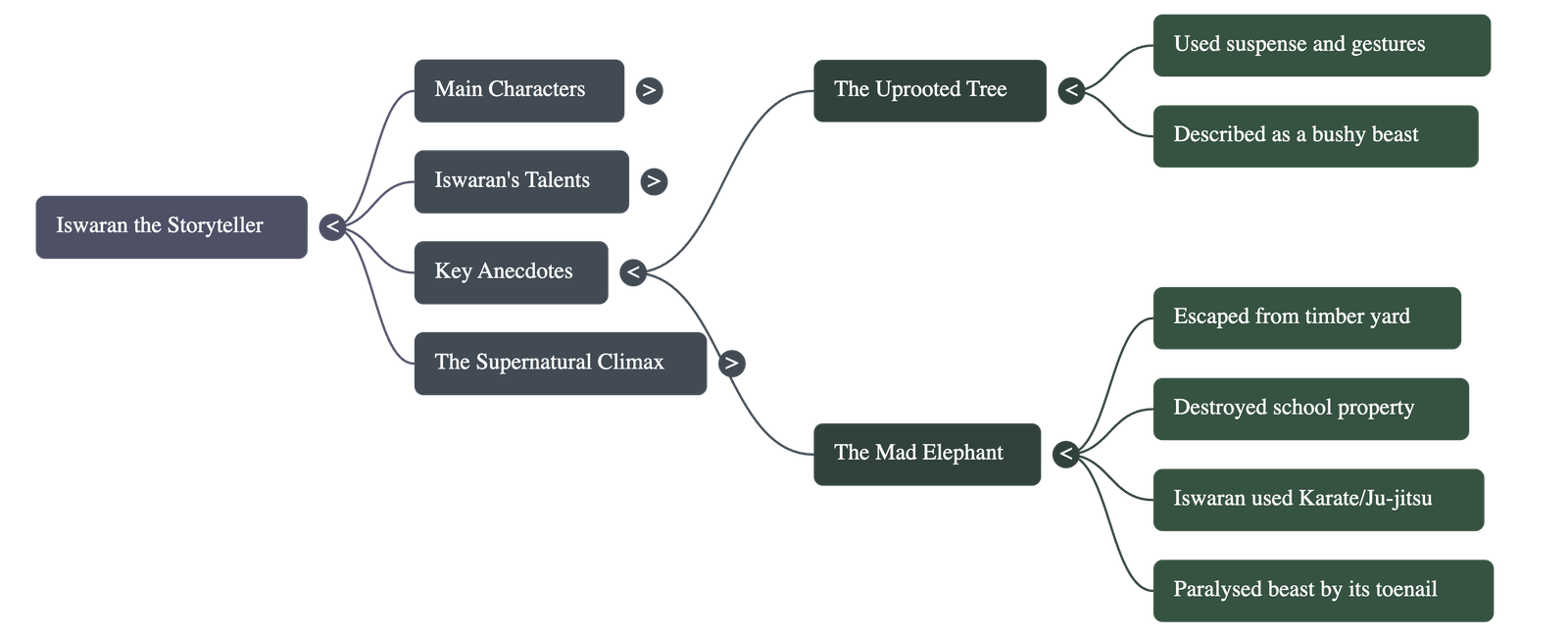
- ➤ Dramatic Narration: Even when describing small incidents, Iswaran adds suspense and surprise endings. For instance, he describes a fallen tree on the road as an "enormous bushy beast" to build tension before revealing the truth.
- ➤ Entertainment: Mahendra listens to these tales uncritically, and Iswaran effectively replaces the need for a television in Mahendra's quarters.
The Tale of the Mad Elephant
- ➤ The Setup: Iswaran recounts a story from his hometown, which is famous for timber. He describes how elephants are used to haul logs but can become uncontrollable when wild.
- ➤ The Rampage: A tusker escapes the timber yard, destroying fences, fruit stalls, and property in the town.
- ➤ School Scene: The elephant enters a school playground. Boys hide in classrooms, and teachers retreat to the terrace in fear.
- ➤ Iswaran’s Heroism: Iswaran, then a junior student, grabs a cane and confronts the beast. The elephant threatens him, kicking up dust and trumpeting.
- ➤ The Outcome: Iswaran hits the elephant's third toenail, causing it to shiver and collapse. He claims this was done using a Japanese art (Karate or Ju-jitsu) that temporarily paralyzes the nervous system.
The Ghost Story
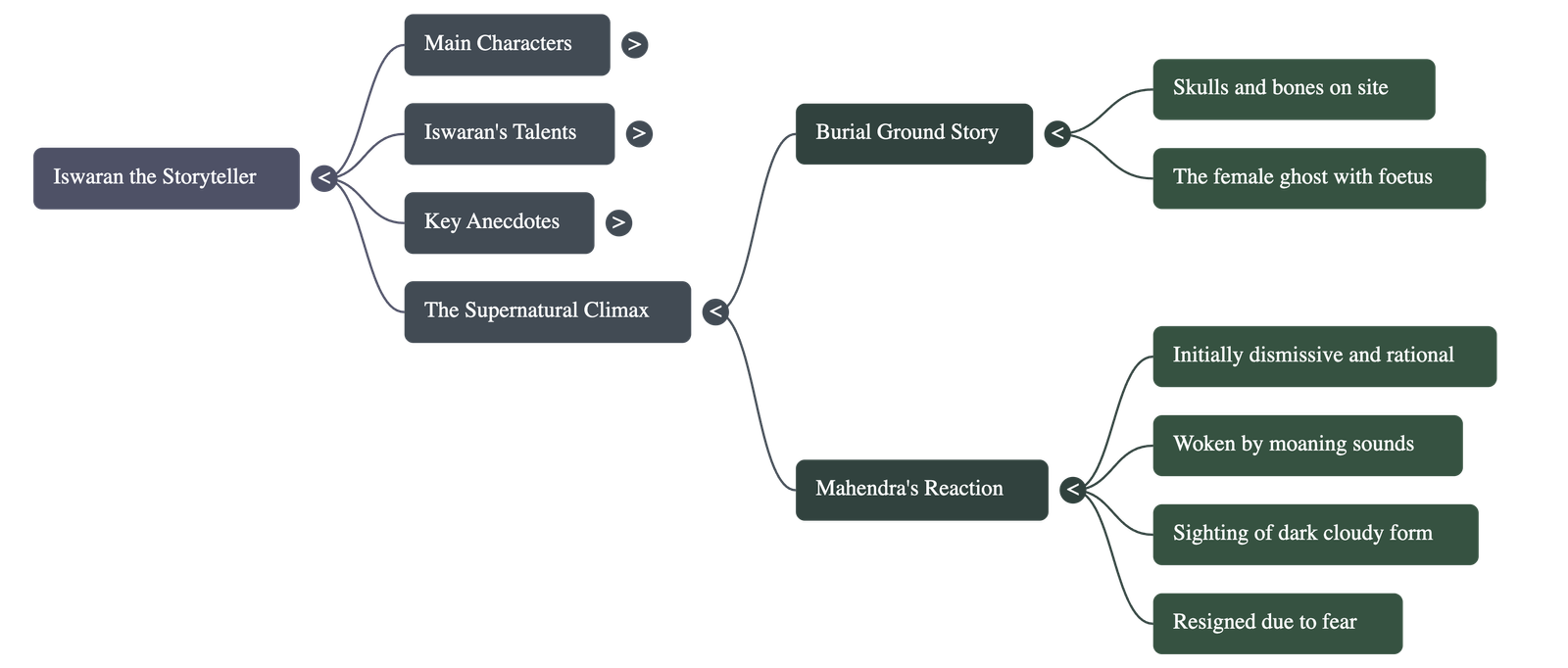
- ➤ The Revelation: On an auspicious day for feeding ancestor spirits, Iswaran reveals that the factory site they live on was once a burial ground. He claims to have seen human skulls and bones.
- ➤ The Female Ghost: He vividly describes a horrible ghost of a woman that appears during the full moon—an ugly creature with matted hair and a shrivelled face, holding a foetus.
- ➤ Mahendra's Reaction: Mahendra is frightened but angry. He scolds Iswaran, calling the story a figment of his imagination and advising him to get his digestive system and head examined.
The Climax and Conclusion
- ➤ Growing Unease: Despite dismissing the story, Mahendra becomes uneasy and avoids looking out of his window at night, especially during the full moon.
- ➤ The Incident: On a full moon night, Mahendra is woken by a low moan near his window. It sounds too guttural to be a cat.
- ➤ The Sight: Overcoming his fear, he looks out and sees a dark cloudy form clutching a bundle. He is terrified and breaks into a cold sweat.
- ➤ Confirmation: The next morning, Mahendra tries to convince himself it was a dream. However, Iswaran greets him and reminds him of the moan, confirming that he also saw Mahendra looking out at the ghost.
- ➤ Departure: Mahendra is chilled to the bone. He immediately hands in his resignation papers and decides to leave the haunted place the very next day.
Do checkout all questions & answers of this chapter.
Quick Navigation:
| | |
1 / 1
Quick Navigation:
| | |