Quick Navigation:
| | |
GLOBALISATION AND THE INDIAN ECONOMY
Transformation of Markets
- Explosion of Choice: Indian markets have transformed significantly in recent years. Consumers now have access to a wide variety of goods and services, from digital cameras and mobile phones to automobiles, belonging to top international brands.
- Rapid Change: This variety is a relatively recent phenomenon, occurring over the last two decades, replacing the days when only a few local brands (like Ambassador and Fiat cars) were available.
Production Across Countries
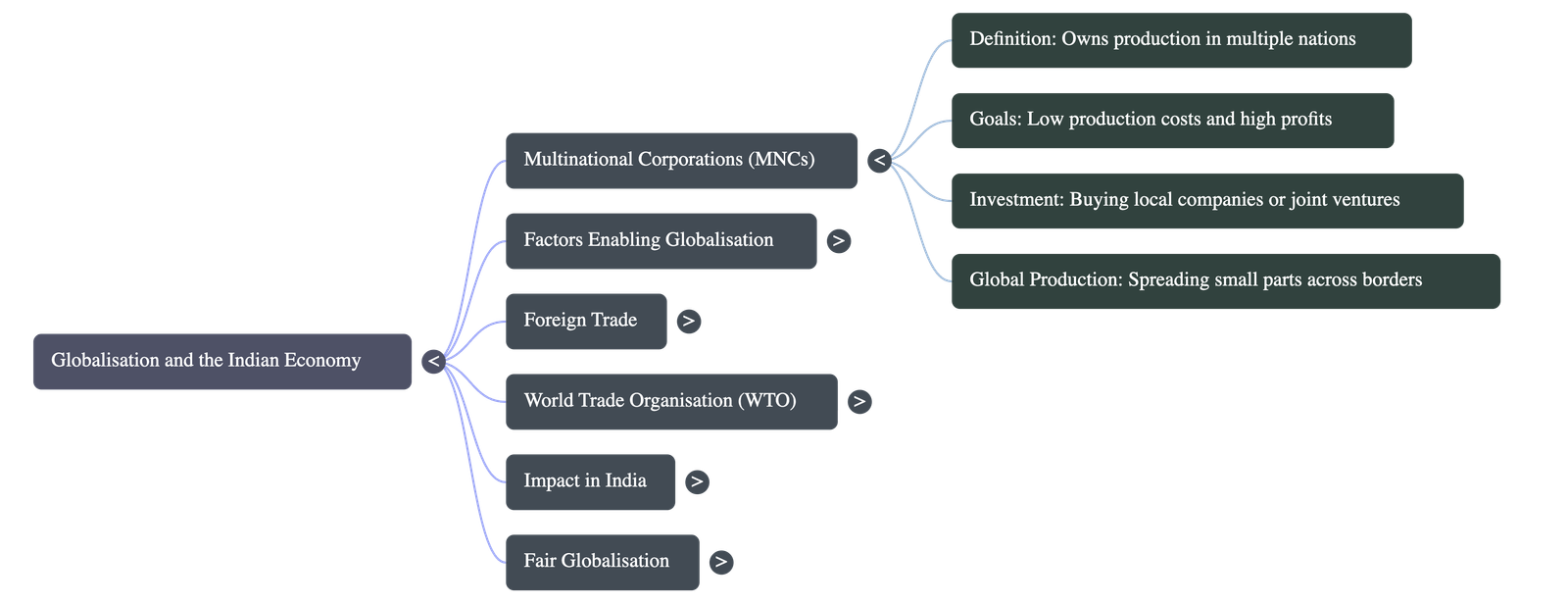
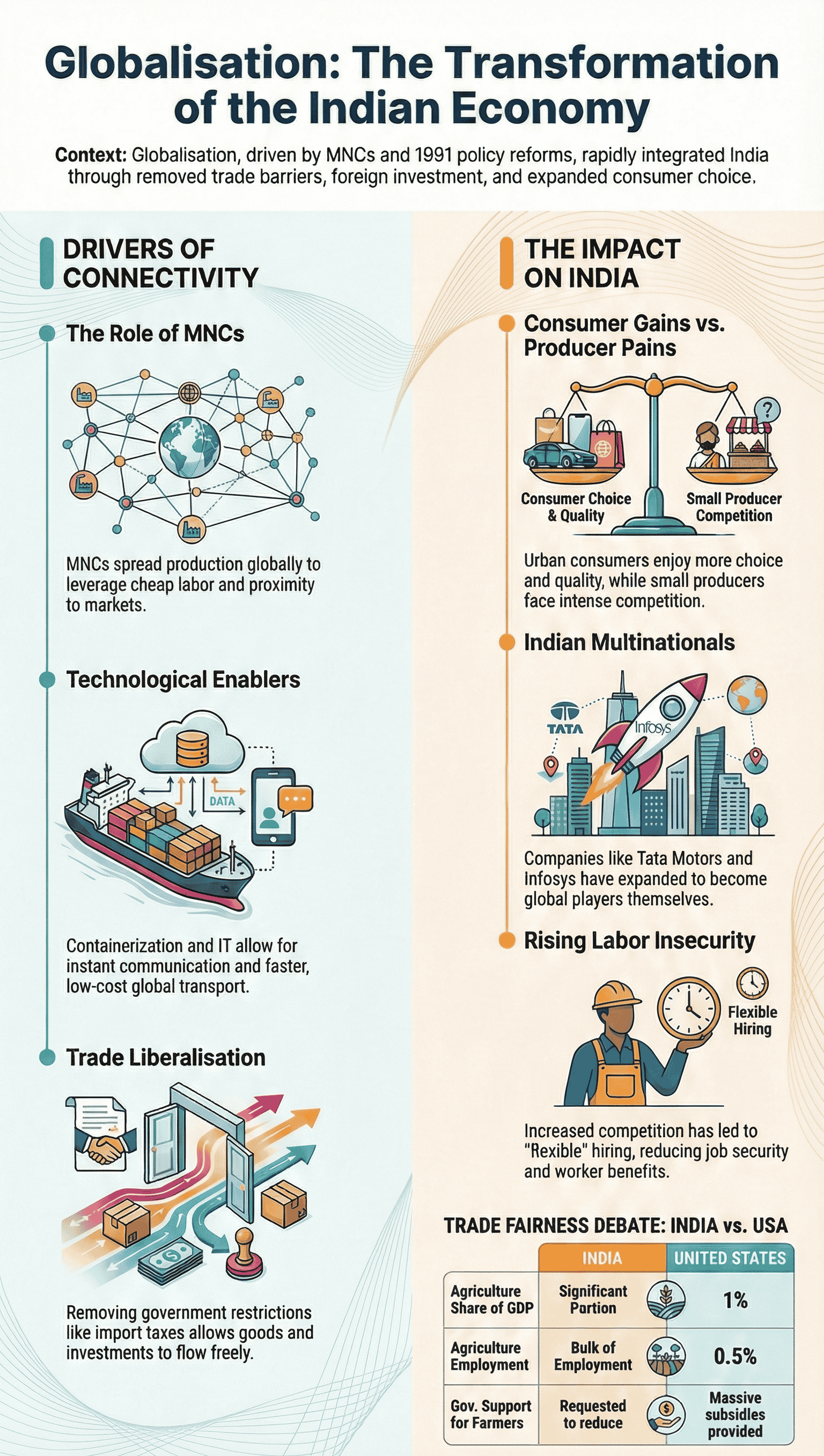
- Multinational Corporations (MNCs): An MNC is a company that owns or controls production in more than one nation. They set up offices and factories in regions where they can get cheap labor and other resources to lower production costs and earn greater profits.
- Complex Production Chains: Production is divided into small parts and spread across the globe. For example, a product might be designed in the US, components manufactured in China, assembled in Mexico or Eastern Europe, and customer care provided by call centers in India.
- Interlinking Production: MNCs interlink production across countries through various methods:
- Foreign Direct Investment (FDI): Buying assets such as land, buildings, and machines in another country.
- Partnerships: Setting up production jointly with local companies, providing them with additional investment and latest technology.
- Acquisitions: The most common route is buying up local companies to expand production (e.g., Cargill Foods buying Parakh Foods in India).
- Outsourcing: Large MNCs place orders for products like garments, footwear, and sports items with small producers worldwide, then sell them under their own brand names.
Foreign Trade and Integration of Markets
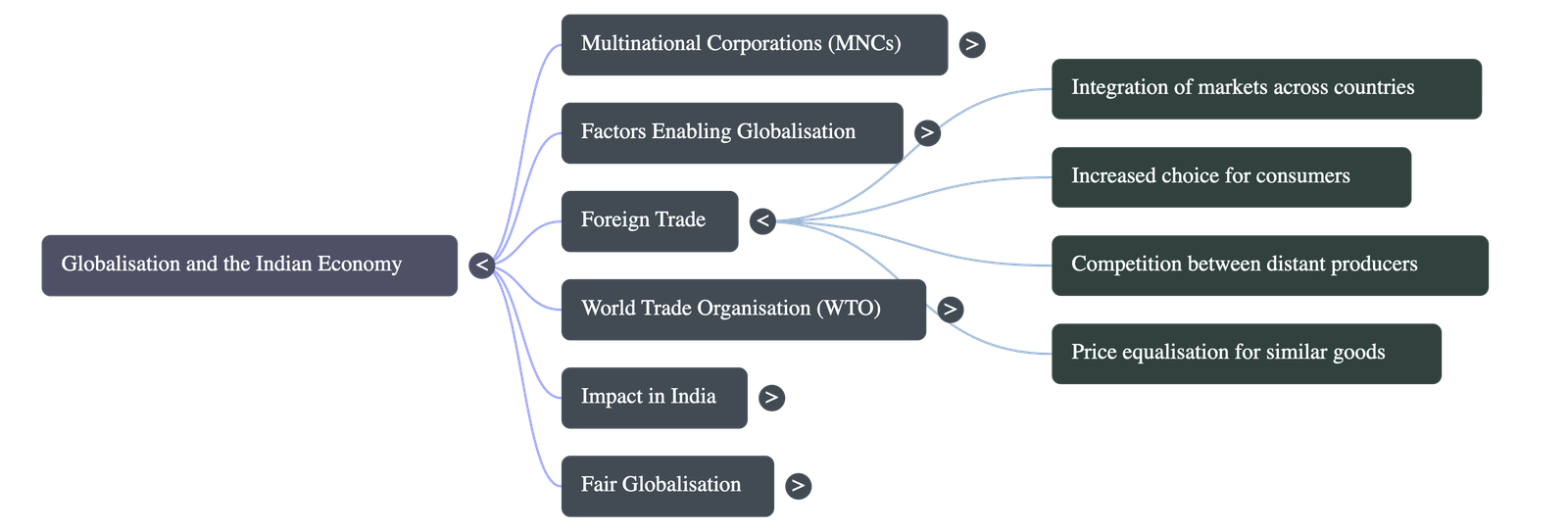
- Function of Foreign Trade: It creates an opportunity for producers to reach beyond domestic markets and compete globally. For buyers, it expands the choice of goods beyond what is domestically produced.
- Market Integration: Foreign trade results in connecting markets in different countries. Prices of similar goods tend to equalize, and producers compete closely despite being far apart.
- Example - Chinese Toys: The entry of cheaper, new-design Chinese toys into the Indian market replaced many Indian toys. This benefited Indian buyers with lower prices but hurt Indian toy manufacturers who faced losses.
What is Globalisation?
Definition: Globalisation is the process of rapid integration or interconnection between countries. It involves the movement of:
- Goods and services
- Investments
- Technology
- People (migration for better income, jobs, or education)
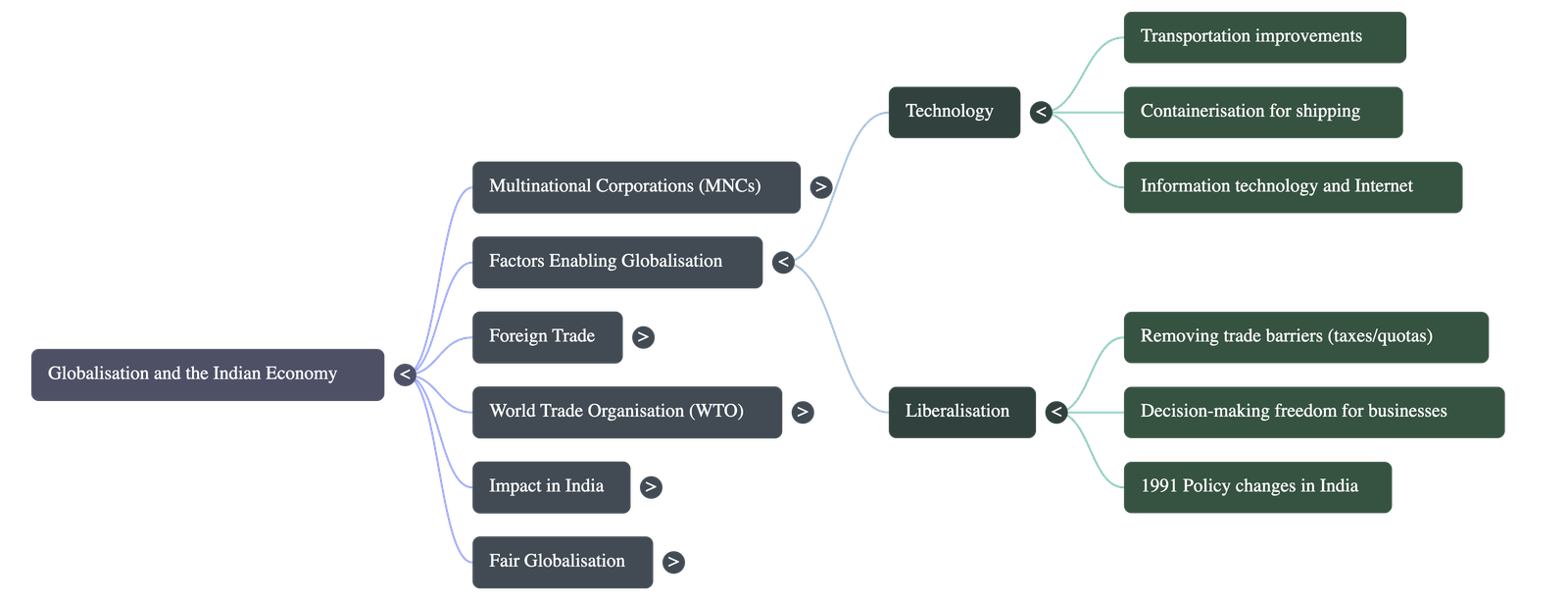
Factors Enabling Globalisation
- Technology:
- Transportation: Improvements in transportation (e.g., containers for shipping) have enabled faster delivery of goods across long distances at lower costs.
- Information and Communication Technology (IT): Developments in telecommunications, computers, and the internet allow for instant contact, information sharing, and coordination of production and services globally at negligible costs.
- Liberalisation of Foreign Trade and Investment:
- Trade Barriers: Restrictions like taxes on imports used by governments to regulate trade and protect domestic industries. India imposed these after independence to allow local industries to grow.
- Policy Shift (1991): India adopted a New Economic Policy removing many barriers to trade and investment. This process of removing restrictions is called liberalisation. It allowed businesses to make free decisions on imports/exports and invited foreign companies to set up factories.
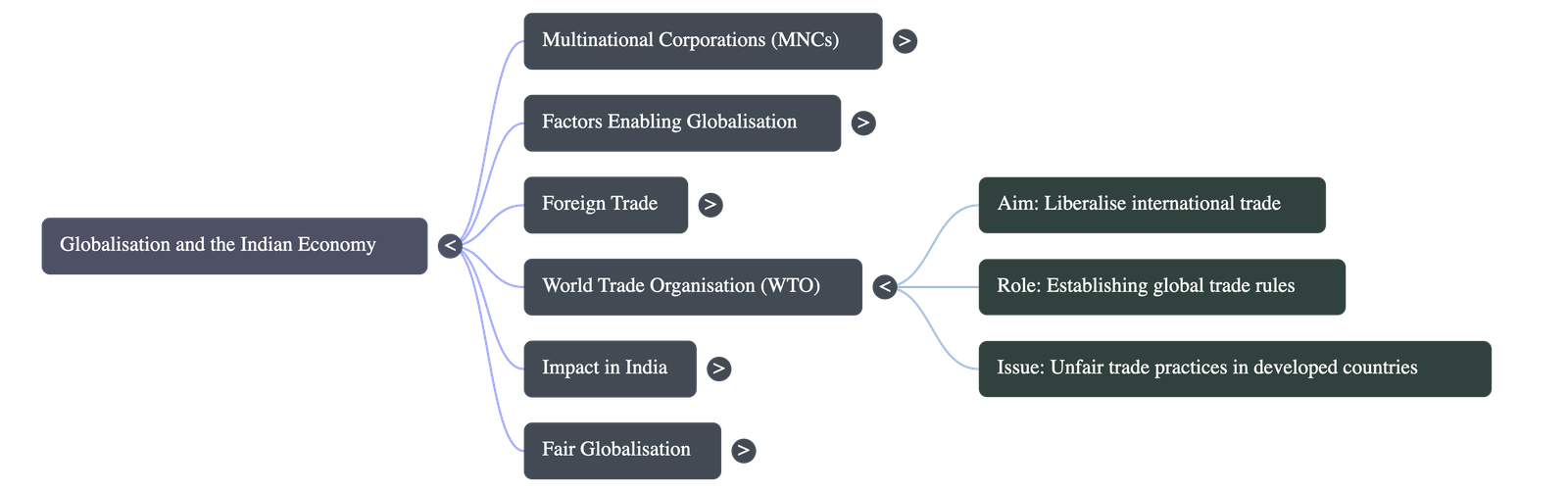
World Trade Organisation (WTO)
- Aim: To liberalise international trade and establish rules regarding it for all countries.
- Critique: While WTO promotes free trade, developed countries have often retained unfair trade barriers (e.g., agricultural subsidies in the US) while forcing developing countries like India to remove theirs.
Impact of Globalisation in India
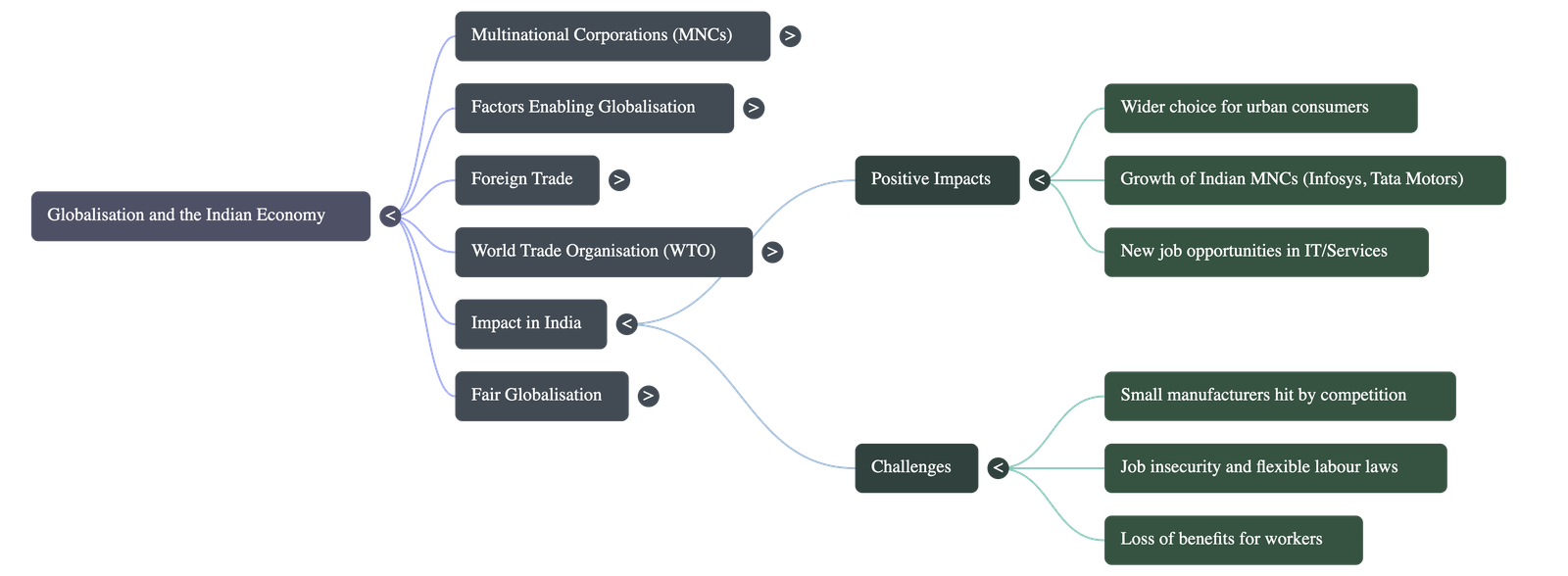
Positive Impacts
- Consumers: greater choice, improved quality, and lower prices, leading to a higher standard of living for urban, well-off consumers.
- MNC Investments: increased investment in industries like cell phones, automobiles, electronics, soft drinks, and banking, creating new jobs.
- Top Indian Companies: benefited from increased competition by investing in new technology and collaborating with foreign companies. Some (Tata Motors, Infosys, Ranbaxy) became MNCs themselves.
- Service Sector: created new opportunities for IT and data entry services.
Negative Impacts and Challenges
- Small Producers: faced stiff competition from cheap imports. Industries like batteries, capacitors, plastics, and toys saw widespread unit closures and job losses.
- Labour Conditions: faced with competition, employers shifted to "flexible" employment. Workers lost job security and benefits, facing longer hours and lower wages (e.g., in the garment industry).
- Inequality: The benefits of globalisation have not been shared equally. While the skilled and wealthy prospered, many workers and small producers suffered.
Special Economic Zones (SEZs): Industrial zones set up by the government with world-class facilities to attract foreign investment. Companies in SEZs are exempted from taxes for an initial period of five years.
The Struggle for Fair Globalisation
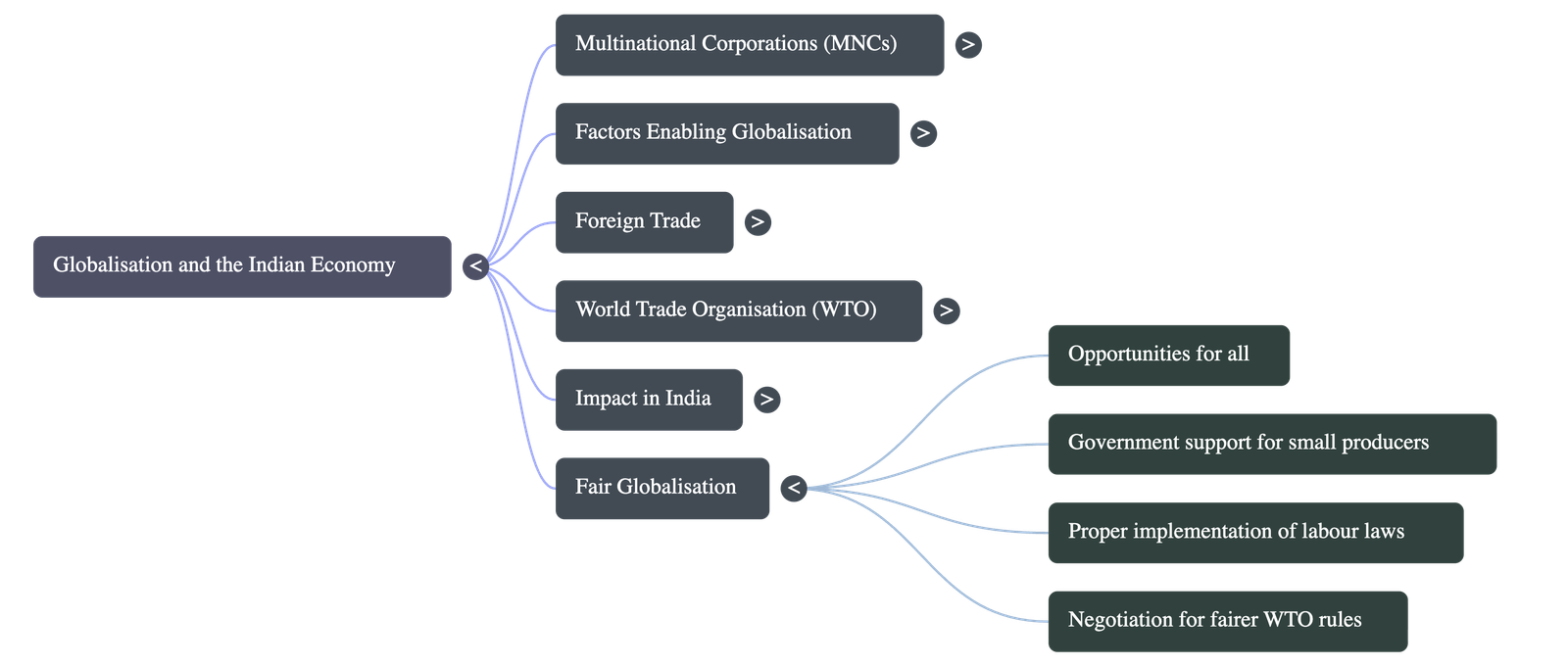
Since globalisation is a reality, the goal is to make it "fair" so that opportunities are created for all.
- Role of Government:
- Ensure labor laws are implemented and workers' rights are protected.
- Support small producers to improve performance until they can compete.
- Use trade and investment barriers if necessary.
- Negotiate at the WTO for fairer rules and align with other developing countries to fight the domination of developed nations.
- Role of People: Campaigns and representation by people's organizations can influence decisions at the WTO.
Do checkout all questions & answers of this chapter.
Quick Navigation:
| | |
1 / 1
Quick Navigation:
| | |