Quick Navigation:
| | |
SECTORS OF THE INDIAN ECONOMY
1. Sectors of Economic Activities
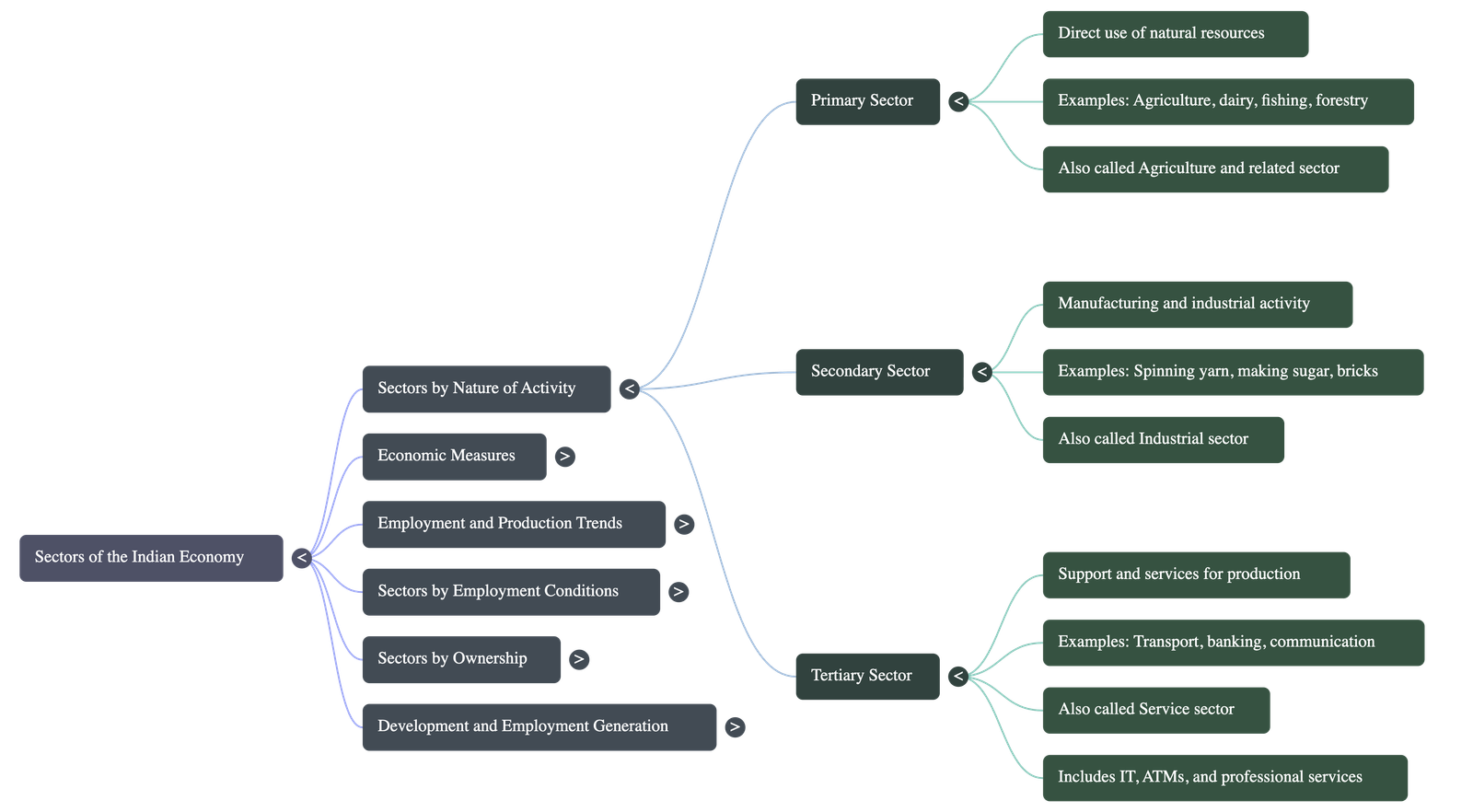
Economic activities are classified into three main sectors based on the nature of the activity:
-
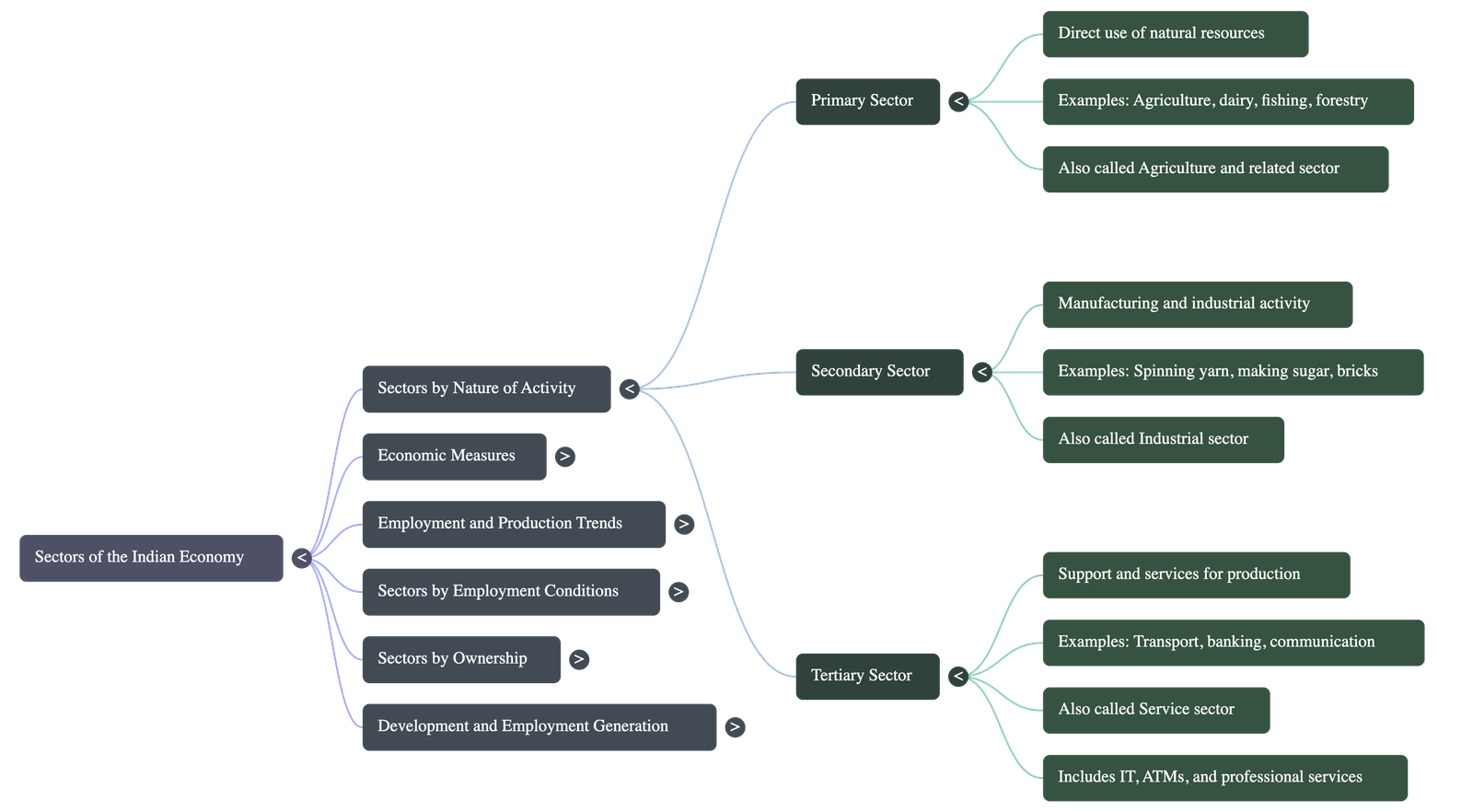
Primary Sector (Agriculture and Related Sector):
- Involves producing goods by exploiting natural resources.
- Examples include cultivation of cotton, dairy farming, fishing, and forestry.
- It is called the "primary" sector because it forms the base for all other products.
-
Secondary Sector (Industrial Sector):
- Covers activities where natural products are changed into other forms through manufacturing.
- The product is not produced by nature but is made in a factory, workshop, or at home.
- Examples include spinning yarn from cotton fiber, making sugar from sugarcane, and making bricks from earth.
-
Tertiary Sector (Service Sector):
- Activities that help in the development of the primary and secondary sectors.
- These activities do not produce goods themselves but provide support for the production process.
- Examples include transport, storage, communication, banking, and trade.
- Also includes essential services like teachers, doctors, and IT services (internet cafes, call centers).
2. Comparing the Three Sectors
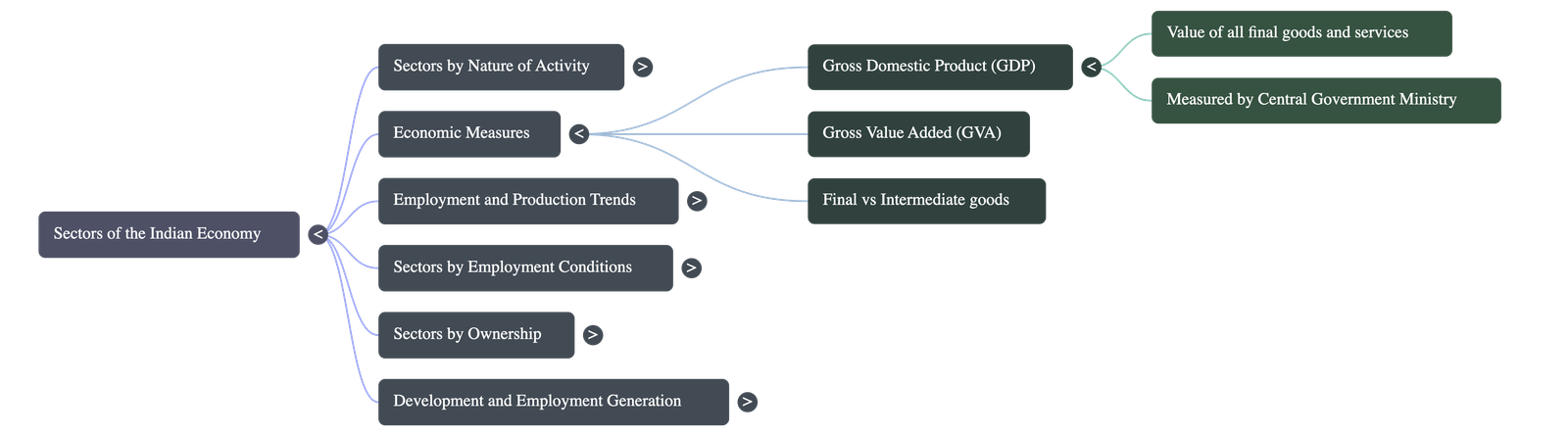
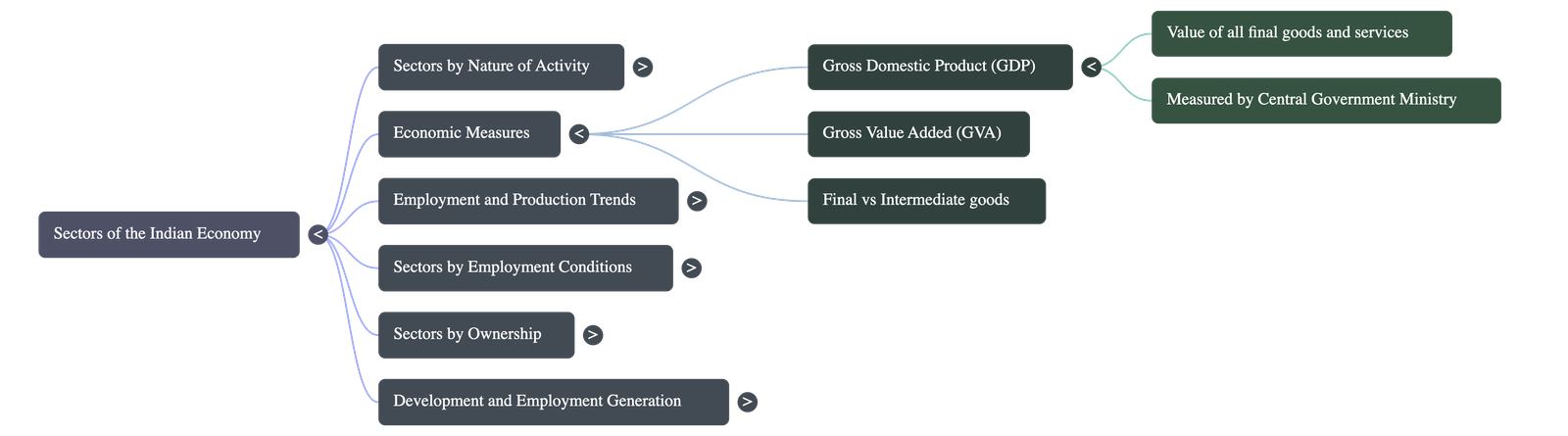
- Measuring Production (GDP): To avoid the impossible task of counting every single item, economists count the value of goods and services.
- Final Goods vs. Intermediate Goods: Only the value of final goods (goods reaching the consumer) is counted. Intermediate goods (like wheat flour used to make biscuits) are not counted separately because their value is already included in the final good. Counting them would lead to double counting.
- Gross Domestic Product (GDP): The sum of production in the three sectors gives the GDP of a country. It represents the value of all final goods and services produced within a country during a particular year.
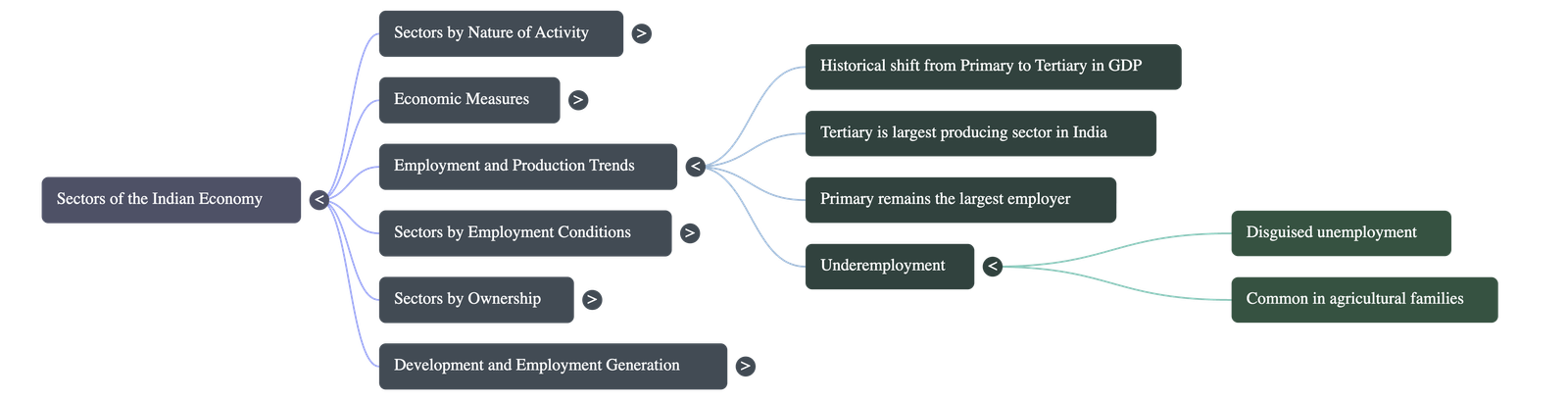
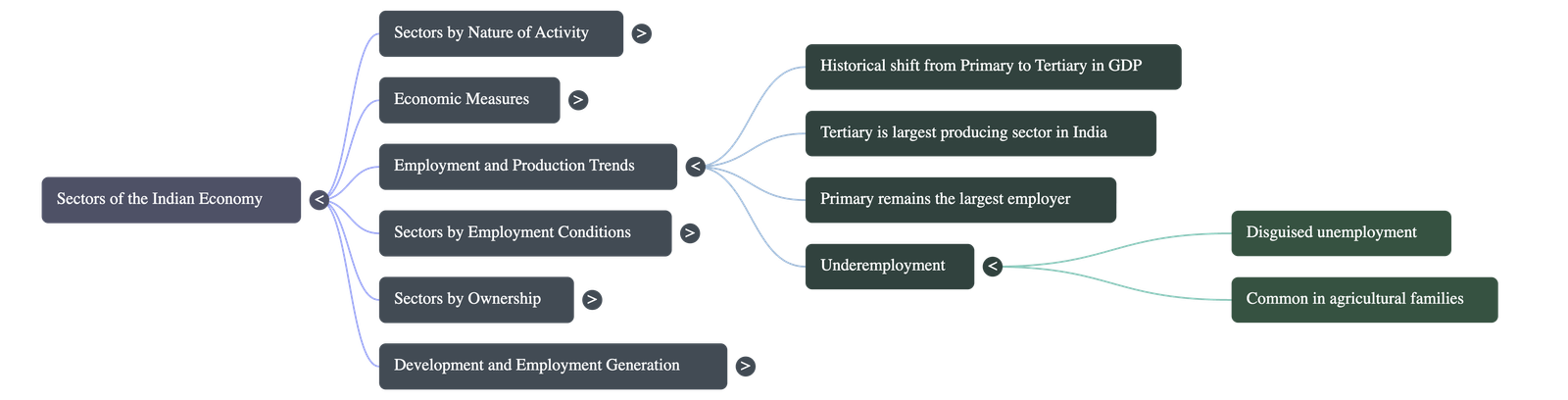
- Historical Shifts: History shows that in developed countries, the economic focus shifted from the Primary sector to the Secondary sector (industrialization), and finally to the Tertiary sector (services).
3. Primary, Secondary, and Tertiary Sectors in India
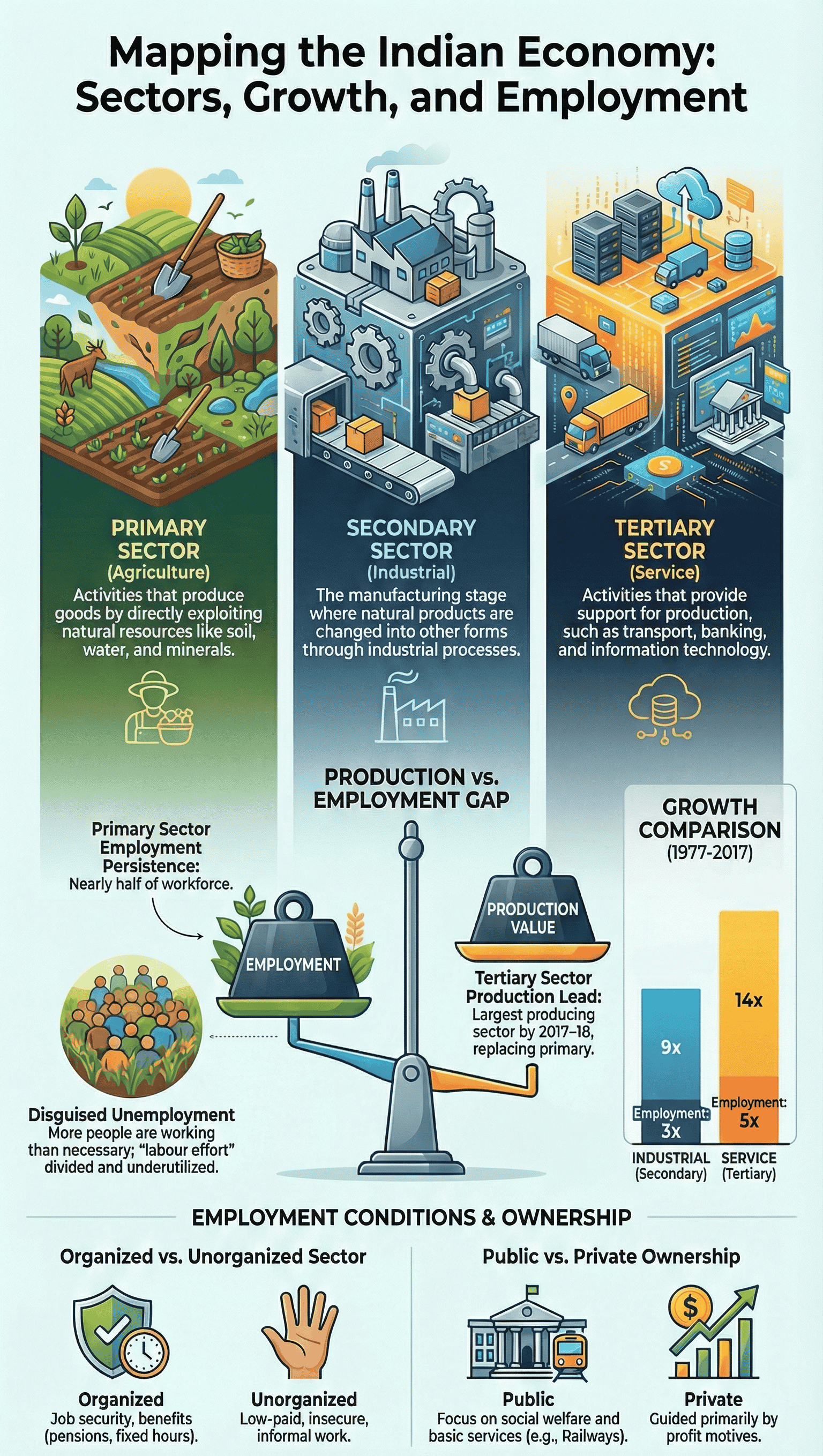
Over the last forty years, while production in all sectors has increased, the Tertiary sector has grown the most, becoming the largest producing sector in India.
Why is the Tertiary Sector Rising?
- Basic Services: The government must provide basic services like hospitals, schools, police, courts, and banks.
- Development of Other Sectors: Growth in agriculture and industry creates demand for transport, trade, and storage.
- Rise in Income: As income levels rise, people demand more services like eating out, tourism, shopping, and private healthcare.
- New Services: The rapid growth of Information and Communication Technology (ICT) services.
The Employment Challenge
- Production vs. Employment: While the Tertiary sector contributes the most to GDP, the Primary sector (agriculture) still employs the largest number of people (more than half the population).
- Disguised Unemployment (Underemployment): Agriculture has more workers than necessary. Even if some move out, production will not suffer. These workers are underemployed—they appear to be working but are working less than their potential. This also exists in urban areas among casual workers (painters, plumbers, cart pushers).
4. How to Create More Employment
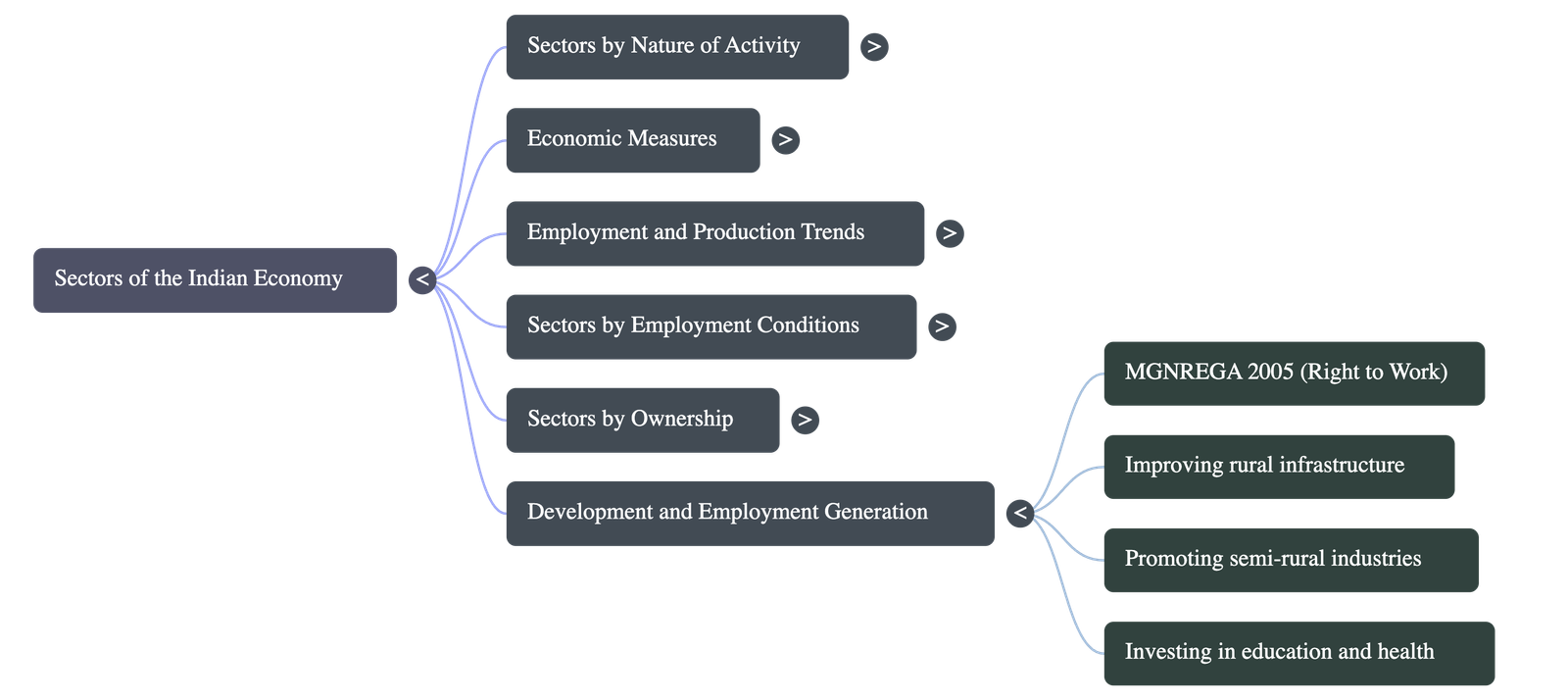
- Irrigation and Infrastructure: Building dams and canals can allow farmers to grow a second crop, increasing employment in agriculture.
- Transportation and Storage: Investing in rural roads and storage facilities allows farmers to sell their produce in towns, employing people in transport and trade.
- Credit: Providing cheap agricultural credit through banks allows farmers to buy seeds and fertilizers, breaking the cycle of debt from moneylenders.
- Semi-Rural Industries: Promoting industries like dal mills, cold storage, and honey collection centers in semi-rural areas can generate local employment.
- Education and Health: Improving schools and healthcare requires lakhs of new teachers, doctors, and nurses.
- MGNREGA 2005: The Mahatma Gandhi National Rural Employment Guarantee Act guarantees 100 days of employment per year to those in need of work in rural areas. It is often referred to as the "Right to Work."
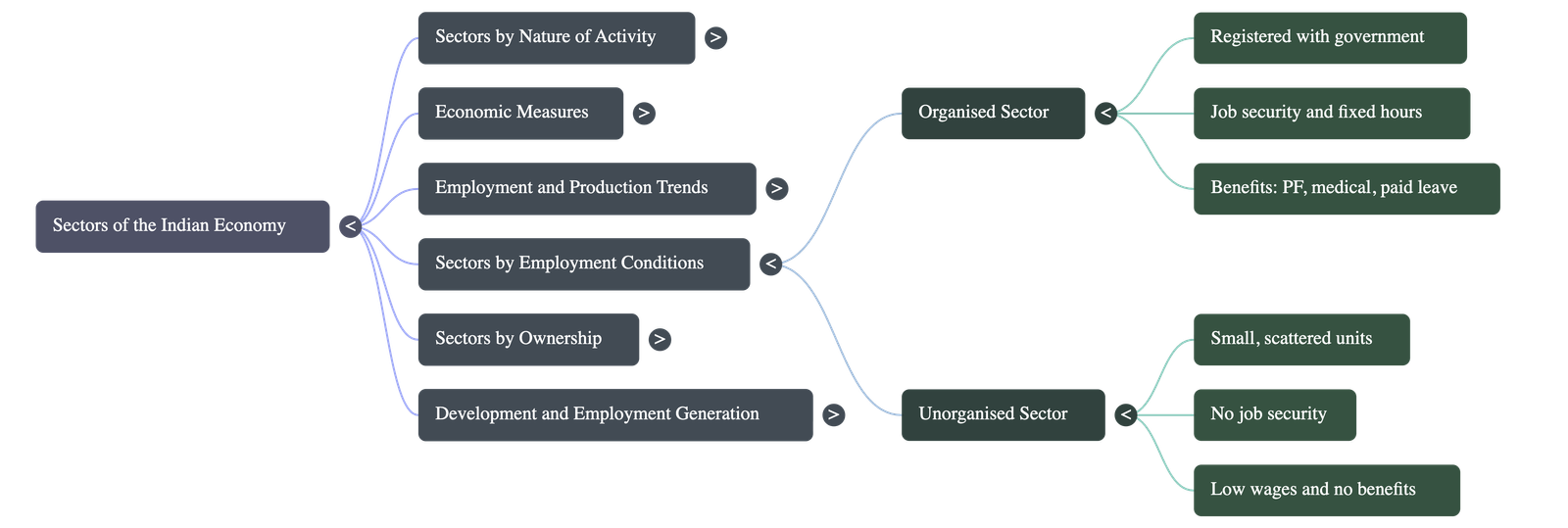
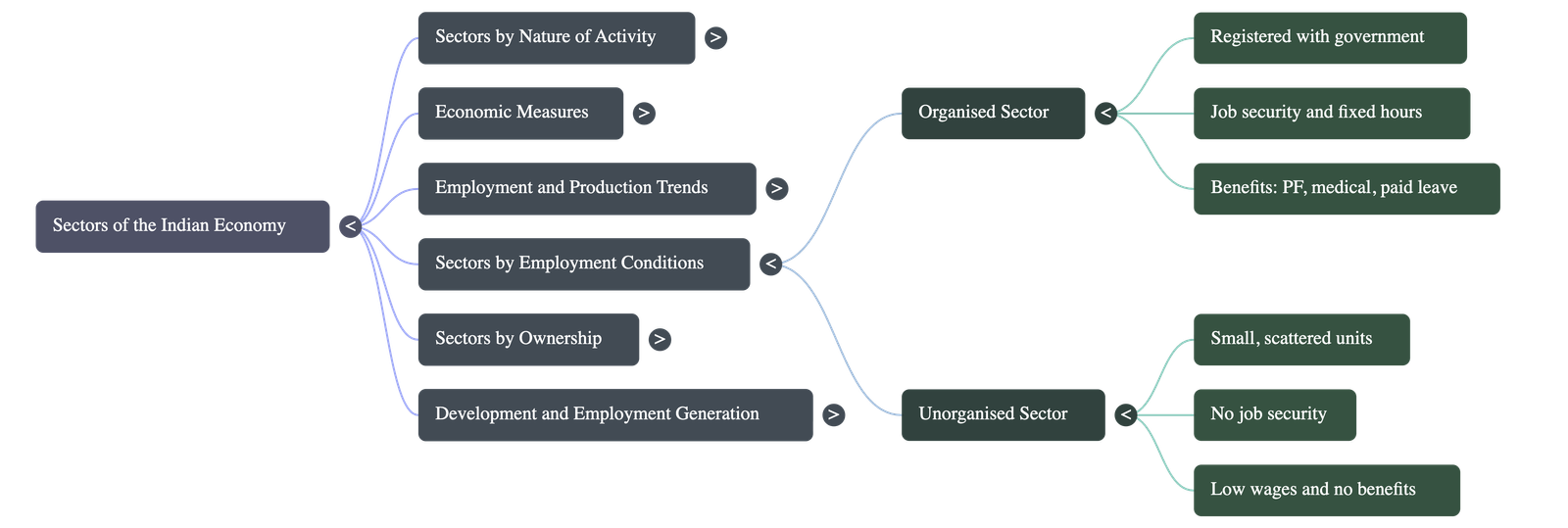
5. Division of Sectors: Organised vs. Unorganised
| Feature | Organised Sector | Unorganised Sector |
|---|---|---|
| Registration | Registered by the government. | Outside the control of the government. |
| Rules | Follows laws like Factories Act, Minimum Wages Act. | Rules exist but are rarely followed. |
| Job Security | Security of employment; fixed hours. | Low-paid, irregular, no security. Can be fired without reason. |
| Benefits | Paid leave, holidays, Provident Fund, medical benefits. | No provision for overtime, paid leave, or medical aid. |
Need for Protection: Workers in the unorganised sector (landless laborers, artisans, street vendors) are often exploited. They need economic and social protection, as many belong to vulnerable communities (SC, ST, backward classes).
6. Sectors in Terms of Ownership: Public and Private
-
Public Sector:
The government owns most assets and provides services. The motive is public welfare, not just profit.
Examples: Railways, Post Office. -
Private Sector:
Ownership of assets and delivery of services is in the hands of private individuals or companies. The motive is to earn profit.
Examples: TISCO (Tata Iron and Steel), Reliance Industries.
Role of the Public Sector
The government must undertake certain activities because:
- Cost & Scale: Some services (roads, bridges, railways, electricity) require huge investment that the private sector cannot afford or would charge too much for.
- Support: The government supports the private sector by supplying electricity at affordable rates or buying farm produce at a fair price.
- Social Welfare: It is the government's duty to provide health and education facilities for all and to take care of the poorest regions and malnourished populations.
Do checkout all questions & answers of this chapter.
Quick Navigation:
| | |
1 / 1
Quick Navigation:
| | |