Quick Navigation:
| | | | |
Quick Navigation:
| | | | |
Glimpses of India
I. A Baker from Goa
by Lucio Rodrigues
Nostalgia for the Past
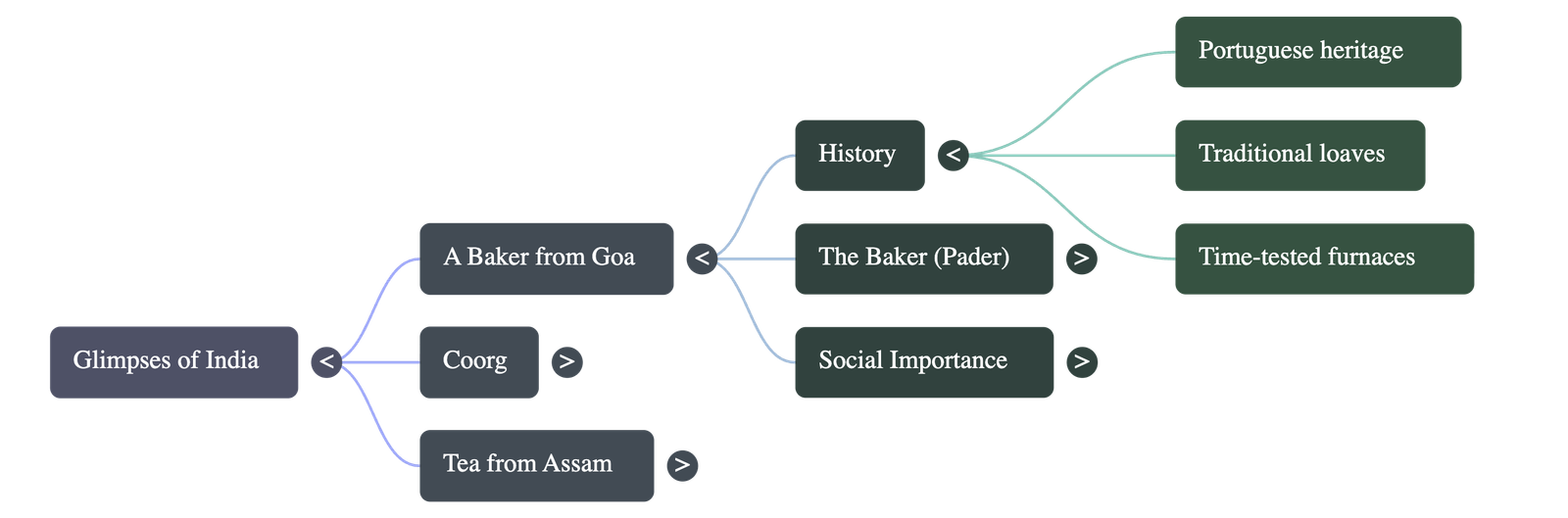
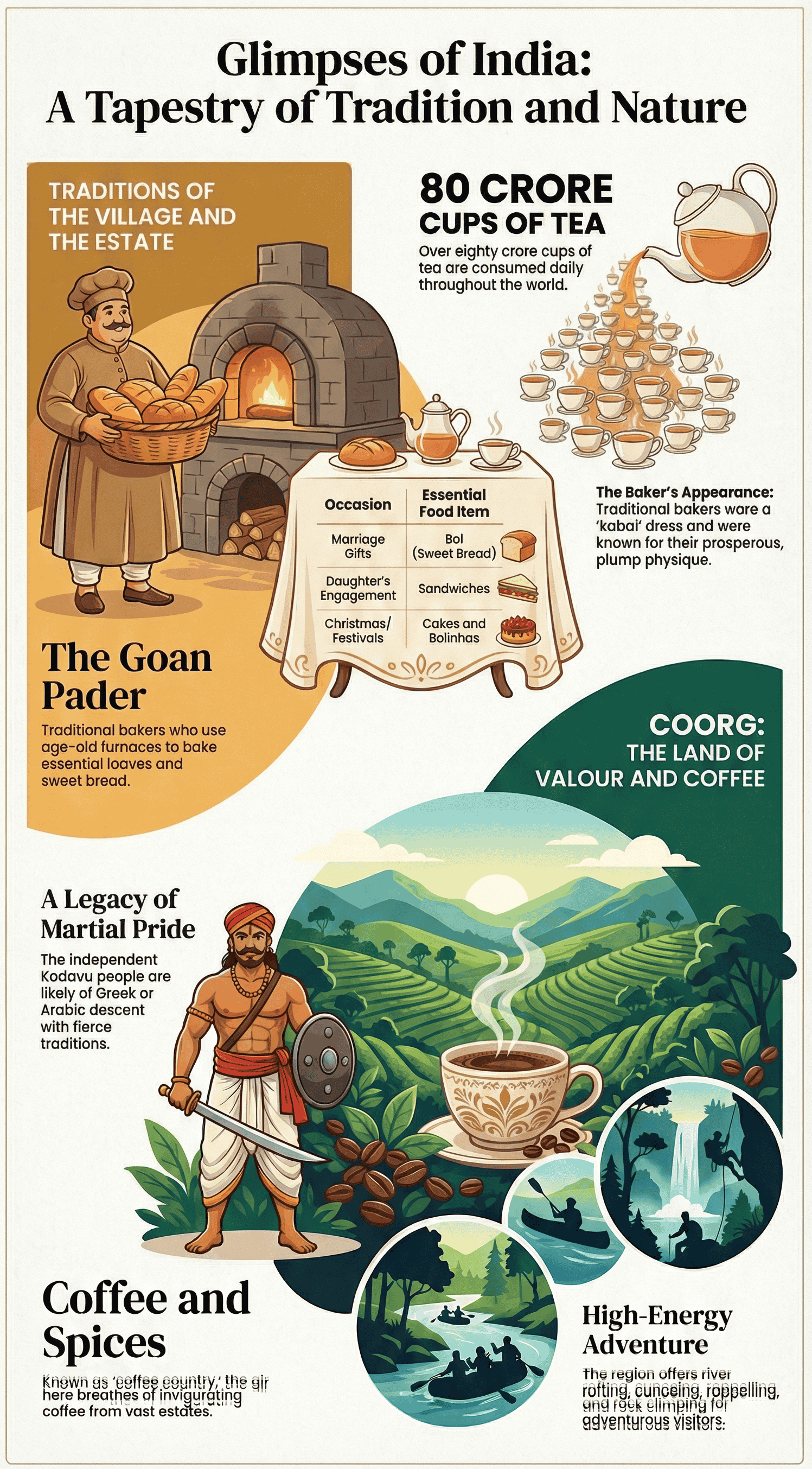
- The elders in Goa often reminisce nostalgically about the old Portuguese days and their famous loaves of bread.
- While the eaters of the loaves may have vanished, the makers (the mixers, moulders, and bakers) still survive.
- The age-old furnaces are still burning, and the traditional profession is being carried on by the sons in many families.
The Baker (Pader)
- The baker is locally known as a pader.
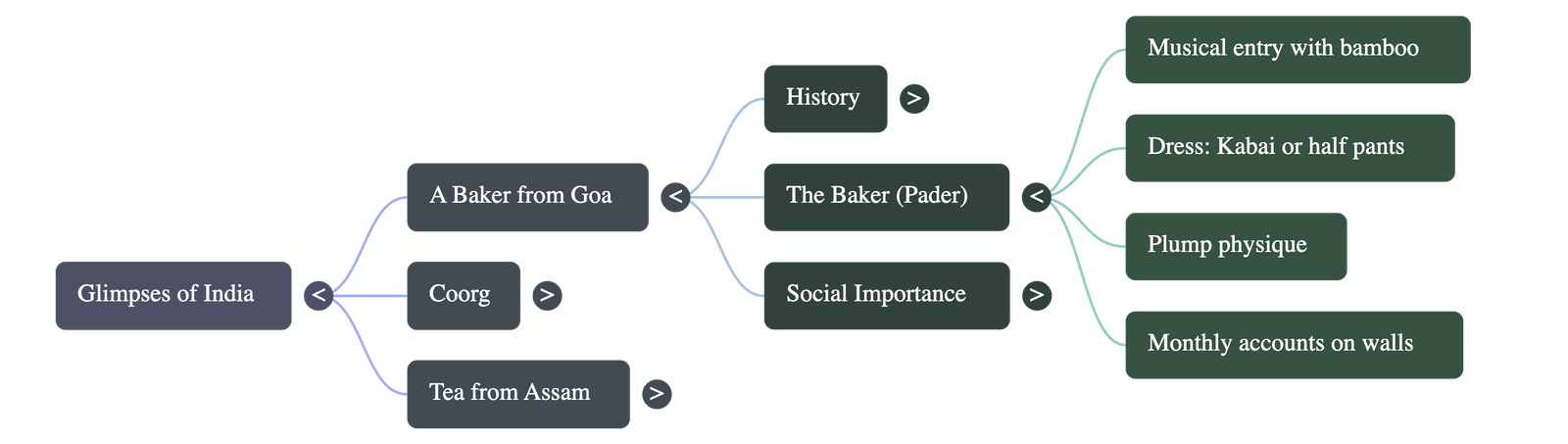
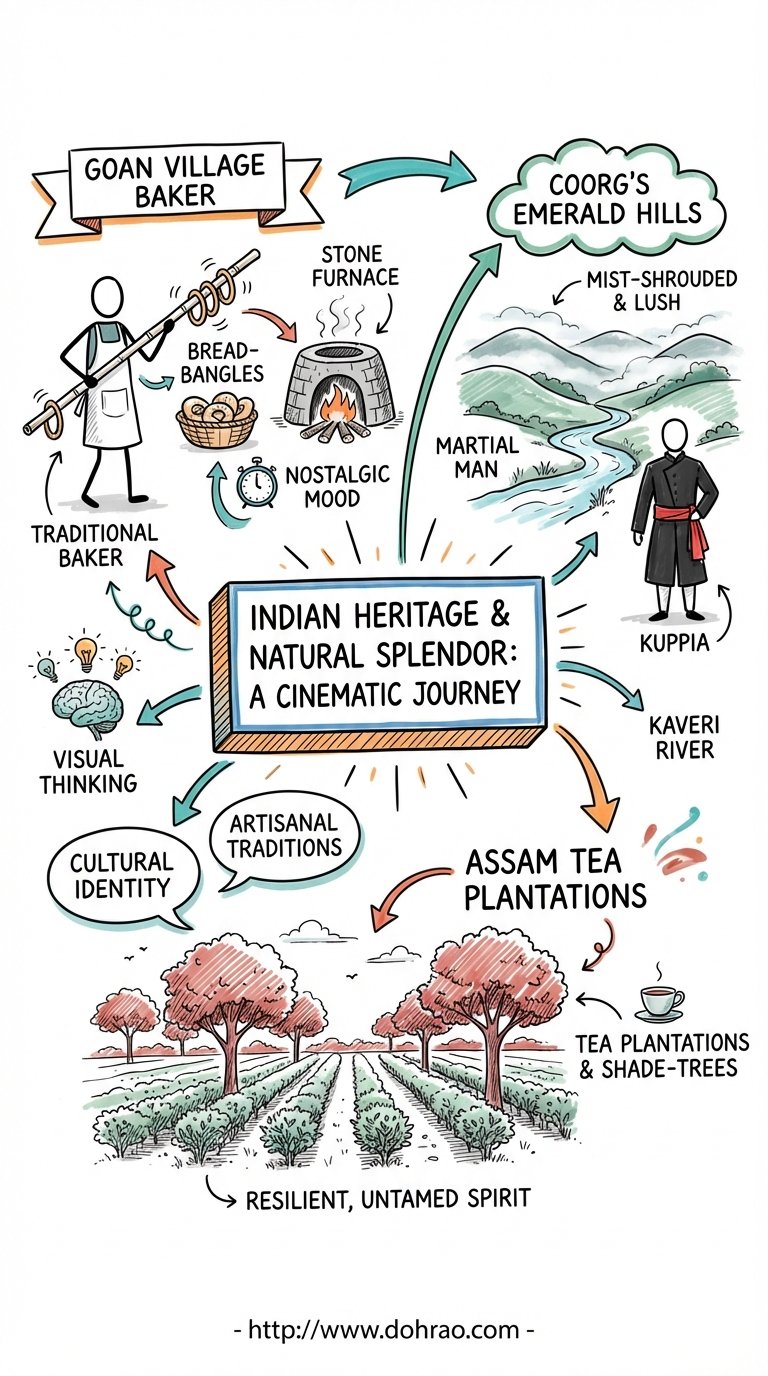
- His arrival is heralded by the "jhang, jhang" sound of his traditional bamboo staff.
- In the author's childhood, the baker was a friend, companion, and guide who visited at least twice a day.
- Children would run to meet him not for the loaves (which were for the elders) but for the "bread-bangles" (sweet bread of special make).
Social Importance of Bread
- Village traditions are incomplete without the baker.
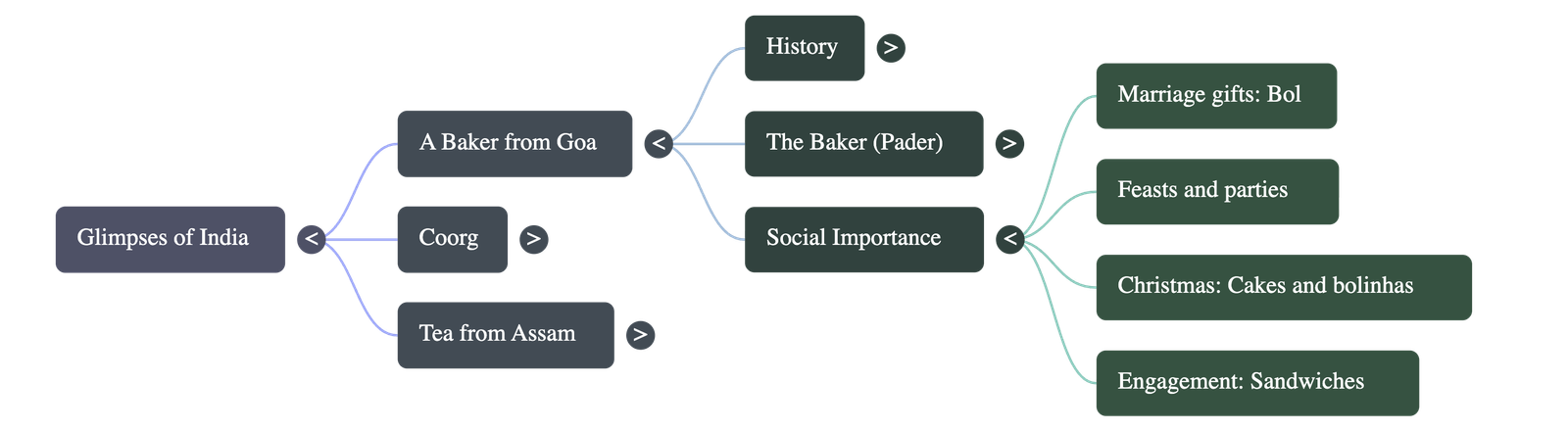
- Marriage gifts are meaningless without the sweet bread known as bol.
- The lady of the house must prepare sandwiches for her daughter’s engagement.
- Cakes and bolinhas are essential for Christmas and other festivals.
Dress and Lifestyle
- In the Portuguese days, bakers wore a peculiar single-piece long frock called the kabai.
- Later, they wore a shirt and trousers that were shorter than full length but longer than half-pants (capris).
- Baking was a profitable profession; the baker and his family never starved and looked happy and prosperous with a "jackfruit-like" plump physique.
II. Coorg
by Lokesh Abrol
Geography and Atmosphere
- Coorg (or Kodagu) is situated midway between Mysore and Mangalore.
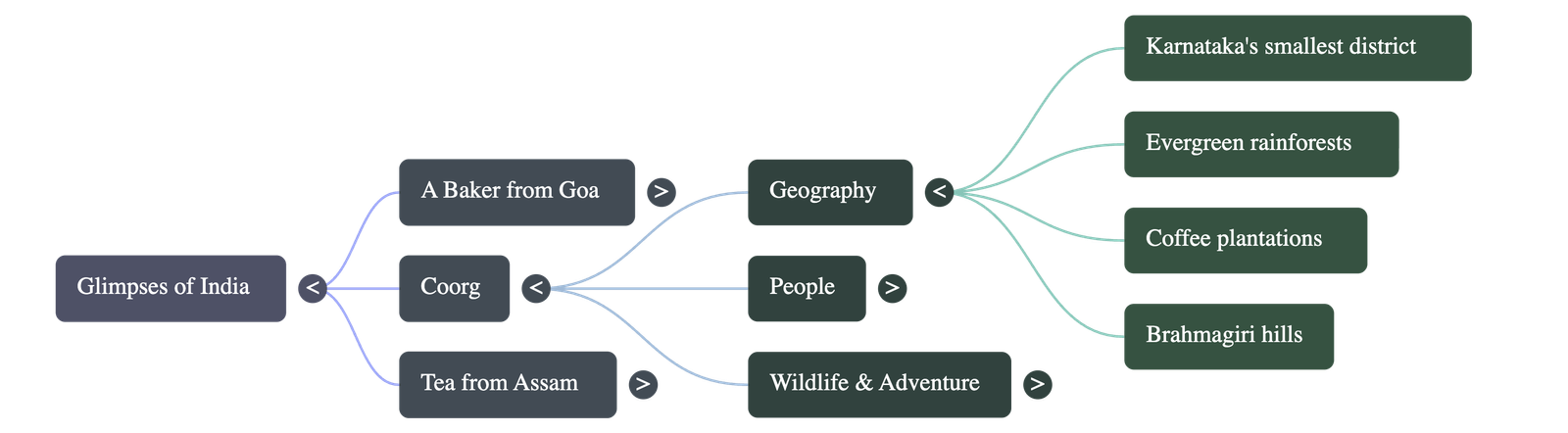
- It is the smallest district of Karnataka, described as a "piece of heaven."
- The land is famous for evergreen rainforests (covering 30% of the district), spices, and coffee plantations.
- The best season for visitors is from September to March when the weather is perfect and the air smells of coffee.
The People and Culture
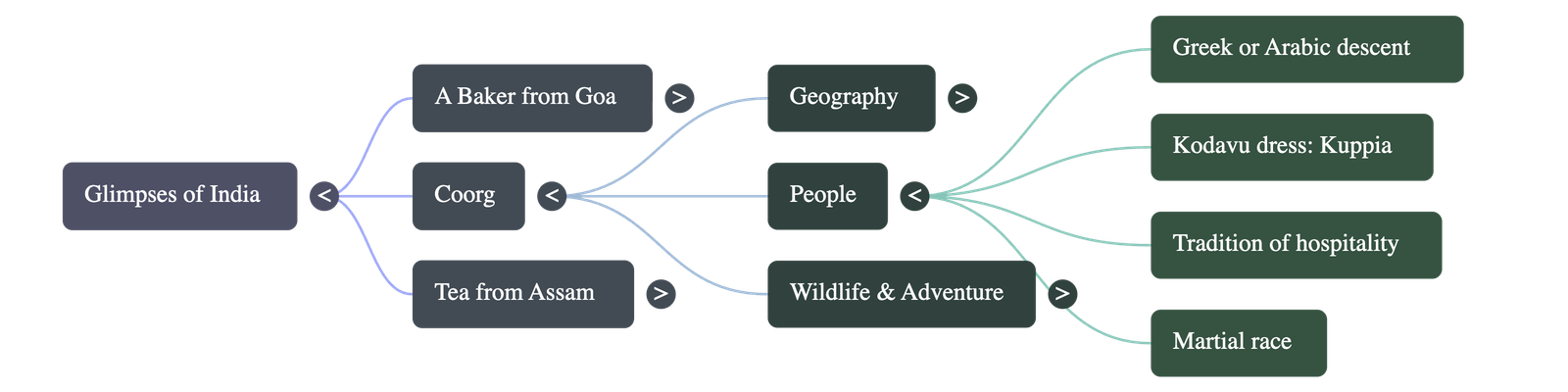
- The inhabitants are a proud race of martial men and beautiful women.
- Origin Theories:
- Greek Theory: A part of Alexander's army moved south and settled there when return became impractical, marrying locals.
- Arab Theory: Supported by their traditional dress, the kuppia (a long black coat with an embroidered waist-belt), which resembles the kuffia worn by Arabs and Kurds.
- Coorgis are known for their hospitality and tales of valour.
- The Coorg Regiment is one of the most decorated in the Indian Army, and the first Chief of the Indian Army, General Cariappa, was a Coorgi.
- They are the only people in India permitted to carry firearms without a license.
Nature and Tourism
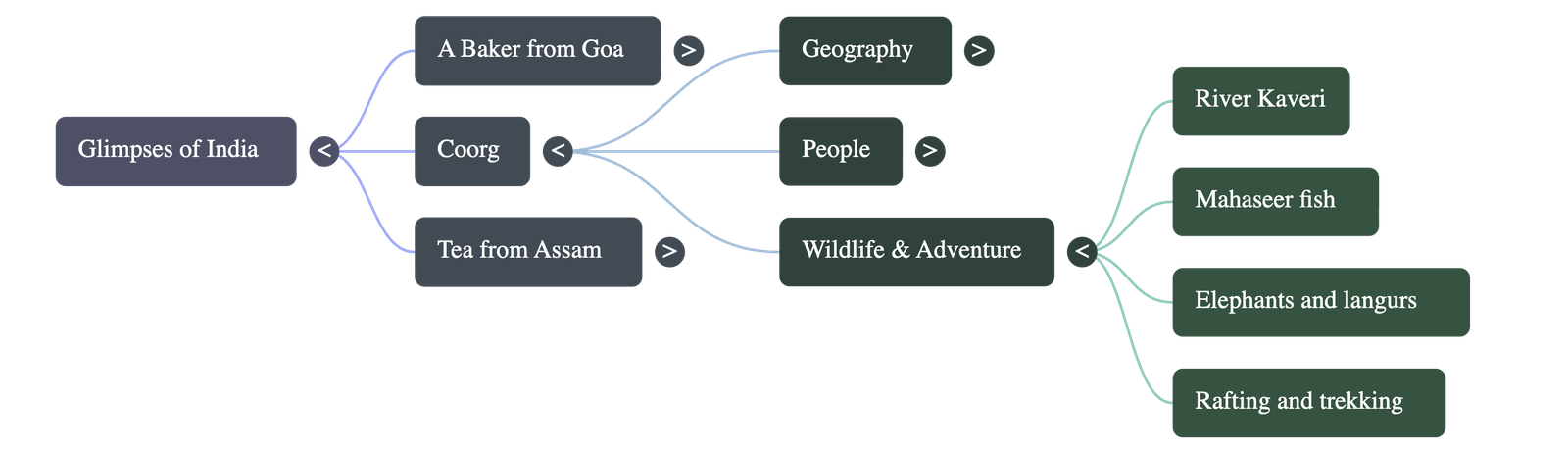
- The river Kaveri obtains its water from the hills of Coorg.
- Wildlife includes the Mahaseer (a large freshwater fish), Kingfishers, squirrels, langurs, and elephants.
- It is a hub for high-energy adventure sports like river rafting, canoeing, rappelling, rock climbing, and mountain biking.
- Panoramic Views: The climb to the Brahmagiri hills offers a view of the misty landscape.
- Nisargadhama: A sixty-four-acre island accessible by a rope bridge.
- Bylakuppe: India’s largest Tibetan settlement is nearby, where one can see Buddhist monks in red, ochre, and yellow robes.
III. Tea from Assam
by Arup Kumar Datta
The Journey
- Pranjol (a youngster from Assam) and Rajvir (his classmate from Delhi) are travelling to Assam by train.
- Rajvir shares a fact: Over eighty crore (800 million) cups of tea are drunk every day throughout the world.
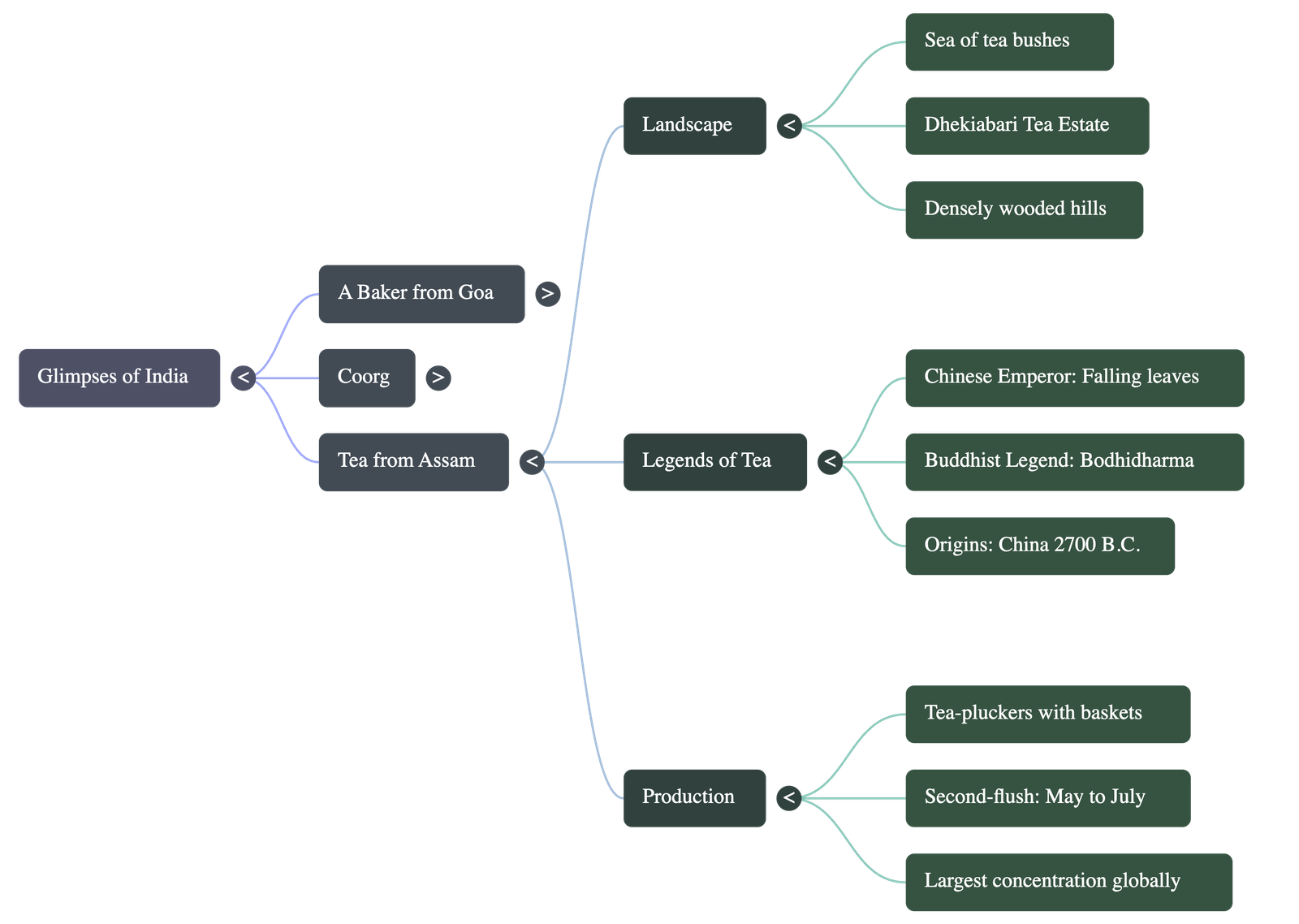
- Rajvir is fascinated by the magnificent view of green paddy fields giving way to tea bushes, set against densely wooded hills.
- Assam has the largest concentration of tea plantations in the world.
Legends about Tea
- Chinese Legend: A Chinese emperor always boiled water before drinking. Once, leaves from twigs burning under the pot fell into the water, giving it a delicious flavour. These were tea leaves.
- Indian Legend: Bodhidharma, an ancient Buddhist ascetic, cut off his eyelids because he felt sleepy during meditation. Ten tea plants grew out of the eyelids. The leaves, when put in hot water and drunk, banished sleep.
History of Tea
- Tea was first drunk in China as far back as 2700 B.C.
- Words like 'chai' and 'chini' are of Chinese origin.
- Tea came to Europe in the sixteenth century and was initially drunk more as medicine than as a beverage.
Arrival at the Estate
- The boys arrive at Mariani junction and drive to the Dhekiabari Tea Estate, managed by Pranjol's father.
- They see acres of tea bushes, all neatly pruned to the same height.
- Groups of tea-pluckers with bamboo baskets on their backs and wearing plastic aprons were plucking the newly sprouted leaves.
- It was the second-flush or sprouting period (May to July), which yields the best tea.
Do checkout all questions & answers of this chapter.
Quick Navigation:
| | | | |
1 / 1
Quick Navigation:
| | | | |