Quick Navigation:
| | | | |
Quick Navigation:
| | | | |
The Sermon at Benares
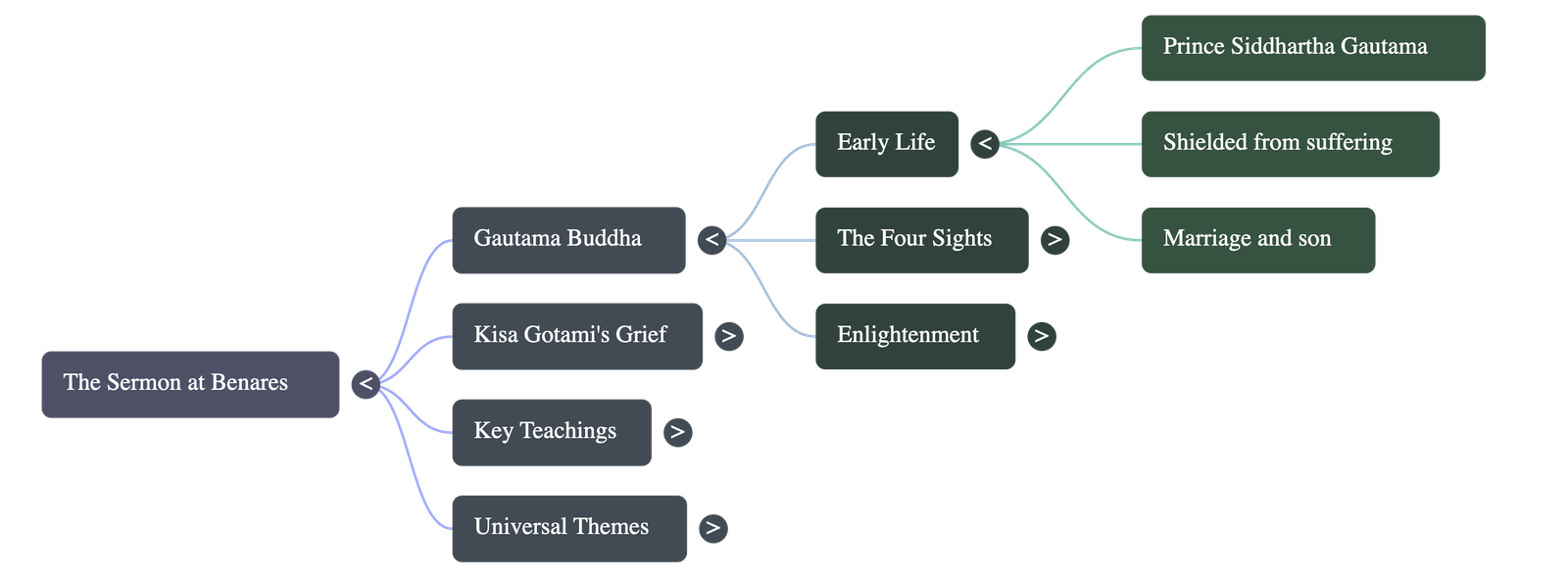
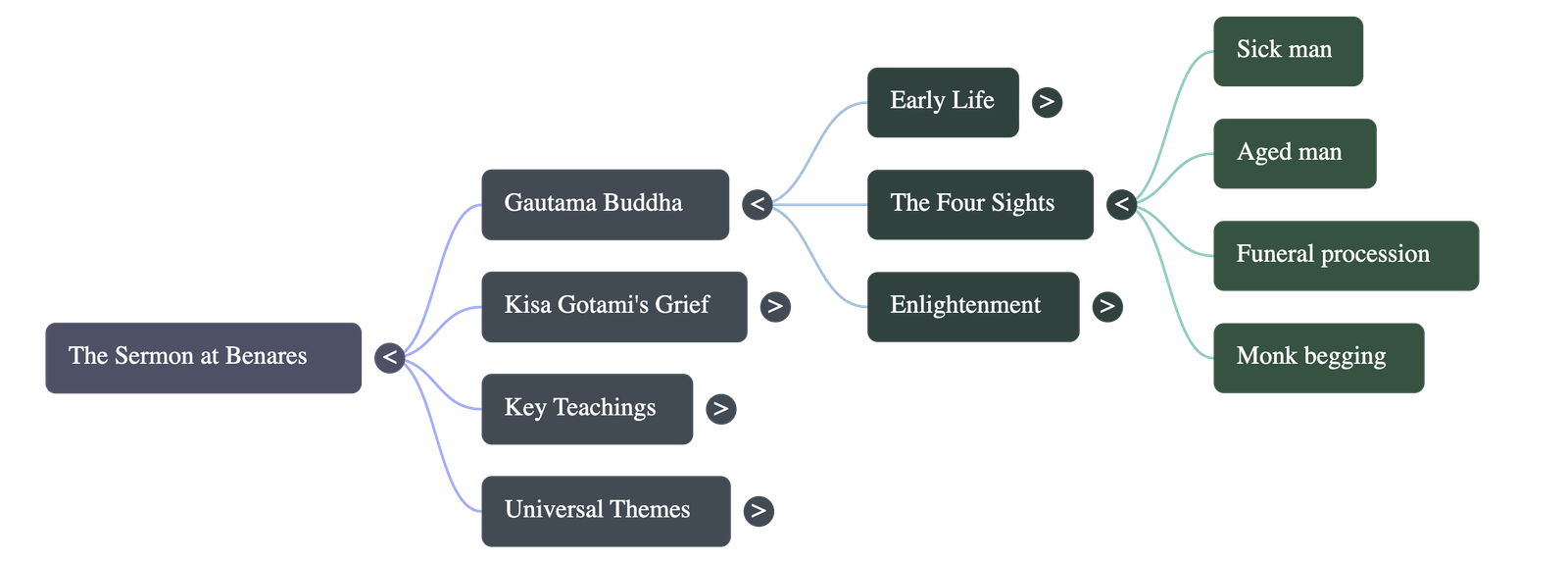
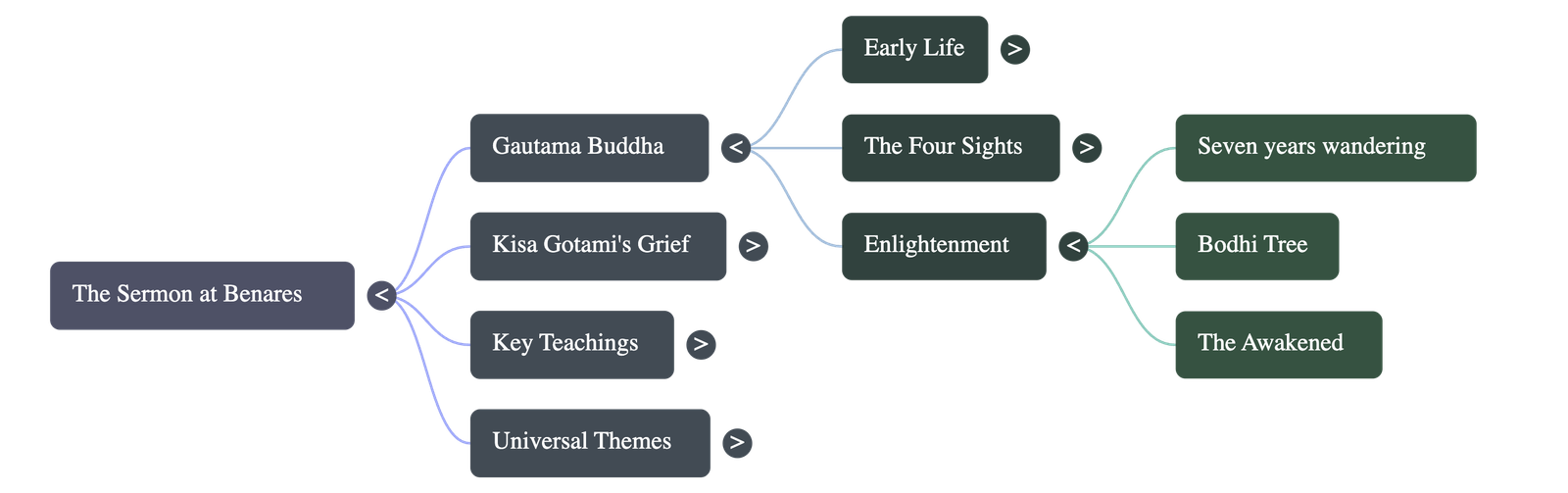
1. The Life of Gautama Buddha
- Early Life: Born as Prince Siddhartha Gautama in northern India. He was sent away for schooling in Hindu sacred scriptures at age twelve and returned four years later to marry a princess.
- Shielded Existence: He lived a royal life for ten years, protected from the sufferings of the world.
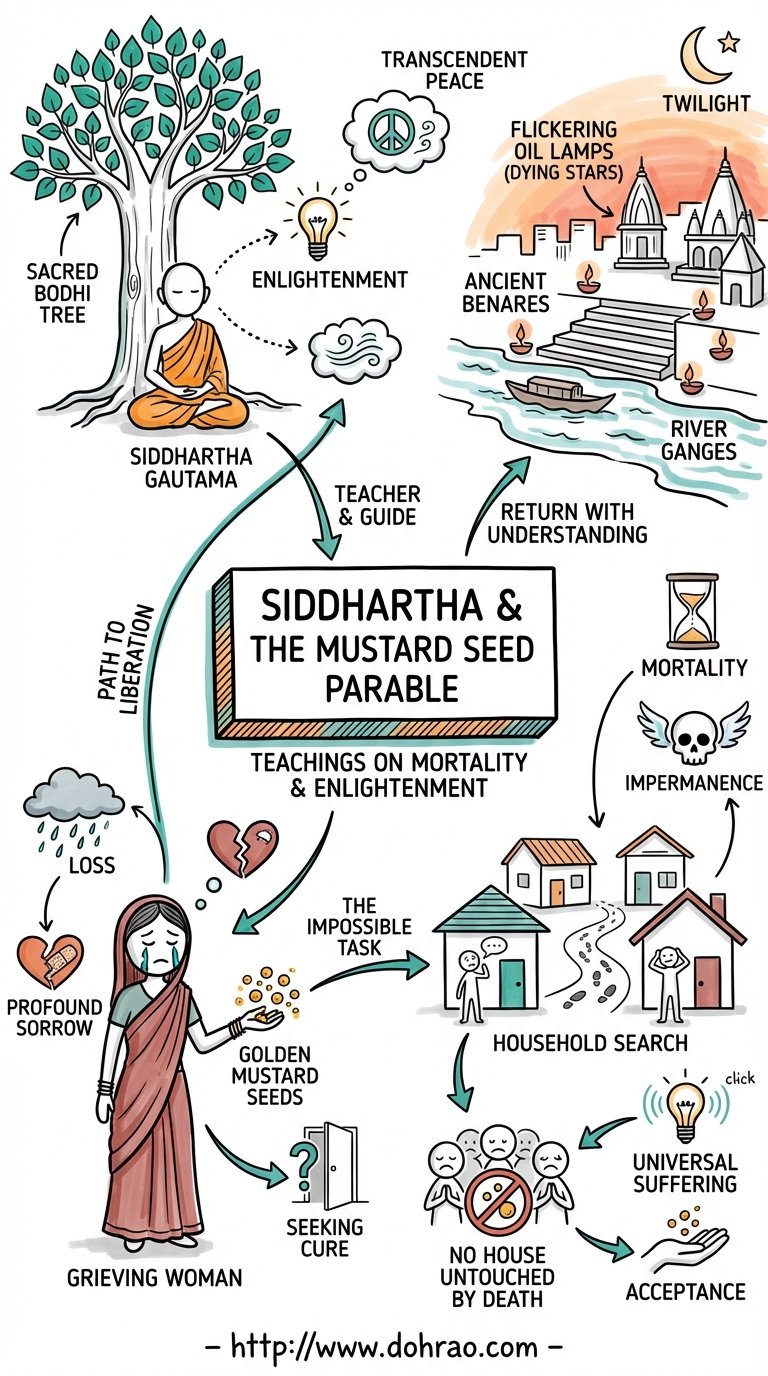
- Exposure to Suffering: At age twenty-five, while hunting, he encountered a sick man, an aged man, a funeral procession, and a monk begging for alms. These sights moved him to seek enlightenment regarding the sorrows of the world.
- Enlightenment: He wandered for seven years before sitting under a peepal tree. After seven days of meditation, he attained enlightenment and renamed the tree the "Bodhi Tree" (Tree of Wisdom). He began teaching and became known as the Buddha (the Awakened).
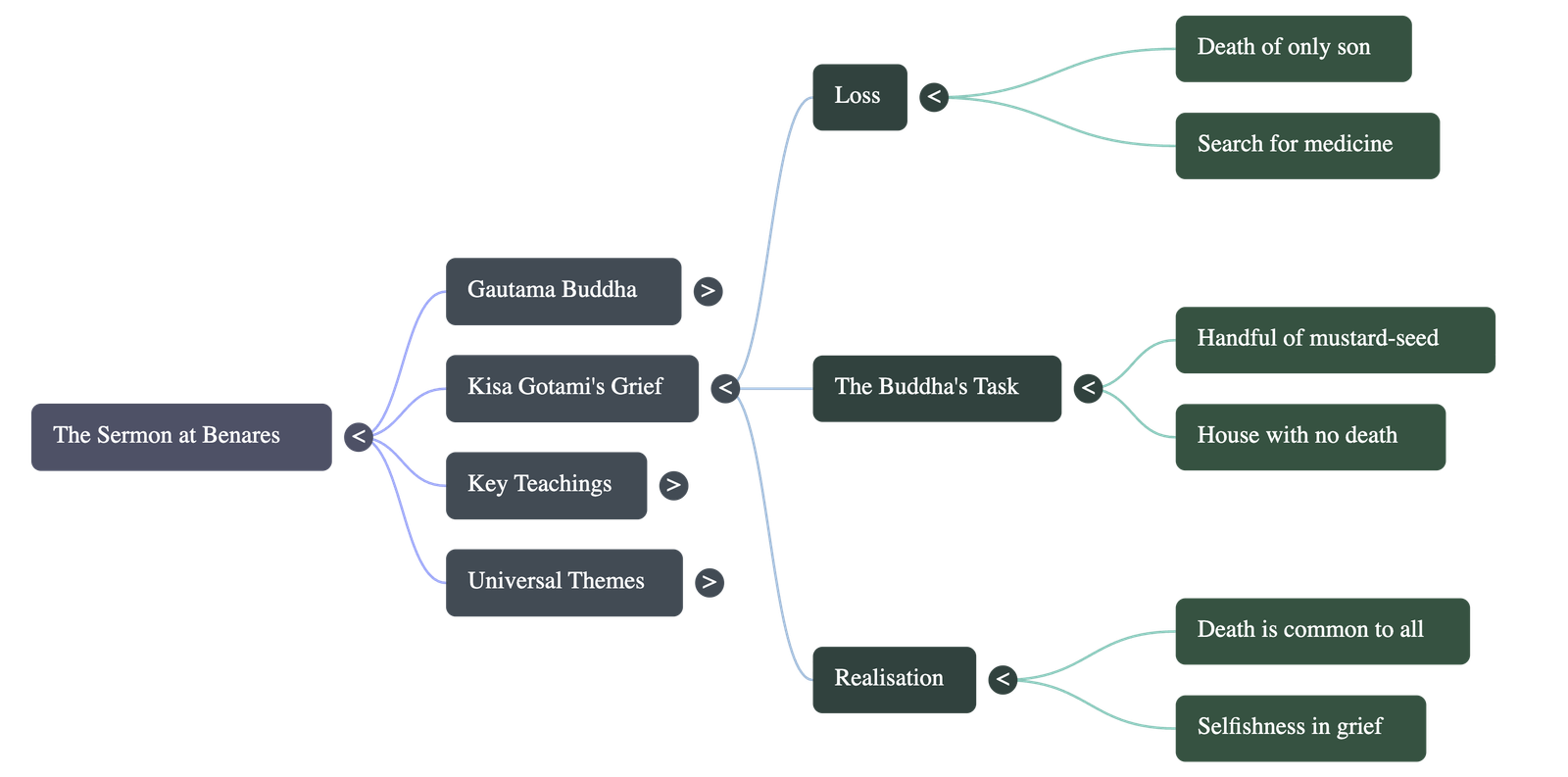
2. The Story of Kisa Gotami
- The Tragedy: Kisa Gotami’s only son died. Overwhelmed by grief, she carried the dead child to her neighbors asking for medicine, leading people to believe she had lost her senses.
- Seeking the Buddha: A man advised her to see Sakyamuni, the Buddha. She went to him and begged for medicine to cure her boy.
- The Condition: The Buddha agreed to help but asked her to bring a handful of mustard seeds. The condition was that the seeds must come from a house where no one had lost a child, husband, parent, or friend.
- The Search: Kisa Gotami went from house to house. People were willing to give seeds, but every household she visited had experienced the death of a loved one. She found no house where the living were not outnumbered by the dead.
- The Realization: Exhausted and hopeless, she sat by the wayside watching the city lights flicker and extinguish. She realized that human life flickers up and extinguishes just like the lights. She understood that death is common to all and that she had been selfish in her grief.
3. The Sermon (Buddha’s Teachings)
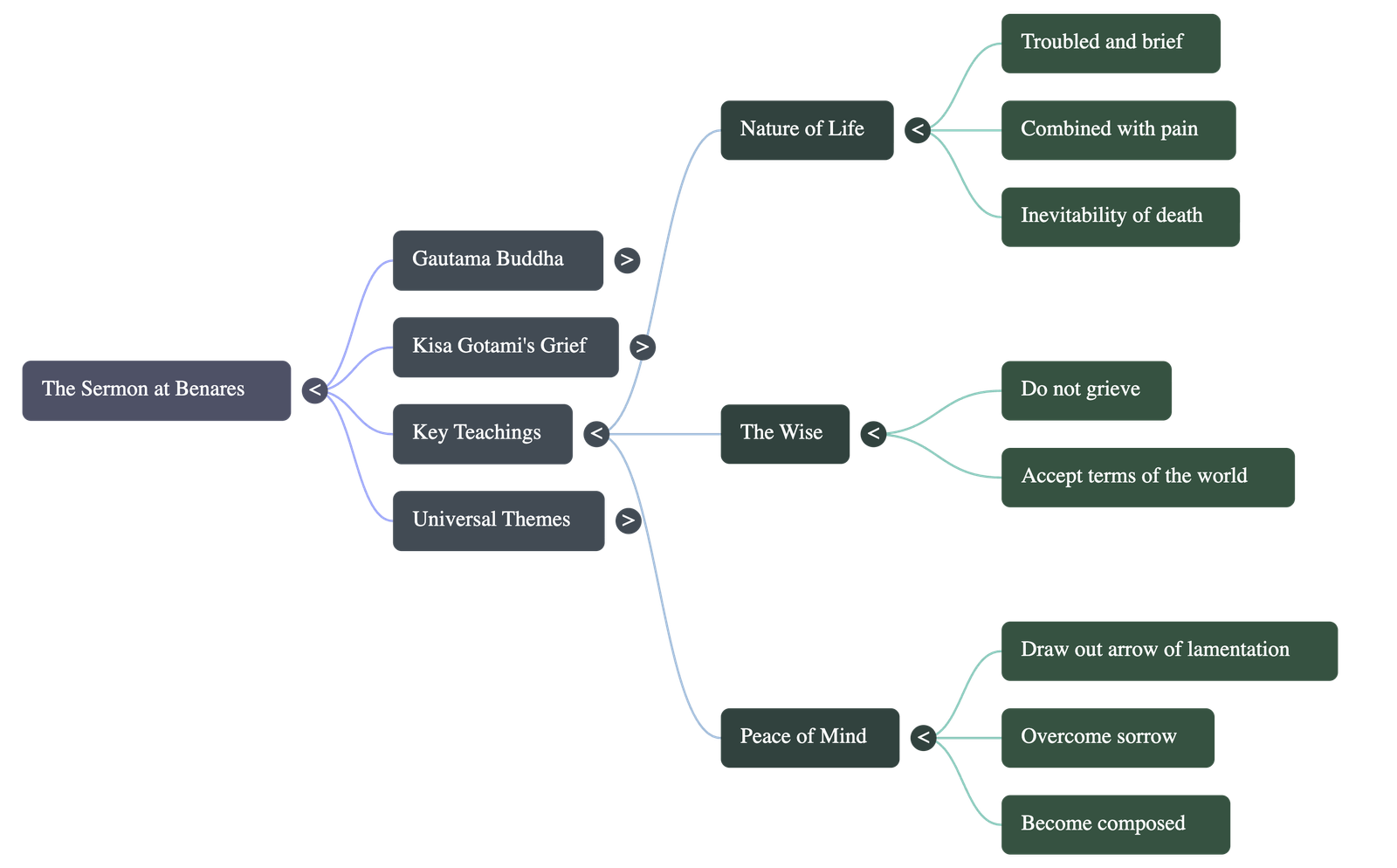
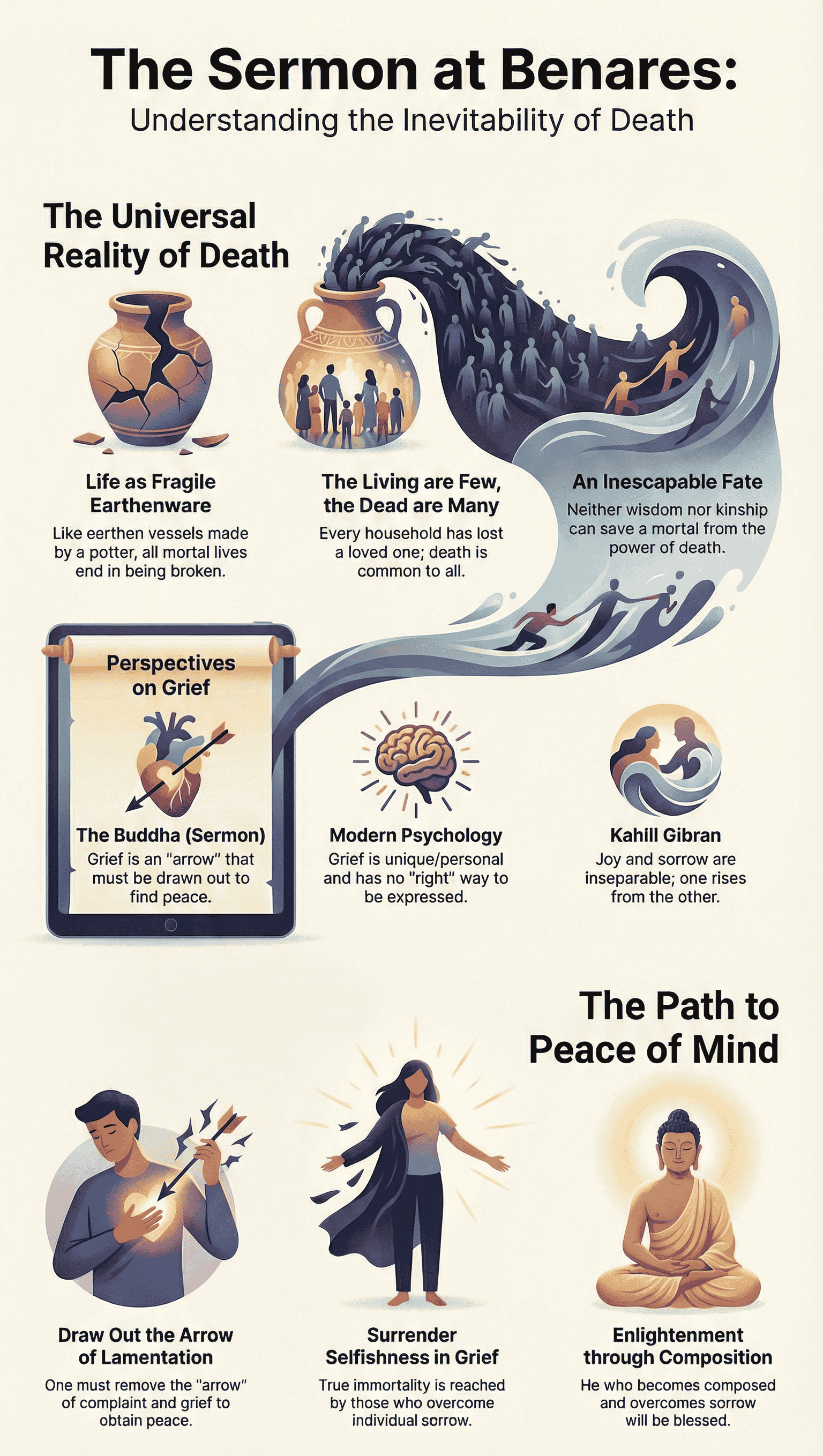
- Inevitability of Death: The life of mortals is troubled, brief, and painful. Just as ripe fruit must fall and earthen vessels must break, all living beings are subject to death. Neither the young nor the wise can escape it.
- Futility of Grieving: No one can save their relatives from death. Weeping and grieving cannot bring back the dead; instead, they cause greater pain and physical suffering to the living.
- Path to Peace: To obtain peace of mind, one must draw out the "arrow" of lamentation, complaint, and grief. He who has overcome sorrow will become free from sorrow and be blessed.
4. Supplementary Readings on Grief
Modern Perspectives: The chapter includes texts describing grief as a natural emotion with various symptoms like sadness, anger, guilt, and loneliness. It suggests that there is no single "right" way to mourn.
"Good Grief" by Amitai Etzioni: The author describes the loss of his wife and son, arguing against the rigid "stages of grief." He suggests that focusing on helping others and doing things for one another is a valid form of consolation.
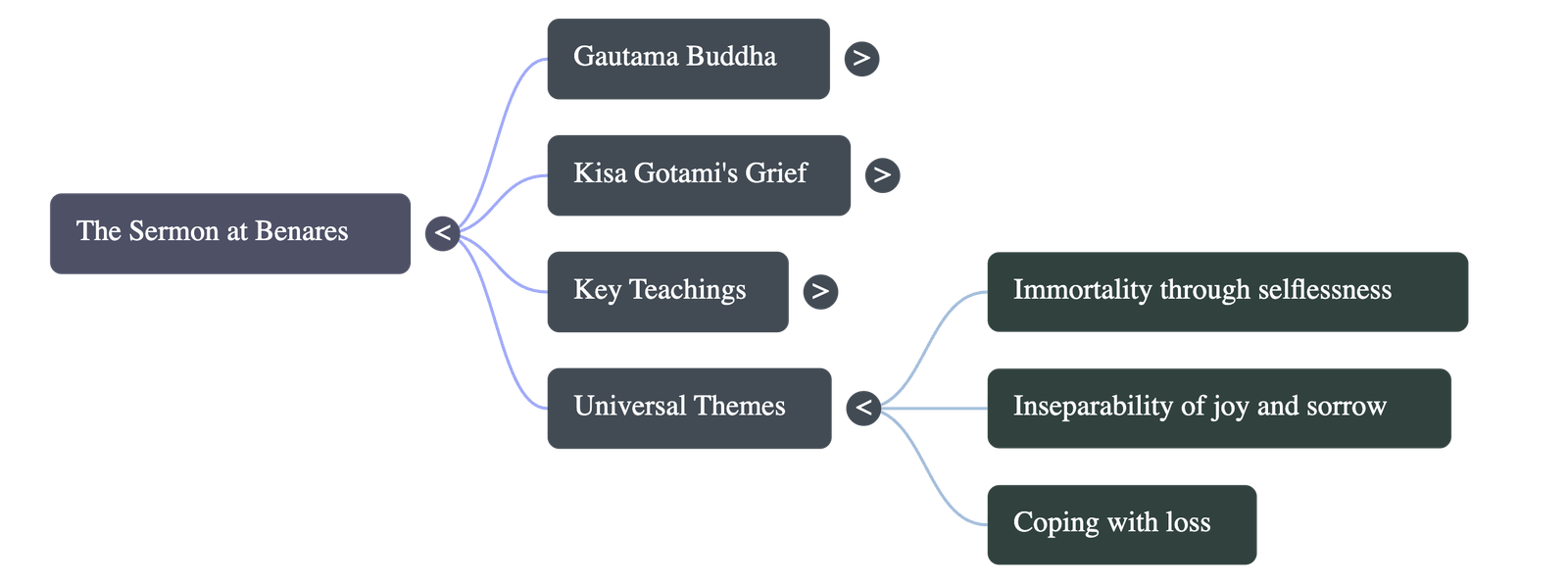
Kahlil Gibran on Joy and Sorrow: An extract from The Prophet teaches that joy and sorrow are inseparable; the deeper sorrow carves into one's being, the more joy it can contain.
Do checkout all questions & answers of this chapter.
Quick Navigation:
| | | | |
1 / 1
Quick Navigation:
| | | | |