Quick Navigation:
| | | | |
Quick Navigation:
| | | | |
From the Diary of Anne Frank
Introduction to Anne Frank
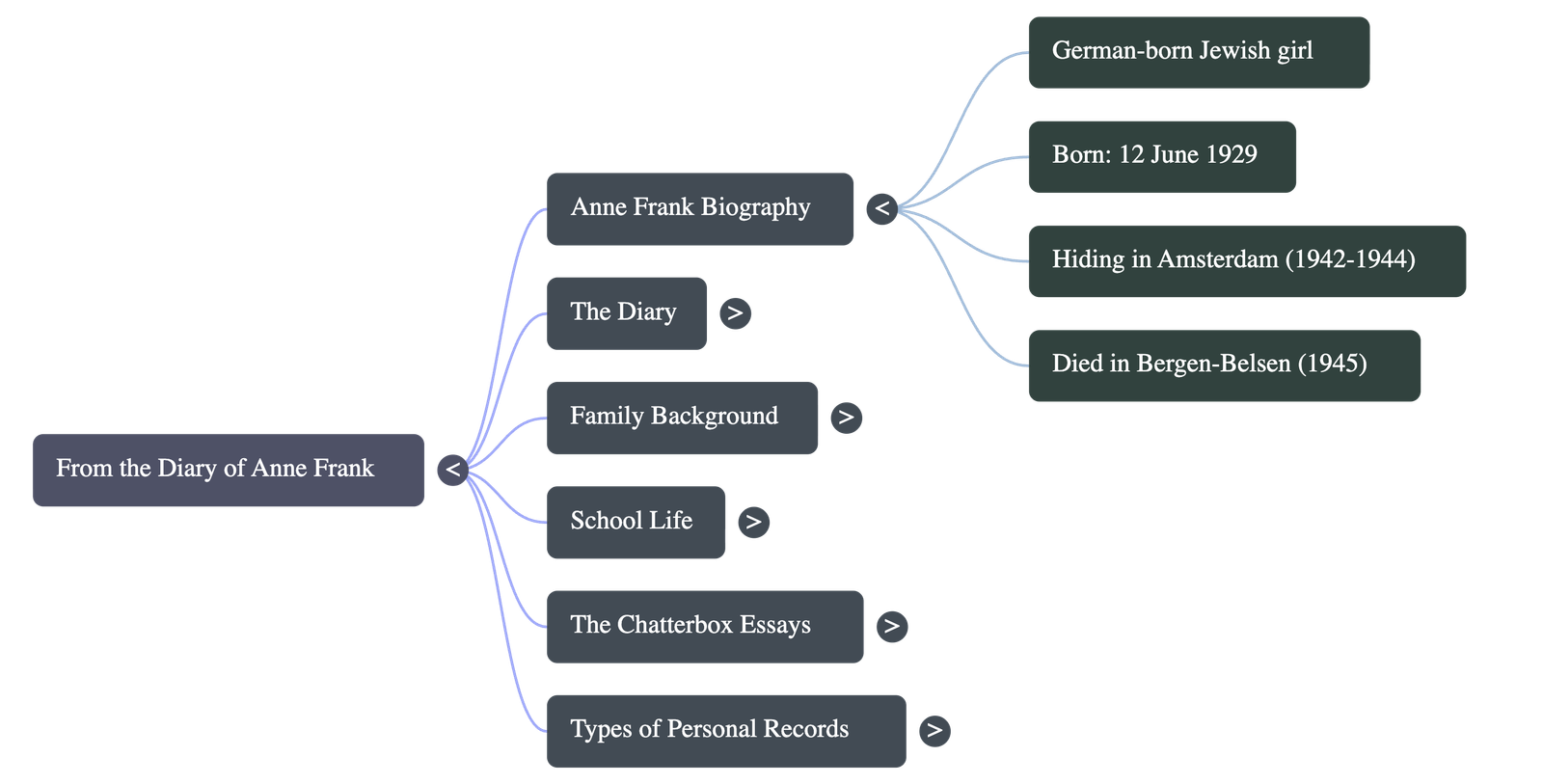
- The Author: Anneliese Marie 'Anne' Frank was a German-born Jewish girl born on June 12, 1929.
- Context: She wrote her diary while hiding with her family and four friends in Amsterdam during the German occupation of the Netherlands in World War II.
- Hiding and Capture: The family went into hiding in July 1942 in her father Otto Frank’s office building. After two years, they were betrayed and transported to concentration camps.
- Tragic End: Anne died of typhus in Bergen-Belsen. Her father, Otto Frank, was the only survivor. He published her diary, convinced it was a unique record.
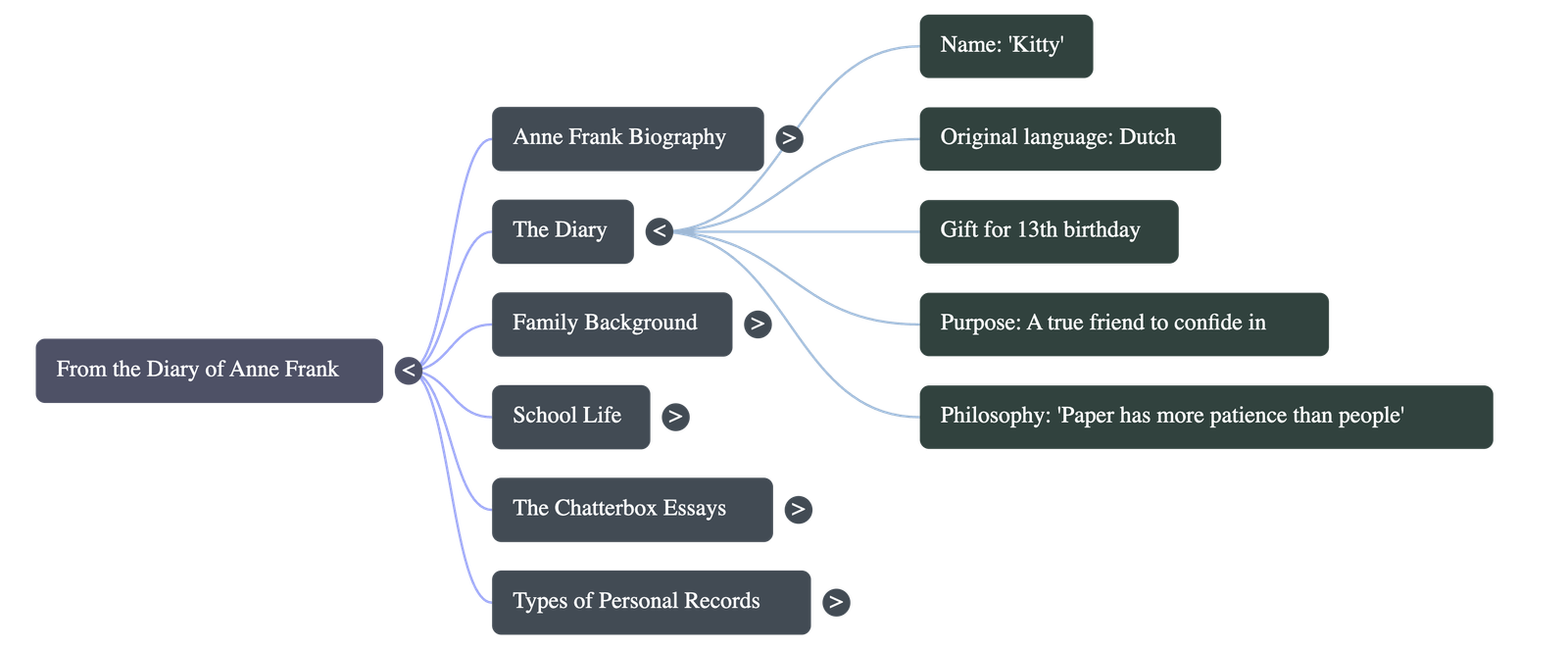
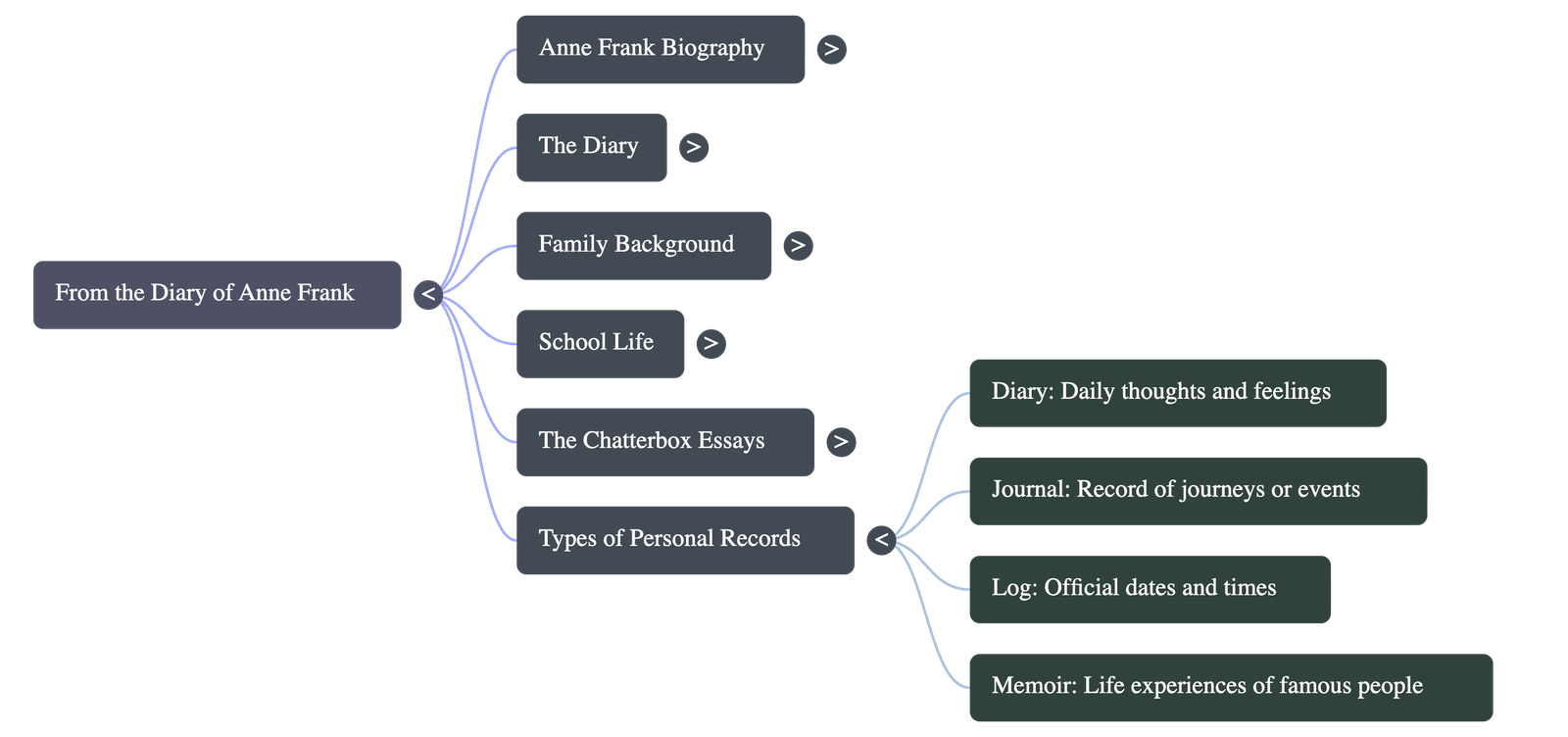
- The Diary: Given to her on her 13th birthday, it chronicles her life from June 12, 1942, to August 1, 1944. It is regarded as the work of a mature mind and an intimate examination of life under Nazi occupation.
Anne's Thoughts on Writing
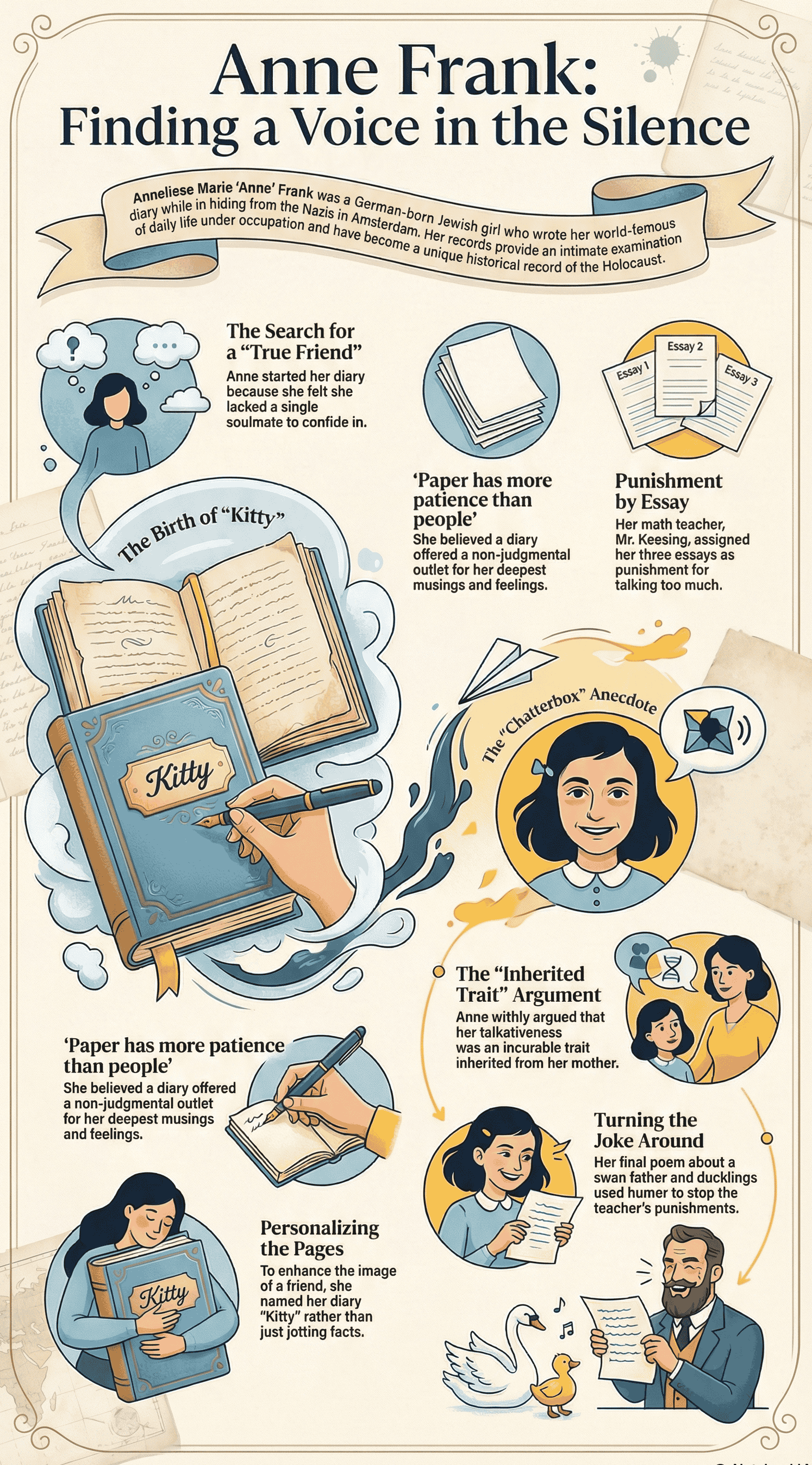
- A Strange Experience: Writing in a diary felt strange to Anne because she had never written before and believed no one would be interested in the "musings of a thirteen-year-old schoolgirl."
- The Need for a Friend: She felt a strong need to unburden herself. Despite having loving parents, a sister, and friends to have fun with, she felt she lacked a "true friend" to confide in.
- Paper vs. People: Anne famously noted, "Paper has more patience than people," deciding to use the diary as the friend she longed for.
- Naming the Diary: She decided not to just jot down facts but to treat the diary as a friend, naming it "Kitty."
Brief Sketch of Anne's Life
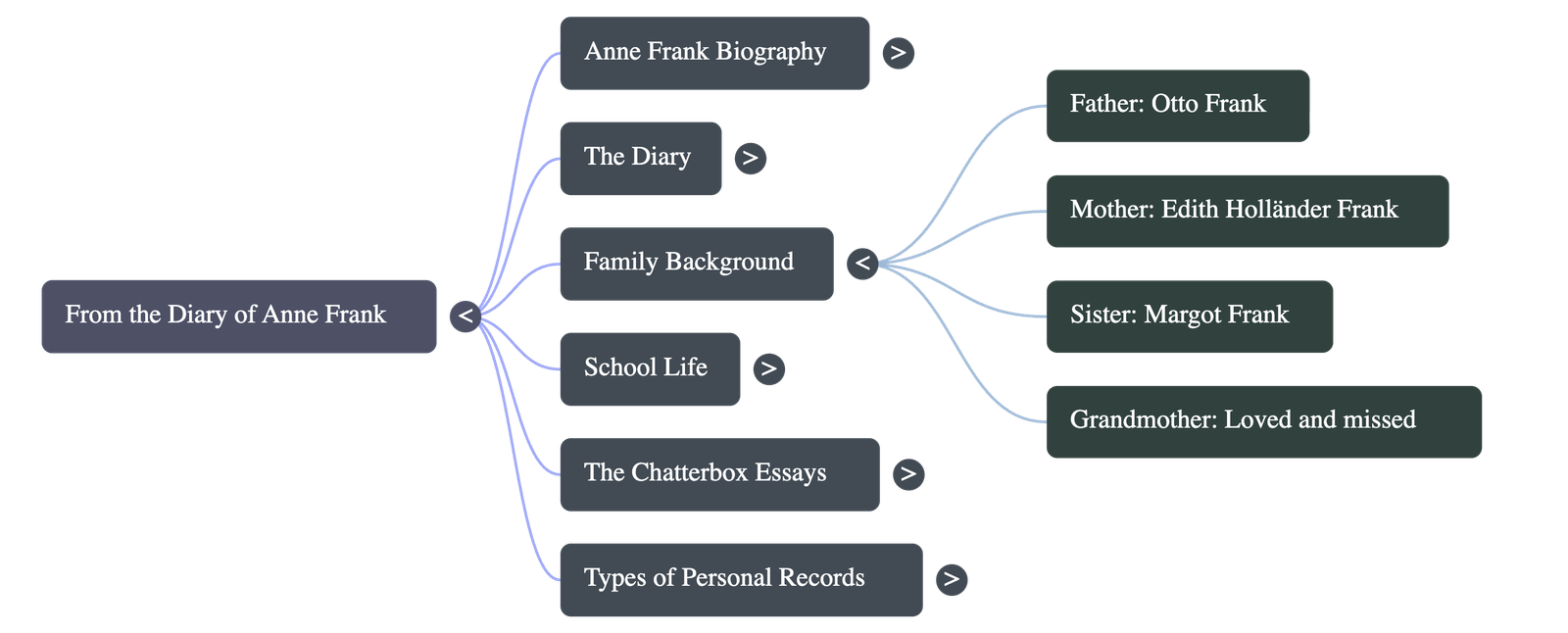
- Family Background: Her father, Otto, married her mother, Edith, when he was 36 and she was 25. Her sister Margot was born in 1926, and Anne in 1929.
- Migration: The family emigrated to Holland in 1933. Anne and Margot initially stayed with their grandmother in Aachen before joining their parents in Holland.
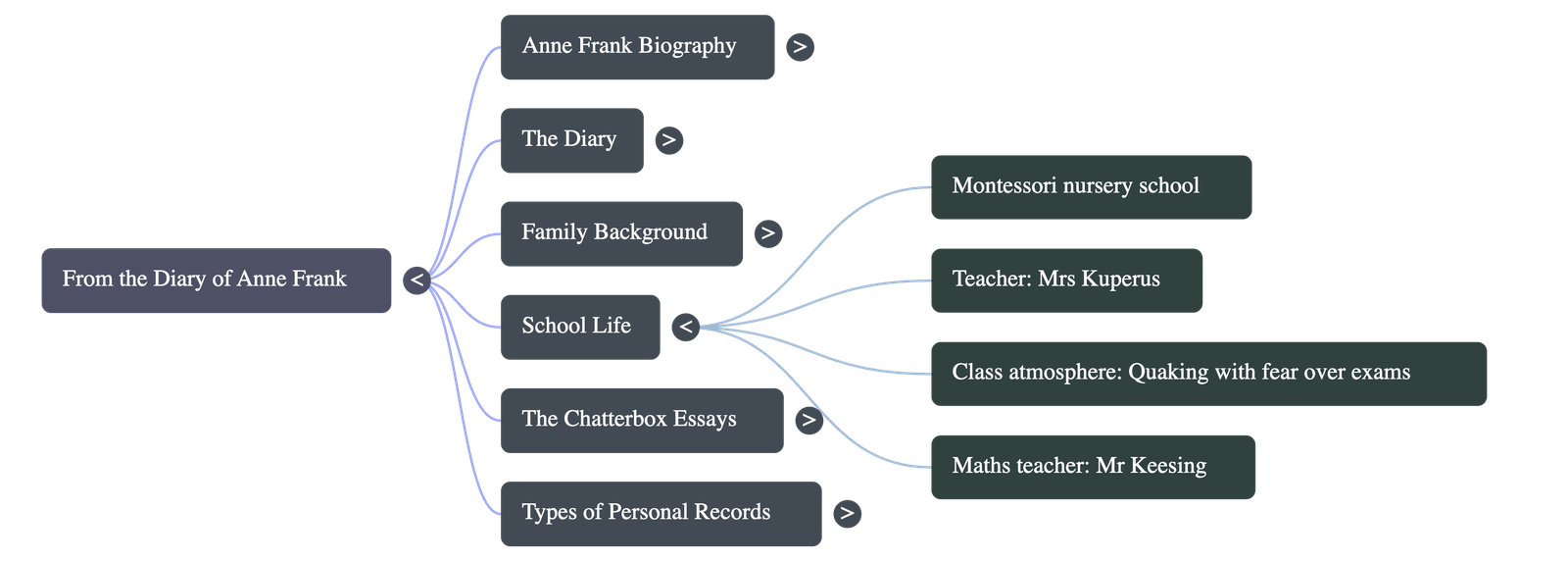
- Schooling: Anne attended a Montessori nursery school until age six. She had an emotional farewell with her headmistress, Mrs. Kuperus.
- Grandmother's Death: Her grandmother fell ill in 1941 and died in January 1942. Anne thought of her often and lit a candle for her during her own birthday celebration in 1942.
School Life and Mr. Keesing
- Classroom Anxiety: The entire class was nervous ("quaking in its boots") about the upcoming meeting where teachers would decide who moved up to the next form. Anne felt teachers were the "most unpredictable creatures on earth."
- Anne's Confidence: She was not worried about her girlfriends or herself, except for the subject of Math.
- The "Chatterbox" Conflict: Mr. Keesing, the old-fashioned Math teacher, was annoyed by Anne's constant talking. He assigned her extra homework as punishment.
The Three Essays
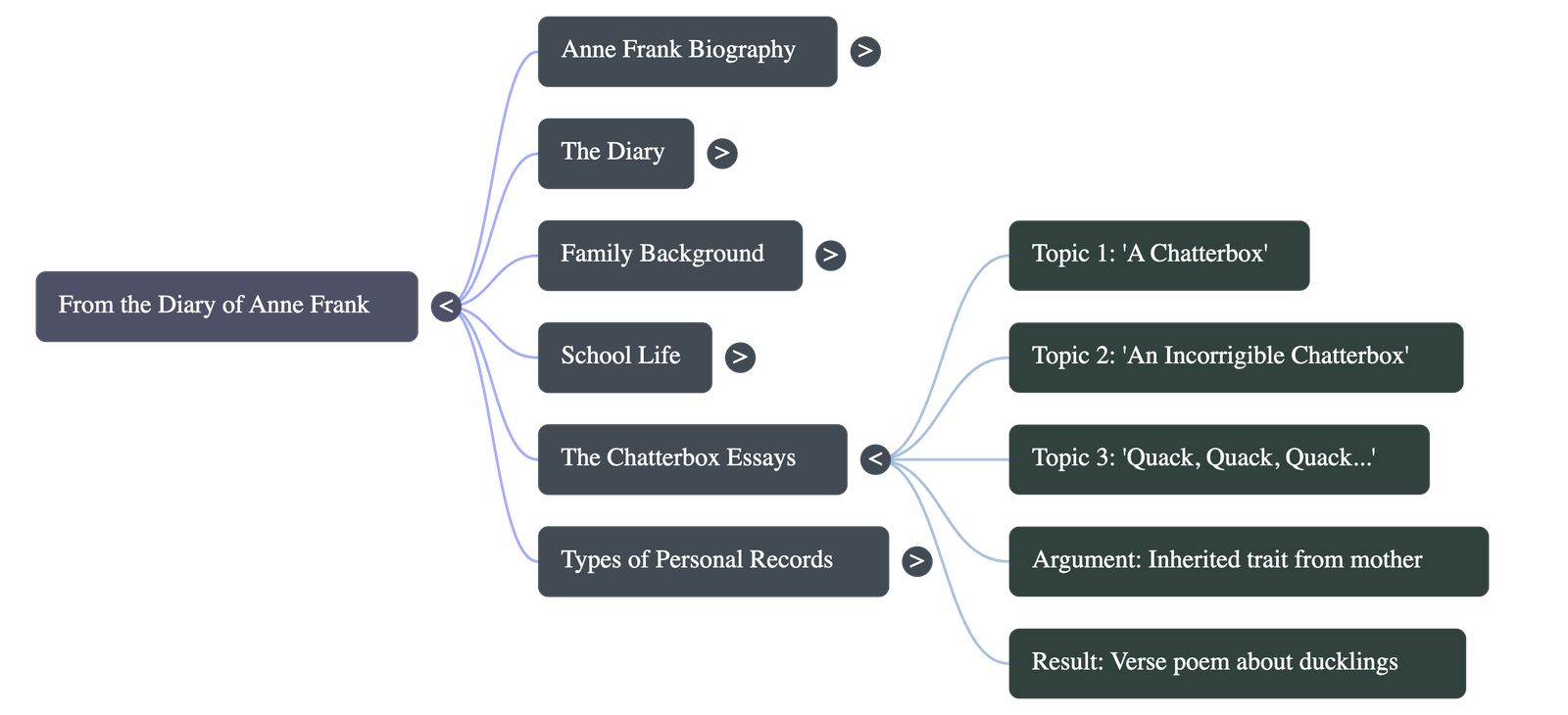
- First Essay ("A Chatterbox"): Anne wrote three pages arguing that talking is a student's trait. She humorously claimed she couldn't cure it because it was an inherited trait from her mother, who also talked a lot. Mr. Keesing laughed at her arguments.
- Second Essay ("An Incorrigible Chatterbox"): Anne continued talking, so she was assigned a second essay. She wrote it and stayed quiet for two lessons.
- Third Essay ("Quack, Quack, Quack, Said Mistress Chatterbox"): When she started talking again in the third lesson, Mr. Keesing assigned a third essay with a ridiculous title intended to mock her.
The Poem and Resolution
- Turning the Joke: Anne wanted to make sure the joke was on Mr. Keesing this time. With the help of her friend Sanne, she wrote the entire essay in verse.
- The Story: The poem told a story about a mother duck and a father swan with three baby ducklings. The father swan bit the ducklings to death because they quacked too much.
- The Outcome: Mr. Keesing took the joke in the right spirit. He read the poem to the class and other classes, adding his own comments.
- Final Result: Anne was allowed to talk in class thereafter and was no longer assigned extra homework. Mr. Keesing even started making jokes in class.
Do checkout all questions & answers of this chapter.
Quick Navigation:
| | | | |
1 / 1
Quick Navigation:
| | | | |