Quick Navigation:
| | |
Food Security in India
Overview and Definition
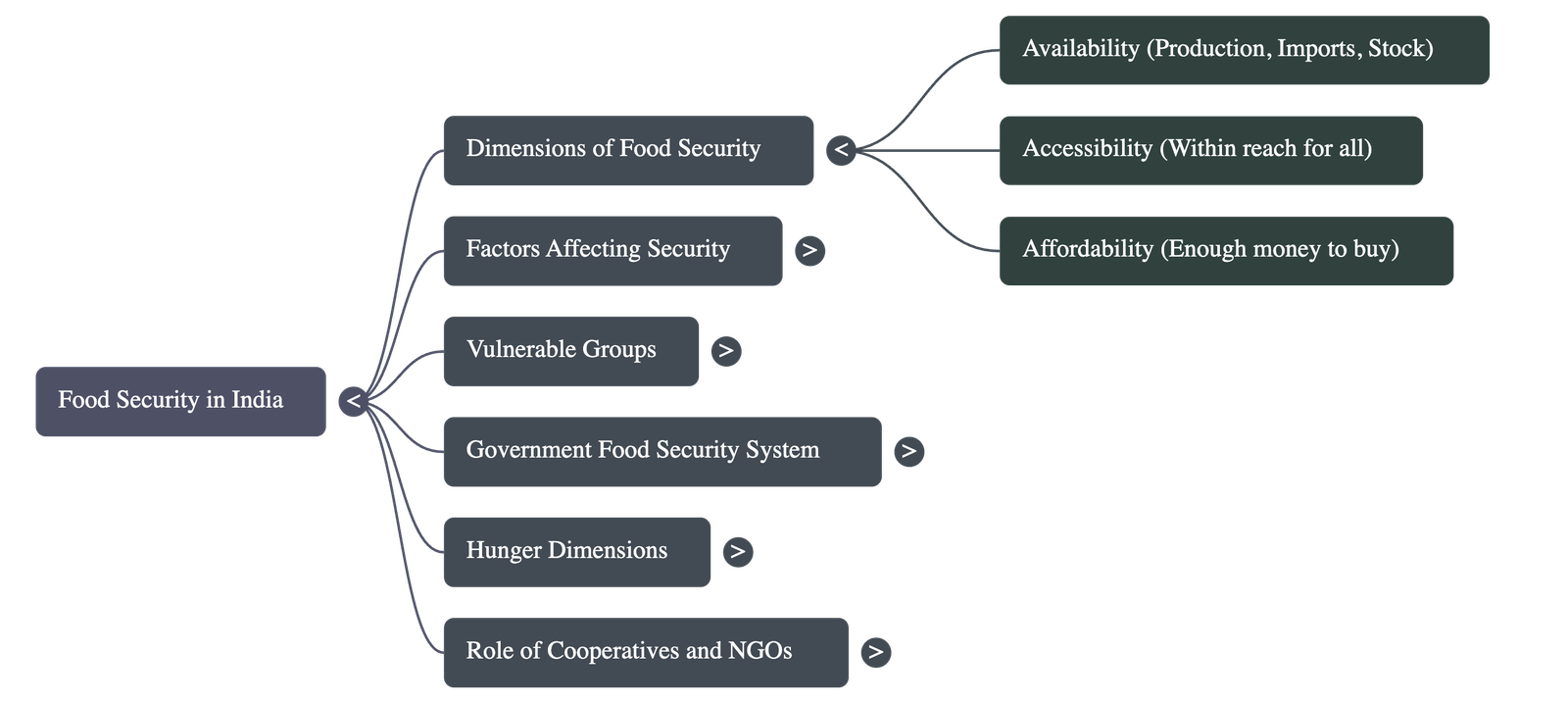
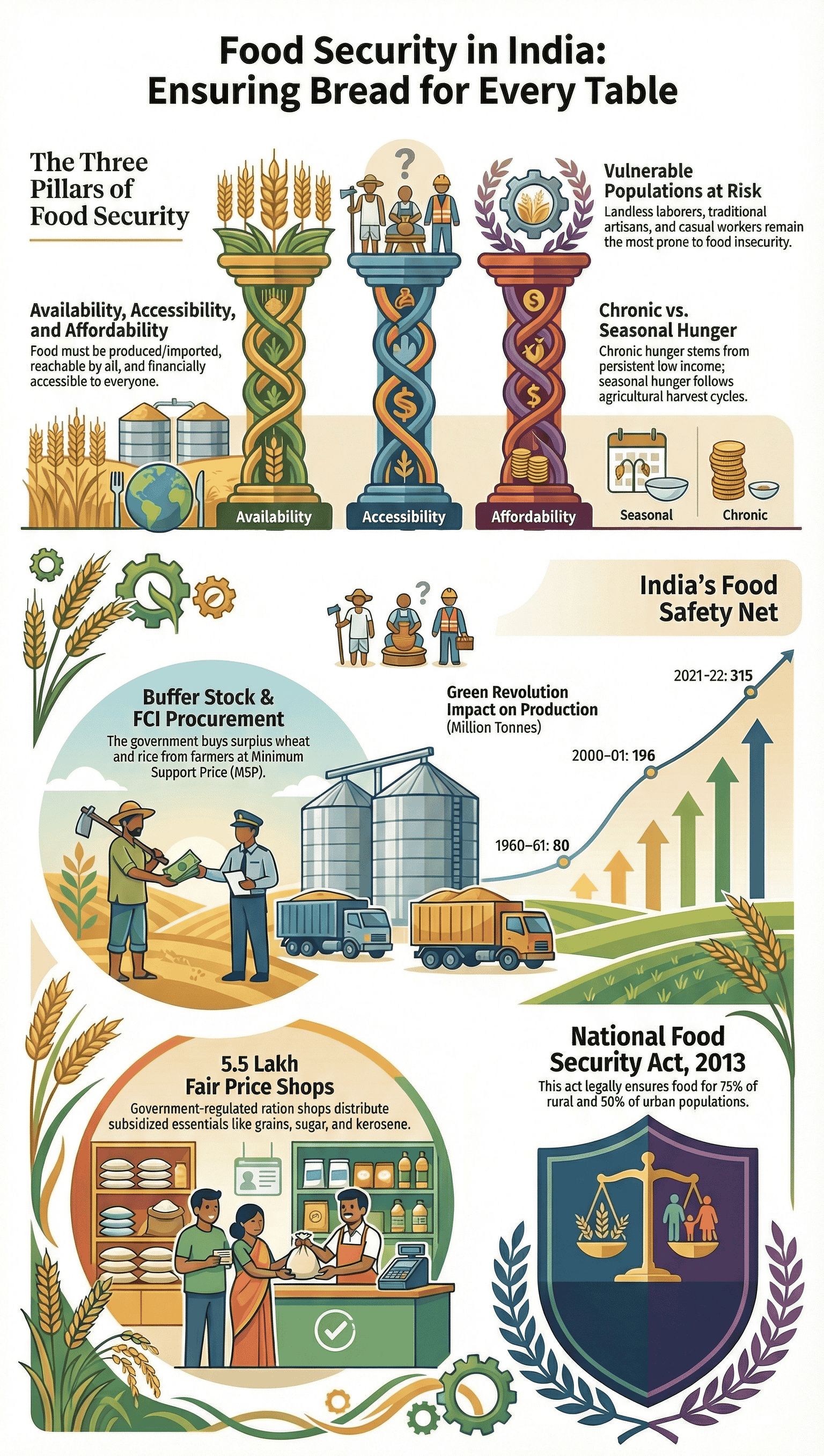
- Definition: Food security refers to the availability, accessibility, and affordability of food to all people at all times.
- Key Dimensions:
- Availability: Involves food production within the country, food imports, and stock stored in government granaries.
- Accessibility: Food is within reach of every person without barriers.
- Affordability: Individuals have enough money to buy sufficient, safe, and nutritious food.
- Vulnerability: Poor households are most vulnerable to food insecurity, especially during production failures or distribution problems.
Why is Food Security Necessary?
- Disaster Management: Even those above the poverty line can become food insecure during national disasters like earthquakes, droughts, floods, or tsunamis.
- Impact of Calamity:
- Natural calamities decrease total food production.
- Shortages lead to price spikes.
- High prices make food unaffordable for the poor, potentially leading to starvation.
- Famine: Massive starvation can turn into a famine, characterized by widespread deaths due to starvation and epidemics caused by contaminated water and decaying food.
- Historical Context: The Bengal Famine of 1943 was the most devastating in India, killing thirty lakh people. It primarily affected agricultural labourers, fishermen, and transport workers.
Who are the Food-Insecure?
- Rural Groups: Landless people, traditional artisans, providers of traditional services, and destitutes.
- Urban Groups: Families employed in ill-paid occupations and the casual labor market, often engaged in seasonal activities.
- Social Composition: SCs, STs, and sections of OBCs with poor land bases are more prone to food insecurity.
- Demographics: A high incidence of malnutrition exists among women and children (especially under 5 years old) and pregnant/nursing mothers.
- Regional Disparity: Food insecurity is higher in economically backward states like Uttar Pradesh (eastern/southeastern parts), Bihar, Jharkhand, Odisha, West Bengal, Chhattisgarh, and parts of Madhya Pradesh and Maharashtra.
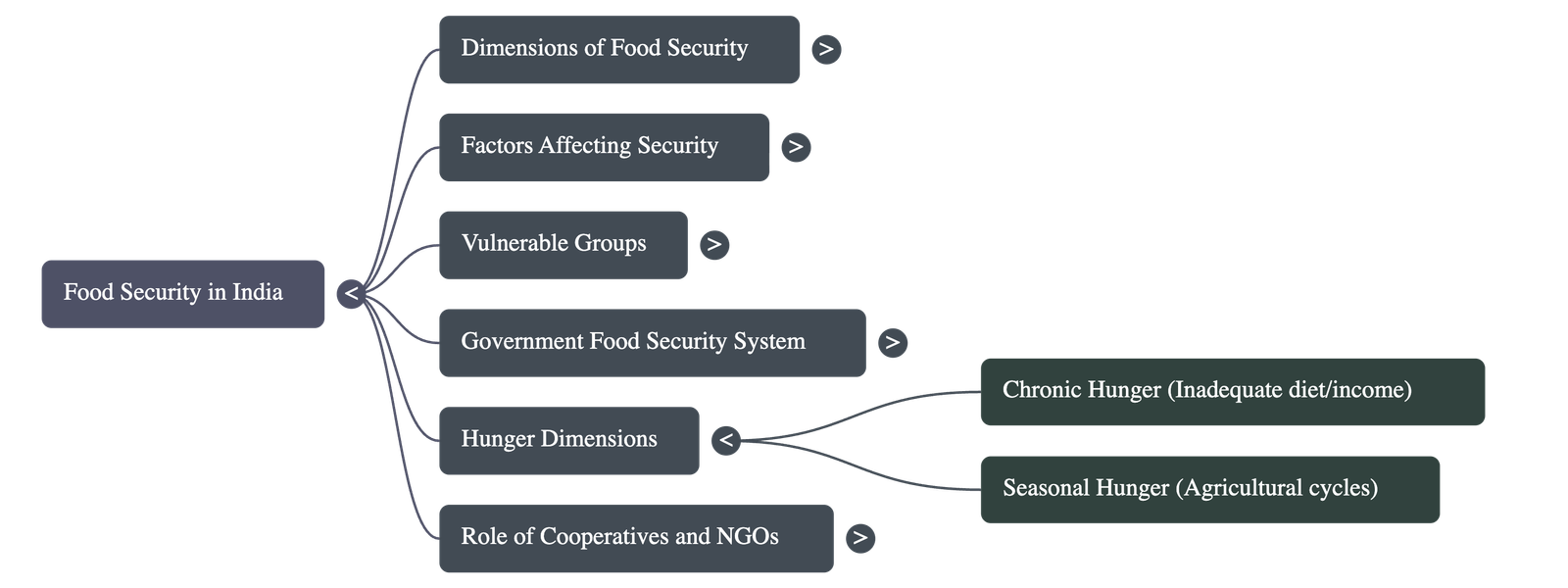
- Types of Hunger:
- Chronic Hunger: Consequence of persistently inadequate diets due to very low income.
- Seasonal Hunger: Related to cycles of food growing and harvesting (rural) or casual labor availability (urban). This has declined in India.
Food Security System in India
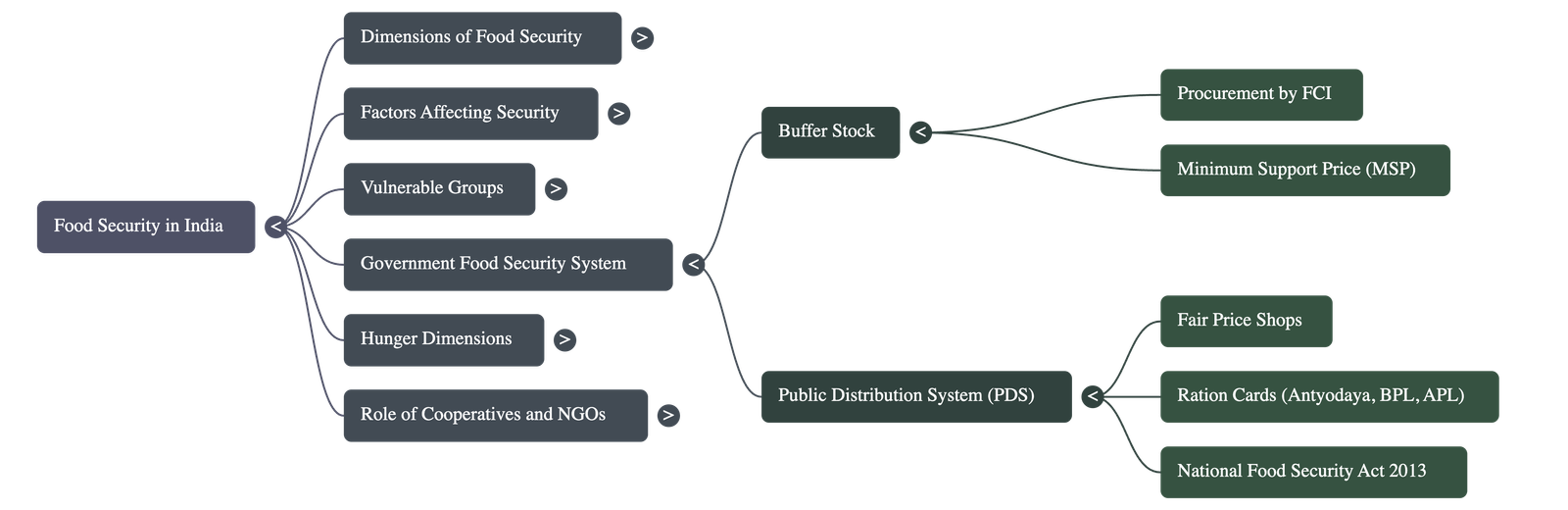
Since the Green Revolution in the 1970s, India has aimed for self-sufficiency in foodgrains and avoided famine. The government system consists of two main components:
1. Buffer Stock
- Maintained by the Food Corporation of India (FCI).
- Procurement: FCI buys wheat and rice from farmers in surplus states.
- Minimum Support Price (MSP): A pre-announced price paid to farmers to incentivize production.
- Purpose: To distribute foodgrains in deficit areas and to the poor at a lower price (Issue Price), and to resolve shortages during calamities.
2. Public Distribution System (PDS)
- Food procured by FCI is distributed through ration shops (Fair Price Shops).
- There are about 5.5 lakh ration shops across villages, towns, and cities.
- Items Sold: Foodgrains, sugar, and kerosene at prices lower than the market rate.
- Ration Cards: There are three kinds of cards: Antyodaya (poorest of the poor), BPL (Below Poverty Line), and APL (Above Poverty Line).
Government Schemes and Acts
- Evolution of PDS:
- Started in the 1940s (Bengal Famine context).
- Revived in the 1960s due to food shortages.
- RPDS (1992): Introduced in backward blocks.
- TPDS (1997): Targeted "poor in all areas" with differential pricing for poor and non-poor.
- Special Schemes (2000):
- Antyodaya Anna Yojana (AAY): Targeted the poorest of the BPL families, providing grain at highly subsidized rates (Rs 2/kg wheat, Rs 3/kg rice).
- Annapurna Scheme (APS): Targeted indigent senior citizens.
- National Food Security Act (NFSA), 2013: Provides for food and nutritional security at affordable prices. It covers 75% of the rural population and 50% of the urban population as eligible households.
Challenges and Issues
- Buffer Stock Issues: FCI godowns often overflow, leading to rotting grain and high carrying costs. Stocks have frequently exceeded minimum buffer norms.
- PDS Malpractices: Dealers may divert grain to the open market, sell poor quality grains, or keep shops closed irregularly.
- Impact of Pricing: With the three-tier price system (APL/BPL/AAY), APL prices are near market rates, reducing incentive for APL families to buy from ration shops.
- Agricultural Distortions: High MSP for wheat and rice has induced farmers in surplus states (Punjab, Haryana) to divert land from coarse grains (staple of the poor) to wheat/rice, leading to environmental degradation and water table depletion.
Role of Cooperatives
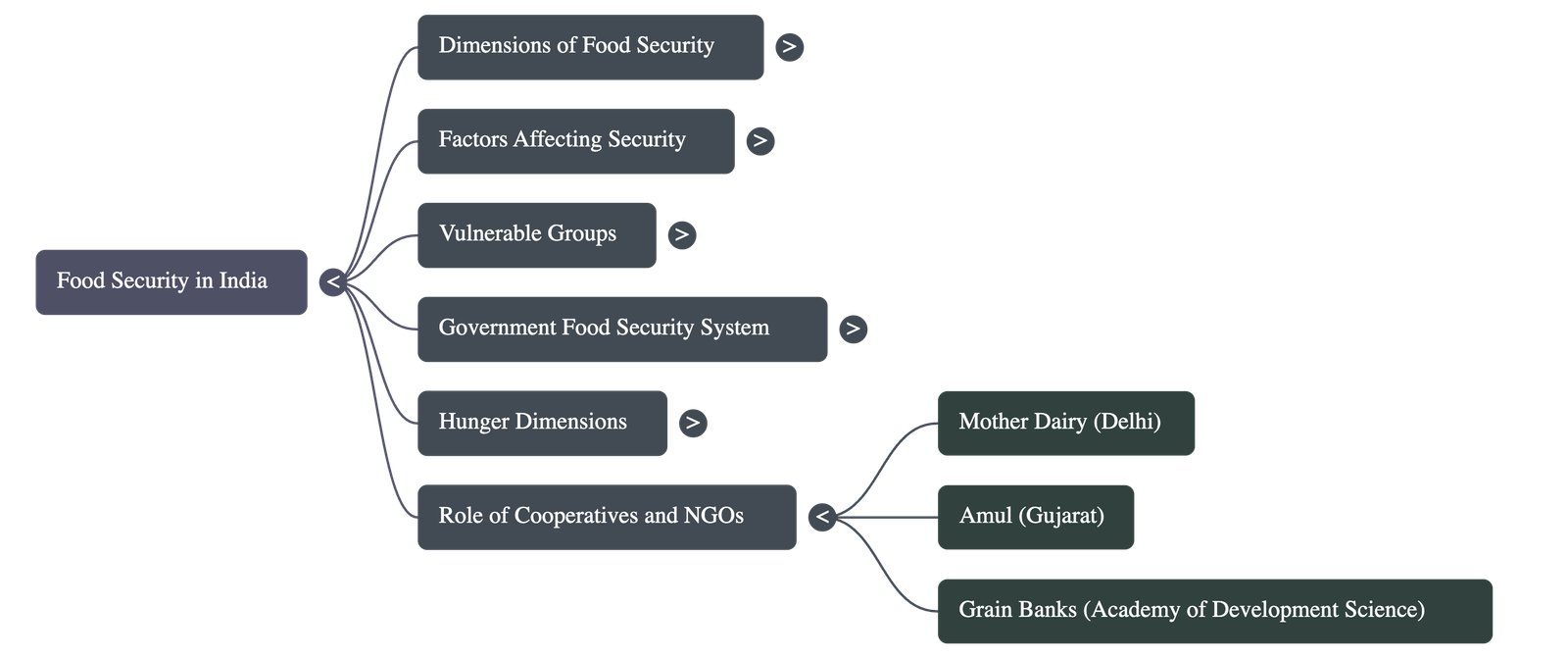
Cooperatives play a significant role in ensuring food security, particularly in southern and western India.
- Tamil Nadu: Around 94% of fair price shops are run by cooperatives.
- Delhi: Mother Dairy provides milk and vegetables at controlled rates.
- Gujarat: Amul is a success story in milk and milk products.
- Maharashtra: Academy of Development Science (ADS) has facilitated a network of NGOs to set up Grain Banks, recognized as a successful food security intervention.
Do checkout all questions & answers of this chapter.
Quick Navigation:
| | |
1 / 1
Quick Navigation:
| | |