Quick Navigation:
| | |
Poverty as a Challenge
Overview and Introduction
- Poverty is one of the most difficult challenges faced by independent India.
- It is a multi-dimensional problem that goes beyond just a lack of money.
- The NITI Aayog uses the Multidimensional Poverty Index (MPI) to analyze poverty.
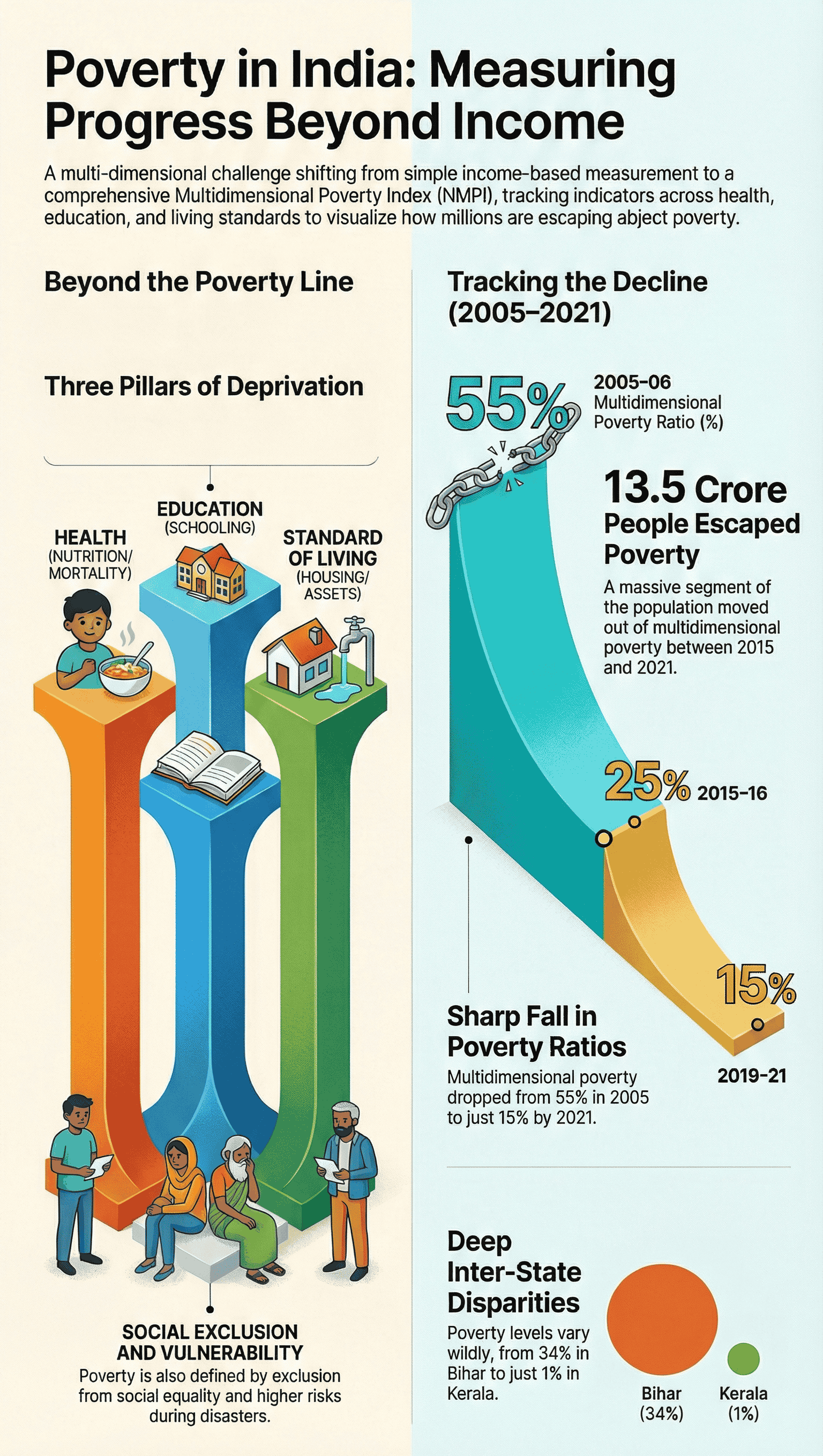
- Trend: The ratio of multidimensional poverty in India has significantly declined from approximately 55% in 2005–06 to 15% in 2019–21.
Dimensions of Poverty: Two Typical Cases
The chapter illustrates poverty through two case studies: Ram Saran (Urban) and Lakha Singh (Rural).
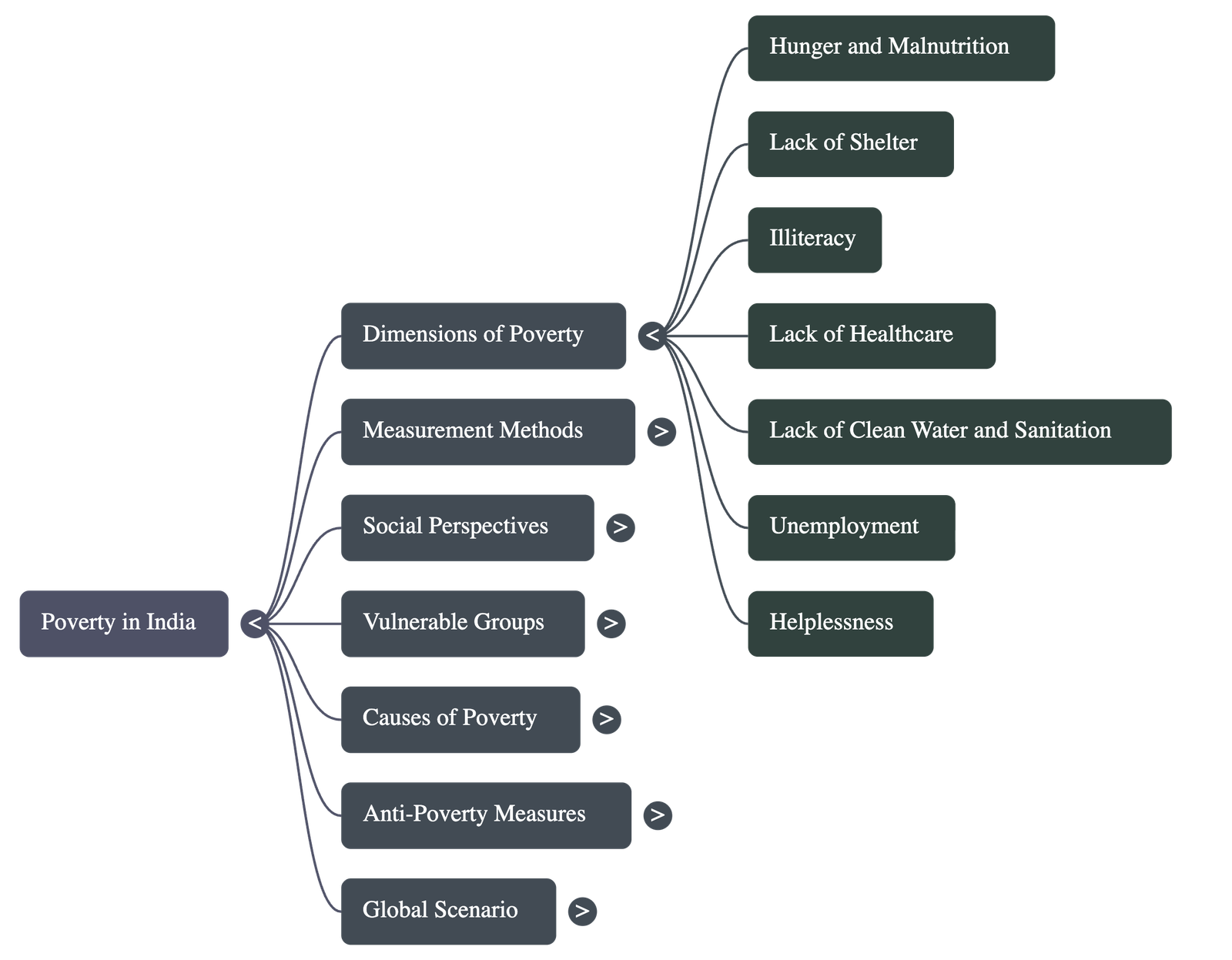
- Urban Poverty: Characterized by overcrowding (living in jhuggis), casual labor with irregular income, child labor to supplement income, and inability to afford education or healthcare.
- Rural Poverty: Characterized by landlessness, erratic work on farms, low wages (sometimes paid in kind), kuchha housing, and lack of basic amenities like soap or oil.
- Key Issues Highlighted:
- Hunger and lack of shelter.
- Inability to afford medical treatment.
- Lack of clean water and sanitation.
- Helplessness and ill-treatment in society.
Poverty as Seen by Social Scientists
Social scientists look at poverty through various indicators beyond just income and consumption:
- Social Exclusion: A process where the poor are excluded from facilities, benefits, and opportunities enjoyed by others. It is both a cause and a consequence of poverty (e.g., the caste system in India).
- Vulnerability: A measure of the probability of certain groups (like backward castes, widows, or the physically handicapped) becoming or remaining poor. It assesses their ability to handle risks like natural disasters or job loss.
The Poverty Line
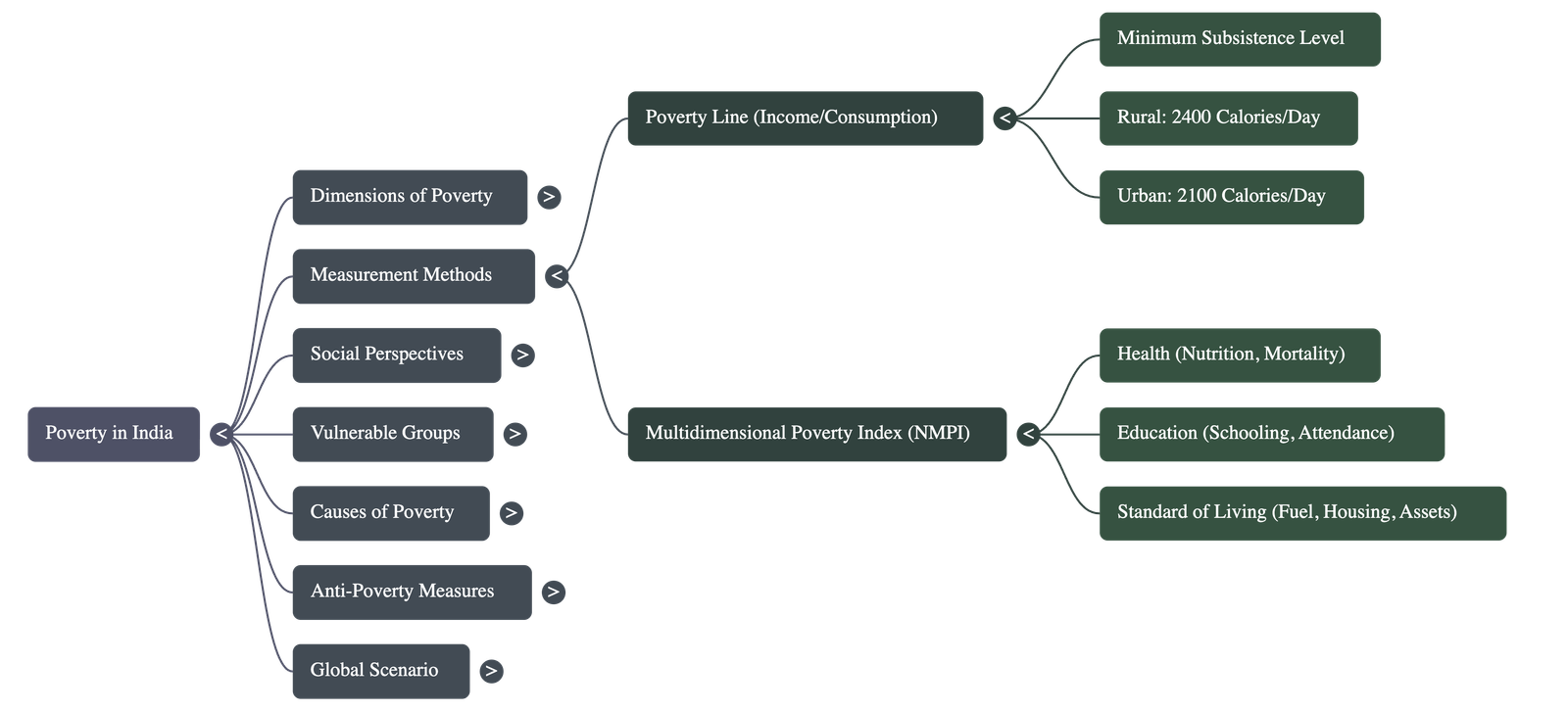
Each country uses an imaginary line to define poverty, appropriate for its development level.
- Determination in India: Based on a minimum level of food requirement, clothing, footwear, fuel, light, educational, and medical needs.
- Calorie Requirement: The formula is based on desired calorie intake:
- Rural Areas: 2400 calories per person per day (higher due to physical labor).
- Urban Areas: 2100 calories per person per day.
- Monetary Value: The physical quantities are multiplied by prices to determine the monetary poverty line, which is revised periodically.
National Multidimensional Poverty Index (NMPI)
NITI Aayog estimates poverty using 12 indicators across three sectors. If an individual is deprived in these, they are considered multidimensionally poor:
Health
- Nutrition
- Child-Adolescent Mortality
- Maternal Health
Education
- Years of Schooling
- School Attendance
Standard of Living
- Cooking Fuel, Sanitation, Drinking Water
- Housing, Electricity
- Assets, Bank Account
Poverty Estimates and Trends
- Decline in Poverty: Substantial decline in poverty ratios from 45% (1993-94) to 37% (2004-05).
- Recent Progress: About 13.5 crore people escaped multidimensional poverty between 2015-16 and 2019-21.
- Rural vs. Urban: Deprivation has declined more sharply in rural areas than in urban areas.
Vulnerable Groups
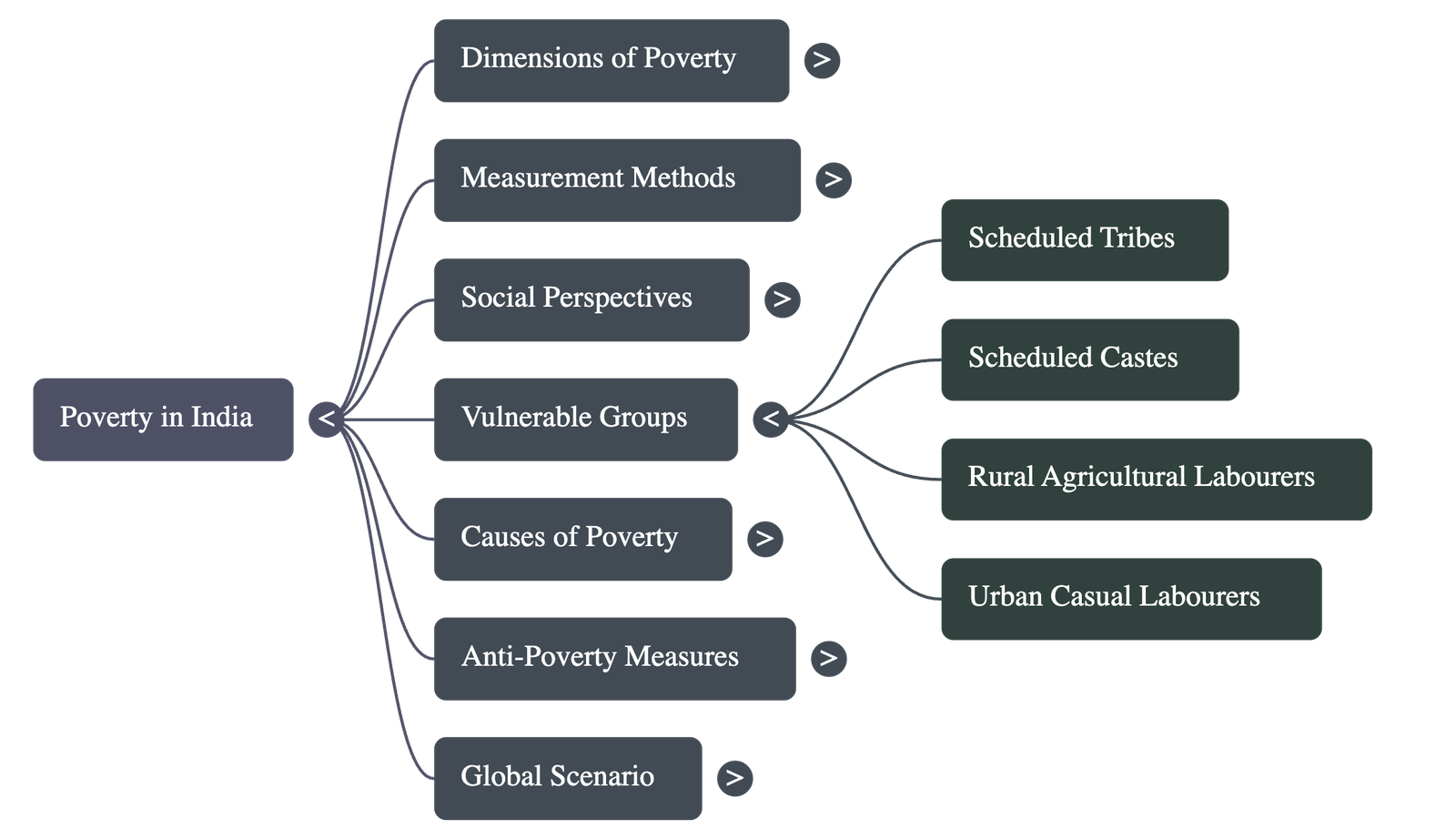
Poverty is not distributed equally among social and economic groups:
- Social Groups: Scheduled Tribes (ST) and Scheduled Castes (SC) are most vulnerable. 43 out of 100 ST members are unable to meet basic needs.
- Economic Groups: Rural agricultural labor households and urban casual labor households are the most vulnerable.
- Inequality within Families: Women, elderly people, and female infants are often denied equal access to resources, making them the "poorest of the poor."
Inter-State Disparities
The success rate of reducing poverty varies from state to state:
- High Poverty States: Bihar, Uttar Pradesh, Madhya Pradesh, and Rajasthan historically had high rates, though they have seen significant recent declines.
- Low Poverty States: Kerala, Tamil Nadu, Punjab, and Himachal Pradesh.
- Reasons for Success:
- Punjab/Haryana: High agricultural growth.
- Kerala: Focus on human resource development.
- West Bengal: Land reform measures.
- Andhra Pradesh/Tamil Nadu: Public distribution of food grains.
Global Poverty Scenario
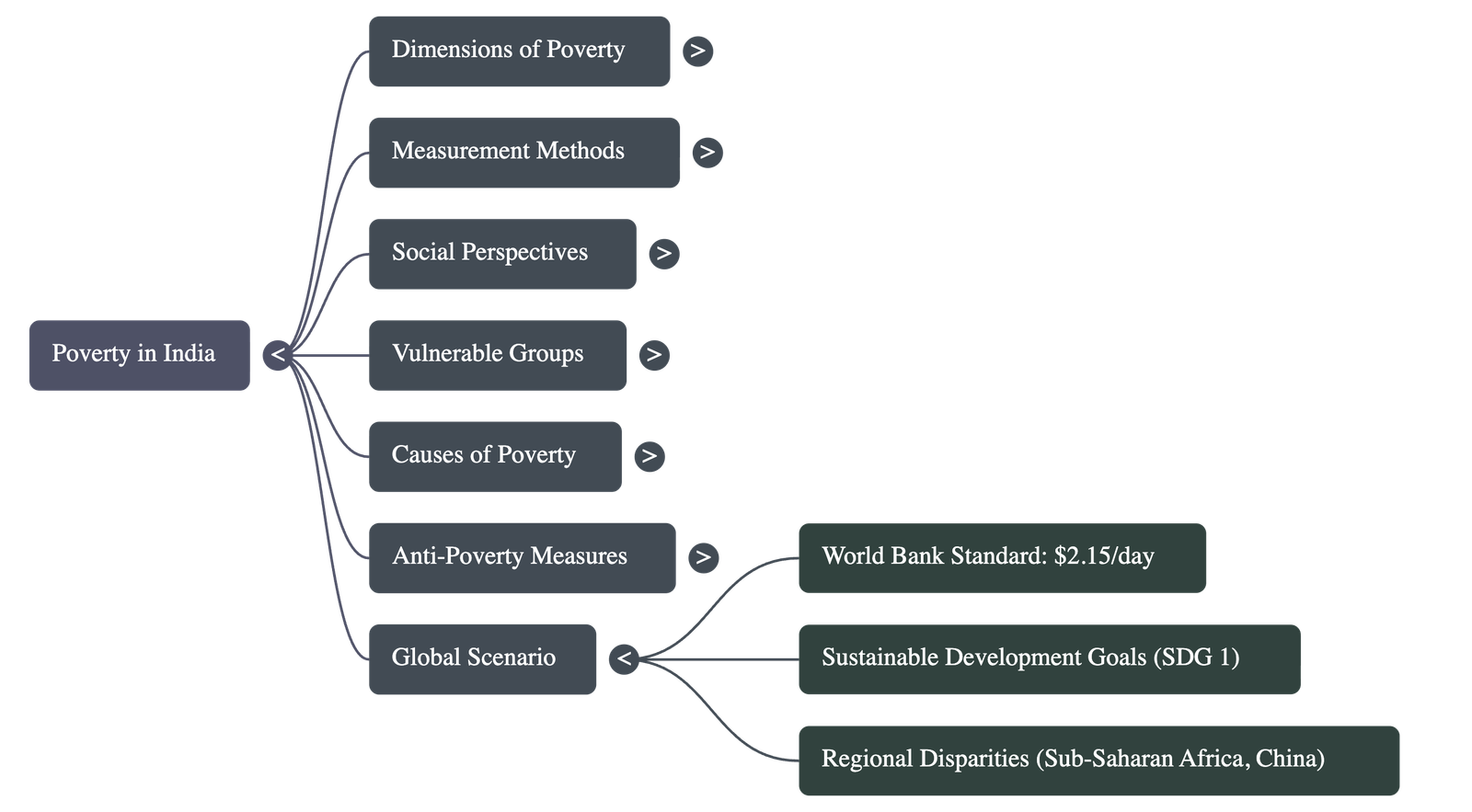
- World Bank Definition: Living on less than $2.15 per person per day.
- Global Decline: Extreme poverty fell from 16.27% (2010) to 9.05% (2019).
- Regional Differences:
- China/SE Asia: Rapid decline due to economic growth and investment in human capital.
- Sub-Saharan Africa: Poverty remains high, with forecasts suggesting most of the world's extreme poor will live here by 2030.
- Sustainable Development Goals (SDGs): The UN targets ending poverty in all forms by 2030.
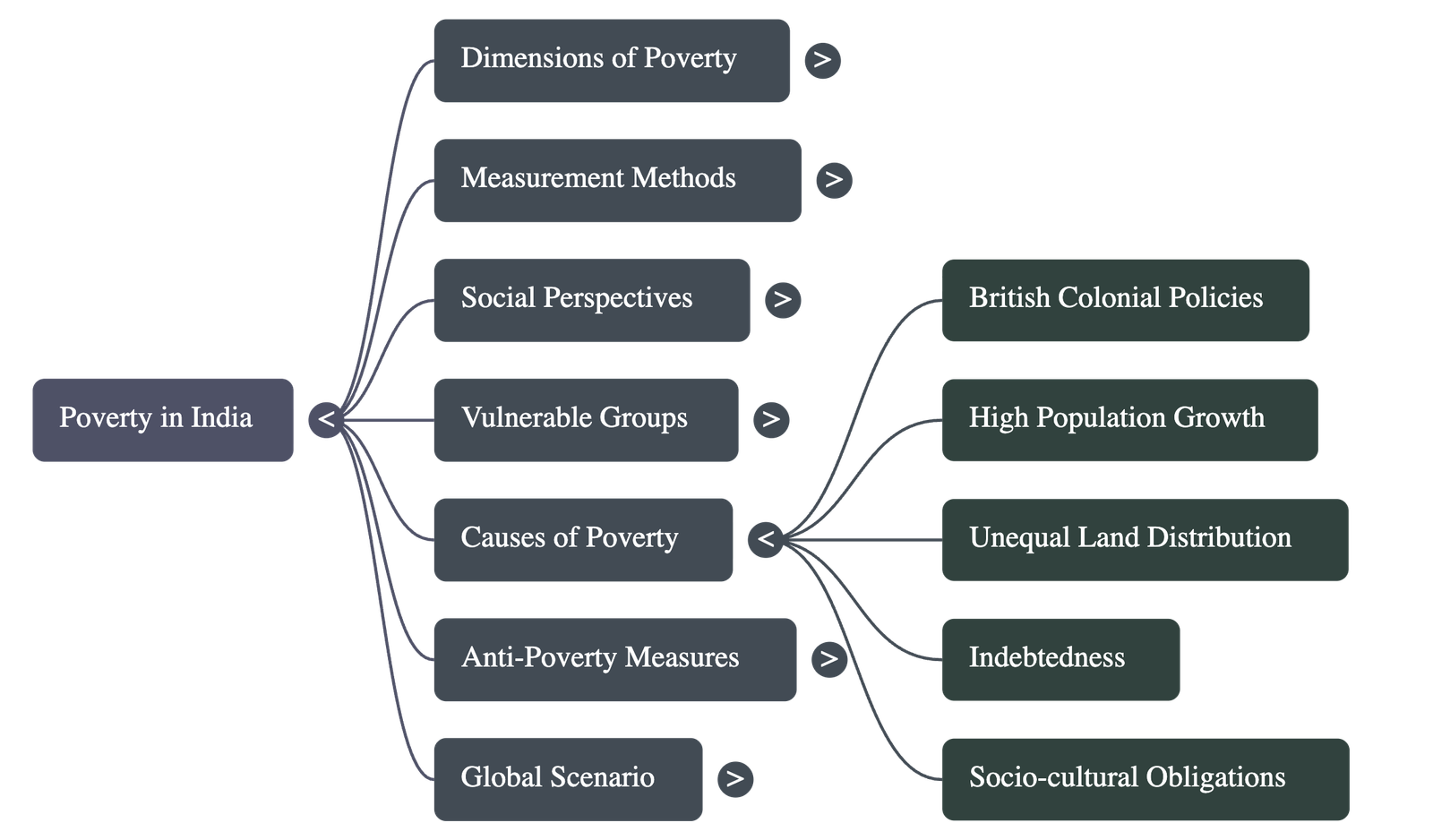
Causes of Poverty
- Historical: Low economic development under British administration; ruin of traditional handicrafts and textiles.
- Population Growth: High growth rate combined with low income growth until the 1980s.
- Limited Employment: Green Revolution impact was limited to certain areas; industries could not absorb all job seekers.
- Income Inequality: Unequal distribution of land and other resources; failure of land reforms in many states.
- Socio-Cultural Factors: Excessive spending on social obligations and religious ceremonies.
- Indebtedness: Small farmers borrow at high interest for inputs; inability to repay leads to a cycle of debt and poverty.
Anti-Poverty Measures
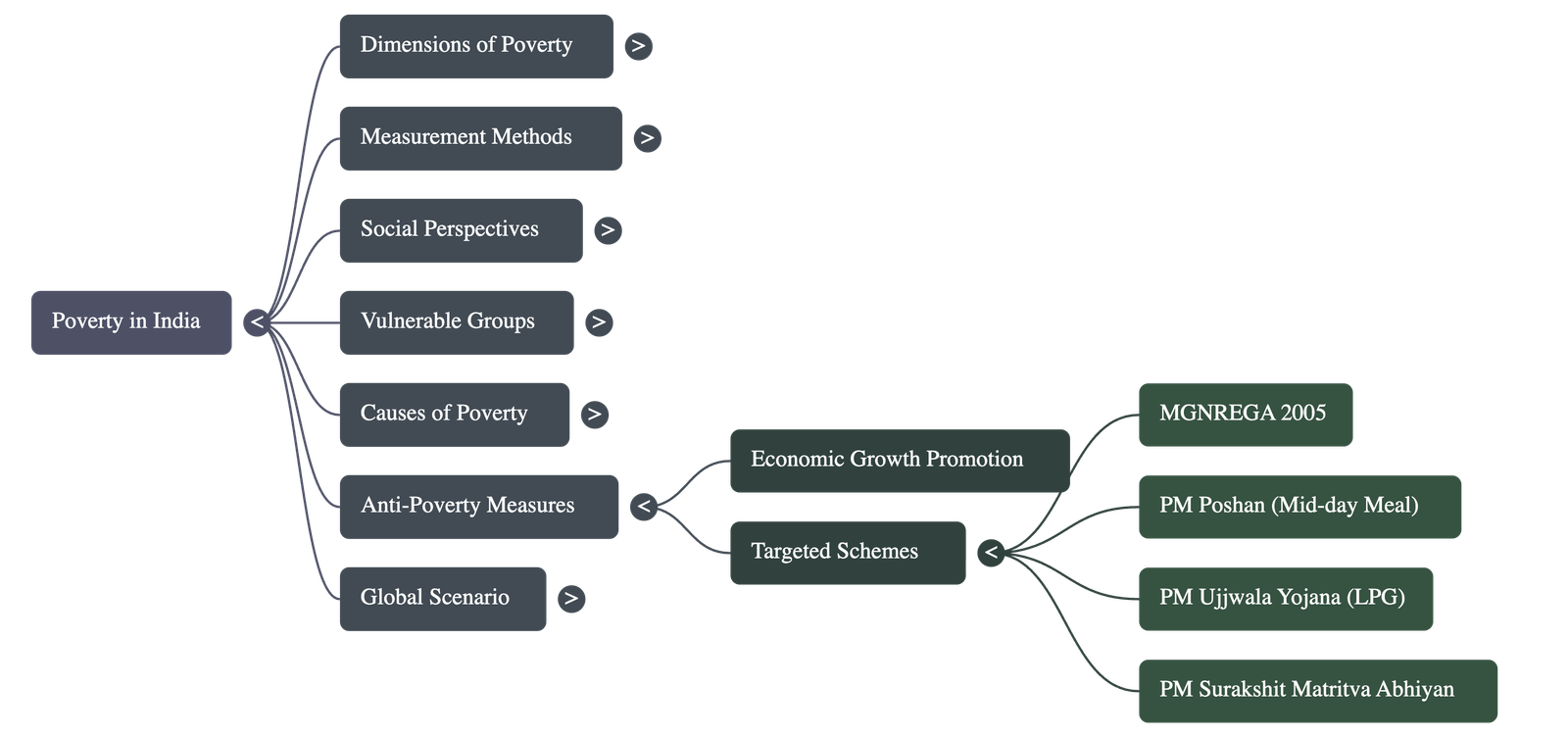
The government's strategy rests on two pillars: promotion of economic growth and targeted anti-poverty programs.
- Economic Growth: Strong link between growth and poverty reduction. Growth widens opportunities and provides resources for human development.
- Targeted Schemes:
- Mahatma Gandhi National Rural Employment Guarantee Act (MGNREGA) 2005: Guarantees 100 days of wage employment to every rural household. Reserves one-third of jobs for women.
- Pradhan Mantri Poshan Shakti Abhiyan (PM Poshan): Improves nutritional status of students and encourages school attendance.
- Pradhan Mantri Surakshit Matritva Abhiyan: Provides quality antenatal care to pregnant women to reduce maternal mortality.
- Pradhan Mantri Ujjwala Yojana (PMUY): Provides LPG connections to poor households (women) to ensure smoke-free kitchens and prevent health issues.
The Challenges Ahead
- Despite progress, poverty reduction remains a compelling challenge.
- Wide disparities exist between rural/urban areas and different states.
- Human Poverty: The definition of poverty needs to broaden beyond "subsistence" to a "reasonable level of living."
- Future goals include not just feeding people, but ensuring education, shelter, healthcare, job security, self-confidence, and freedom from caste/gender discrimination.
Do checkout all questions & answers of this chapter.
Quick Navigation:
| | |
1 / 1
Quick Navigation:
| | |