Quick Navigation:
| | |
Chapter 3: Electoral Politics
Overview
This chapter explores why elections are necessary in a democracy, how the electoral system works in India, and the factors that ensure elections are free and fair.
1. Why Do We Need Elections?
- Mechanism of Democracy: In large communities, it is impossible for all people to sit together daily to make decisions. Therefore, people rule through elected representatives.
- Purpose of Elections: Elections are a mechanism by which people can choose their representatives at regular intervals and change them if they wish.
- Voter Choices: Through elections, voters decide:
- Who will make laws for them.
- Who will form the government and take major decisions.
- Which party’s policies will guide the government.
2. What Makes an Election Democratic?
Many countries hold elections, but not all are democratic. The minimum conditions for a democratic election are:
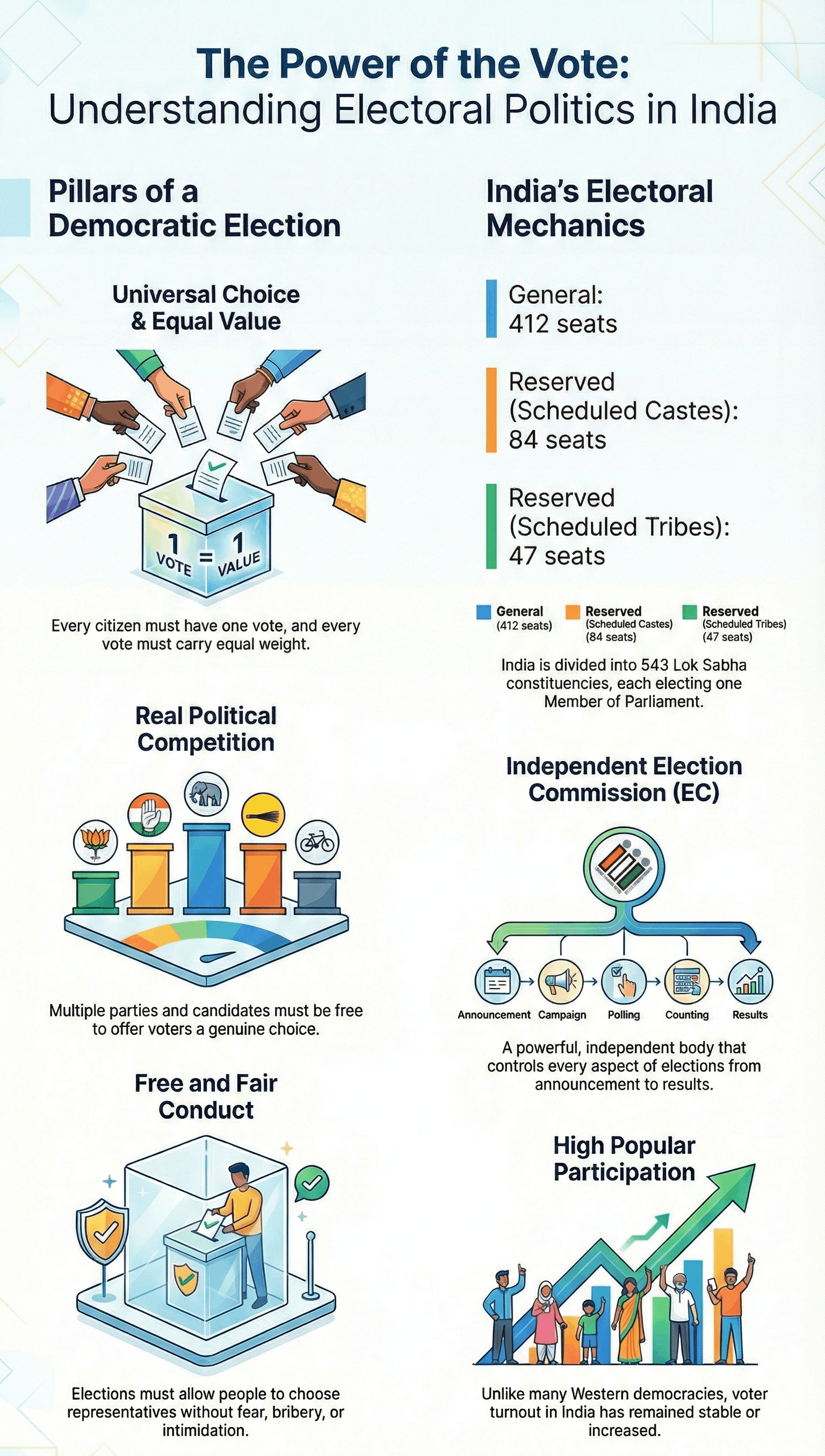
- One Vote, One Value: Everyone should be able to choose; every person has one vote, and every vote has equal value.
- Real Choice: Parties and candidates should be free to contest and offer real alternatives to voters.
- Regular Intervals: Elections must be held regularly every few years.
- Preferred Candidate Wins: The candidate preferred by the people should get elected.
- Free and Fair: Elections should be conducted in a free and fair manner where people can vote without fear.
3. Political Competition
- The Reality of Competition: Elections are all about political competition. While it can create disunity, factionalism, and the use of "dirty tricks," it is considered necessary.
- Incentive System: Political competition works like a market. Leaders are motivated by the desire to remain in power. To do so, they must serve the people. If they fail to satisfy voters, they will not be elected again.
4. The System of Elections in India
A. Electoral Constituencies
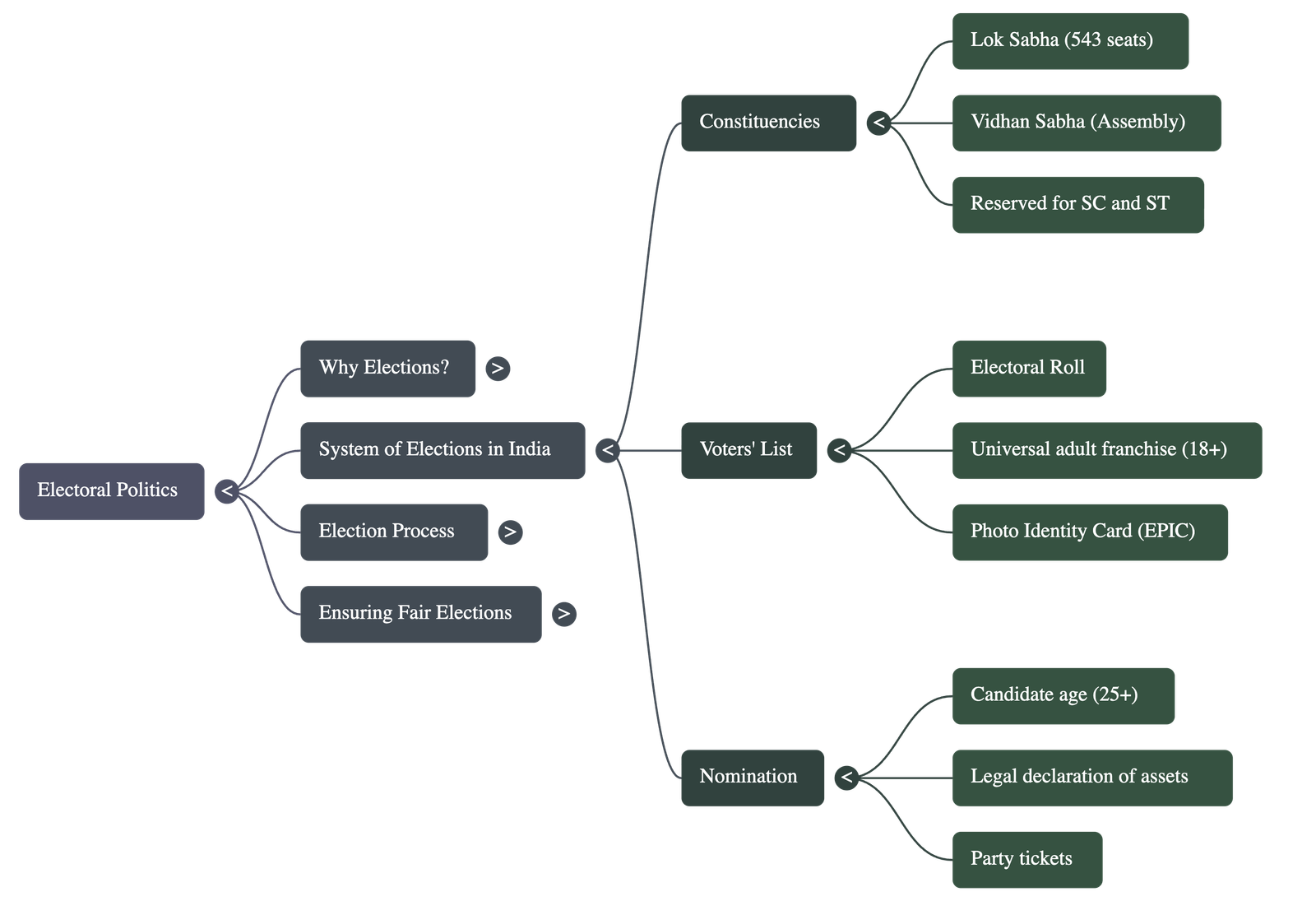
- India uses an area-based system of representation. The country is divided into different areas called constituencies.
- Lok Sabha: For national elections, the country is divided into 543 constituencies. The elected representative is called a Member of Parliament (MP).
- Vidhan Sabha: States are divided into Assembly constituencies. The elected representative is a Member of Legislative Assembly (MLA).
B. Reserved Constituencies
- To ensure weaker sections are represented, the Constitution provides for reserved constituencies.
- In these constituencies, only people belonging to Scheduled Castes (SC) or Scheduled Tribes (ST) can contest.
- Currently, in the Lok Sabha, 84 seats are reserved for SCs and 47 for STs.
- This system also applies to local bodies (Panchayats and Municipalities) for Other Backward Classes (OBC) and women (one-third of seats).
C. Voters’ List (Electoral Roll)
- Universal Adult Franchise: All citizens aged 18 years and above have the right to vote regardless of caste, religion, or gender.
- The list of eligible voters is prepared and revised before elections to remove names of those who died or moved and add new voters.
- EPIC: The Election Photo Identity Card has been introduced to prevent impersonation, though other proofs like ration cards are also accepted.
D. Nomination of Candidates
- Anyone who can vote can also become a candidate, provided they are at least 25 years old.
- Parties nominate candidates (give them a "ticket") and support them with the party symbol.
- Legal Declaration: Under Supreme Court direction, every candidate must file an affidavit declaring:
- Serious criminal cases pending against them.
- Details of assets and liabilities of the candidate and family.
- Educational qualifications.
- There is no educational qualification requirement for MPs or MLAs, as the key qualification is the ability to understand and represent people's concerns.
E. Election Campaign
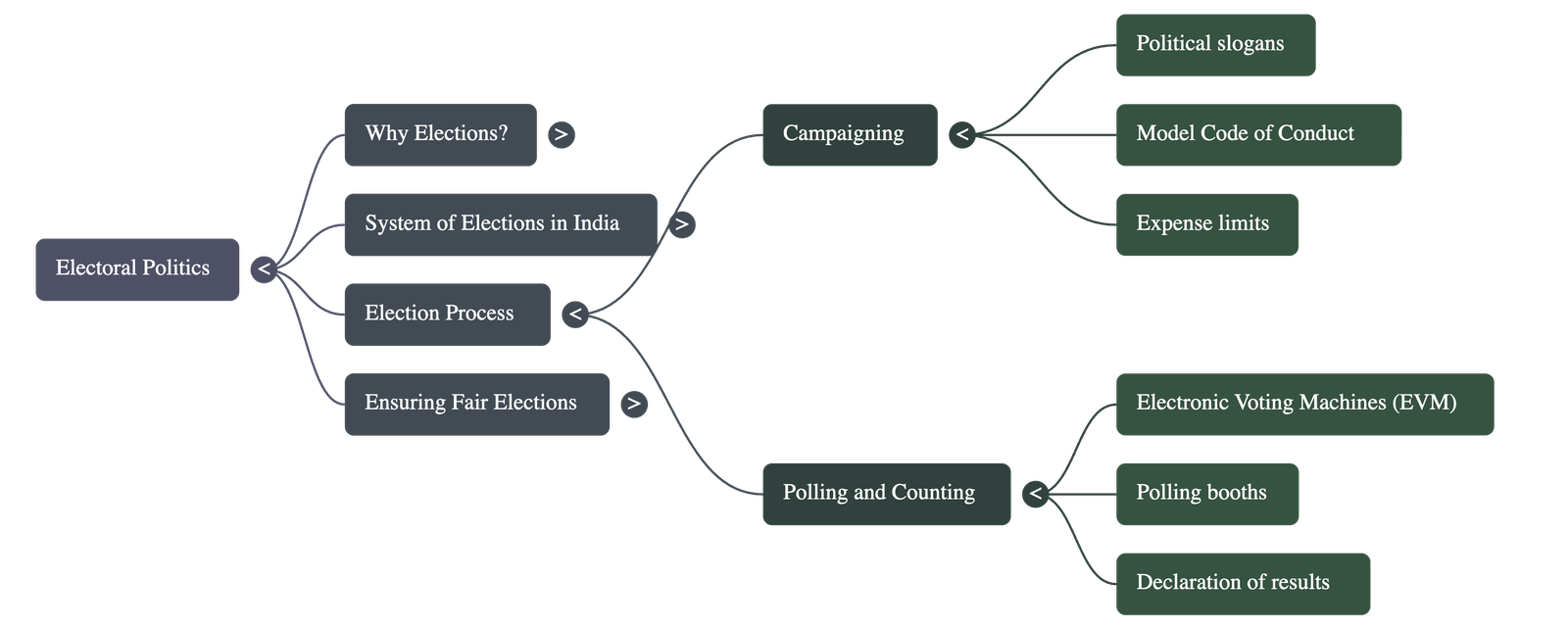
- Campaigns take place for a two-week period between the announcement of the final list of candidates and the polling date.
- Model Code of Conduct: Political parties have agreed to a code whereby they cannot:
- Use places of worship for propaganda.
- Use government vehicles, aircraft, or officials for elections.
- Make new policy decisions or lay foundation stones once elections are announced.
- Bribe or threaten voters.
- Expenditure Limits: Strict limits exist on how much a candidate can spend in a constituency.
F. Polling and Counting
- Voters cast their vote at polling booths using Electronic Voting Machines (EVMs).
- Agents of candidates sit inside booths to ensure fair voting.
- Votes are counted on a fixed date, and the candidate with the highest number of votes is declared elected.
5. What Makes Elections in India Democratic?
A. Independent Election Commission (EC)
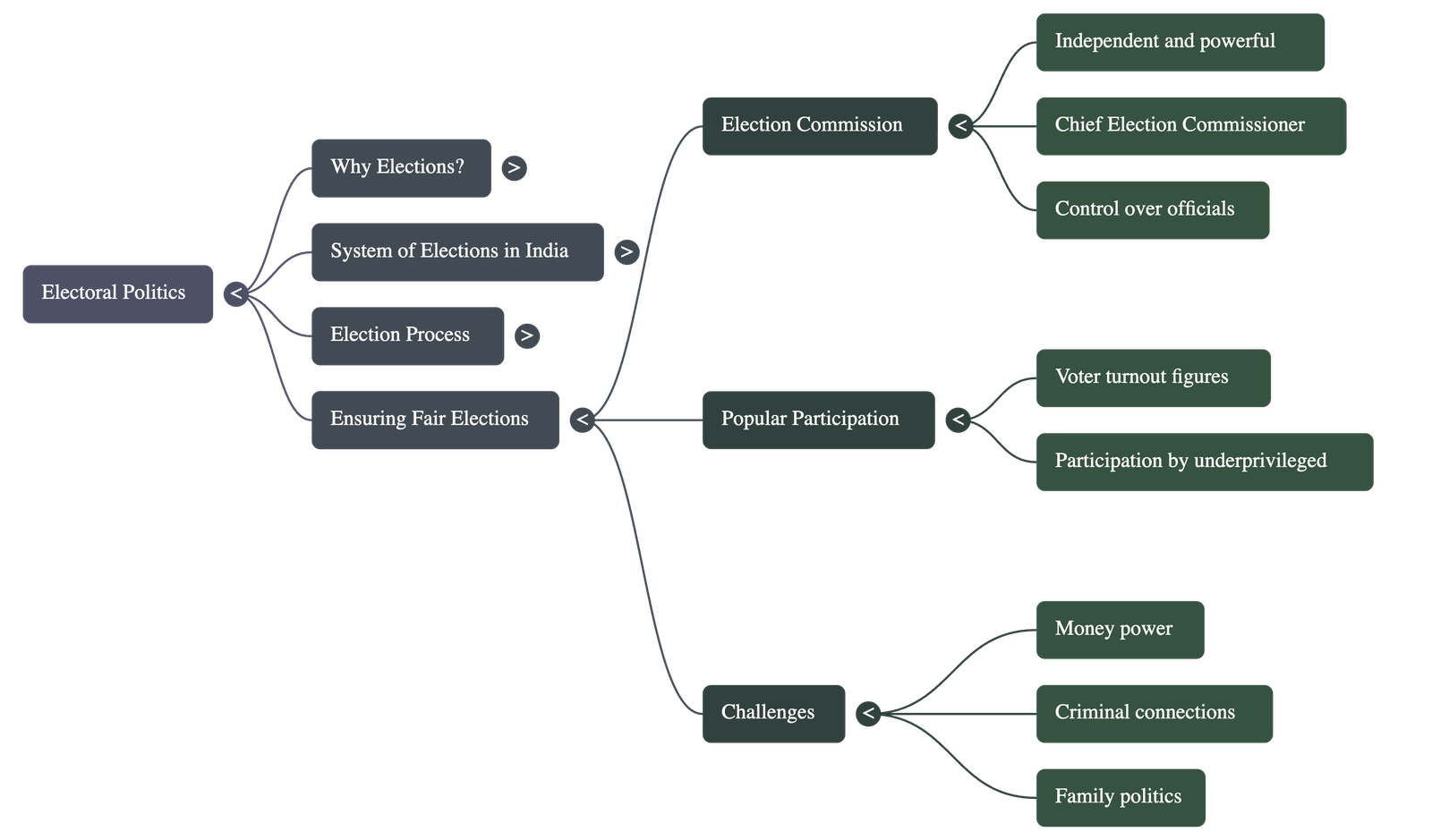
- The Chief Election Commissioner (CEC) is appointed by the President but is not answerable to the President or government thereafter.
- The EC has wide-ranging powers to conduct elections, implement the Code of Conduct, and punish violations. It can order a repoll if polling is not fair.
B. Popular Participation
- Voter turnout in India has remained stable or increased, unlike in the West where it has declined.
- In India, poor, illiterate, and underprivileged people vote in larger proportions compared to the rich and privileged.
- Common people attach great importance to elections, believing their vote matters.
C. Acceptance of Election Outcome
- Ruling parties routinely lose elections in India (both national and state).
- About half of sitting MPs and MLAs often lose elections.
- Electoral outcomes are usually accepted as the "people’s verdict" by the defeated party, which proves elections are generally free and fair.
6. Challenges to Free and Fair Elections
Despite being democratic, the system faces limitations:
- Money Power: Candidates and parties with excessive money enjoy an unfair advantage.
- Criminal Connection: Candidates with criminal backgrounds sometimes push others out of the race to secure tickets.
- Dynastic Politics: Some families dominate parties, and tickets are distributed to relatives.
- Lack of Choice: Major parties often have similar policies and practices, offering little real choice to voters.
- Disadvantage for Independents: Smaller parties and independent candidates suffer huge disadvantages compared to big parties.
Do checkout all questions & answers of this chapter.
Quick Navigation:
| | |
1 / 1
Quick Navigation:
| | |