Quick Navigation:
| | |
What is Democracy? Why Democracy?
1. What is Democracy?
The chapter begins by defining democracy to distinguish it from other forms of government.
- Simple Definition: Democracy is a form of government in which the rulers are elected by the people.
- Utility of the Definition: This definition helps separate democracies from non-democracies:
- Myanmar: Army rulers were not elected by the people.
- Chile (under Pinochet): Dictators are not elected by the people.
- Saudi Arabia: Monarchs rule by birthright, not by the people's choice.
- Limitation: This definition is insufficient because many non-democratic governments hold elections to appear democratic. A deeper understanding of the specific features is required.
2. Features of Democracy
To differentiate a real democracy from a pretend one, the chapter outlines four key features.
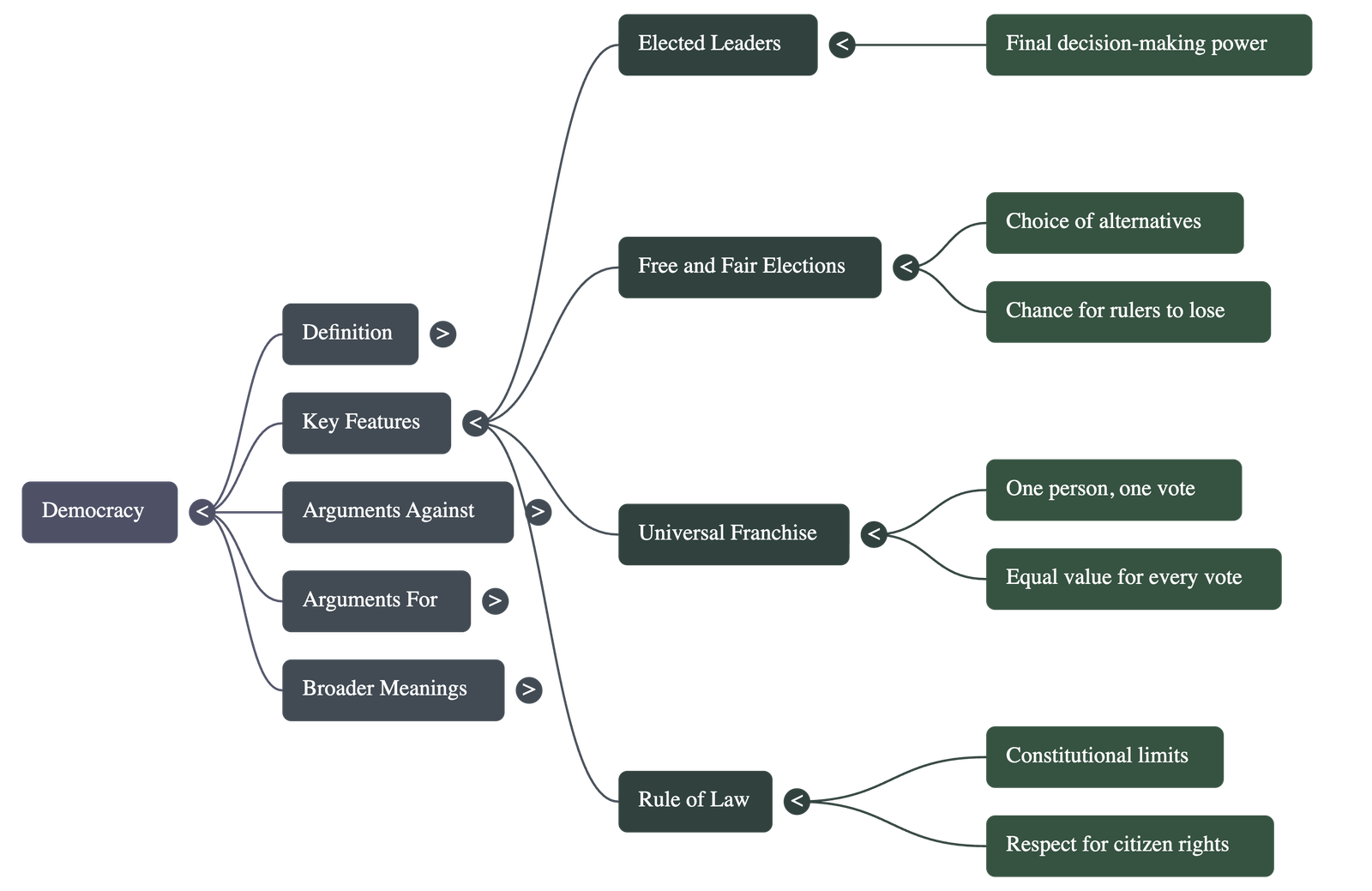
Feature 1: Major Decisions by Elected Leaders
- In a democracy, the final decision-making power must rest with those elected by the people.
- Case Study (Pakistan): General Pervez Musharraf led a military coup in 1999. He later held a referendum based on fraud to grant himself an extension. Although Pakistan had elected assemblies, the final power rested with military officers and Musharraf, who were not elected. Therefore, it was not a true democracy.
Feature 2: Free and Fair Electoral Competition
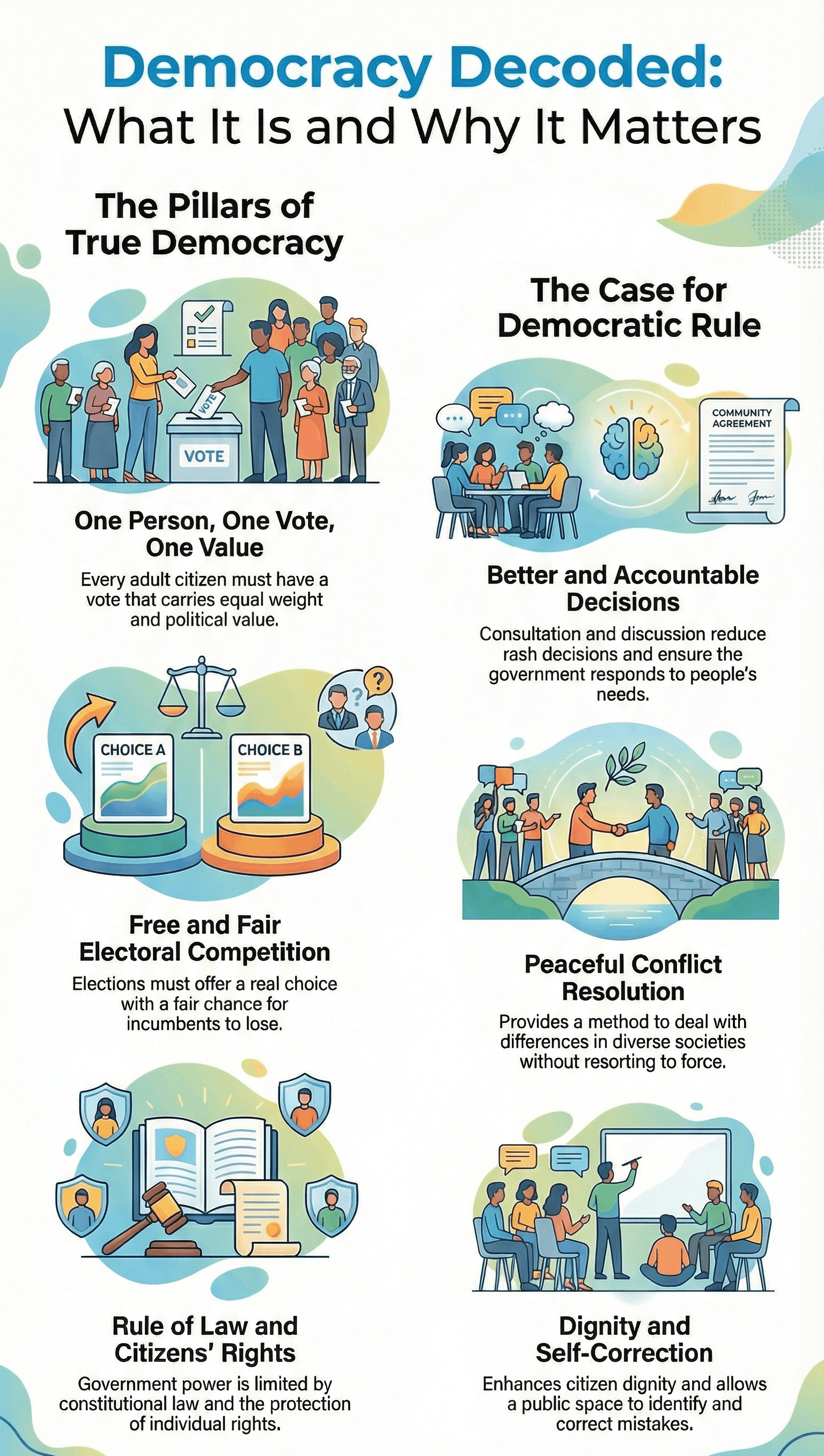
- A democracy must be based on a free and fair election where those currently in power have a fair chance of losing.
- Case Study (China): Elections are held regularly, but candidates need the approval of the Chinese Communist Party. The government is always formed by the Communist Party, offering no real choice to the people.
- Case Study (Mexico): Until 2000, every election was won by the PRI party. Opposition parties contested but never won because the PRI used dirty tricks, forced government employees to attend meetings, and manipulated polling booths. This was not a fair election.
Feature 3: One Person, One Vote, One Value
- In a democracy, each adult citizen must have one vote and each vote must have one value. This is based on the principle of political equality.
- Instances of Denial:
- Saudi Arabia: Women did not have the right to vote until 2015.
- Estonia: Citizenship rules made it difficult for the Russian minority to get voting rights.
- Fiji: The vote of an indigenous Fijian had more value than that of an Indian-Fijian.
Feature 4: Rule of Law and Respect for Rights
- A democratic government rules within limits set by constitutional law and citizens’ rights.
- Case Study (Zimbabwe): Robert Mugabe and his party ZANU-PF ruled since independence. While popular, they used unfair practices. The constitution was changed to increase presidential powers, opposition workers were harassed, and public protests were declared illegal. The state did not respect the basic rights of citizens or the judiciary.
3. Why Democracy? (Debating Merits)
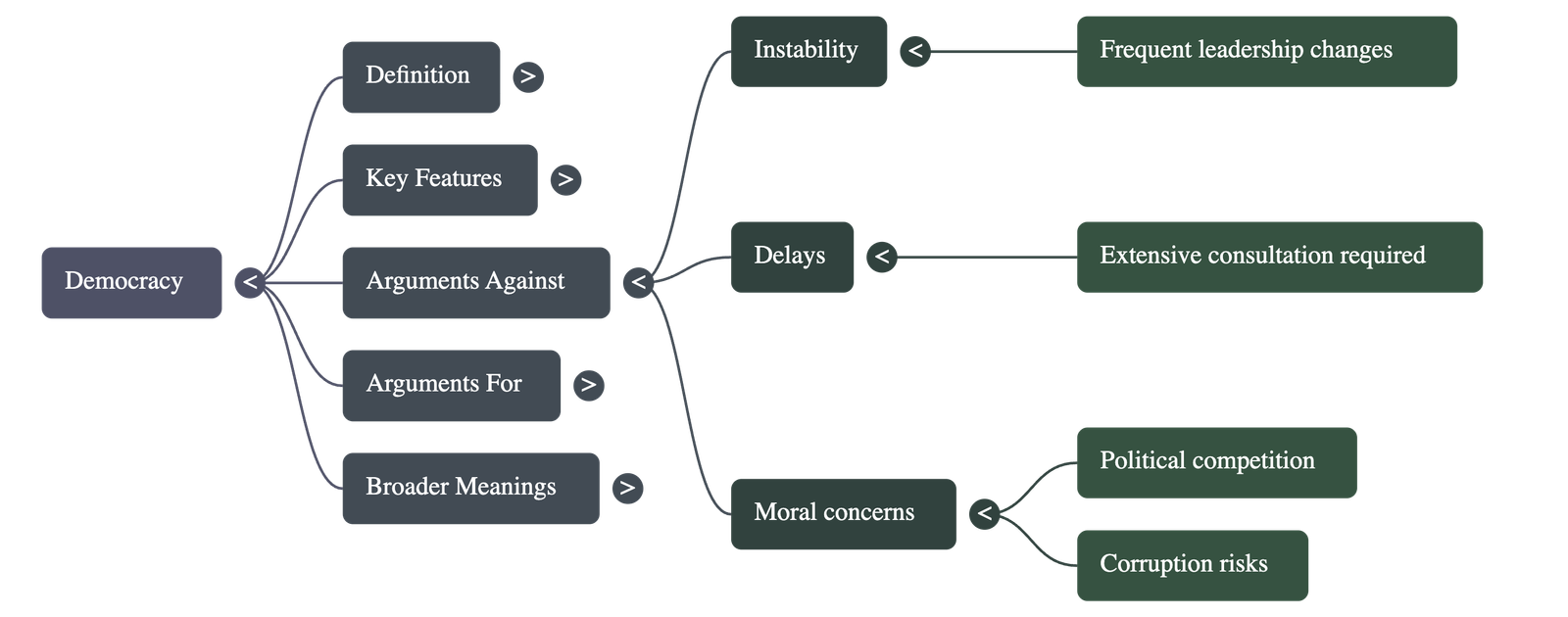
Arguments Against Democracy
- Instability: Leaders keep changing, leading to instability.
- No Morality: It is all about political competition and power play.
- Delays: Consultation with many people leads to delays in decision-making.
- Bad Decisions: Elected leaders may not know the best interests of the people.
- Corruption: Electoral competition often leads to corruption.
Arguments For Democracy
- Accountability: A democratic government is a better government because it is a more accountable form of government.
Example: The China famine of 1958-61 killed nearly 3 crore people. India, despite a similar economic condition, did not suffer such a famine because its democratic government had to respond to food scarcity. - Quality of Decision Making: Democracy involves consultation and discussion. While slower, it reduces the chances of rash or irresponsible decisions.
- Conflict Resolution: It provides a method to deal with differences and conflicts. In a diverse country like India, democracy allows different groups to live together peacefully as no one is a permanent winner or loser.
- Dignity of Citizens: Democracy is based on political equality. The poorest and least educated have the same status as the rich. Citizens are not subjects but rulers themselves.
- Correcting Mistakes: Democracy allows for its own mistakes to be corrected. Public discussion on mistakes is possible, and rulers can be changed if they do not change their decisions.
4. Broader Meanings of Democracy
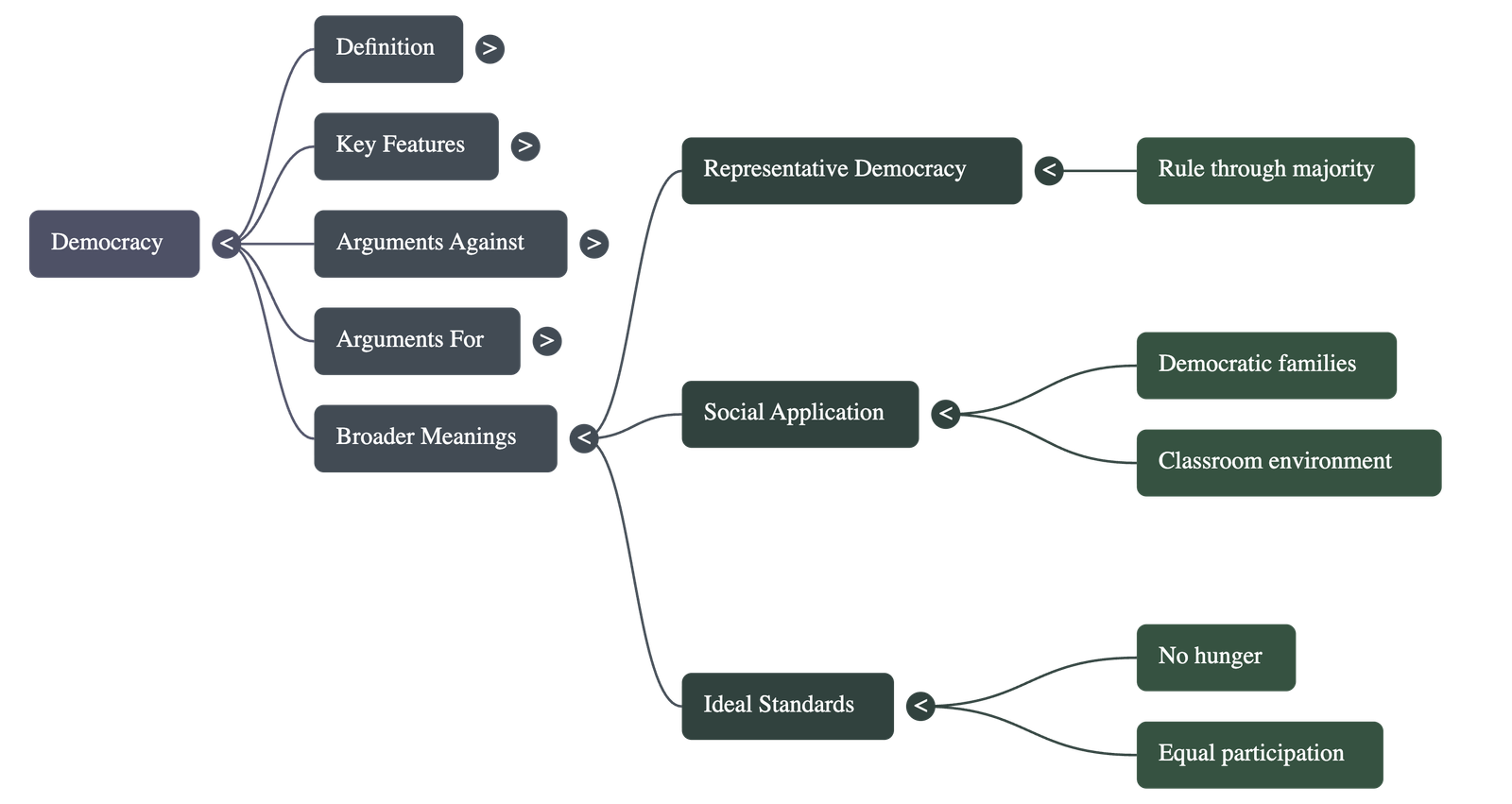
- Representative Democracy: The most common form today. The majority rules through elected representatives because modern populations are too large to sit together, and citizens may not have the time or skills for every decision.
- Beyond Government: The principle of democracy (consultation and consent) can apply to any organization, including families, classrooms, and political parties.
- Democracy as an Ideal: The word is sometimes used to set an ideal standard (e.g., "True democracy will come only when no one goes hungry"). This ideal helps citizens judge existing democracies and strive for improvement.
- Active Citizenship: The fate of a democratic country depends significantly on the active participation of its citizens, not just the rulers.
Do checkout all questions & answers of this chapter.
Quick Navigation:
| | |
1 / 1
Quick Navigation:
| | |