Quick Navigation:
| | | |
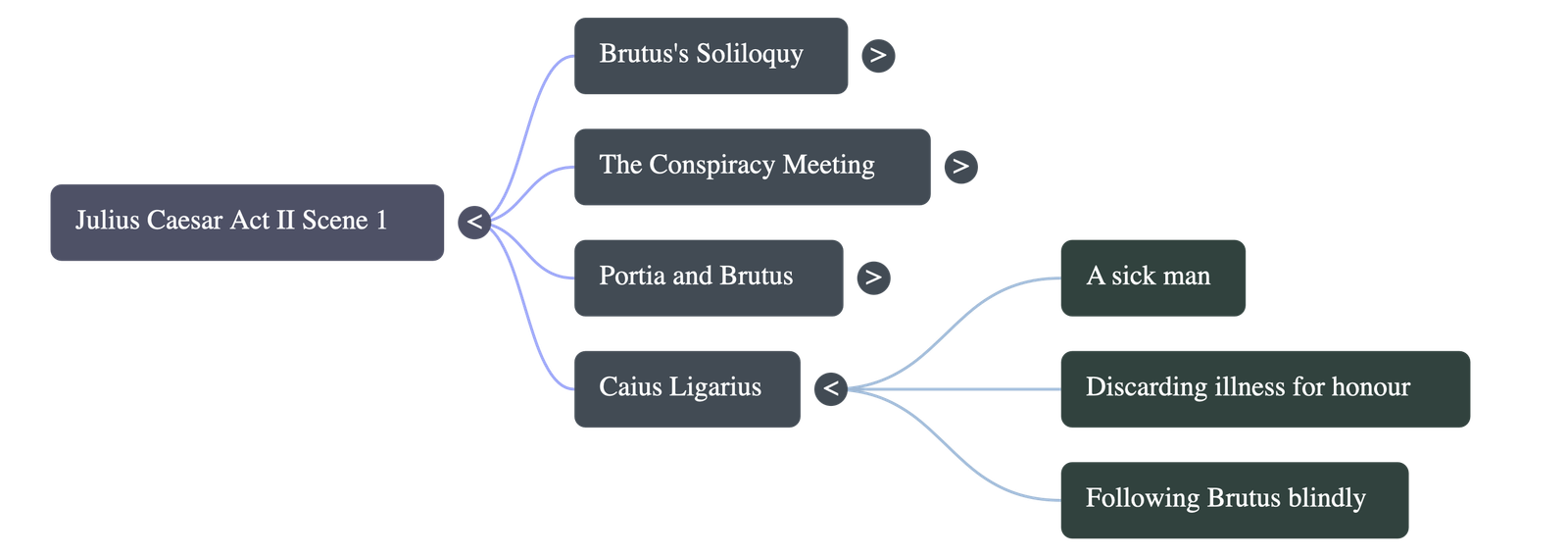
Julius Caesar: Act 2, Scene 1
A detailed, point-wise summary of the events taking place in Brutus's orchard late at night, leading up to the assassination plot against Caesar.
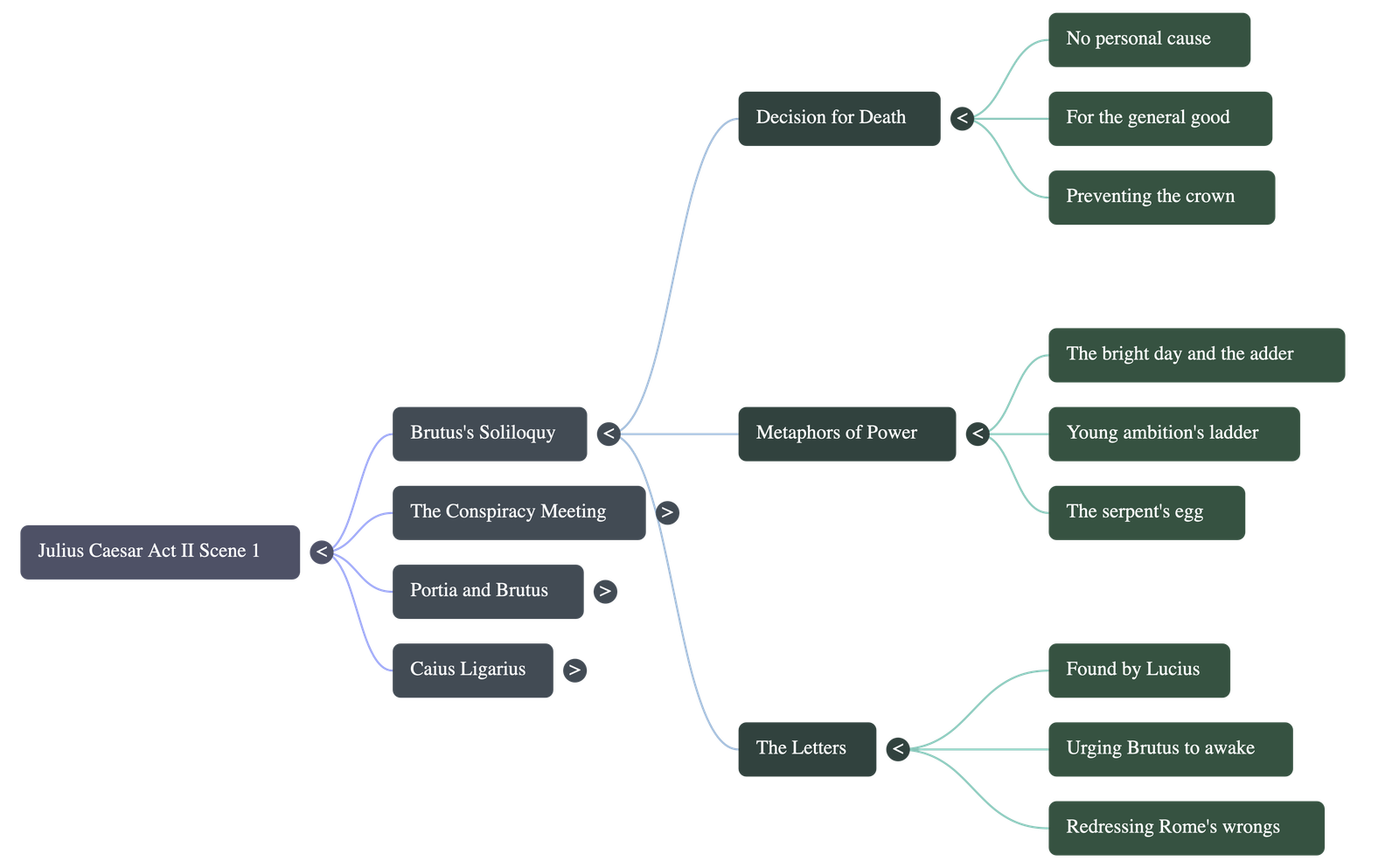
1. Brutus's Inner Conflict (The Soliloquy)
- The scene opens late at night in Brutus's garden. Brutus is restless, awake, and deeply troubled. He asks his servant, Lucius, to light a candle in his study.
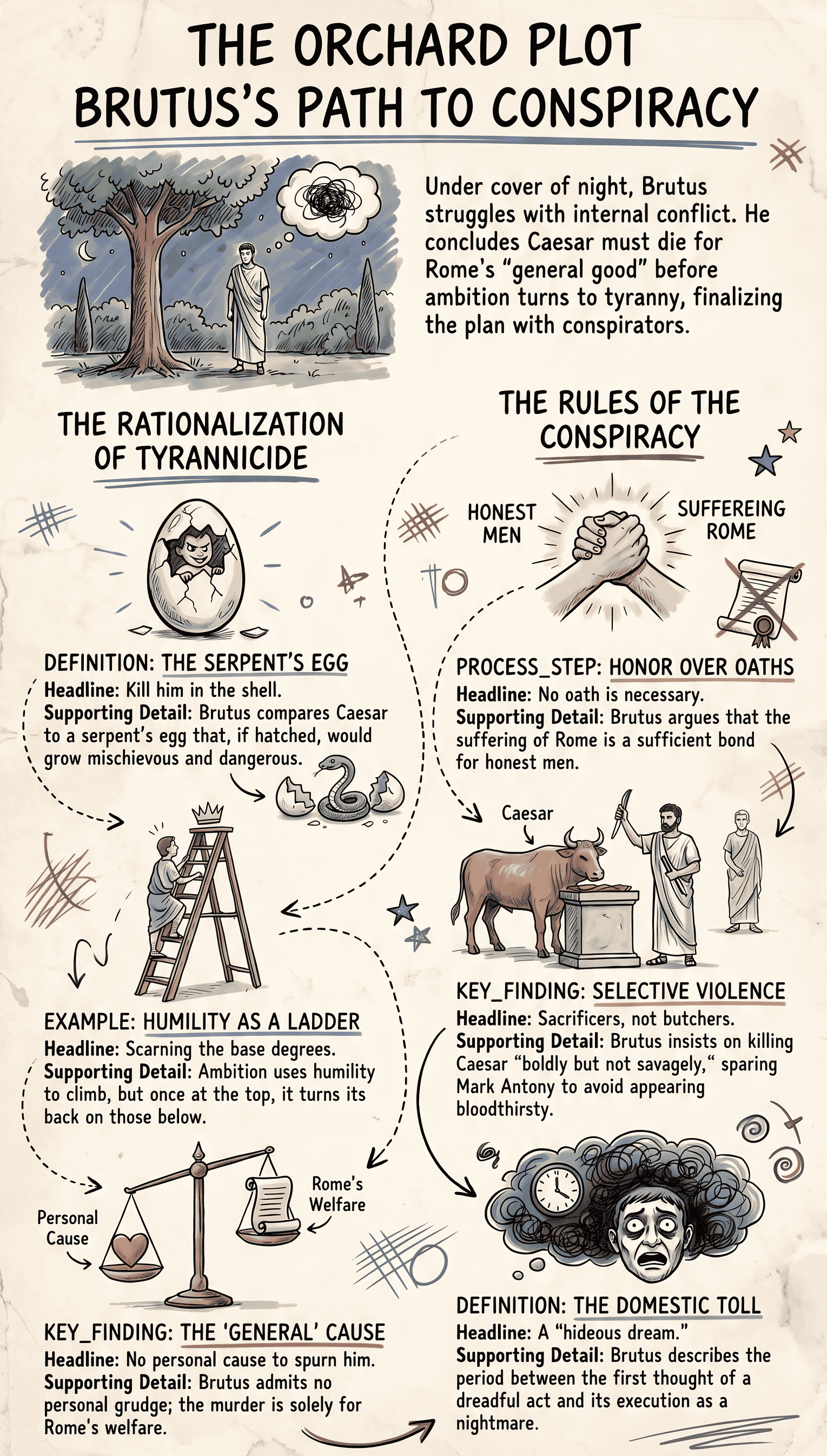
- Brutus talks to himself, revealing that he has no personal hatred or grudge against Caesar. His only reason to consider killing him is for the "general good" of Rome.
- He fears that if Caesar is crowned king, absolute power will corrupt him. He compares Caesar to a poisonous snake that comes out in the bright sunshine, meaning power brings out the worst in people.
- He uses the famous metaphor of an "ambition's ladder": a person uses humility to climb to the top, but once they reach the highest rung, they turn their back on the people below who helped them.
- Brutus decides they must kill Caesar before he gets too powerful, comparing him to a "serpent's egg" that must be crushed in its shell before it hatches and becomes dangerous.
2. The Mysterious Letter
- Lucius brings a sealed letter he found near the window. Brutus reads it by the eerie light of meteors flashing in the night sky.
- The letter says, "Brutus, thou sleep'st: awake, and see thyself... Speak, strike, redress!" This is a fake letter planted by Cassius, urging Brutus to wake up and take action against tyranny.
- Brutus takes this as a direct call from the citizens of Rome, asking him to fix the wrongs, just as his ancestors once drove out the ancient kings of Rome. This makes him firmly commit to the conspiracy.
3. Arrival of the Conspirators
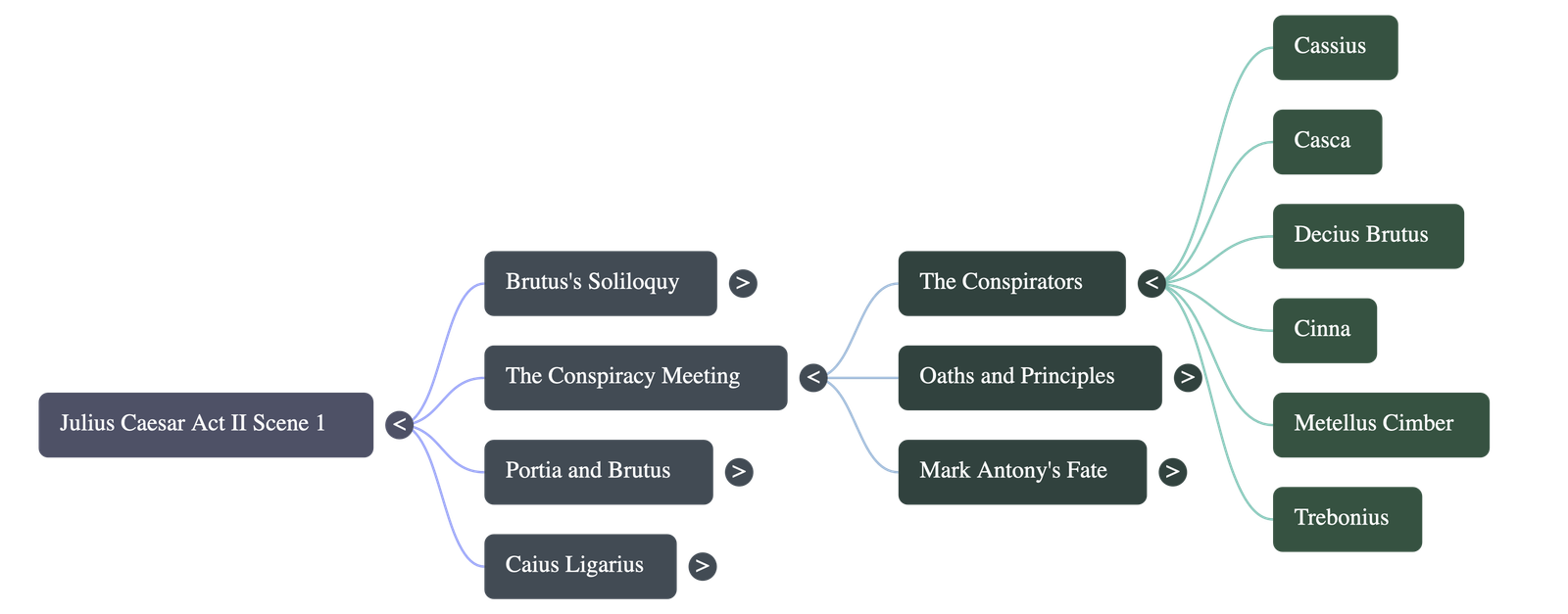
- Cassius arrives with the other conspirators: Casca, Decius, Cinna, Metellus Cimber, and Trebonius.
- They arrive sneaking in the dark, with their hats pulled down and faces half-hidden by their cloaks.
- Brutus dislikes this secretive behavior. He advises them that hiding their faces makes them look guilty. Instead, they should hide their deadly plans behind "smiles and affability" (friendly, normal behavior) during the day.
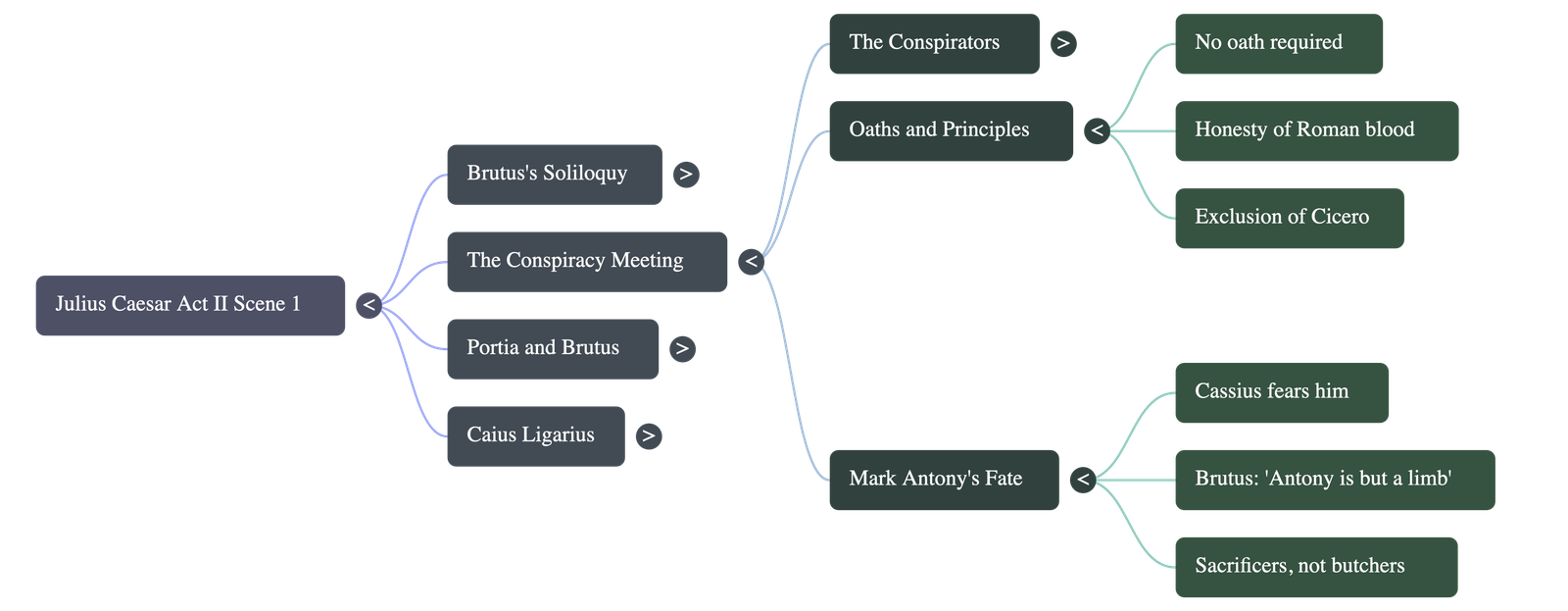
4. Brutus Takes Charge: Three Crucial Decisions
- No Oath Needed: Cassius wants everyone to swear an oath to stick to the plan. Brutus refuses. He says their cause is so noble that they don't need an oath; swearing oaths is for cowards and untrustworthy men, not true Romans.
- Excluding Cicero: The group considers inviting the wise, older senator Cicero, thinking his "silver hairs" (old age and respect) will make the public support them. Brutus rejects this, stating Cicero is too proud and will never follow a plan started by other men.
- Sparing Mark Antony: Cassius warns that Mark Antony is a dangerous, loyal friend of Caesar and should be killed too. Brutus disagrees, saying it will make their actions seem too bloody and malicious. He argues Antony is merely a "limb of Caesar" who will be completely powerless once Caesar (the head) is cut off. He wants them to be seen as "purgers" (healers/reformers) and not "murderers."
5. The Plan to Fetch Caesar
- Cassius worries that Caesar might stay home today because he has become very superstitious due to recent bad omens and dreams.
- Decius confidently steps up, promising he can manipulate Caesar. He says he knows exactly how to use flattery to bend Caesar's mood and guarantees he will bring Caesar to the Capitol by 8 o'clock in the morning.
- The conspirators agree and disperse, reminding each other to act perfectly normal to avoid any suspicion.
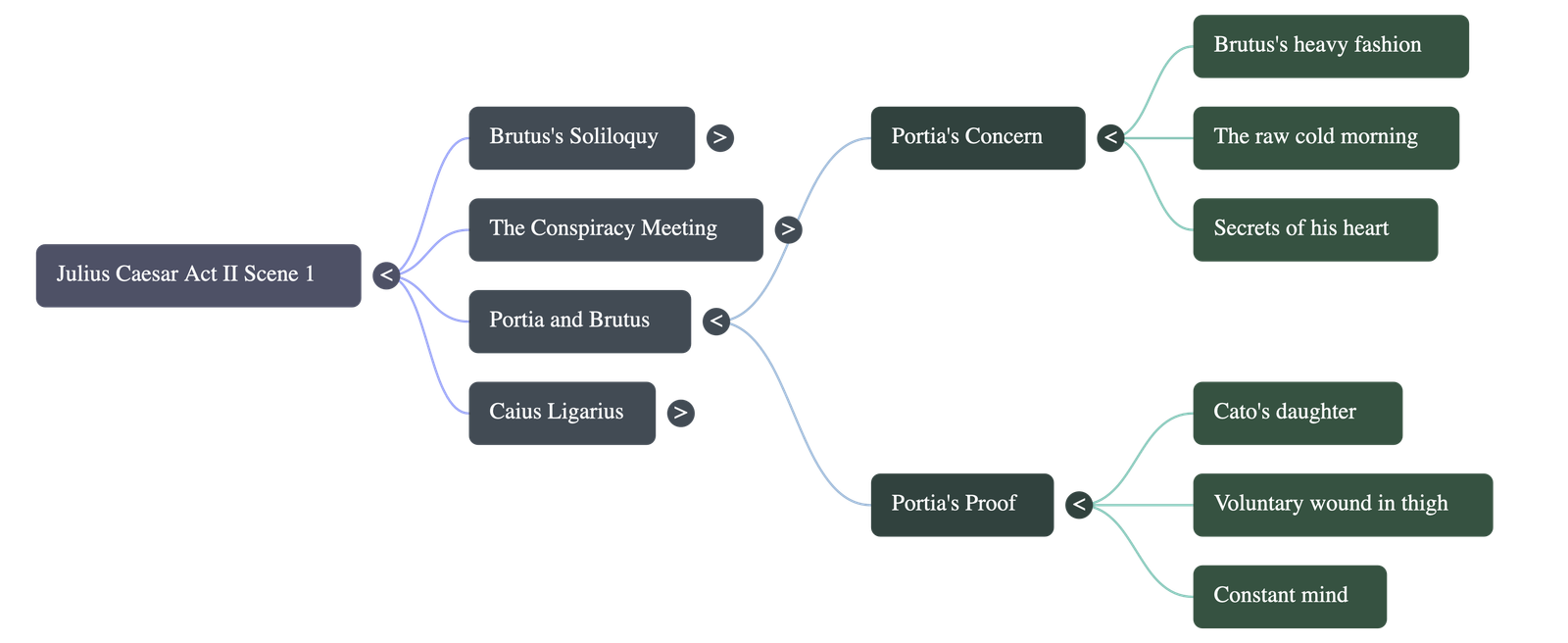
6. Portia's Plea
- After the men leave, Brutus's wife, Portia, comes out. She is deeply worried because Brutus has been acting strangely—pacing, sighing, and refusing to eat or sleep.
- When Brutus lies and says he is just physically sick, Portia cleverly points out that if he were physically sick, he would stay in bed, not walk around in the cold night air. She correctly guesses he has a "sick offence within his mind" (a dangerous secret).
- She kneels and begs him to trust her, reminding him of her noble background (she is Cato's daughter). To prove she is tough enough to handle his secret, she reveals she voluntarily gave herself a deep wound in her thigh and bore the pain without complaining.
- Deeply moved by her loyalty and strength, Brutus calls her his "noble wife" and promises to tell her everything very soon.
7. A Sick Man Joins the Cause
- Portia leaves just as someone knocks on the door. It is Caius Ligarius, a man who is physically ill and wearing a kerchief (a sign of sickness).
- Ligarius says he will instantly cure himself of his illness if Brutus has a noble, honorable plan in mind.
- Brutus confirms he has an "exploit worthy the name of honour." Hearing this, Ligarius enthusiastically throws off his sickness, showing how much the people of Rome respect Brutus and are willing to blindly follow his leadership into danger.
Do checkout all questions & answers of this chapter.
Quick Navigation:
| | | |
1 / 1
Quick Navigation:
| | | |