Quick Navigation:
| | | |
Introduction to Julius Caesar
A detailed summary of Shakespeare's famous historical tragedy, exploring power, betrayal, and consequence.
1. The Plot (Act by Act)
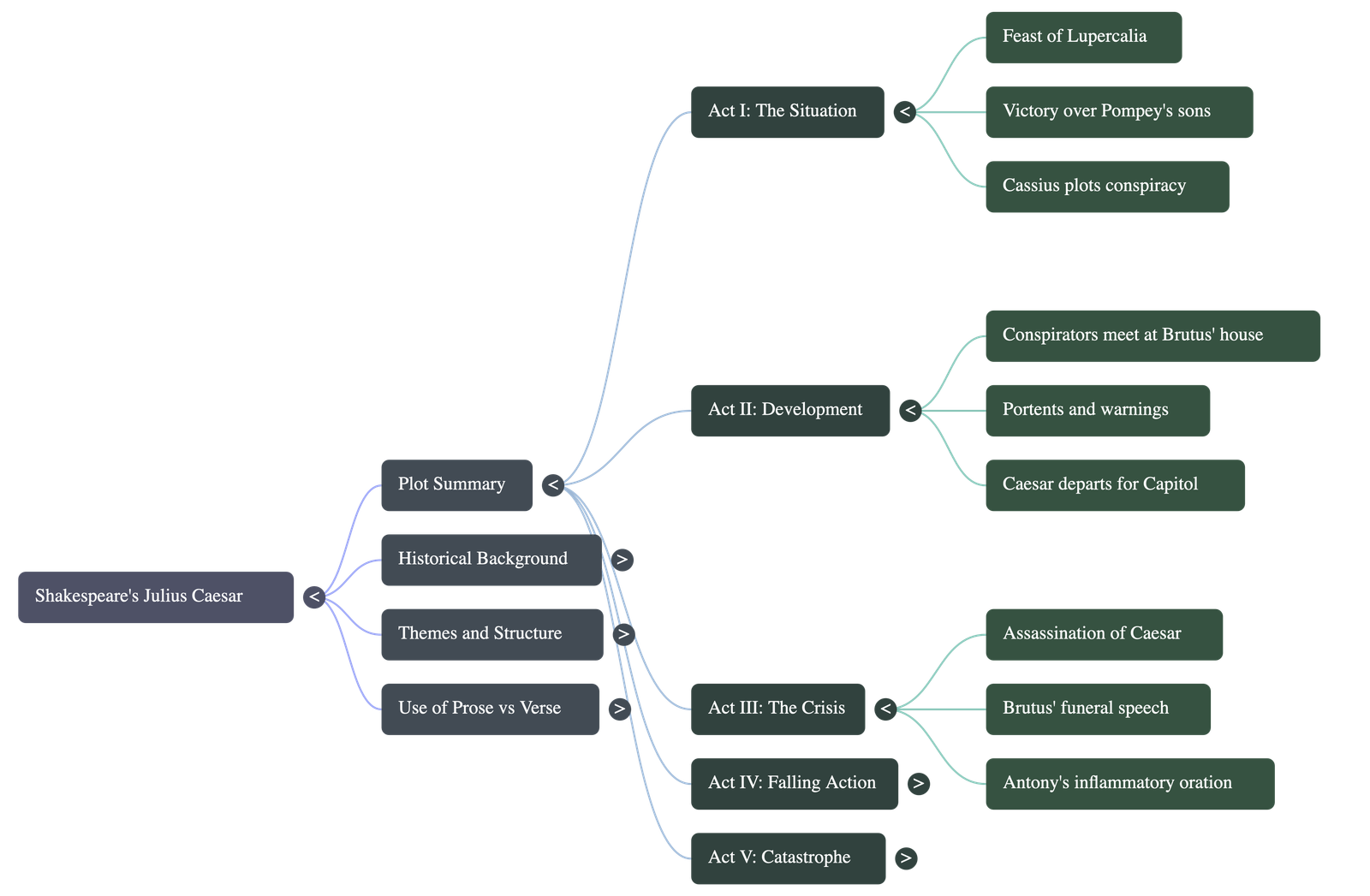
- Act I: The play opens with commoners celebrating Julius Caesar's victory over his rival, Pompey. Some government officials are jealous of Caesar's growing popularity. A group of senators, especially Cassius, fear that Caesar wants to become a king. Cassius begins a conspiracy and tries to recruit the highly respected Marcus Brutus.
- Act II: On a night with a terrifying storm, Cassius successfully convinces Brutus to join the plot to kill Caesar. Caesar's wife, Calpurnia, has bad dreams and begs him to stay home. However, a conspirator named Decius flatters Caesar and tricks him into going to the Capitol.
- Act III (The Climax): Caesar ignores multiple warnings, including a fortune teller's warning about the "ides of March." Once at the Capitol, the conspirators stab Caesar to death. Brutus explains to the crowd that the murder was to save Rome. However, Mark Antony delivers a brilliant, emotional speech that turns the citizens into an angry mob, forcing the conspirators to run away from Rome.
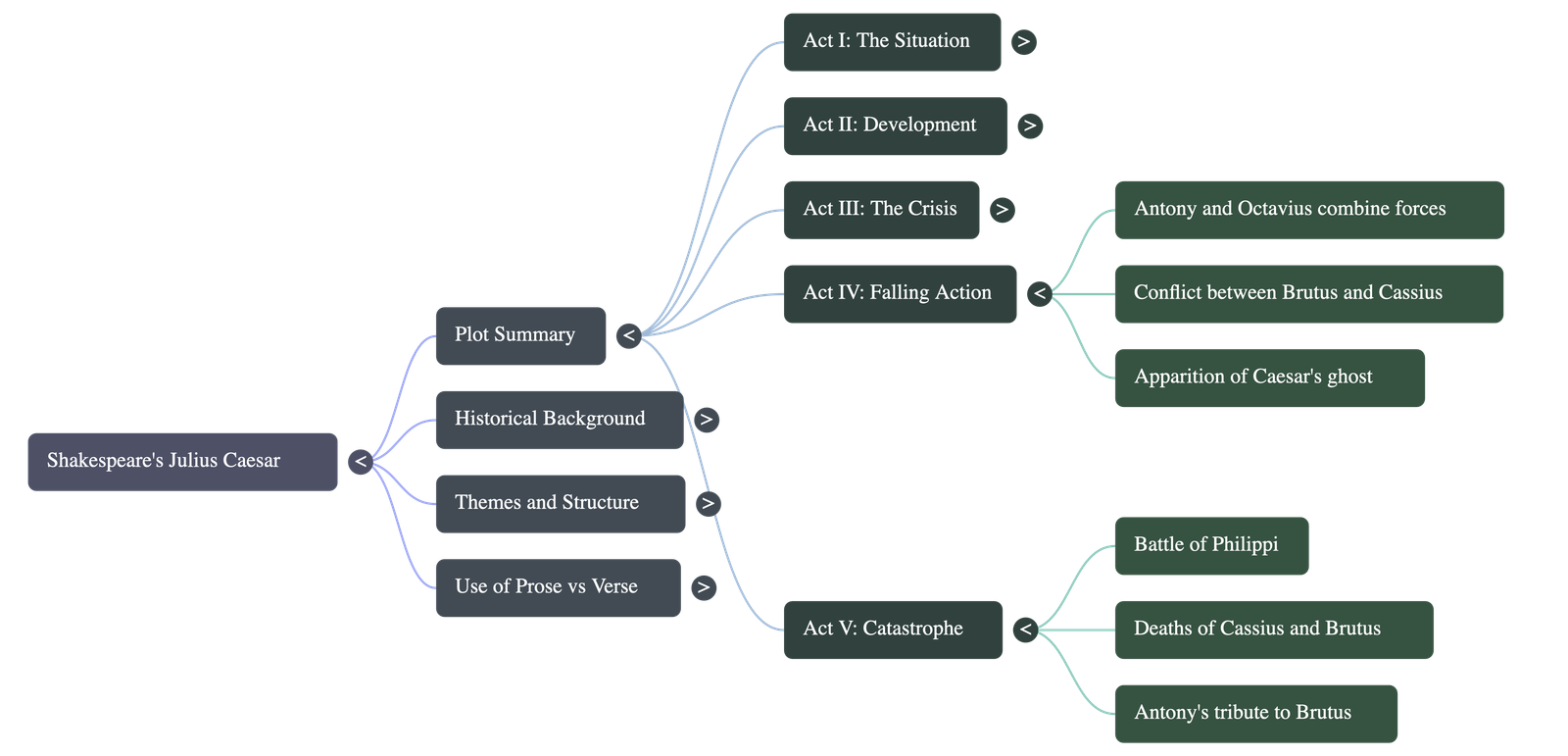
- Act IV: Mark Antony joins forces with Octavius and Lepidus to hunt down the killers. Brutus and Cassius have fled to a place called Sardis, where they argue but eventually make up. Brutus learns his wife, Portia, has taken her own life. That night, the terrifying ghost of Caesar visits Brutus, warning him they will meet again on the battlefield at Philippi.
- Act V: A massive battle takes place at Philippi. Cassius makes a tragic mistake, thinking they have lost, and kills himself. Brutus fights on but is eventually defeated and takes his own life as well, declaring that Caesar's spirit is finally avenged. Mark Antony honors Brutus, calling him the "noblest Roman of them all."
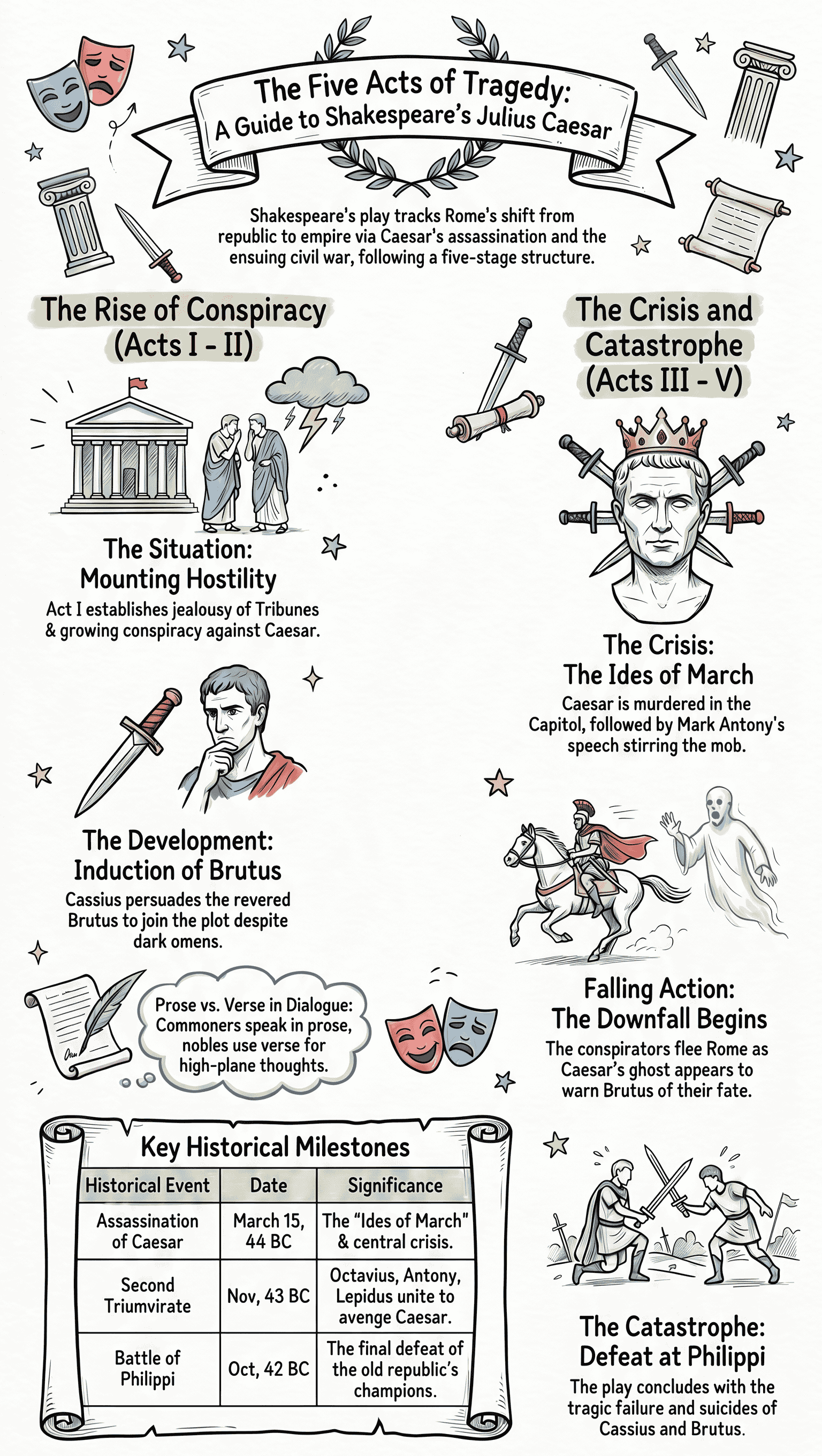
2. The Five-Stage Structure of the Play
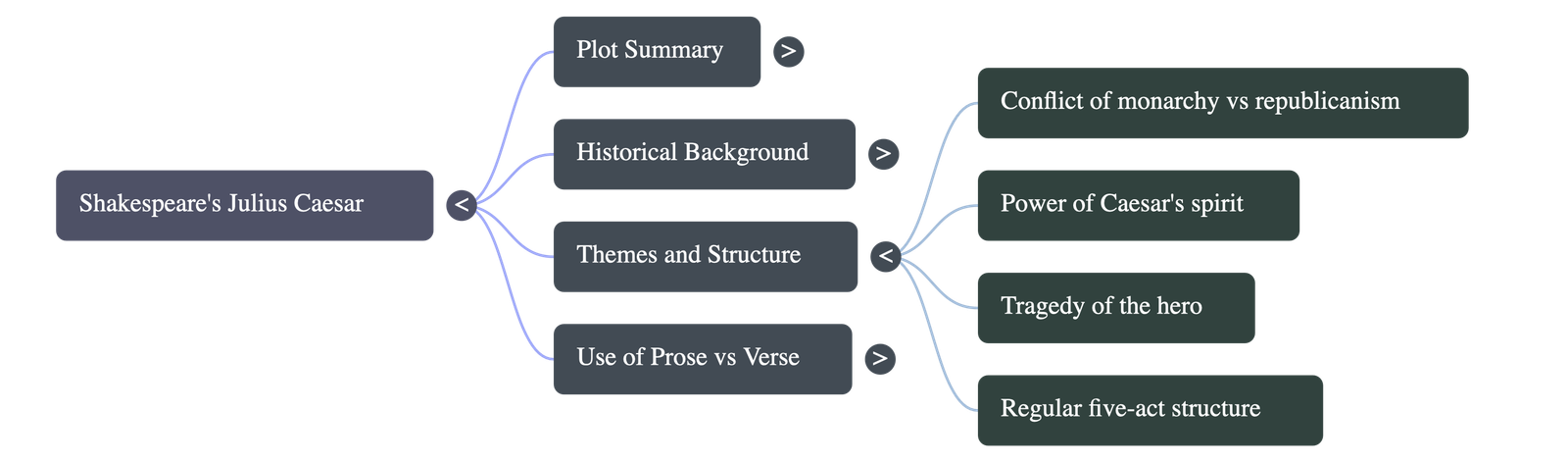
Unlike some of his other plays, Shakespeare designed Julius Caesar in a very neat, five-step structure:
- Stage 1 (Situation): Introduction to the hostility and jealousy toward Caesar.
- Stage 2 (Development): The conspiracy against Caesar is secretly hatched.
- Stage 3 (Crisis): The climax happens early—Caesar is murdered and the immediate chaos follows.
- Stage 4 (Falling Action): The conspirators slowly begin to lose their power and experience their downfall.
- Stage 5 (Catastrophe): The final tragic defeat and death of Caesar’s enemies.
3. Historical Background
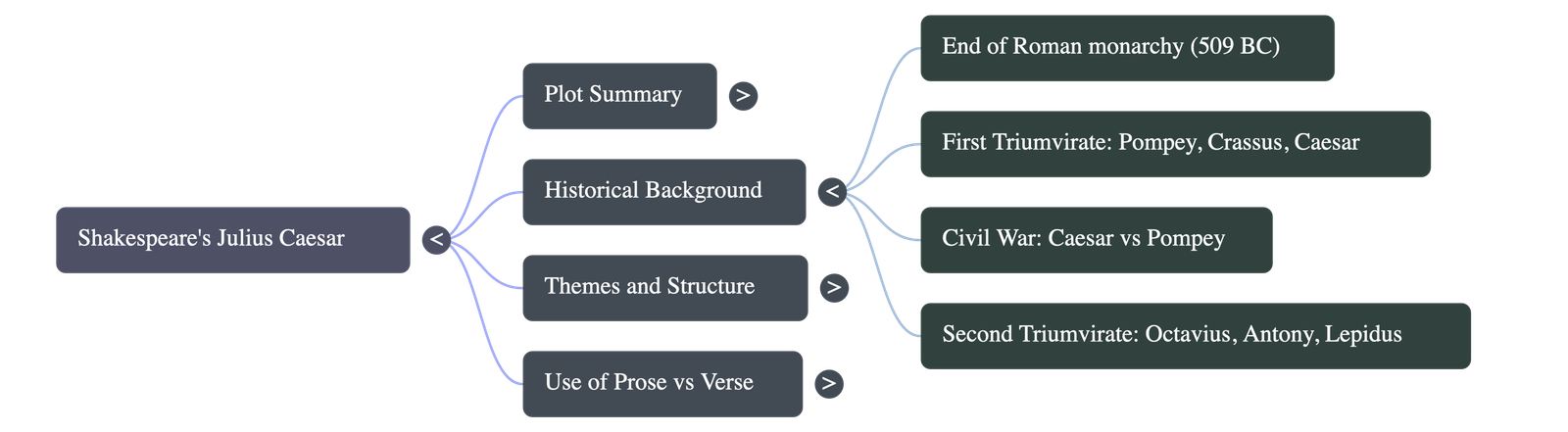
- The Roman Republic: Hundreds of years before Caesar, Rome was ruled by a brutal king. The people overthrew him in 509 BC and set up a "Republic" (a government ruled by elected officials, not kings).
- The Triumvirate to Dictator: Early in the first century BC, three men—Pompey, Crassus, and Caesar—shared power. After Crassus died, Caesar and Pompey fought a civil war. Caesar won and made himself the sole dictator of Rome.
- The Real Assassination: Because Romans hated the idea of kings, a group of sixty senators, led by Brutus and Cassius, stabbed Caesar to death on March 15, 44 BC. However, instead of being seen as heroes, the assassins were chased out of the city and eventually defeated in battle.
4. Why is the Play Titled "Julius Caesar"?
- The Central Figure: Even though Caesar appears in only three scenes and is killed halfway through the play, the entire story revolves around him.
- Power in Death: The first half of the play is driven by his physical greatness and power. The second half is completely dominated by his powerful spirit, which eventually destroys his murderers. As the play notes, "Caesar dead was more powerful than Caesar living."
- Political Themes: The story explores the danger of taking out a strong leader before the public is truly ready for a democracy, ultimately showing the murder as a huge political mistake.
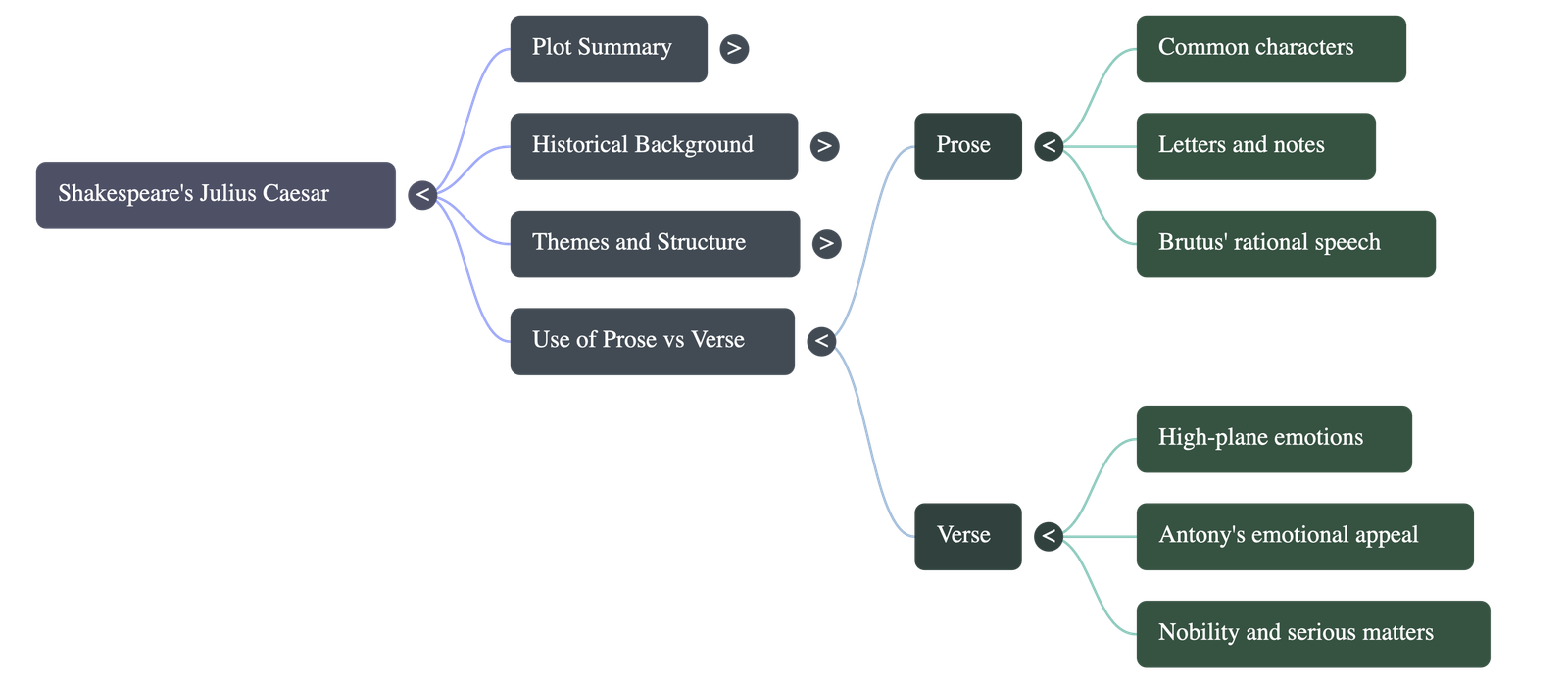
5. Shakespeare's Use of Language (Prose vs. Verse)
- Poetry vs. Everyday Talk: Shakespeare usually writes his serious plays in "verse" (rhythmic poetry). However, he uses "prose" (regular, everyday language) for ordinary people, letters, and casual conversations.
- Matching the Mood: When characters talk about deep feelings or important thoughts, they use verse. When they talk about everyday, trivial things, they use prose.
- A Battle of Speeches: After the murder, Brutus speaks to the crowd in prose because he wants to appeal to their logic and reason. Immediately after, Mark Antony speaks to the crowd in beautiful verse because his goal is to emotionally manipulate them and start a riot. This brilliant mix makes the characters feel incredibly real and distinct.
Do checkout all questions & answers of this chapter.
Quick Navigation:
| | | |
1 / 1
Quick Navigation:
| | | |