Characterisation in Julius Caesar
Introduction to Character Analysis
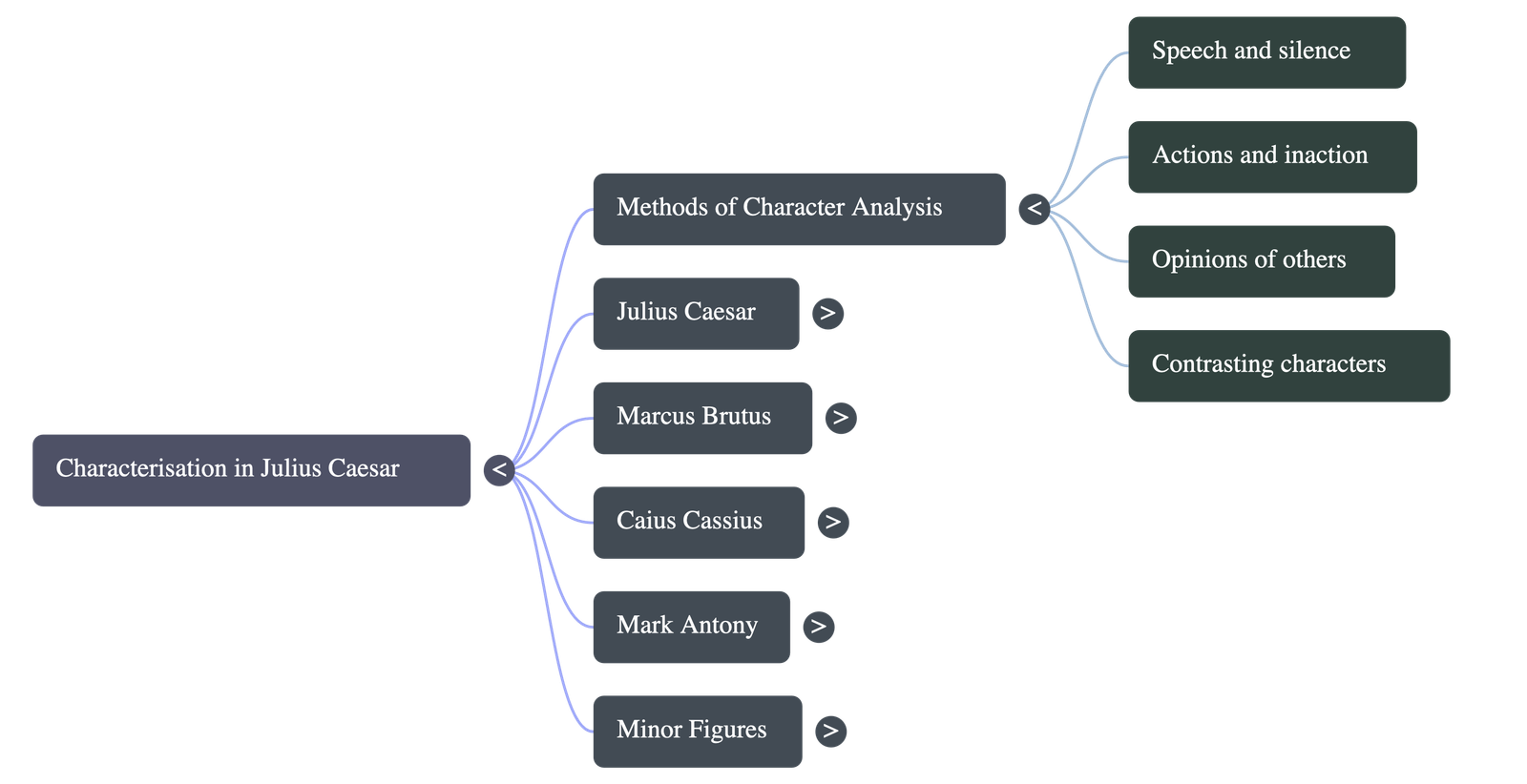
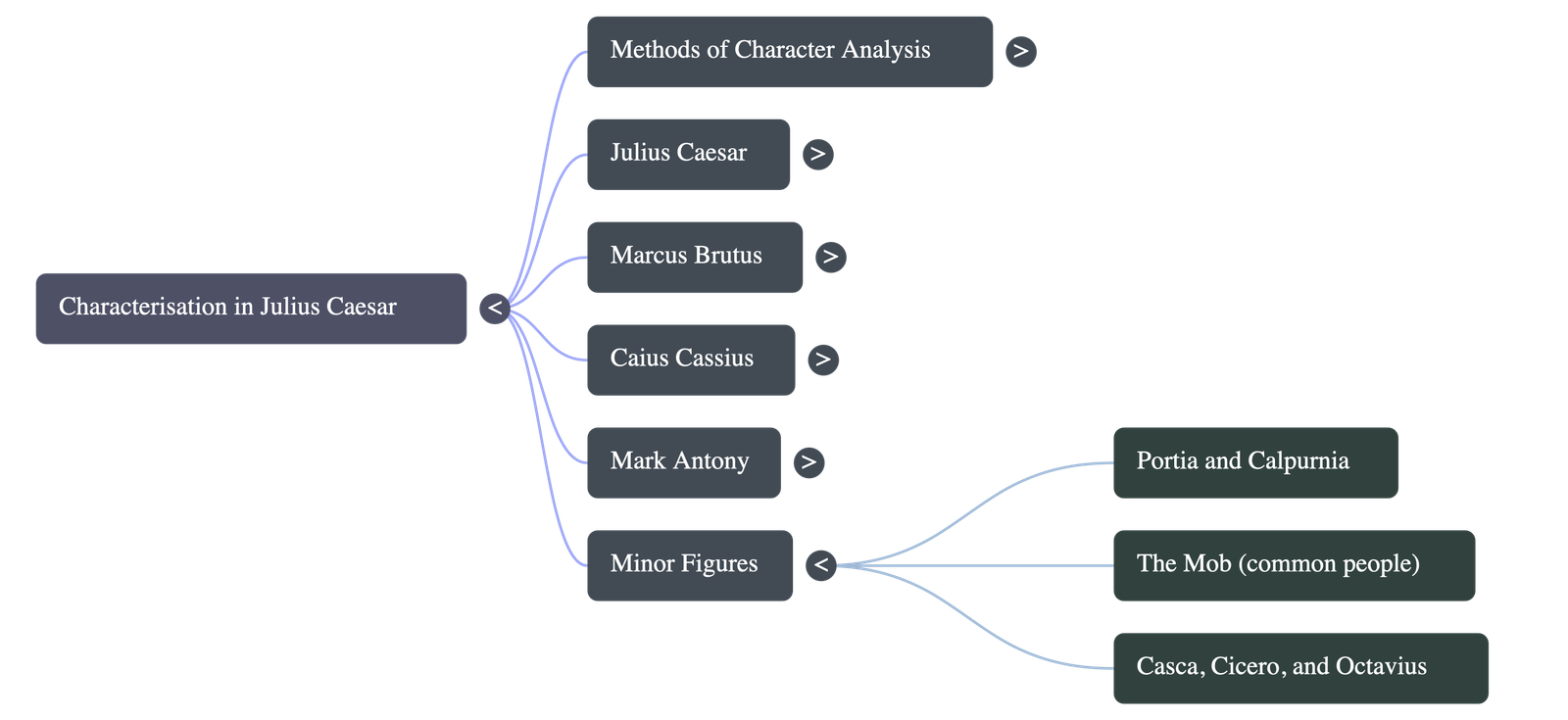
In Shakespeare's tragedies, the plot is driven by characterisation—things happen because characters act in specific ways. Characters reveal themselves through their words, actions, what others say about them, and by contrasting them with others. The play features leading figures (Caesar, Brutus, Cassius, Antony), minor figures, a few female characters (Portia, Calpurnia), and the common people or 'the Mob'.
Julius Caesar
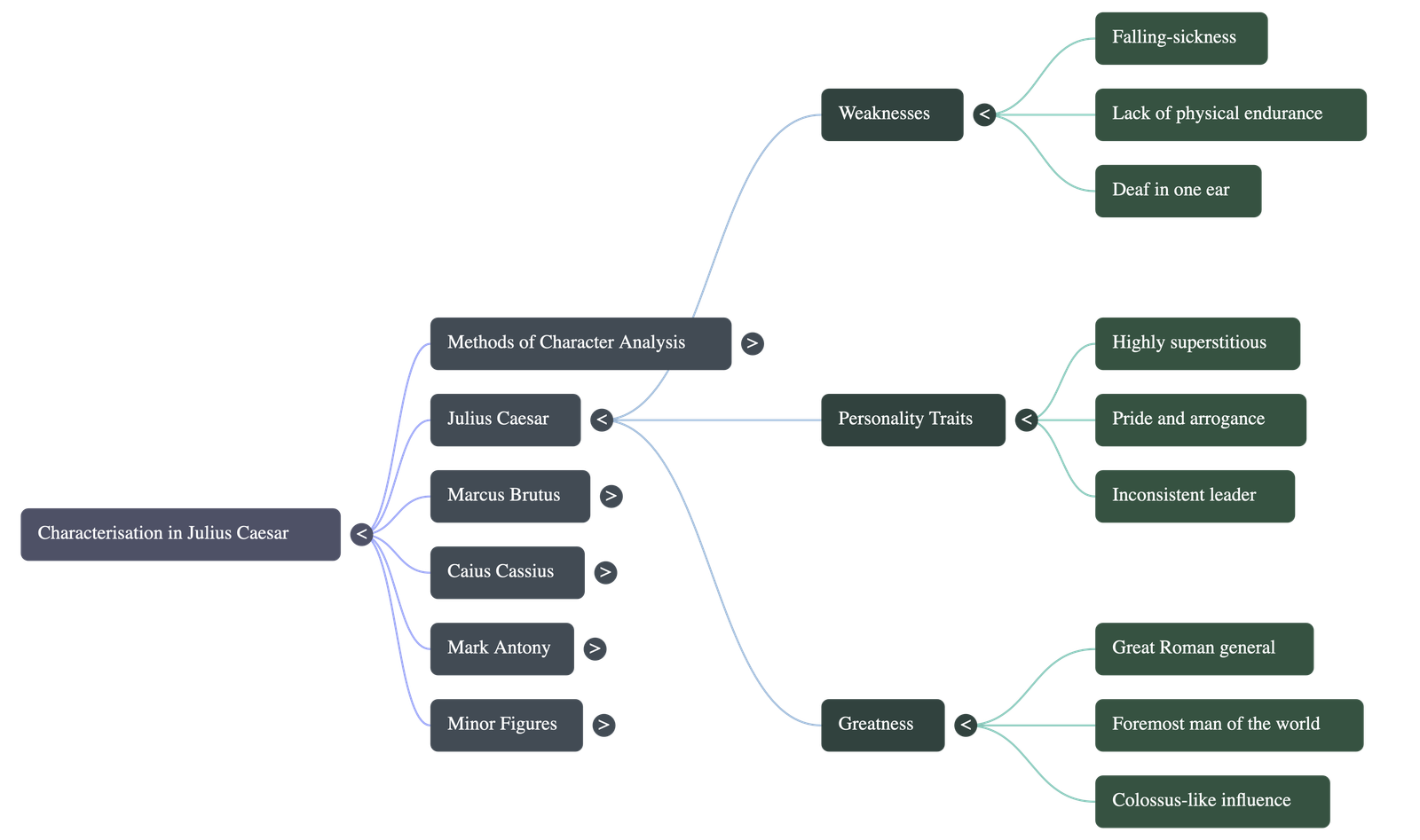
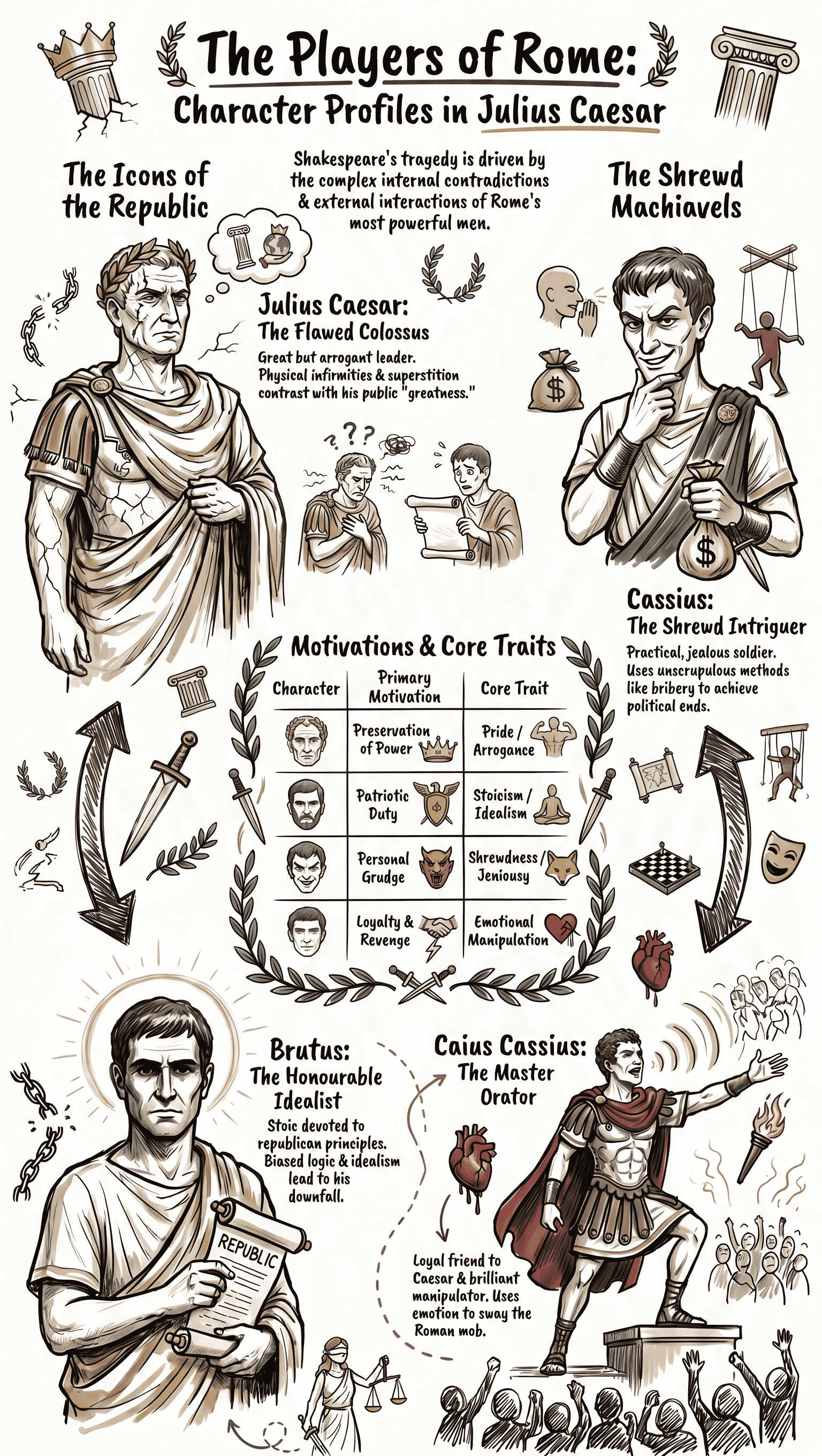
Depicted as a great Roman general and senator, he is highly aware of his own greatness.
- Physical Weaknesses: Despite his reputation, he suffers from physical ailments. He has the "falling-sickness" (epilepsy), lacks physical stamina, and is deaf in one ear.
- Highly Superstitious: He tries to hide it under a manly exterior, but he secretly believes in rituals, omens, and is deeply affected by his wife's bad dreams.
- Proud and Arrogant: He is extremely proud, often refers to himself in the third person, ignores warnings from well-wishers, and speaks arrogantly to others.
- Inconsistent Leader: He puts up a brave front but is internally fearful. For example, he acts like he doesn't want the crown, though he secretly desires it.
- Overwhelming Greatness: Even with his faults, his power and influence dominate. After his assassination in the middle of the play, his spirit continues to rule the Roman world, ultimately causing the defeat of his enemies.
Marcus Brutus
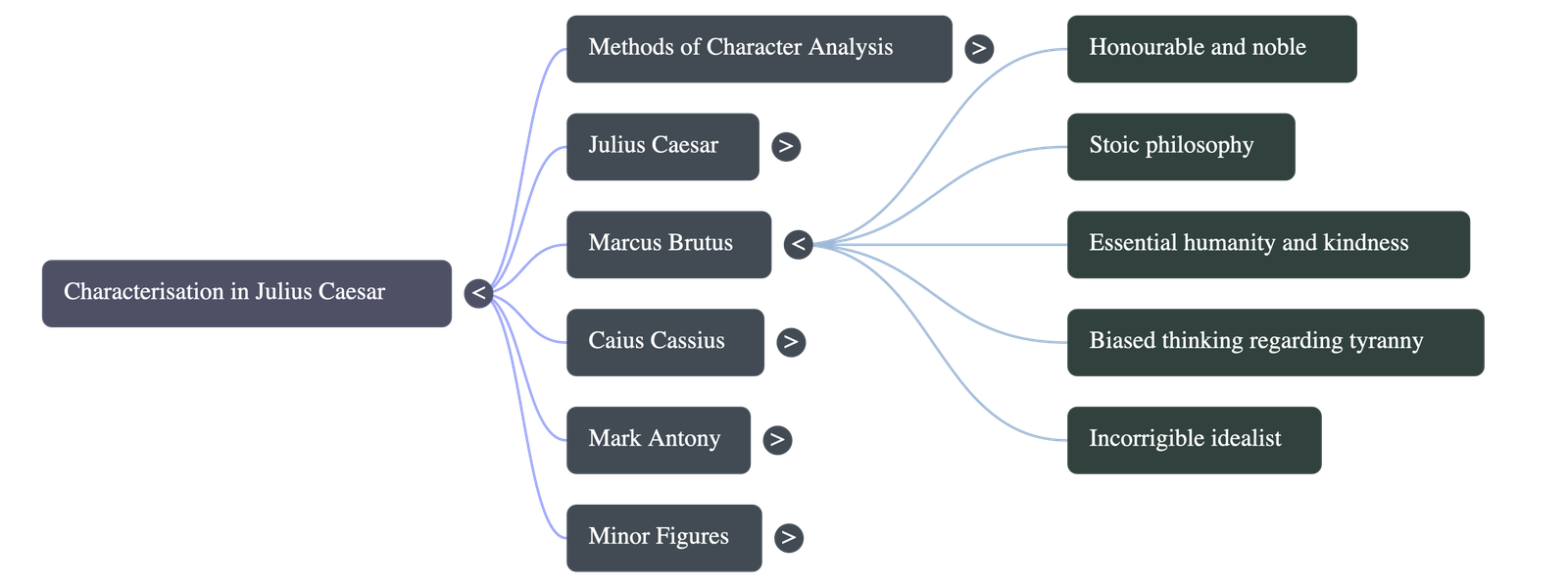
A noble, stoic man who joins the conspiracy out of a sense of duty to his country.
- An Honourable Man: He is highly respected and devoted to the welfare of Rome. He acts entirely on his republican principles, not for personal gain.
- Essential Humanity: He is kind and loving to his servant boy and shares a deep, affectionate, and equal relationship with his wife, Portia.
- Biased Thinking: His deep hatred for monarchy clouds his judgment. He decides to kill Caesar not for what Caesar has done, but out of fear of what Caesar might become.
- An Incorrigible Idealist: He is a noble philosopher but a terrible politician. His strict ideals and lack of worldly wisdom cause him to make critical mistakes (like letting Antony speak at the funeral), which eventually ruin the conspirators.
Caius Cassius
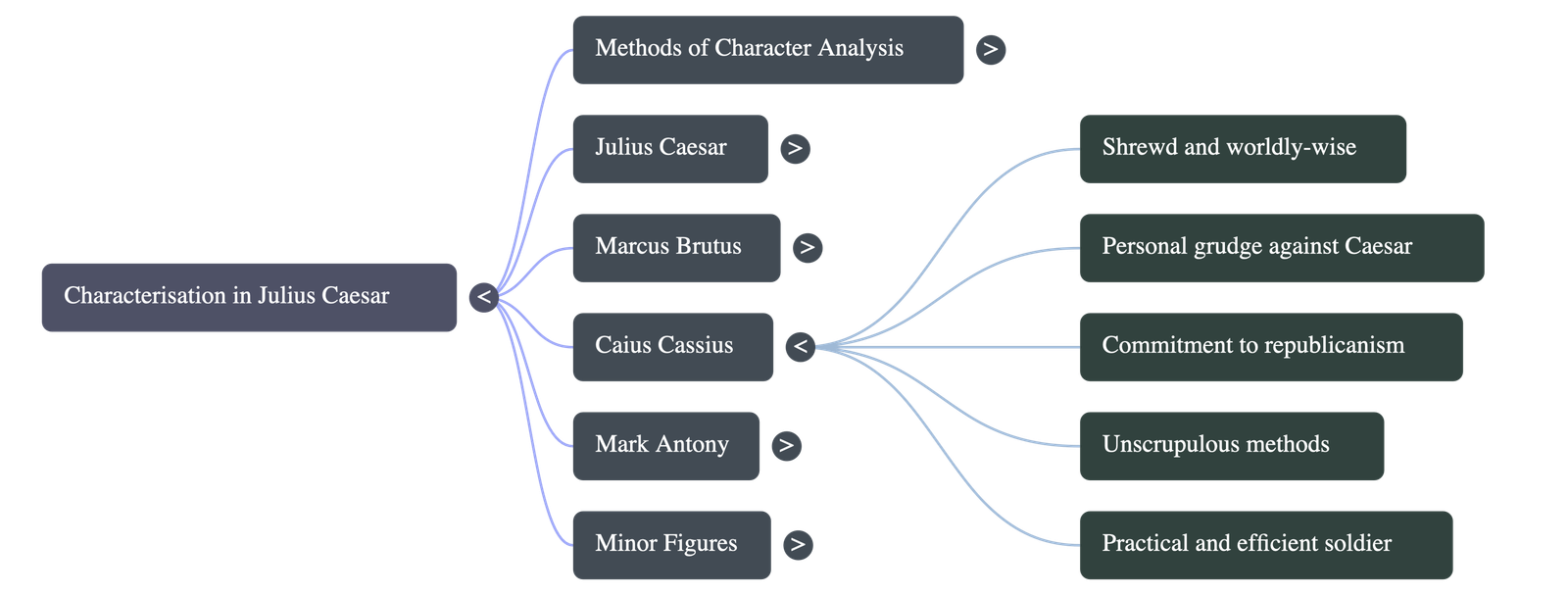
A worldly-wise, shrewd man who acts as the complete opposite (a foil) to Brutus.
- Shrewd Intriguer: He is observant, manipulative, and driven by a personal grudge and jealousy against Caesar rather than true patriotism.
- Deeply Committed: Once dedicated to the cause of overthrowing Caesar, he is ready to sacrifice everything for it.
- Unscrupulous: He does not care about morality if it gets in the way of success. He gladly uses bribery, extortion, and manipulation to achieve his goals.
- Practical and Efficient: Unlike Brutus, Cassius is a practical soldier who understands human nature. His tactical advice is always correct, but he constantly lets Brutus overrule him, leading to their downfall.
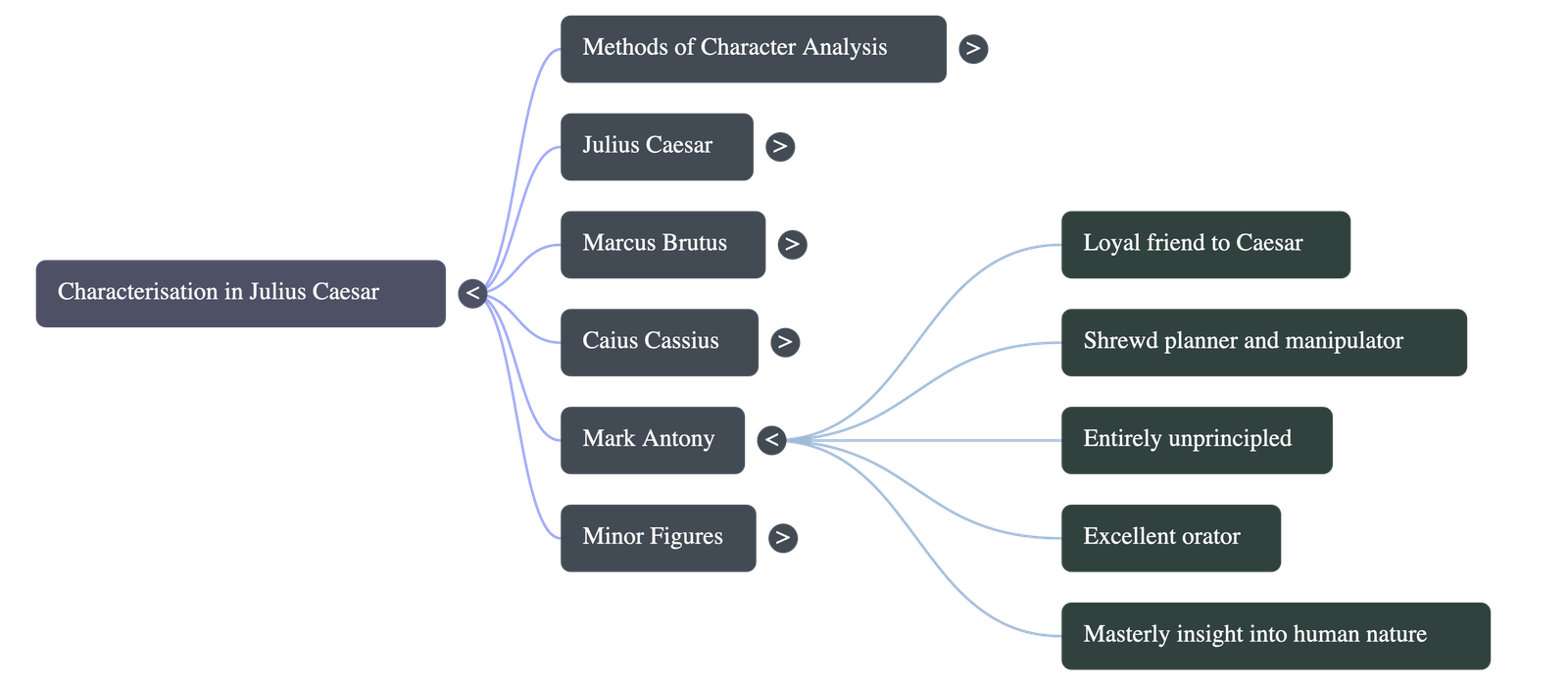
Mark Antony
A loyal friend to Caesar who uses his hidden brilliance to avenge his death.
- Shrewd Planner: He cleverly hides his anger from the conspirators. He understands exactly how to manipulate both his enemies and the common people.
- Excellent Orator: His funeral speech is a masterpiece. Instead of using logic like Brutus, he plays on the crowd's emotions like an instrument, turning their minds and sparking a violent mutiny.
- Entirely Unprincipled: Once he gains power, his dark side shows. He becomes selfish, cruel, and heartless—willing to use his allies (like Lepidus) and casually condemning people to death for his own benefit.
Do checkout all questions & answers of this chapter.