Quick Navigation:
| | | |
Themes and Issues of Julius Caesar
A complete chapter summary designed for Class 9 students.
1. Major Themes in the Play
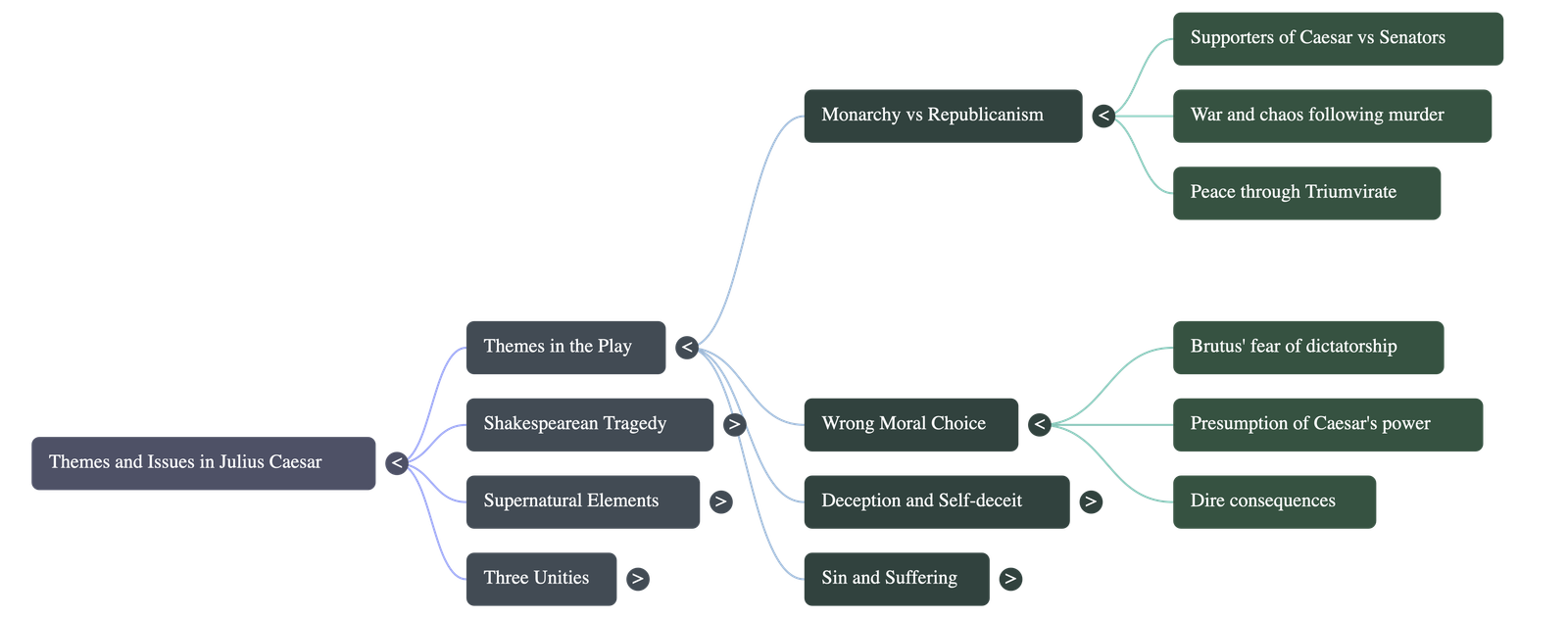
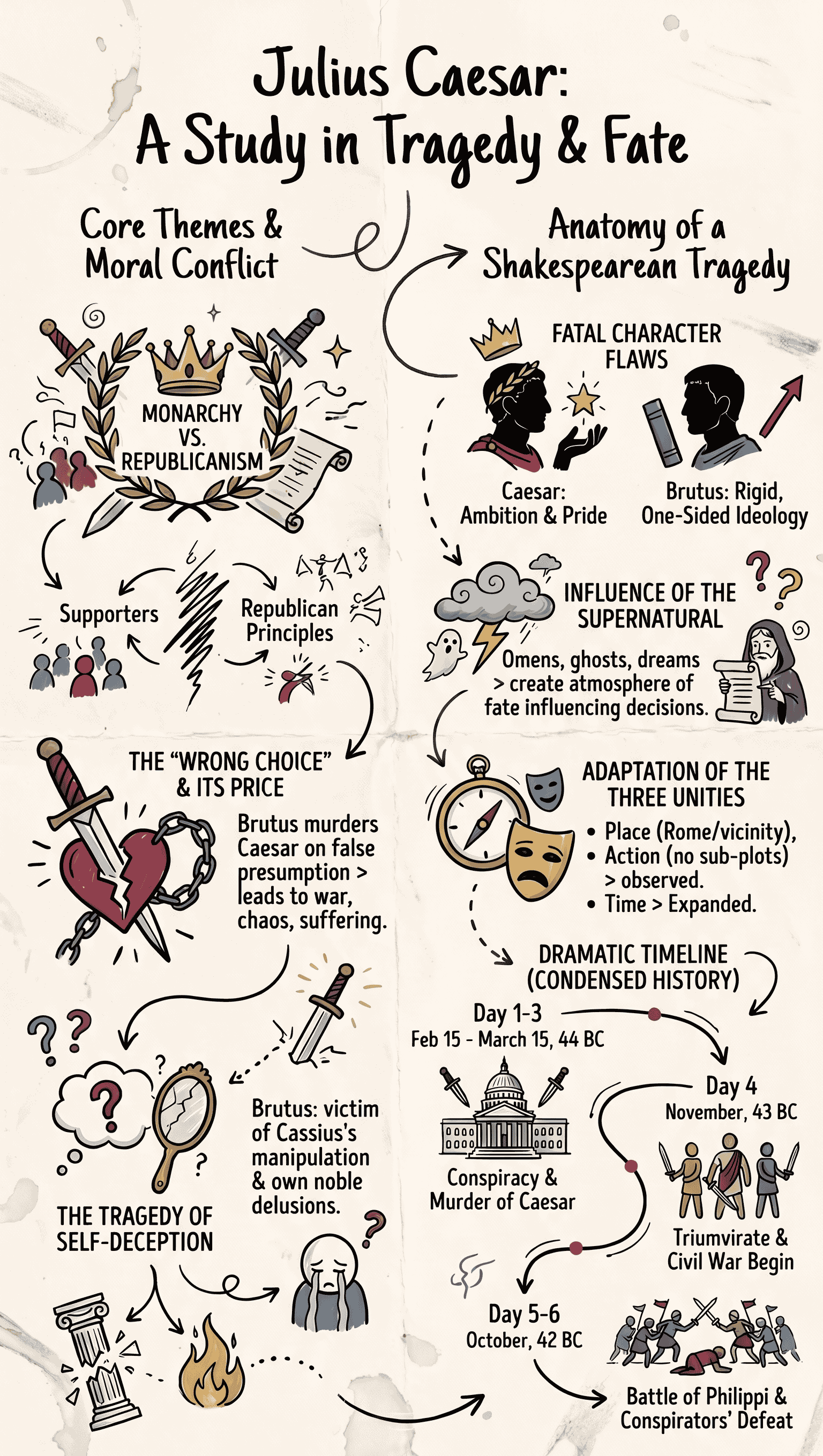
- Monarchy vs. Republicanism: The play starts with a major clash between people who support Caesar ruling as a king (monarchy) and the senators who want Rome to stay a free republic. However, murdering Caesar does not bring peace; it causes a terrible war and chaos.
- Wrong Moral Choices: Brutus kills Caesar not because Caesar is evil, but because Brutus fears he might become a cruel dictator in the future. Making this terrible choice based on a wrong guess leads to disastrous consequences.
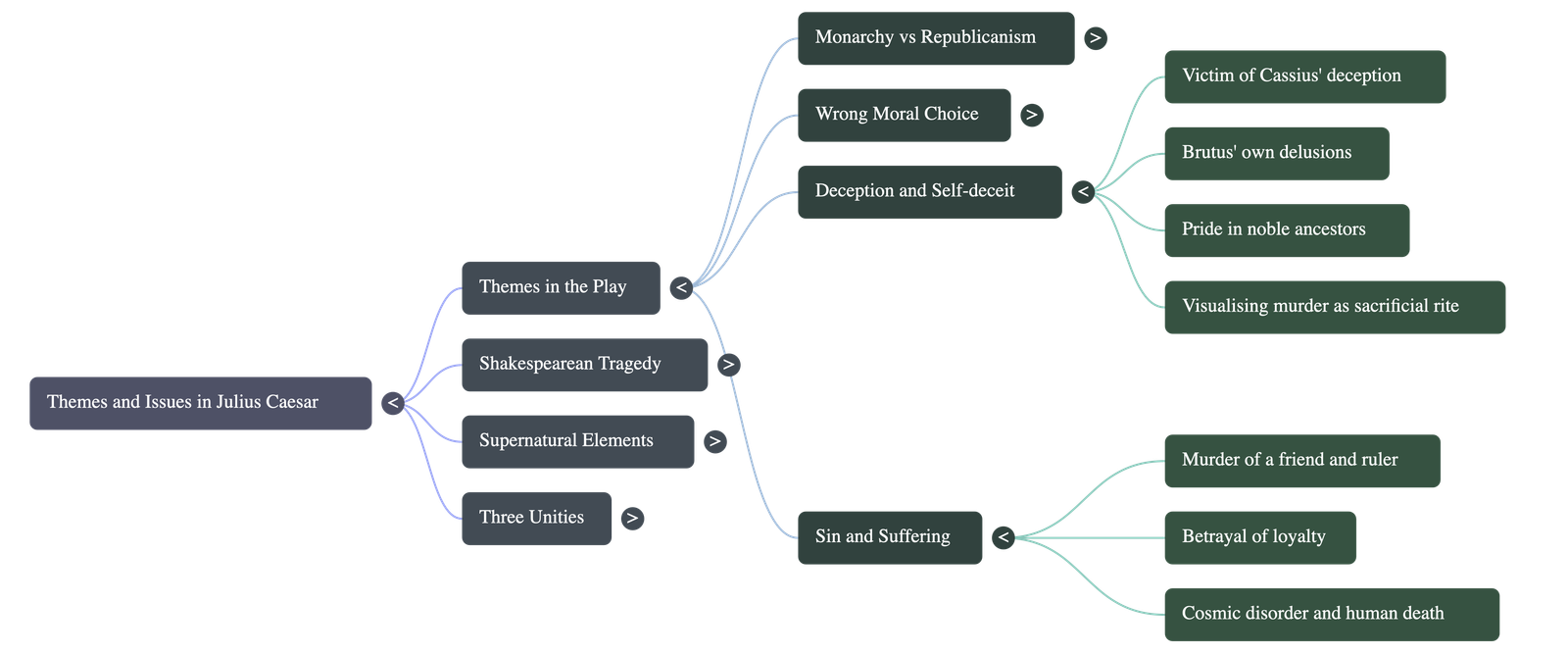
- Deception and Tricking Oneself: Cassius tricks Brutus, but Brutus also lies to himself. Because he is so proud of his noble family history, he mentally twists the brutal murder into a "noble sacrifice" for the good of Rome.
- Sin and Suffering: Killing a trusted friend and the ruler of Rome is treated as a massive crime and a sin against the gods. This single sinful act throws nature into chaos and results in death, destruction, and intense human suffering.
2. Julius Caesar as a Shakespearean Tragedy
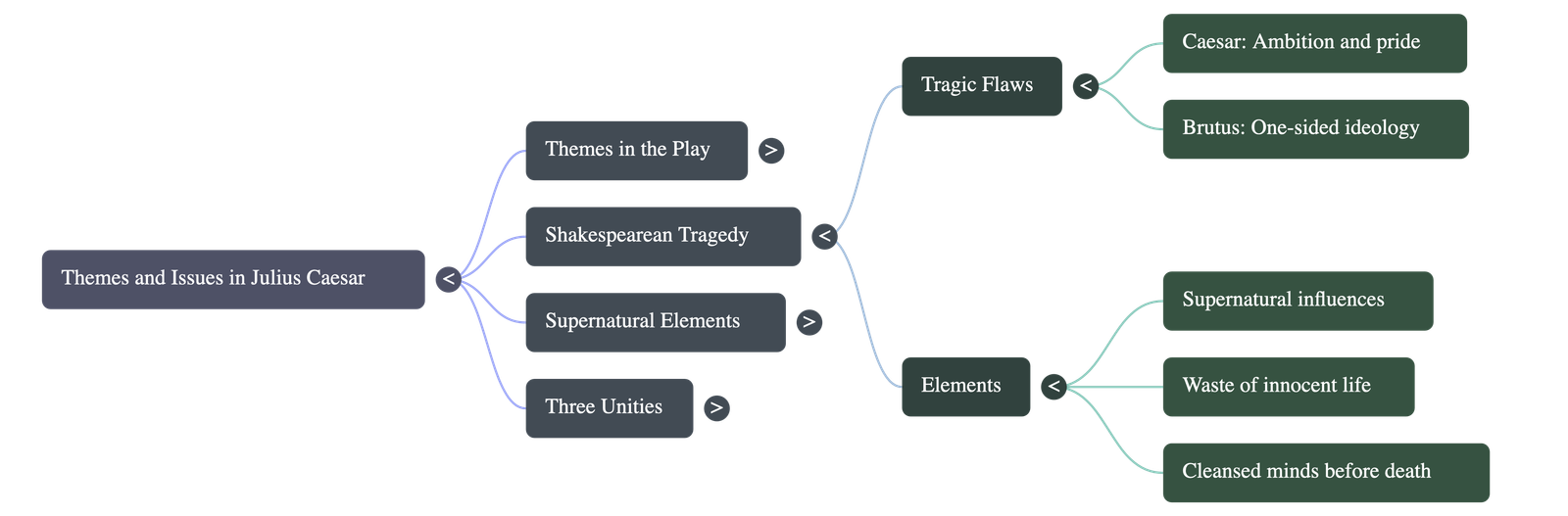
- The Fall of Great Men: The play is a tragic story where great heroes (Caesar and Brutus) fall because of a "tragic flaw" in their personalities. Caesar is brought down by his pride and ambition, while Brutus is ruined by his rigid, one-sided beliefs.
- Learning the Truth Too Late: Before they die, the heroes finally see clearly. Caesar realizes his political friends cannot be trusted, and Brutus realizes that murdering Caesar was a horrible mistake.
- Helping the Audience: By watching these powerful heroes go through such extreme destruction and suffering, the audience can realize that their own everyday problems are small, making their own lives easier to bear.
3. Supernatural Elements and Fate
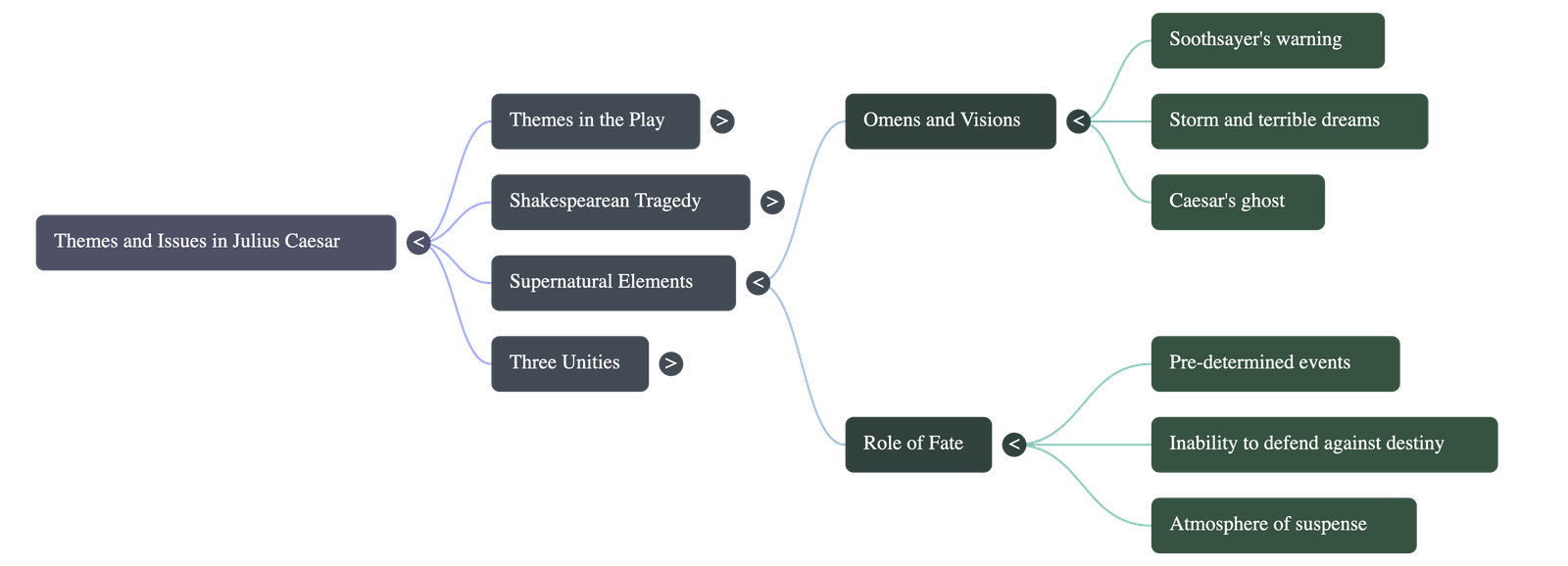
- Omens and Warnings: The story is filled with spooky signs like a dreadful storm, a fortune-teller's warnings, terrible nightmares, and even the appearance of Caesar's ghost.
- The Power of Destiny: These supernatural events show that the characters cannot escape their "Fate." Caesar is marked by destiny to die, and despite all the magical warnings, he cannot avoid his death.
- Building Suspense: Because people in Shakespeare's time deeply believed in ghosts and bad omens, Shakespeare used these elements to make the play thrilling, mysterious, and full of suspense.
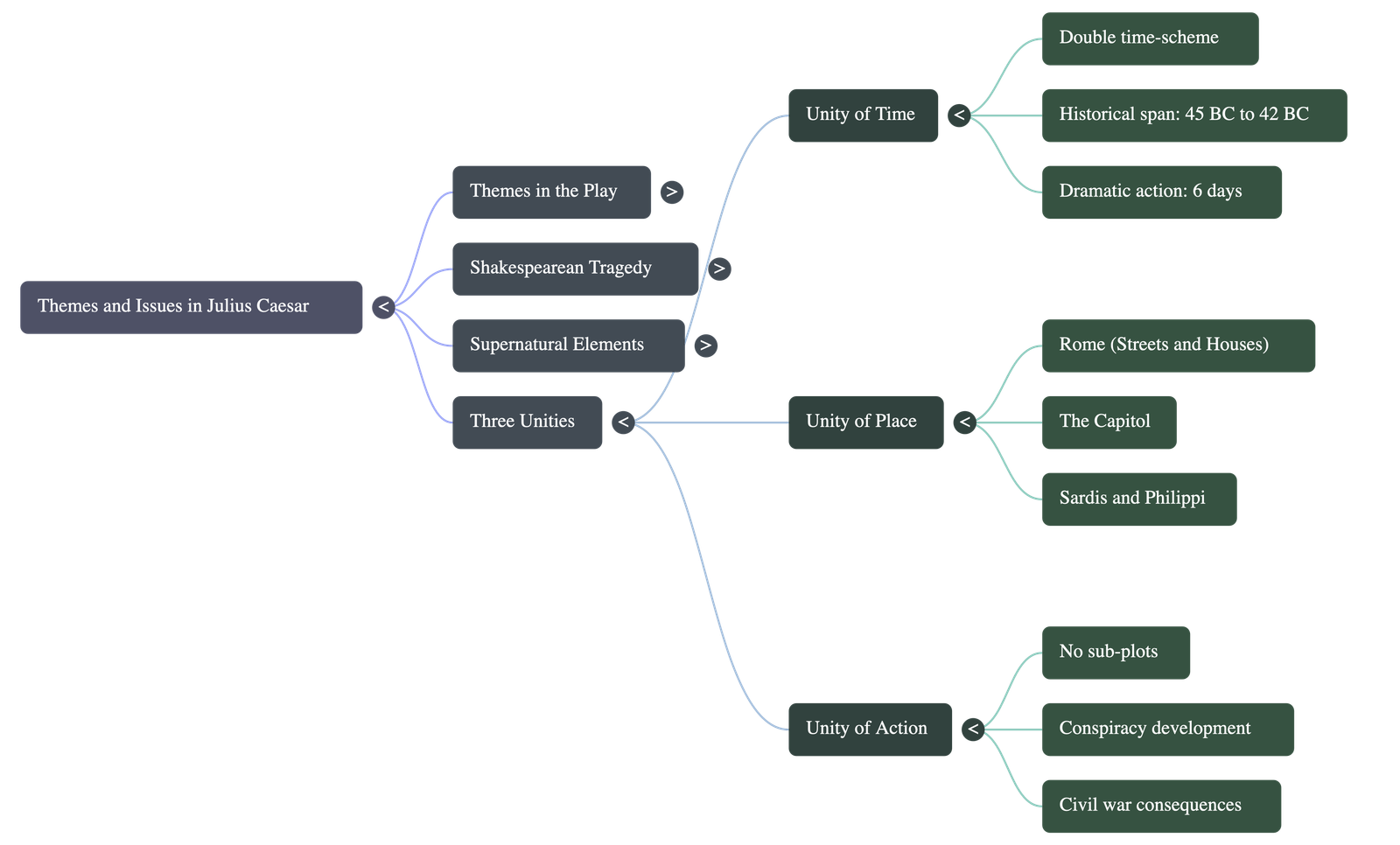
4. The Three Unities (Rules of Drama)
Shakespeare adapted the ancient rules of drama (originally set by Aristotle) to fit his story smoothly:
- Unity of Action: There are no distracting side-stories or minor plots. The story is swift and direct: the first half is about the conspiracy to murder Caesar, and the second half is about the civil war and the defeat of the killers.
- Unity of Place: The locations are kept close together. The story happens in the streets and houses of Rome, and eventually moves to the nearby battlefields of Sardis and Philippi.
- Unity of Time: While the real historical events took three years (45 BC to 42 BC), Shakespeare speeds up the dramatic action. Instead of one single day, the play's events happen across six specific days separated by intervals, allowing the audience to follow the three-year history easily.
Do checkout all questions & answers of this chapter.
Quick Navigation:
| | | |
1 / 1
Quick Navigation:
| | | |