Quick Navigation:
| | | | |
Quick Navigation:
| | | | |
Chapter Summary: Nature and Conservation
Part A: Saving the Gharial
Based on the narrative by Janaki Lenin regarding Romulus Whitaker's conservation efforts.
- Discovery on the River Padma: In the mid-1980s, the team searched the River Padma on the India-Bangladesh border. They located a female gharial guarding a nest, which was likely the last time gharials nested in that region. To save the species, they collected the eggs to rear the young in captivity.
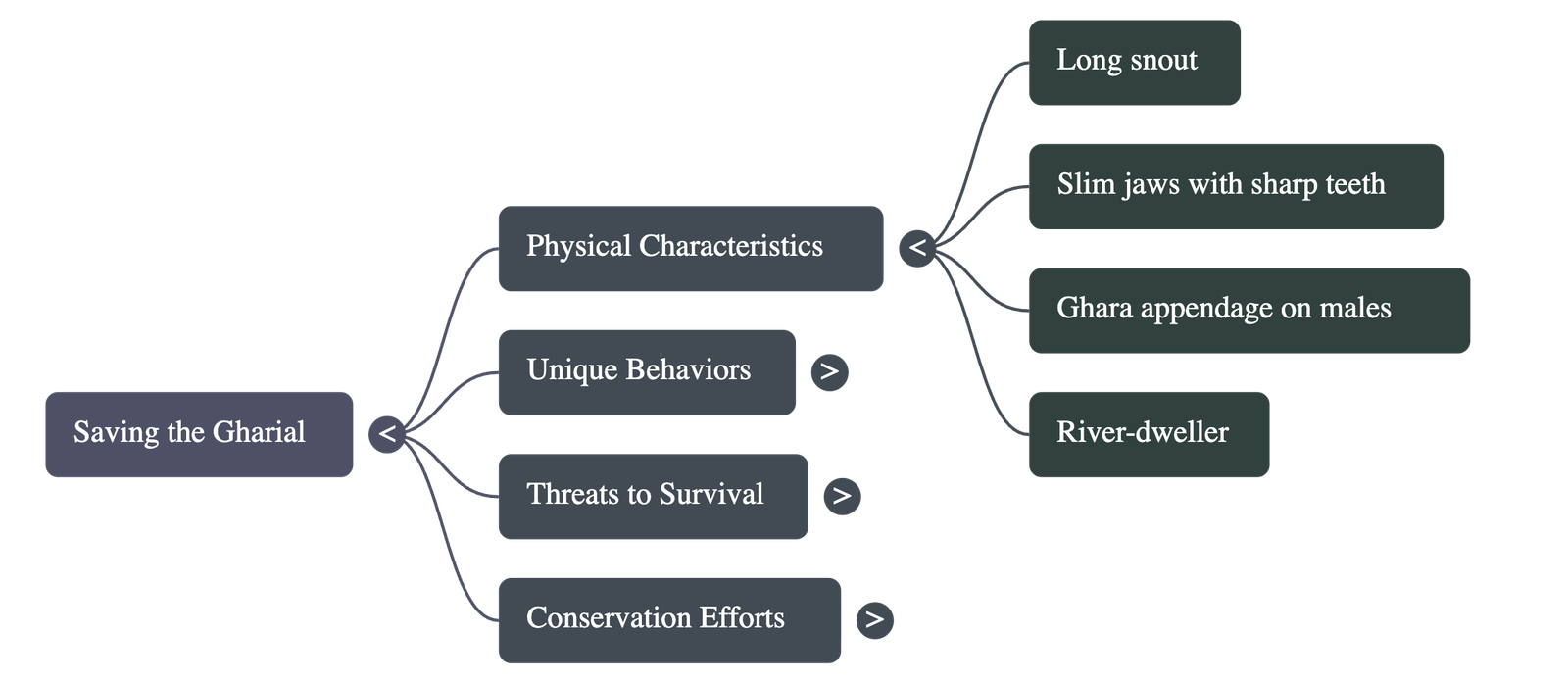
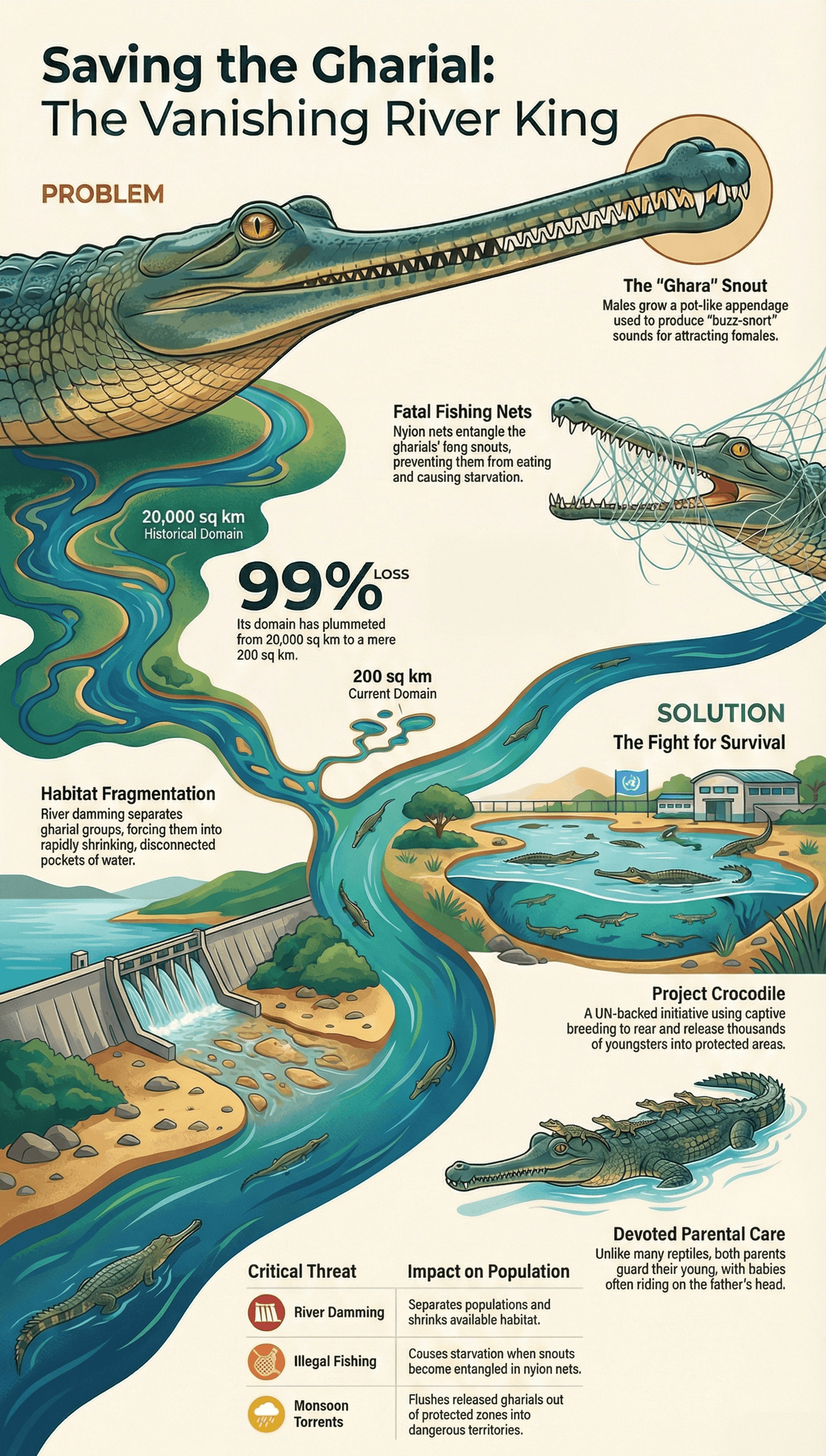
- Unique Physical Features: The gharial is distinct from other crocodilians due to its long snout and slim jaws lined with sharp teeth, specialized for catching fish.
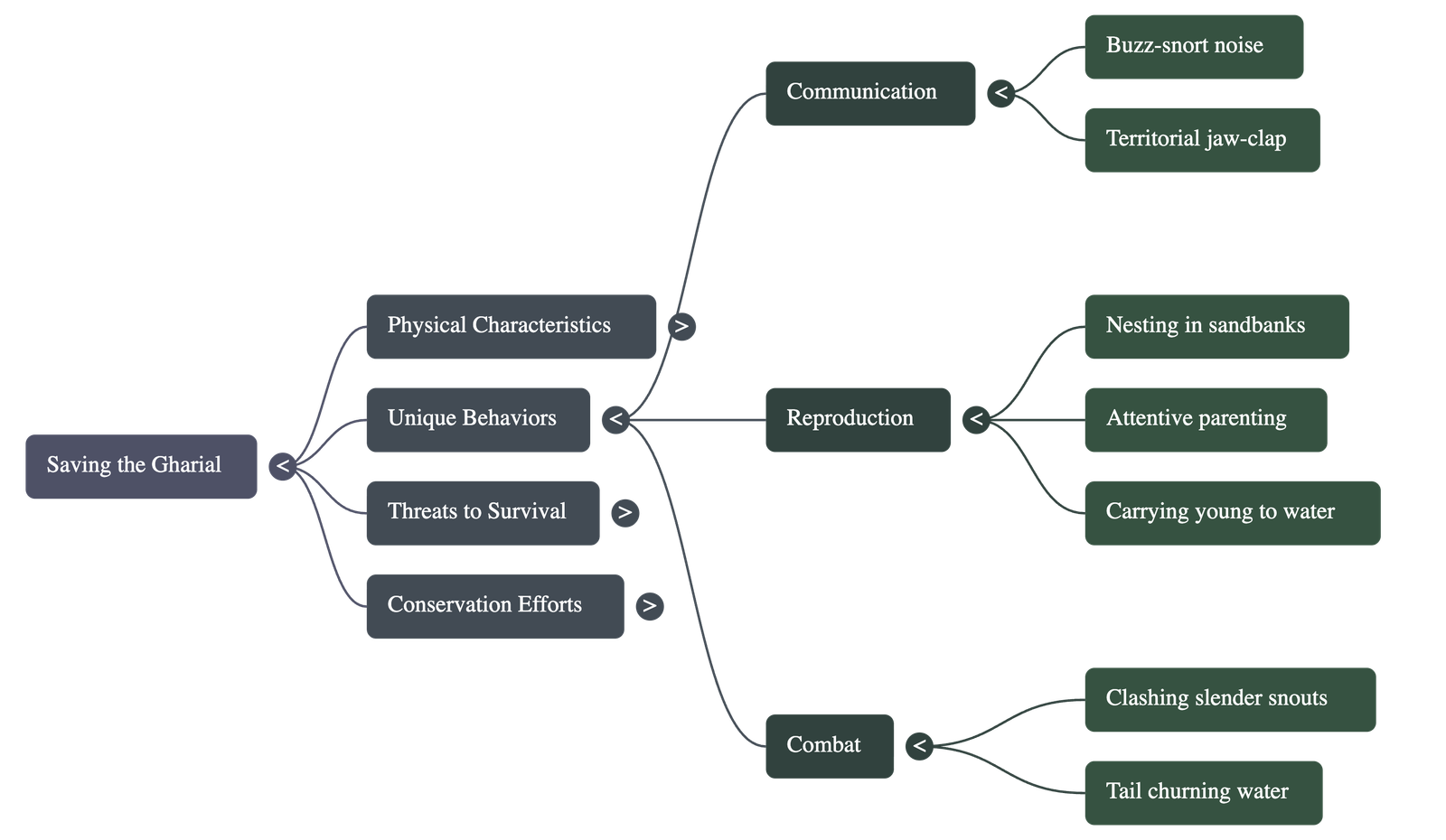
- The "Ghara": Male gharials develop a pot-like appendage called a ghara on their snouts around age twelve. This acts as a resonator to produce a "buzz-snort" sound, which is used to attract females and warn off rival males.
- Parenting Behavior: Female gharials are devoted parents. They dig deep nests (40–50 cm) in sandbanks and guard them. Unlike other crocodiles that carry hatchlings in their mouths, the gharial's sharp teeth make this impossible; instead, the mother guides them tenderly to the water and protects them.
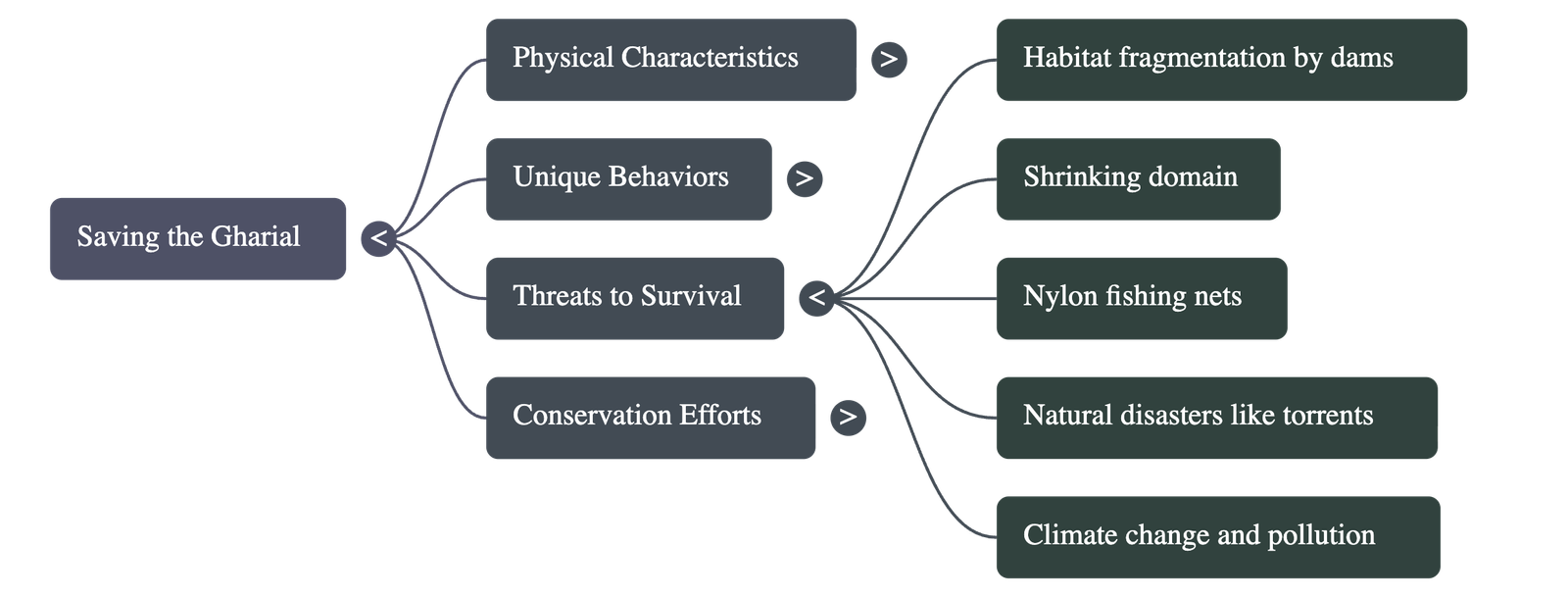
- Habitat and Decline: Gharials require deep, flowing rivers and eat only fish. Their population has plummeted due to dam construction (which fragments their habitat) and net-fishing (where their snouts get fatally entangled). Their domain has shrunk from a range spanning Pakistan to Myanmar to a mere 200 square kilometers.
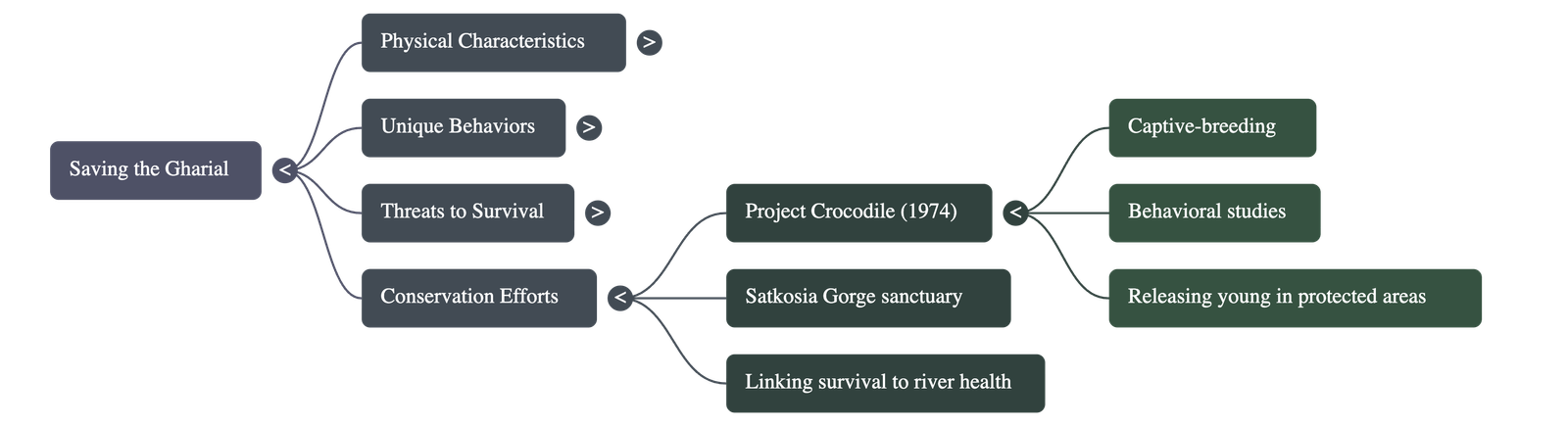
- Project Crocodile: Launched in 1974 by the Indian Government with UN help, this project involved captive breeding. While thousands of eggs were reared, releasing them into the wild proved difficult.
- Challenges in Rehabilitation: Many released gharials did not survive. In areas like the Satkosia Gorge, monsoonal torrents flushed young gharials out of protected areas into the sea or fishing nets. The writer concludes that captive breeding is not enough; saving the gharial requires saving the rivers themselves from pollution and development.
Part B: The Elephant and the Tragopan
Based on the poem by Vikram Seth.
- The Gathering: The poem describes a meeting of the "Beasts of Bingle," including the leopard, bear, and tragopan, led by the Elephant to discuss a common threat.
- The Nature of Man: The Elephant describes humans as a contradictory species—capable of being both mild and vicious, sane and mad—but ultimately defined by selfishness. Humans view the planet as their "fief" (property) where everything exists solely for their consumption.
- Exploitation of Animals: The text highlights how humans kill animals for trivial reasons: the leopard for spots, the elephant for ivory, and others for mere sport or fashion.
- The Immediate Threat: A specific human scheme is underway to build a dam and reservoir ("tame our valley"). This involves clearing the forests, using explosives, and destroying the natural habitat.
- Destruction of Ecosystems: The Elephant warns that when roads are built, forests disappear. The cutting of rhododendrons and bamboo will leave animals homeless and starving.
- Warning to the Trout: The Elephant specifically addresses the trout, who might think a reservoir offers "endless space." The Elephant warns that the resulting soot, filth, and ecological collapse will kill the fish as well.
- Call to Unity: The poem concludes with a plea for all endangered denizens of the forest—fur and feather alike—to unite. The message is that they share a common fate and must stand together against human encroachment to survive.
Do checkout all questions & answers of this chapter.
Quick Navigation:
| | | | |
1 / 1
Quick Navigation:
| | | | |