Quick Navigation:
| | | | |
Quick Navigation:
| | | | |
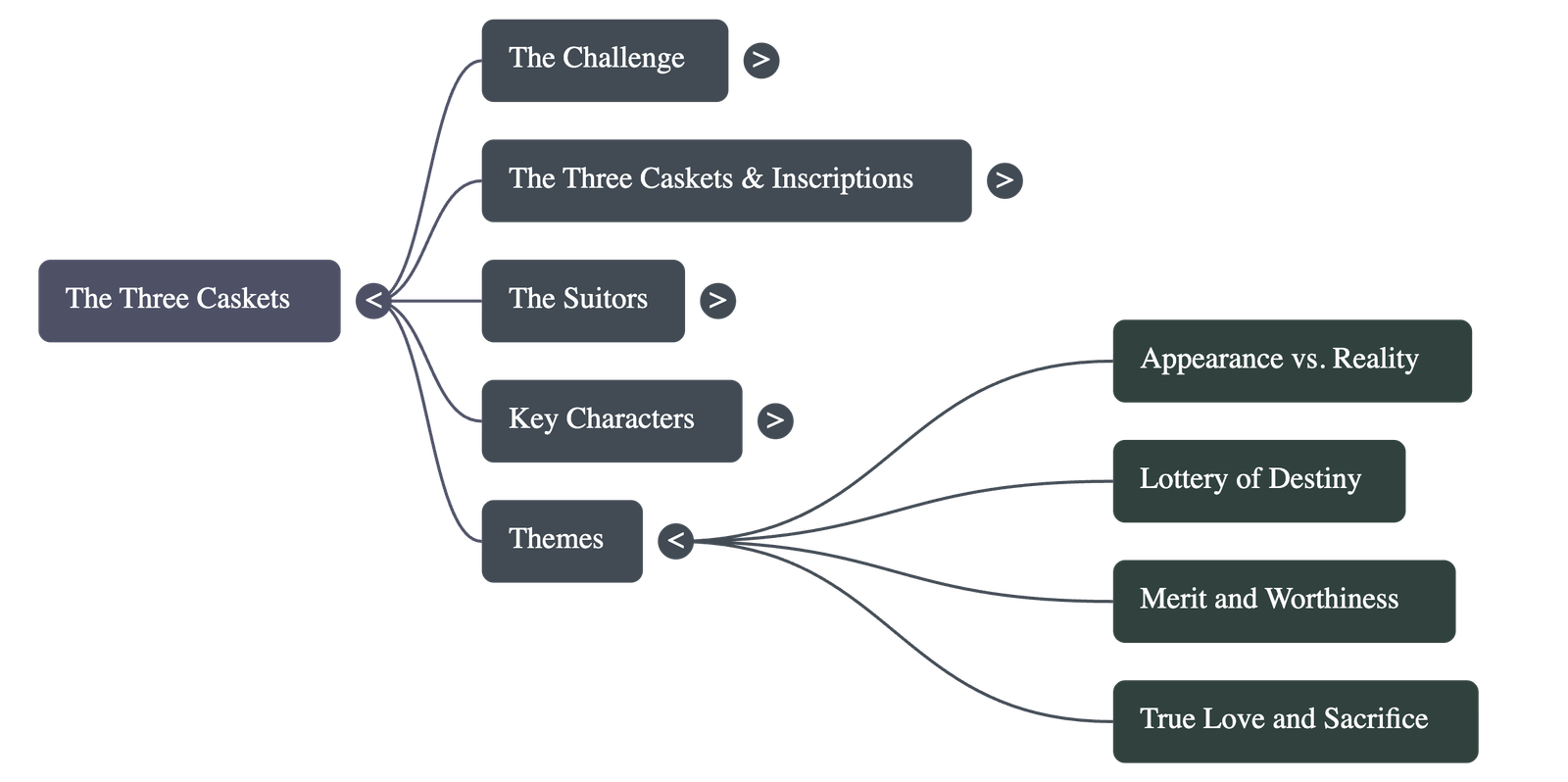
Chapter Summary: The Three Caskets
Introduction: The Test of Love
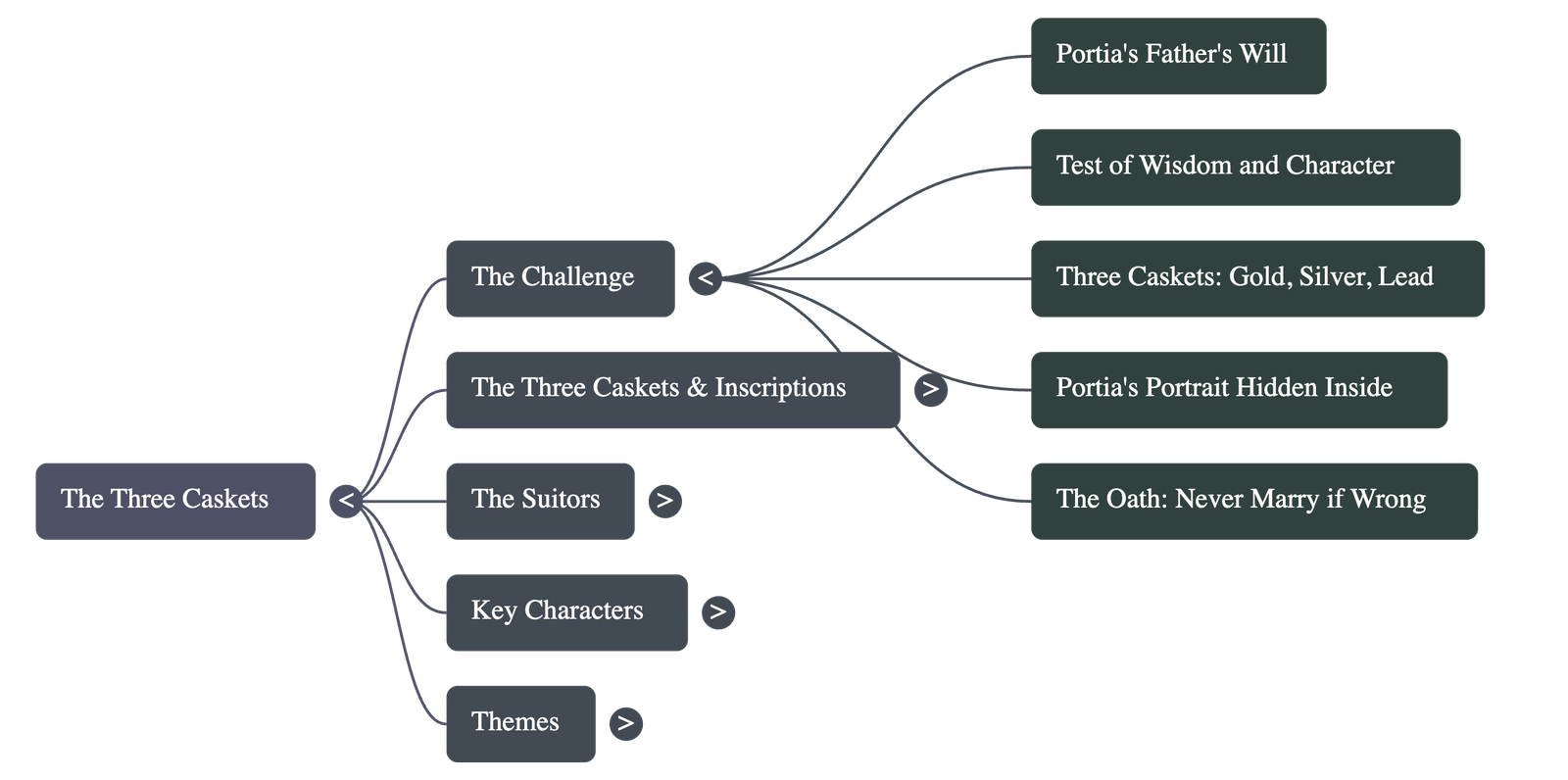
- Portia, a wealthy heiress of Belmont, cannot choose her own husband.
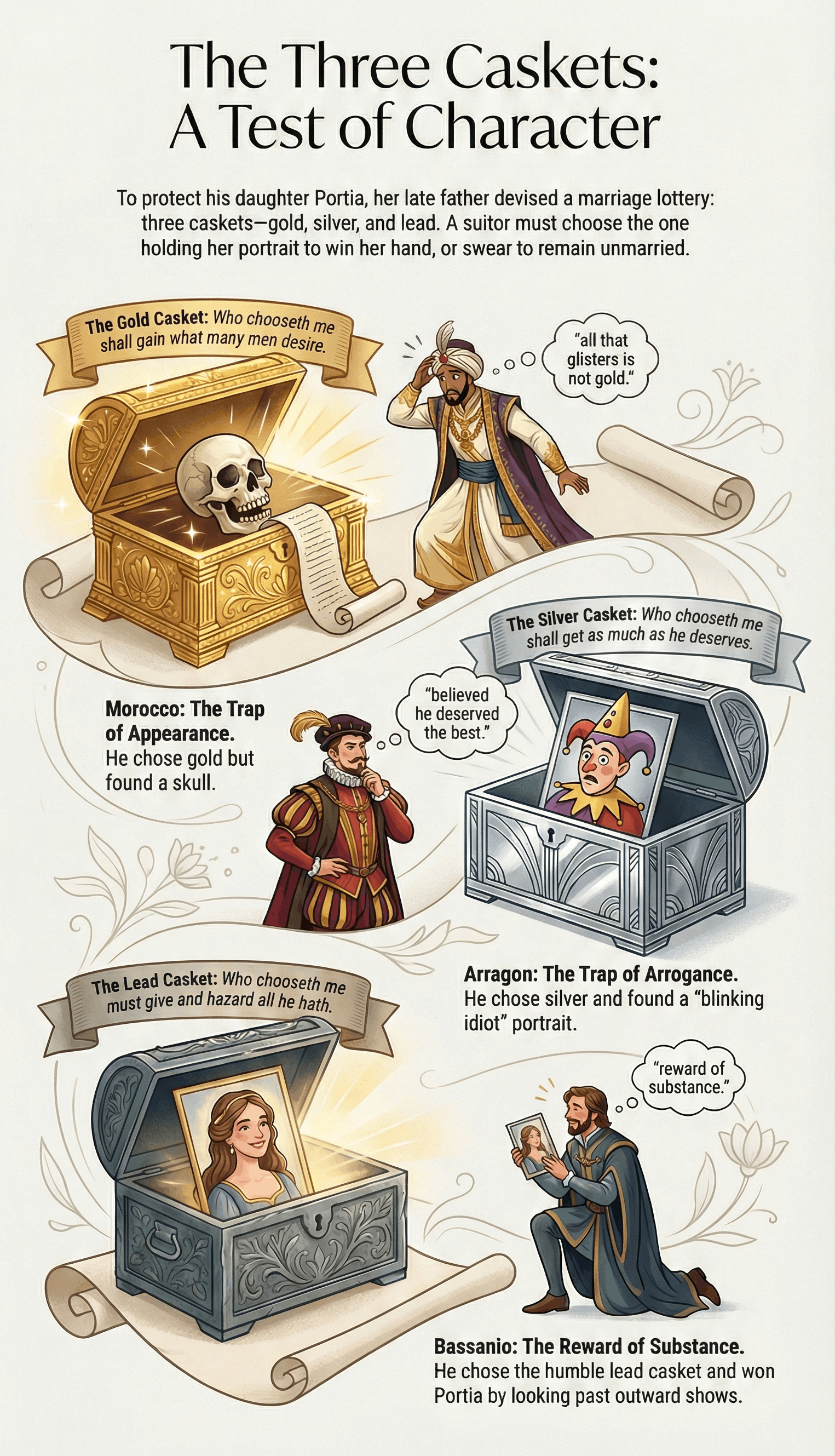
- Her late father left a will establishing a lottery to ensure she marries a man who loves her for herself, not her wealth.
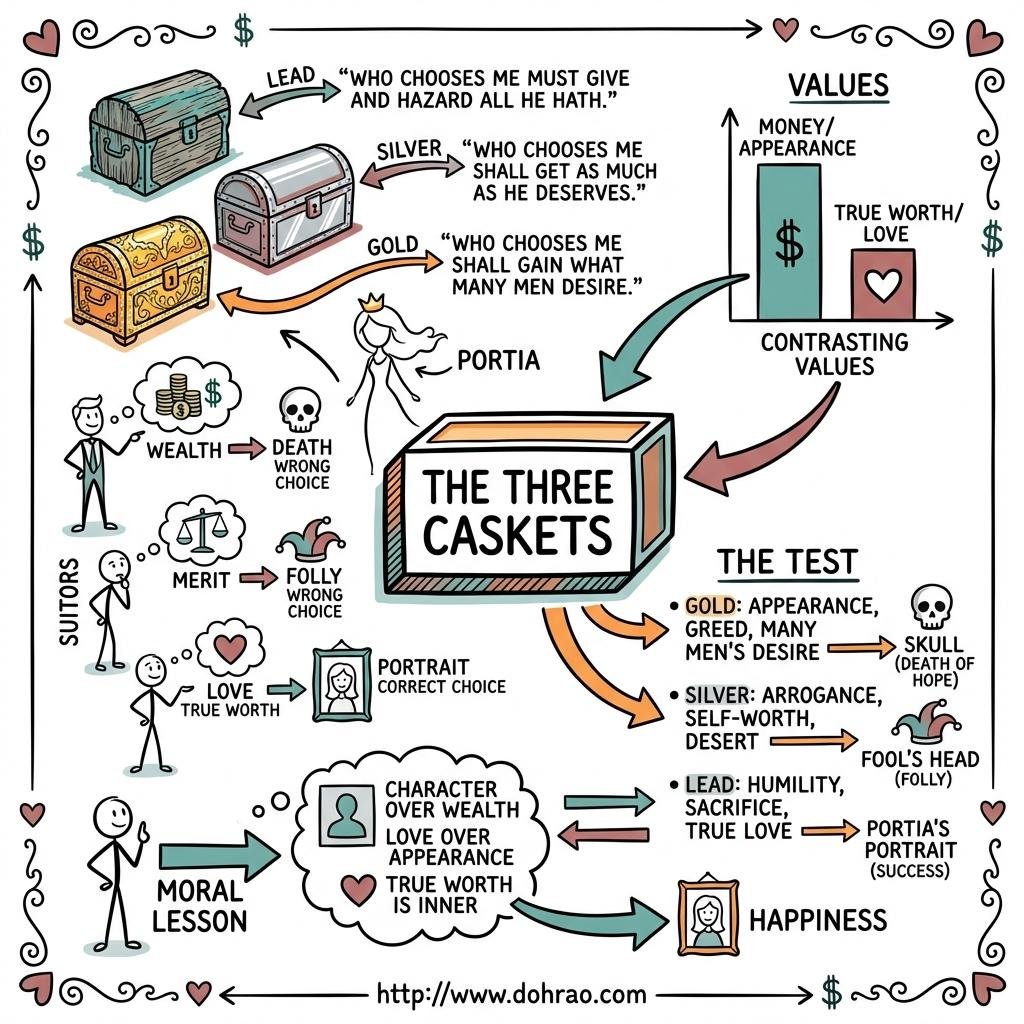
- There are three caskets: Gold, Silver, and Lead. Only one contains Portia's portrait.
- The Rules: Suitors must take an oath before choosing. If they choose wrong, they must:
- Never reveal which casket they chose.
- Never woo another woman in marriage.
- Leave Belmont immediately.
1. The Prince of Morocco (The Golden Casket)
- Arrival: The Prince of Morocco asks Portia not to judge him by his dark skin ("shadowed livery of the burnished sun"). He boasts of his bravery and claims the best women of his land love him.
- The Choice:
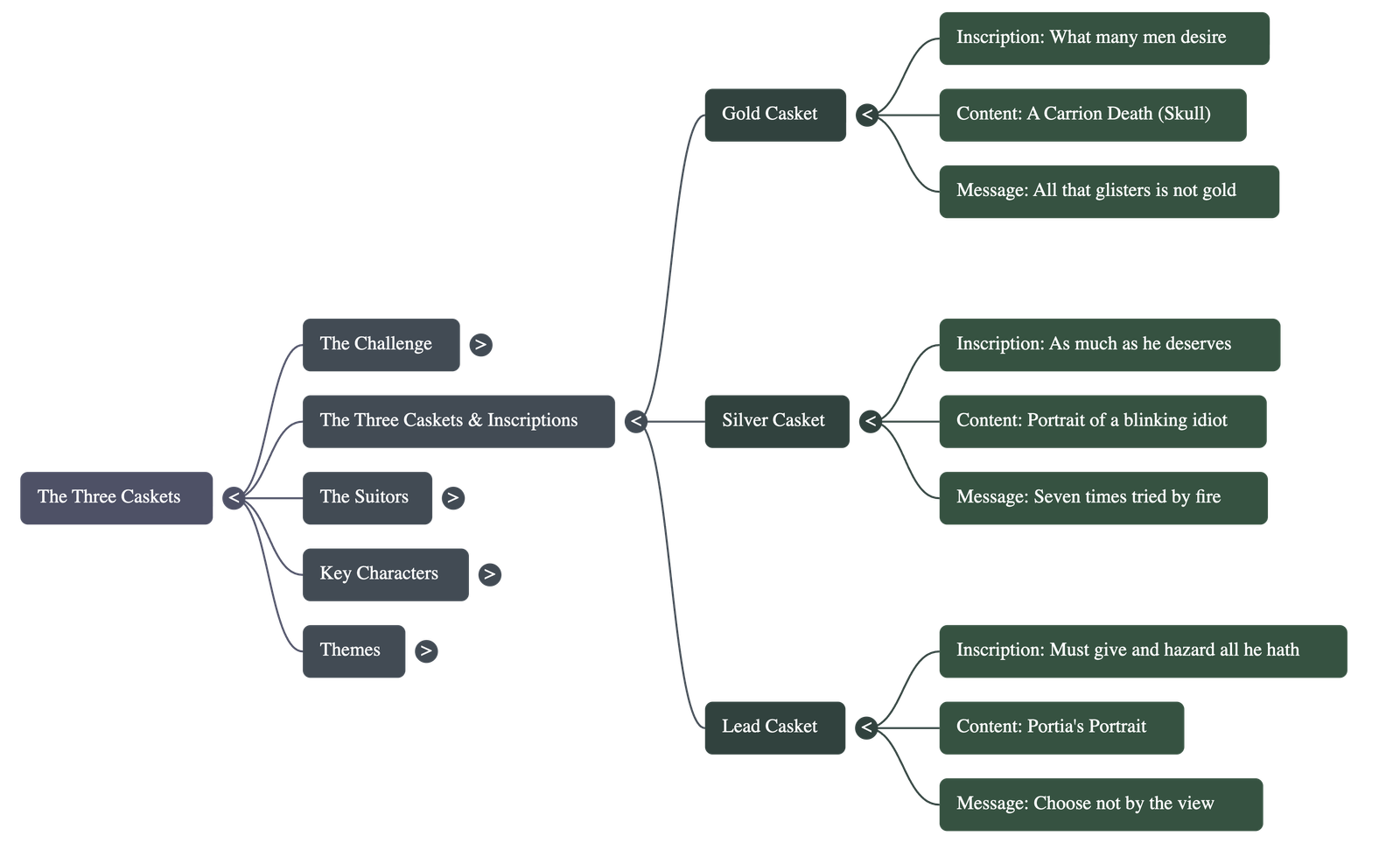
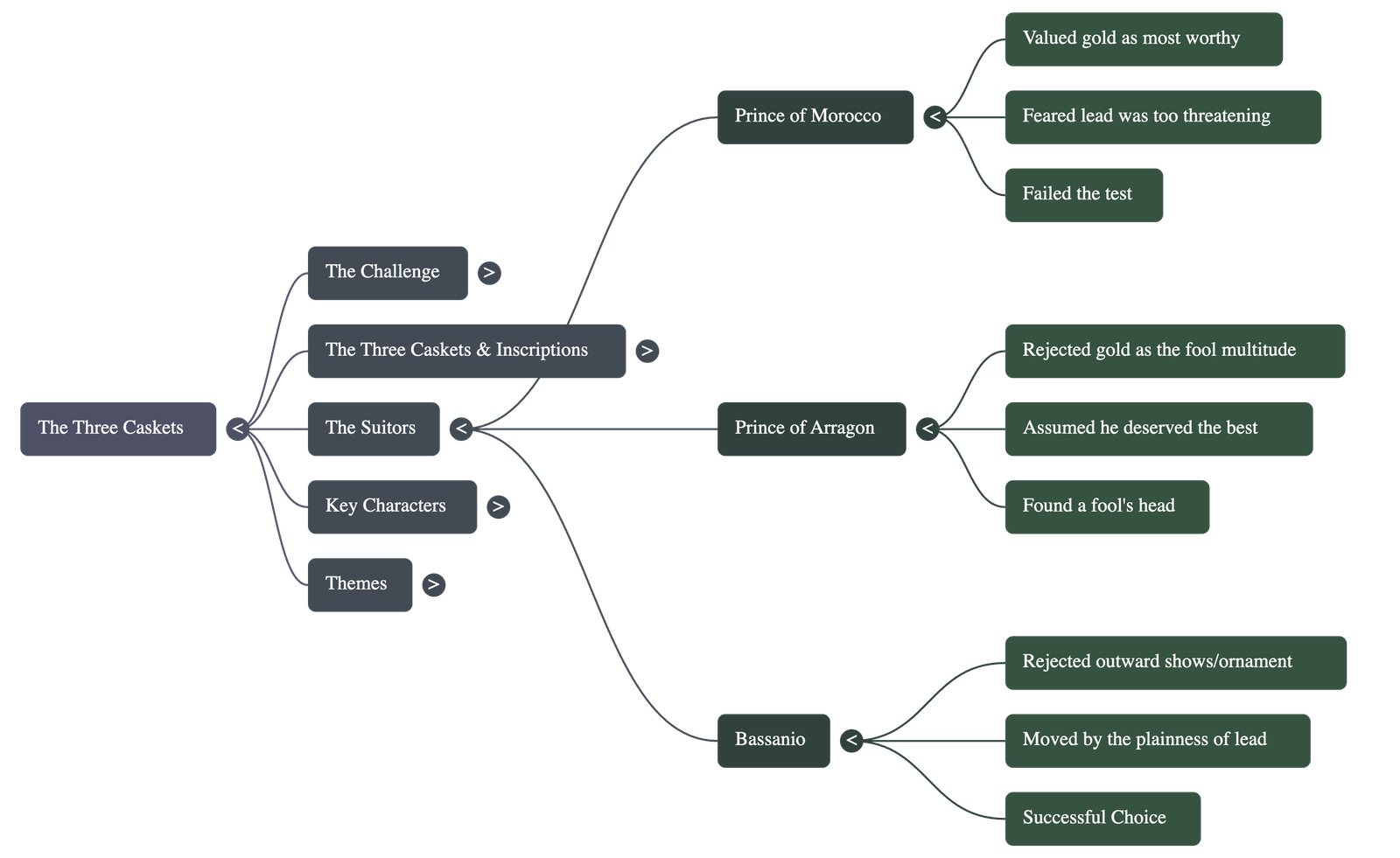
- He rejects the Lead casket ("Who chooseth me must give and hazard all he hath") because he feels a golden mind should not stoop to choose something so dull.
- He rejects the Silver casket ("Who chooseth me shall get as much as he deserves") because, while he believes he has merit, he thinks he deserves even more than that.
- He chooses the Gold casket ("Who chooseth me shall gain what many men desire"). He reasons that the whole world desires Portia, and a gem like her should be set in gold.
- The Result: He opens the casket to find a skull (Carrion Death) with a scroll.
- The Lesson: The scroll reads, "All that glisters is not gold." It criticizes him for being swayed by external appearances. He leaves in defeat.
2. The Prince of Arragon (The Silver Casket)
- Arrival: The Prince of Arragon arrives and haughtily agrees to the conditions of the oath.
- The Choice:
- He rejects the Gold casket because he refuses to join the "fool multitude" or the common masses who choose based on showy appearances.
- He chooses the Silver casket ("Who chooseth me shall get as much as he deserves"). He believes strongly in merit and thinks titles and honors should only be given to those who truly deserve them—including himself.
- The Result: He opens the casket to find a portrait of a blinking idiot presenting him with a schedule.
- The Lesson: The scroll calls him a fool for assuming his own worthiness. By claiming he "deserves" Portia, he displayed arrogance. He leaves Belmont.
3. Bassanio (The Leaden Casket)
- Arrival: Bassanio arrives, and Portia clearly favors him. She asks him to wait a few days or months before choosing so she can enjoy his company, fearing he might lose.
- The Choice: Bassanio insists on choosing immediately because the waiting feels like torture ("the rack").
- He observes the caskets and philosophizes about how the world is easily deceived by ornament and false appearances (in law, religion, and beauty).
- He rejects Gold (referencing King Midas) and Silver (a "common drudge" between men).
- He chooses the Lead casket, which threatens rather than promises. He is moved by its plainness and is willing to "give and hazard all" for love.
- The Result: He finds Portia's portrait inside, along with a scroll confirming his victory.
- The Lesson: The scroll congratulates him for not choosing by view alone.
Resolution: The Exchange of Rings
- Portia's Vow: Portia commits herself and all her possessions to Bassanio. She presents him with a ring as a symbol of their union.
- The Warning: She warns him that if he ever parts with, loses, or gives away the ring, it will signify the ruin of their love.
- Bassanio's Promise: Bassanio swears that he will never remove the ring from his finger while he is alive; if he loses it, he is effectively dead.
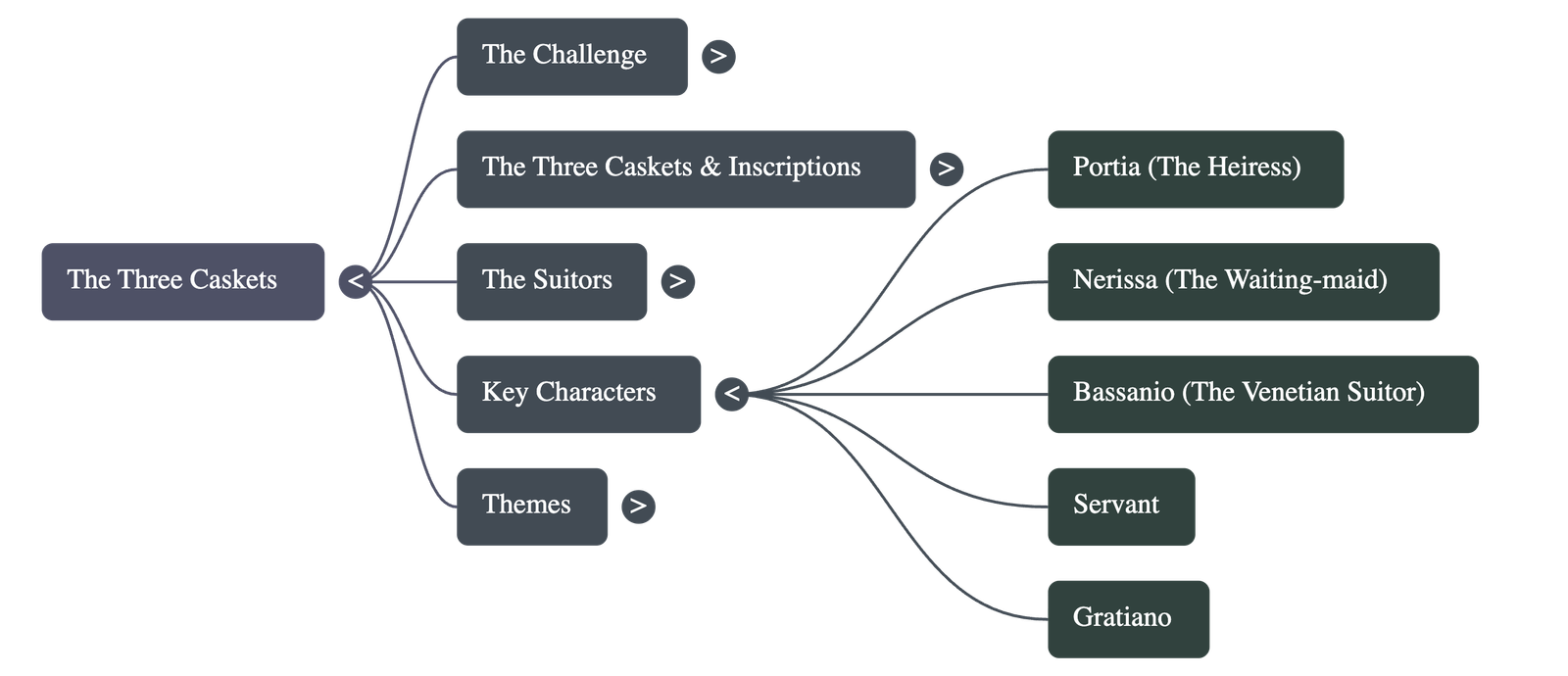
- Nerissa and Gratiano congratulate the couple, and the scene ends in joy.
Do checkout all questions & answers of this chapter.
Quick Navigation:
| | | | |
1 / 1
Quick Navigation:
| | | | |