Quick Navigation:
| | | | |
Quick Navigation:
| | | | |
Pointwise summary of the chapter "My Greatest Olympic Prize" and the accompanying poem:
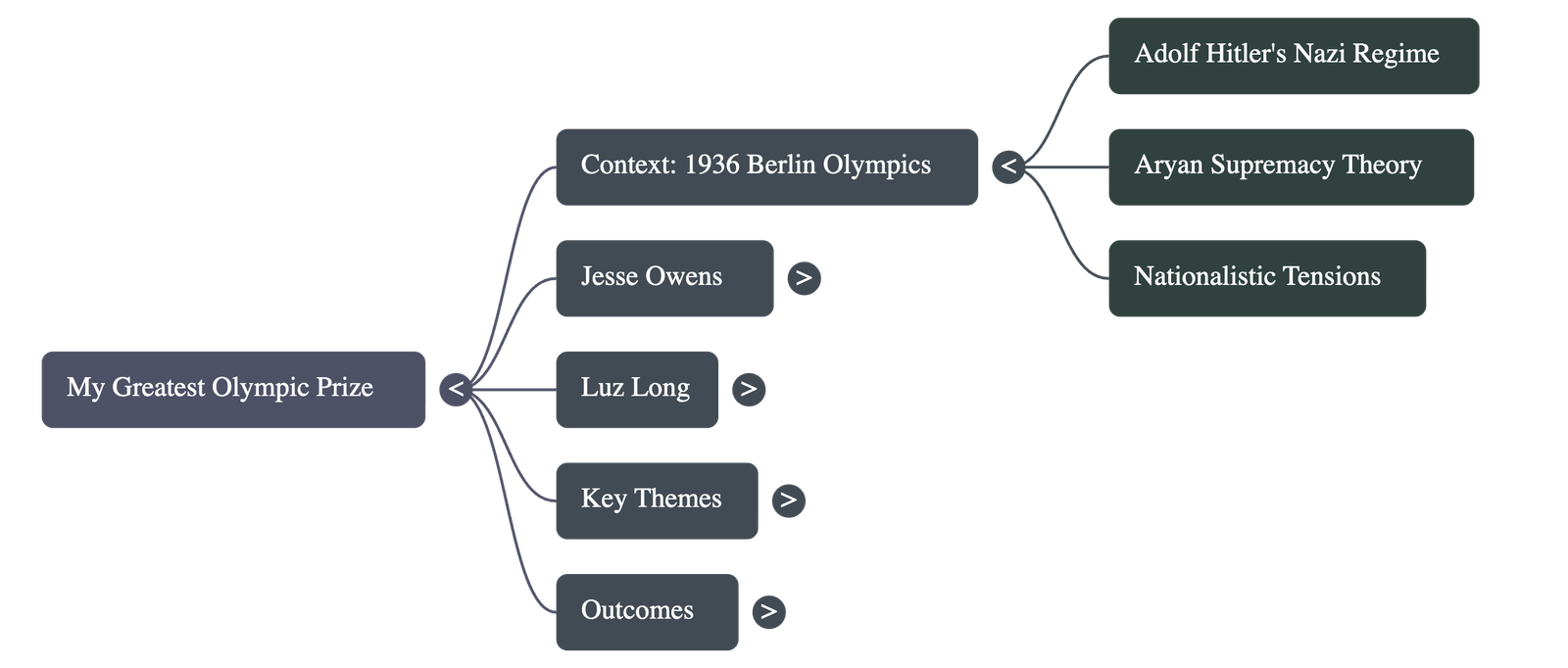
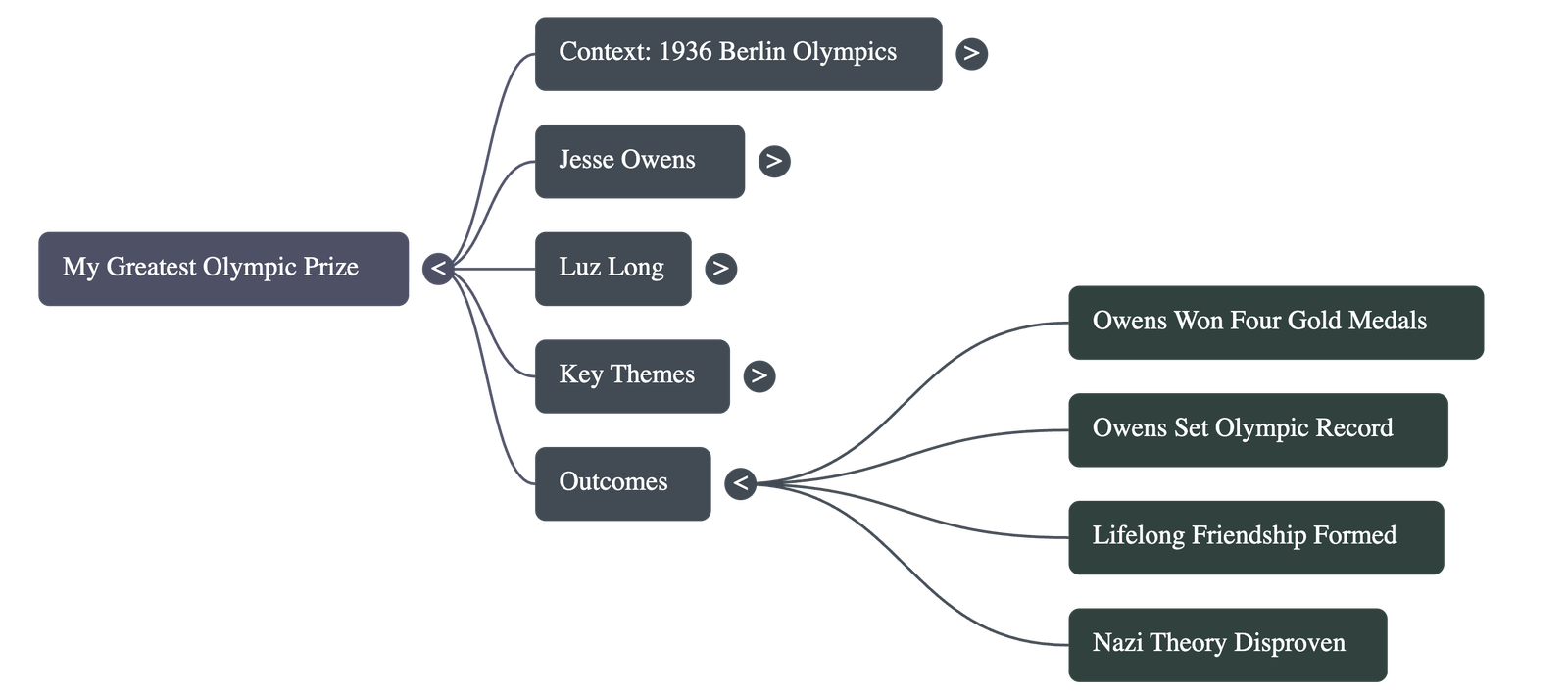
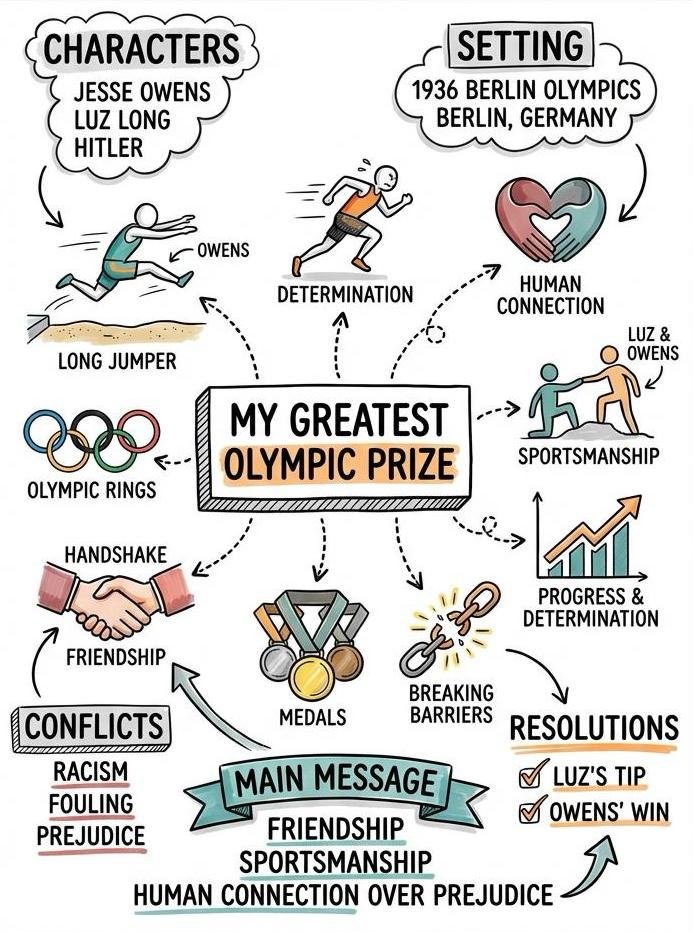
- Historical Context: The story is set during the 1936 Berlin Olympics, a time when Adolf Hitler’s Nazi regime was promoting the "Aryan-superiority" theory, claiming that German athletes were a "master race".
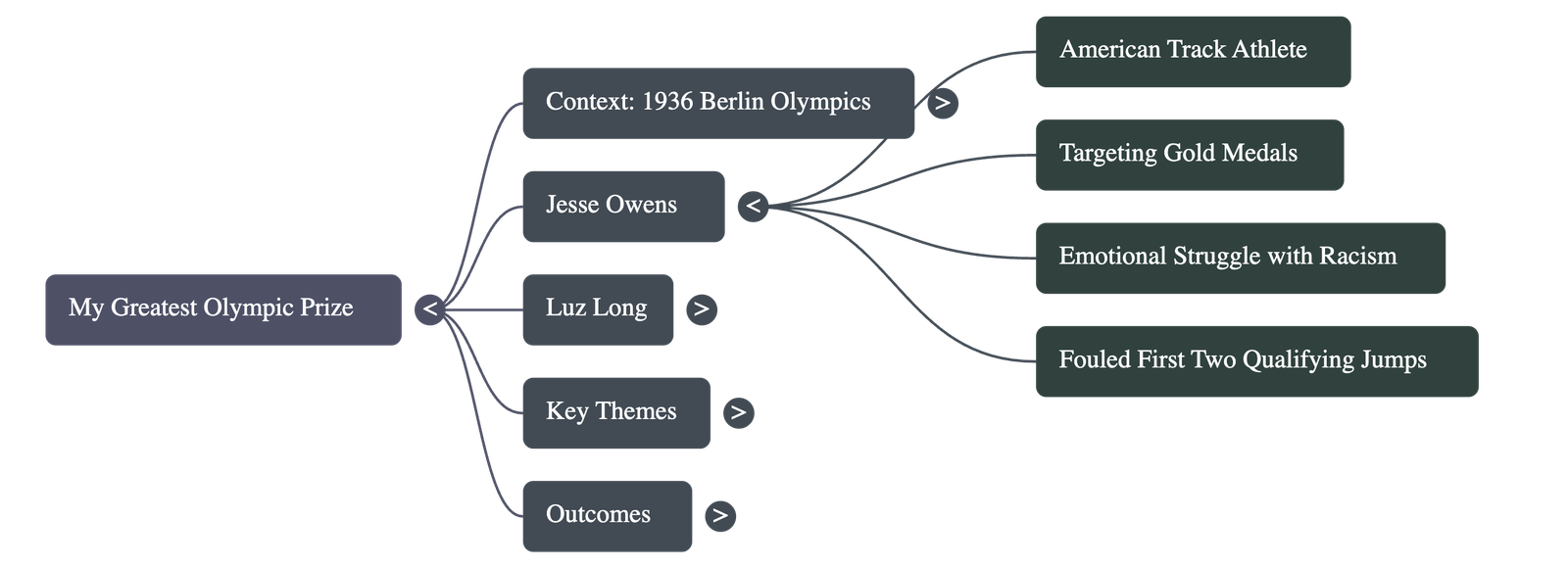
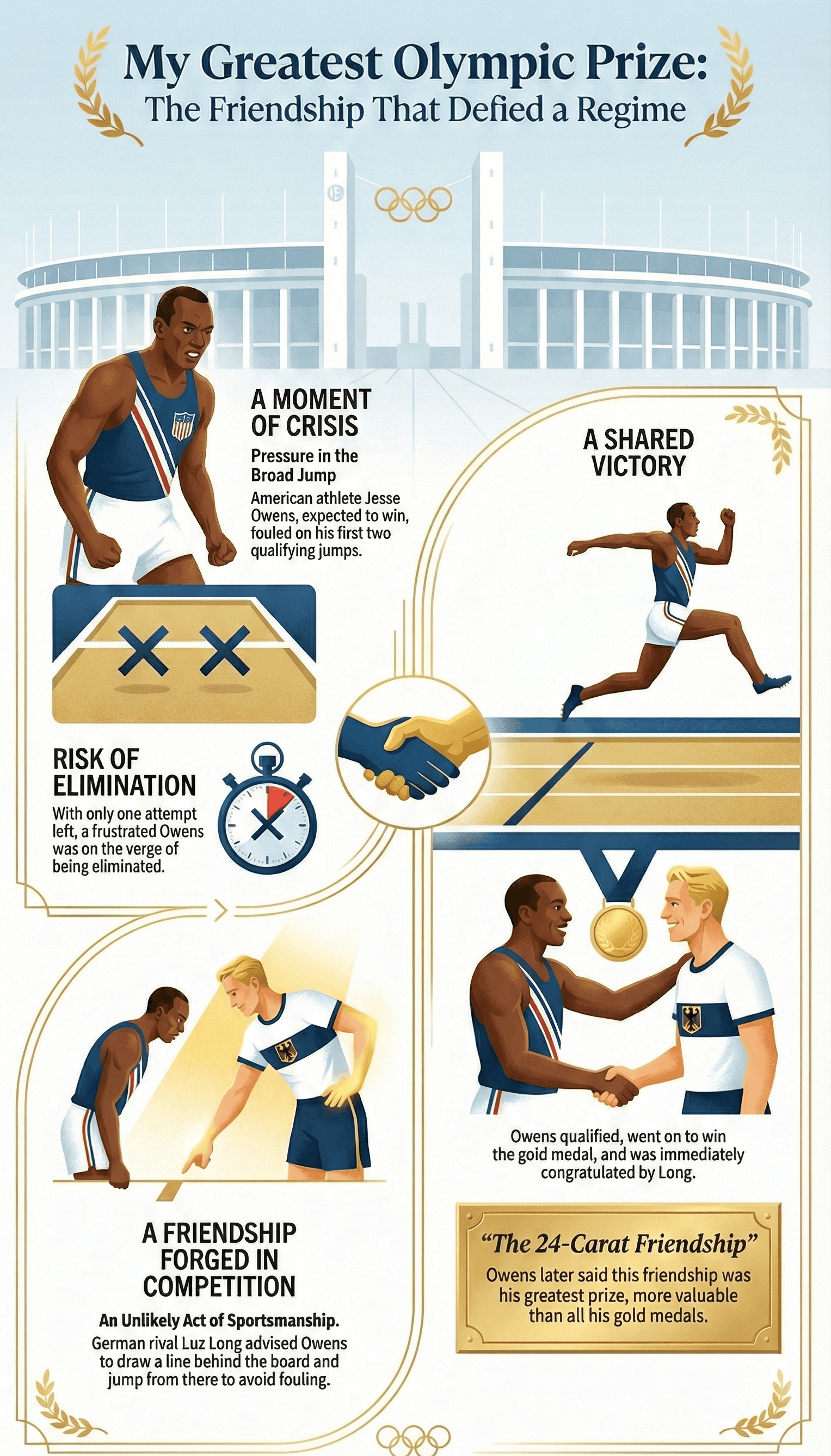
- Jesse Owens’ Ambition: Jesse Owens, an American athlete who had trained for six years and held the world record in the broad jump, arrived at the Games determined to win gold and disprove Hitler’s theories.
- Initial Struggle: Angered by Hitler's racism, Owens became "hot under the collar," which led him to foul his first two qualifying jumps. He feared he would make a fool of himself and fail to reach the finals.
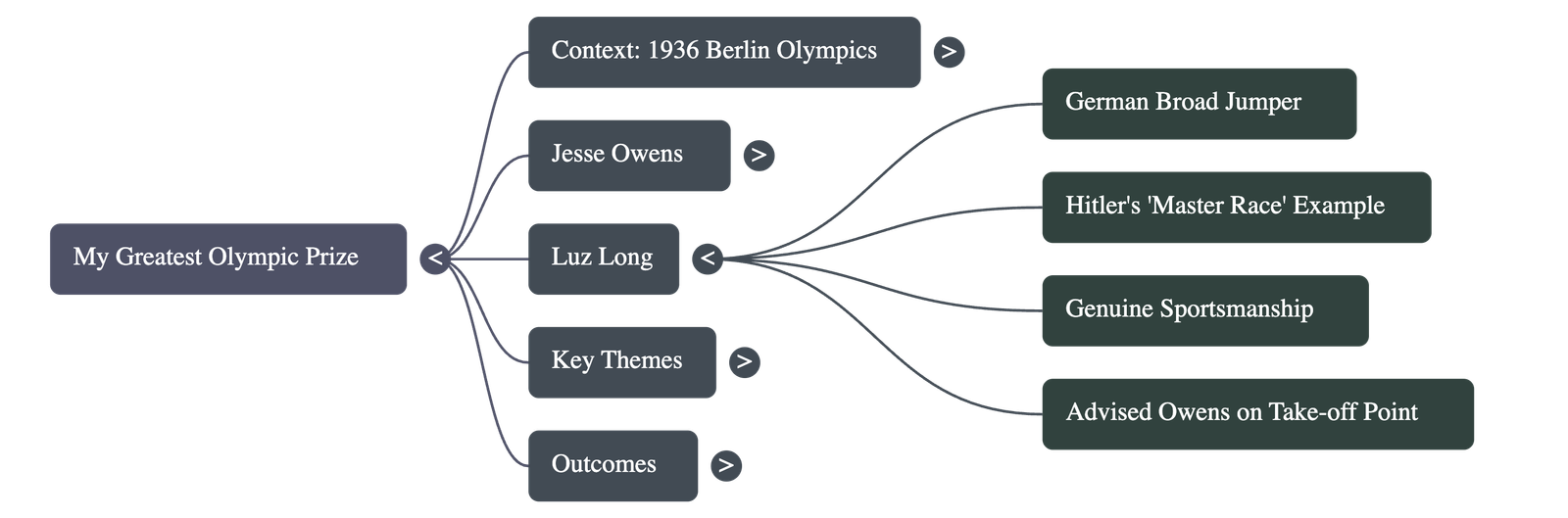
- Luz Long’s Intervention: Luz Long, a tall, German broad jumper whom Hitler had "kept under wraps," approached Owens. Despite being the epitome of the "Aryan" ideal, Long was friendly and did not believe in the Nazi supremacy theory.
- The Winning Advice: Long sensed Owens' frustration and suggested that he draw a line a few inches behind the take-off board and jump from there to ensure he qualified without fouling. Owens followed this advice and qualified with ease.
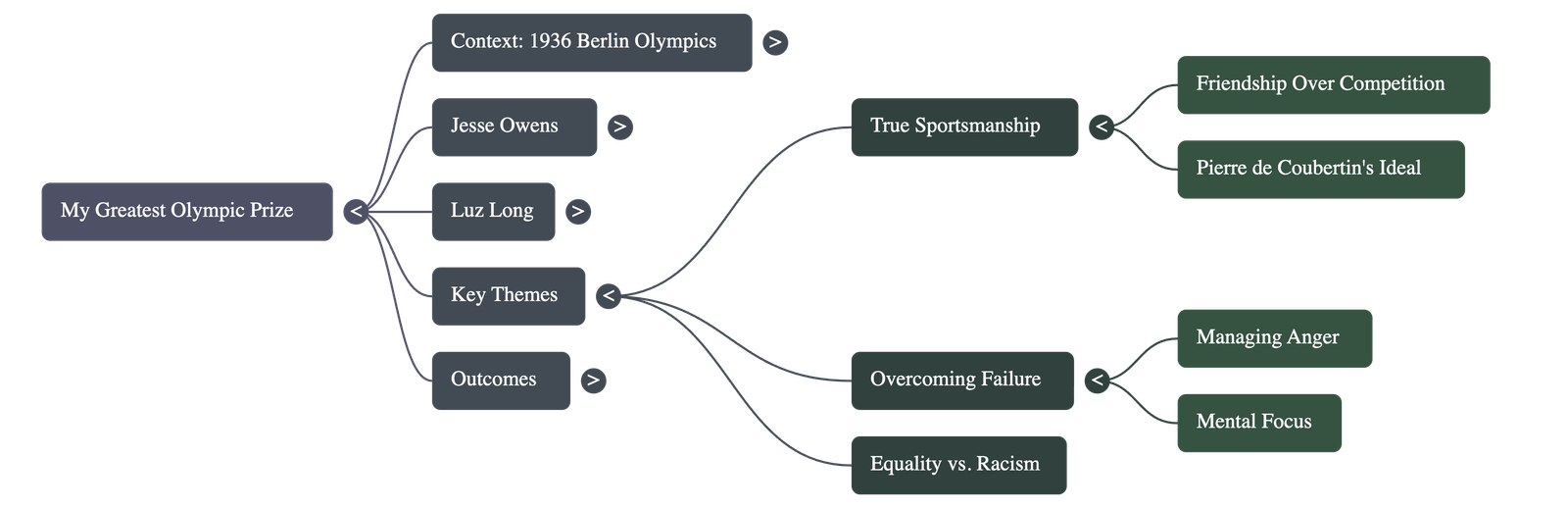
- The "Greatest Prize": Owens won the gold medal and set a new Olympic record. Long was the first to congratulate him heartily in full view of Hitler. Owens realized that his "24-carat friendship" with Long was worth more than all his medals, embodying the Olympic spirit that "the essential thing in life is not conquering but fighting well".
- Hitler’s Reaction: While the German audience cheered for Owens, Hitler was reported to have refused to shake his hand or congratulate him due to his racist beliefs.
- Luz Long’s Legacy: Long died during World War II, but before his death, he wrote to Owens expressing hope for peaceful coexistence among men of all races.
- Theme of Overcoming Failure: The chapter also includes the poem "Failure" by Amos Russel Wells, which uses metaphors like a "rocky hill" or a "tangled string" to teach that failure should be met with determination, optimism, and a will to succeed.
Do checkout all questions & answers of this chapter.
Quick Navigation:
| | | | |
1 / 1
Quick Navigation:
| | | | |