Quick Navigation:
| | |
Kathmandu
1. Arrival and Overview
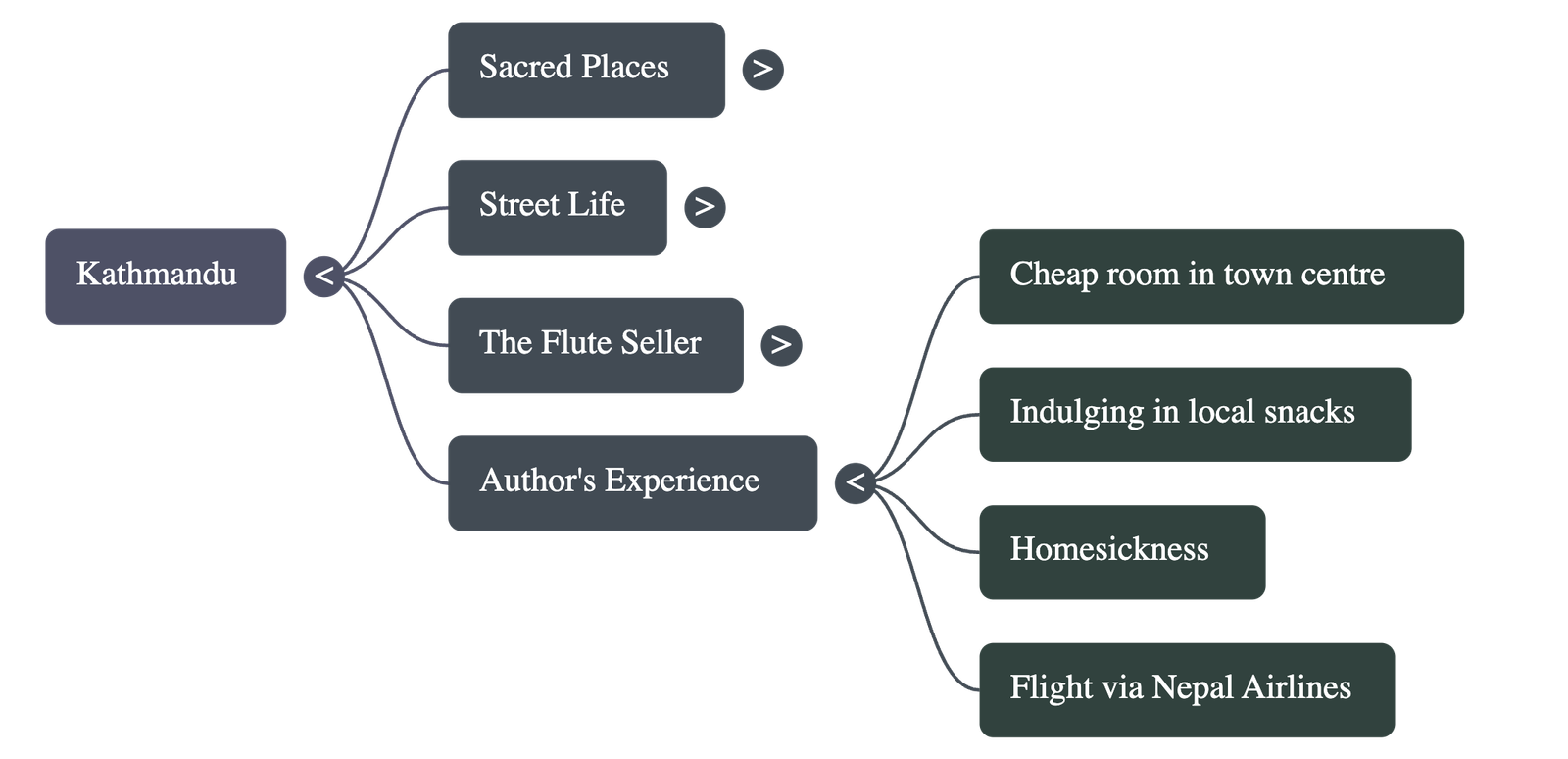
- The narrator, Vikram Seth, stays in a cheap room in the center of Kathmandu.
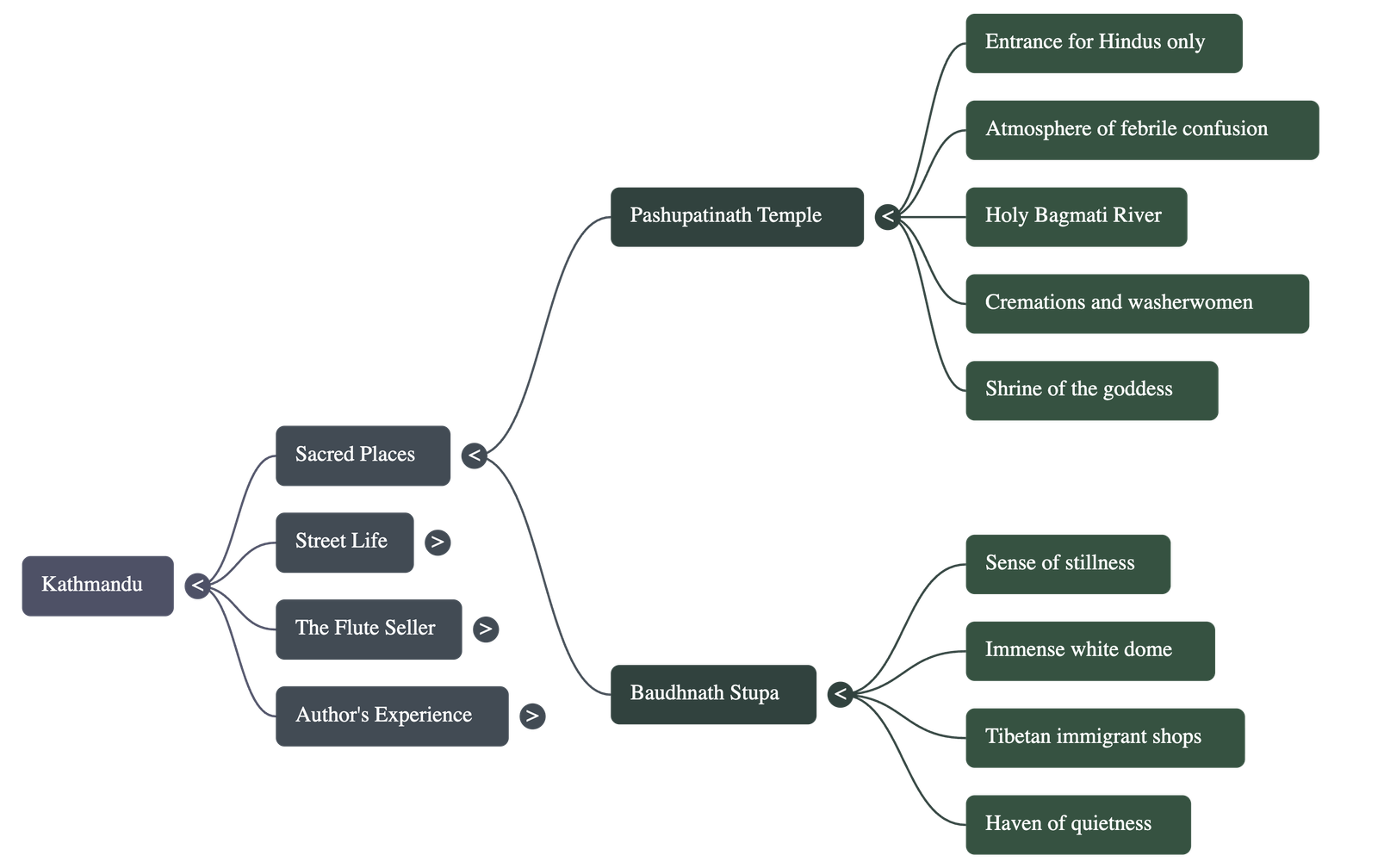
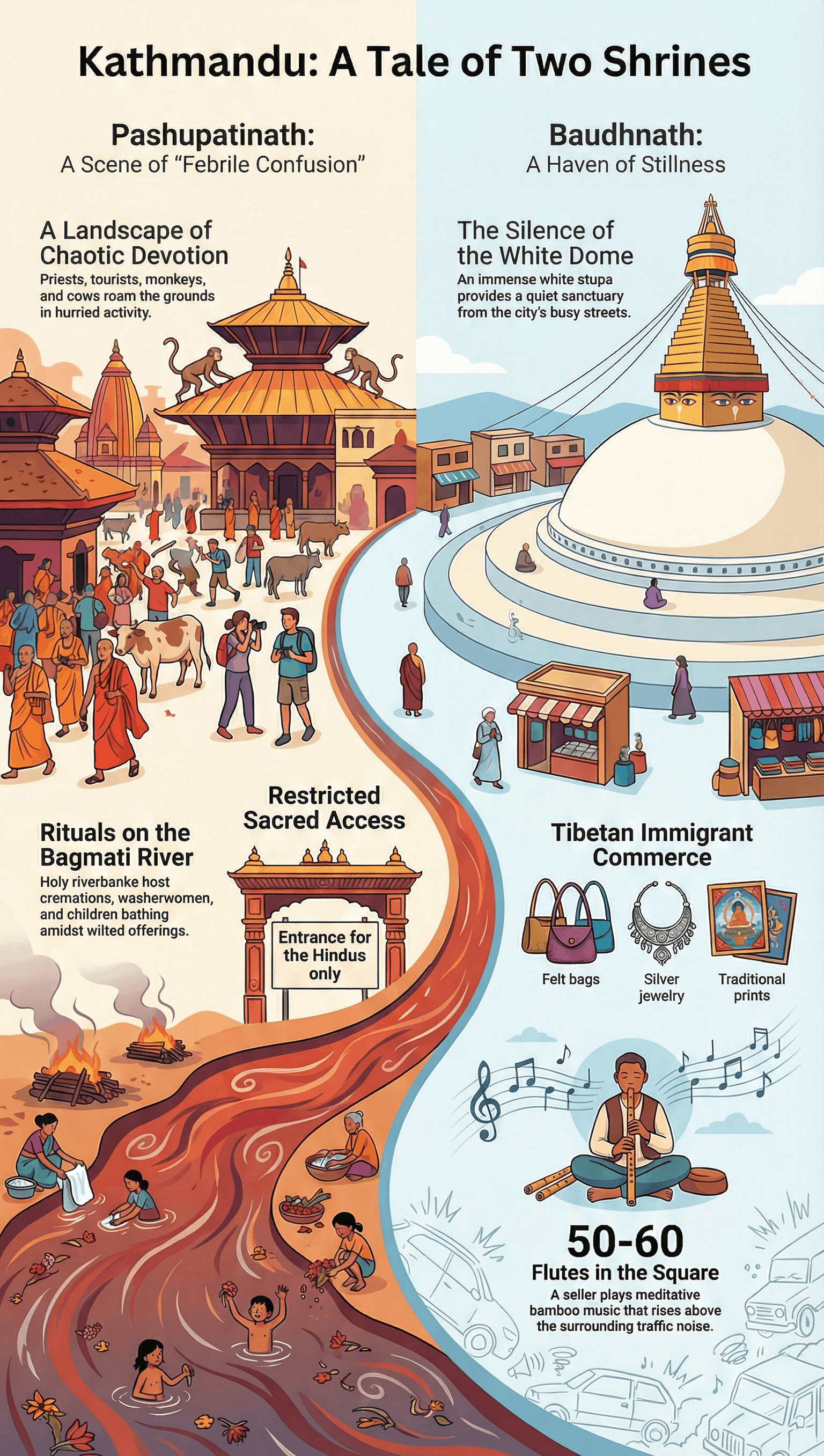
- Accompanied by Mr. Shah’s son and nephew, he visits the two most sacred temples in the city: Pashupatinath (Hindu) and Baudhnath (Buddhist).
2. The Chaos at Pashupatinath Temple
- Entry Restriction: A sign at the entrance declares "Entrance for the Hindus only".
- Atmosphere of Confusion: The grounds are filled with "febrile confusion" (feverish chaos). The crowd includes priests, hawkers, devotees, tourists, cows, monkeys, pigeons, and dogs.
- Crowd Behavior: Worshippers push and elbow each other to get to the front to catch the priest's attention.
- Royal Deference: When a Nepalese princess appears, everyone bows and makes way for her.
- Western Tourists: A group of saffron-clad Westerners struggles to convince a policeman to let them in, but the officer stands firm that only Hindus are allowed.
- Monkey Antics: A fight breaks out between two monkeys. One jumps onto a Shivalinga and runs screaming around the temple down to the river.
- The Holy Bagmati River:
- The river flows below the temple.
- Activities on the banks include corpse cremation, washerwomen working, and children bathing.
- Wilted flowers and leaves (old offerings) are dropped into the river from balconies.
- The Myth: There is a small shrine half-submerged in the river. It is believed that when it fully emerges, the goddess inside will escape, marking the end of the evil period of Kaliyug on earth.
3. The Serenity of Baudhnath Stupa
- Contrast: In complete contrast to Pashupatinath, the Buddhist shrine of Baudhnath offers a sense of stillness.
- Structure: It has an immense white dome surrounded by a road.
- Surroundings: The outer edge is lined with small shops, many owned by Tibetan immigrants.
- Merchandise: The shops sell felt bags, Tibetan prints, and silver jewellery.
- Atmosphere: There are no crowds. It serves as a "haven of quietness" amidst the busy streets.
4. The Streets of Kathmandu
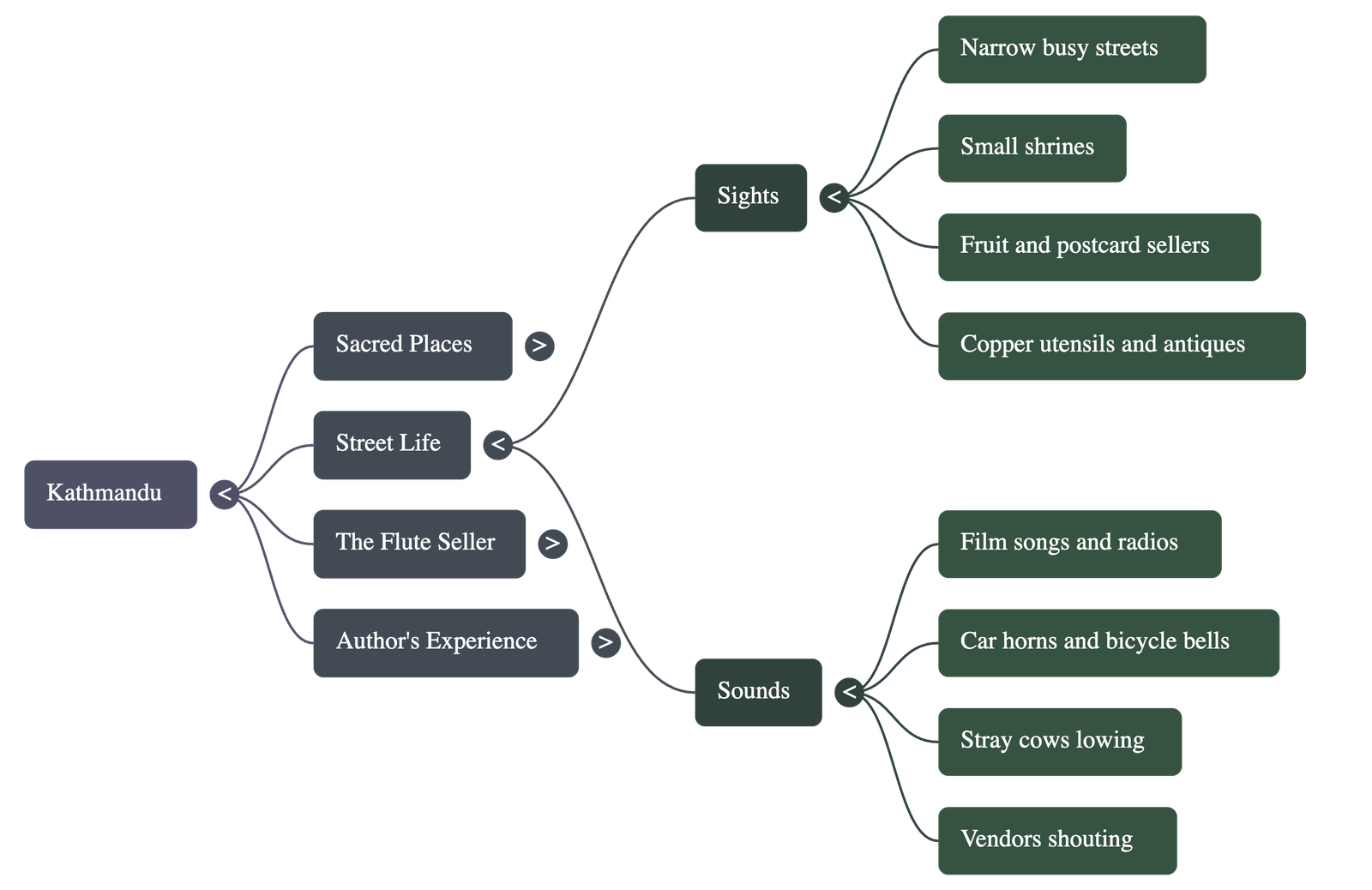
- Vivid Description: The city is described as vivid, mercenary, and religious.
- Sights:
- Small shrines with flower-adorned deities are found along narrow, busy streets.
- Hawkers sell fruit, flutes, and postcards.
- Shops sell a mix of goods: Western cosmetics, film rolls, chocolates, copper utensils, and Nepalese antiques.
- Sounds: The streets are noisy with film songs blaring from radios, car horns, bicycle bells, stray cows mooing, and vendors shouting their wares.
- The Author's Indulgence: Vikram Seth enjoys various treats:
- A bar of marzipan.
- Corn-on-the-cob roasted on charcoal, rubbed with salt, chilli, and lemon.
- He reads love story comics and a Reader’s Digest.
- He washes it all down with Coca-Cola and a "nauseating orange drink".
5. Decision to Return Home
- Route Consideration: The author considers an adventurous land route home: bus/train to Patna, sailing up the Ganges to Allahabad, then up the Yamuna to Agra and Delhi.
- Final Decision: Feeling exhausted and homesick, and realizing it is the end of August, he abandons the adventurous plan.
- Action: He enters the Nepal Airlines office and buys a flight ticket for the next day to head directly home.
6. The Flute Seller
- Location: Standing in a corner of the square near the hotel.
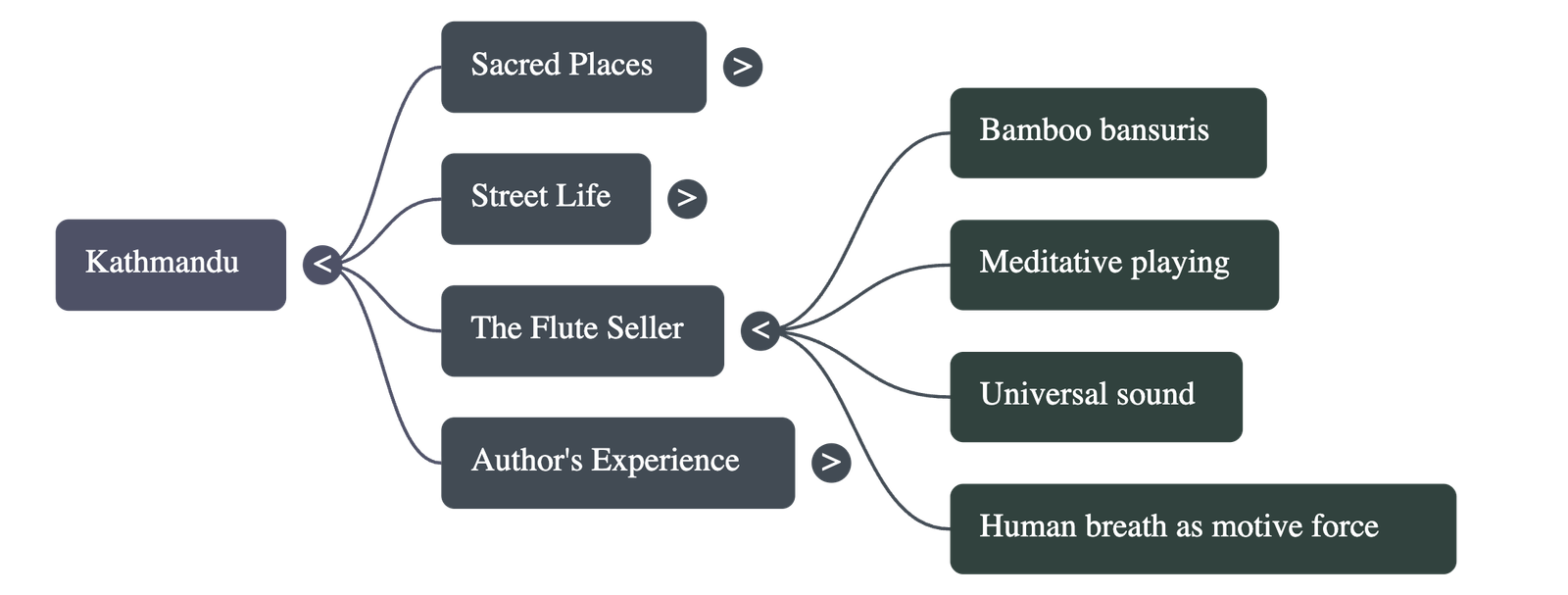
- Appearance: He holds a pole with an attachment at the top from which 50 to 60 bansuris (flutes) protrude in all directions, resembling the quills of a porcupine.
- Instruments: The flutes are made of bamboo and include cross-flutes and recorders.
- Performance:
- He places the pole on the ground and plays a flute.
- The sound is distinct and rises clearly above the traffic and noise.
- He plays slowly and meditatively, without excessive display or shouting out his wares.
- Business Style: His salesmanship is incidental and offhanded. He occasionally sells a flute or breaks off to chat with a fruit seller. The author senses this has been his routine for years.
7. Reflections on Flute Music
- Universal Appeal: The author finds it hard to leave the square because of the music. He believes the flute is the most universal and particular of sounds.
- Cultural Varieties: He notes that every culture has its own flute with specific fingering and range:
- The reed neh.
- The recorder.
- The Japanese shakuhachi.
- The deep bansuri of Hindustani classical music.
- The clear or breathy flutes of South America.
- The high-pitched Chinese flutes.
- Connection to Humanity: Despite the differences, all flutes link to the "commonality of all mankind". The music is closest to the human voice because it is motivated by living breath and requires pauses to breathe.
- Personal Change: The author is surprised by how deeply he is affected by the familiar phrases of the bansuri. In previous years, when returning home from abroad, he had not invested such details with this level of significance.
Do checkout all questions & answers of this chapter.
Quick Navigation:
| | |
1 / 1
Quick Navigation:
| | |