Quick Navigation:
| |
My Childhood
Family and Birth
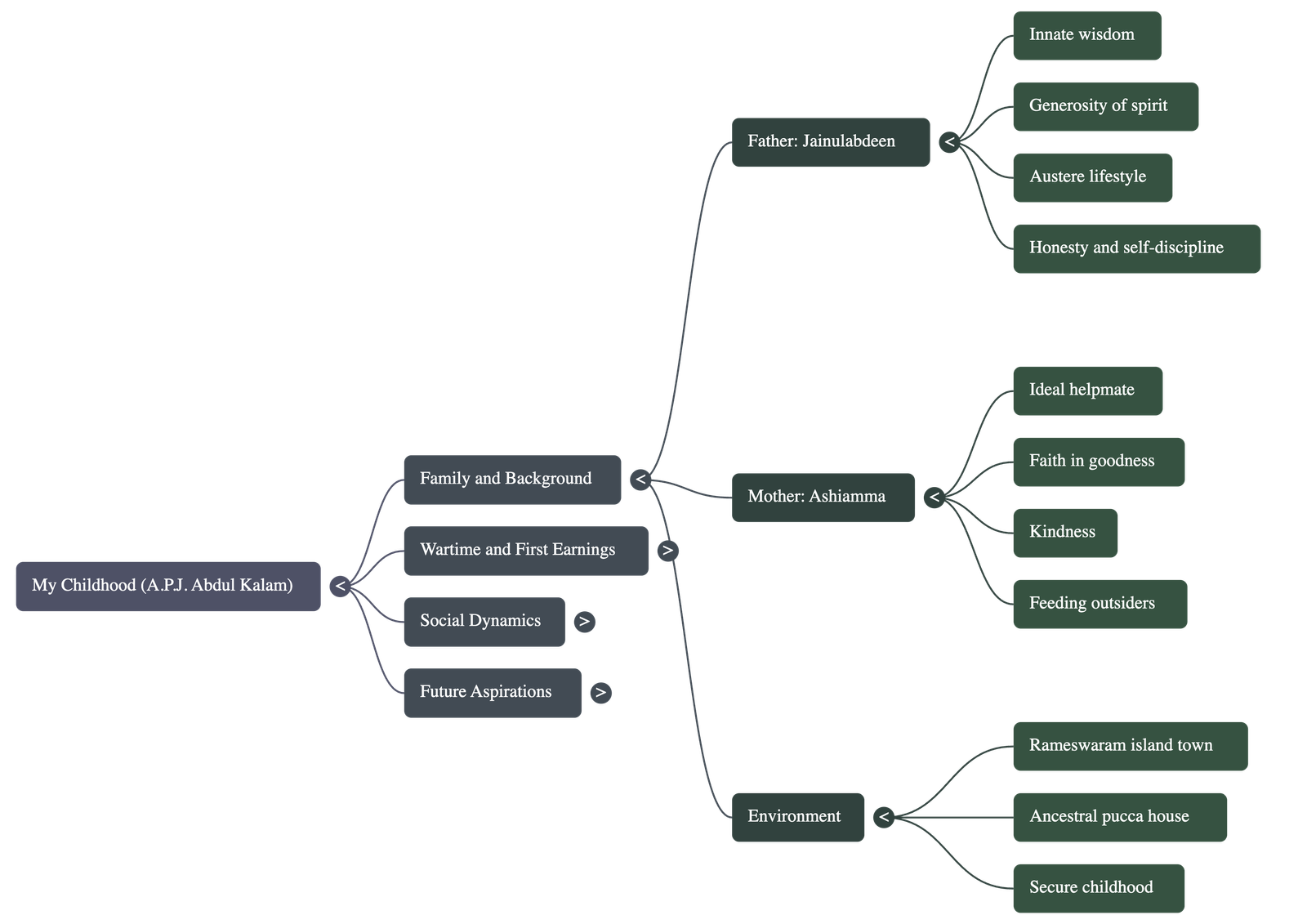
- Origins: A.P.J. Abdul Kalam was born into a middle-class Tamil family in the island town of Rameswaram, in the erstwhile Madras State.
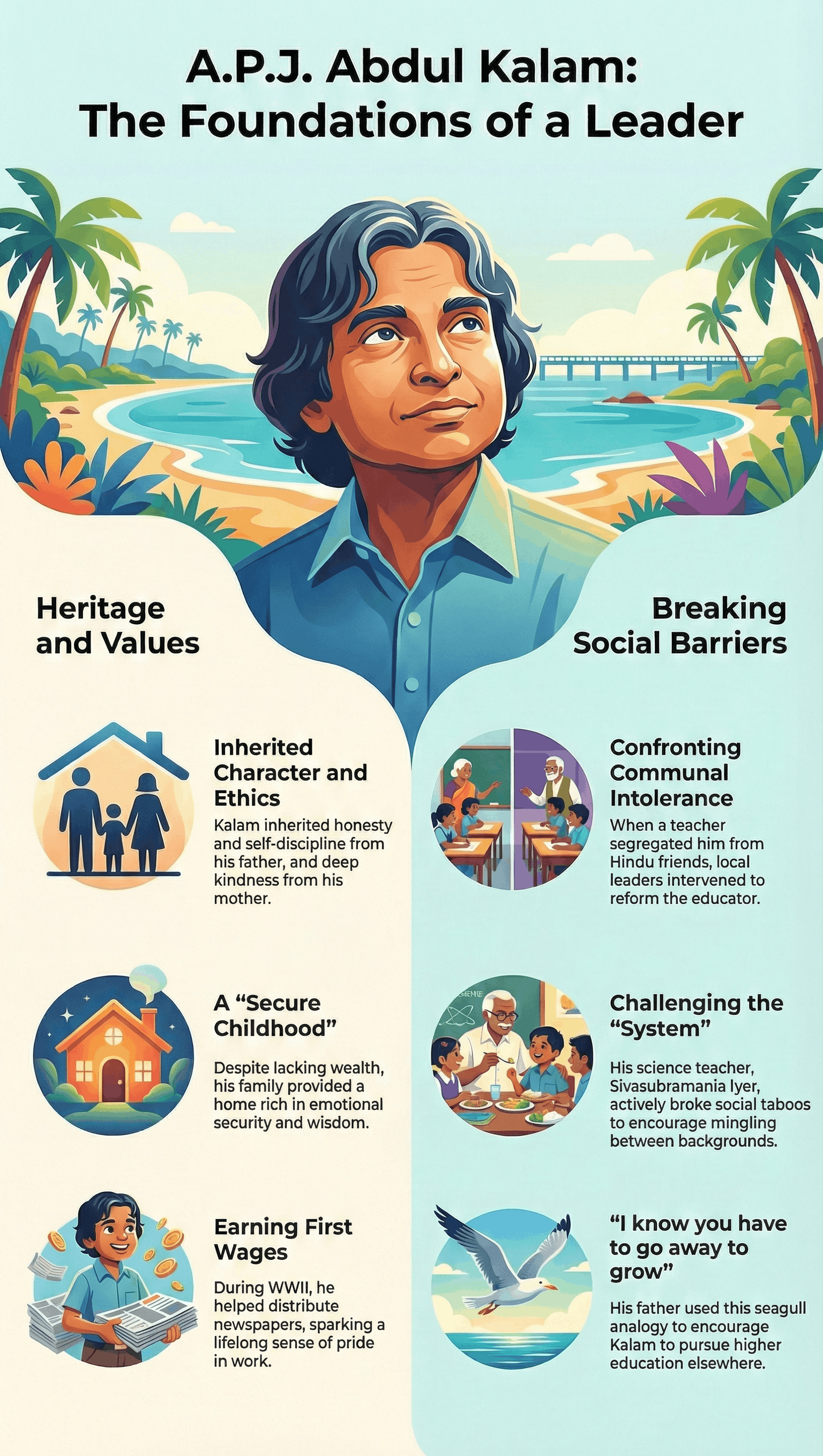
- Parents: His father, Jainulabdeen, possessed great innate wisdom and generosity despite having little formal education or wealth. His mother, Ashiamma, was a generous helpmate who fed numerous outsiders daily along with their large family.
- Appearance and Home: Kalam describes himself as a short boy with undistinguished looks, born to tall, handsome parents. They lived in a large, ancestral pucca house made of limestone and brick on Mosque Street.
- Upbringing: His father was austere and avoided inessential luxuries but ensured all necessities like food, medicine, and clothes were provided. Kalam recalls his childhood as very secure, both materially and emotionally.
Impact of World War II
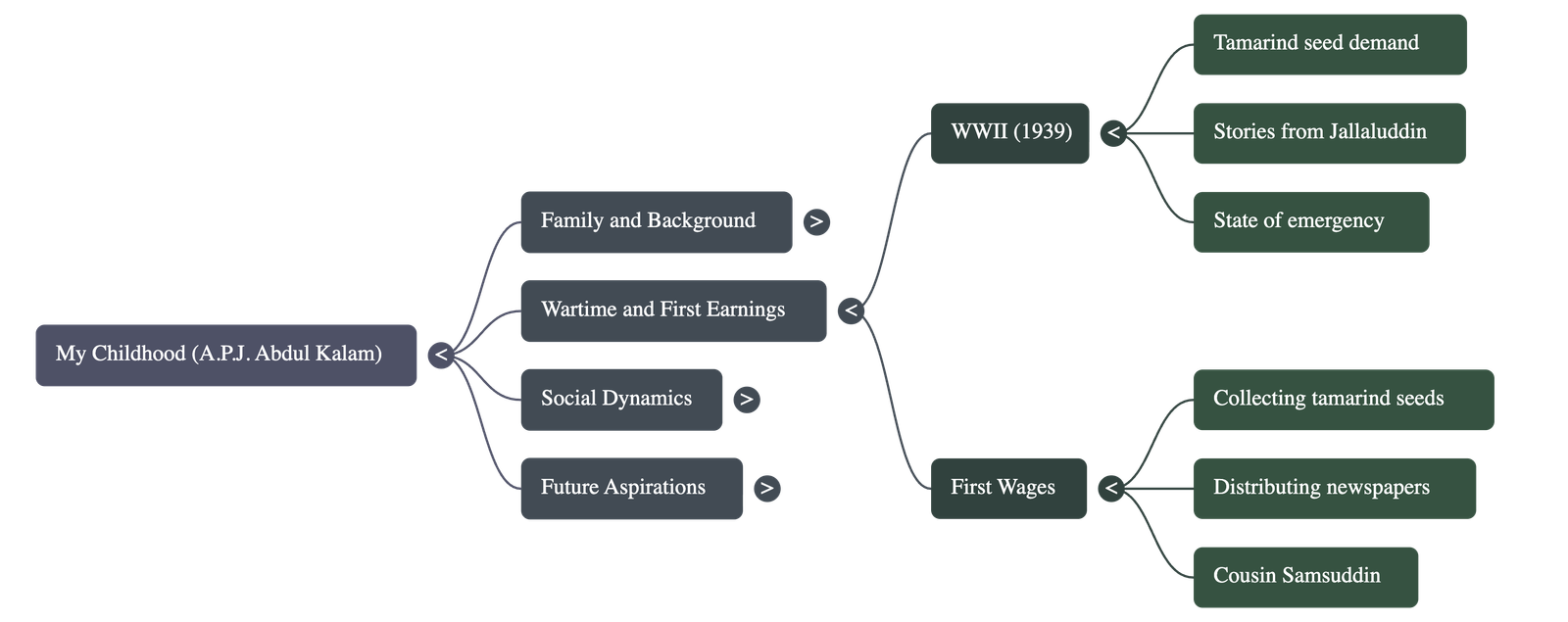
- First Earnings: When the war broke out in 1939 (Kalam was eight), there was a sudden demand for tamarind seeds. Kalam collected and sold them, earning one anna per day.
- News of War: Being isolated, Rameswaram was initially unaffected, but Kalam heard stories from his brother-in-law Jallaluddin and read headlines in the newspaper Dinamani.
- First Job: When the train halt at Rameswaram was suspended due to the war, newspapers had to be thrown from the moving train. Kalam’s cousin, Samsuddin, recruited him to help catch the bundles, allowing Kalam to earn his first wages—a moment of great pride.
Friendships and Values
- Inherited Traits: From his father, he inherited honesty and self-discipline; from his mother, he inherited a deep kindness and faith in goodness.
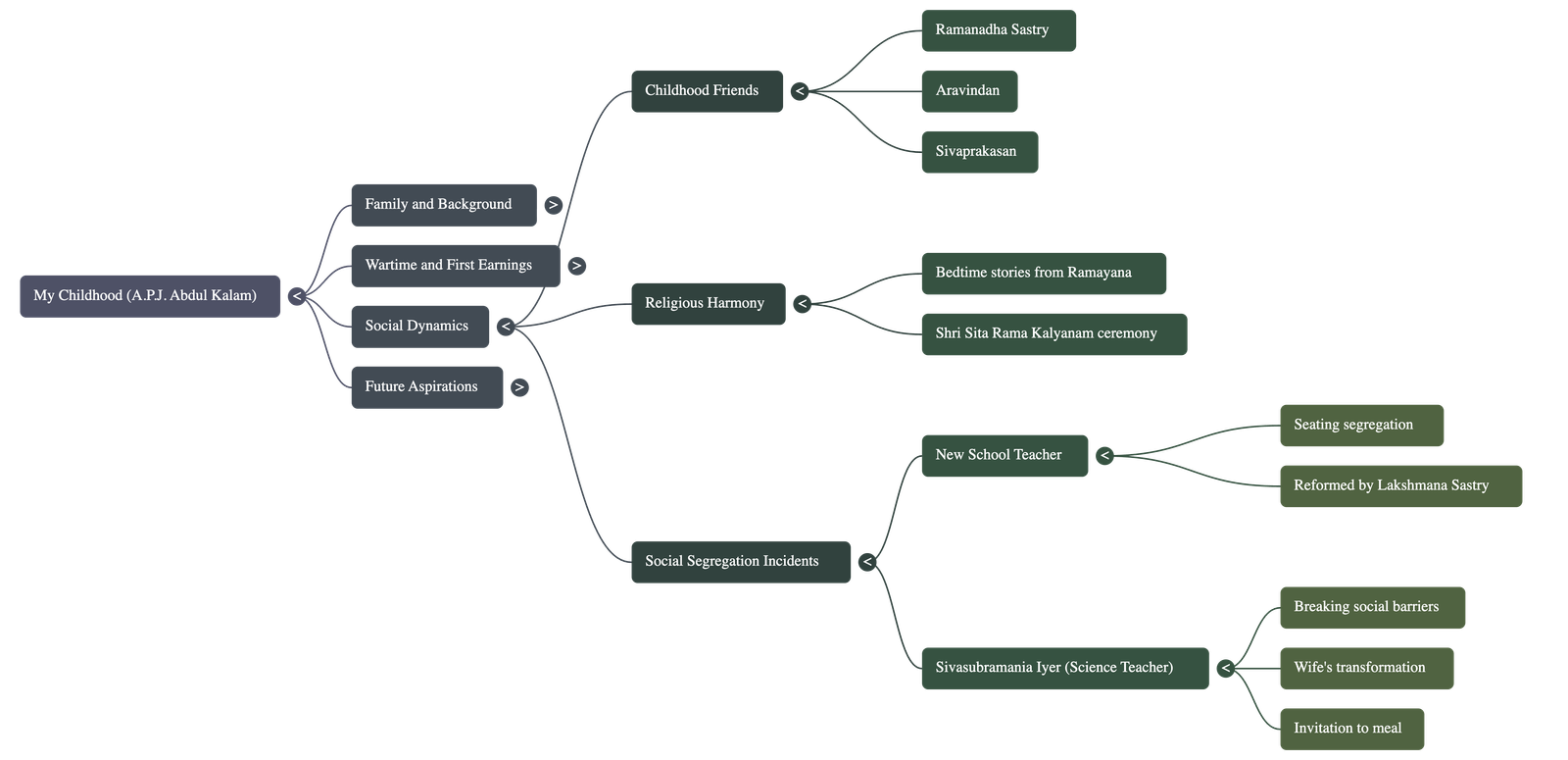
- Close Friends: He had three close friends from orthodox Hindu Brahmin families: Ramanadha Sastry, Aravindan, and Sivaprakasan. They never felt any religious differences during their childhood.
- Religious Harmony: During the Shri Sita Rama Kalyanam ceremony, Kalam’s family arranged boats with platforms to carry idols. His mother and grandmother also told bedtime stories from both the Ramayana and the life of the Prophet.
Social Barriers and Education
- Discrimination in School: In the fifth standard, a new teacher could not tolerate a Muslim boy (Kalam in his cap) sitting with a Hindu priest's son (Ramanadha in his sacred thread). Kalam was forced to sit on the back bench, causing deep sadness to both friends.
- Reformation: Ramanadha’s father, Lakshmana Sastry (the high priest), summoned the teacher and sternly told him not to spread social inequality and communal intolerance. The teacher apologized and was reformed by Sastry's strong conviction.
- The Science Teacher: Sivasubramania Iyer, Kalam’s science teacher, was an orthodox Brahmin but a rebel against social segregation. He encouraged Kalam to become highly educated and break social barriers.
Breaking Traditions
- The Dinner Incident: Sivasubramania Iyer invited Kalam to his home for a meal. His conservative wife refused to serve a Muslim boy in her ritually pure kitchen.
- Teacher’s Reaction: Unperturbed, Iyer served Kalam with his own hands and sat beside him to eat. When Kalam was invited again, he hesitated, but Iyer told him that confronting problems is necessary to change systems.
- Acceptance: On the next visit, the wife took Kalam inside the kitchen and served him food with her own hands.
Leaving Home
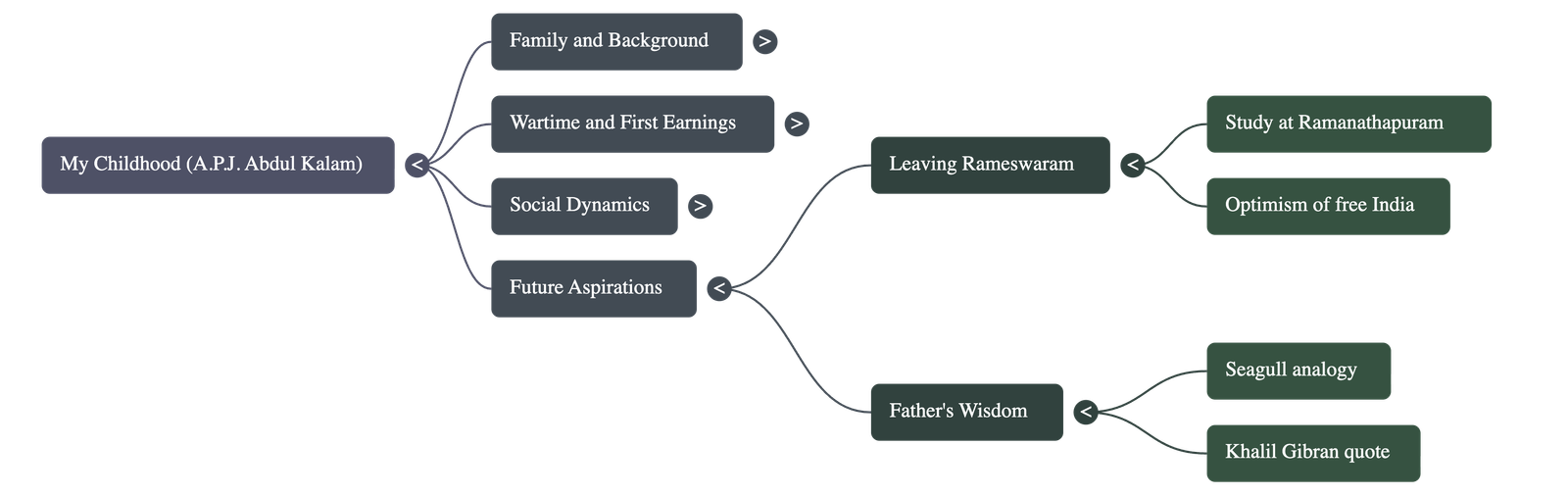
- Freedom Imminent: After World War II ended, Gandhi declared that Indians would build their own India, filling the country with optimism.
- Permission to Leave: Kalam asked his father for permission to study at the district headquarters in Ramanathapuram.
- Father’s Wisdom: His father agreed, understanding the need for growth. He compared Kalam to a seagull flying alone across the sun. Quoting Khalil Gibran to comfort Kalam’s mother, he explained that children are "sons and daughters of Life's longing for itself" and have their own thoughts and destinies.
Do checkout all questions & answers of this chapter.
Quick Navigation:
| |