Quick Navigation:
| | |
A Truly Beautiful Mind
Early Life and Childhood
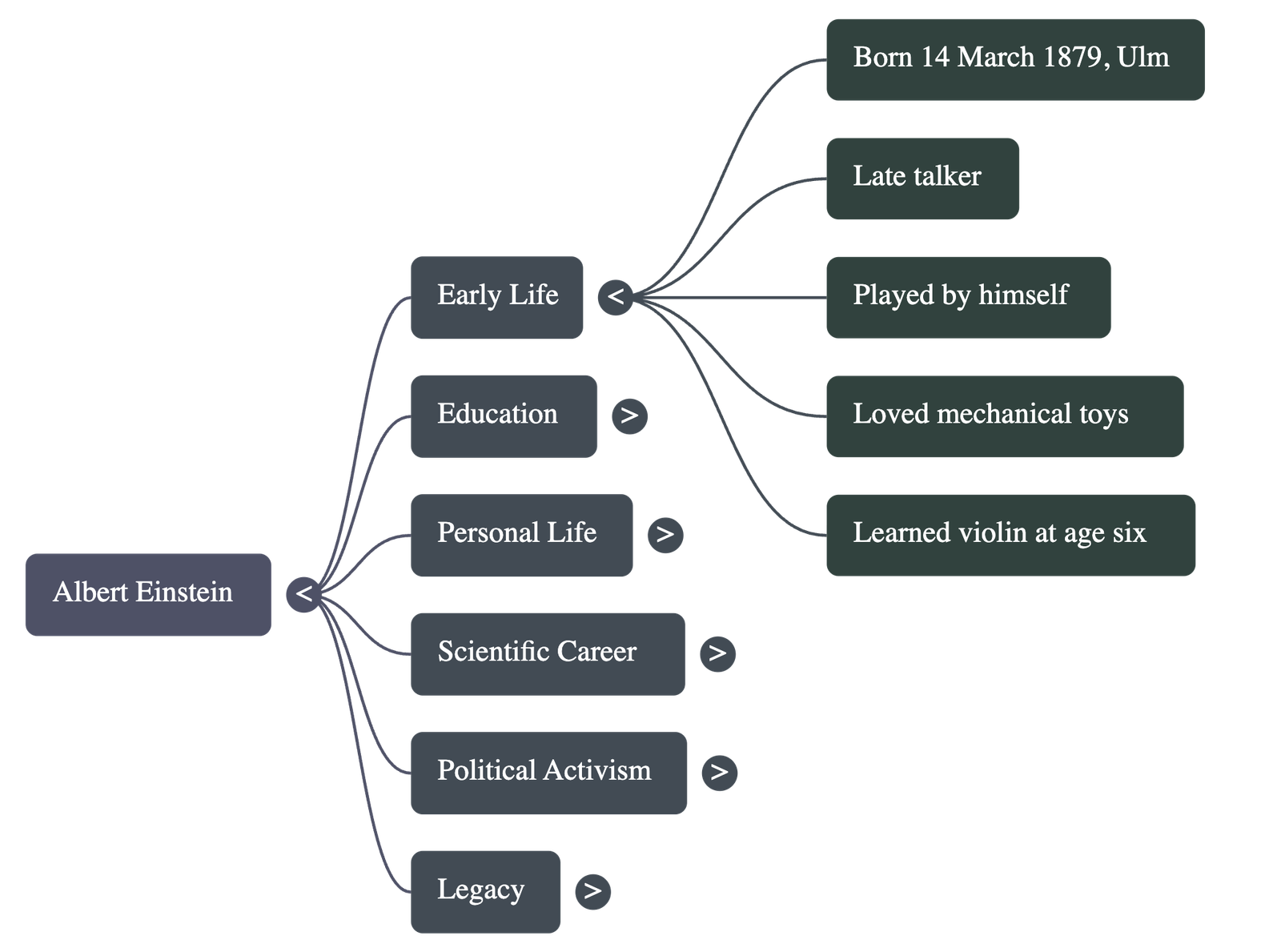
- Birth: Albert Einstein was born on March 14, 1879, in the German city of Ulm. There were no early signs of his future greatness.
- Physical Appearance: As a baby, his head appeared unusually large, leading his mother to believe he was a "freak."
- Speech Delay: He was a late talker and did not speak until he was two-and-a-half years old. Even then, he had a habit of repeating every word twice.
- Social Interaction: He did not enjoy playing with other children, who called him "Brother Boring." Consequently, he spent much of his time playing alone with mechanical toys.
- Music: At his mother's insistence, he learned to play the violin at age six and became a gifted amateur violinist, a passion he maintained throughout his life.
Schooling and Education
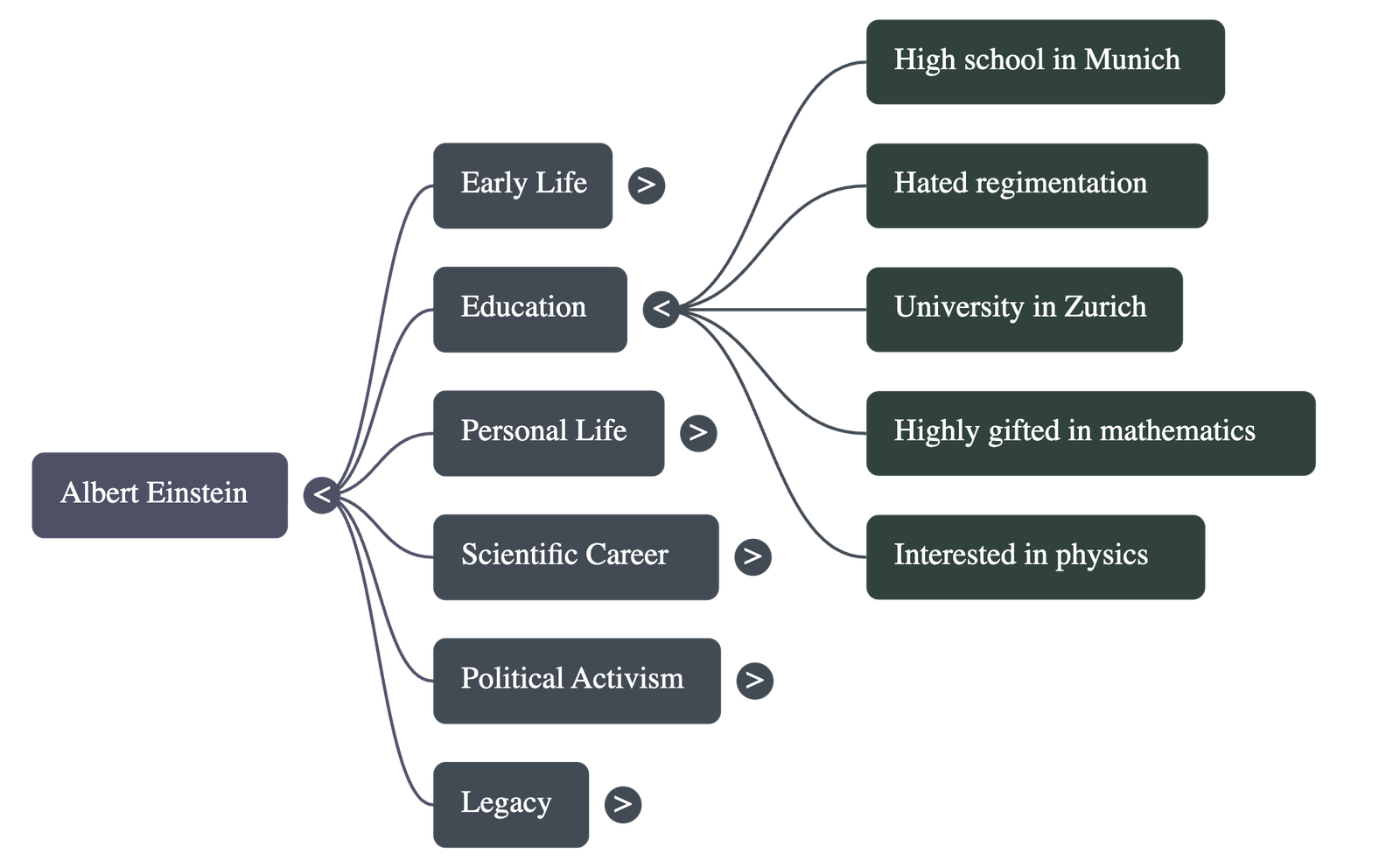
- Munich: He attended high school in Munich, where he scored good marks in almost all subjects. However, he felt stifled by the school's strict regimentation and discipline.
- Dropping Out: At age 15, unable to bear the environment, he left the school for good.
- Switzerland: He convinced his parents to let him continue his education in a liberal German-speaking city in Switzerland.
- University: He joined a university in Zurich, showing immense talent in mathematics and physics.
Romance and Marriage
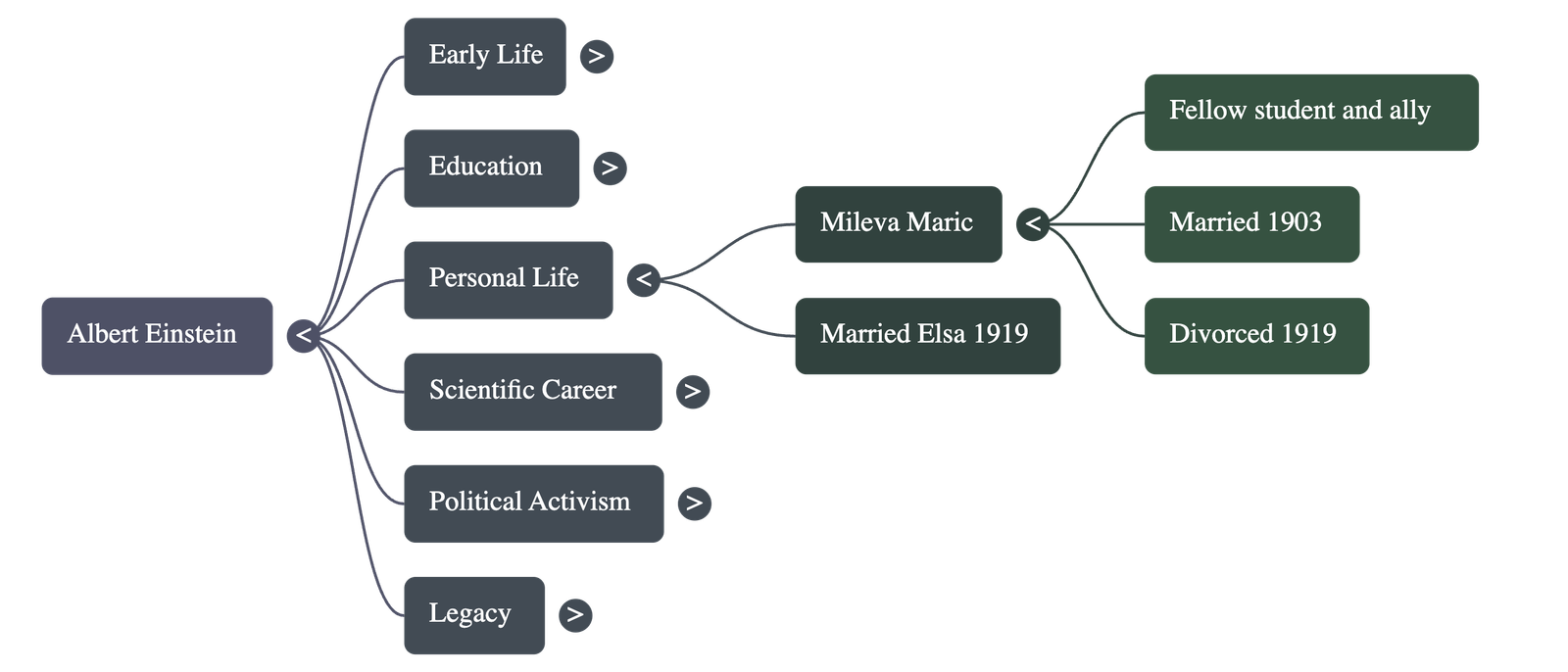
- Mileva Maric: Einstein fell in love with a fellow student, Mileva Maric, a Serbian woman whom he considered a "clever creature" and an ally against "philistines" (people uninterested in art or culture).
- Opposition: His mother opposed the match because Mileva was three years older than Albert and was considered "too intelligent" (like a book).
- Marriage and Divorce: Despite objections, they married in January 1903 and had two sons. However, the marriage faltered as Mileva lost her intellectual ambition. They divorced in 1919.
- Second Marriage: Einstein married his cousin, Elsa, in the same year he was divorced.
Scientific Breakthroughs (1905)
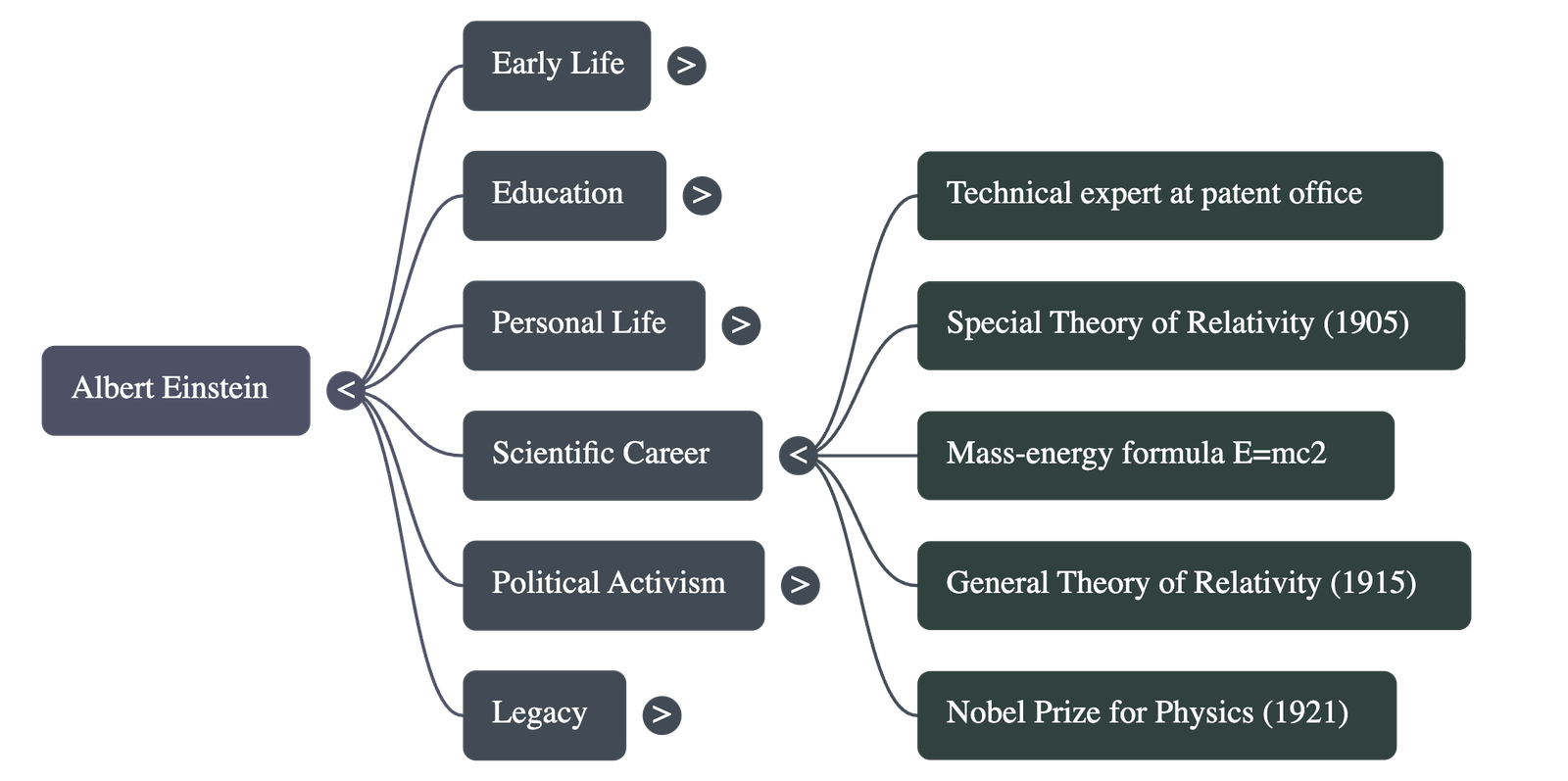
- The Patent Office: After graduating, Einstein worked as a technical expert in a patent office in Bern in 1902. He secretly developed his own ideas there, jokingly calling his desk drawer the "bureau of theoretical physics."
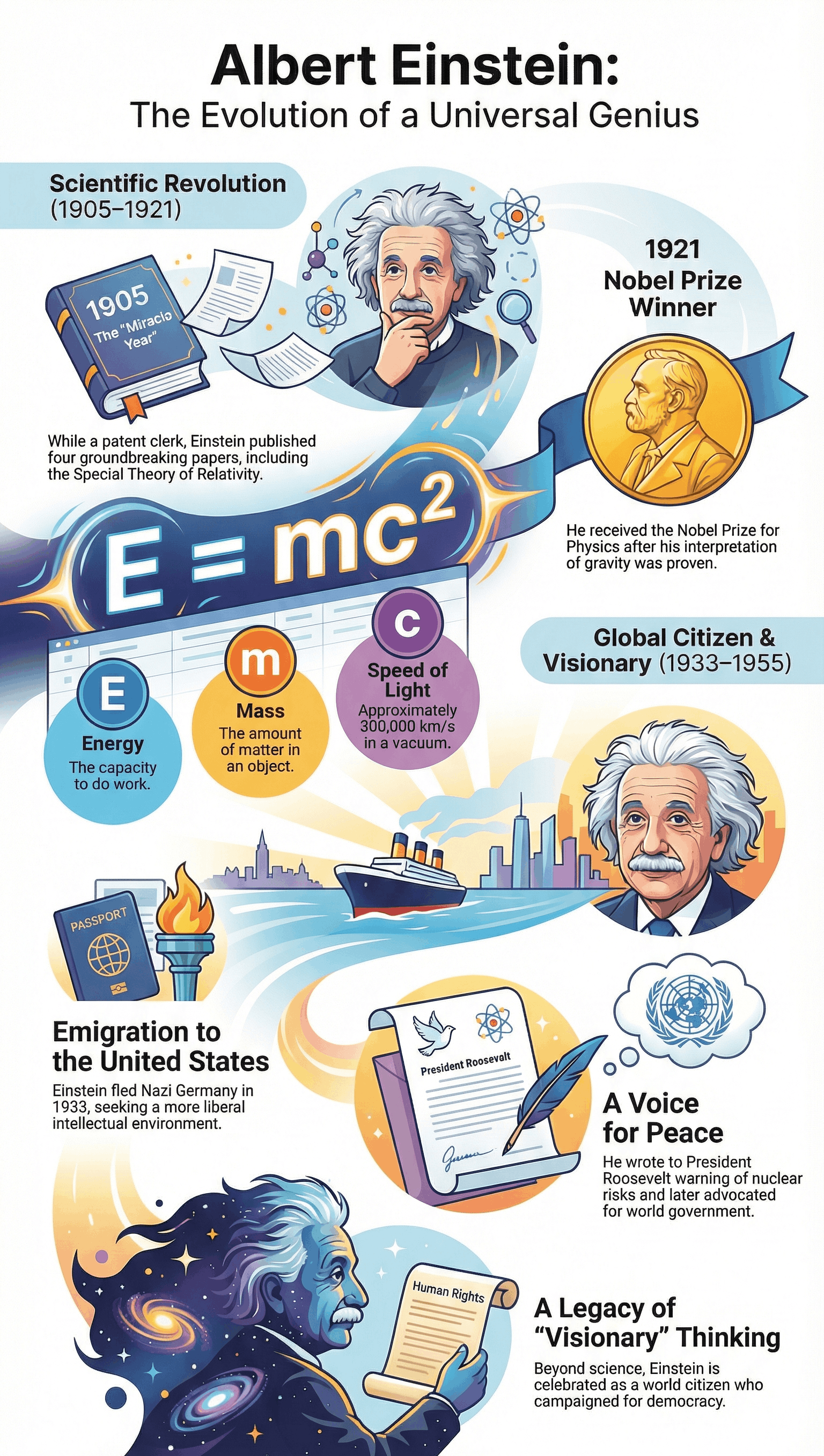
- Annus Mirabilis: In 1905, he published four revolutionary papers on light, the motion of particles, electrodynamics, and energy.
- Special Theory of Relativity: This theory established that time and distance are not absolute. It introduced the famous formula E = mc², describing the relationship between mass and energy.
Rise to World Fame
- General Theory of Relativity: Published in 1915, this theory provided a new interpretation of gravity.
- Solar Eclipse Proof: A solar eclipse in 1919 proved his calculations correct regarding the deflection of light by the sun's gravitational field. Newspapers hailed it as a "scientific revolution."
- Nobel Prize: He received the Nobel Prize for Physics in 1921 and was showered with honors from around the world.
Emigration and Political Activism
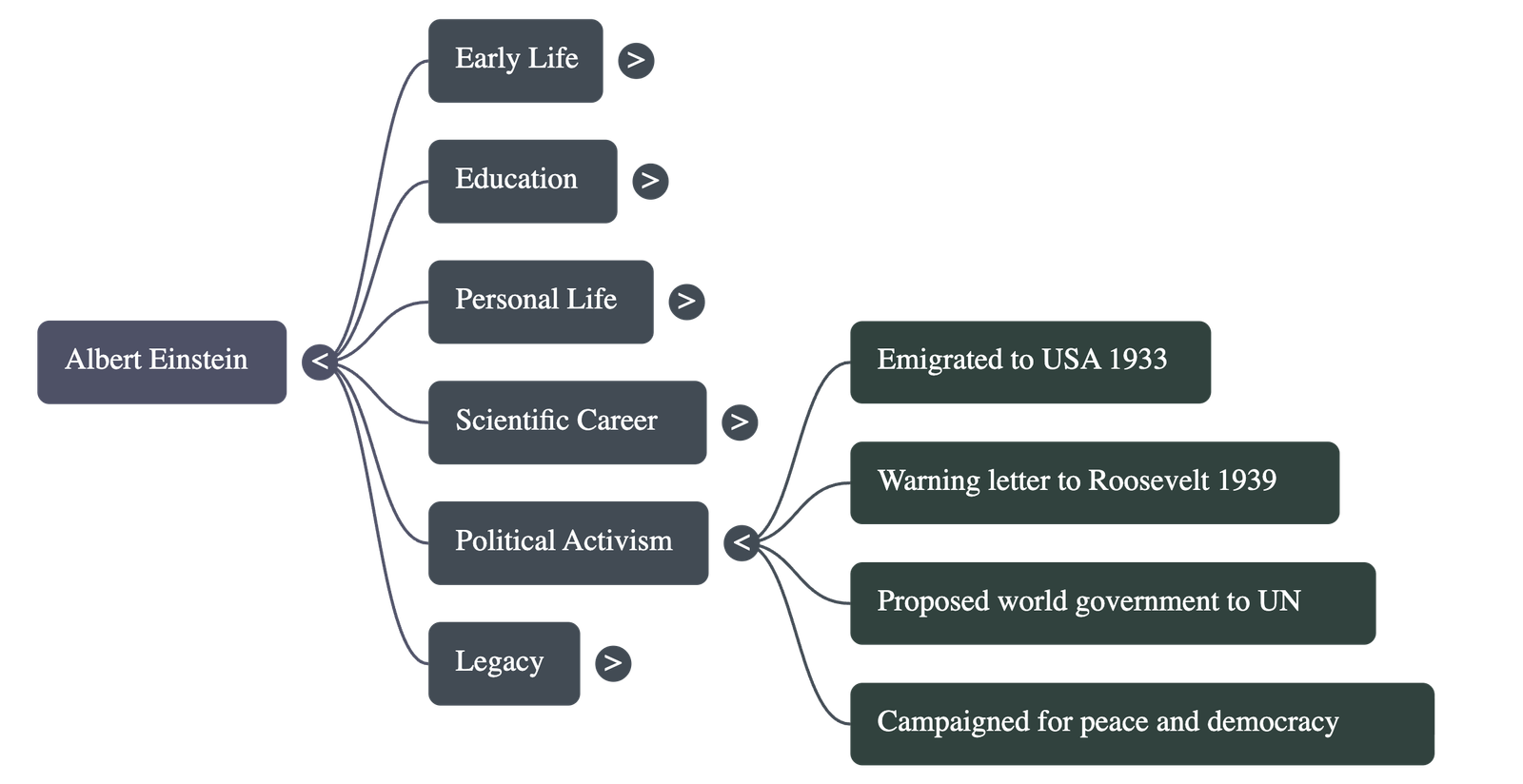
- Move to USA: When the Nazis came to power in Germany in 1933, Einstein emigrated to the United States.
- Atomic Bomb Warning: Fearing that the Nazis would build an atomic bomb after the discovery of nuclear fission, Einstein wrote a letter to U.S. President Franklin D. Roosevelt in 1939 warning of the danger.
- Impact: His letter led to the American development of the atomic bomb (Manhattan Project), which was used against Hiroshima and Nagasaki in 1945.
- Reaction to War: deeply shaken by the destruction caused by the atomic bombs, Einstein proposed a "world government" to the United Nations, but this had no impact.
Later Years and Legacy
- Peace Activist: In his final decade, Einstein became increasingly involved in politics, campaigning for peace, democracy, and an end to the arms race.
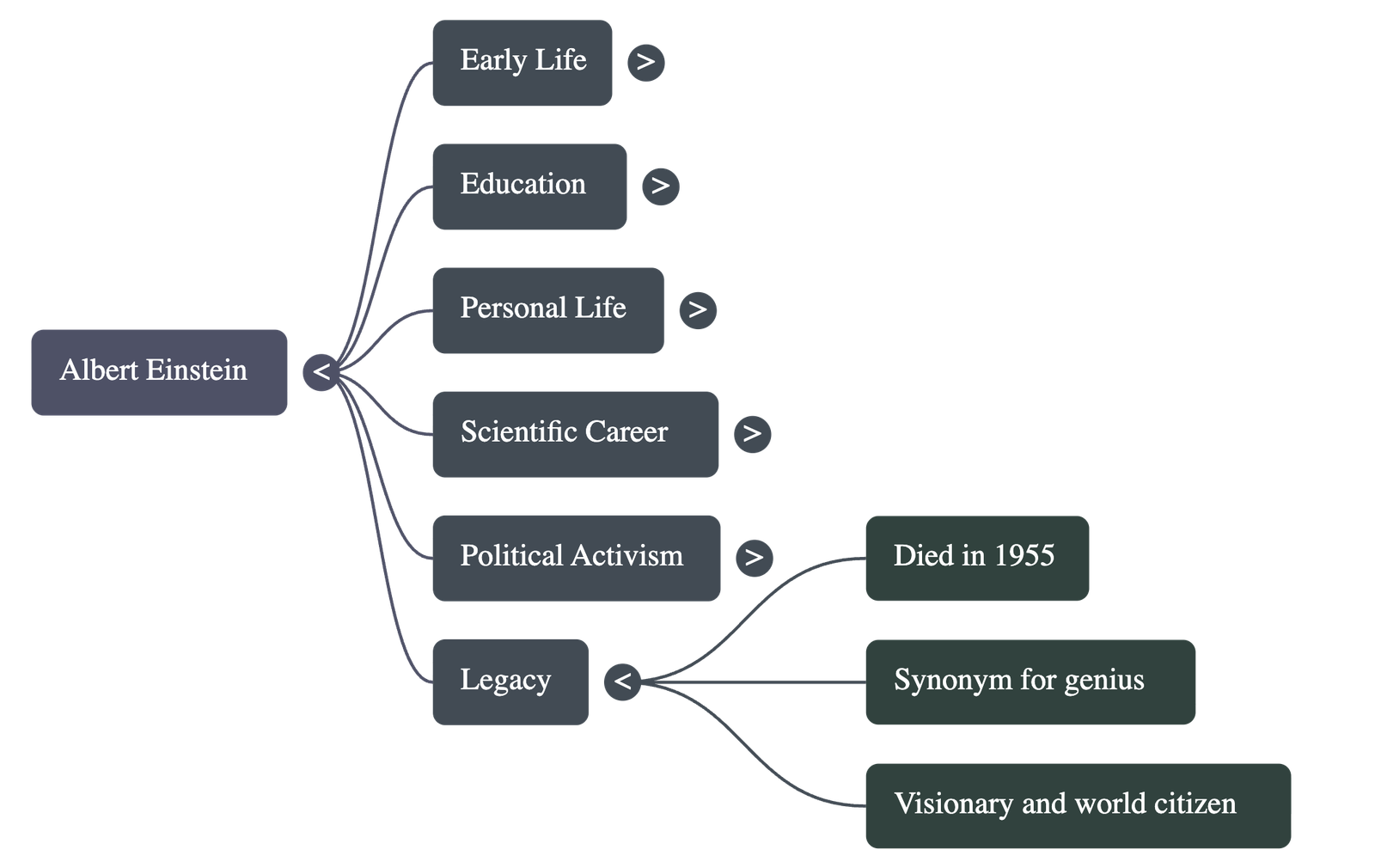
- Death: He died in 1955 at the age of 76.
- Legacy: He is celebrated not only as a scientific genius but also as a visionary and a "world citizen."
Do checkout all questions & answers of this chapter.
Quick Navigation:
| | |
1 / 1
Quick Navigation:
| | |