Quick Navigation:
| | | |
Quick Navigation:
| | | |
Coco Chanel
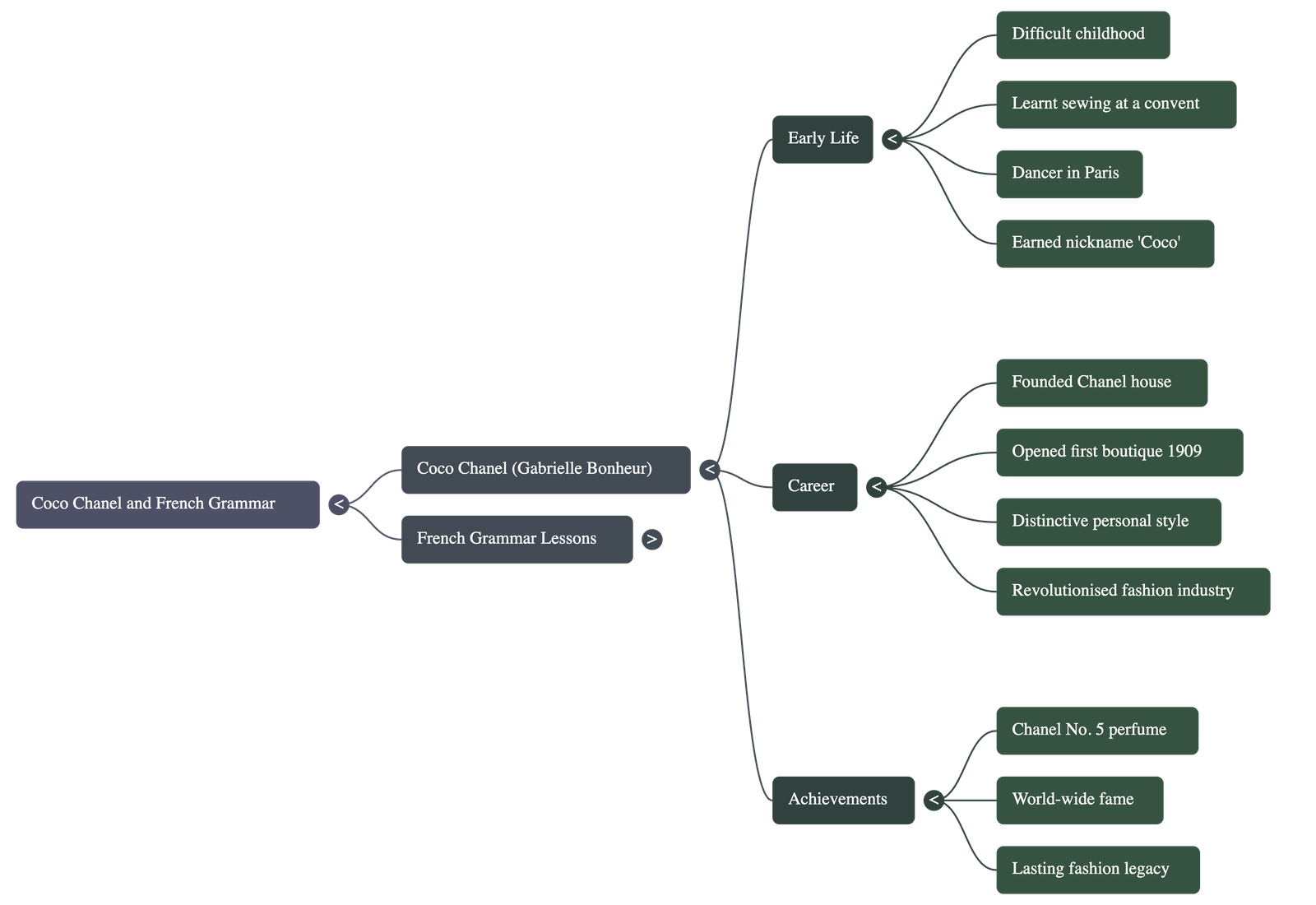
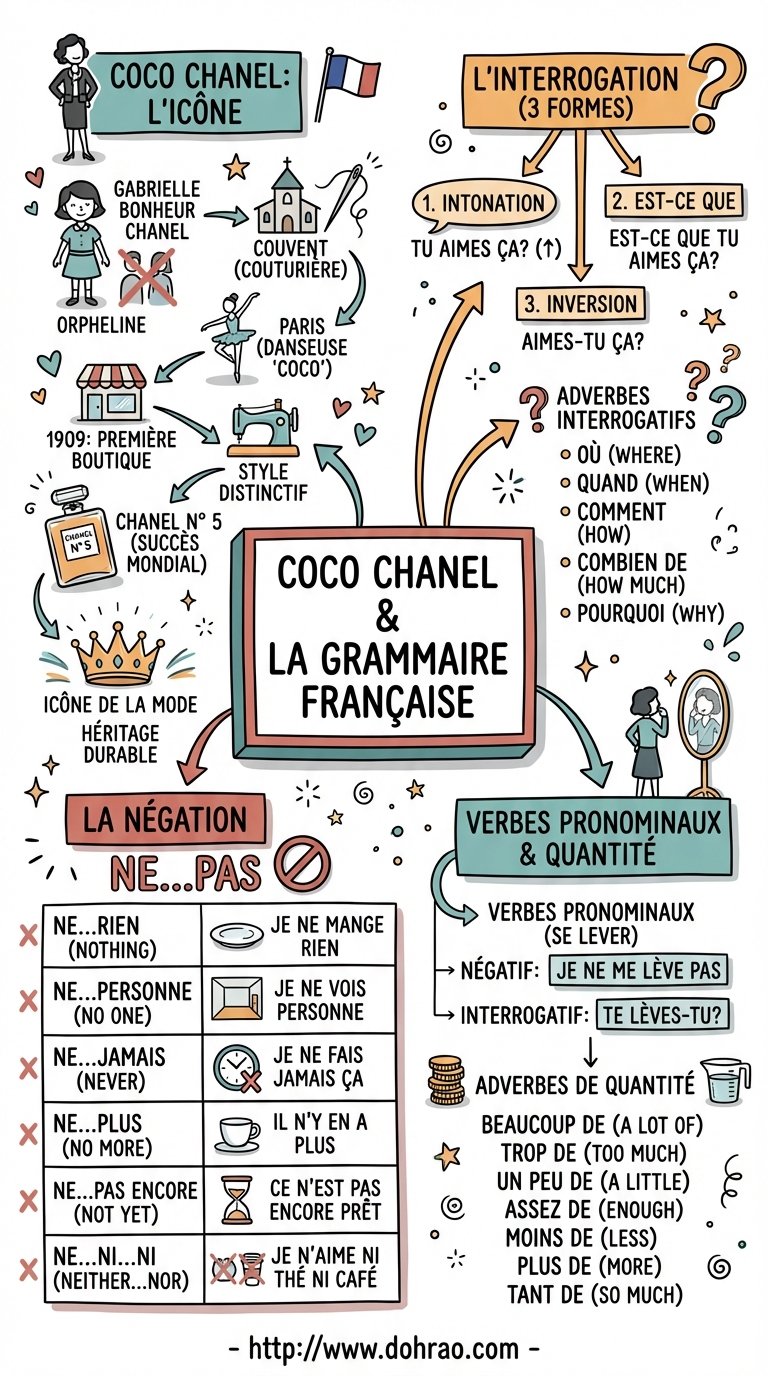
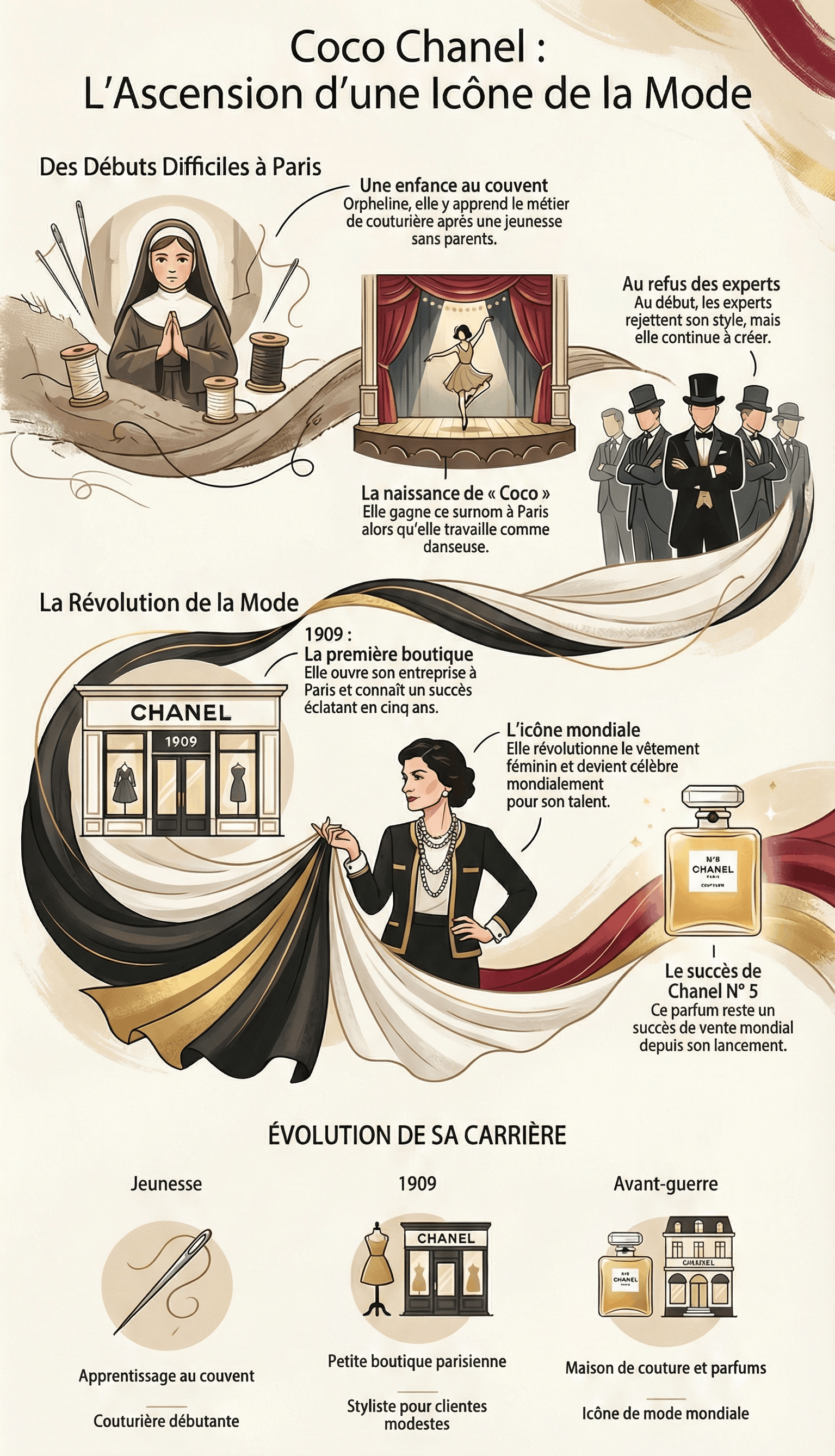
- Coco Chanel est une icône de la mode parisienne et la fondatrice d'une des maisons les plus connues au monde.
Coco Chanel is an icon of Parisian fashion and the founder of one of the most famous houses in the world. - Son véritable nom est Gabrielle Bonheur Chanel et elle a connu une enfance difficile en tant qu'orpheline.
Her real name is Gabrielle Bonheur Chanel and she experienced a difficult childhood as an orphan. - Elle a appris le métier de couturière dans un couvent avant de s'installer à Paris pour devenir danseuse.
She learned the trade of a seamstress in a convent before moving to Paris to become a dancer. - C'est à Paris qu'elle a gagné le surnom de « Coco », un nom qu'elle a gardé toute sa vie.
It was in Paris that she earned the nickname "Coco," a name she kept all her life. - Elle a ouvert sa première boutique en 1909 et a fini par révolutionner l'industrie du vêtement avec son style distinctif.
She opened her first boutique in 1909 and eventually revolutionized the clothing industry with her distinctive style. - Avant la Deuxième Guerre mondiale, elle s'est concentrée sur les parfums, créant le célèbre « Chanel N° 5 ».
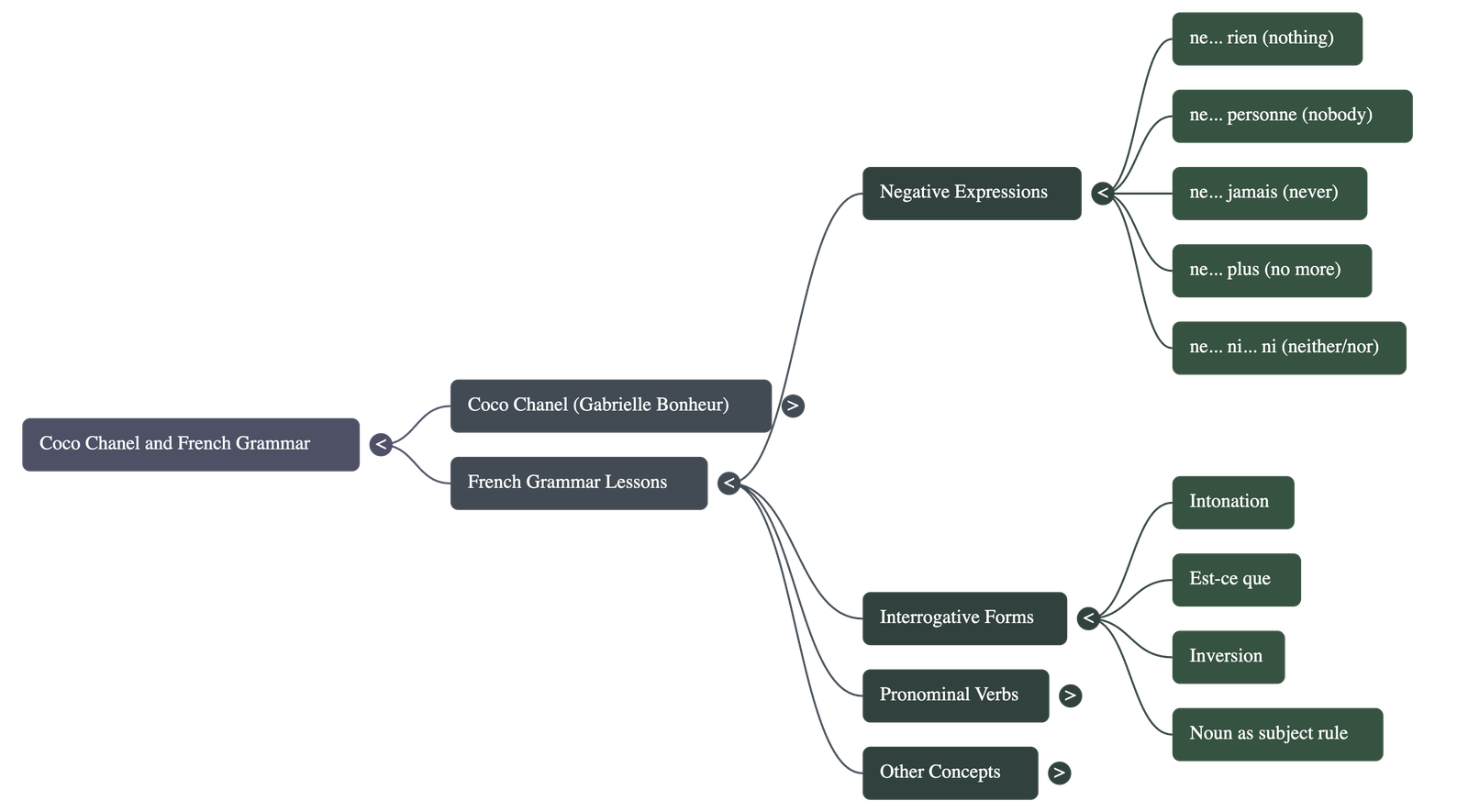
Before the Second World War, she focused on perfumes, creating the famous "Chanel No. 5." - La leçon présente les expressions négatives telles que « ne... rien », « ne... personne » et « ne... jamais ».
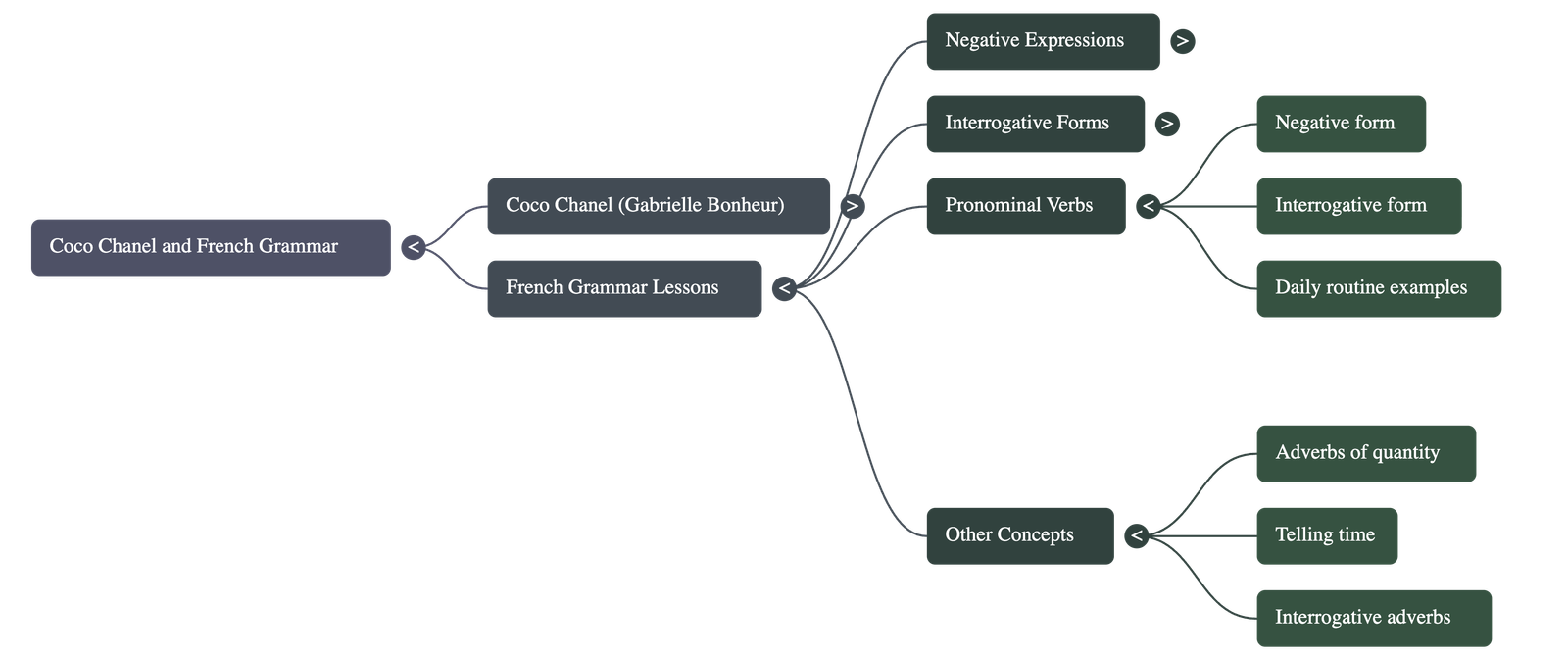
The lesson introduces negative expressions such as "nothing," "no one," and "never." - Le chapitre explique la formation des formes négative et interrogative pour les verbes pronominaux comme « se lever ».
The chapter explains the formation of negative and interrogative forms for pronominal verbs like "to get up." - Une section grammaticale détaille comment poser des questions lorsque le sujet de la phrase est un nom.
A grammar section details how to ask questions when the subject of the sentence is a noun. - Les élèves apprennent à utiliser des adverbes de quantité comme « beaucoup de », « trop de » et « assez de ».
Students learn to use adverbs of quantity such as "a lot of," "too much of," and "enough of." - Le cours couvre également l'utilisation des adverbes interrogatifs tels que « où », « quand », « comment » et « pourquoi ».
The course also covers the use of interrogative adverbs such as "where," "when," "how," and "why." - Enfin, la leçon inclut des exercices pratiques sur l'heure et la description des activités quotidiennes.
Finally, the lesson includes practical exercises on telling time and describing daily activities.
Do checkout all questions & answers of this chapter.
Quick Navigation:
| | | |
1 / 1
Quick Navigation:
| | | |