Quick Navigation:
| | |
ENVIRONMENT
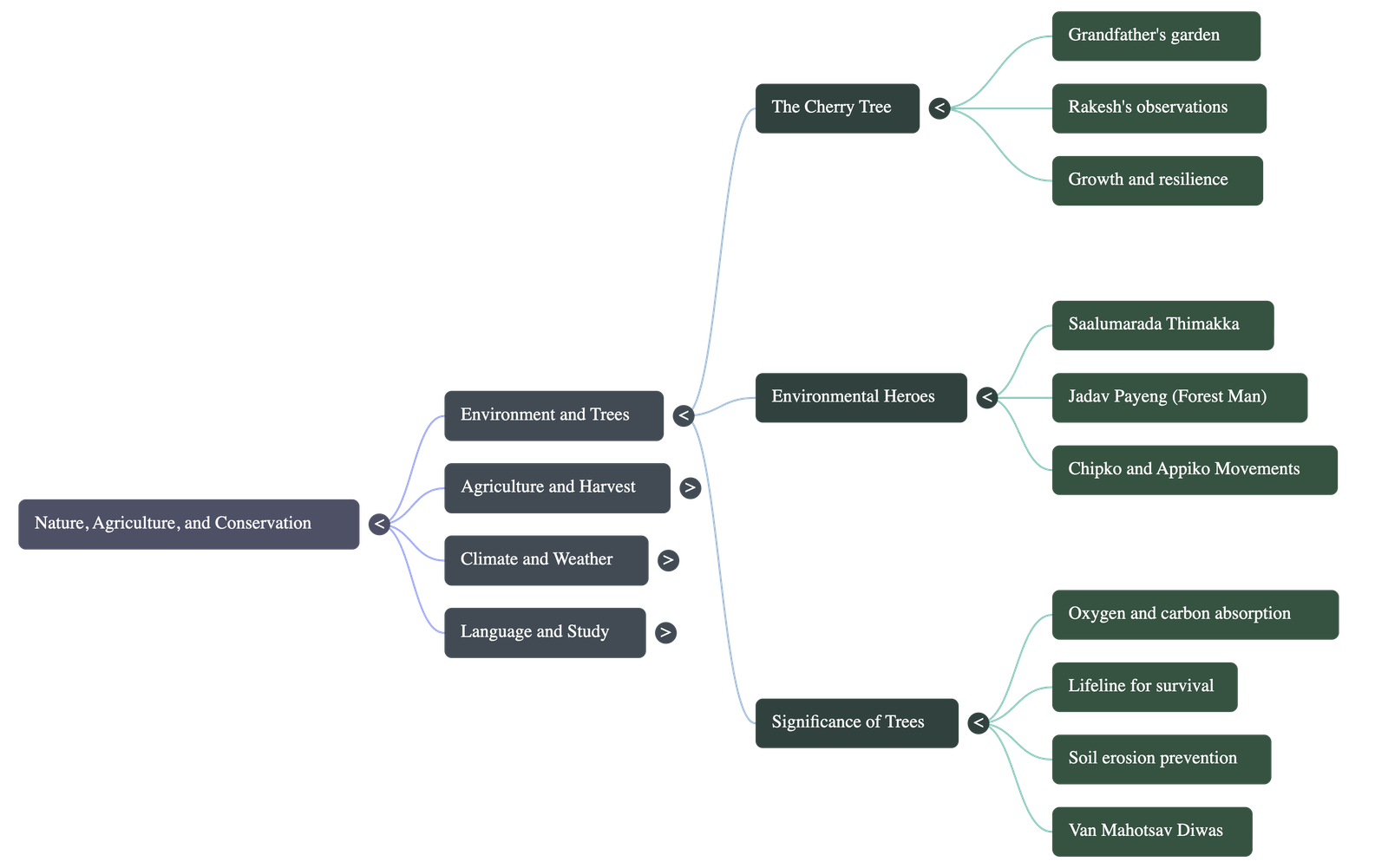
The Cherry Tree (by Ruskin Bond)
A heartwarming story about patience, growth, and the beautiful bond between humans and nature.
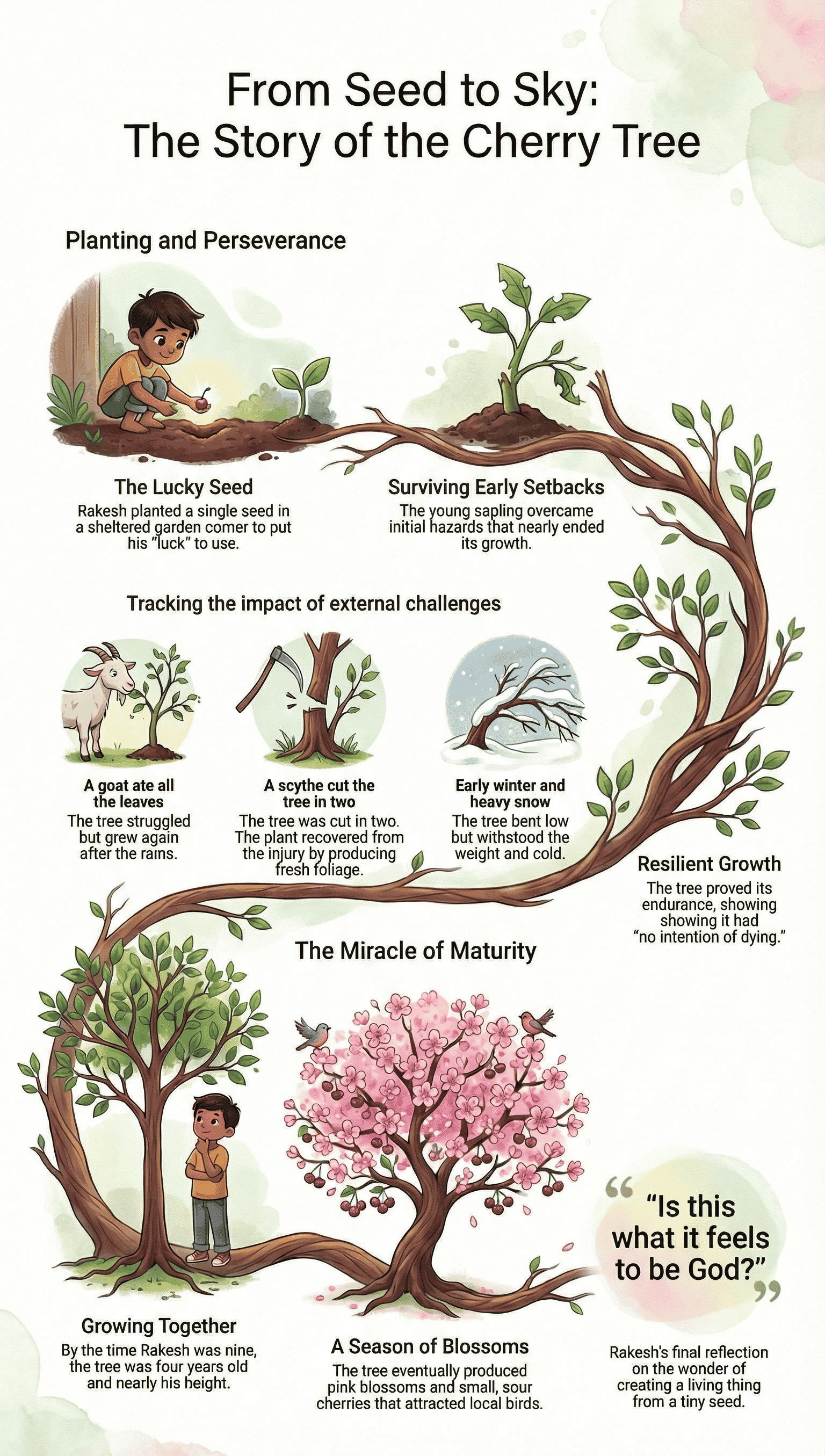
- Six-year-old Rakesh buys a bunch of cherries in the Mussoorie bazaar and walks home to his grandfather’s cottage.
- After eating the cherries, his grandfather advises him to plant the last seed in a shady corner of the garden to put it to good use.
- The following spring, Rakesh is thrilled to discover that the seed has sprouted into a tiny twig. He waters it and protects it with a circle of pebbles.
- The young tree faces severe challenges to its survival: a goat eats all its leaves during the monsoon, and later, a woman cutting grass accidentally slices the plant in two.
- Despite the damage, the resilient cherry tree refuses to die and sprouts new shoots by the next summer.
- As Rakesh grows up, the tree grows rapidly alongside him. It begins to attract wildlife, hosting a praying mantis, a caterpillar, and eventually birds that feed on its nectar and sour cherries.
- By the time Rakesh is nine, the tree is four years old and taller than his grandfather. They sit together under its shade, marveling at the miracle of having grown a tree from a single small seed.
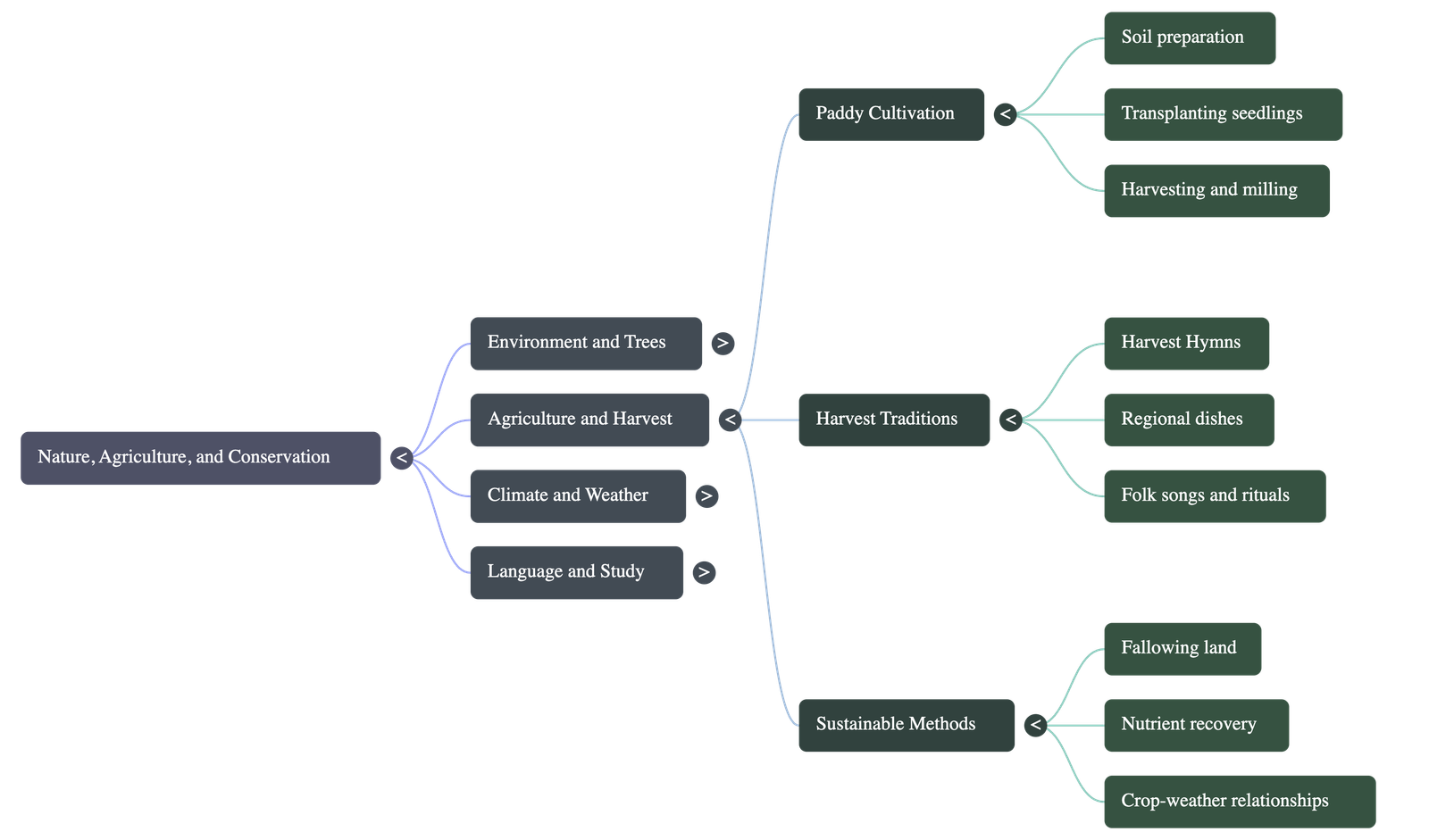
Harvest Hymn (by Sarojini Naidu)
A poetic tribute to the divine forces of nature that make agricultural abundance possible.
- The poem is a joyous song of praise dedicated to the gods of nature during the harvest festival.
- Praise to the Sun: The men sing to Surya (the Sun God), thanking him for his bright, generous sunlight that prospers their sowing and ripens their golden crops.
- Praise to the Rain: The people offer thanks to Varuna (the Water God) for sending the rains and dewfall that nourish and cherish their grain.
- Praise to the Earth: All voices unite to praise Prithvi (the Earth), honoring her as the sweet, omnipotent mother who is the ultimate source of life, home, and their harvest.
- The people dedicate their hard work, lives, and the bounty of the fields as a tribute to these divine forces using cymbals and flutes.
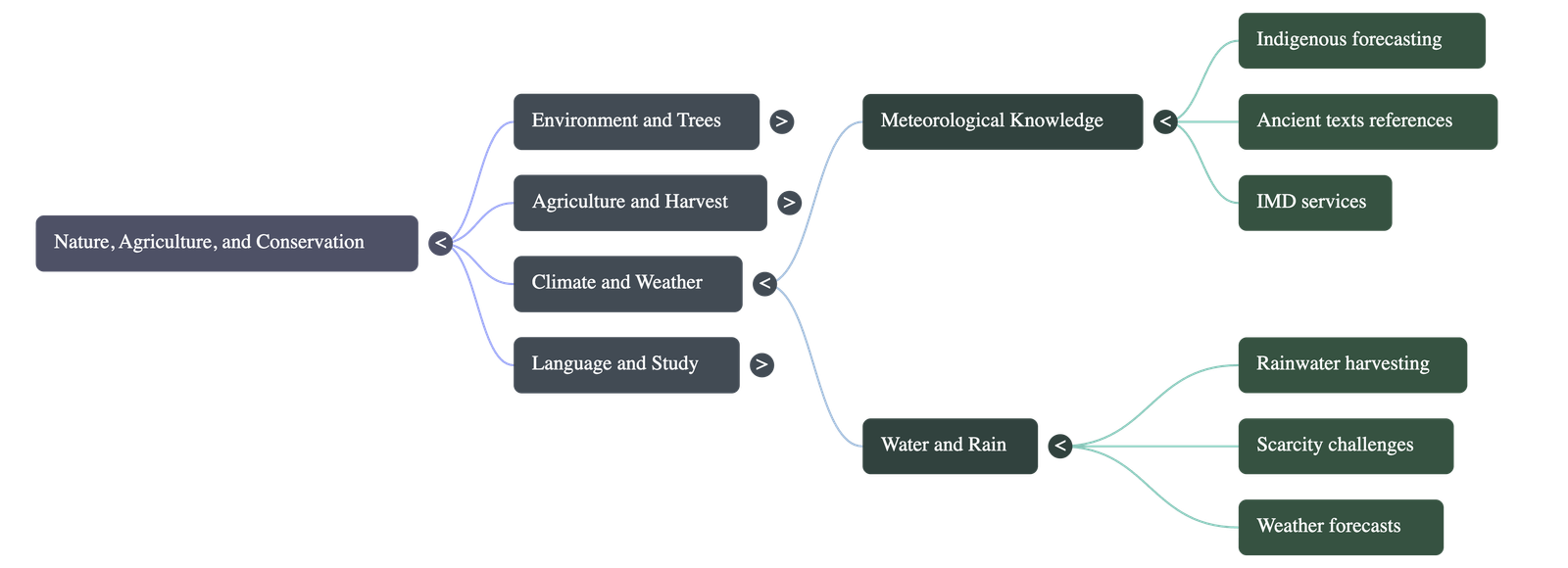
Waiting for the Rain (by Kamakshi Balasubramanian)
A narrative reflecting on the struggles of farming and learning to understand nature's cycles.
- Velu, a hardworking farmer, wakes up anxiously looking for clouds. He has diligently farmed his land for six years, but a prolonged dry spell threatens his livelihood.
- Desperate for answers, he travels to the city weather office, but the officials are unable to predict the rain despite favorable atmospheric conditions.
- Tired and dejected, Velu rests under a large tree and meets a smiling, wise old woman.
- Velu complains to her that his hard work is being unfairly punished by the drought.
- The old woman changes his perspective by explaining that the Earth is a mother to everyone. Just like any living being, the overworked land needs periods of rest (drought) to heal and recover its strength.
- Comforted by this realization, Velu heads back to his village. Just as he accepts nature's wisdom, dark clouds finally gather, and the much-awaited, fragrant rain begins to fall, filling him with joy.
Environmental Awareness & Key Concepts
Insights derived from the chapter's integrated activities and ecological lessons.
- Conservation Movements: Highlights historical efforts like the Chipko Movement and the Appiko Movement, where common people hugged trees to prevent deforestation and regenerate forests.
- Inspiring Figures: Features Indian environmental heroes like Padma Shri awardee Saalumarada Thimmakka (who planted thousands of trees) and Jadav Payeng, known as the "Forest Man of India" (who single-handedly created a thousand-acre forest over 30 years).
- Sustainable Agriculture: Explains traditional farming wisdom like "fallowing" (letting land rest to naturally recover nutrients and moisture) and crop rotation to maintain soil health.
- Superfoods: Discusses the high nutritional profile and climate-resilient properties of Millets (like Pearl Millet/Bajra), promoting them as healthy and sustainable dietary options.
Quick Navigation:
| | |
1 / 1
Quick Navigation:
| | |