Quick Navigation:
| | |
Wit and Wisdom
A comprehensive summary of the stories, poems, plays, and language concepts covered in the chapter.
1 The Wit That Won Hearts (Story)
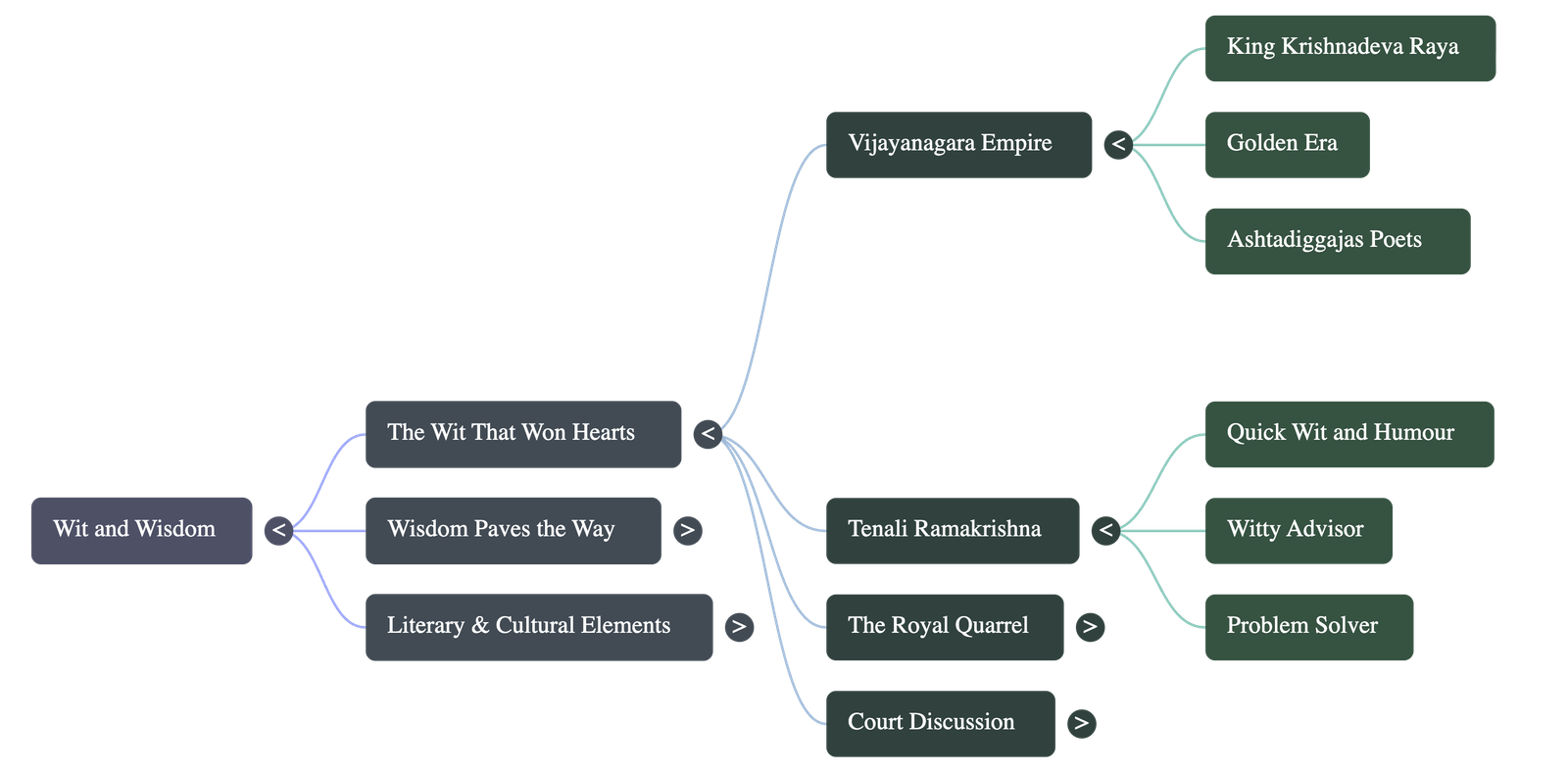
- ✦ Setting the Scene: The story is set in the Golden Era of the Vijayanagara Empire during the reign of King Krishnadeva Raya, who was accompanied by eight celebrated poets known as the Ashtadiggajas.
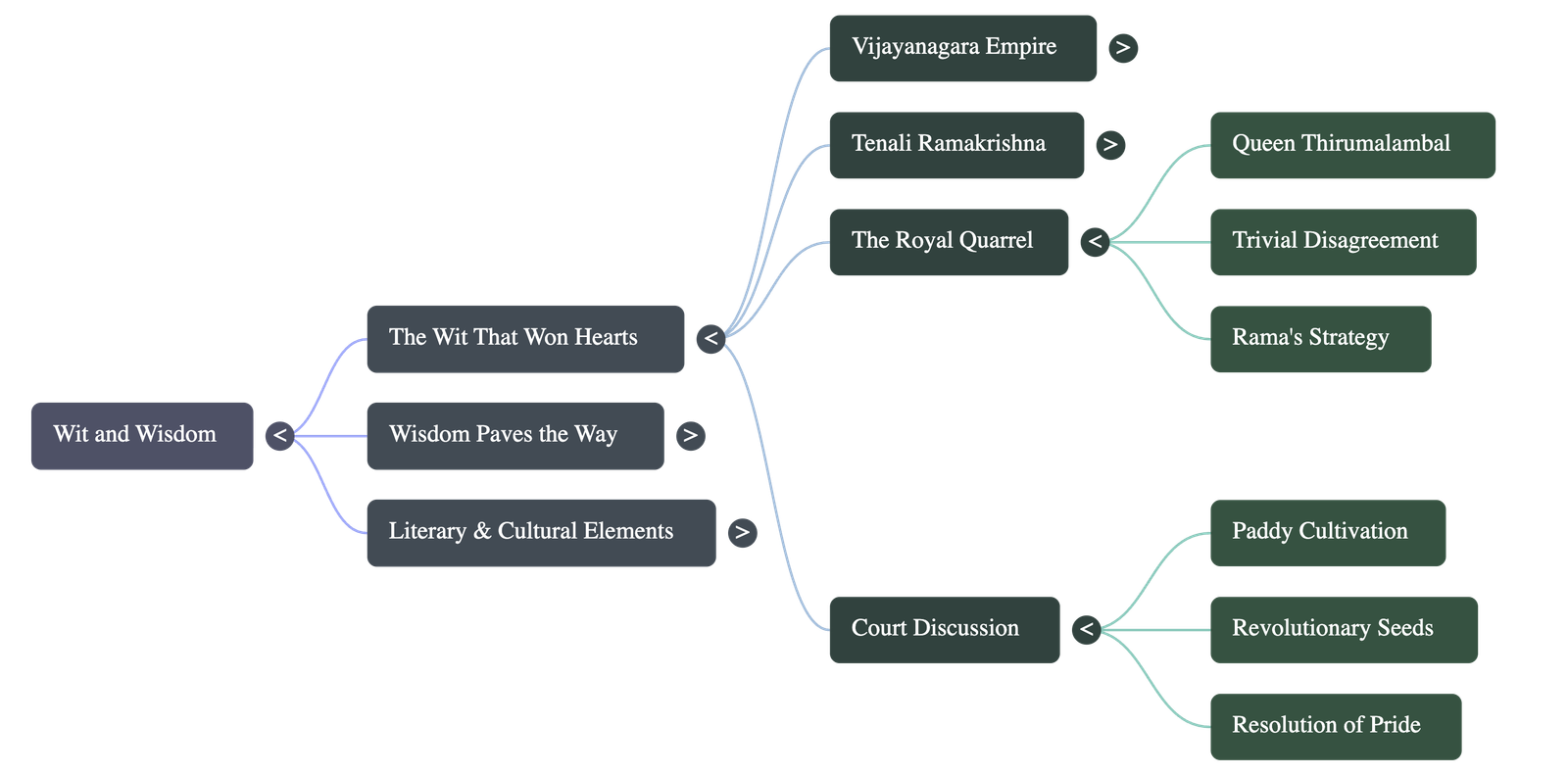
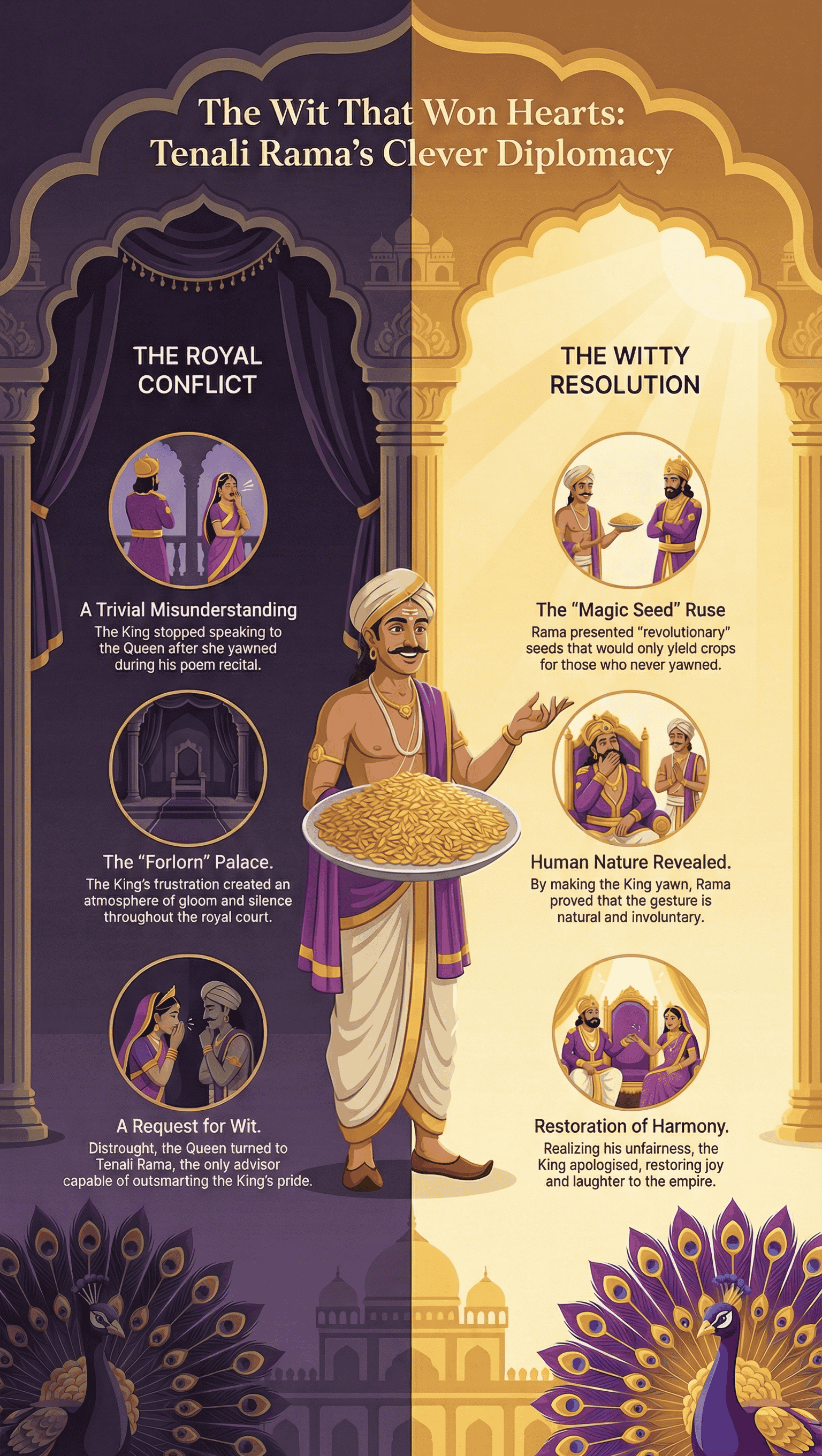
- ✦ The Conflict: The King gets angry with Queen Thirumalambal because she yawned while he was reciting his newly written poem. Perceiving this as an insult, he stops speaking to her.
- ✦ Seeking Help: Distraught, the Queen asks the witty poet Tenali Ramakrishna to help resolve the misunderstanding.
- ✦ The Clever Strategy: During a court discussion on farming, Tenali Rama brings paddy seeds and claims they will yield three times the harvest, but only if sown by a person who never yawns.
- ✦ The Realisation: When the court bursts into laughter and the King himself yawns, he realises that yawning is a natural human reflex, not a sign of disrespect.
- ✦ Resolution: The King apologises to the Queen for letting his pride blind him, and harmony is restored in the royal palace.
2 A Concrete Example (Poem)
- ✦ Overview: A humorous poem by Reginald Arkell about a peculiar neighbour named Mrs. Jones.
- ✦ The Stone Garden: Mrs. Jones has a garden filled predominantly with stones, featuring a "crazy path," a lily pond, a rockery, and a strange sundial.
- ✦ Delicate Plants: She wedges tiny, insignificant plants between the stones, prompting the narrator to joke that she must plant them using a pin.
- ✦ Comedic Irony: When Mrs. Jones invites the narrator over to admire a specific lovely flower, the narrator cannot find it—until Mrs. Jones points out that the narrator is standing right on top of it.
3 Wisdom Paves the Way (Play)
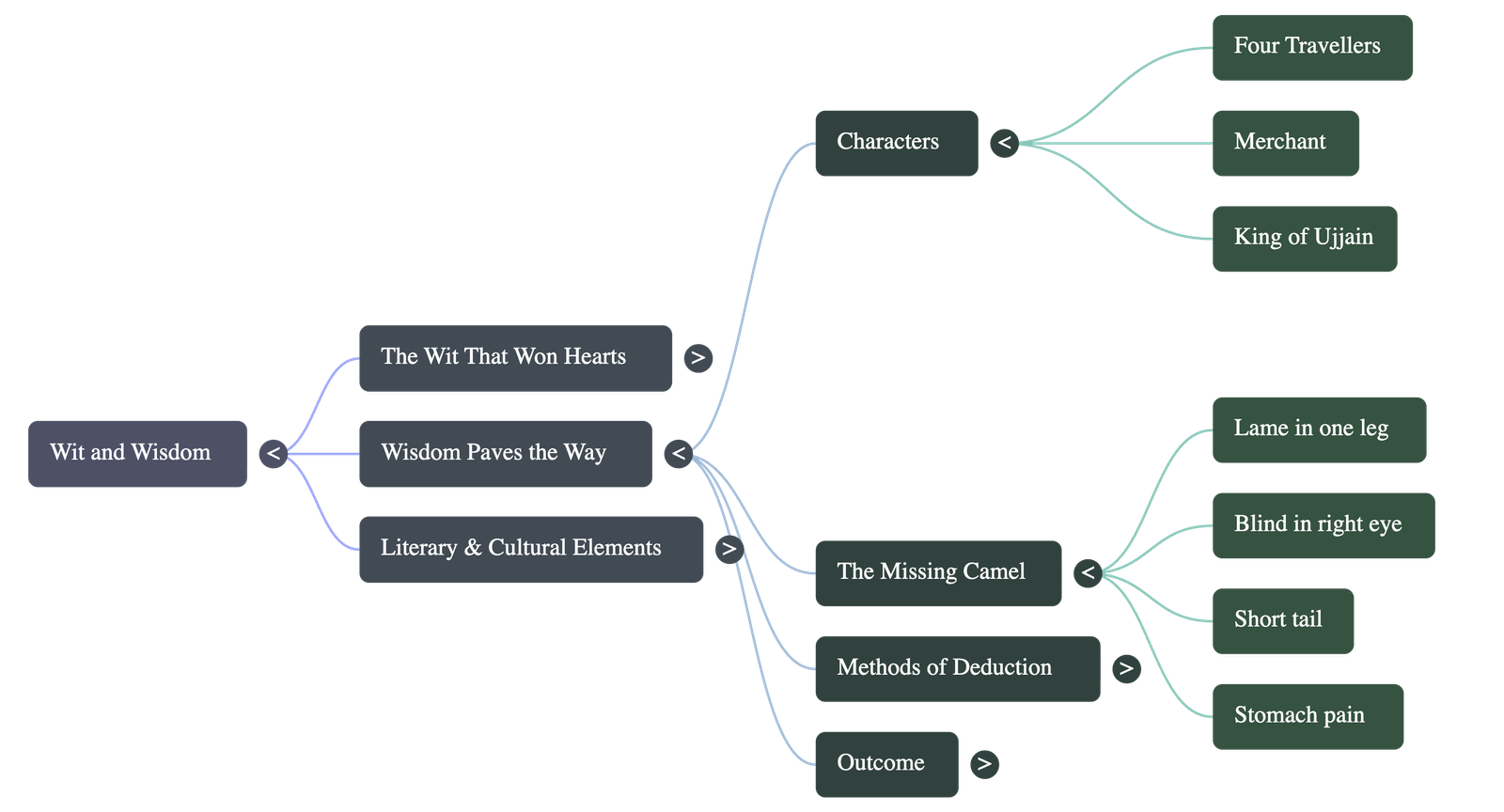
- ✦ The Travellers: Four young, observant men (Ram Datt, Shiv Datt, Har Datt, and Dev Datt) are walking toward Ujjain to seek employment in the King's court.
- ✦ The Encounter: They meet a distressed merchant looking for his lost camel. Using only the tracks on the road, they accurately describe the camel's physical condition without ever seeing it.
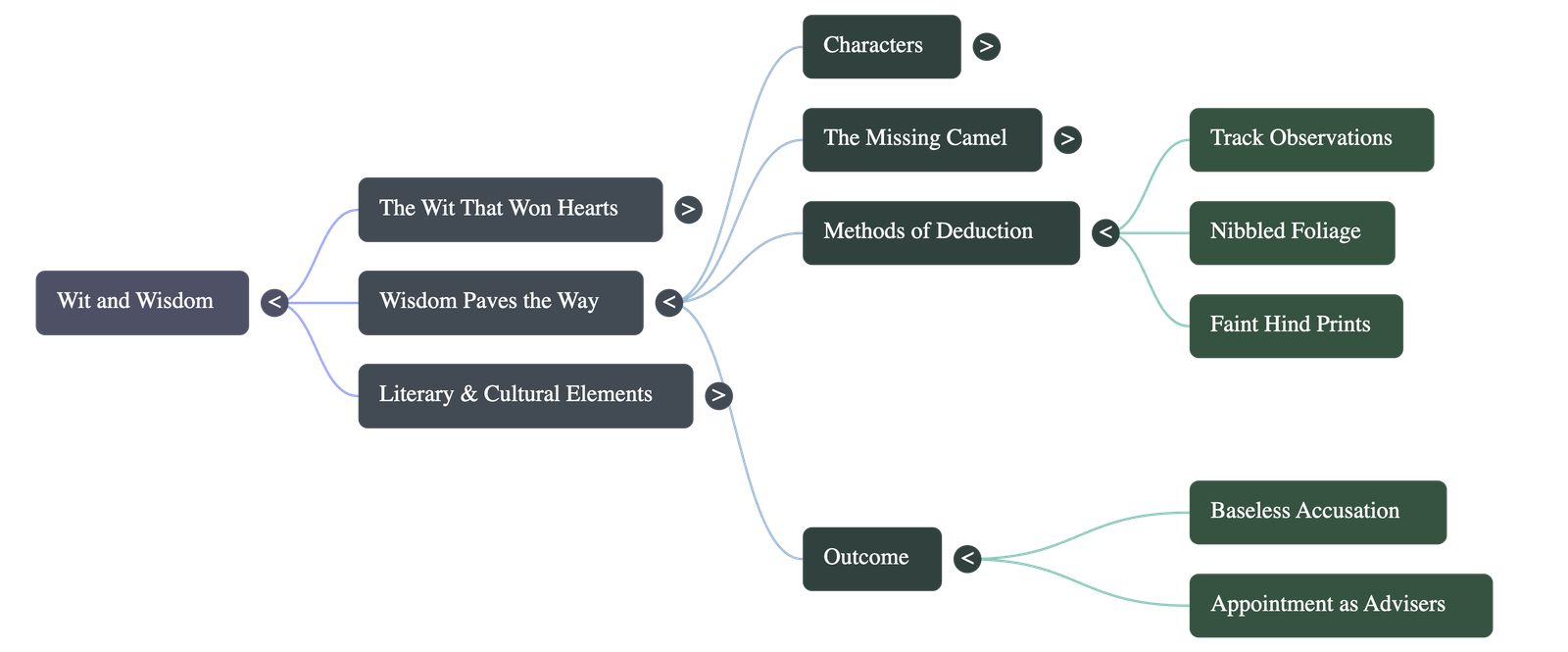
- ✦ The Accusation: Amazed but suspicious, the merchant accuses them of stealing the camel and drags them to the King's court.
-
✦
Deductive Reasoning: At the trial, the four men explain their brilliant deductions to the King:
- Lame leg: Deduced from three deep footprints and one faint limp mark.
- Blind right eye: Deduced because leaves were only eaten from the left side of the path.
- Short tail: Deduced from blood specks on the trail, showing the camel couldn't swat away mosquitoes.
- Stomach pain: Deduced from deep forefeet prints and faint hind prints, indicating the animal was drawing up its legs to ease belly pain.
- ✦ The Reward: The King is highly impressed by their sharp intellect and observational skills. He frees them and appoints all four as royal advisers.
4 Key Grammar & Writing Concepts
- ✦ Compound Words: Combining words to make new meanings (e.g., sunlight, courtroom, well-planned, paddy seeds). Includes closed, hyphenated, and open compounds.
- ✦ Conditional (If) Clauses: Exploring the relationship between actions and their potential or hypothetical outcomes (e.g., "If I had known..." or "If you like...").
- ✦ Modal Verbs: Usage of words like can, could, should, must, might, may, ought to to express abilities, possibilities, obligations, and deductions.
- ✦ Narrative Essay Writing: Guidelines on how to share a personal experience effectively by structuring an introduction, body (with logical sequencing), and conclusion.
- ✦ Notice & Letter Writing: Formats and guidelines for drafting official notices (e.g., for a Nature Club) and formal complaint letters to authorities.
- ✦ Intonation & Speech: Understanding rising and falling tones in statements, questions, and exclamations to correctly express intended meaning.
Quick Navigation:
| | |
1 / 1
Quick Navigation:
| | |