Quick Navigation:
| | |
Values and Dispositions
A Comprehensive Summary of the Chapter
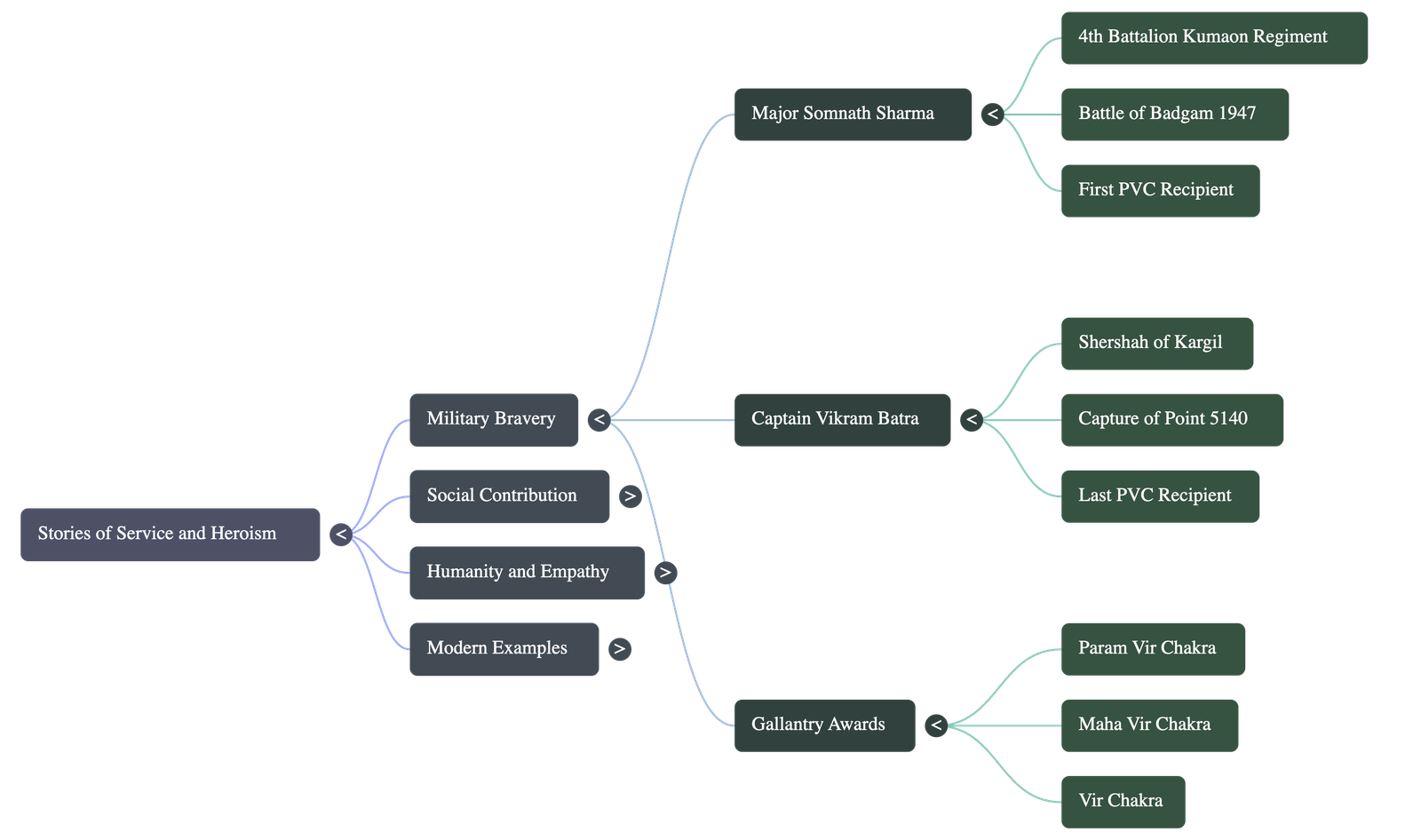
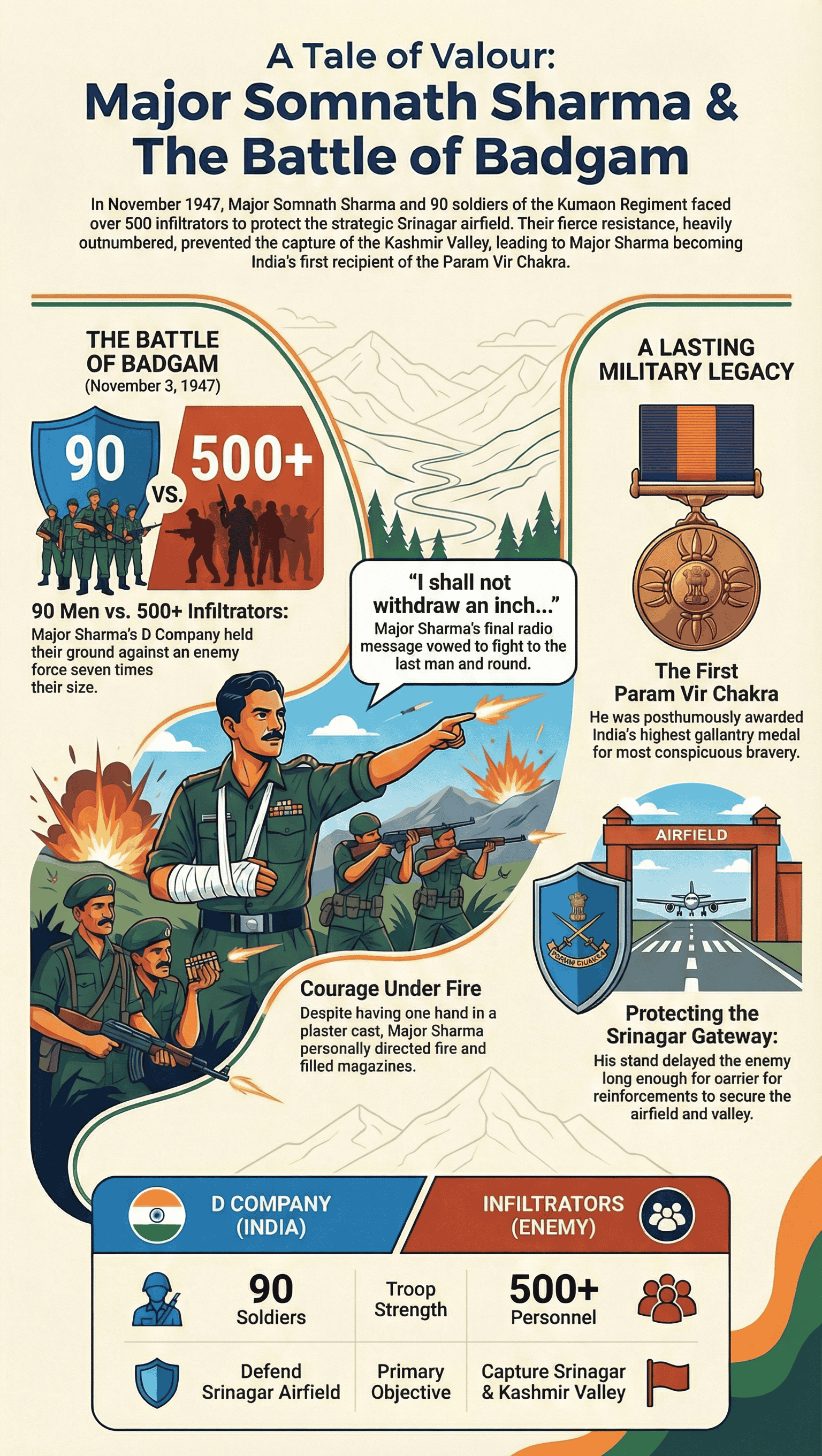
1. A Tale of Valour: Major Somnath Sharma and the Battle of Badgam
- • Early Life and Inspiration: Born on 31 January 1923 in Kangra, Himachal Pradesh, Major Somnath Sharma came from a family with a strong military legacy. He was deeply influenced by the valorous tales of the Mahabharata narrated by his grandfather.
- • The Threat to Srinagar: In November 1947, around 500 Pakistani infiltrators launched an attack to capture the Srinagar airport and the Kashmir Valley, posing a severe threat to newly independent India.
- • Unyielding Leadership: Major Sharma led the 90 men of 'D Company' (4 Kumaon battalion). Heavily outnumbered by a ratio of seven to one and facing devastating enemy fire, he stood resolute and refused to retreat.
- • Ultimate Sacrifice: Despite sustaining injuries, he fearlessly directed fire and filled magazines for his gunners. He was killed instantly when a mortar shell hit his position. His last message was a vow to fight to the "last man and the last round."
- • Victory and Legacy: His men, motivated by his bravery, held the position for six hours, allowing reinforcements to arrive and successfully saving Srinagar. For his supreme sacrifice, Major Somnath Sharma became the first recipient of India's highest gallantry award, the Param Vir Chakra (awarded posthumously).
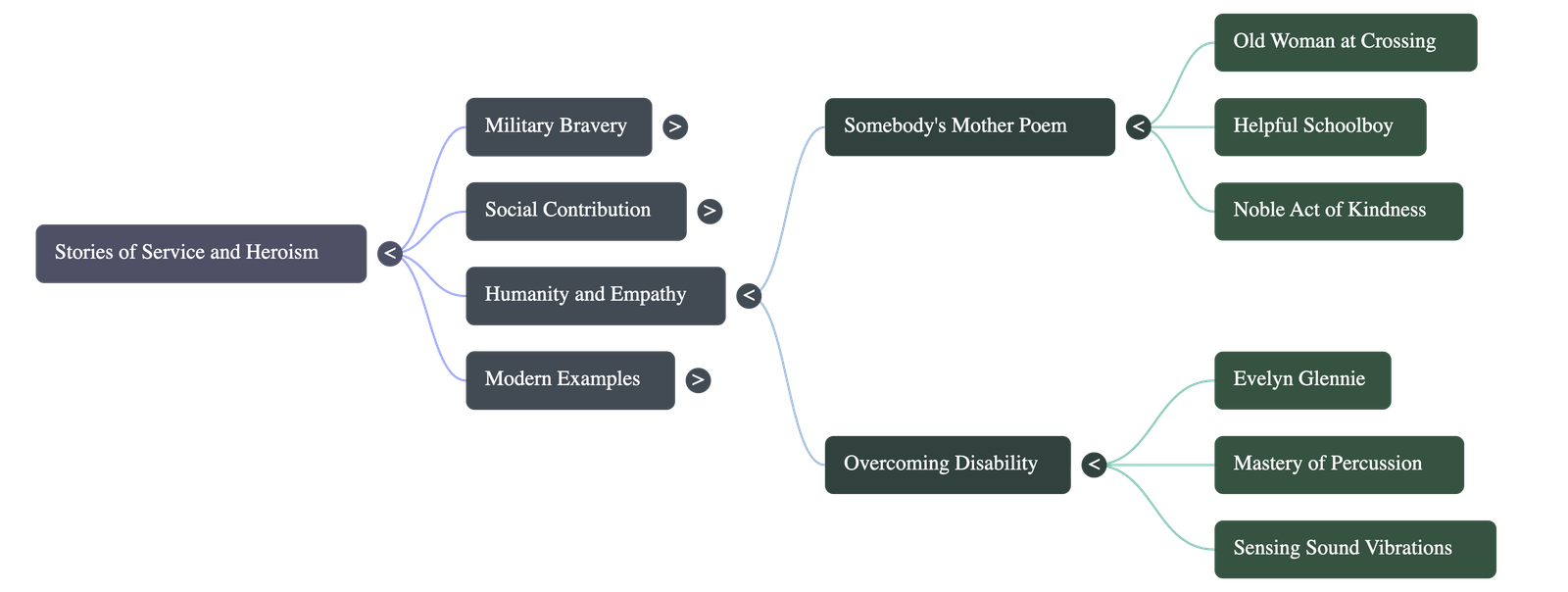
2. Somebody’s Mother (Poem by Mary Dow Brine)
- • The Helpless Woman: An old, ragged, and frail woman stands alone at a crossing on a cold, snowy winter day, hesitant and afraid to cross the slippery street due to heavy carriage traffic.
- • The Indifferent Crowd: A group of joyful schoolboys passes by her. Lost in their own merriment and freedom, most of the children ignore her completely and fail to offer a helping hand.
- • An Act of Compassion: One cheerful boy stops, whispers gently to the old woman, and safely guides her trembling feet across the street, feeling proud of his own strength and ability to help.
- • The Underlying Empathy: The boy later explains to his friends that he helped the elderly woman with the hope that someday, someone else might offer the same kindness to his own mother if she is ever in need.
- • A Mother's Blessing: Touched by the young boy's selfless act, the old woman prays to God that night, asking for blessings upon the noble boy who is "somebody's son, and pride and joy."
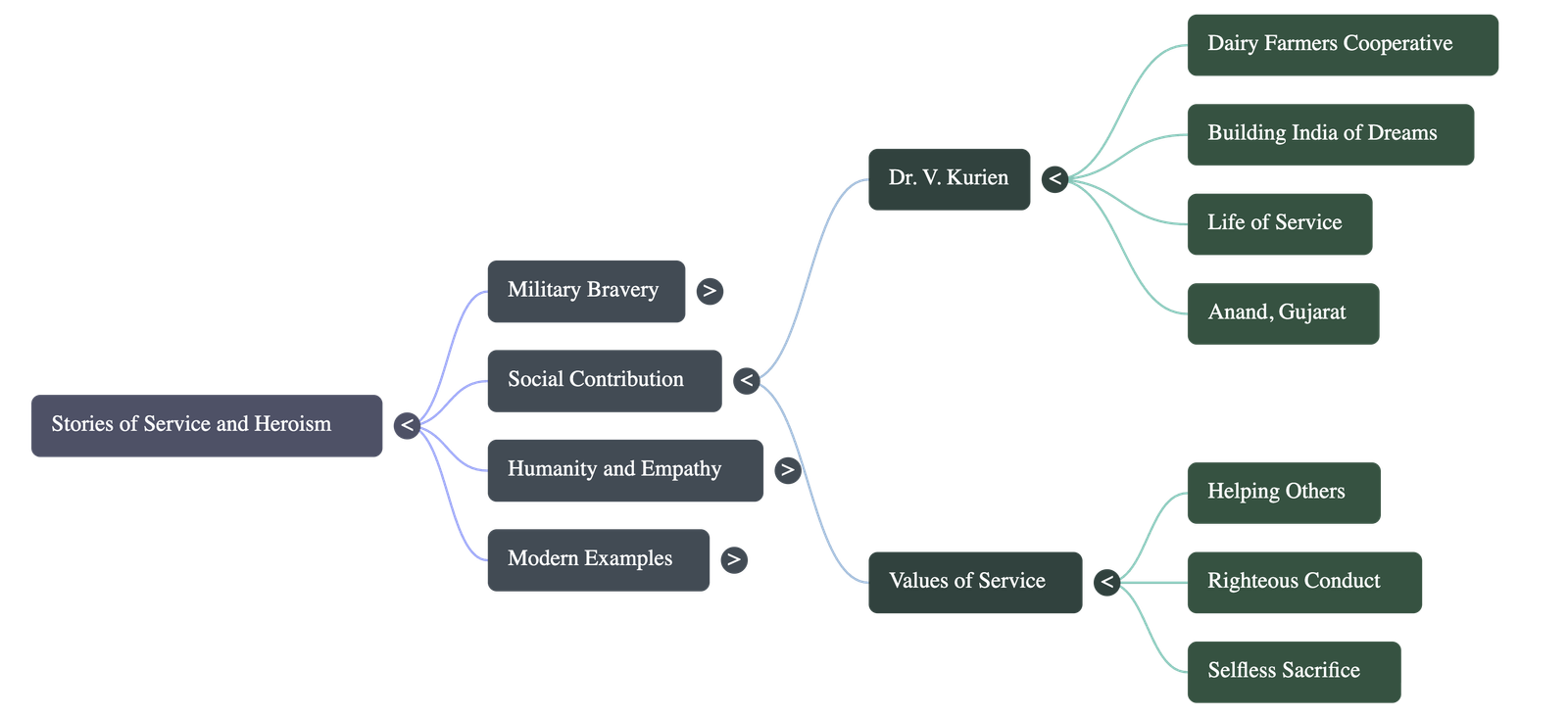
3. Verghese Kurien — I Too Had A Dream
- • The Value of Written Words: Addressed as a letter to his grandson Siddharth, Dr. Kurien highlights that while modern telephone calls offer fleeting joy, written letters are treasures that provide abiding pleasure and deep understanding across generations.
- • Choosing a Path of Service: He reflects on post-independence India, noting his decision to forego lucrative careers (like becoming a corporate executive or moving to the US) in order to work for a dairy farmers' cooperative in Anand, Gujarat.
- • Family Support: He credits his wife (the grandson's grandmother) for her unwavering support, sacrificing modern comforts to stand by him, which gave him the poise and everlasting strength to shoulder his responsibilities.
- • Core Values and Integrity: Dr. Kurien stresses that personal integrity—being honest with oneself—is the most crucial value, leading naturally to honesty with others and forming the foundation of his success.
- • Life as a Privilege: He imparts the wisdom that life is a privilege meant to be used for the common good. True failure is not a lack of success, but rather the failure to put in one's best effort to help the community.
- • The True Reward: Recalling when he received the Padma Vibhushan, he reminds his grandson that awards are just symbols; the real challenge and true reward lie in living a life well-spent, working tirelessly for the greater good of humanity.
Quick Navigation:
| | |
1 / 1
Quick Navigation:
| | |