Razia the Tigress
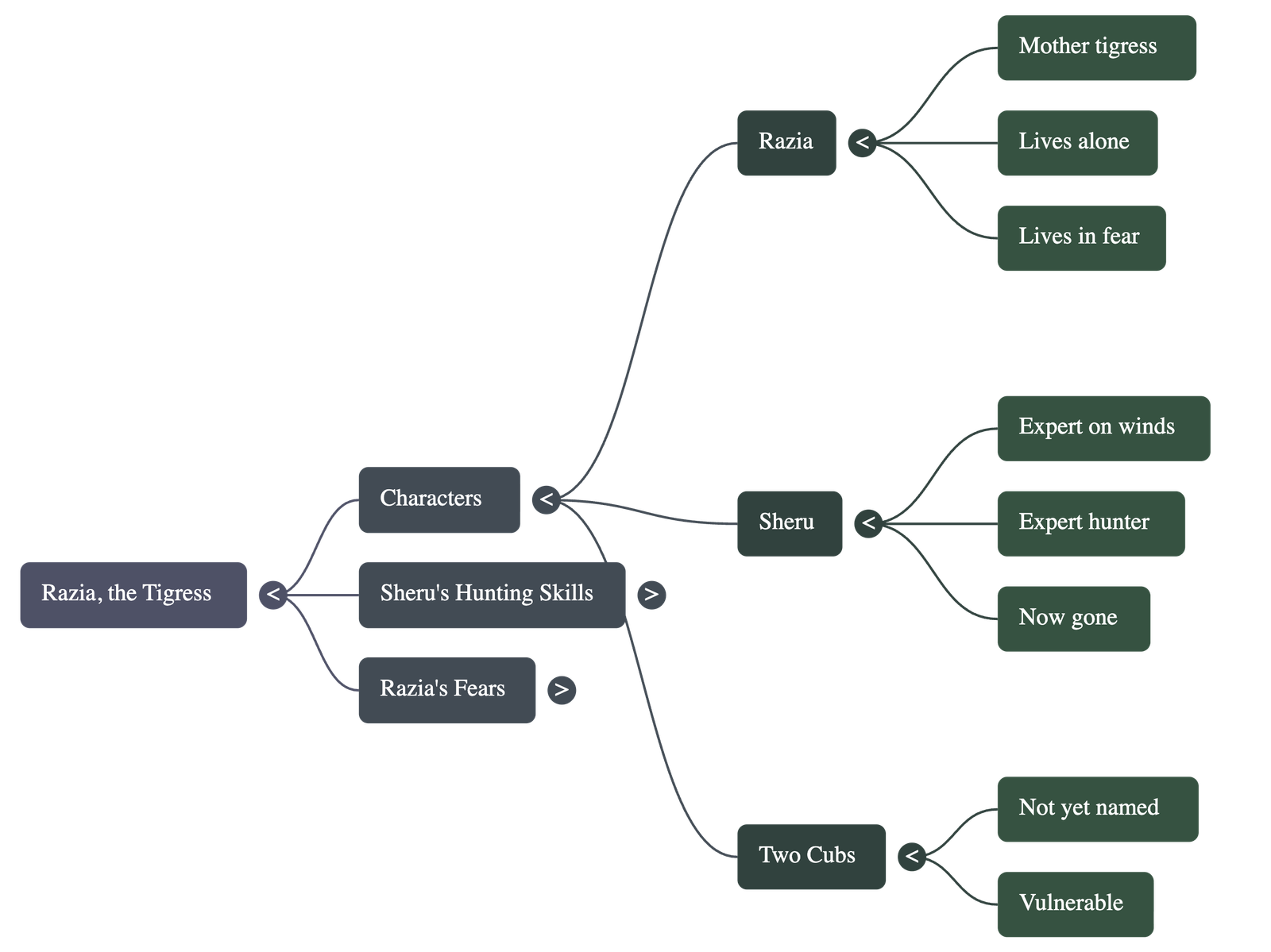
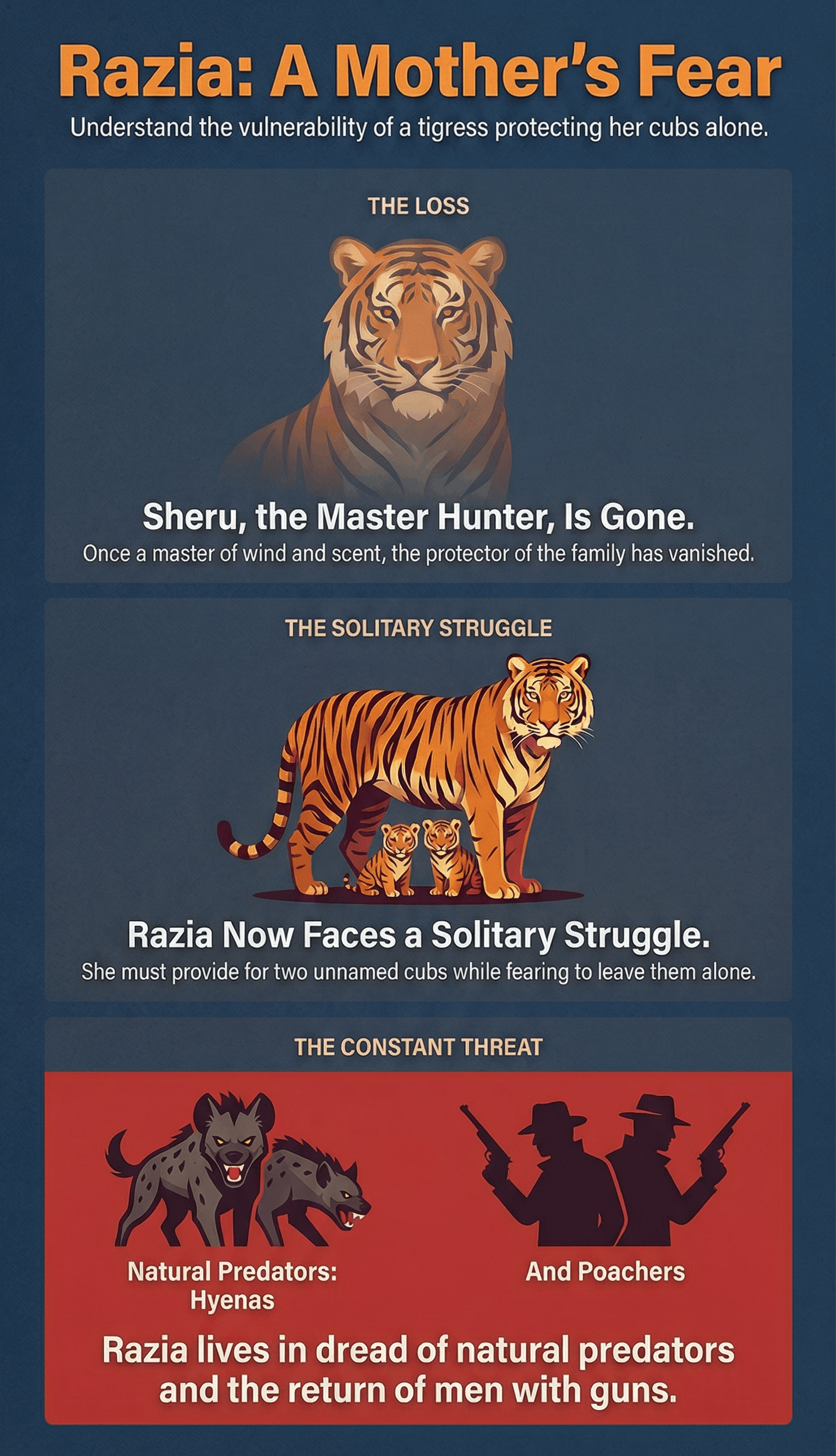
The poem "Razia, the Tigress" by Keki N. Daruwalla depicts the vulnerability of wildlife through the story of a solitary female tiger. It initially focuses on Sheru, a male tiger who was once a master hunter capable of navigating wind patterns to stealthily ambush his prey. However, the narrative shifts to a more sombre tone following Sheru’s departure, leaving Razia to raise two young cubs by herself.The protagonist is now overwhelmed by profound anxiety regarding the safety of her offspring in a landscape filled with danger. She specifically worries about predatory hyenas attacking her cubs while she hunts and the overarching threat of human poachers. Ultimately, the text serves as a poignant reflection on the precarious existence of endangered animals facing environmental and man-made risks.
What survival skills did Sheru use to hunt his prey?
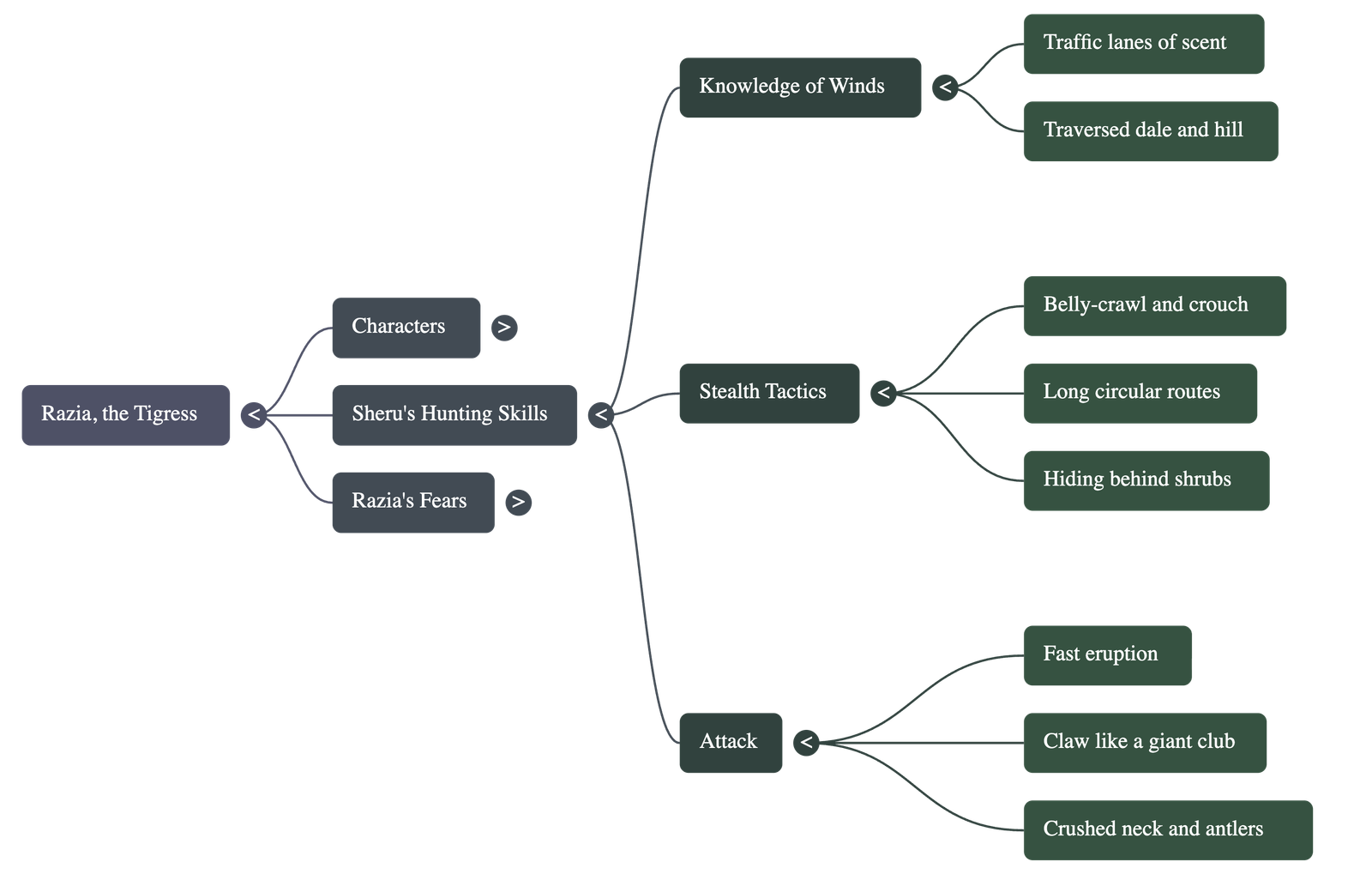
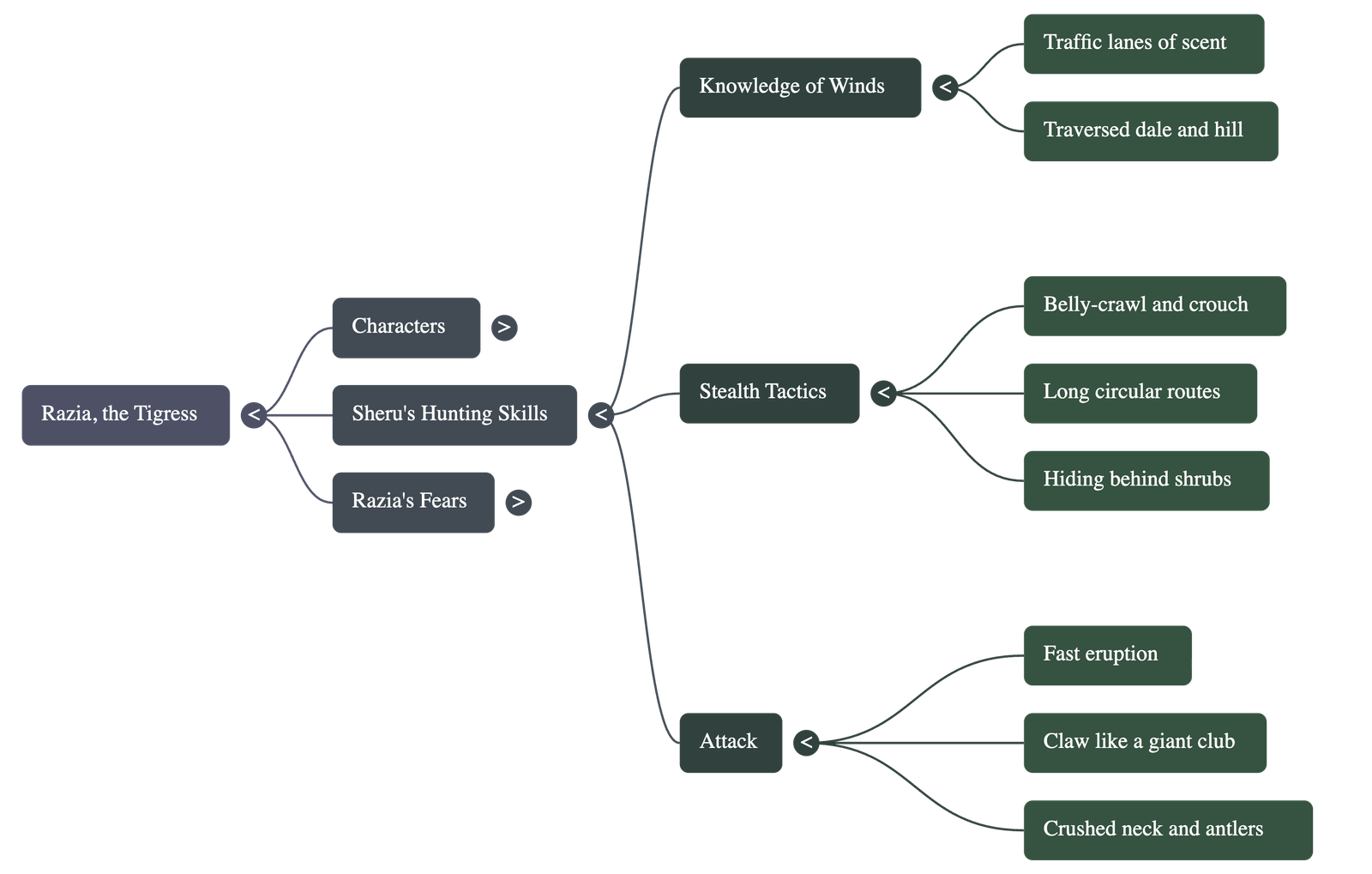
Sheru utilised a sophisticated combination of environmental awareness, stealth, and physical power to hunt his prey:
Expert Knowledge of Winds: Sheru was described as an "expert on winds," possessing a deep understanding of how they traversed the hills and dales. He specifically understood the "traffic lanes" of the wind—the directions in which it would carry his scent—and knew exactly where the wind would settle for the night when the air became still.
Scent Management: He was acutely aware that if he were down-wind, deer would be able to smell his "thick and musty" tiger-scent. To prevent detection, he would only attack once he was certain his scent would not carry to the prey.
Stealth and Camouflage: To approach his target undetected, Sheru would "belly-crawl and crouch," taking a "long circular route" to ensure he remained hidden. He also utilised the natural environment for cover, hiding behind bushes and shrubs.
Speed and Force: After stalking his prey, he would "erupt" in a flash to deliver a sudden, powerful attack. He used his immense physical strength, with a claw described as a "giant club," to crush the neck and antlers of his prey.
Why does Razia now fear for her cubs' safety?
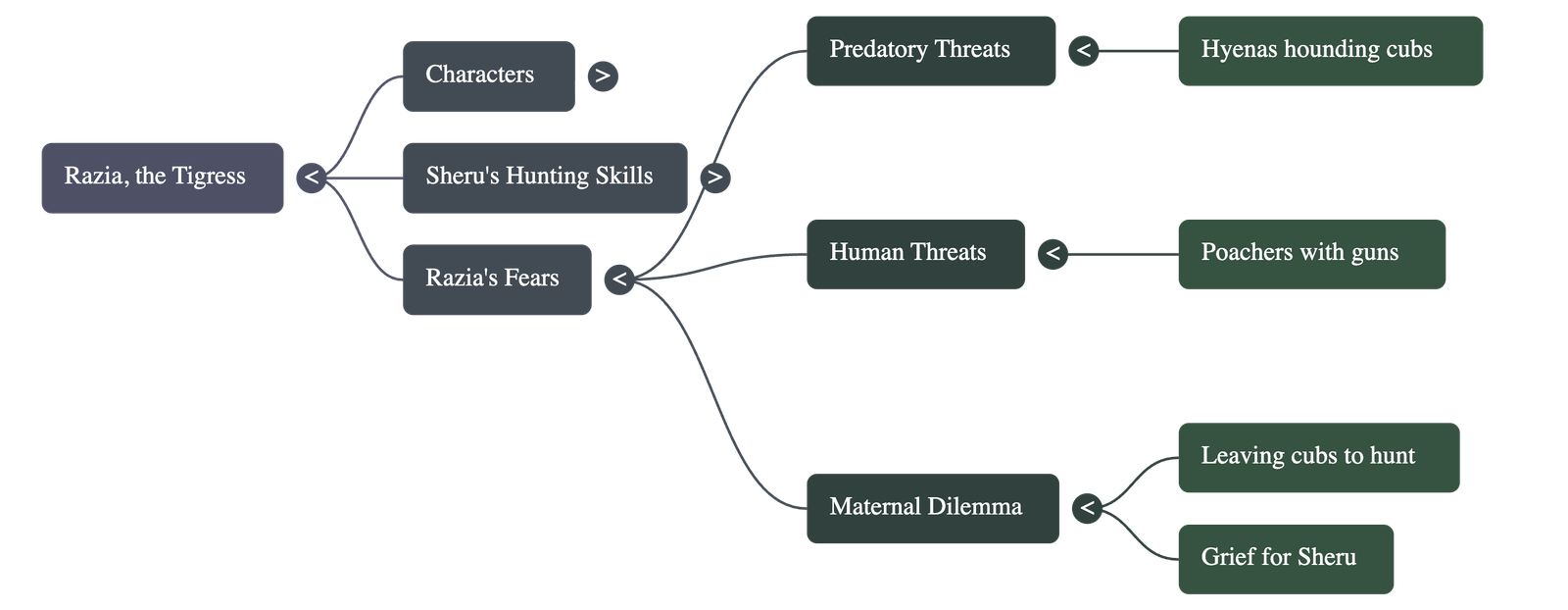
Razia fears for her cubs' safety primarily because Sheru is gone, leaving her to raise and protect their two unnamed cubs alone. Her anxiety stems from several specific threats:
Natural Predators: Without Sheru's presence to deter them, Razia worries that hyenas will "hound" her cubs.
Vulnerability During Hunting: She faces the dilemma of how to provide food; she is unsure if she can safely leave the "little ones alone" while she goes out "hunting flesh and bone".
The Threat of Poachers: Razia lives with a "greater dread" regarding the return of poachers with guns.
Loss of Protection: With Sheru gone, people no longer fear his "dreaded spoor" (tracks or smell) or his pug-marks on the forest floor, suggesting the tigers' territory may no longer be perceived as a dangerous area to avoid.
What impact do poachers have on Razia's daily life?
The threat of poachers has a profound and debilitating impact on Razia’s daily existence, primarily by instilling a constant state of psychological distress and operational difficulty in her life as a mother:
Constant State of Fear: Razia lives in a state of "greater dread," perpetually worried about when "the poachers with their guns" will return. This fear is so pervasive that it competes with her grief over the loss of Sheru, becoming a dominant emotion in her heart.
Hindrance to Daily Survival: The threat from humans impacts her ability to perform essential daily tasks, such as providing food. She is plagued by the dilemma of whether she can safely "leave the little ones alone" while she goes out "hunting flesh and bone". The fear that poachers or other predators might find her cubs while she is away makes the simple act of hunting a source of extreme anxiety.
Loss of Territorial Security: Following Sheru's disappearance—which leaves her vulnerable to human intruders—the "dreaded spoor" and "pug-marks" that once kept people away no longer command fear. This suggests that her territory is now more accessible to poachers, increasing the likelihood of a dangerous encounter.
Heightened Vulnerability: While she worries about natural threats like hyenas hounding her cubs, the poachers represent a superior level of danger that she cannot easily defend against, especially now that she is the sole protector of her family.
In summary, the poachers have transformed Razia's home into a place of perpetual anxiety, where the need to hunt for survival is in direct conflict with her need to stay and protect her cubs from human violence.
How does Razia's maternal instinct conflict with her need to hunt?
Razia's maternal instinct creates a profound internal conflict because she is now the sole provider and protector for her two unnamed cubs. Following Sheru's departure, her need to hunt for survival is directly at odds with her instinctual drive to keep her offspring safe from the following threats:
The Dilemma of Absence: To sustain herself and her cubs, Razia must go out "hunting flesh and bone". However, this creates a dangerous situation where she must decide if she can safely "leave the little ones alone". Her maternal instinct makes her hesitant to leave them unguarded, as she knows they are vulnerable without her presence.
Natural Predators: Her instinctual fear is heightened by the threat of scavengers; she specifically worries that "hyenas will hound her cubs" if they are left unprotected while she is away seeking food.
Human Intervention: Razia’s maternal dread is further intensified by the threat of poachers with guns. She is caught between the physiological necessity of hunting and the "greater dread" that humans might return to harm her cubs while she is not there to defend them.
Loss of Shared Responsibility: Previously, Sheru's presence—and even his "dreaded spoor" and "pug-marked" tracks—served as a deterrent to intruders. With him gone, the full burden of both securing food and providing 24-hour protection falls entirely on her, making the act of hunting a source of competing "grief and fear".
In essence, the sources illustrate that Razia is trapped in a vicious cycle: she must leave her cubs to ensure they do not starve, but leaving them exposes them to the very predators and poachers she instinctively seeks to protect them from.
Do checkout all questions & answers of this chapter.