The Bees
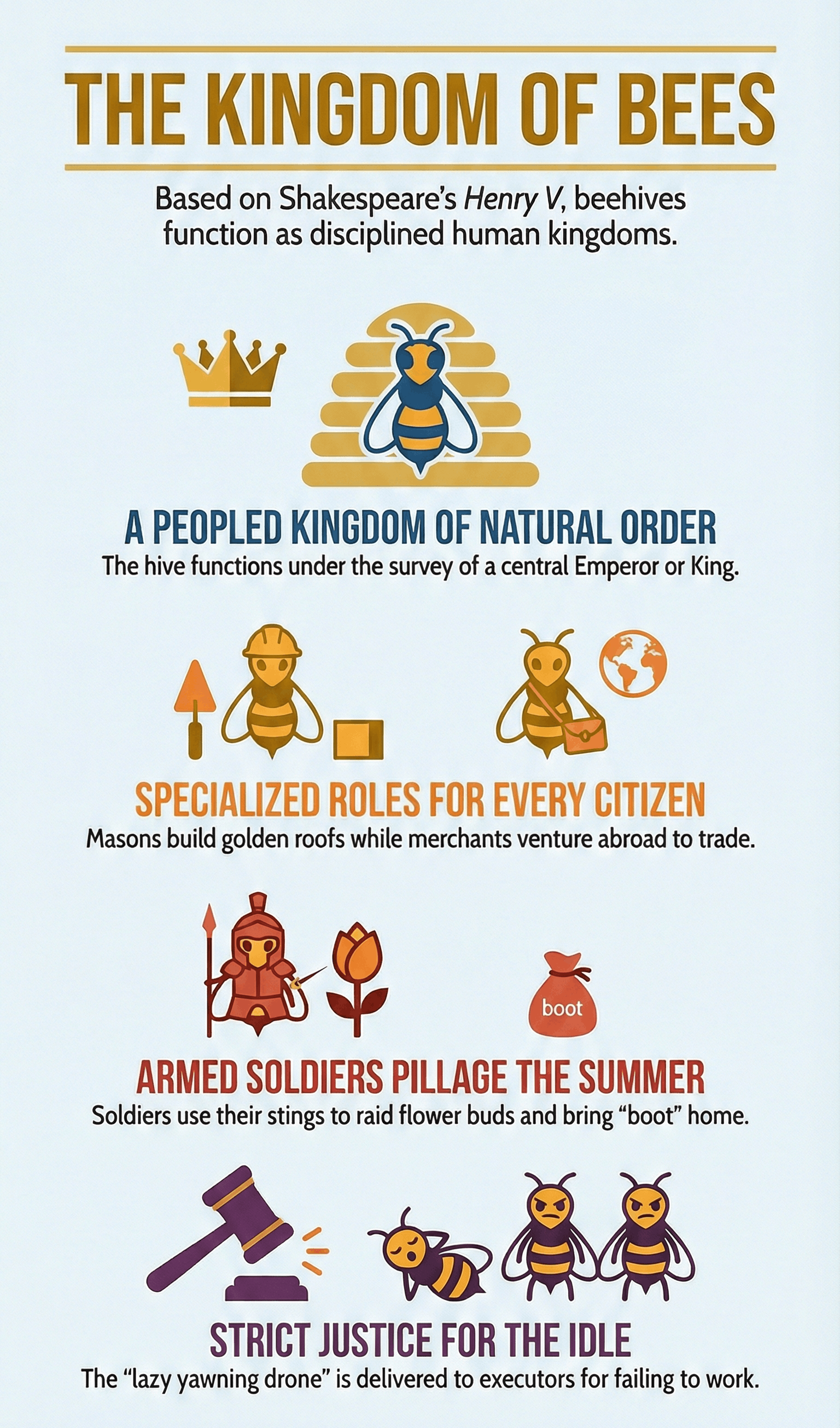
This excerpt from William Shakespeare’s Henry V portrays a beehive as a sophisticated and disciplined monarchy that serves as a model for human civilisations. The poem describes a hierarchical society where various bees occupy specific roles, including soldiers who gather resources and masons who construct the golden hive. An emperor oversees the collective industry, while judges maintain order by punishing those who do not contribute.By personifying these insects as merchants and officers, the text illustrates how natural instincts can create a perfectly organised community. This literary work suggests that true prosperity is achieved through shared labour and a strict adherence to social structure.
How does the poem describe the different roles within the hive?
The poem portrays the honey-bee colony as a highly disciplined "peopled kingdom" where various individuals perform specialised functions to maintain order. These roles are described through the following categories:
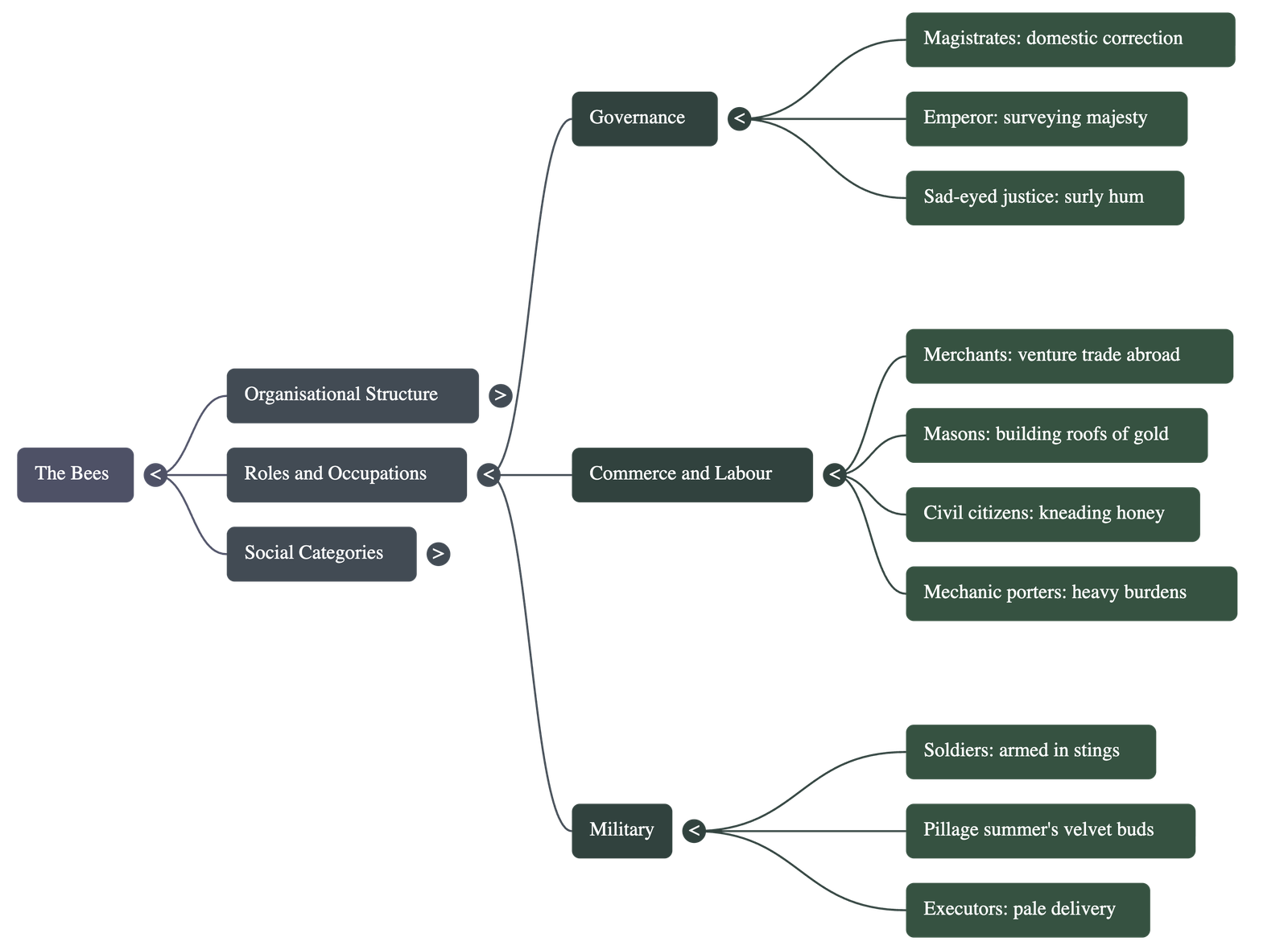
The Sovereign: At the head of the society is a king or emperor who, while "busied in his majesty", surveys the work of his subjects from his "tent royal".
Administrative and Trade Roles: The poem identifies magistrates who remain within the hive to "correct at home" and merchants who "venture trade abroad" to gather resources.
Military Force: Soldier bees, armed with stings, act as foragers who "make boot" (raid to steal) upon summer flowers. They are described as returning to the emperor in a "merry march" to deliver their "pillage".
Labourers and Artisans: The physical maintenance of the hive is carried out by "singing masons" who build "roofs of gold" (honeycombs), while "civil citizens" are responsible for "kneading up the honey". Additionally, "poor mechanic porters" are depicted crowding through the narrow gates, carrying "heavy burdens".
Judicial Figures: Social discipline is maintained by a "sad-eyed justice" who, with a "surly hum", delivers the "lazy yawning drone"—a male bee that performs no work—to "executors pale".
What happens to the lazy drones who do not work?
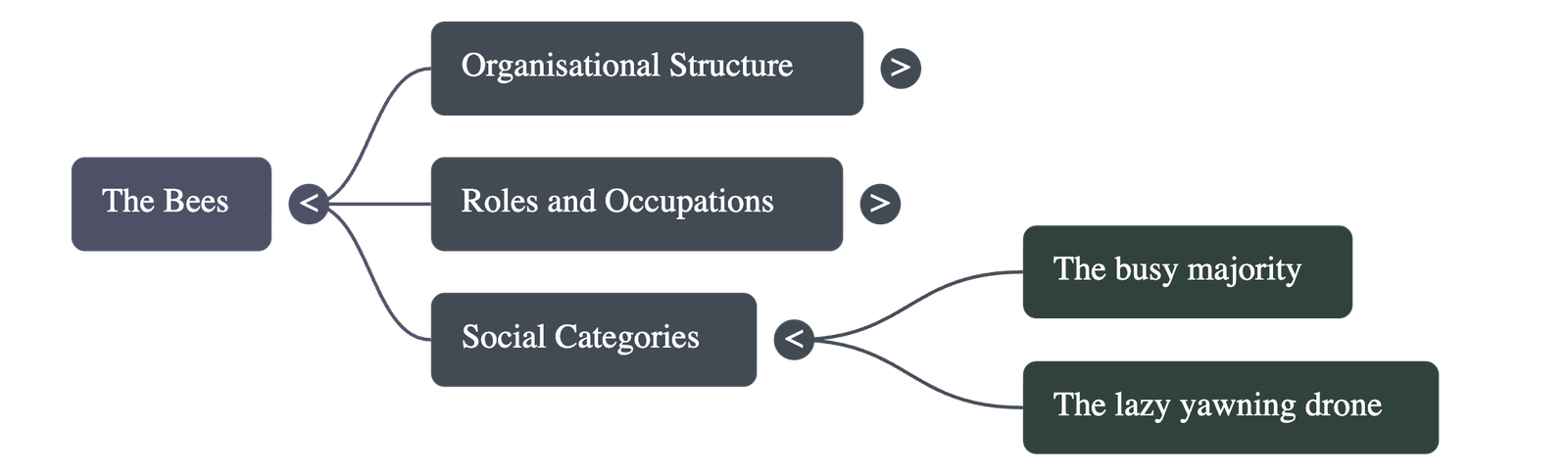
In the bee colony described in the poem, the lazy yawning drone—which is defined as a male bee that performs no work—is subject to a formal system of judicial discipline. The poem depicts a "sad-eyed justice" who, with a "surly hum", officially delivers the drone over to "executors pale".
This implies that because the drone fails to contribute to the hive's collective industry, it is handed over to be executed or punished, ensuring that the "act of order" and discipline within the kingdom are strictly maintained.
Why does Shakespeare compare the bee colony to a human kingdom?
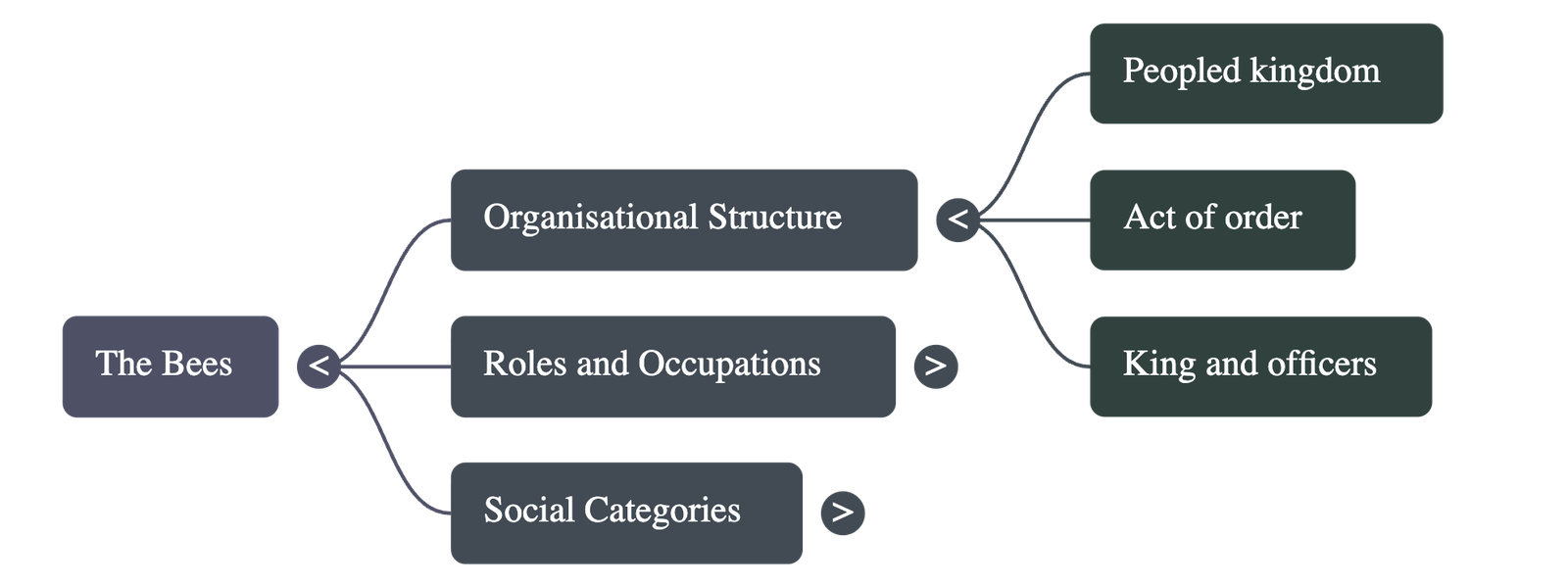
Shakespeare compares the bee colony to a human kingdom primarily to demonstrate how a rule in nature can "teach the act of order to a peopled kingdom". By drawing these parallels, he suggests that human societies should follow the same natural discipline and organisation found in the hive.
The comparison highlights several key aspects of a functional society:
Centralised Governance: Just as a human kingdom has a monarch, the bee colony features a king or emperor who "surveys" the diverse tasks of his subjects from a "tent royal".
Specialisation of Labour: Shakespeare illustrates that a successful state requires citizens to perform distinct roles, comparing bees to "magistrates" who maintain domestic order, "merchants" who trade abroad, and "soldiers" who protect the realm and gather resources.
Infrastructure and Industry: He likens the physical work of the hive to human industry, including "singing masons" who build structures and "porters" who manage the heavy transport of goods.
The Rule of Law: The comparison extends to a judicial system where a "sad-eyed justice" ensures the colony's productivity by delivering the "lazy yawning drone"—a bee that does no work—to executors for punishment.
In essence, the comparison serves to show that order and hierarchy are not just human inventions, but are fundamental principles of nature that ensure a community's survival and success.
What qualities of the bees represent different ranks in human society?In the poem, the bee colony serves as a microcosm of human society, where different biological functions represent various social ranks and professional classes through their specific behaviours and duties. The different ranks are represented by the following qualities:
Sovereignty and Oversight: The "king" or "emperor" represents the highest rank of leadership. His qualities include majesty and surveillance, as he remains in a "tent royal" to oversee the various activities of his subjects rather than engaging in manual labour himself. • Civil Administration: The "magistrates" embody the quality of domestic discipline. Their role is to "correct at home", mirroring human officials who manage internal affairs and maintain social order.
Commercial Enterprise: The "merchants" represent the expansive and adventurous nature of trade. Their quality is the willingness to "venture trade abroad", seeking resources beyond the borders of the hive.
Military Discipline: The "soldiers" represent protection and resource acquisition. They are characterised by being "armed in their stings" and their ability to conduct a "merry march" while bringing back "pillage" (resources) to the state.
Artisanship and Industry: The "singing masons" represent the creative and architectural skills of human society, focused on building "roofs of gold". Meanwhile, "civil citizens" represent the processing and refinement of goods as they work on "kneading up the honey".
Manual Labour: The "poor mechanic porters" represent the toil of the working class. Their qualities are physical strength and endurance, as they are seen "crowding in" with "heavy burdens".
Judicial Enforcement: The "sad-eyed justice" represents the gravity and surliness of the legal system. His role is to identify and deliver the "lazy yawning drone"—representing the idle or non-contributing members of society—to "executors" for punishment, ensuring that the hive's productivity is not compromised.
Do checkout all questions & answers of this chapter.