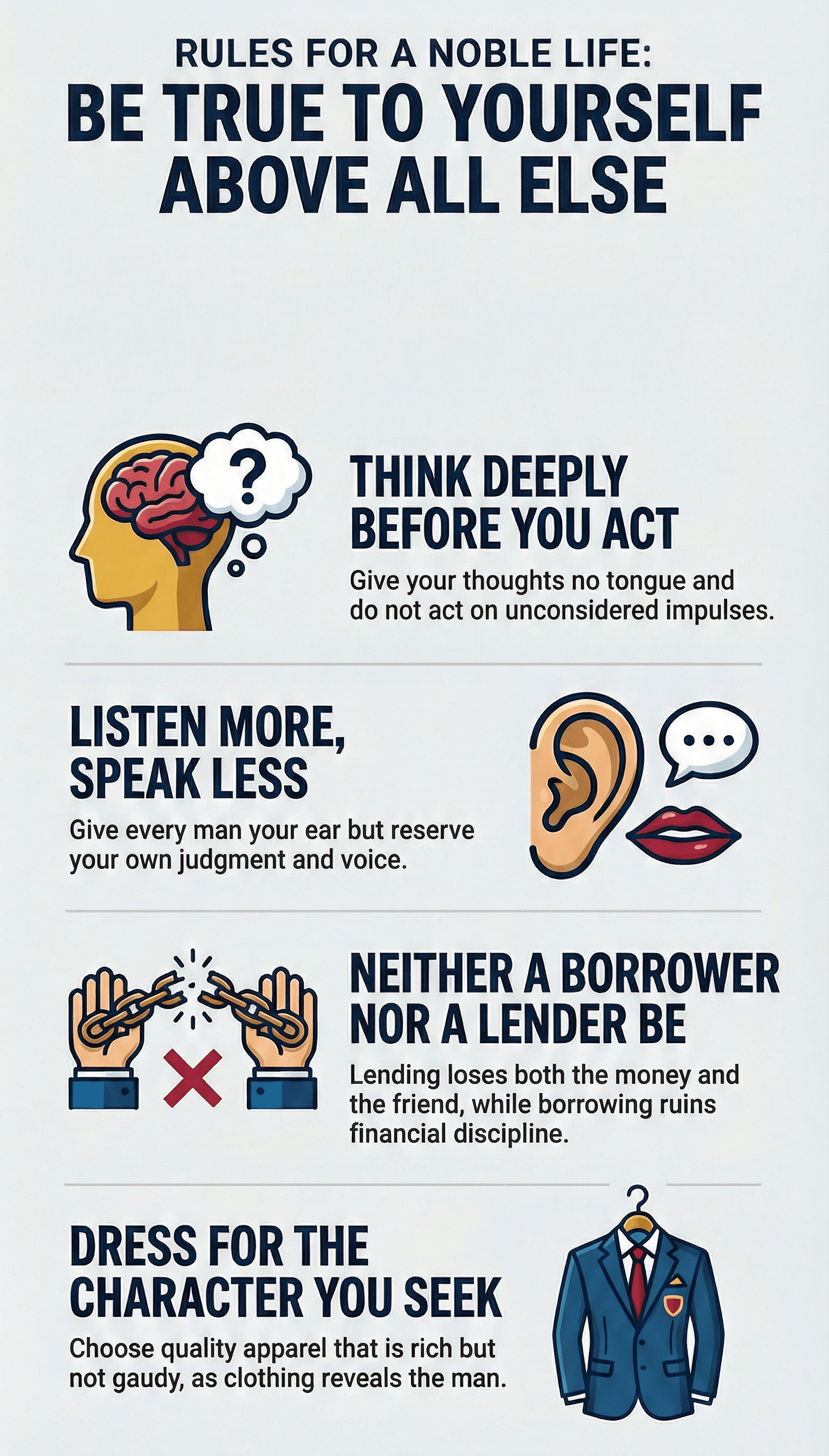
Polonius advises Laertes
This excerpt from William Shakespeare’s Hamlet features a famous speech where Polonius offers parting wisdom to his departing son, Laertes. The father encourages a lifestyle defined by discretion and moderation, advising his son to listen more than he speaks and to avoid impulsive actions. Regarding social conduct, he suggests maintaining loyal friendships while cautioning against the financial and personal risks of lending or borrowing money.Polonius also emphasizes the importance of dressing with quality rather than gaudiness, as appearances often influence public perception. The passage concludes with the iconic moral directive to be true to oneself, suggesting that personal integrity naturally leads to honest dealings with others. Ultimately, these verses serve as a comprehensive guide to etiquette and character for a young man entering the wider world.
What are the core moral lessons Polonius shares with Laertes?
Polonius offers Laertes a series of "precepts" intended to guide his conduct and character while abroad. These moral lessons cover various aspects of social, financial, and personal life:
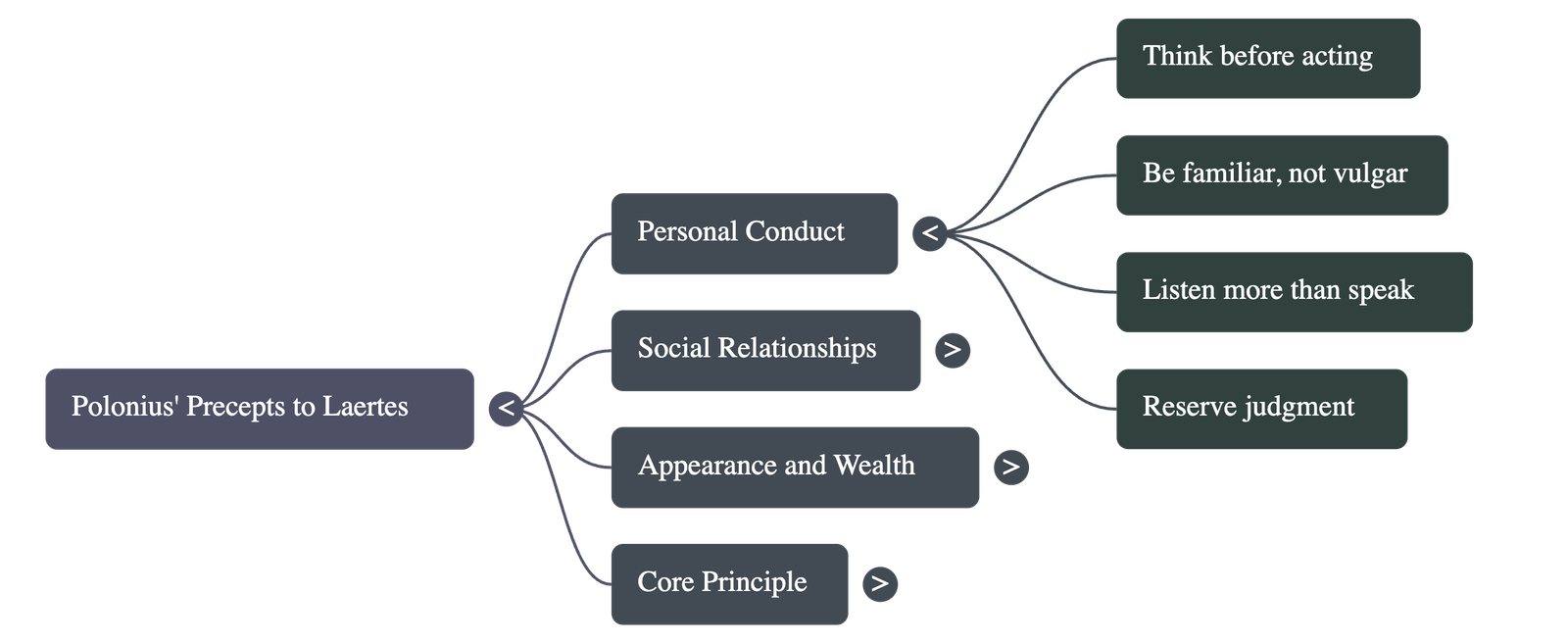
Discretion in Speech and Action: Polonius advises Laertes to think before he speaks and to avoid acting on impulsive or "unproportion'd" thoughts. He suggests being friendly and approachable ("familiar") without becoming common or "vulgar".
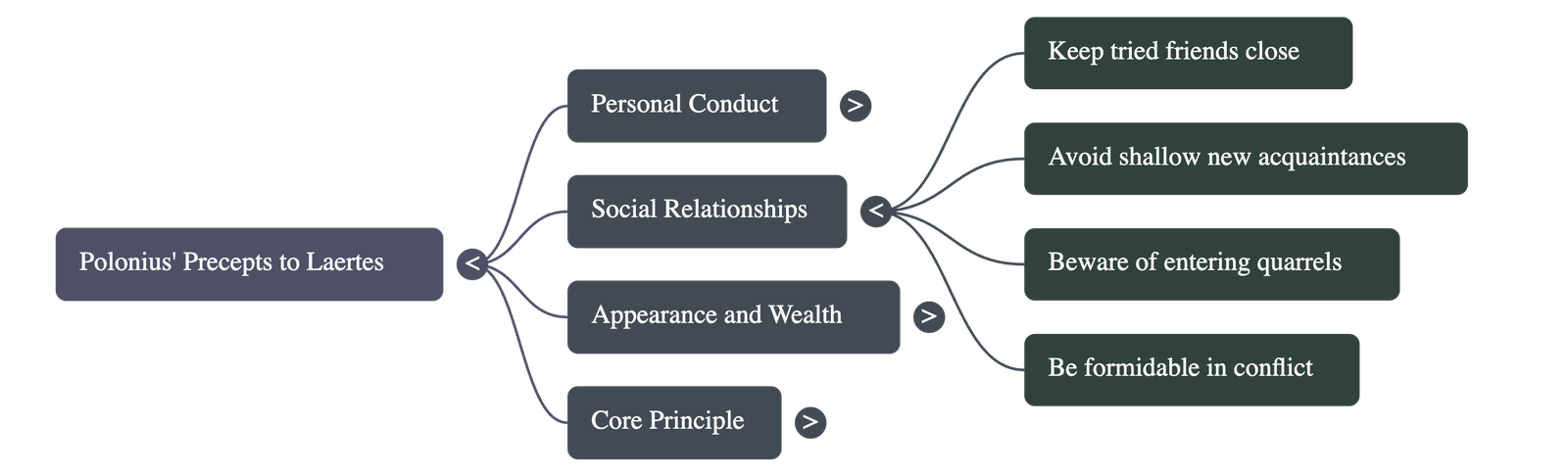
Discernment in Friendship: He encourages Laertes to hold fast to proven friends with "hoops of steel" but warns him not to waste his time or hospitality on every new, unproven person he meets.
Conduct in Conflict: Laertes is warned to avoid entering into quarrels; however, if he finds himself in a fight, he should hold his own so that his opponent will "beware" of him.
Observation over Opinion: The text suggests that Laertes should listen to everyone but speak to few. He is encouraged to hear out the criticisms and "censure" of others while keeping his own judgements to himself.
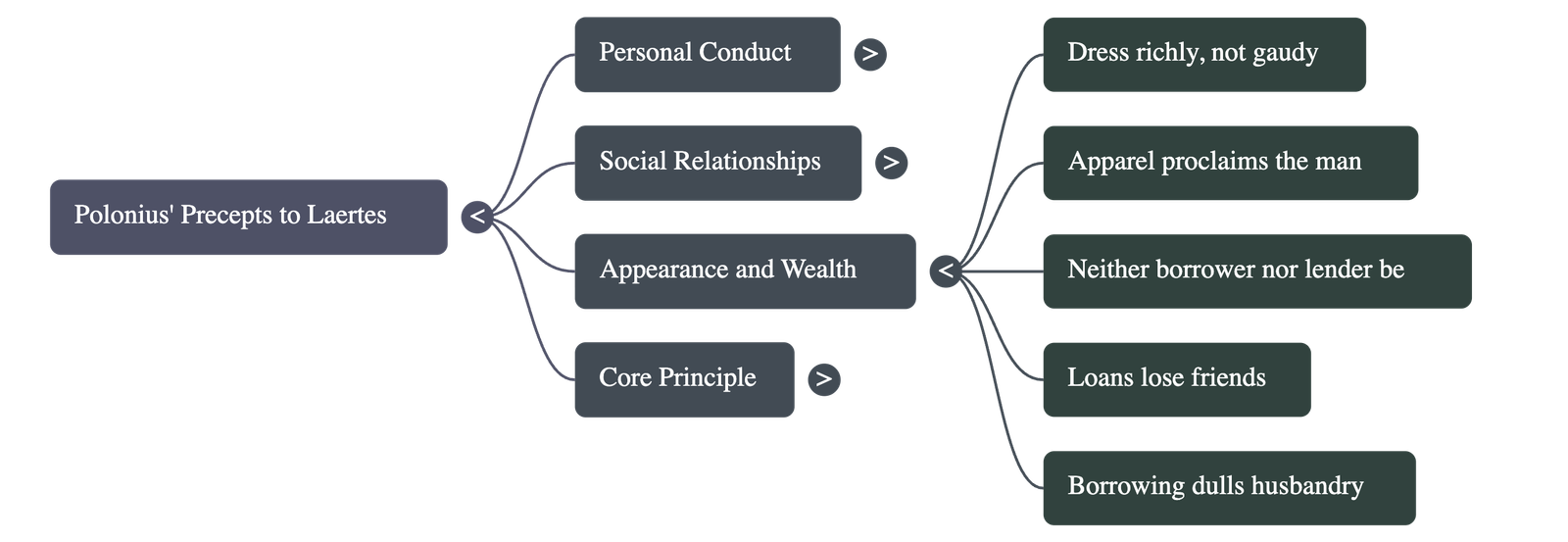
Appearance and Status: Polonius recommends buying the highest quality clothing his budget allows, provided it is "rich, not gaudy," because a man’s character is often judged by his attire.
Financial Independence: A core lesson is to avoid both borrowing and lending money. Polonius explains that lending often results in the loss of both the money and the friendship, while borrowing "dulls the edge of husbandry" (financial management).
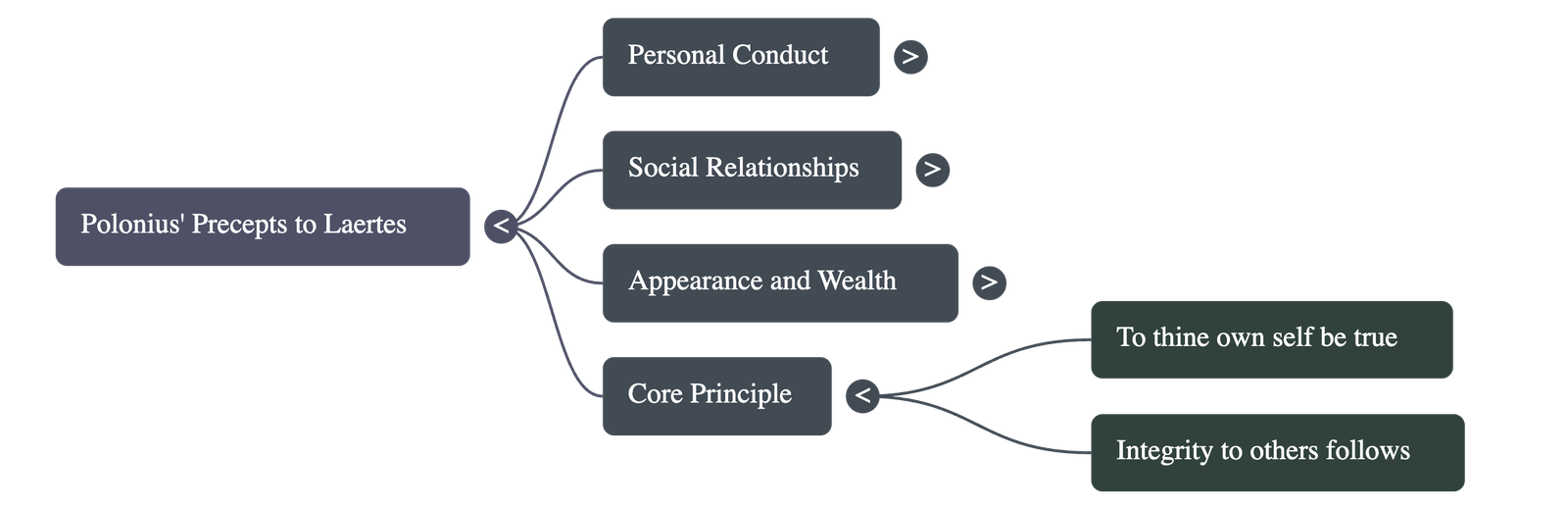
Personal Integrity: The final and most significant piece of advice is for Laertes to be true to himself. Polonius argues that if a person maintains their own integrity, it follows "as the night the day" that they cannot be false to anyone else.
How does Polonius link personal appearance to social status?
Polonius links personal appearance to social status by arguing that "apparel oft proclaims the man," suggesting that a person's outward clothing is a direct reflection of their inner character and social standing.
To ensure Laertes projects the correct image while abroad, Polonius provides specific guidelines on how to manage his appearance:
Quality over Ostentation: He advises Laertes to buy the most expensive clothing his budget allows ("Costly thy habit as thy purse can buy"), but specifies it should be "rich, not gaudy". He warns against clothing that is "express'd in fancy," prioritising understated quality over flashy or vulgar displays.
Social Benchmarking: Polonius reinforces the importance of dress by pointing to the French aristocracy as a standard of excellence. He notes that those of the "best rank and station" in France are particularly distinguished and "select" in their choice of attire, linking high-quality dress directly to noble status. By following these rules, Polonius believes Laertes can use his appearance to signal his respectability and high social position to others.
How does the French elite influence Polonius's views on fashion?
The French elite serve as a benchmark of social excellence for Polonius, providing the justification for his belief that outward appearance is a primary indicator of a person's character and status.
His views are influenced by the French upper class in the following ways:
Validation of the Proclamation of Status: Polonius believes that "apparel oft proclaims the man," and he uses the French elite to prove this point. He observes that those in France of the "best rank and station" are particularly attentive to their dress, suggesting that their high social standing is maintained and communicated through their fashion choices.
Standards of Selection: Polonius describes the French nobility as being of a "most select and generous chief" in matters of attire. This suggests that he views them as having superior taste and discernment, which influences his specific advice to Laertes to seek out clothing that is "rich, not gaudy".
Quality over Ostentation: By pointing to the French elite as a model, Polonius emphasizes that high status is signaled by the quality of the fabric and tailoring ("costly thy habit") rather than by eccentric or flashy designs ("not express'd in fancy").
In essence, Polonius looks to the French elite as the ultimate authority on how a gentleman should present himself to ensure he is respected and correctly identified by his peers.
Does Polonius believe outward appearance reflects a person's inner integrity?
Polonius believes that outward appearance is a vital indicator of a person's character and social standing, famously stating that "the apparel oft proclaims the man". He suggests that a man's choice of clothing acts as a public declaration of his inner nature and social "rank," which is why he urges Laertes to invest in garments that are "costly" and "rich" rather than those that are "gaudy" or "express'd in fancy"
Do checkout all questions & answers of this chapter.