Quick Navigation:
| | | |
The Home-coming
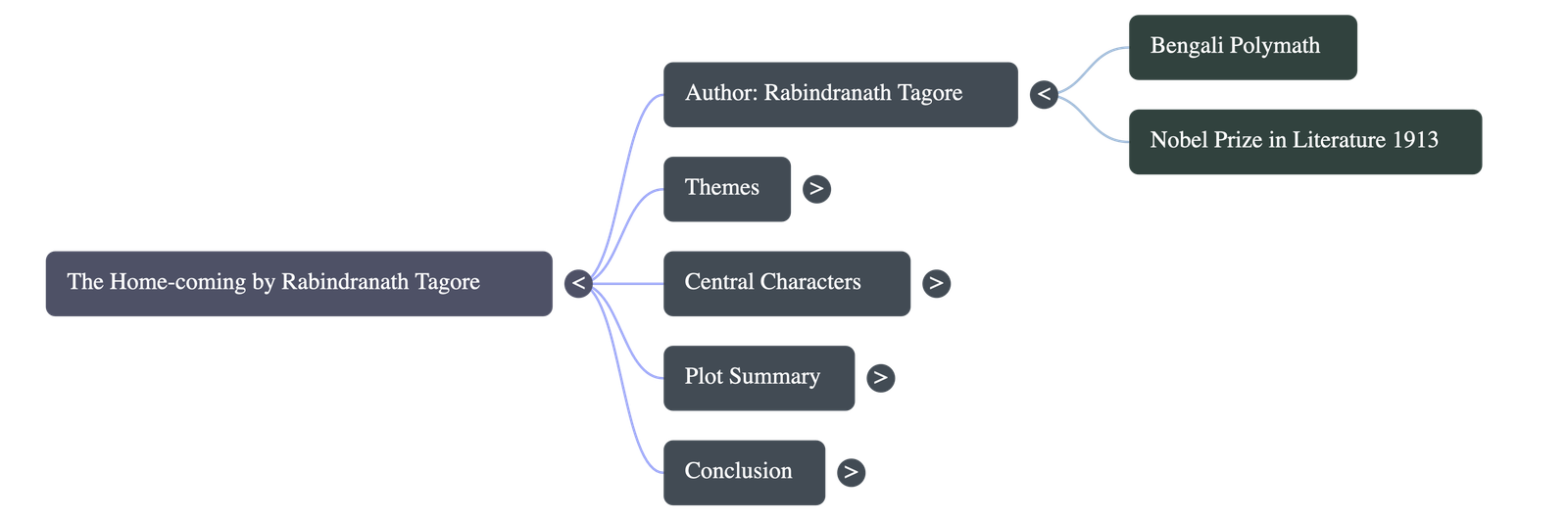
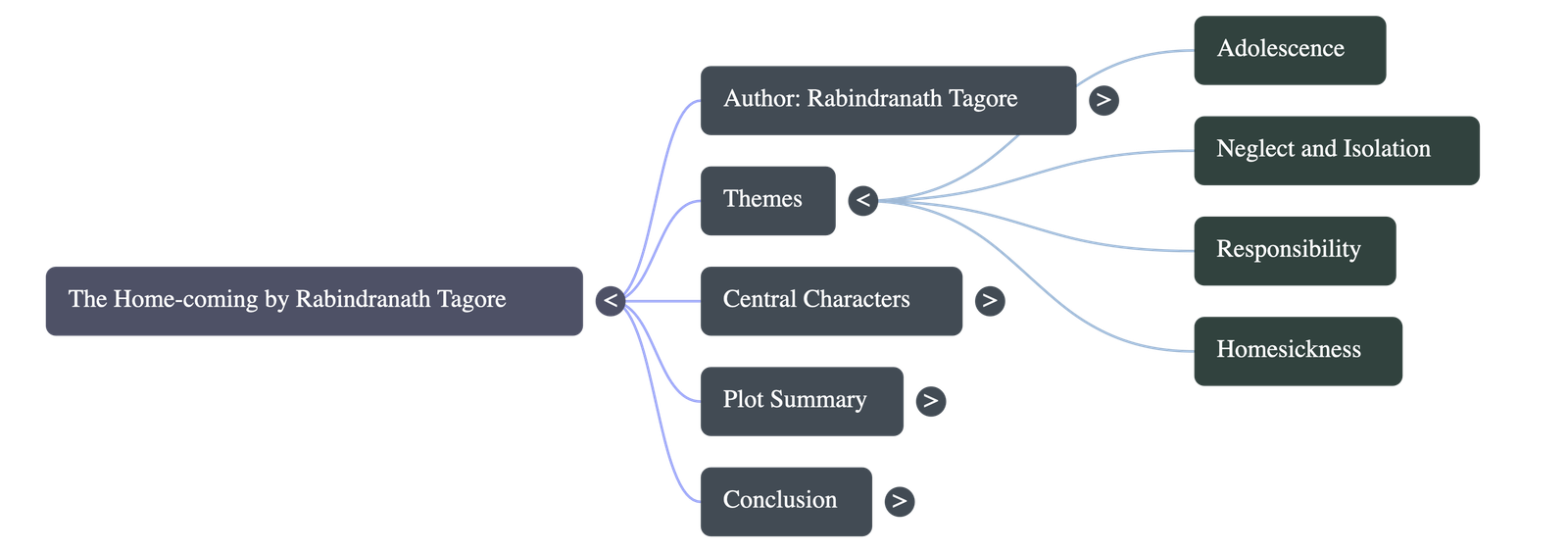
About the Chapter: Written by Rabindranath Tagore, this poignant story beautifully captures the universal themes of adolescence, neglect, the desperate need for love, and the deep feeling of homesickness through the eyes of a young boy named Phatik.
1. Life in the Village and the Log Incident
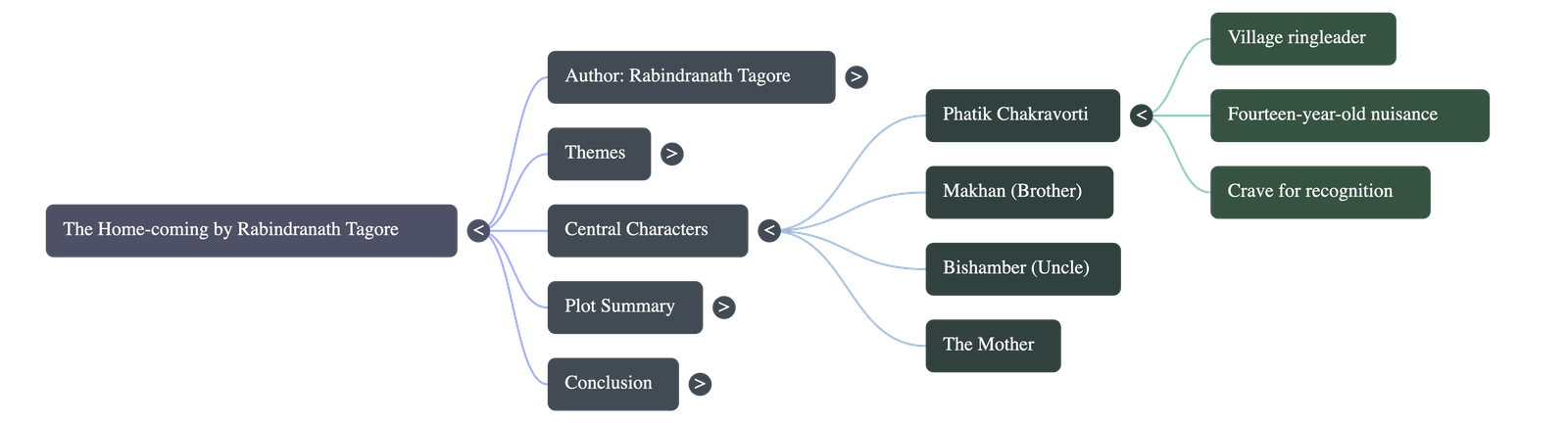
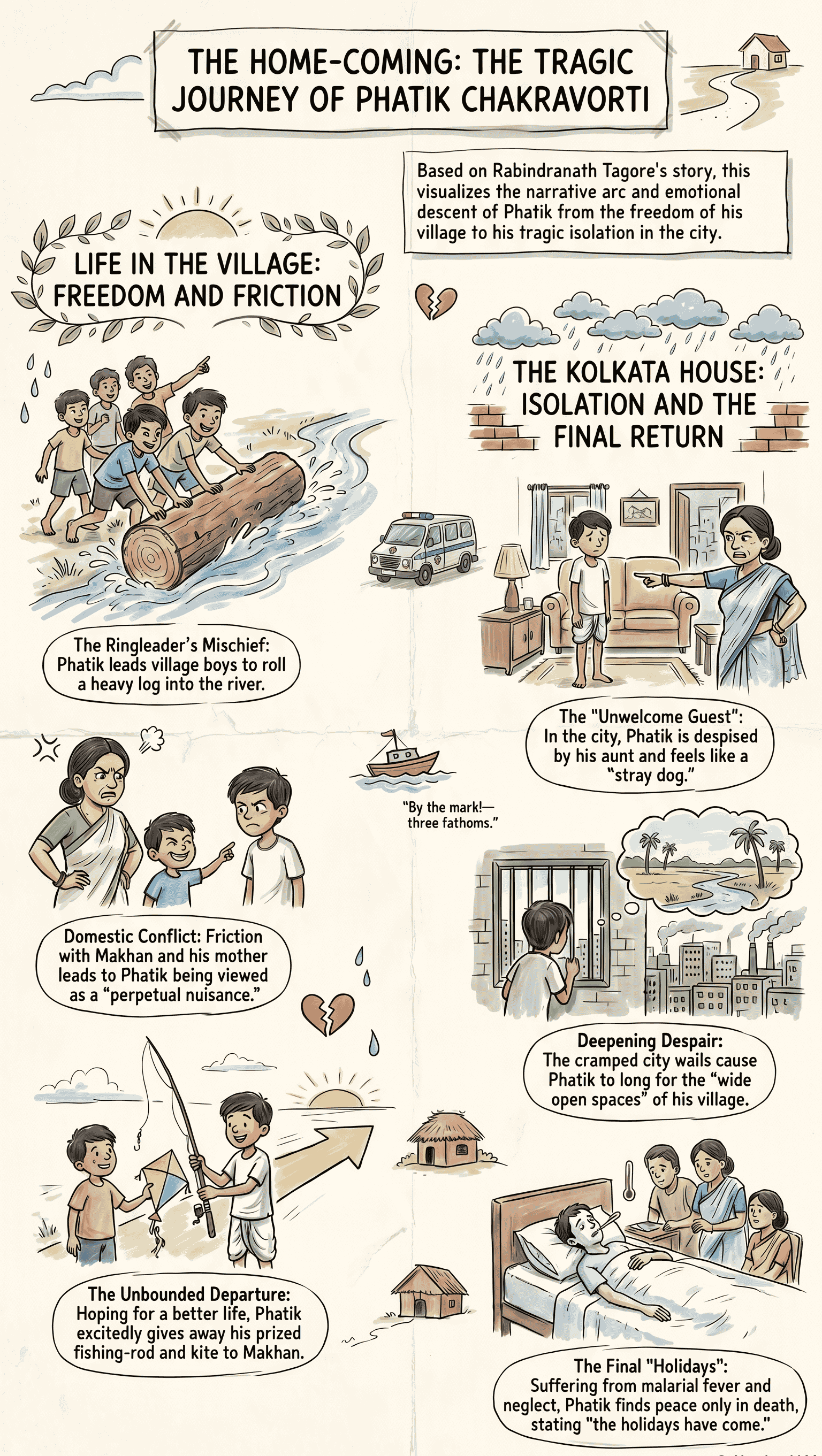
- • The Ringleader: Fourteen-year-old Phatik Chakravorti is a mischievous boy and the ringleader among the village children.
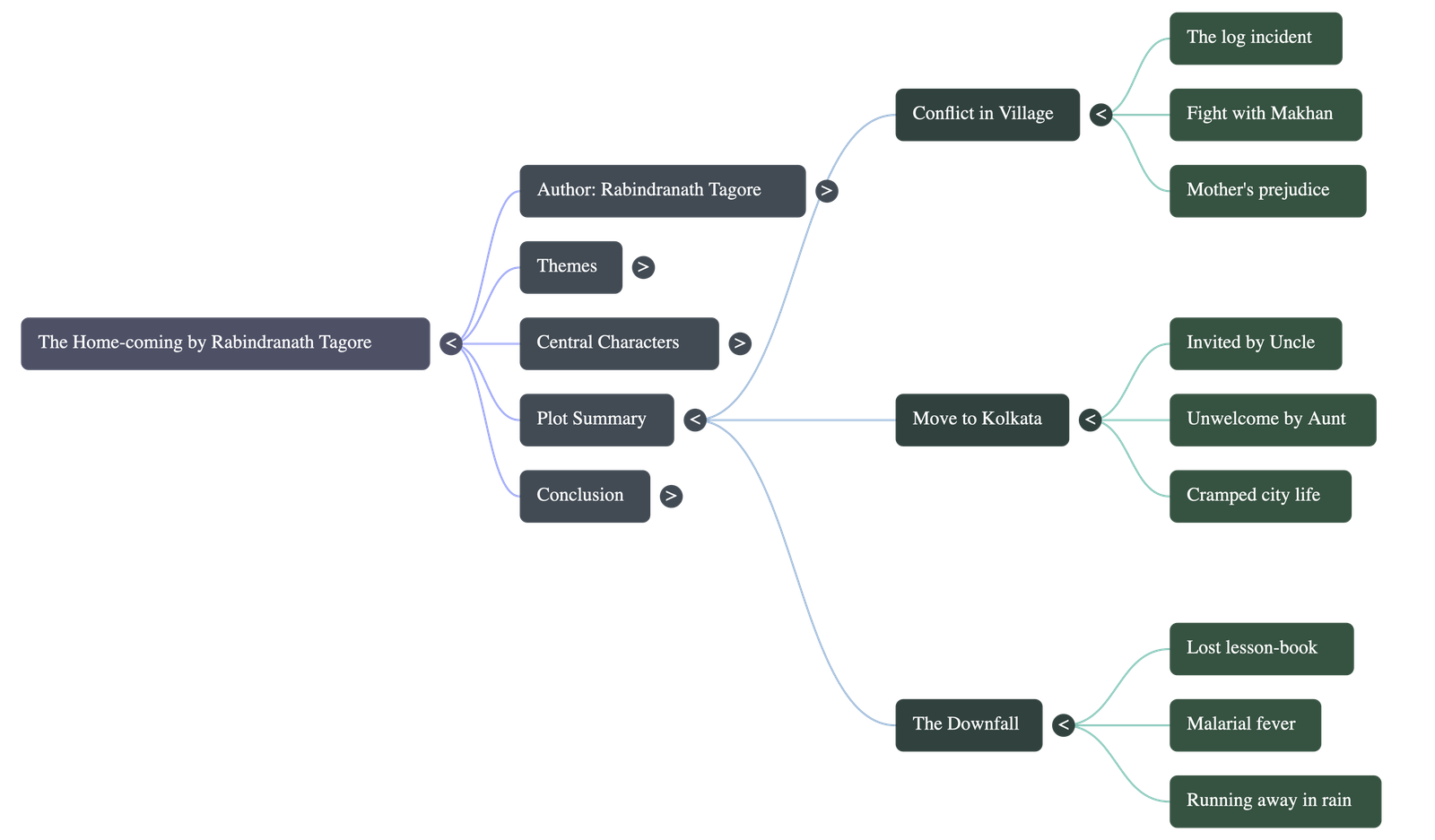
- • The Prank: Phatik devises a plan to roll away a heavy log resting on the riverbank to annoy its owner. However, his younger brother, Makhan, spoils the fun by stubbornly sitting on the log.
- • The Fall: To maintain his authority, Phatik orders his friends to roll the log anyway. Makhan falls into the mud, gets furious, attacks Phatik, and runs home crying.
2. The Arrival of the Stranger
- • A New Face: While sitting by the riverbank after the fight, a middle-aged stranger arrives by boat and asks Phatik for the Chakravorti house. Phatik responds rudely and refuses to help.
- • Unfair Accusation: A servant drags Phatik home, where his mother falsely accuses him of beating Makhan (because Makhan had lied to her).
- • The Uncle's Identity: Phatik loses his temper and hits Makhan for lying, leading his mother to beat him. Just then, the stranger enters and is revealed to be Bishamber, Phatik's maternal uncle from Calcutta.
3. The Decision to Move to Calcutta
- • A Burden Lifted: Phatik's mother considers him a wild, disobedient nuisance and constantly fears he will harm the well-behaved Makhan. She is deeply relieved when Uncle Bishamber offers to take Phatik to Calcutta to educate him.
- • Excitement to Leave: Phatik is absolutely thrilled to go to the city. In his excitement to leave, his generosity swells, and he gives away his precious fishing rod, kite, and marbles to Makhan.
4. Misery and Isolation in the City
- • An Unwelcome Guest: Upon reaching Calcutta, Phatik's aunt is entirely displeased. She views the fourteen-year-old village boy as an unnecessary addition and a burden to her family.
- • The Awkward Age: The author highlights that fourteen is a difficult age. Phatik is neither a child who can be freely pampered nor a grown-up. He desperately craves love and recognition but only receives scolding and contempt, making him feel like a "stray dog that has lost his master."
- • Intense Homesickness: Trapped among the walls of Calcutta, Phatik suffocates. He intensely misses his open village meadows, the riverbanks, his gang of friends, and even his strict mother.
5. Struggles at School
- • The Worst Student: At school, Phatik is the most backward boy. He remains silent when asked questions and silently endures cruel physical punishments from his teachers.
- • Loss of the Lesson Book: When Phatik loses his lesson book, his aunt severely insults him, calling him a "clumsy, country lout" and complaining about the cost of buying new books.
- • Waiting for the Holidays: He asks his uncle when he can go home, but is heartbreakingly told he must wait until the holidays in November.
6. Sickness and the Tragic Climax
- • Running Away: Feeling the onset of a terrible malarial fever, Phatik's greatest fear is becoming an even bigger nuisance to his aunt. In a desperate state, he runs away into the pouring rain.
- • The Return: The police find him drenched, muddy, and severely ill, and carry him back to his uncle's house. Delirious from the fever, Phatik hallucinates and begs to go home.
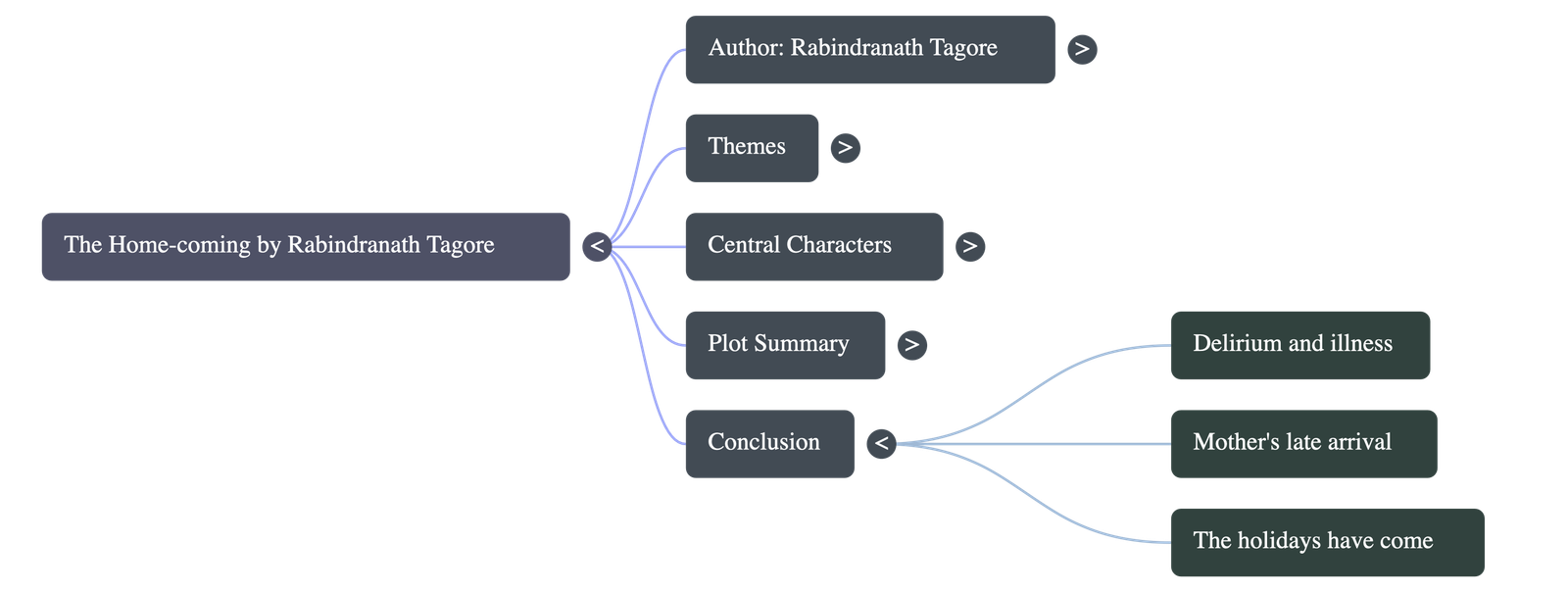
- • The Final "Home-coming": Phatik's condition becomes critical. Uncle Bishamber sends for Phatik's mother. She arrives weeping for her "darling." In his final, tragic moment, Phatik slowly turns his head away and mutters, "Mother, the holidays have come," metaphorically finding his ultimate release and returning to his true home.
Do checkout all questions & answers of this chapter.
Quick Navigation:
| | | |
1 / 1
Quick Navigation:
| | | |